


Related Features
IMPRESSIONS: GRAHAM 100 at New York City Center (Part 2)
IMPRESSIONS: GRAHAM 100 at New York City Center (Part 1)

DAY IN THE LIFE OF DANCE: "Graham 100: The Architecture of Emotions" at SUNY Purchase

By Robert Johnson
View Profile |
More From This Author
Published on March 26, 2026
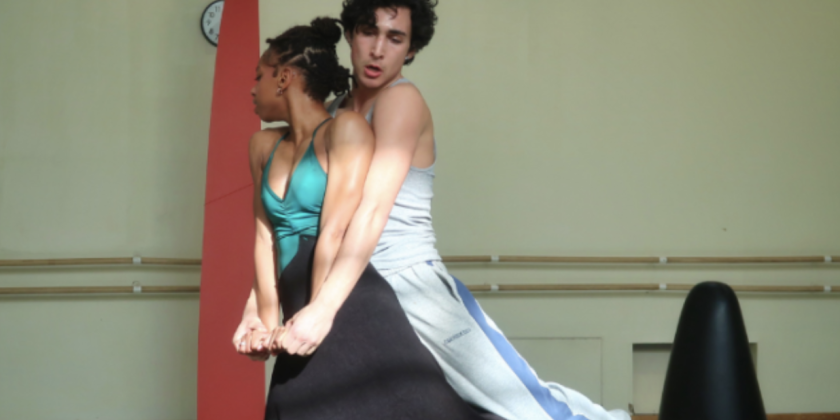
"Dark Meadow." Photo: Imani Carre
Graham 100: The Architecture of Emotions at SUNY Purchase
Rehearsal directors: Martin Løfsnes and Katherine Crockett
Choreographer: Martha Graham
Dark Meadow student cast:
The One Who Seeks: Amanda Goodridge / Britton Johnson
He Who Summons: Franco LaGrega / Armand Rufen-Blanchette
She Of The Earth: Amelia Zawacki / Reagan Stafford
They Who Dance Together: Fabricio Aguilera, Gabriel Bait, Camila Cordero-Garbanzo, Anika Desch, Kaden Golding, Tianni Johnson, Josie Kaskovitch, Maximilian Malachi, Rie Matsumae, Sage Melton, Zoe Payson, Julianna Poole, Quincy Vincent
Understudies: Francesco Adamo, Adrienne Butler, Jules Harris, Hailey Karcich, Ezra Mehta, Maya Suzuki
Dance Building, Studio B (DAN 1006), SUNY Purchase
March 11, 2026
For students in the Conservatory of Dance at SUNY Purchase, the centenary of the Martha Graham Dance Company offers a rare opportunity to immerse themselves in the legacy of this great choreographer, who was a pioneer of American modern dance. Martin Lofsnes, a Graham dancer who once starred in such works as Diversion of Angels and Errand into the Maze, now passes on the tradition as an assistant professor at the school, which has programmed a yearlong schedule of lecture-demonstrations devoted to analyzing Graham’s oeuvre.
Meanwhile, the Purchase Dance Company is preparing a full-length revival of Graham’s 1946 masterpiece Dark Meadow, set to a commissioned score by Carlos Chávez, and with surrealist decors by sculptor Isamu Noguchi. The performances will take place, May 1-3, at the Purchase Performing Arts Center.
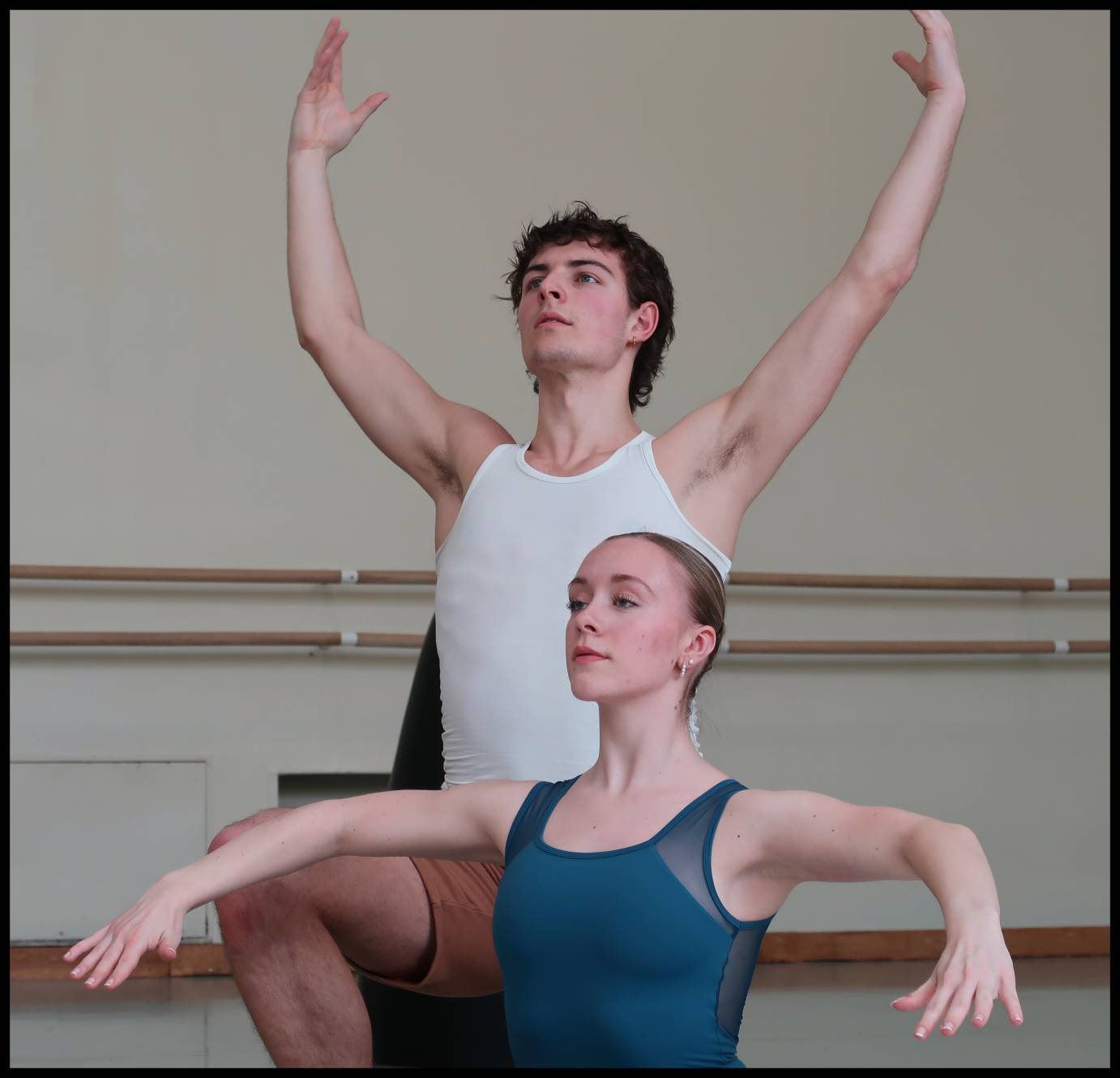
The 10th edition of the lecture series, titled Graham 100: The Architecture of Emotions offered insights into Graham’s ballets Dark Meadow and Night Journey, on March 11. Night Journey, a gripping account of the incestuous tragedy of Oedipus, is told from the point of view of Oedipus’ wife and mother, Queen Jocasta. The Martha Graham Dance Company will perform the work this spring, both on tour and during its season, April 8-12, at New York City Center.
Graham was noted for her ingenious use of props; and at Purchase another veteran dancer, glamorous Katherine Crockett, was on hand to demonstrate the use of the rope that is an essential element in Night Journey. As the story unfolds, this highly symbolic property comes to represent an umbilical cord; the fate that binds Oedipus and Jocasta helplessly together; and, finally, the noose with which Jocasta hangs herself. Speaking of another set-piece, Noguchi’s spiky bed of incest with interlocking male and female figures, Crockett said that Graham’s stage decorations “become a part of our bodies, and are an extension of what we express.”
The presentation also included a wonderful film excerpt from Night Journey, featuring Christine Dakin as Jocasta, and Pascal Rioult as the blind seer, Tiresias, who strikes the bed insistently with his staff, demanding that Jocasta return in memory to face her crime. Stalking from side to side like a caged animal, Jocasta becomes increasingly agitated, while the Daughters of the Night, who represent the sleepless torments of her conscience, assail her. Horrified, Jocasta recalls suckling her husband-to-be at her breast; and eventually she collapses at the foot of the bed.
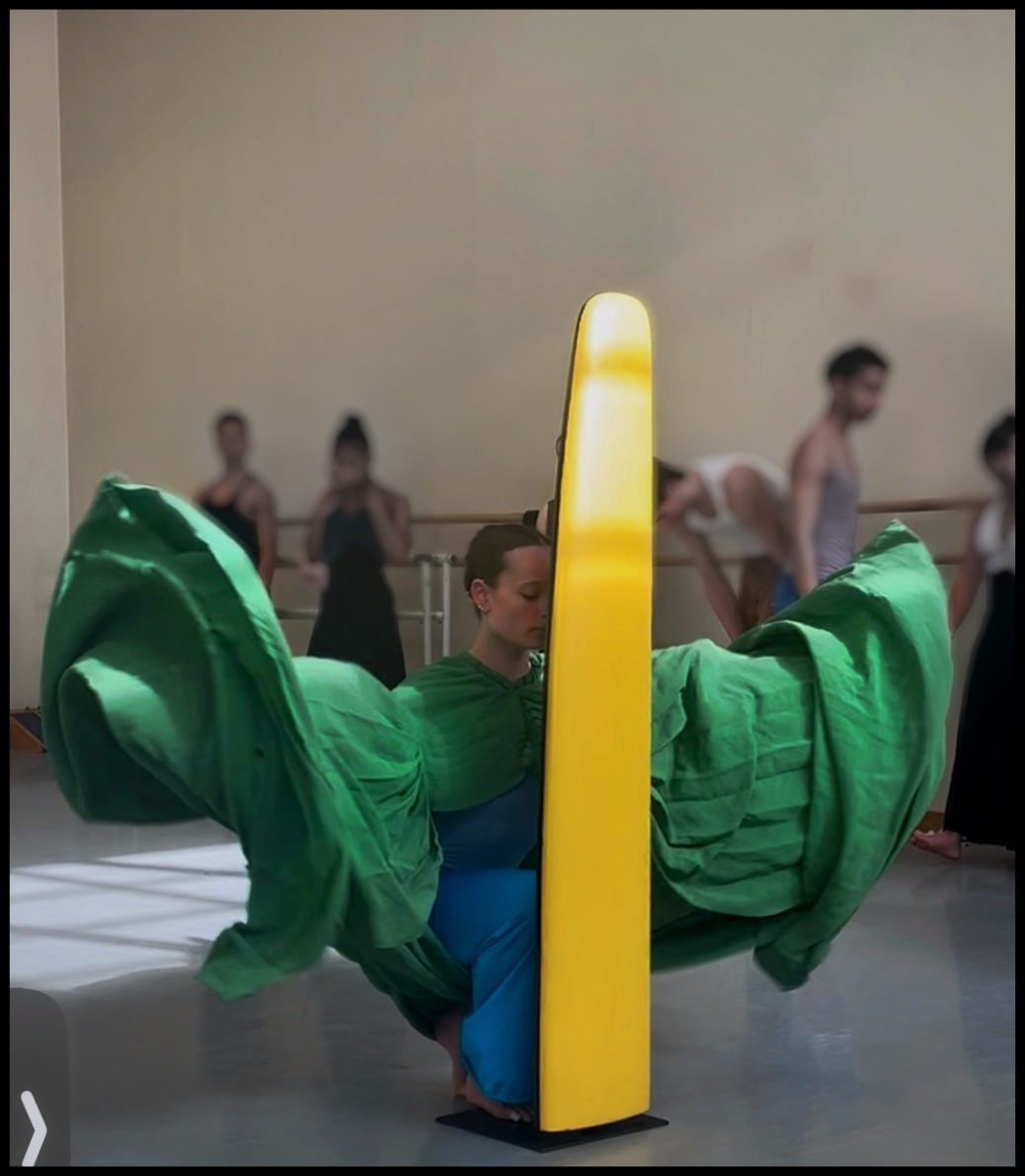
Moving on to Dark Meadow, Lofsnes explains that narrative exposition takes a backseat in this dance whose structure reflects the workings of the mind. Combining her fascination with Jungian psychology with her study of the classics, Graham conceived of the unconscious as “the dark meadow of Ate,” a phrase she borrowed from the Greek writer Empedocles. For Graham, her own mind was a place of blind and ruinous impulses through which the artist was fated to wander continuously searching for enlightenment. In her dance, the meadow also becomes a physical location, where a rite of passage unfolds.
Though the dance portrays the journey of the protagonist, One Who Seeks, the tale is fragmented. “We don’t dream linear stories,” Lofsnes points out, “We dream in images.” One Who Seeks receives assistance from two spirit-guides, She of the Earth, an ancient goddess who inhabits the meadow, and He Who Summons, the male energy who kindles the protagonist’s sexuality. Audience members, however, have no one to take us by the hand. Graham expected us to make sense of Dark Meadow by organizing the fragments in our own minds, unconsciously recognizing buried archetypes and recalling our own adventures in the dark meadow of life. We, too, are “ones who seek.”
Graham viewed life as growth and struggle, and Dark Meadow depicts the organic development of an individual who must attain maturity before claiming a place in society. This approach is so at odds with the tech-addled America of our day, where hucksters peddle short-cut solutions to every problem from weight-loss to poverty, that one wonders what a contemporary audience will make of it.
Seen in rehearsal, the teenage dancers display a fearless energy and commitment, assuming their roles like a second skin. They are artists, after all, and once they learn the lessons of Dark Meadow, they will be wiser than the majority of their peers. The dancing is virtuosic, and the choreography features some of Graham’s most felicitous inventions. Maybe it isn’t too late for us to rise to the challenge of Dark Meadow, and Martha Graham’s profoundly humane vision.