


Related Features

DANCE NEWS: A New Season and an Expansion of The Dance Enthusiast's Audience Reviews

DANCE NEWS: These Are Works & Process’ 2026-2027 Curated and Open Call Residency Artists
IMPRESSIONS: GRAHAM 100 at New York City Center (Part 1)

By Robert Johnson
View Profile |
More From This Author
Published on May 19, 2026
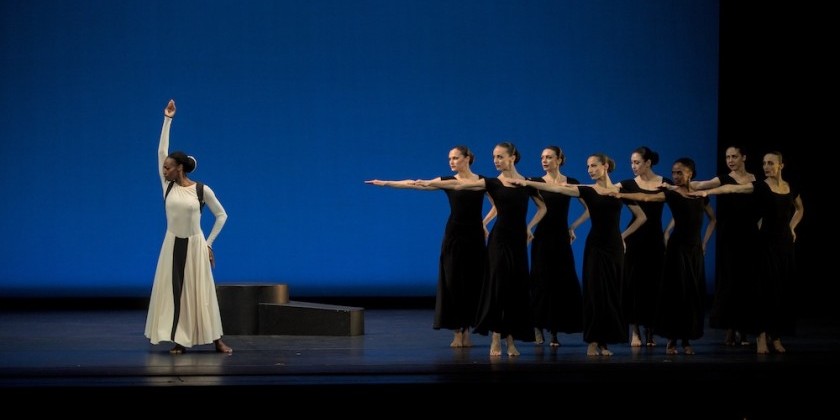
Martha Graham's "Chronicle." Photo: Melissa Sherwood
The Centennial Celebration of The Martha Graham Dance Company
Presented by: Barbara and Rodgin Cohen, Judith G. Schlosser, Lawrence Stein, and Inger K. Witter
Artistic Director: Janet Eilber
Executive Director: LaRue Allen
The Company: Lloyd Knight, Xin Ying, Leslie Andrea Williams, Anne Souder, Laurel Dalley Smith, So Young An, Marzia Memoli, Devin Loh, Antonio Leone, Meagan King, Ane Arrieta, Zachary Jeppsen-Toy, Amanda Moreira, Jai Perez, Ethan Palma, Isabella Pagano, Grace Sautter
Rehearsal Directors: Ben Schultz, Blakely Angelle White
The Mannes Orchestra, David Hayes conductor
April 8 - 12, 2026
Although the Martha Graham Dance Company is now a century old, the troupe refreshes itself continuously. No longer the raw women’s collective whose debut in 1926 seemed like a rash experiment, neither is it the same ensemble whose legendary matriarch held court during Broadway seasons flush with celebrities. The streamlined troupe that returned to New York City Center, April 8 to 12, 2026 has acquired an eclectic, contemporary repertoire, Yet, true to its founder, it preserves her knife-edge style and dramatic sophistication; while cherishing some of the most brilliant dances ever created.
While making space for ephemeral, yet obligatory season premieres, the Graham company under the direction of Janet Eilber has nurtured a new generation of stars capable of making Chronicle (1936) and Appalachian Spring (1944) as glamorous as ever. Vitally inhabited, those works have survived the vicissitudes of fashion to achieve timelessness. Included in this season’s repertoire along with Lamentation (1930), Night Journey(1947), and Diversion of Angels (1948), these works will define American culture for the ages. In honor of the occasion, a rapid-fire glimpse of the company’s history in a video titled “100 Years in 100 Seconds,” compiled by Melissa Sherwood, preceded each of this season’s performances; and theater-goers received a keepsake program.
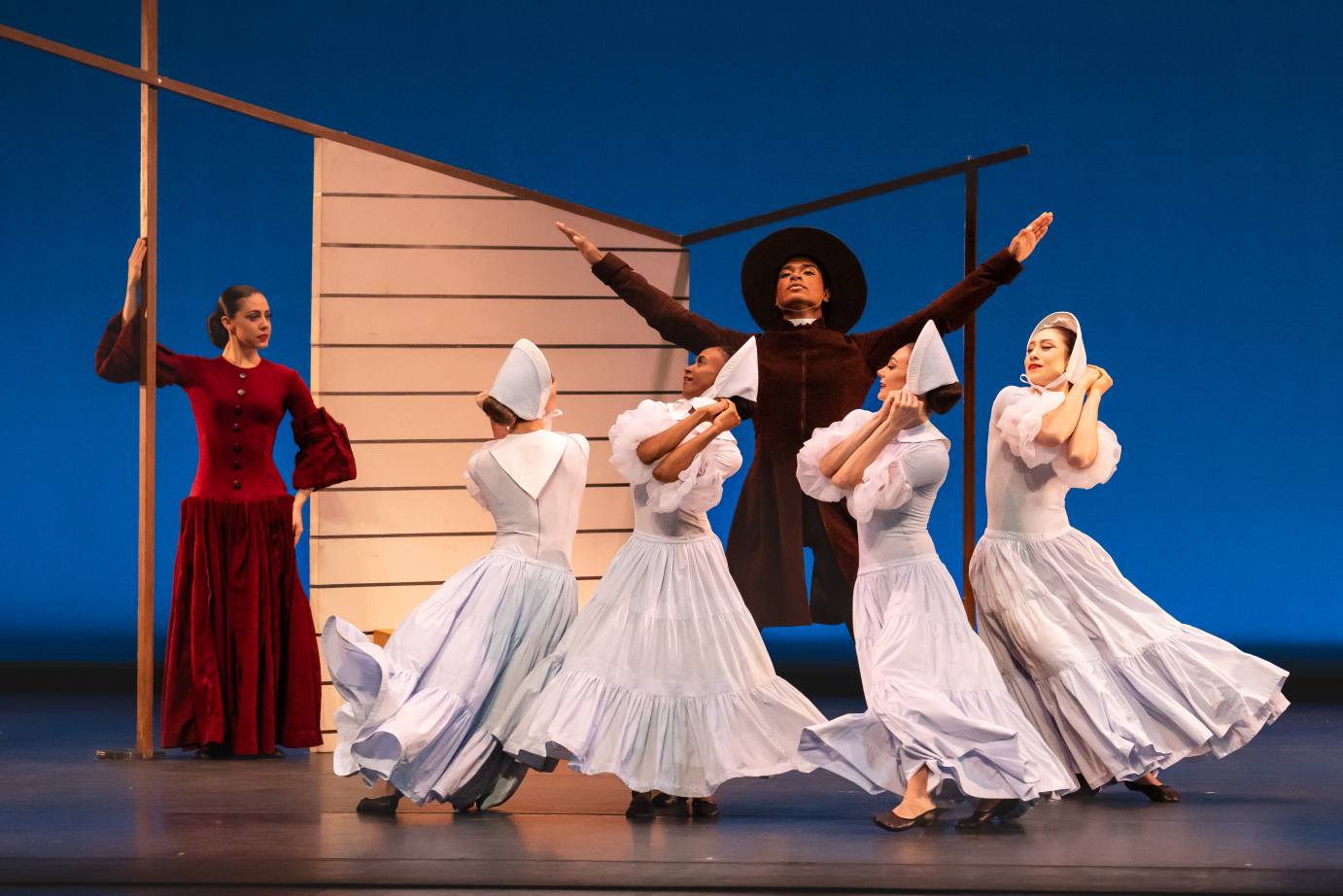
Most striking today in Appalachian Spring is Graham’s desire to set her dance on an intellectual foundation. Transcending what might have been a saccharine romance, the ballet describes a struggle between the gods of earth and sky and their imperatives. This moral drama infuses the ballet with meaning, and gives the protagonists an inner life.
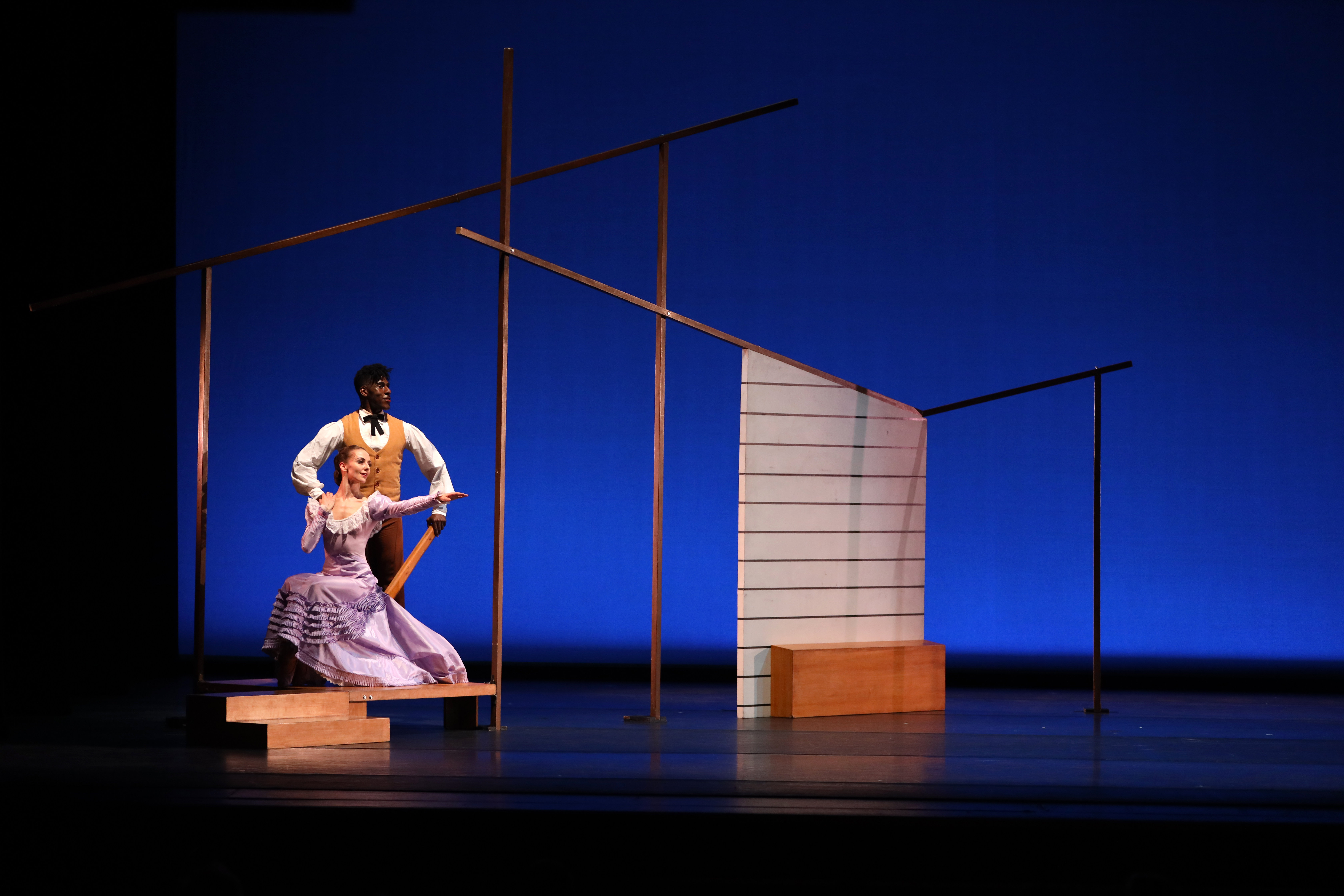
The Pioneering Woman and the Preacher emerge first in the opening parade of dramatis personae. Graham is eager to introduce them. Before we meet the Bride and Husbandman, those ingenuous protagonists, their elders lay claim to the space. The Pioneering Woman makes herself at home in Isamu Noguchi’s famous rocking chair — a piece shaped like an aroused farm implement — and the Preacher seeks out high ground on an inclined platform. Later, the Pioneering Woman will conjure over the earth, and dispel the atmosphere of hysteria created by the Preacher’s tormented solo. She represents nature’s domain, he the terrifying prohibitions of Scripture. These two symbolic figures joined battle on American soil the day the Pilgrims landed.
Graham assumes we know what the newlyweds’ challenges will be — clearing fields, battling poverty and the elements. Yet delving into the young people’s hearts, she finds another struggle to which she applies the teachings of Emerson and Jung. Pioneers are supposed to represent civilization’s vanguard, but Graham’s newlyweds must overcome the psychic burden of civilization to fulfill their destiny. The frontier represents their chance at freedom. Noguchi’s eerily transparent house not only brings us closer to the surrounding wilderness, but also suggests a fragmentary dream-space. This interior is the home of sexual desires, where nature lives within the mind. Appalachian Spring helps define the American experience, but the modern perspective shared by Graham and Noguchi raises the ballet above facile myth-making.
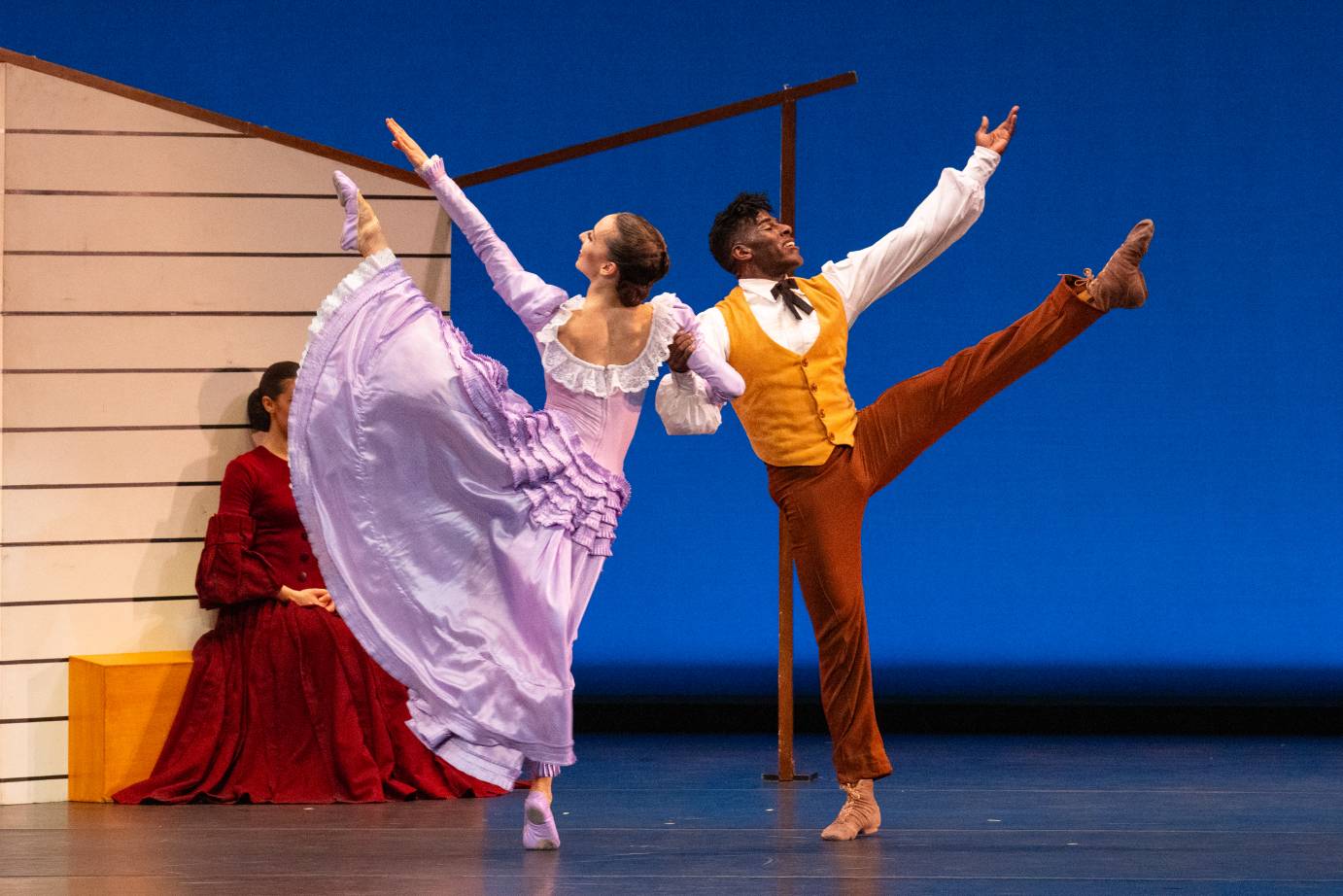
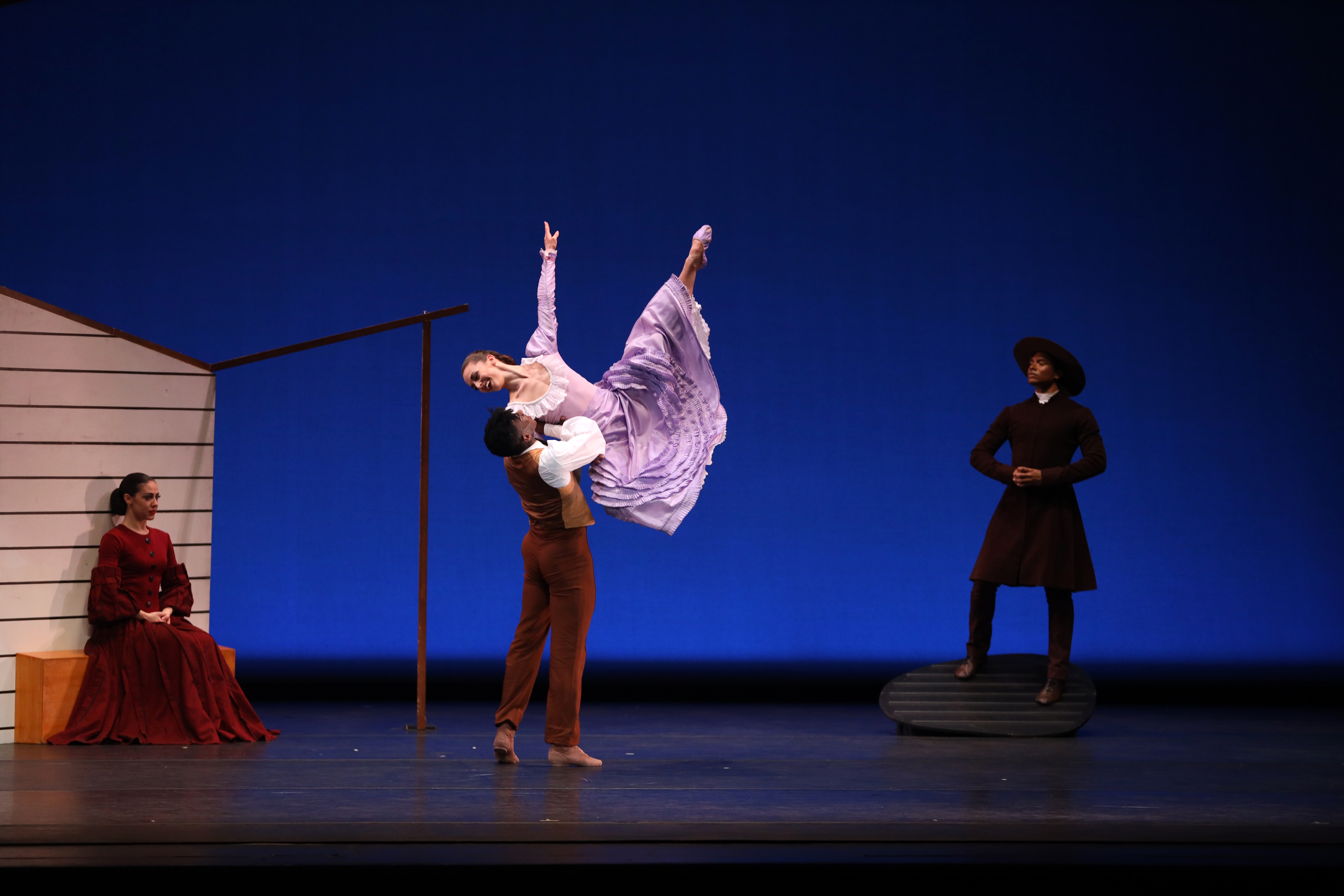
While seeding the ballet with ideas, Graham also invests her characters with a robust physicality. As the Husbandman, Lloyd Knight breaks his stride on entering, rushing eagerly into the future with his face aglow. In his first solo, he bounds straight up, slapping his knee and riding high as if on horseback. Leaning backward with one leg extended, he pulls his fists apart, relishing the test of strength. His job is to tame, and to impose his will. Yet Graham’s characters are not one-dimensional. When the Husbandman and the Bride link arms in a hoe-down, he can’t resist the playful urge to swing her into the air. In introspective moments, we see the Husbandman’s mind working, making plans as he rests his arms on the fence. Knight is a consummate actor.
The Bride is a flightier character, experiencing a pang of nervousness as she crosses the threshold into her new life. Perhaps only her staunch faith in her partner holds her up. When the Bride and the Husbandman clasp hands, she gazes raptly into his eyes, and she blows him secret kisses from afar. She imagines children growing, and cradles a longed-for infant in her arms, yet she remains a child herself returning to rest her head against the Pioneering Woman’s knee. In her solo, the Bride bounces and flutters; and, while the Husbandman only shares his dreams with her, she scatters her attentions everywhere, on everyone. Anne Souder has a powerful technique that she shows off in deep backbends and high kicks, yet she also suggests the Bride’s fragility. How will this slender and impulsive creature ever bear the rigors of frontier life? We fear for her, yet Graham’s heroine possesses mysterious resources, underscoring the resilience of womanhood.
As the Preacher, Jai Perez appears smug rather than stern. At first, this callow young man surrenders mildly to his followers’ blandishments. Greeting each other with slapping hands, they play like children. This initial innocence makes the Preacher’s transformation all the more disturbing, when he reveals his dark side. Kicking himself with rigid legs, he fulminates and accuses. He clasps his hands and twists his prayer, hurling himself to the floor and recoiling, all but snarling as he spits out a vision of hellfire. Ane Arrieta looks naturally dramatic as the Pioneering Woman who undoes the Preacher’s spell, her movements ample and never frivolous. Quietly but firmly, she exerts her authority over this patch of land, where fertility is paramount, and where nature will have the final say.
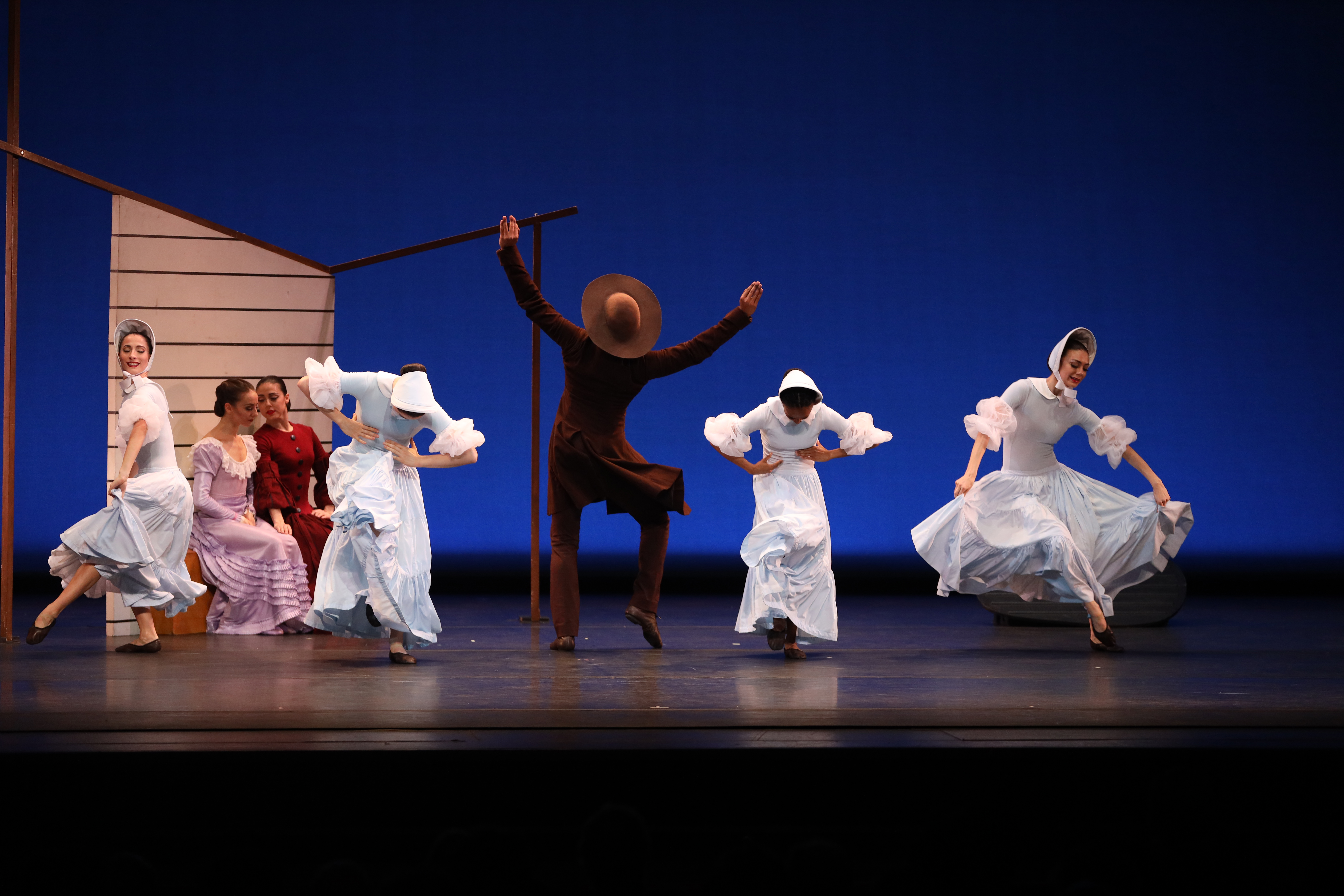
Prim and bustling, the Preacher’s followers scuttle around him. Useful helpers in transitions, they nurse and adore him. Swishing their skirts, they recall mundane tasks like shooing chickens and washing clothes, but they also form architectural groups. One of Graham’s most felicitous inventions, which must have been inspired by religious art, suggests a stylized “Lamentation,” in which the Preacher falls backward, his hat and outstretched arms making a cross, with his followers supporting him below and pressing his hands to their faces like grieving angels.
While most of Appalachian Spring looks to the future, the final cameo with the Bride seated on her rocker, and the Husbandman erect behind her, occupies a moment out-of-time. She arranges her skirts and he clasps her shoulder as they calmly assume their places in history. This dance made history, too. Intense performances of Aaron Copland’s music by the Mannes Orchestra under David Hayes helped keep the dancing vivid.
The reconstructed portions of Graham’s Chronicle are more abstract than other dances of the 1930s that recalled the carnage of World War I, and foretold the darkness to come. Léonide Massine’s Les Présages (1933) has allegorical characters who haunt the hero’s dream-journey; while Kurt Jooss’s The Green Table (1932) is frankly melodramatic. As Chronicle opens with “Spectre — 1914,” however, we don’t know exactly who or what the soloist is supposed to be. This indeterminacy allows her to be many things. Given free rein, Graham’s imagination created a numinous space that she packed with suggestive imagery, channeling visions of horror.
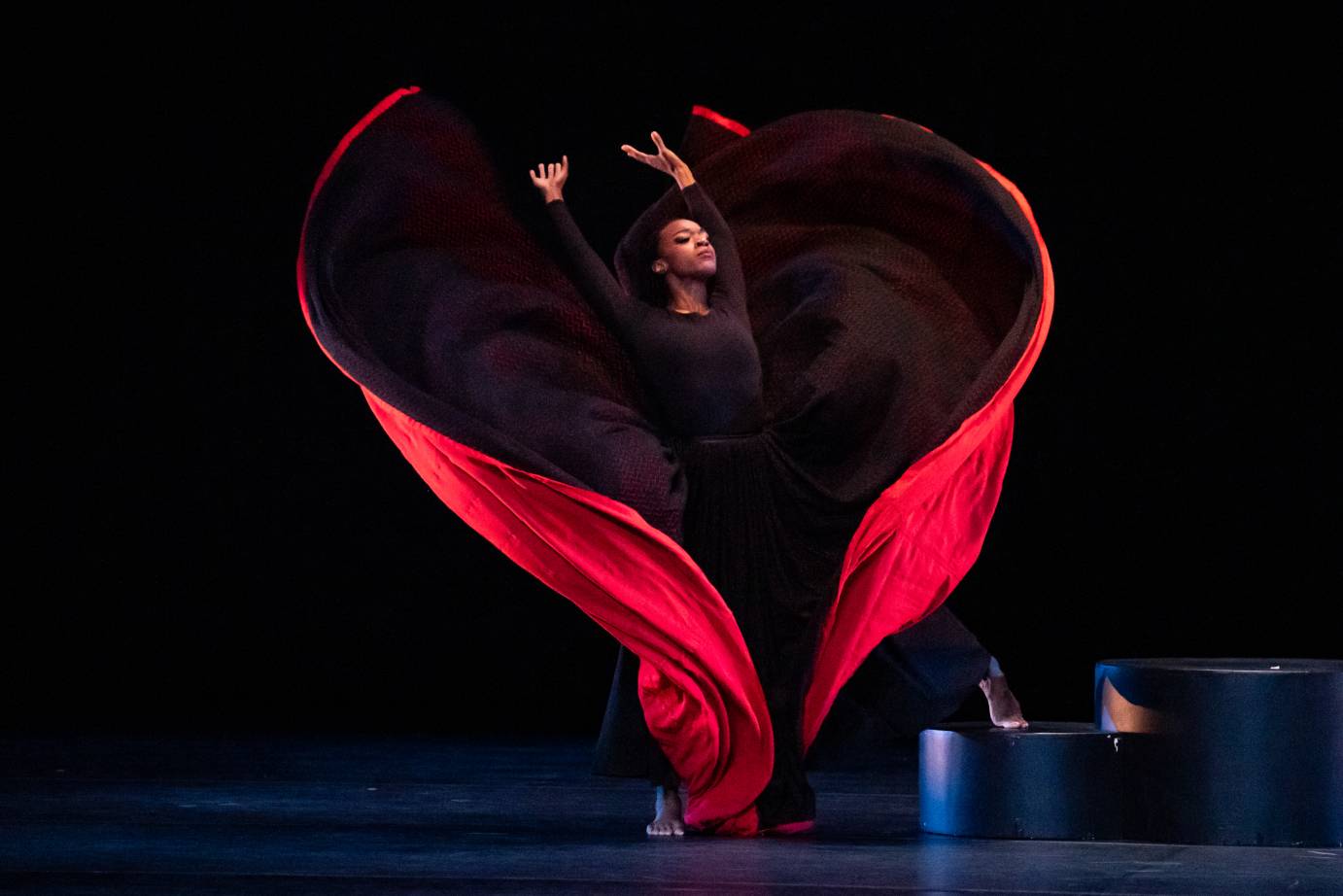
Leslie Andrea Williams is the Spectre this season. Seated on a platform with notched hands jutting past her knees, and a voluminous, black skirt sloping down from her waist, she could be a mountain whose physiognomy is merely a trick of the mind. When this monument awakes to thunder and spitting hail in the orchestra, she suggests a volcano erupting. Flinging her hair instead of rocks and fire, she rises to an alarming height. Descending from the platform, she spins like a cyclone, and her skirts engulf the landscape. She is every natural disaster rolled into one. A goddess spreading terror, she flaps her skirts like giant wings of death, and stands shrouded in their red lining as if drenched in blood. Yet while she embodies a superhuman force, Williams can also portray war’s victims. Kneeling she struggles to fend off disaster; and stretches insensate on the floor. She peers watchfully over a parapet; and lies on her pedestal stiff as a corpse laid on a bier. In a drama of roiling millions, she plays every role. Williams brings somber introspection to the part, and a towering, full-bodied athleticism.
The shocked survivors of this cataclysm appear in “Steps in the Street,” inching backward half-frozen. Again, Graham resorts to abstract imagery. The first to edge out of the wings with halting gait, So Young An displays a curved profile in which the line of her long black skirt extends the line of her torso. A twist in her body conveys emotion, but also seems to bisect her figure into Cubist planes. On top, her left arm folds back to her shoulder, creating a shelf on which she rests her grieving face. Below, she shields herself with her other arm. As the stage fills with other women just like her, they seem to follow random pathways, isolated and lost; while their direction signals weakness — no one steps backward unless retreating. Perhaps these women can no longer imagine a future, and long to rewind their lives to a time before the war. Maybe they are seeking their shattered past.
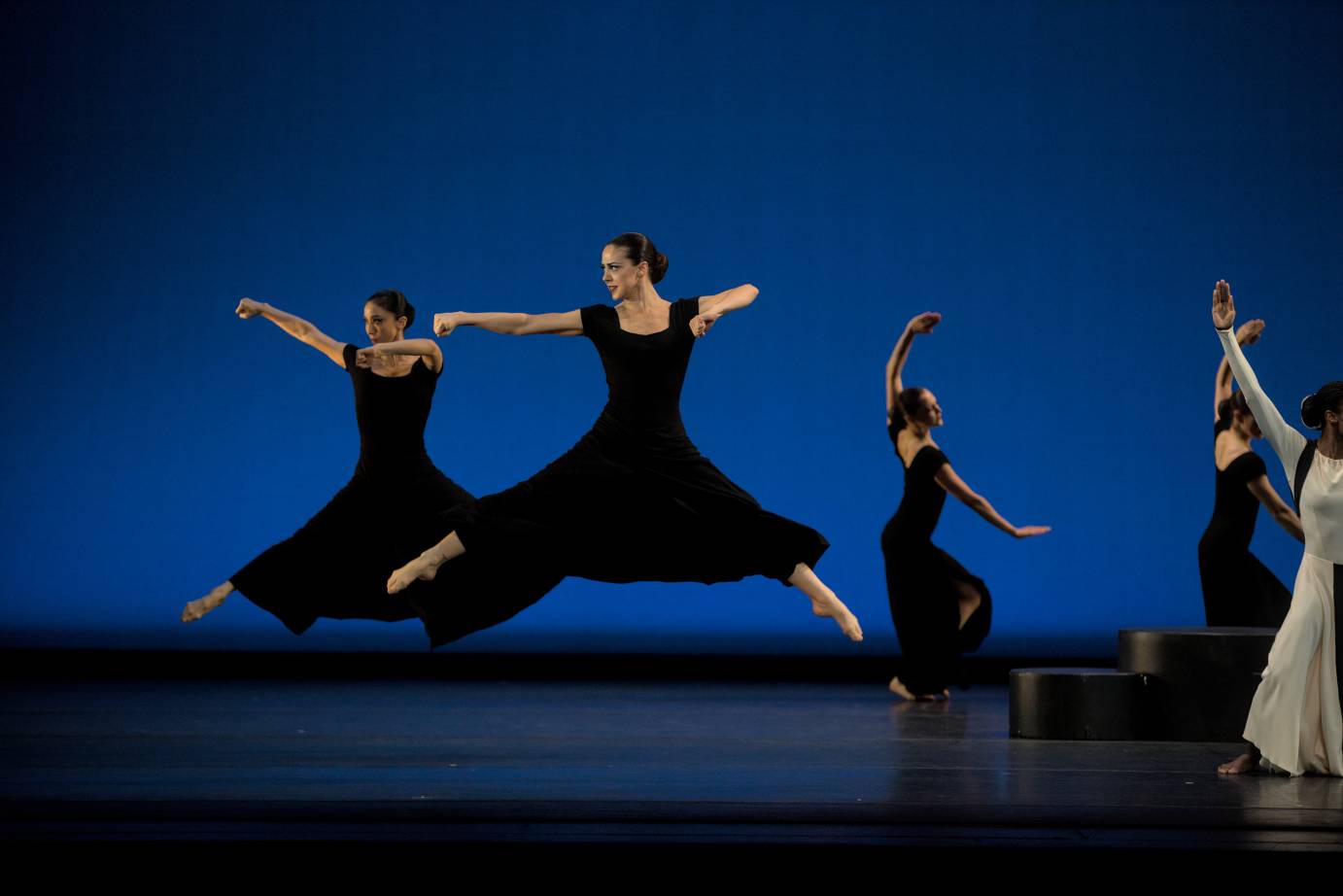
Laurel Dalley Smith breaks the spell, lifting and crossing her fists defiantly. Later she taps her foot to one side, responding to a new rhythm in the score and spurring the ensemble to action. In what may be only a dream, Dalley Smith places herself at the head of an aggressive line of troops. Yet this rally does not endure. Poignantly she returns to the women’s opening stance, abandoned by the others and shuffling backward off-stage, with the future half-glimpsed behind a scrim. This false start may be a relic of what was originally a more complicated scenario, with sections entitled “Masque” and “Tragic Holiday.”
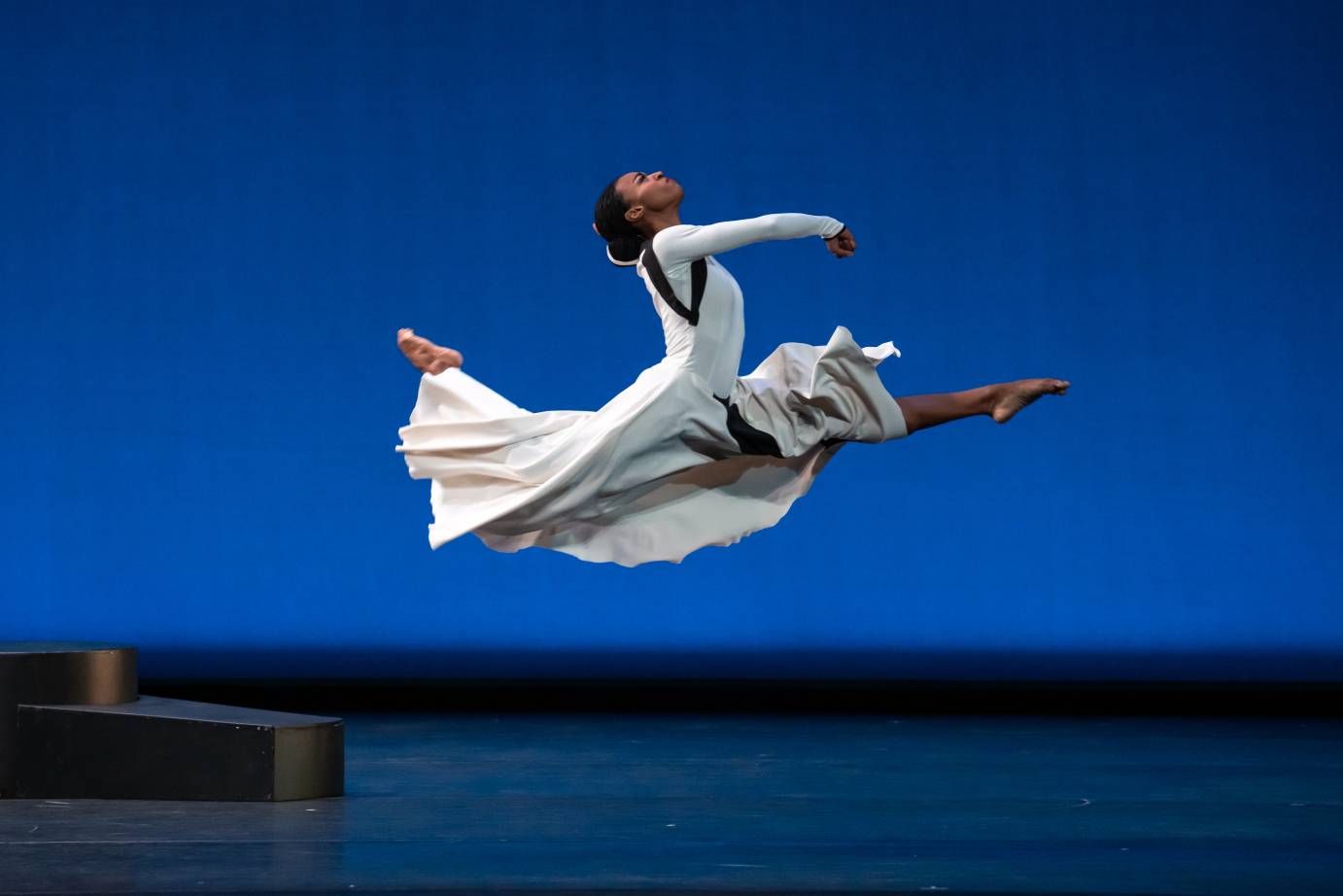
The real mobilization comes in the final “Prelude to Action,” dynamically charged with scything and plunging figures. This section features Williams in a new role, striking and defiant. Now clad in a white gown with black trim, she twists and lashes the air, and bounces on the platform like a human drumbeat. The soloist also bookends the uprising with a visual stop sign, her X-stance recalling the anti-fascist slogan, "They Shall Not Pass."
Like Chronicle, Graham’s iconic solo Lamentation (1930) reflects the influence of earlier developments in the visual arts, where painters led the way in deconstructing reality. So Young An is the anonymous protagonist seated on a bench, wearing a tube dress that imprisons her in a cocoon of woe. She begins faintly keening side to side, her figure already tense. Then, slanting and twisting, she stretches further dividing the planar surfaces. She extends flattened hands, and, as if separate from the rest of her body, her face peers at us from within a recess. As the soloist doubles over, Graham identifies another cavity where loss has inflicted a wound. The formalism of Lamentation renders the protagonist’s experience universal. Yet, watching her, we feel torn between the dance’s geometry and her recognizable emotion. She rises from the bench with a surge of energy, but at any moment she might collapse, if the life-force that sustains this architecture becomes depleted. Seated once again, she concludes the piece bowed and broken, listlessly brushing the floor.
With apologies to Susan Sontag, these dances demand interpretation as a sign of true engagement, though not everyone may rise to the heights of poet Ben Belitt, whose effusions following a rehearsal produced the title Diversion of Angels. Graham herself was playing coy. Does this ballet depict three stages in a woman’s life? Or do the female principals portray three different women? Either way, their figures are allegorical, representing impetuous, young love (in Yellow); self-indulgent passion (in Red); and the cool detachment of maturity (in White).
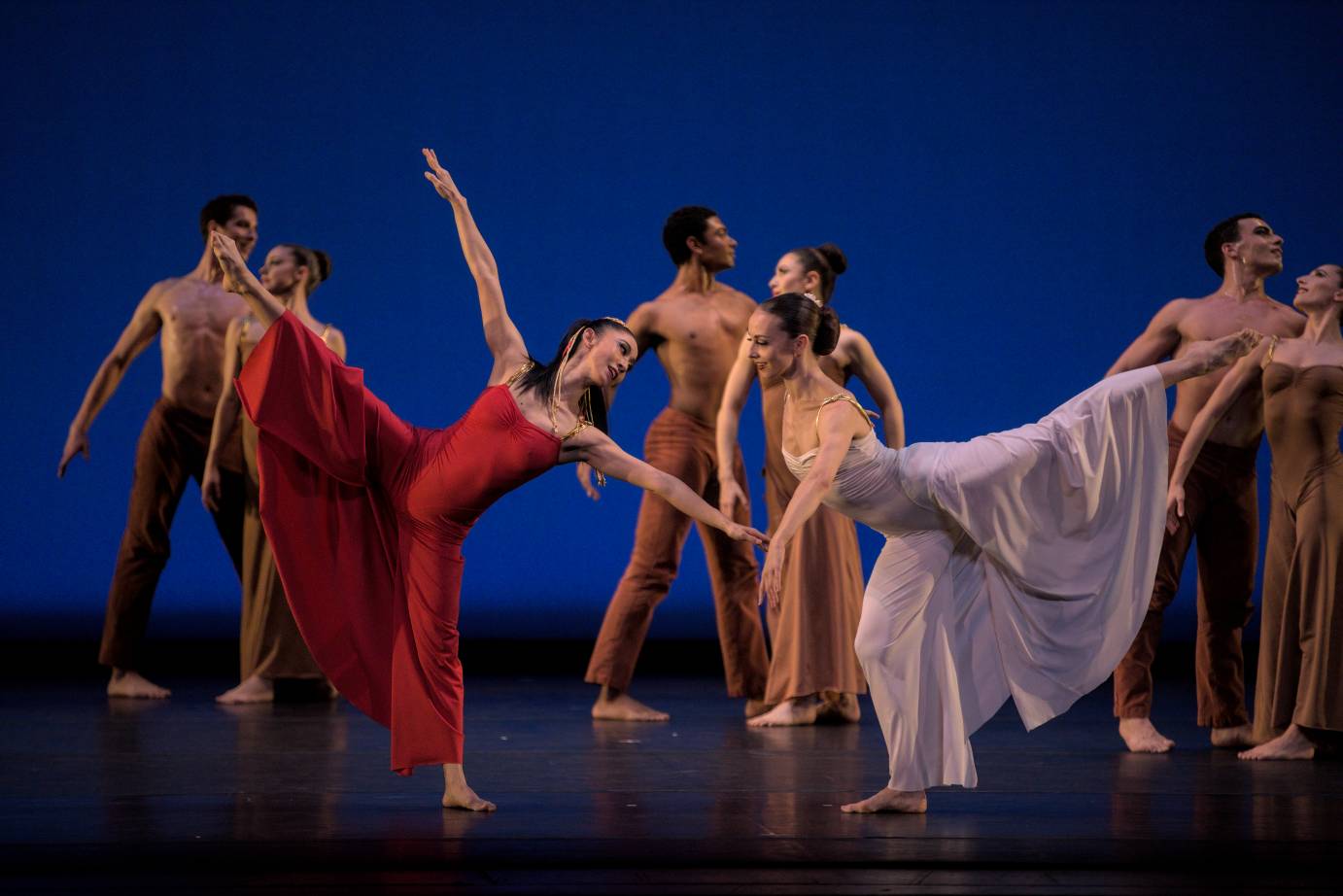
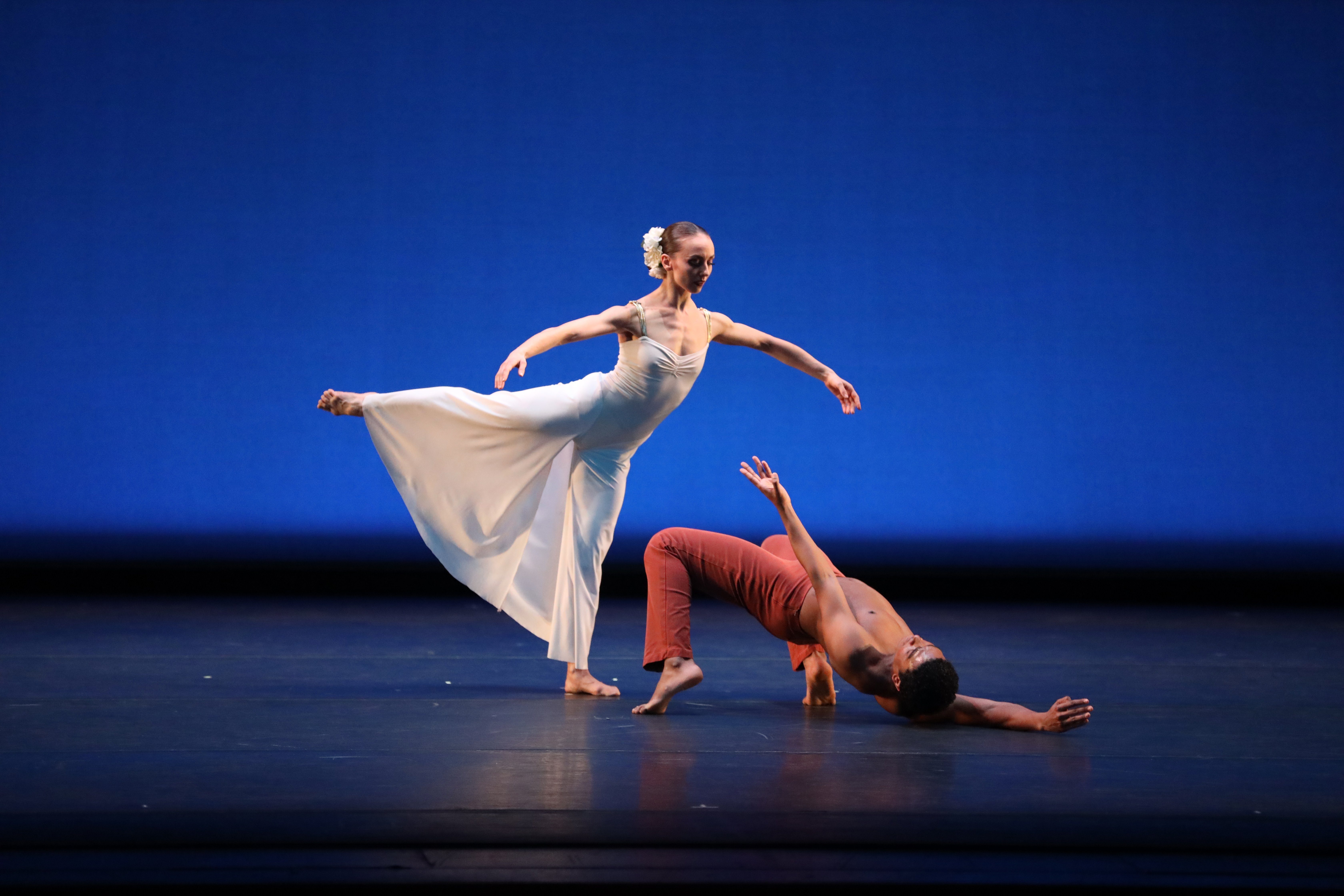
Men emerge from the mixed ensemble to serve as foils and partners; ogling, catching, and adoring the female principals. With their muscles bared, the men bring a thrilling energy to Diversion. Yet the women remain in charge, and the men crown them with hands splayed like sunbursts behind the women’s heads.
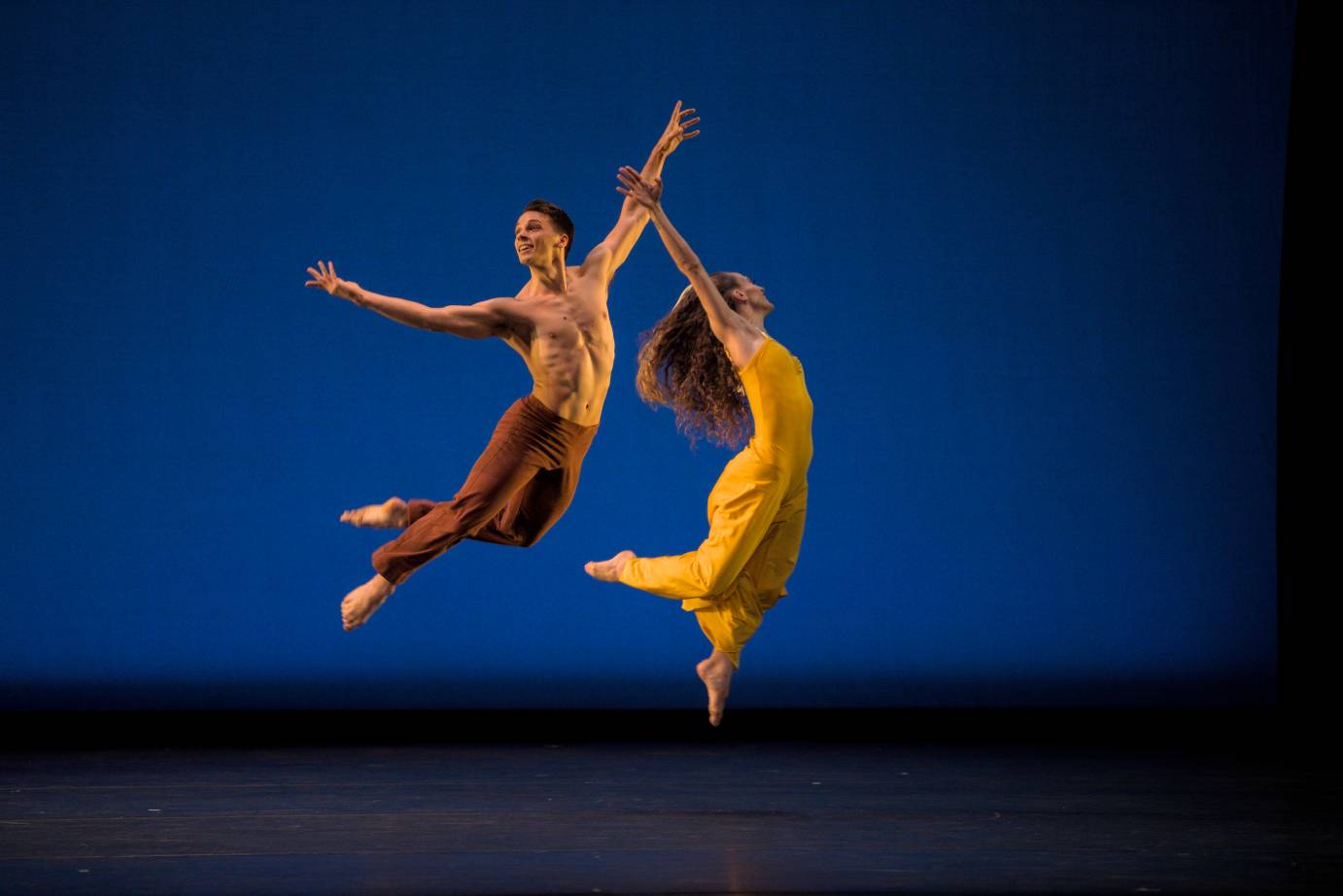
Zachary Jeppsen-Toy and Marzia Memoli in Martha Graham's Diversion of Angels. Photo: Melissa Sherwood
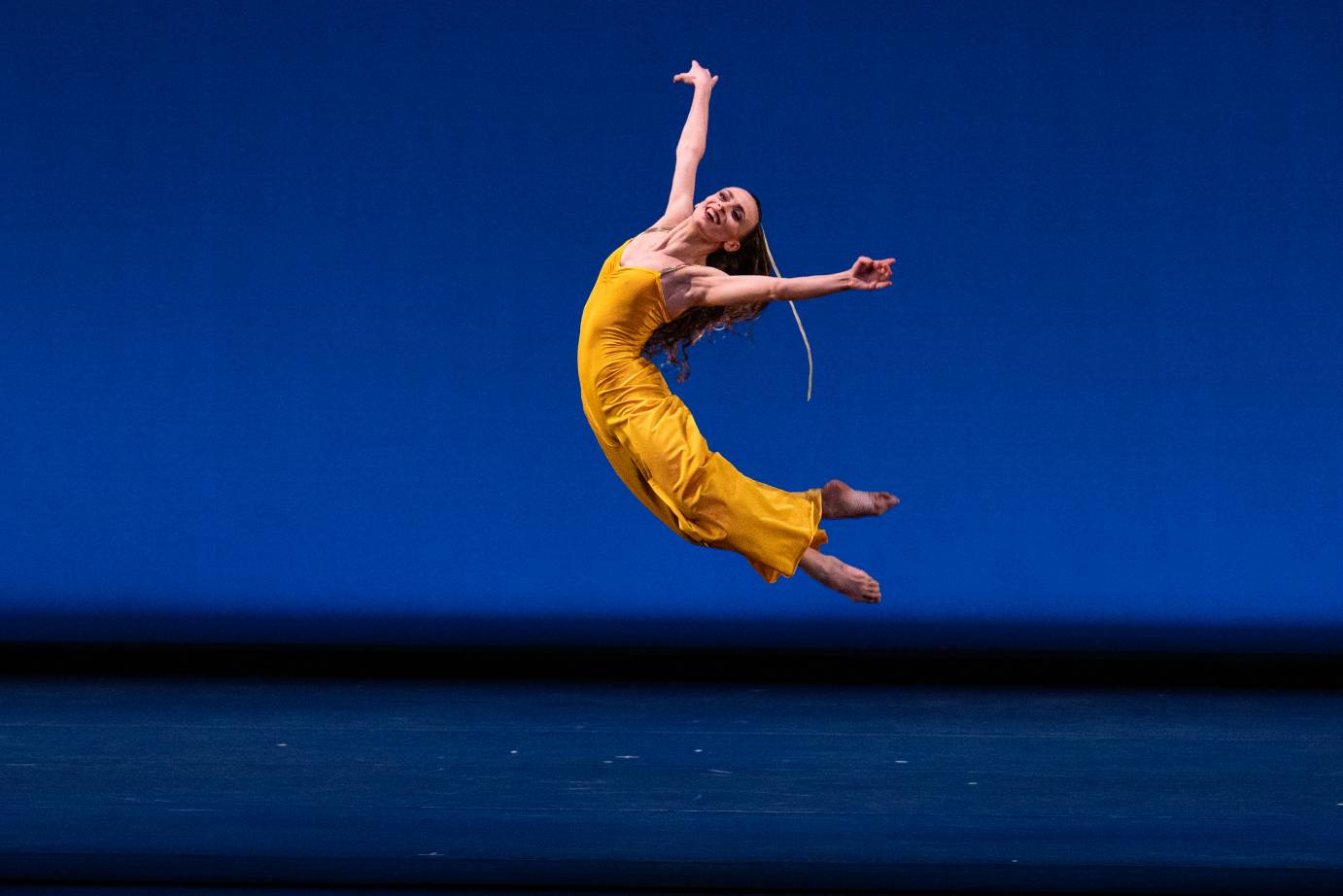
As the Woman in Yellow, Marzia Memoli rockets through the air throwing herself onto Zachary Jeppsen-Toy’s shoulder, her momentum translated into riotous spins. So Young An, the Woman in Red, flirts and eludes Antonio Leone, perching briefly on his leg before escaping. Graham gives this character an emblematic pose with one leg pointing skyward, and her body tilted. The openness of her figure enhances the impact of a contraction, but the dancer’s technique conceals the delicate equilibrium in which she hangs suspended. For Graham, this is an image of flight — and Martha Graham was not afraid of flying. Jai Perez half-embraces Anne Souder, as the reigning Woman in White, throwing himself at her feet and allowing her to ride him. His head lifted like the prow of a ship, while she stands in the rear, he seems to bear her on a mystical journey. In a composition of gorgeous, formal designs, the group encircles Souder variously, and male-female couples frame the action in lines. The man and women face each other connected in stiff-armed symmetry; or the women pillow their heads on the men’s knees.