

Related Features
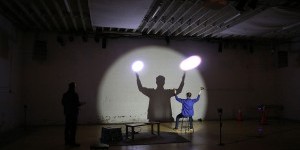
IMPRESSIONS: "Plato Caves: Screens vs Shadows" at The Chocolate Factory Theater

IMPRESSIONS: Anna Sperber's “Beacons” at The Chocolate Factory Theater
IMPRESSIONS: “nothing personal, just everything” at The Chocolate Factory and “Optimistic Voices” at BAM Next Wave

By Sarah Cecilia Bukowski
View Profile |
More From This Author
Published on November 18, 2025
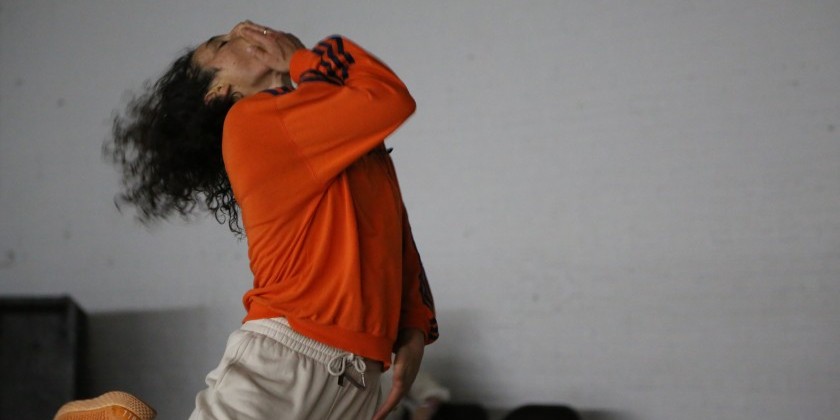
Netta Yerushalmy. Photo by Brian Rogers
nothing personal, just everything
Created and Performed by Netta Yerushalmy, Tuçe Yasak, Mieke Ulfig, Katherine Profeta, Paula Matthusen, and Alla Kovgan
Consulting Director: Katie Brook
Sound Assistant: Anthony Sertel Dean
Technical Director: Dedalus Wainright
Lighting Doula: Cassie Dietrich
Producer: Caitlin Scranton, The Blanket
Presented by The Chocolate Factory Theater
October 30, 2025
Optimistic Voices
Original songs by Juliana F. May
Performed by Justin Faircloth, Wendell Gray II, Lucy Kaminsky, Gwendolyn Knapp, Kayvon Pourazar, and Anh Vo
Music composition by Clara Hunter Latham
Set design by Juliana F. May
Lighting design by Chloe Z. Brown
Costume design by Mariana Valencia
Dramaturgy by Hilary Clark
Dramaturgical consultation by Matt Shalzi and Iris McCloughan
Presented by BAM Next Wave at BAM Fisher’s Fishman Space
November 7, 2025
This fall continues to bring an absolute deluge of excellent dance and performance across a wide spectrum of styles and scales. Seeing everything is well-nigh impossible (the FOMO is real!); seeing nothing, even more so. I’m doing my best to see everything I can — to follow the new creative endeavors of artists I recognize, to experience the work of artists I’ve heard of but never encountered on stage, and to take some risks and see something entirely new and unknown to me. It’s a rich and vibrant season for dancers, dancemakers, and audiences alike, with performances that move between cathartic channelings of, reckonings with, and respites from the anxieties of our time — all as manifestations of the generative power of vulnerability and doubt, and in turn, the pressing need for collectivity.
October 30, 2025
Collectivity and collaboration serve as guiding principles for the artists behind the intermedia work nothing personal, just everything, presented at the Chocolate Factory Theater. The artists Netta Yerushalmy (movement), Tuçe Yasak (light), Mieke Ulfig (graphics), Katherine Profeta (text), Paula Matthusen (sound), and Alla Kovgan (film) each use their specializations to explode disciplinary compartmentalization and activate decentered space. Together, they compose fragile orders amid an unruly, luminous mess.
everything is there in the sheer volume of objects, referents, and media elements, drawn together from seeming chaos by thematic threads of embodiment woven through a historical tapestry of defiantly resilient womanhood. Choreographies of light, sound, words, images, and bodies traverse the space to engage an active, mobile audience to continually reorient our modes of attention.
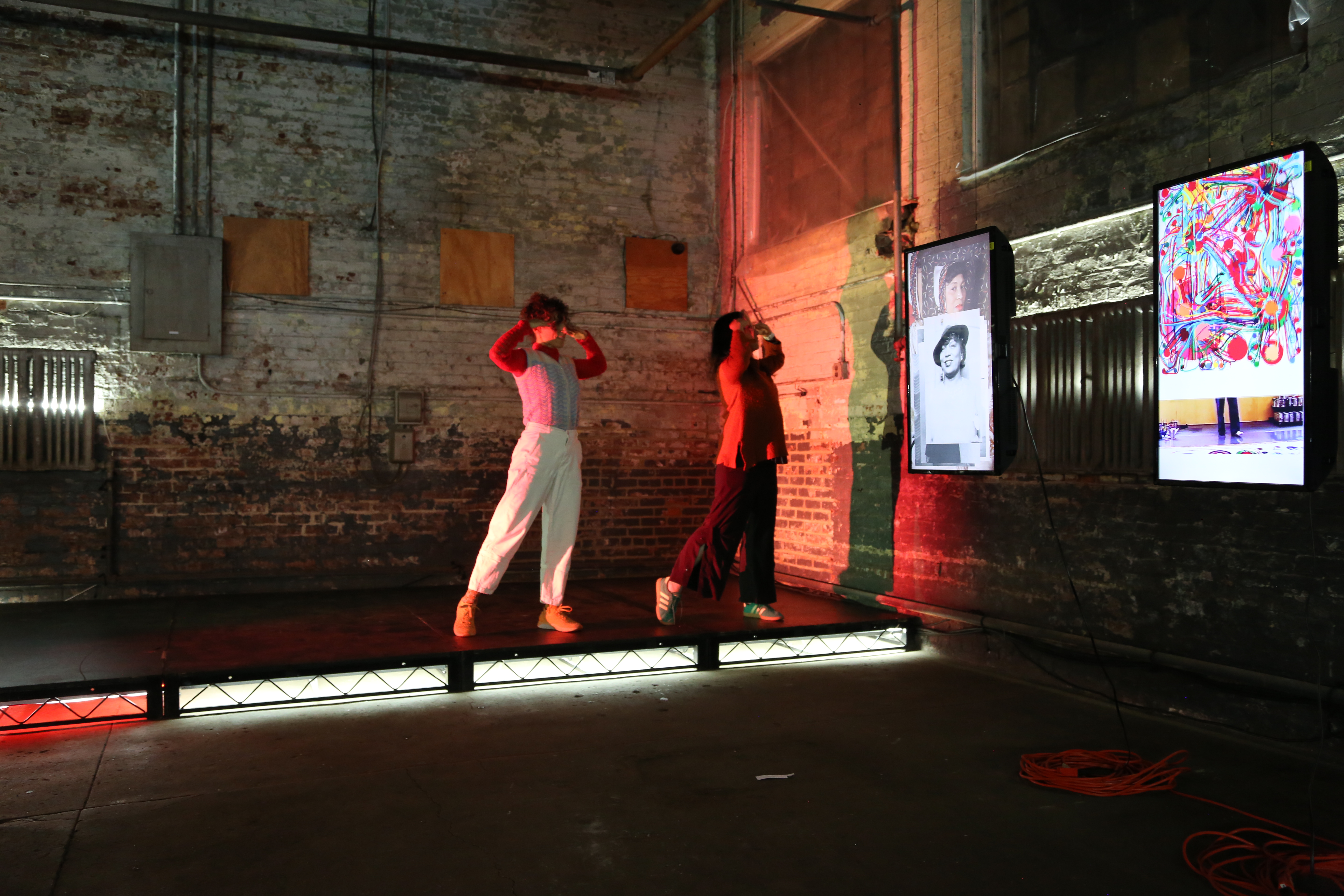
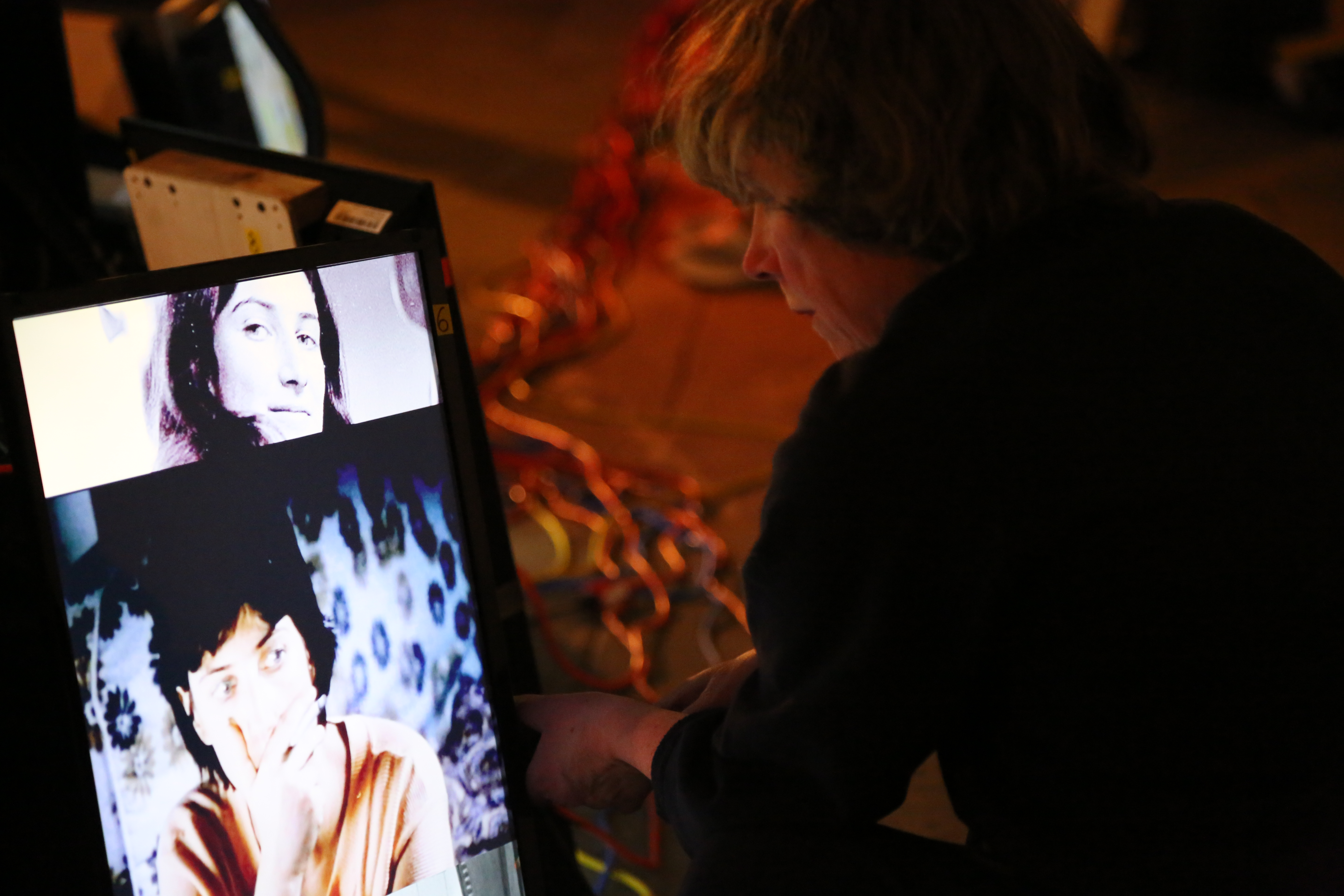
Before the physical action gets underway, a video gallery creates a palette for the evening with video collages of revolutionary 20th century women artists. Yerushalmy rises, striding to the stage to offer an extended solo — blazing abandon suspended in moments of breathtaking precision — binding herself with clasped hands and maneuvering free only to face another grasping contortion. Profeta delivers frank musings and monologues on the psychologies of domesticity, probing her own life and the interior lives of her collaborators. Together, Yerushalmy and Profeta pepper the shifting environment of color-blocked lights, directional shadows, and pulsating sound with brief solos and gestural duets performed in careful unison.
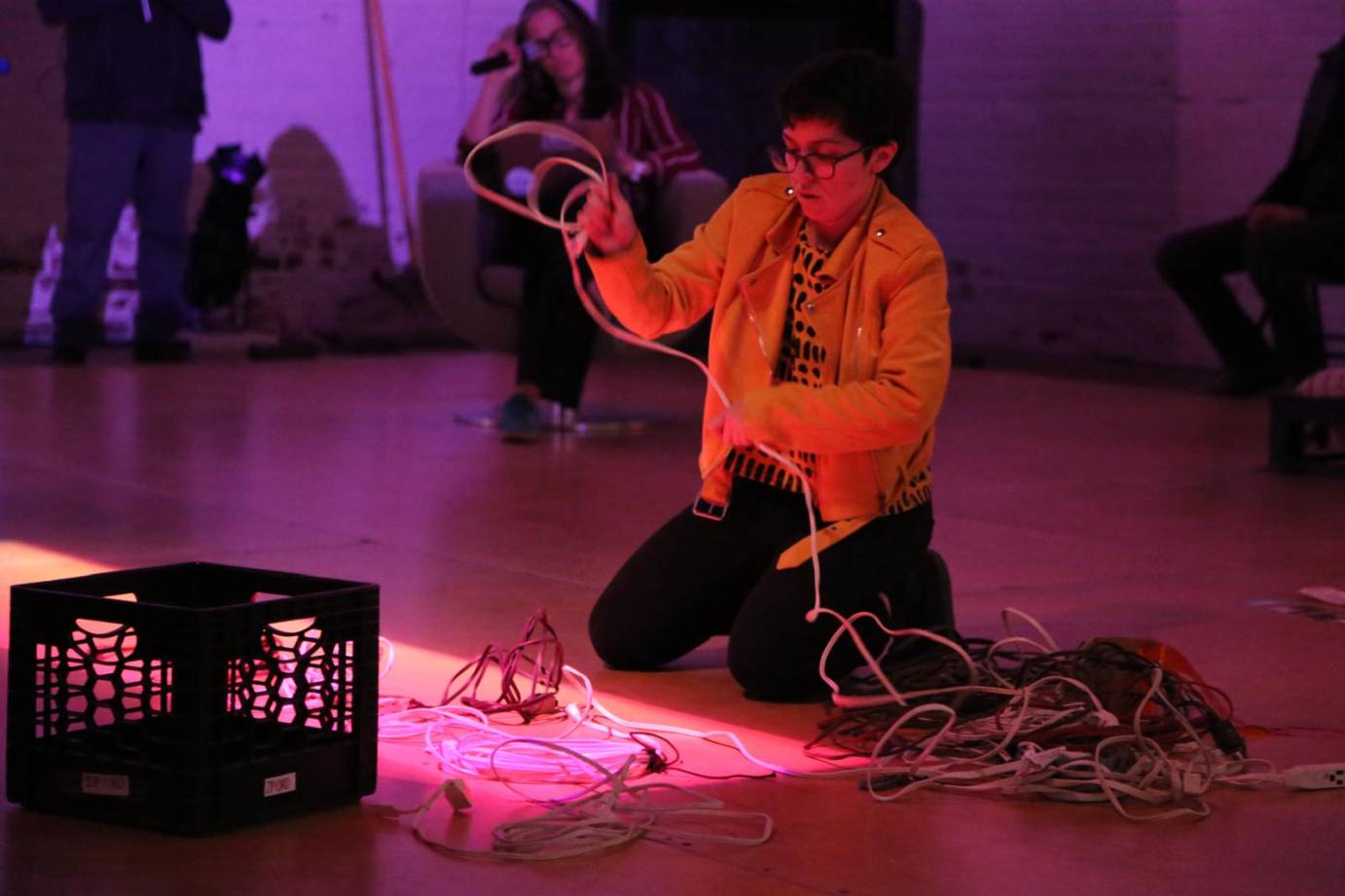
In a rush of multicolored cables, the video gallery becomes an angular, multifaceted sculpture: a teeming monument to its subjects. The stuff of everyday life spills across the space — piles of clothes, tangles of extension cords and lighting fixtures, the stray contents of a handbag — all to be tenuously cataloged and arranged in neat rows, only to be subsumed once again into the totality. Every artist has a hand in the proceedings, including the making of Turkish dolmas (a rice mixture rolled in moistened grape leaves — Yasak’s mother’s recipe) that we share at the program’s conclusion.
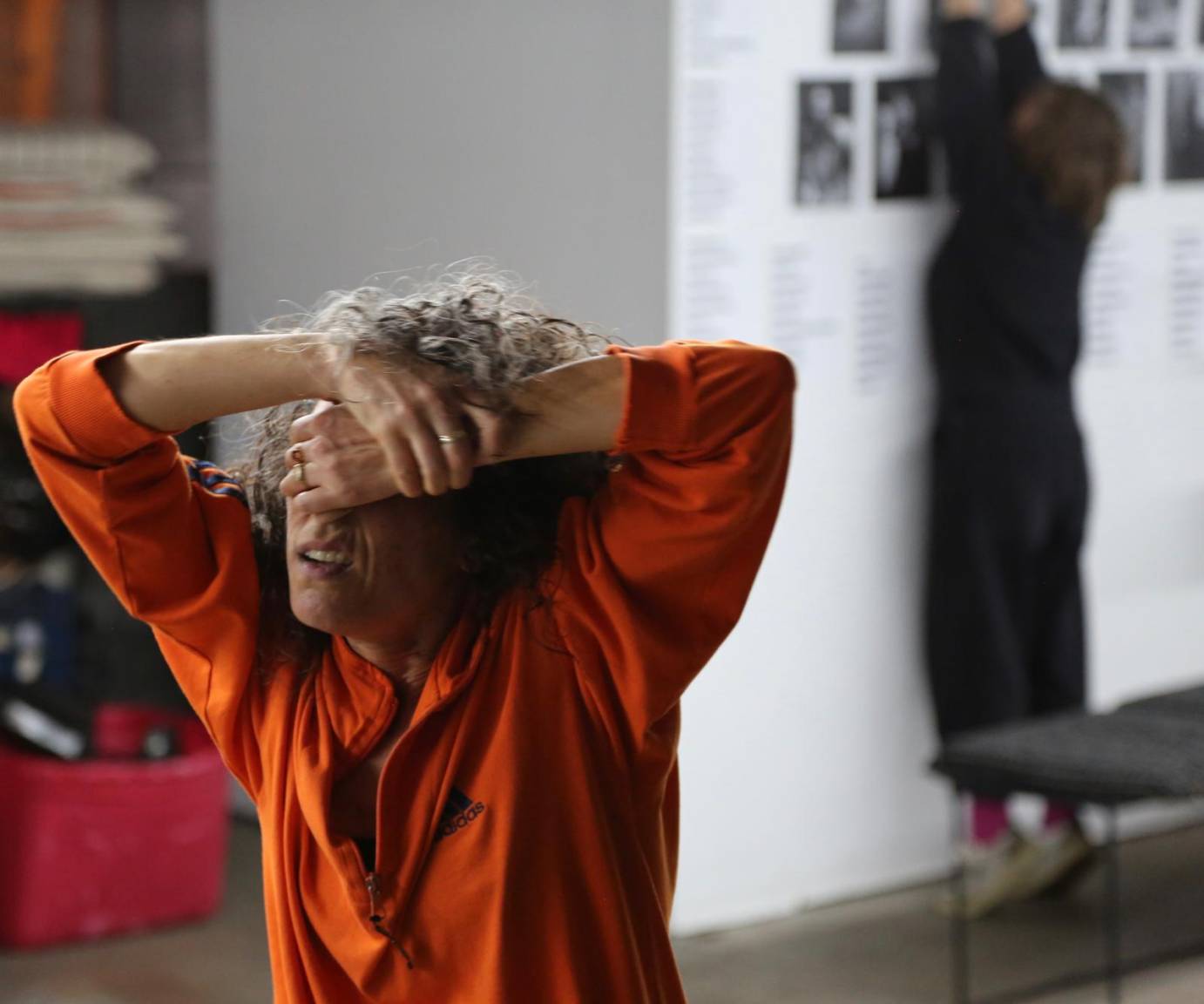
This chaotic yet holistic landscape of salvaged histories and writhing presence presses us to confront unfathomable futures through the many channels of creative human expression. There’s an indelible liveness to it all, a mixing in the moment that leans into the now as a function of limited knowns and infinite unknowns.
November 7, 2025:
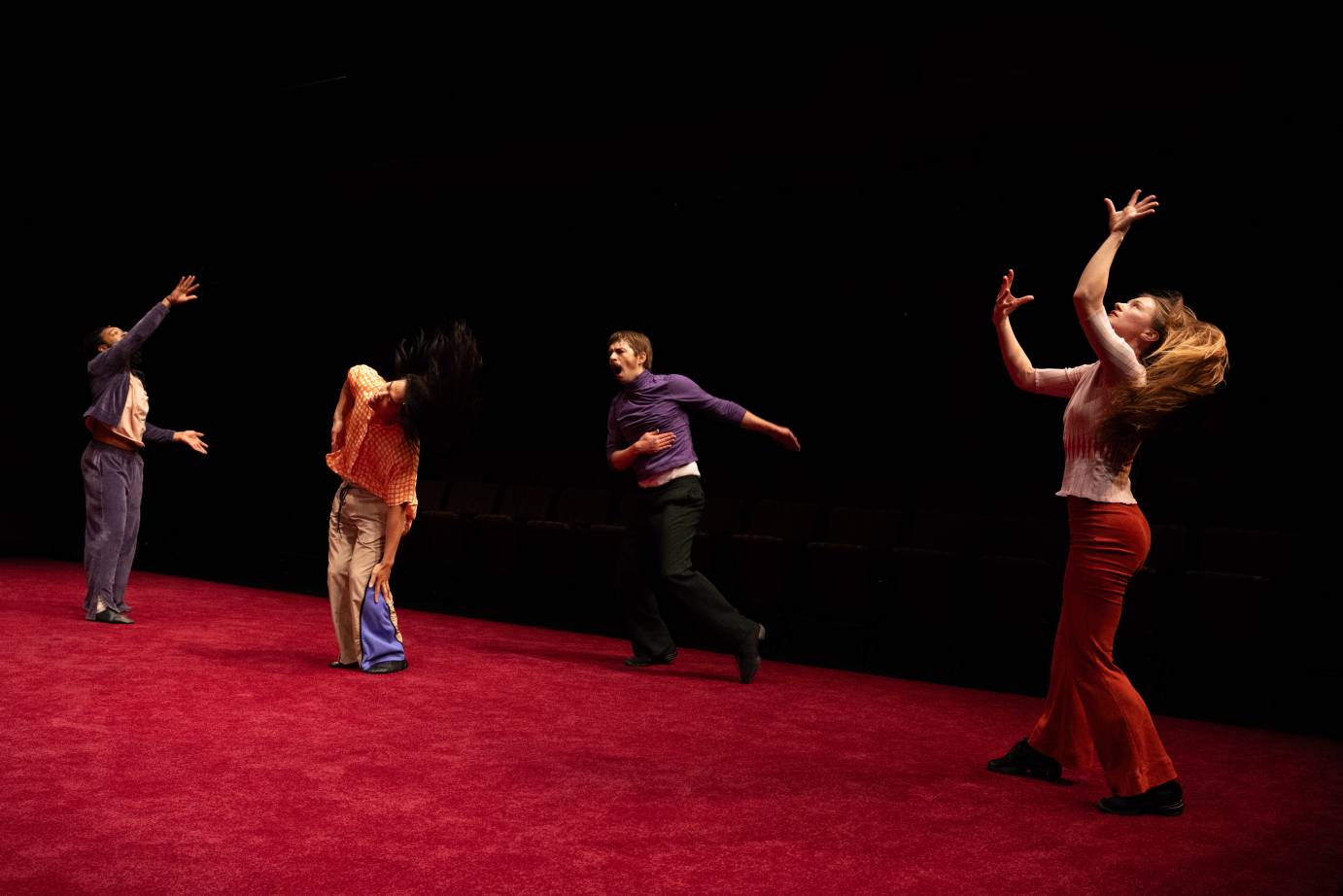
Outpourings of the everyday percolate and overflow in Juliana F. May’s Optimistic Voices, presented at BAM’s intimate Fishman Space as part of the Next Wave Festival. The cast of six piercingly honest performers brings expansive immediacy to May’s movement and song cycles, which operate as a single, writhing organism. Voices and bodies meld and layer, reaching out in echos and departures to expand harmonic possibilities through shape, rhythm, sound, inflection, and perspective.
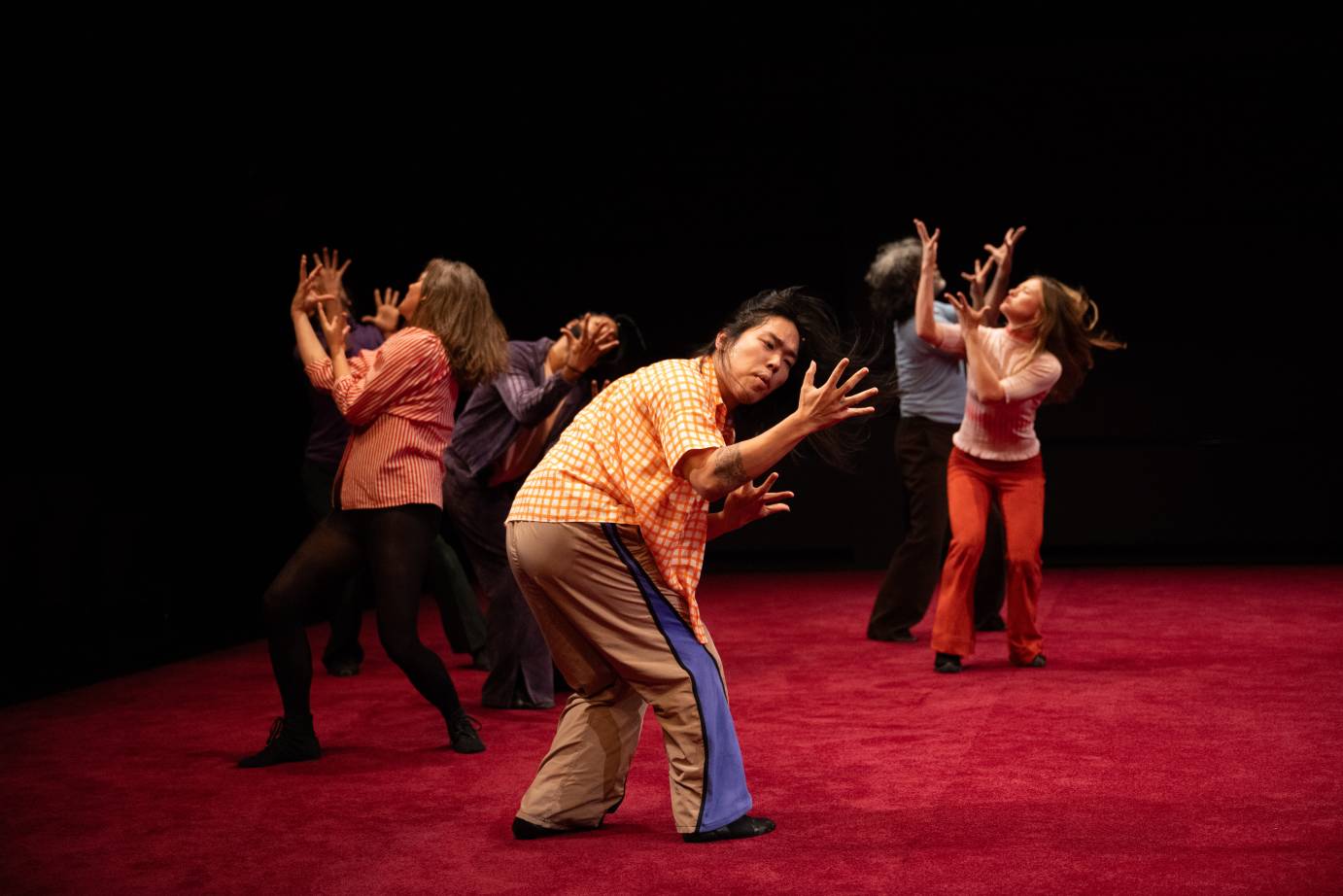
Photo: Nir Arieli
The work plays out on a field of plush, vibrant deep red carpet. Footfalls are hushed, falls muffled, joints cushioned; the staticky prickle and heat of friction becomes almost palpable amid shuffling gaits and bodies slid with whooshing ease. Each performer builds a signature movement vocabulary, sometimes paired with a mirrored body or grouped — or piled and rolling — with others. Some motifs spread in fleeting contagions through the cast, while others remain singular. As effort mounts in their wandering yet purposeful repetitions and interruptions, it becomes clear that they are never the same: each repetition increases in exhaustion and absurdity, building recognition and alienation at once.
May’s original songs, composed to the tonal drones and sparse pulsations of Clara Hunter Latham’s score, ground the work as it meanders between strange, silly, sexy, incisive, and earnest. Voices are most often paired—two in a high, urgent lilt set off two others on a low, humming line—and moments of choral accumulation ring with sensitive harmonies centered by Lucy Kaminsky’s capacious breath. Tension builds in crisp, clipped deliveries that explode into exaggerated sighs, whines, or guffaws; repetition and interruption are in equal play in song as in dance.
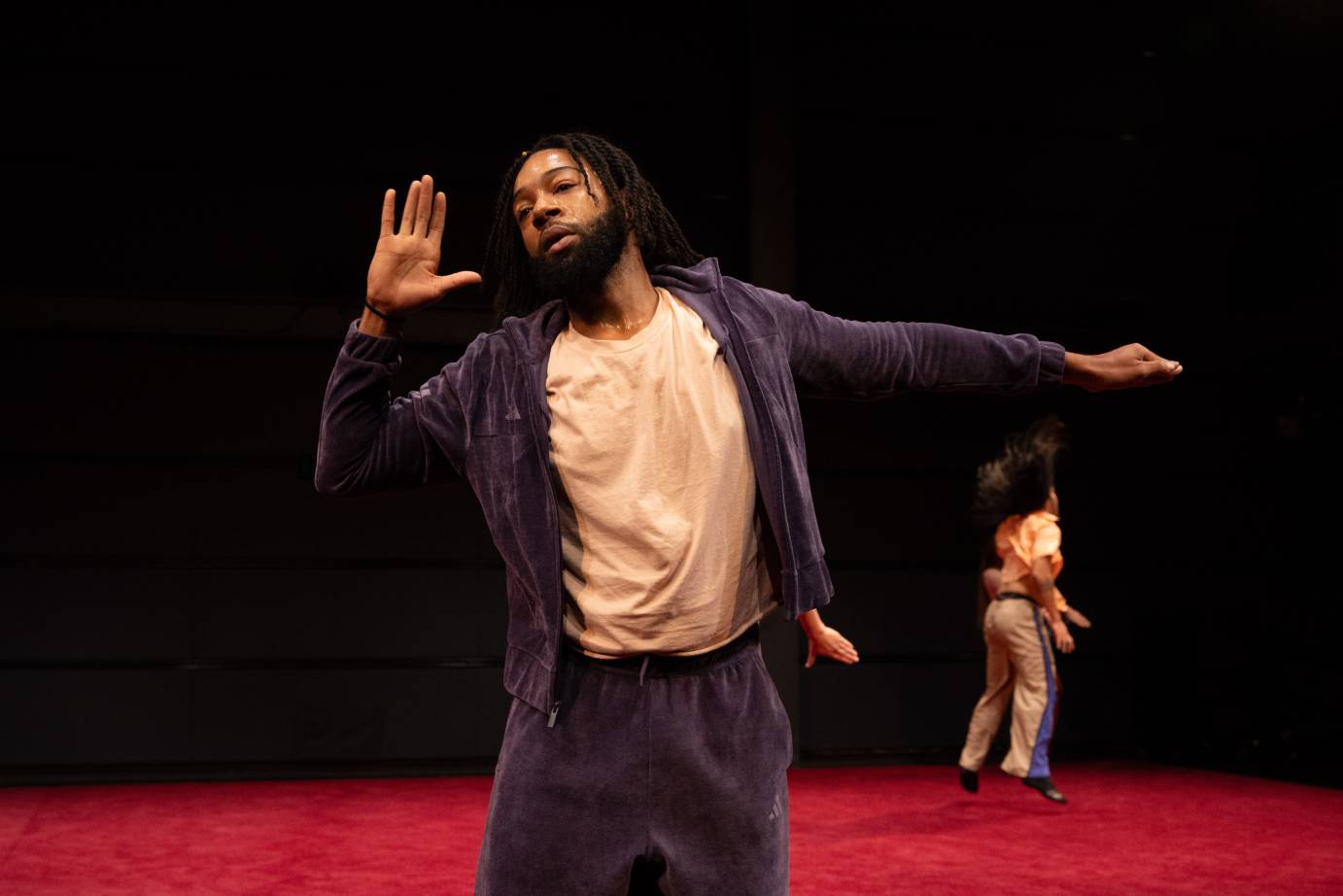
Optimistic Voices turns everyday interactions inside out, weighing the interpersonal and psychological dimensions of life in equal measure. In this microcosmic community of individuals, their encounters with beauty, pain, grief, sensuality, frustration, and effort spool out through words, phrases, positions, gestures, and sensations that strike to the heart. May’s multidimensional expressive palette channels through the performers to ask: What are the limits and potentials of habit? What can saying, thinking, or doing the same things over and over again tell us about ourselves? How can this extend into the ways we empathize with others?
These questions give way to new questions and doubts, new frustrations and aspirations, new expectations and mistakes, new depths and unknowns, new spans of lying in wait for an uncertain future that will always, ever, in some way, be new — perhaps there is yet some measure of optimism there.