

Related Features
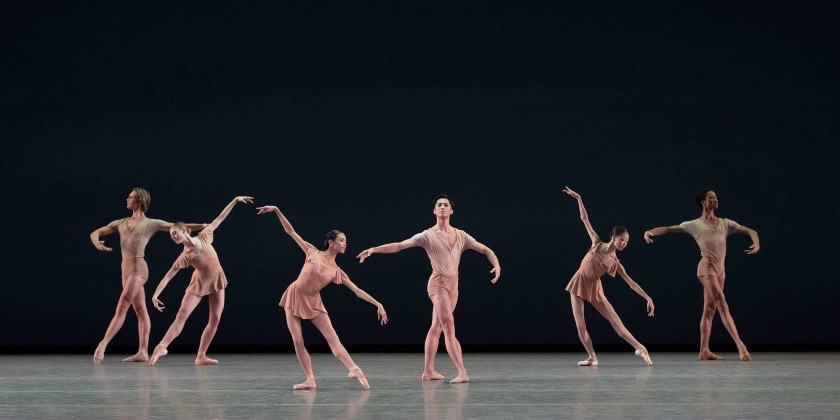
IMPRESSIONS: New York City Ballet in Jerome Robbins' "Dances at a Gathering" and George Balanchine's "Diamonds"
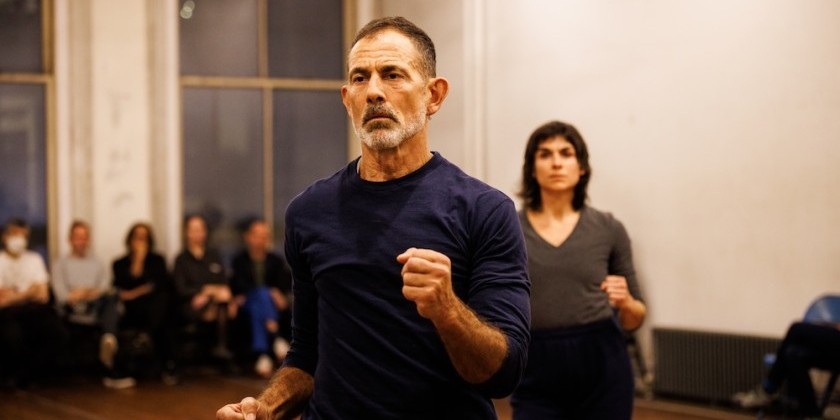
IMPRESSIONS: Trisha Brown Dance Company in “Dancing with Bob: Rauschenberg, Brown and Cunningham Onstage” at BAM
MOVING VISIONS: Some Thoughts on Silence

By Wendy Perron
View Profile |
More From This Author
Published on November 24, 2025
Trisha Brown's "Group Accumulation." Photo by John Mallison

Moving Visions Editor, Wendy Perron
View Profile |
More From This Editor
Watching Times Four/David Gordon: 1976/2025 reminded me of the power of silence. An expanded version of David Gordon’s repetitive duet with Valda Setterfield, it’s from the dawn of postmodern dance. Back then, everyday gestures and pedestrian pacing lived easily in non-proscenium settings. Even so, this version had a certain austerity, requiring an intense, sustained concentration — for both performers and audience.
Wally Cardona and Molly Lieber, replacing/representing Gordon and Setterfield, performed Times Four in its original studio of making: 541 Broadway in SoHo, the home and workspace of Gordon/Setterfield. The counting and direction changes — four exact repetitions in four directions — were diabolical for the dancers to keep track of. What did the silence allow us to hear or see?

One noticed how they stared straight ahead while somehow staying in strict unison. One noticed how beads of sweat gathered as the movement progressed from simple walks to kicks, stomps, and thudding falls. For those of us who had seen David and Valda perform this dance in 1976, it was a memory game. Back then, it was very much David & Valda being themselves — different from each other in manner and bulk, but breathing together, stepping together, almost thinking together.
For the current version, Cardona extended the steps and actions. It seems to me that he also extended Gordon’s subtle sense of mischief. For instance, in a kind of interrupted pratfall, the two dancers held their bodies just inches above the floor before finally dropping their weight at exactly the same moment.
One thing the silence seems to magnify is that each small departure from the pattern becomes huge. For instance, after dancing side by side for maybe half an hour, Cardona and Lieber suddenly separate, going to opposite sides of the room. Or when they curl up in baby-sleeping position, Lieber drops her behind to the side, one beat before Cardona — the only non-unison thud in the piece. Let it be noted that, among the fifty or so people in the audience, not a single cough or paper-rustling was heard during the entire hour. (Click here for a poetic response to Times Four (1975/2025) by Sarah Cecilia Bukowski.)

The notion of silence in performance was introduced with a mind-bending jolt by John Cage’s 4’33” (1952). For four and a half minutes a musician sits at a piano without playing, thus forcing the audience to listen to ambient sounds or their own breath. As Cage wrote in his 1961 collection of lectures titled Silence, “There is no such thing as an empty space or an empty time. There is always something to see, something to hear. In fact, try as we may to make a silence, we cannot.”
In the early 1960s, Cage was a big influence on Judson Dance Theater (through his disciple Robert Dunn). Many dances by Steve Paxton, Yvonne Rainer, Lucinda Childs, and Trisha Brown were soundless, and this had an effect on Judson Memorial Church itself. Al Carmines, the senior minister, who had welcomed the dancers in 1962, wrote: “We would not have instituted the period of silence in our service had we not seen silence made profound and aesthetic in many concerts of dance in the sanctuary.”

I’ve been thinking of dances from the past where the silence was indeed “profound and aesthetic.” Some of them are Jerome Robbins’ Moves (1959), Trisha Brown’s Group Primary Accumulation (1973), José Limón’s The Unsung (1971), Twyla Tharp’s The One Hundreds (1970), and the more recent Secret Mary (2012) by Tere O’Connor.
Moves is driven by relationships, and the relationships are driven by audible movements. Sometimes the sounds — running, gliding, pointe shoes jabbing the floor — are like calls from way across the stage. In this “Inside the Repertory” clip about Moves, New York City Ballet dancer Jared Angle says, “You take away the music and you’re left with a sense of community that he [Jerome Robbins] creates.”

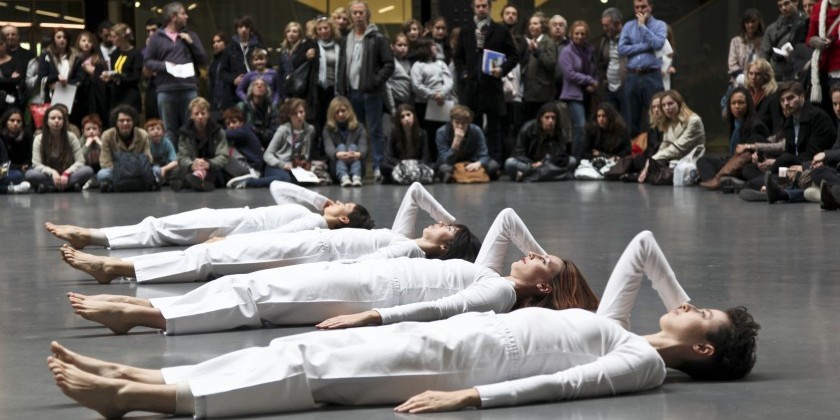
Trisha Brown spoke of this topic in a 1995 talk at the 92nd Street Y. She said the reason she started using music was that, “I couldn’t bear the coughing anymore. It destroyed the beautiful silence, the sound of the dancers, their breathing, their feet.” One of her quiet dances that is still performed on tour is Group Primary Accumulation, in which four women lying on their backs lift the right hand a few inches. That’s gesture #1. In a steady cycle that the audience can follow, they accumulate a total of thirty moves. Then, two people approach the still-moving dancers, picking up each one and resettling her into a new place. (David Gordon was one of those carriers in the first bunch of performances.) I think the silence gave the piece an essential, even spiritual quality. Trisha once told me, “When I do this dance, I feel like this is all there is.”
Limón’s The Unsung, about various Native American heroes, starts with six men in a circle, then gives each dancer a solo representing a different aspect of that culture. The silence allows us to hear their feet stabbing the floor as well as sense the ceremonial aspect that suffuses this ode to another culture.
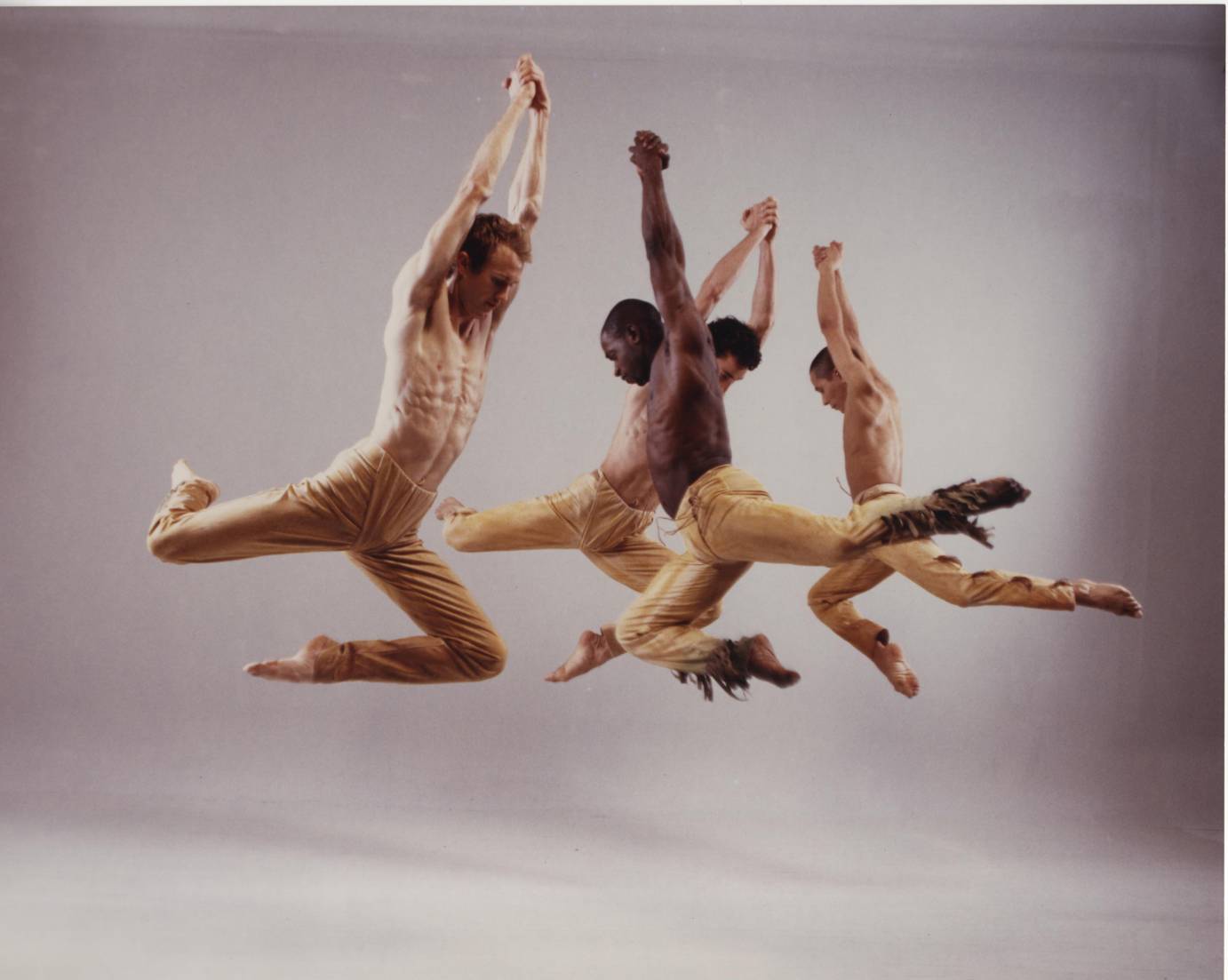
In Tharp’s original The One Hundreds, she established a steady rhythm of three women coming downstage in eleven-second segments, then simply walking back upstage. The regularity of these one hundred sequences could have been lulling, but each eleven-second phrase was bursting with astonishingly inventive moves, thus keeping the audience wide awake.
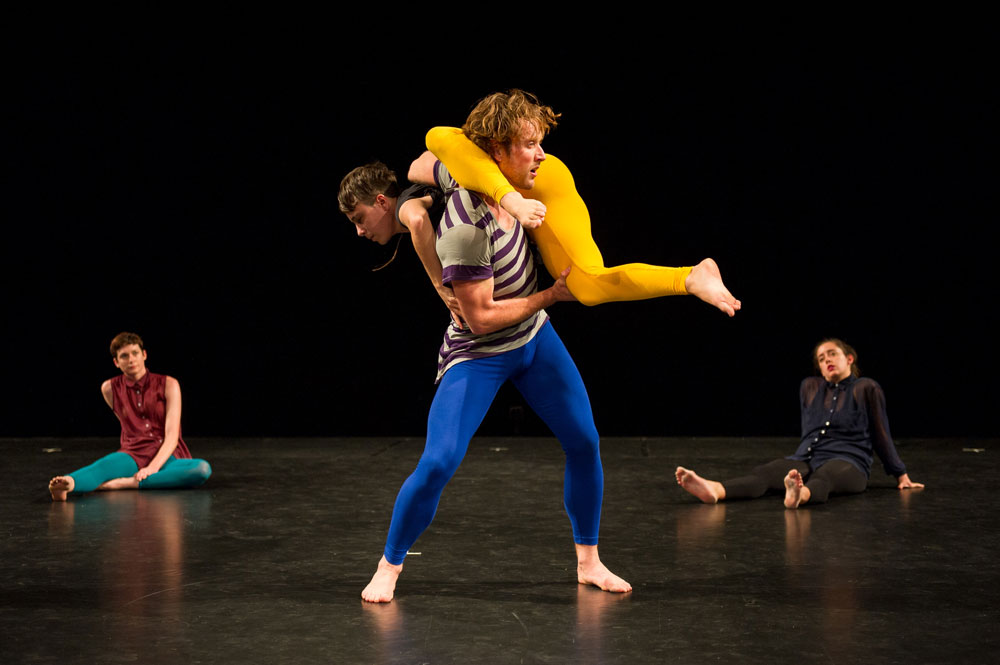
Instead of a musical flow, O’Connor’s quartet, Secret Mary, has a flow that’s almost like movement conversations. Who’s dancing with whom, who joins whom, and who is left alone? There’s a porousness to these interactions, as though the audience is peering into their secrets. The silence makes their ties to each other both more exact and more mysterious.
When there’s no music to connect you to your sensuality or transport you to a distant memory, there’s no escaping what’s in front of you. While such pieces require patience from the audience, they can also bring a bracing clarity to the experience. In today’s world, when most of us are bombarded with noise from all sides, silence can be a haven, a time to concentrate on a single thing.
Created in 2020 as a way to lift up and include new voices in the conversation about dance, The Dance Enthusiast's Moving Visions Initiative welcomes artists and other enthusiasts to be guest editors and guide our coverage. Moving Visions Editors share their passion, expertise, and curiosity with us as we celebrate their accomplishments and viewpoints.