



Related Features
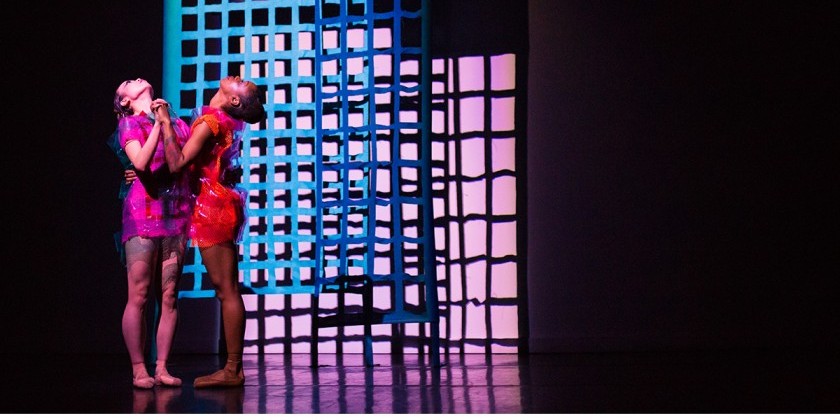
IMPRESSIONS: Norte Maar’s CounterPointe13: Original Collabs between Women Choreographers & Visual Artists

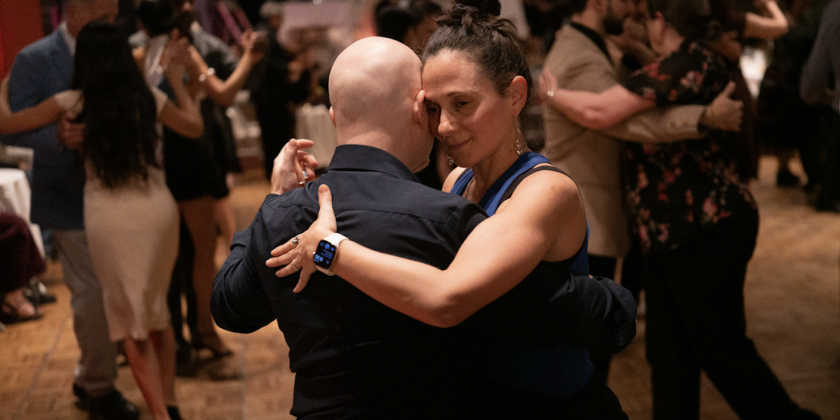
THE DANCE ENTHUSIAST ASKS: Julia Gleich’s "CounterPointe" is Art in Motion
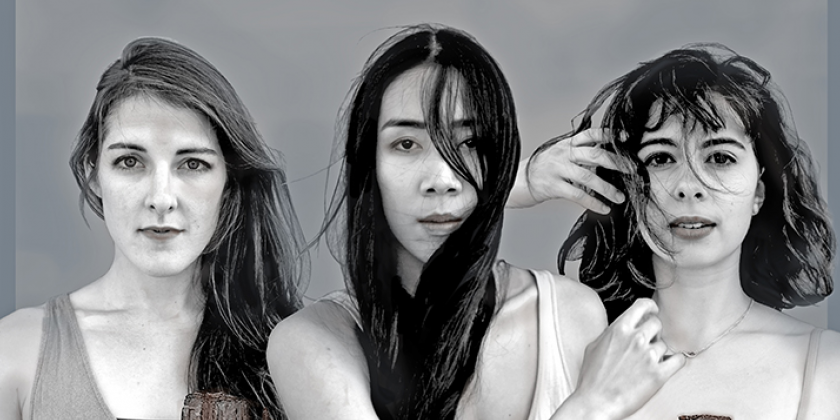
POSTCARDS: Returning the Portrait to Its Subject — Brenda Zlamany and Julia Gleich
Catch “Self/Portrait” from March 20 - 22 as Part of Norte Maar’s COUNTERPOINTE13
self/Portrait
Part of Norte Maar's CounterPointe13
Mark O'Donnell Theater, Brooklyn, NY
All costumes, props, and paintings by Brenda Zlamany
Choreography: Julie Gleich
Tickets: CLICK HERE
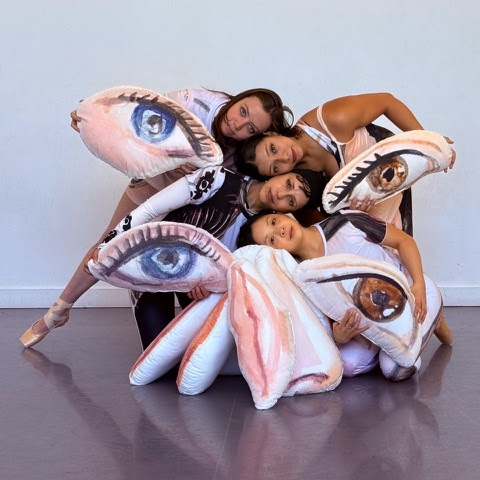
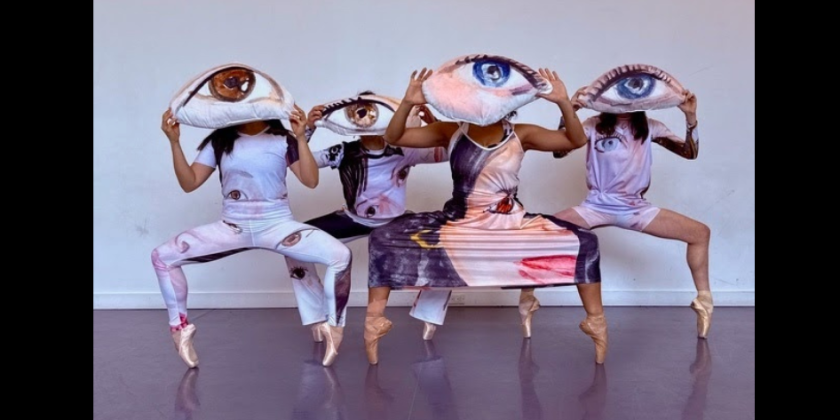
Cover Image: Annie Freeman, Kara Chan, Dianna Warren, and Mikaila Malia in self/Portrait
Brenda Zlamany: I have been painting portraits for 35 years. The subject sits. I paint. The subject is the object. I am the objectifier. It's a problem I've been working against for a long time. Through my ongoing project The Itinerant Portraitist, more than three thousand portraits made across the globe using a camera lucida, a Renaissance-era optical device, I found a way to let the sitter see themselves emerge, to shape the image through body language and conversation. When the portrait is finished, we both sign it. Authorship is shared. But I wanted to go further. I wanted to get the work off the wall and return the image to its subject so completely that she could control it, make it her own.
Julia Gleich: I thought painting a portrait was a study in stillness but I learned that Brenda sees movement in the portrait — not a linear movement, but a kind of aliveness. This got me thinking about how I envision dance — not a series of still moments, something that can’t be captured in a photograph. I think in terms of qualities, not steps per se. And directed energy in space, vectors.
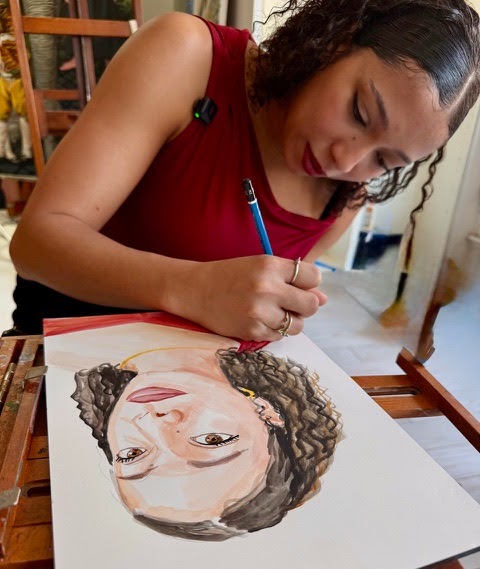
Brenda Zlamany painting Mikaila Malia in her Brooklyn studio. Photo: Brenda Zlamany
Brenda Zlamany: When I saw Norte Maar's CounterPointe 12 last year, I thought this could be the moment. I wrote to choreographer, Julia K. Gleich, and asked if she would consider me for a collaboration. She said yes, and I was genuinely thrilled, because I had been following her work for years. Julia and I could not think more differently. Her research on vector movement theory, the geometric and mathematical underpinnings of choreography, movement mapped through space with structural precision from the first moment to the last, is published and presented internationally. I am dyslexic. I don't know left from right. I don't see things in linear time. I build in still images. A painting is a single punch and the viewer chooses what to see and when; nothing is given in sequence.
Julia Gleich: I always think of the dancers as “going somewhere” or “intending” some action. This is a clash for me with the principles of ballet which can be very positional.
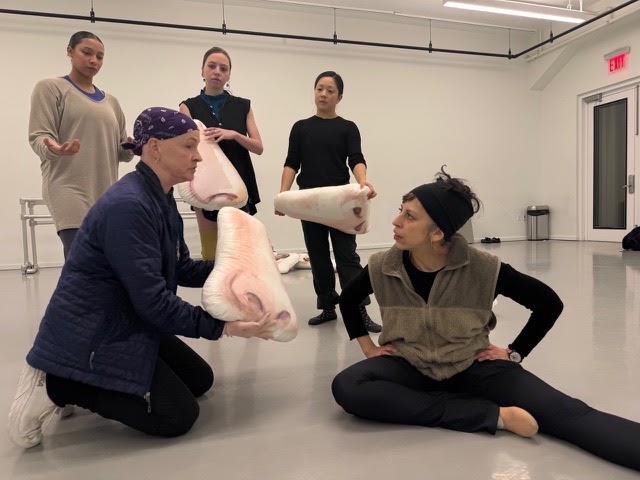
Choreographer Julia K. Gleich in rehearsal with the company. Photo: Brenda Zlamany
Brenda Zlamany: I proposed three ideas for the collaboration. Julia chose self/Portrait. But the ideas didn't arrive fully formed. They emerged from the rehearsal process itself, from doing and looking, from the friction and the dialogue between Julia's way of thinking and mine. The dancer wears her own likeness, abstracted and dispersed across the body: an eye at the shoulder, a mouth at the hip. She is no longer rendered by someone else's gaze. The image is hers to move, to reconfigure, to control.
Julia Gleich: My ideas evolve in the studio with the dancers, but start from a tiny kernel of a plan. Brenda brought some excellent ideas. I think all my choreography becomes a portrait because I can’t remove the essence of the individual from the dance. So self/Portrait made sense and I started to visualize a concept, a progression toward individuality.
Brenda Zlamany: I began by painting the dancers, two watercolor portraits of each, one sustained and slow, one quick impression, both recorded in conversation. These sittings were how I got to know them, and how I designed the costumes and props: soft sculptural pillows in the shape of eyes, noses, lips, each one made from those portraits, each dancer's face available to be disassembled and rebuilt.
In the early rehearsals I was genuinely frustrated. The piece opens in white, four dancers in hazmat suits pushing large blank rectangular structures across the stage. None of the costumes, portraits, or props were visible. Julia held the whiteness long, the slow Bach almost unbearable to me. I kept thinking: when do we get to the image? She held firm. The buildup needed to be almost painfully long because the reveal had to earn its power. I had to take that entirely on faith. And because we were building the dance from beginning to end, it wasn't until
the middle of rehearsals that I got to see the images emerge. Honestly, I would have started from the end and worked backwards.
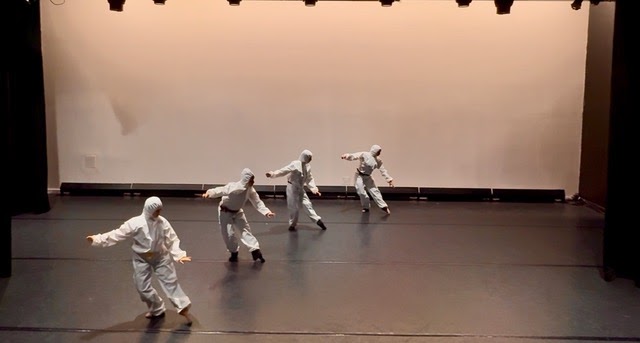
Julia Gleich: I sometimes work in pieces, and I understand Brenda’s frustration. I wanted to build the tension coming from ballet’s history of conformity, classicism and dancers as blank canvases. These are four very different dancers who fight for sameness in the beginning. It can be beautiful — sameness/unison/stillness — but constrained. They move into more freedom as we start to see facial features — neo-classicism, momentum. Then they discover each others’ isolated facial features, eyes, nose, mouth, which disrupt the sense of the whole.
Brenda Zlamany: I also had to work with the dancers on handling the props. At first they picked up the pillows and tossed them around like footballs. I put together a portfolio of Cubist paintings and we looked at them together. I talked about simultaneity, and about how a photograph is not actually how we see or remember. In memory we recall the parts, not the whole. Children's drawings understand this instinctively — a child might paint the eyes and leave out the nose entirely, because the eyes are what they actually saw. I explained that the dancers weren't only making beautiful movement, they were also making paintings. There needed to be pauses, moments where the viewer could see the image being constructed, a kind of fourth wall where the dance steps back and lets the picture emerge. The dancers understood immediately. More than understood, they ran with it. Kara Chan invented a winking eye that had a humor and playfulness that was entirely hers. There is a moment that became the three graces. Another that became the Egyptian. These were their ideas, and this was evidence that the concept was working, that the dancers had begun to create images from the parts.
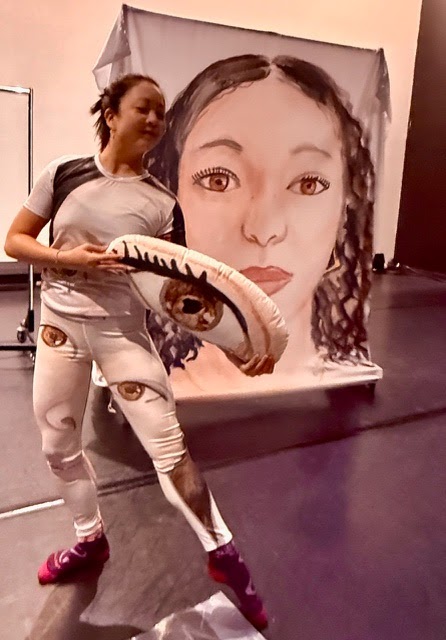
Julia Gleich: The studio is a place to play and Brenda was all in. We tried to touch on every idea she put forward. I feel a tension between tableaus and movement. Creating a painting “feels” classical to me. But if it is a Picasso? This is the progression of the piece, towards Brenda’s approach to painting, the recalling of the parts, not the whole.
Brenda Zlamany: Agency was built into the piece from the start. Each dancer chose what she wanted to wear, her own clothing, her own visual identity, and I designed the costume around her choice. One dancer is in a dress. Another in a football jersey. I am a ballet mom. My daughter trained at the School of American Ballet, so I am not a stranger to the world of dance. But making work in time, in space, in sequence, was genuinely new territory for me. Somewhere in the middle of this process I stopped fighting the time. I saw Julia's way of working and mine come together. Her movement and my stills became a single thing on stage.
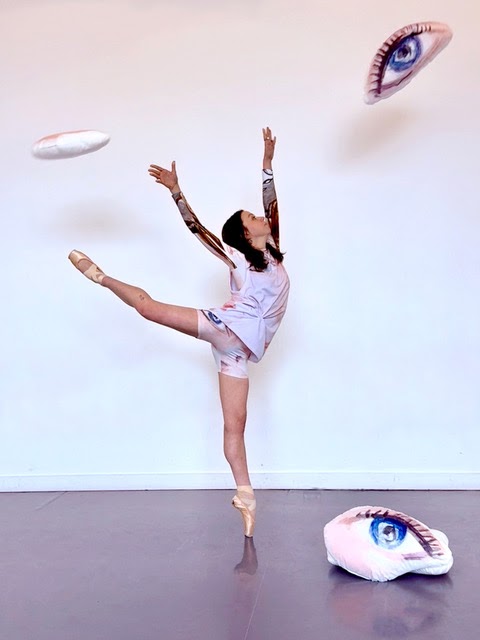
The watercolor portraits that became the costumes will be exhibited in the lobby of the Mark O'Donnell Theater, the wall and the stage in the same building, on the same night. self/Portrait performs March 20 to 22 as part of Norte Maar's CounterPointe13 at the Mark O'Donnell Theater, Brooklyn. We hope to see you there.