

Related Features
IMPRESSIONS: Mark Morris Dance Group's 45th Anniversary at the Brooklyn Academy of Music

IMPRESSIONS: Lucinda Childs’ Early Works from 1963-1973 at the Guggenheim’s Rotunda
THE DANCE ENTHUSIAST ASKS: (LA)HORDE Brings "Age of Content" to BAM Brooklyn

By Theo Boguszewski
View Profile |
More From This Author
Published on February 19, 2026
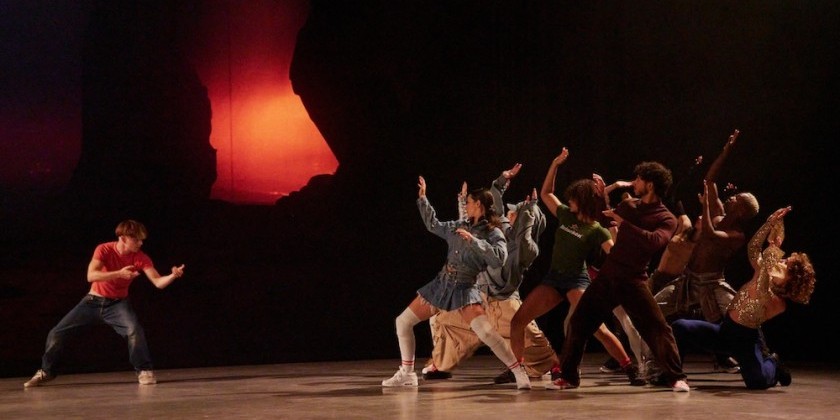
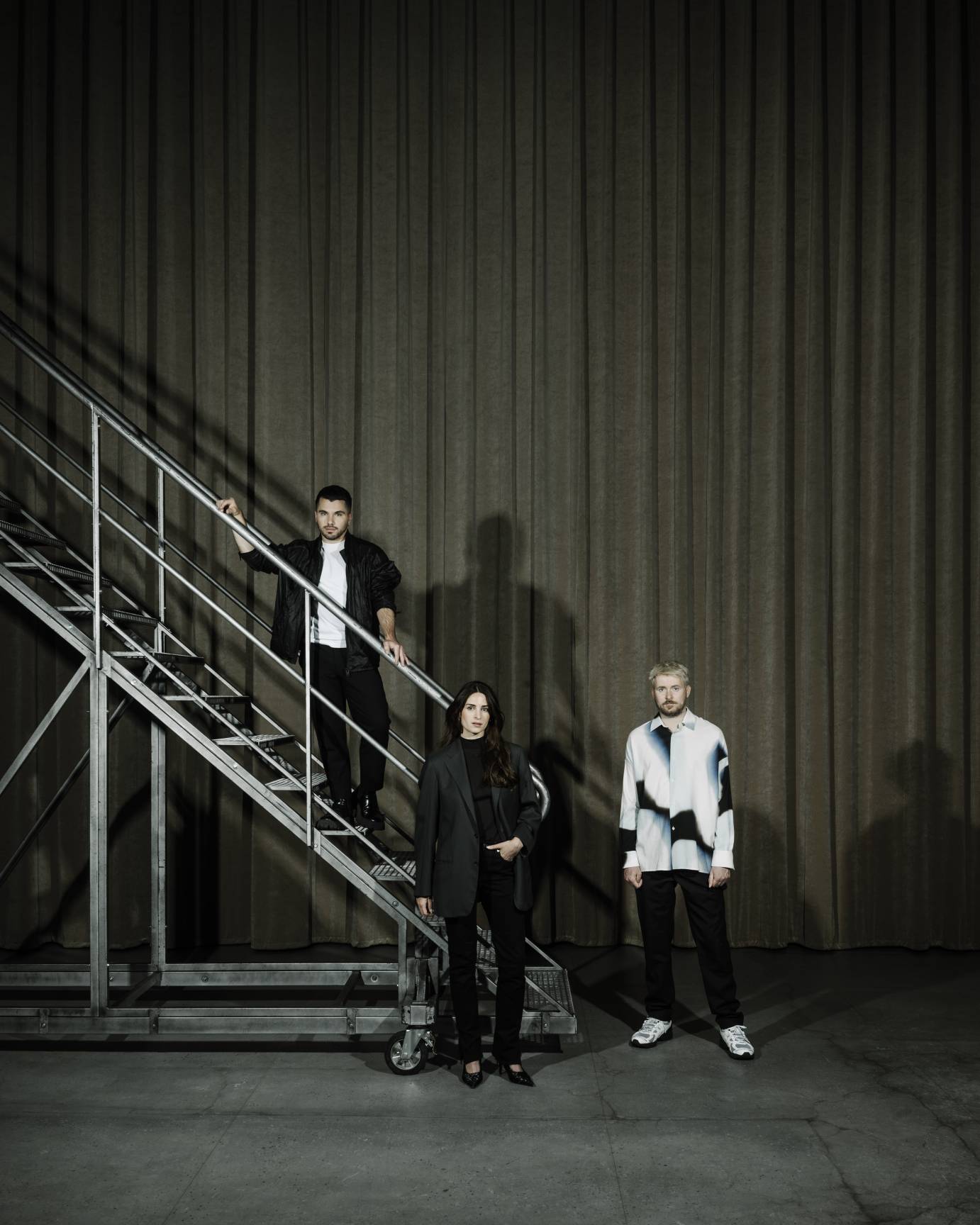
(LA)HORDE. Photo: Fabian Hammerl
As Part of Dance Reflections Festival from February 20 - 22, 2026
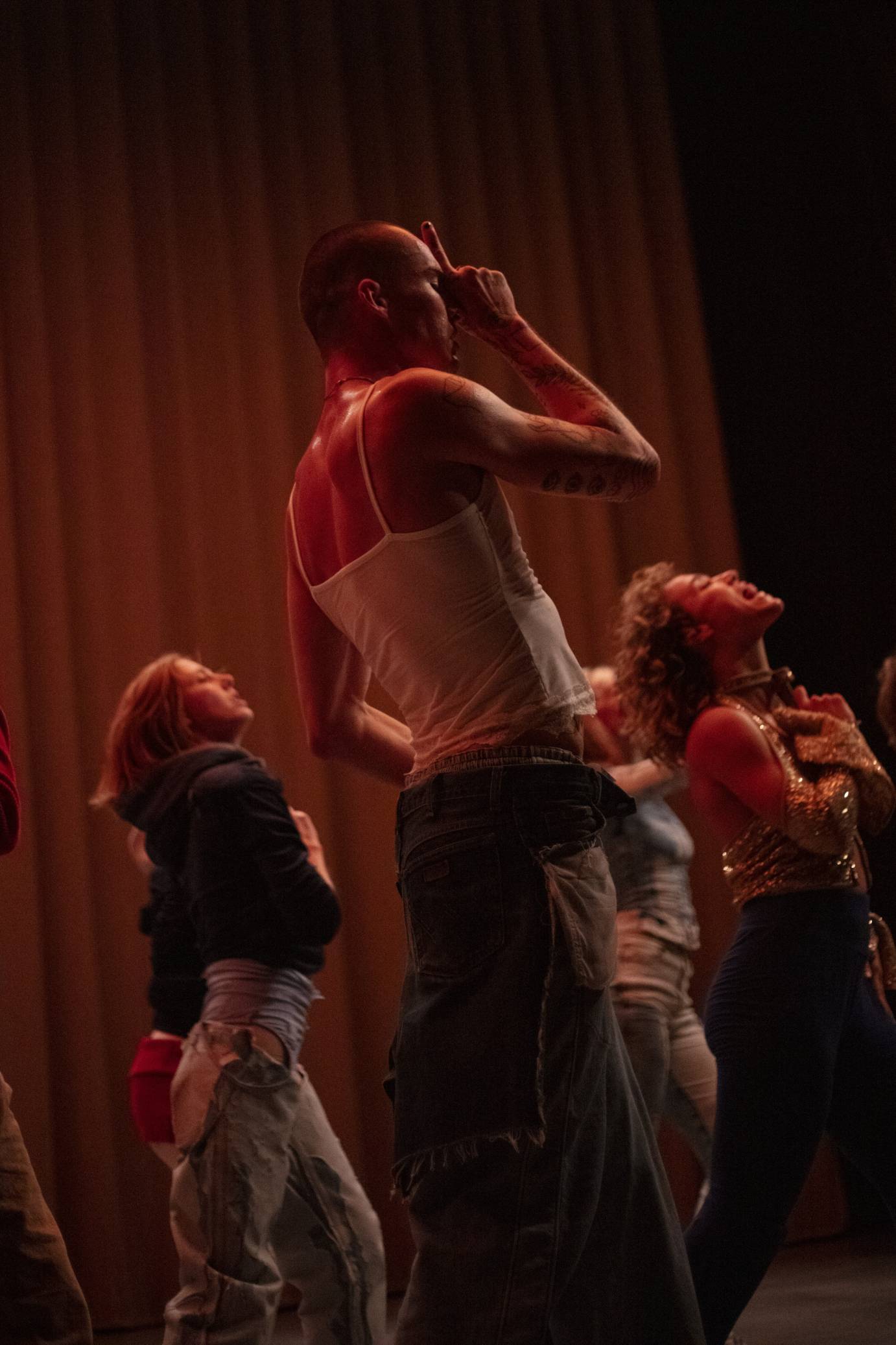
As part of this season’s Dance Reflections Festival in NYC, French multidisciplinary collective (LA)HORDE brings its electrifying work Age of Content to Brooklyn Academy of Music (BAM), a significant moment for the French collective’s growing U.S. visibility. Known for blurring the boundaries between choreography, pop culture, and digital life, (LA)HORDE has built an international reputation for works that examine how online ecosystems shape bodies, identities, and desire. In Age of Content, that inquiry becomes immersive and theatrical — a live, communal experience of the “chronically online” condition.
The Dance Enthusiast’s Theo Boguszewski speaks with (LA)HORDE co-directors Marine Brutti, Jonathan Debrouwer, and Arthur Harel about what it means for them to present Age of Content in one of New York City’s most iconic homes for avant-garde performance.
(LA)HORDE was founded as a collective. What motivated you to work collaboratively from the beginning, and how has that choice shaped the identity of the group over time? How do you balance individual artistic voices with the shared vision of (LA)HORDE?
(LA) HORDE: The collective was a practical form of protection and empowerment: a “need for shelter,” creating a safe space where anonymity could help us speak out and take more risks. We’ve also tried to describe it as something that became necessary over time: building a “house” as a single creative body, where critique between the three of us pushes the work into zones we wouldn’t reach alone. Where emulation can happen. And where we can reflect on the world in a safe environment.
The balance between the three of us comes through constant exchange: ideas emerge continuously, and we feel like it’s a major win when it becomes hard to trace who brought what. What initiated whom. And so on. The “shared vision” is more of a snapshot of an ongoing conversation that strips away the less interesting part of our egos.
Your work is described as “existing at the crossroads of choreography, pop culture, and digital ecosystems.” Was this intersection always central to (LA)HORDE mission, or did it evolve organically through your collaborations and research?
We began working together without any strategic plan or ambition, but out of a shared desire to deconstruct the world around us, to support one another, and simply to create together. It evolved organically from what we were already observing: how contemporary tools and platforms shape bodies and movement, how gestures can tend to be standardized, accelerated, and contaminated by digital life. We’ve named this “post-Internet dance”: not an aesthetic label, but an acknowledgment that new tools for sharing images in movement inevitably shape choreography and process.
As your work has moved from smaller experimental contexts to major international stages, has the mission of the collective shifted? If so, how?
The scale of the platform has shifted indeed, and our drive remains the same. There is something definitely special which happened when we were nominated to take over the Ballet National de Marseille. We understood this position as a chance to articulate what contemporary dance can be today, and to deconstruct classist hierarchies between dance aesthetics, influences, and cultures; sheltering alternative forms within the institution, and not letting them stay marginalized.
The company emerged at a moment when internet culture was rapidly transforming how people consume and create movement. How did your early works respond to this cultural moment?
When YouTube started, we understood as artists that everyone with a camera could have the opportunity to share their visions with viewers and enthusiasts. This is the moment we had our first step aside, thinking that we would reflect on this medium by making it our subject.
Then the smartphone happened, and everyone had a camera in their pockets, at any given time. And this is when dance online boomed entirely. And our two favorite subjects – video / directing and Body in movement / Dance – merged together.
What was the initial spark or idea that led you to create Age of Content?
In continuity with our previous works, we were interested in how technologies and platforms influence our behaviors, our bodies, and our perceptions of reality. When we began the creation process, we came to the studio with a set of questions : how do you reflect this existence of endless scrolling that our generation is living through? What does it do to our bodies – to the way we represent ourselves, but also picture ourselves? Where do you draw the line between something that feels empowering and something that becomes completely objectifying, like in certain online spaces such as OnlyFans? It led us to look into avatars and virtual bodies, exploring games such as Grand Theft Auto or The Sims, where movements and behaviors are highly coded and stereotyped. We kept asking ourselves whether these digital projections are actually shaping the way we move and perceive reality, even though they were artificial constructs to begin with.
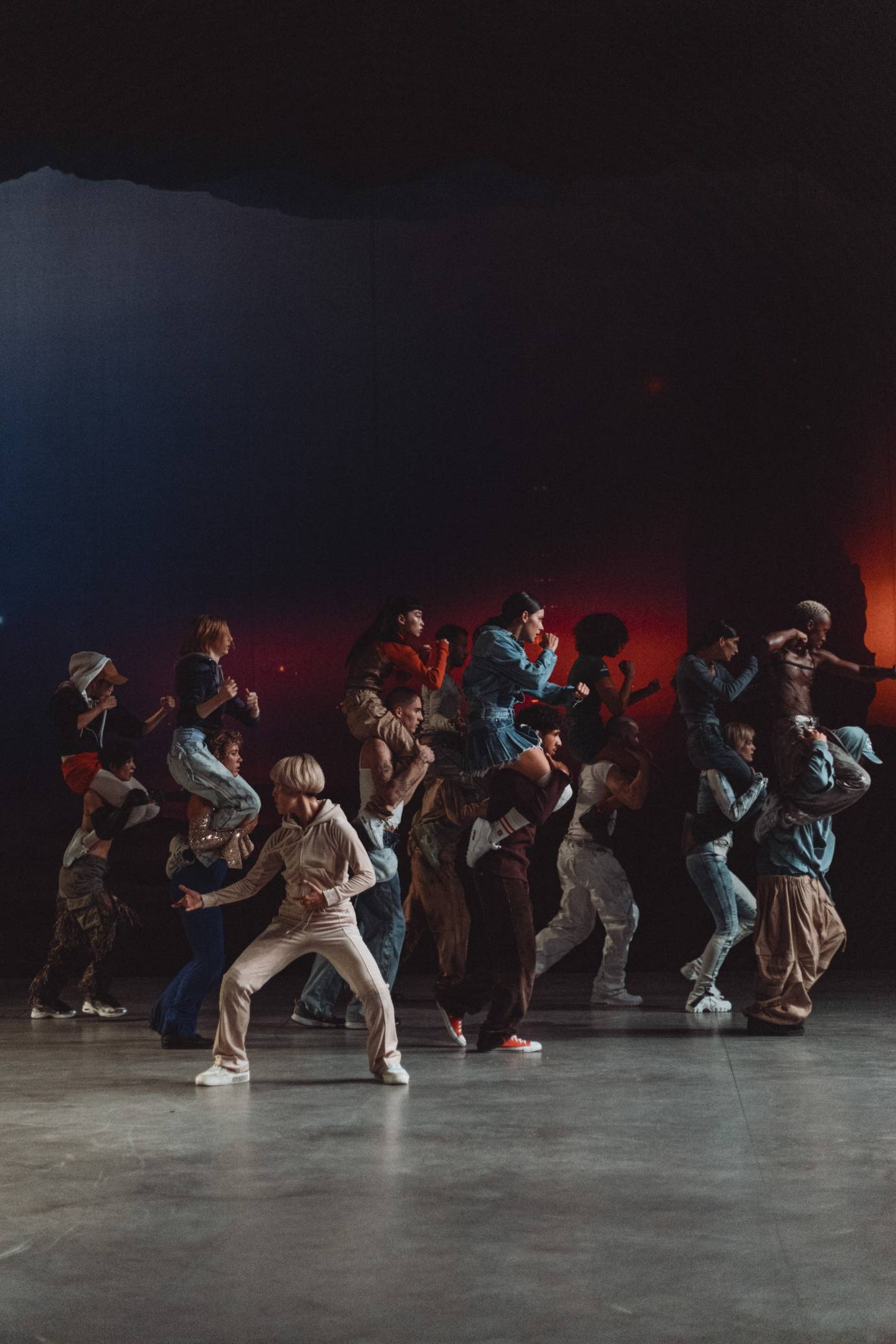
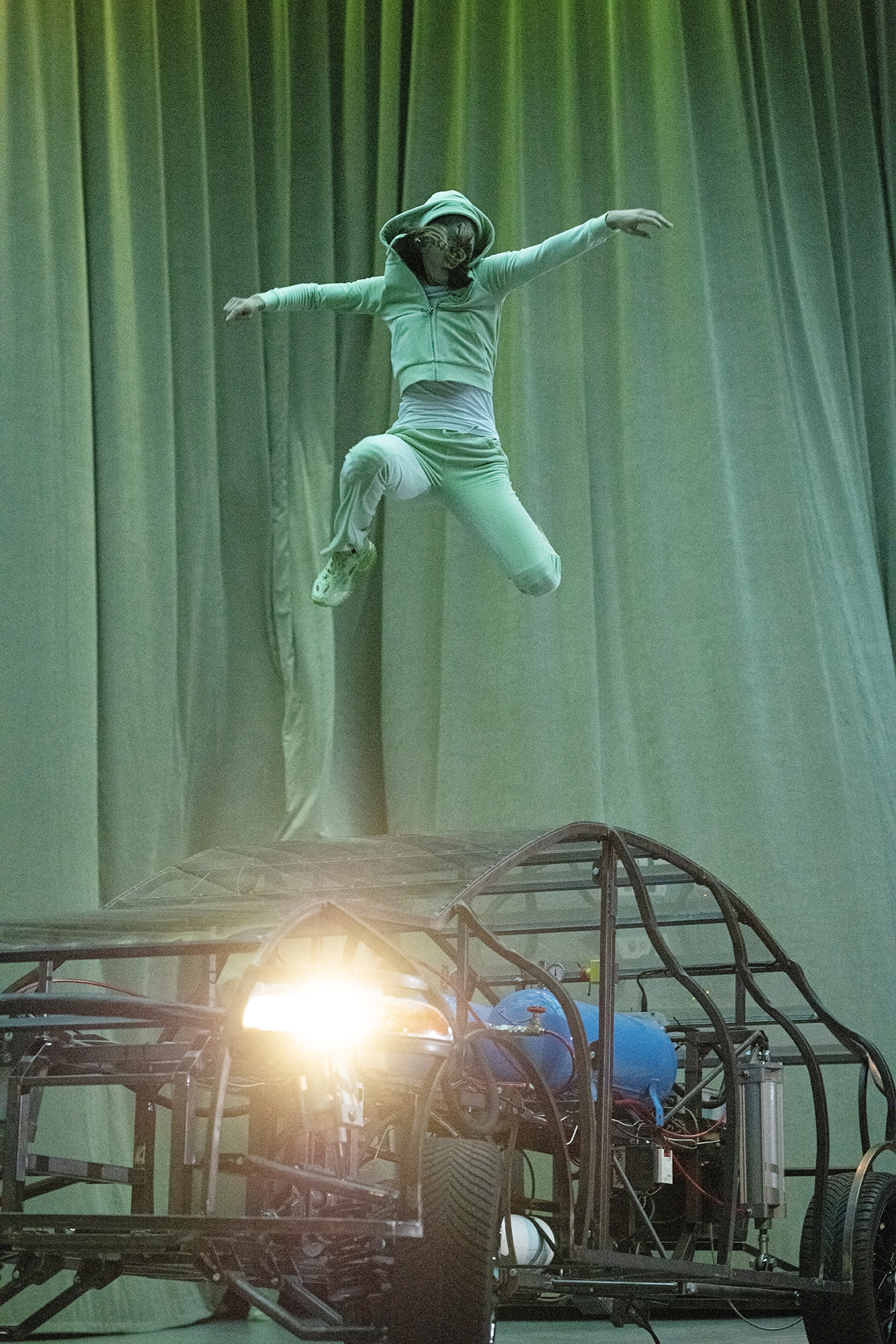
The piece grew out of these ideas and eventually came to embody a kind of giant scrolling experience itself. The tableaus follow one another like swipes, the scenography keeps shifting, and the bodies move through radically different states, until everything builds toward a kind of “doomscrolling” climax : a final dopamine hit represented in our last tableau, “TikTok Jazz.”
Your projects often sit at the intersection of performance, fashion, and pop imagery. Can you speak about the role of visual design within Age of Content?
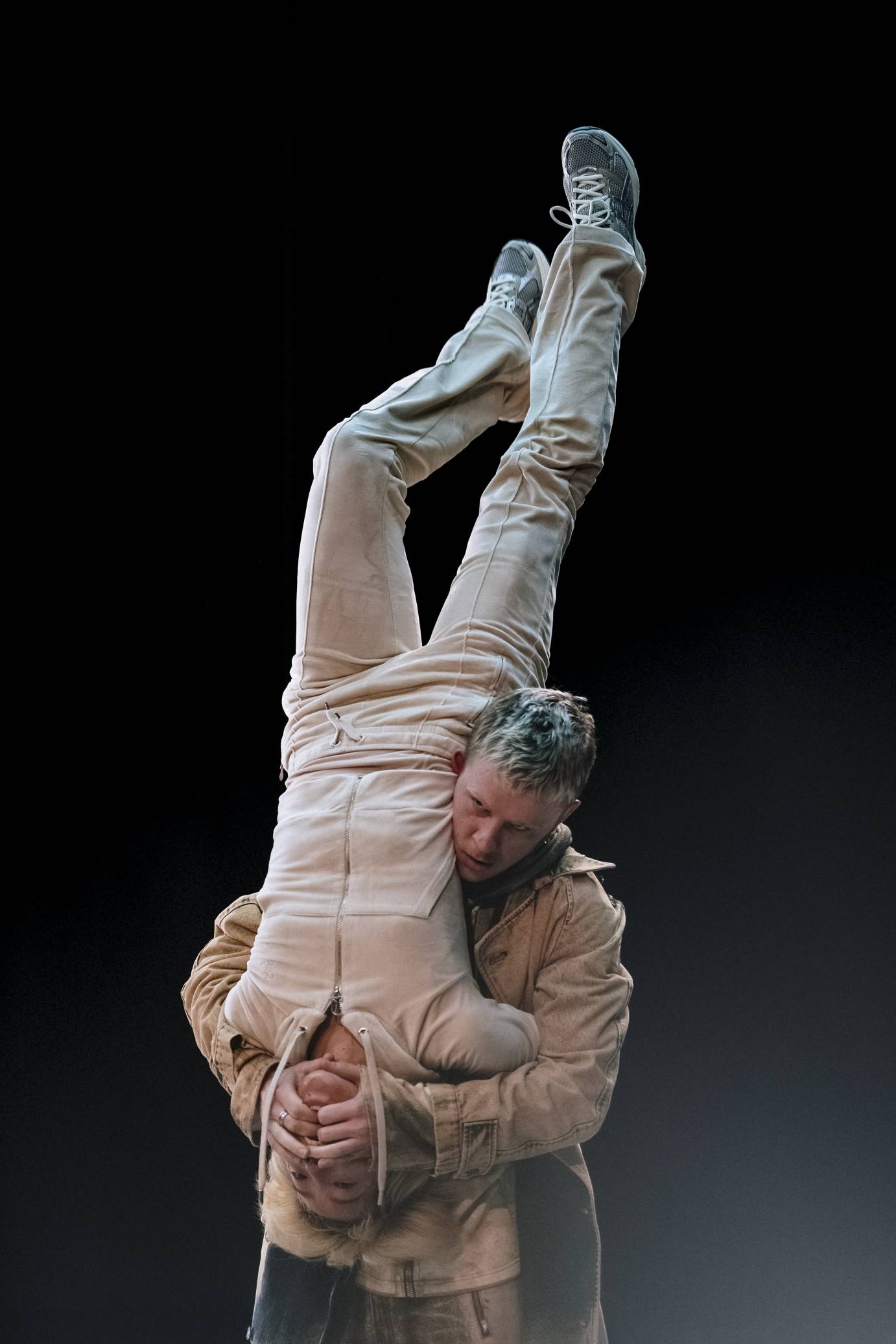
It is essential to our work to stay very visual. We come from the visual arts and we really approach dance as a snapshot of our humanity in a given time. It is so important to create a visual context both through costume and set design, to ensure a complete experience to the viewer.
What role do the performers play in generating movement or conceptual material for Age of Content?
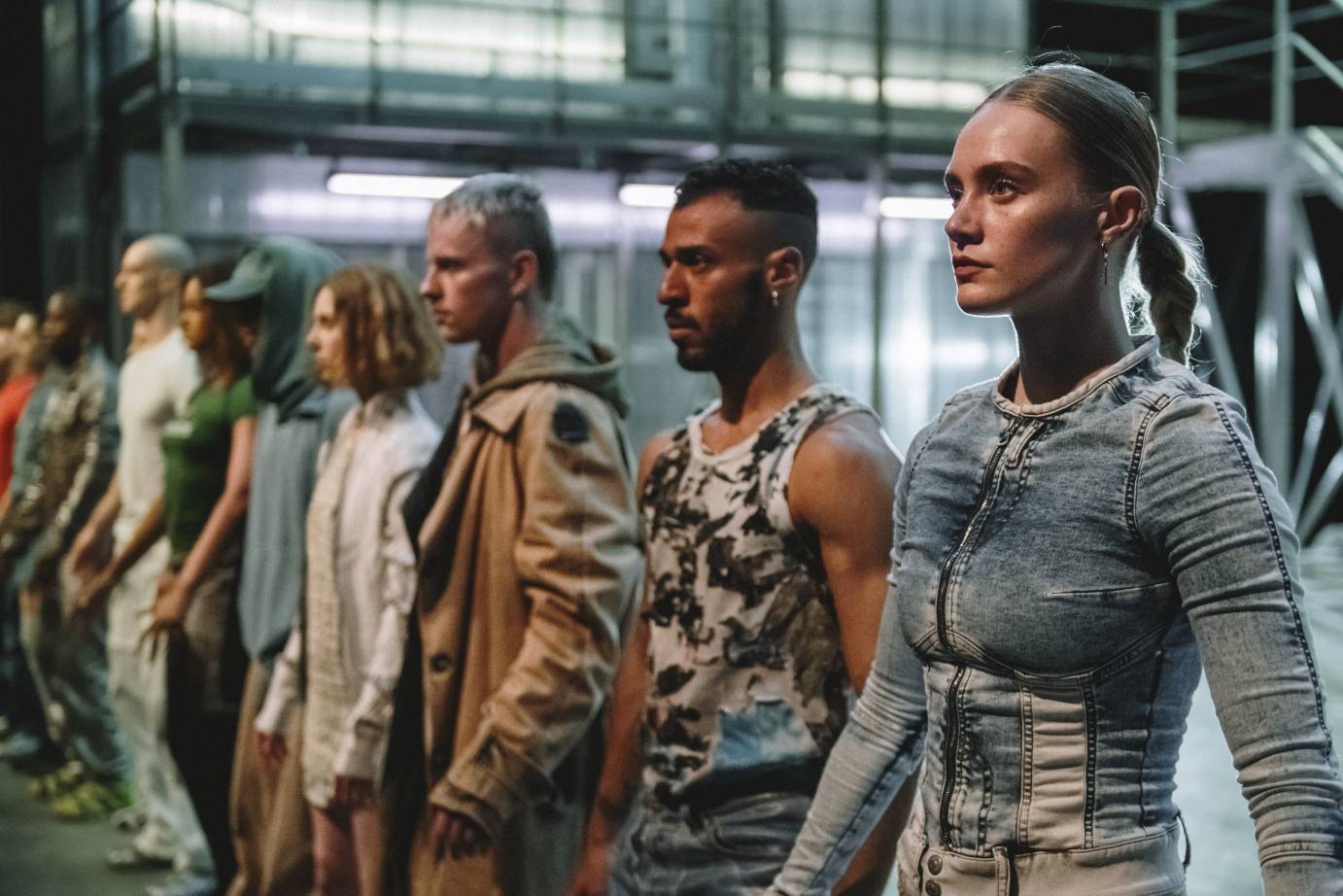
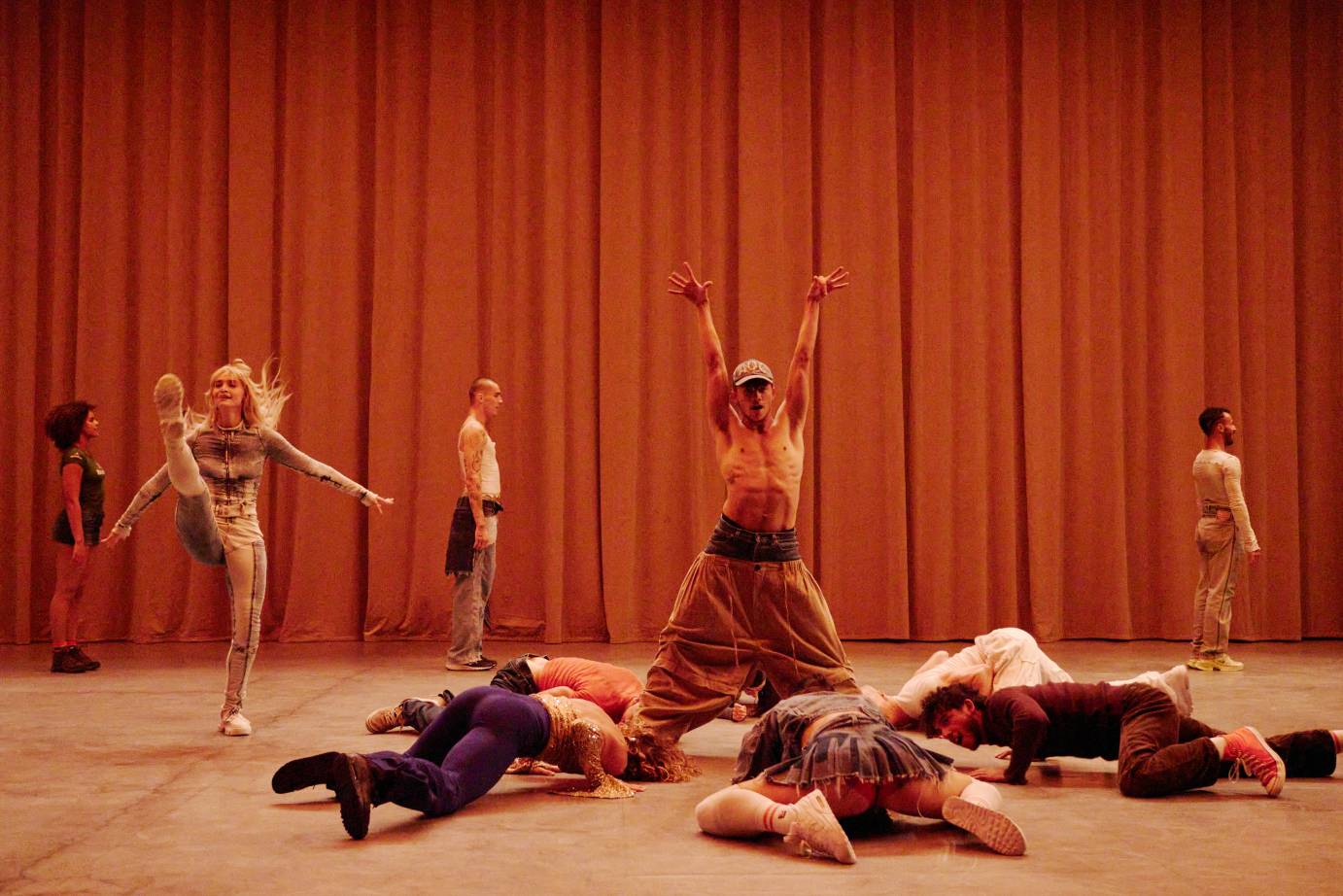
We approach working with dancers, our collaborators, as a deeply collective process. The Ballet National de Marseille brings together around fifteen different nationalities, so diversity is not something we add on, it is truly at the core of who we are. From the very beginning, we try to create a space where they can bring their own stories, energies, and physical vocabularies into the work. We think of the studio as a safe space, where everyone can express themselves and set boundaries with one another. Not a sterile environment, but rather a kind of melting pot where possibilities are open and everyone can find their place. It is a space where we can collectively confront and deconstruct the ideas and themes we are bringing. Since our pieces often explore collective dynamics, we place great emphasis on building trust and strong group energy, so that choreography emerges through dialogue, improvisation, and shared exploration. In that way, we try to reflect an inclusive vision that is present not only in the bodies on stage, but also in the way we work together throughout the creative process.
How has the piece evolved as it has toured internationally?
There is a healthy turnover in the company, and it makes us rediscover again and again the choreographic material. The show is a living matter we all collectively take care of. It is always evolving and echoes different events happening in the world.
What does it mean for you to present Age of Content at Brooklyn Academy of Music, a venue historically associated with avant-garde international performance?
It’s unbelievable. We’ve dreamed about this. For the longest time. It’s a stage where our heroes showed their work. And it means so much to be standing where they once were.
Do you anticipate the work resonating differently with New York audiences, particularly given the city’s own deep connections to nightlife, club culture, and digital creativity?
We can’t wait to feel it in the room. NY has been blessed by dance and culture. And we hope it’s a place where our irreverent, researched, full of humor, deep, and hopefully moving show will inspire emulation.
Age of Content is being presented as part of Dance Reflections by Van Cleef & Arpels. How does being included in this international festival context shape the way you think about presenting the work?
For this edition of the festival, its founder and curator Serge Laurent has decided to present more than 50 different shows and workshops. This festival is more than sharing his vision of what dance is today, it is also creating a moment, for a month, in New York, when dance feels at the center of it all. It is an incredible feeling for artists to be celebrated and to have this focus on our medium. And to feel its pulse throughout the city.
In our case, with Age of Content, which will be presented at BAM, it also reinforces the work’s premise: bringing the “chronically online” condition into a communal space, where many visions of the world can coexist for a moment, on stage.
How do you see (LA)HORDE contributing to or challenging current definitions of choreography?
We see choreography as something that already exceeds the stage. Movement circulates constantly, through social media, video games, nightlife, protest, pop culture.
Bodies were always shaped by context, culture and repetition, but we also now have algorithms, trends, formats designed for speed and visibility. Our work brings these circulating gestures into theatrical space and places them in dialogue with institutional dance. By doing so, we blur hierarchies between “high” and “low,” authored and collective, composed and viral.
For us, choreography today is also about revealing the forces that are already organizing how we move, and making them visible.
Do you see Age of Content in dialogue with earlier generations of experimental dance or performance art?
First, as a collective, our work is inherently dialogical. We are constantly aware that what we are able to create today is made possible by artists such as Loie Fuller, Isadora Duncan, Martha Graham, Trisha Brown, Pina Bausch, and Lucinda Childs. We are deeply conscious of the lineage we stand within and of how these artists expanded the possibilities of movement, allowing subsequent generations to approach the body with greater freedom and experimentation.
In Age of Content, the final tableau functions as a tribute to postmodern dance. We re-stage postmodern compositional structures on stage in order to present viral TikTok dance movements, reframing their aesthetics through a different lens. By placing these gestures within a formal structure historically associated with experimental dance, we invite the audience to reconsider their value, authorship, and cultural impact.
Participation in international festivals can create new entry points for audiences encountering your work for the first time. What do you hope viewers unfamiliar with (LA)HORDE take away from experiencing Age of Content in this festival context?
For audiences encountering our work for the first time, we hope the experience is both visceral and reflective. Age of Content operates on multiple levels: it can be felt physically, through rhythm, accumulation, and intensity, but it also invites viewers to question the systems of images and gestures that shape contemporary life.
We do not ask from the audience to recognize every reference or decode every layer. Instead, we hope they leave with a heightened awareness of how digital culture choreographs us. How it influences the way we move, desire, present ourselves, and relate to one another. Ideally, the piece creates a space of ambivalence: attraction and discomfort, humor and critique, pleasure and exhaustion.
If viewers leave feeling both energized and slightly unsettled, and more conscious of the mechanisms behind what they consume daily, then the work has opened a meaningful entry point!