

Related Features
IMPRESSIONS: In Conversation with Merce with Choreography by Merce Cunningham, Kyle Abraham, and Liz Gerring, Presented by Baryshnikov Arts Center
DAY IN THE LIFE OF DANCE: A Peek into the Final Preparations for the Performance Mix Festival
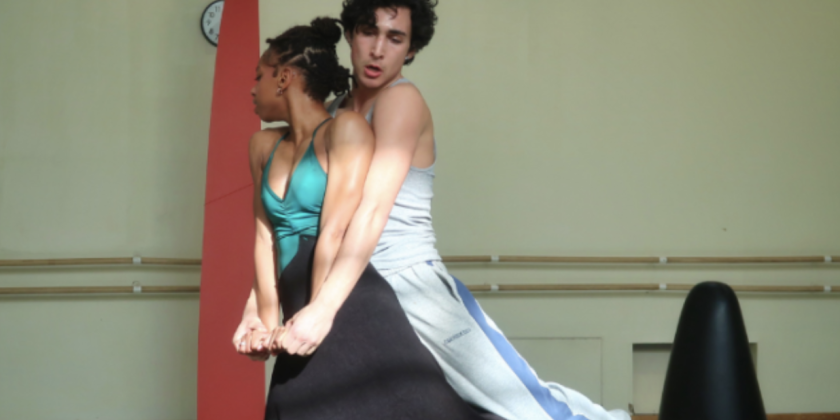
DAY IN THE LIFE OF DANCE: Baryshnikov Arts Residency Artists Chalvar Monteiro, Chaery Moon and Alex Munro

By Sarah Cecilia Bukowski
View Profile |
More From This Author
Published on November 13, 2025
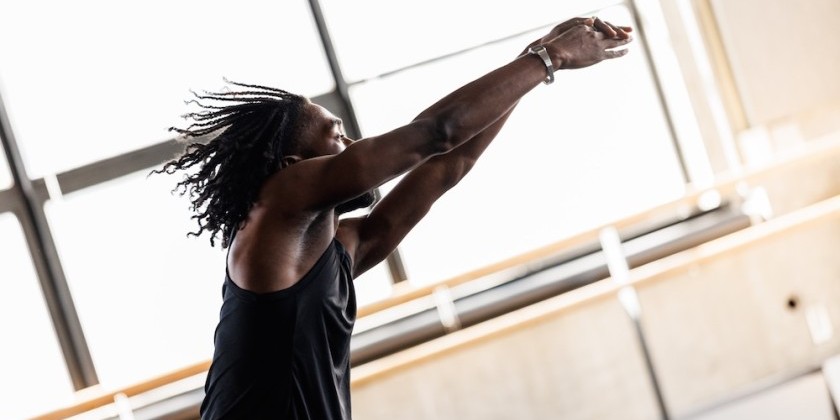
Chalvar Monteiro. Photo by Maria Baranova
Over two unseasonably warm early October afternoons, I had the pleasure of spending time in the airy fourth floor studios at Baryshnikov Arts Center to observe two of their Fall 2025 Residency Artists at work: Chalvar Monteiro, who gathered a group of four dancers in the sun-flooded corner studio, and Chaery Moon and Alex Munro, who closed their sunshades and marshalled yards of cable to activate an array of technologies in the darkened studio next door. These settings made for some pointed contrasts: Monteiro’s intricate dance spools out through dynamically virtuosic vocabularies, while Moon and Munro’s conceptual and technological investigations take a quieter, more introspective tone.
These artists are colleagues of mine whose curiosities show some consonances in thinking. The last time we were together was in June of this year, one floor below in BAC’s Jerome Robbins Theater, where we took part in a program of new arrangements of works by Merce Cunningham — Monteiro, Moon, and I as dancers, and Munro as director and editor of the film Beach Birds: A New Arrangement (which also features Moon and me). Months later, witnessing their processes and speaking with them about their work afforded me an opportunity to reflect on the tiny seeds and tender shoots of their creativity, and how residencies function as essential incubators and accelerators for artistic growth.
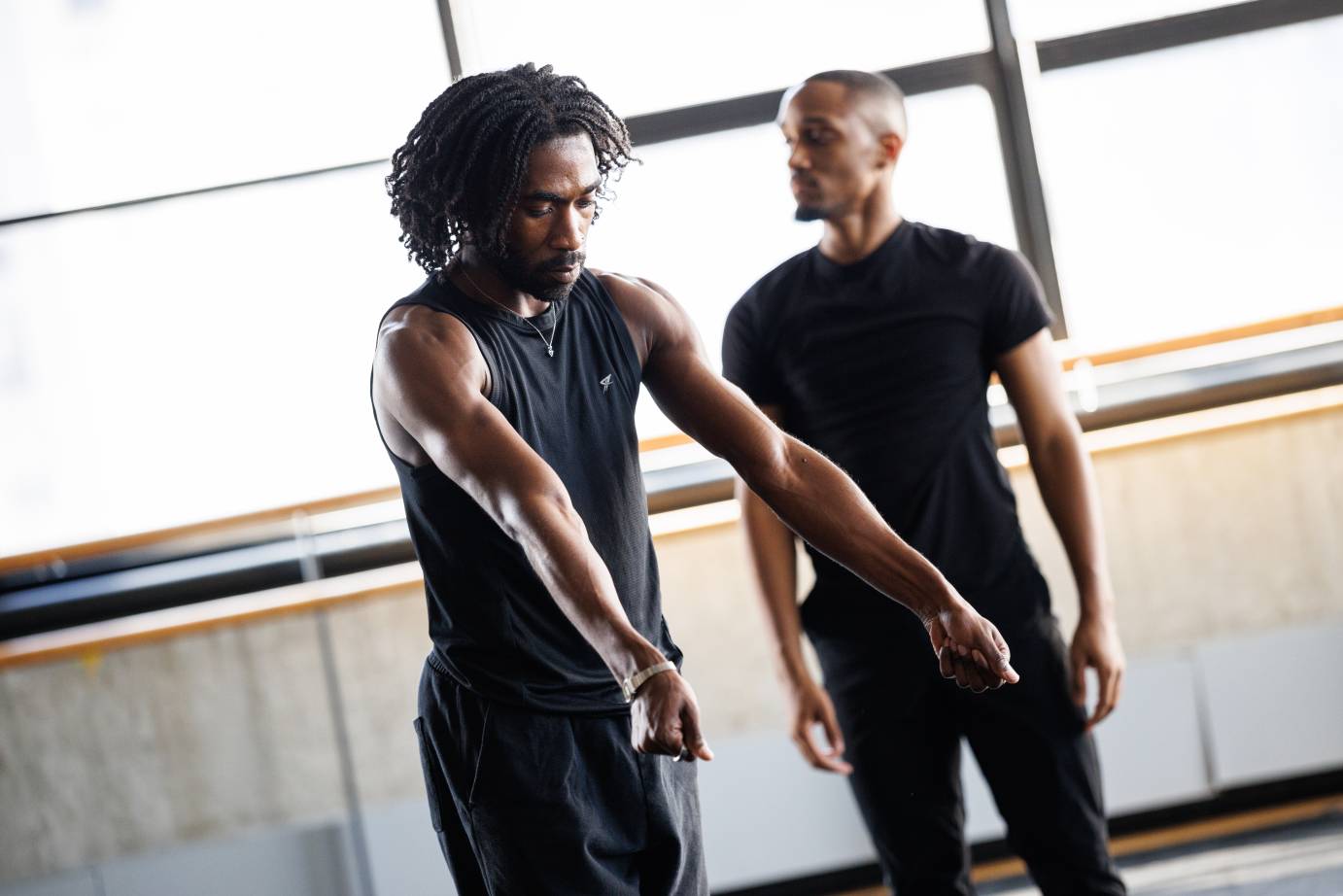
Monteiro, who recently left a long and fruitful performing career with the Alvin Ailey American Dance Theater, is launching the first steps of his independent choreography project, THE MNTRO PRJCT. He continues to dance — the imperative to move is written all over his body and spirit—and he weaves among his four dancers as an equal party. This is the group’s inaugural voyage: dancers Arianna Carson, Andy Guzmán, Hannah Howell, and AJ Jordan met Monteiro at different points in their careers, and come together in this work with a shared technical foundation, intensity of focus, and collective sense of play.
The mood in the rehearsal room is light, led by Monteiro, a genuinely luminous person who grounds his dancing in generosity and humor to allow each dancer’s personality to come through in their approach to learning, remembering, and adjusting their steps at his direction.
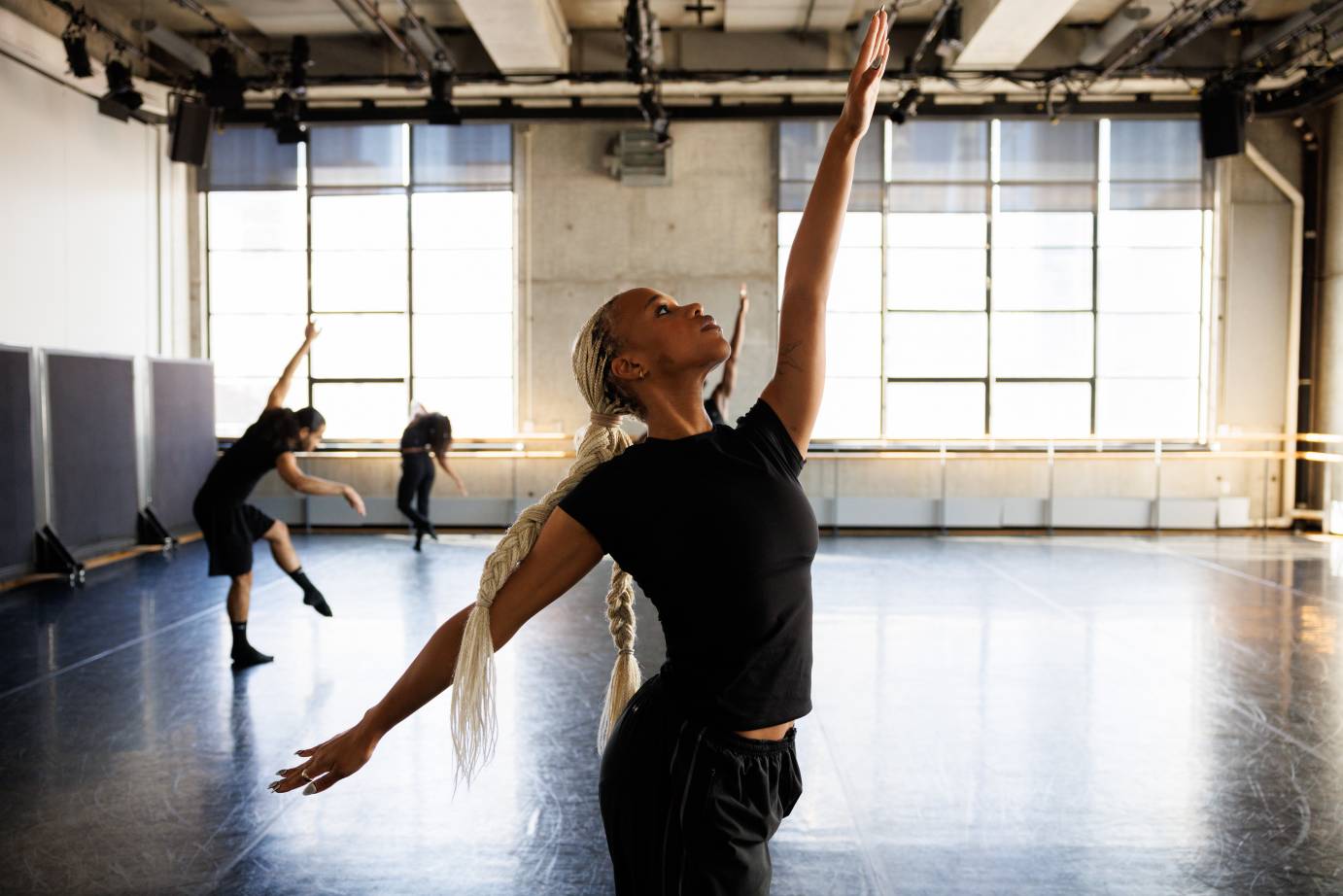
While Monteiro’s choreographic voice is thoroughly informed by his training and career, he manages to avoid derivative pitfalls to remain uninhibited and fluently original. Signatures of modern, ballet, and contemporary dance share equal footing with social dance vernaculars — an arabesque here, a tootsie roll there — to create a fresh vocabulary that flows organically from the dancers’ agile bodies.
“Show the architecture of the body,” Monteiro cues as he breaks down the discrete components of a sequence; he’s attentive to punctuation as well: “Make it like a comma,” he suggests to give breath to a transition. Joints operate not as fixed points but as vectors of possibility: shoulders fold and roll, hips tilt and slip, spines arch and curve, soles of feet swirl and heels rise to perched stillness, long limbs trace wide arcs and circles like compasses.
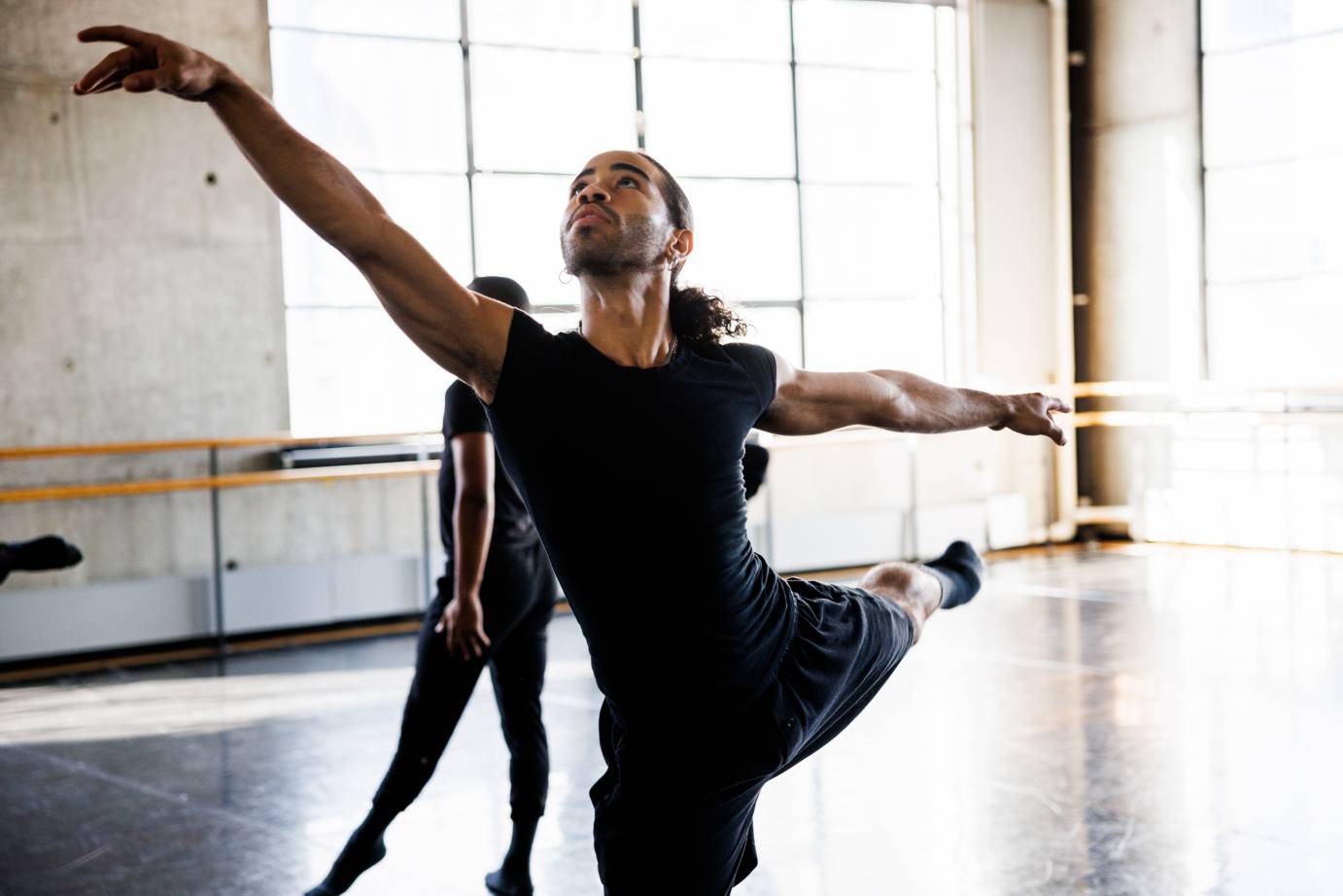
Monteiro tells me that his point of departure for this new work is Lighthouse, a work I admired at the 2024 Ailey Dancers' Resource Fund benefit performance; he’s working now to create something like its “shadow.” Music is one throughline, as he continues working with Colin Stetson’s experimental compositions for woodwinds and percussion that evoke sound environments pulsating with breath and vibration. Lighthouse drew definitively from Monteiro’s interest in what he calls Merce Cunningham’s “virtuosity without ego and technique of possibility.” His current line of thinking expands those possibilities by channeling them through his research into embodied trauma processing and “an exploration of healing through the reclamation of exiled parts of ourselves.” These themes come up in whirling, slicing gestures and vigilant panning of the eyes and head, and informs the dance’s structure as bodies interact as mirrors, fragments, shadows, or multiples of self and community.
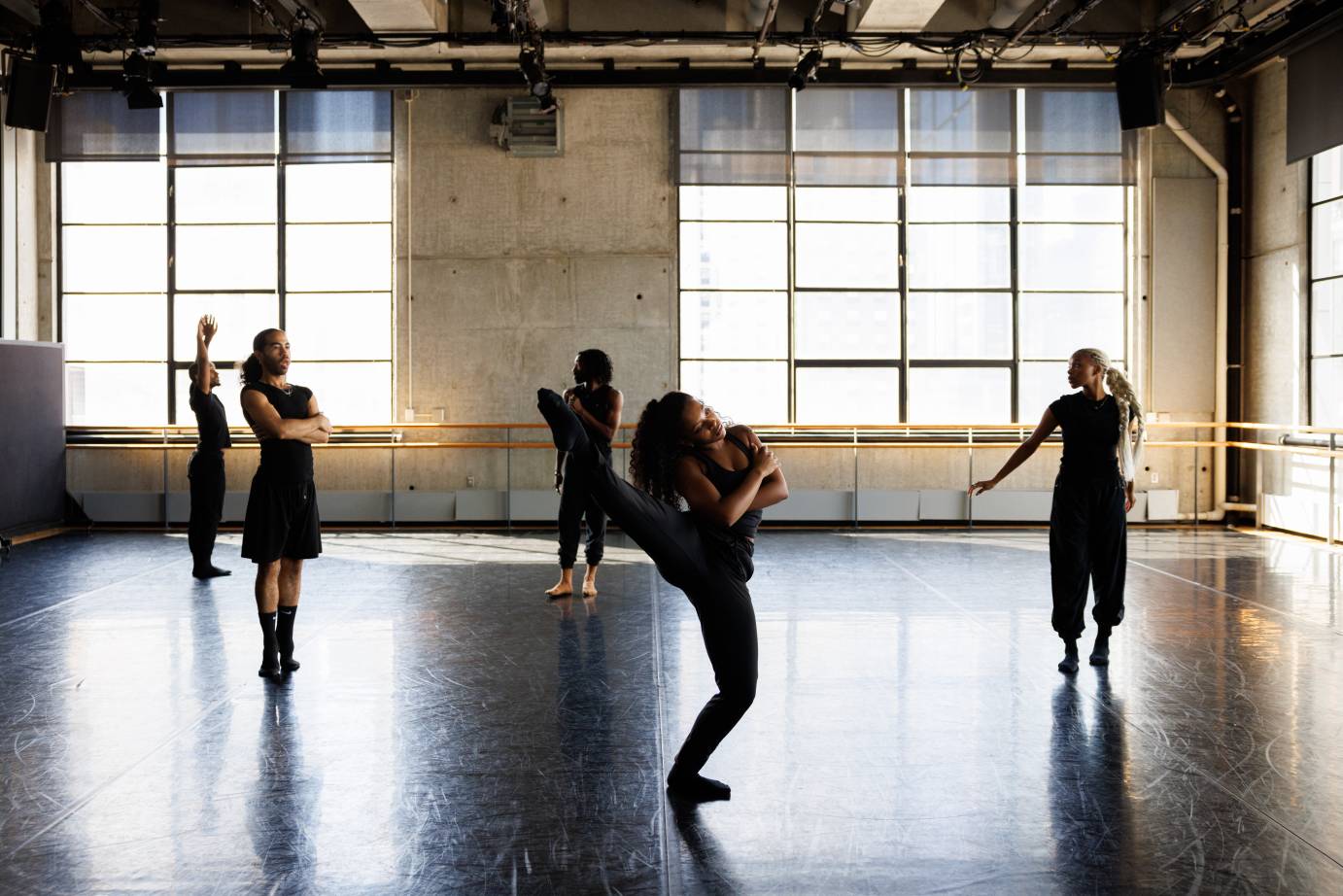
As he explores the role of community in trauma and healing, Monteiro asks, “How do we honor the shadow? How do we dance with our shadows?” His answers are not singular or definitive, but instead explore structures and feelings through the spatial relations of bodies and the power of gesture. After a whirlwind week of creation, the choreographer hopes to incubate the work as he seeks out iterative opportunities to create and present his work, led by a spirit of authenticity and love.
Next door, Moon and Munro slowly tease out the possibilities for, as Moon puts it, “the body and the camera to operate as equal players in performance.” Their conceptual investigations stem from a shared interest in mediated performance, that is, the relationship between performance and its representation. Munro says they’re asking “what each one is doing and not doing, what each one can say and not say” and the role of perspective in what is seen and unseen.
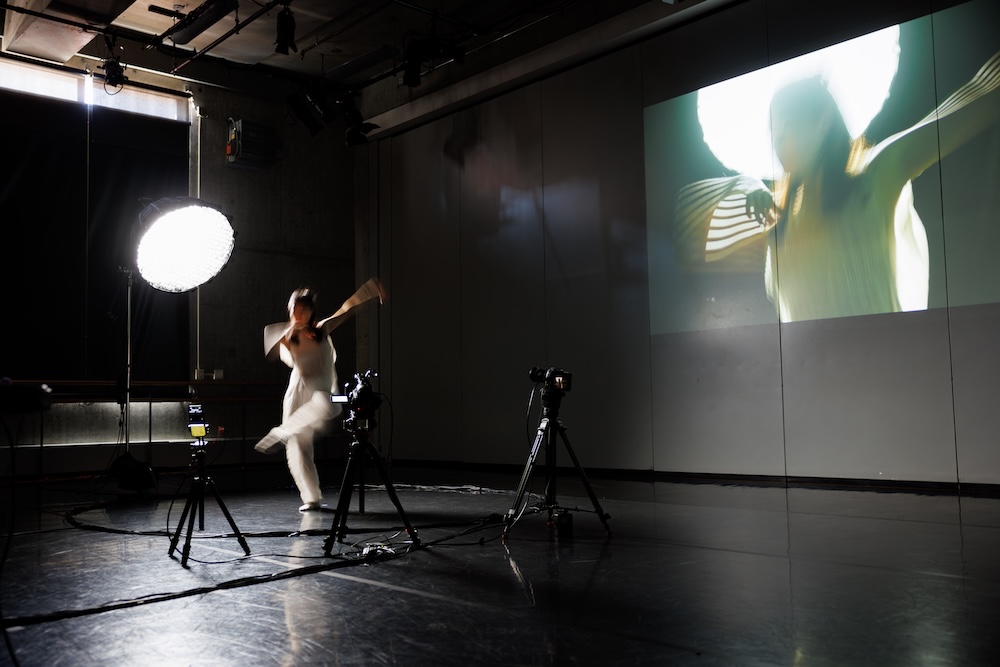
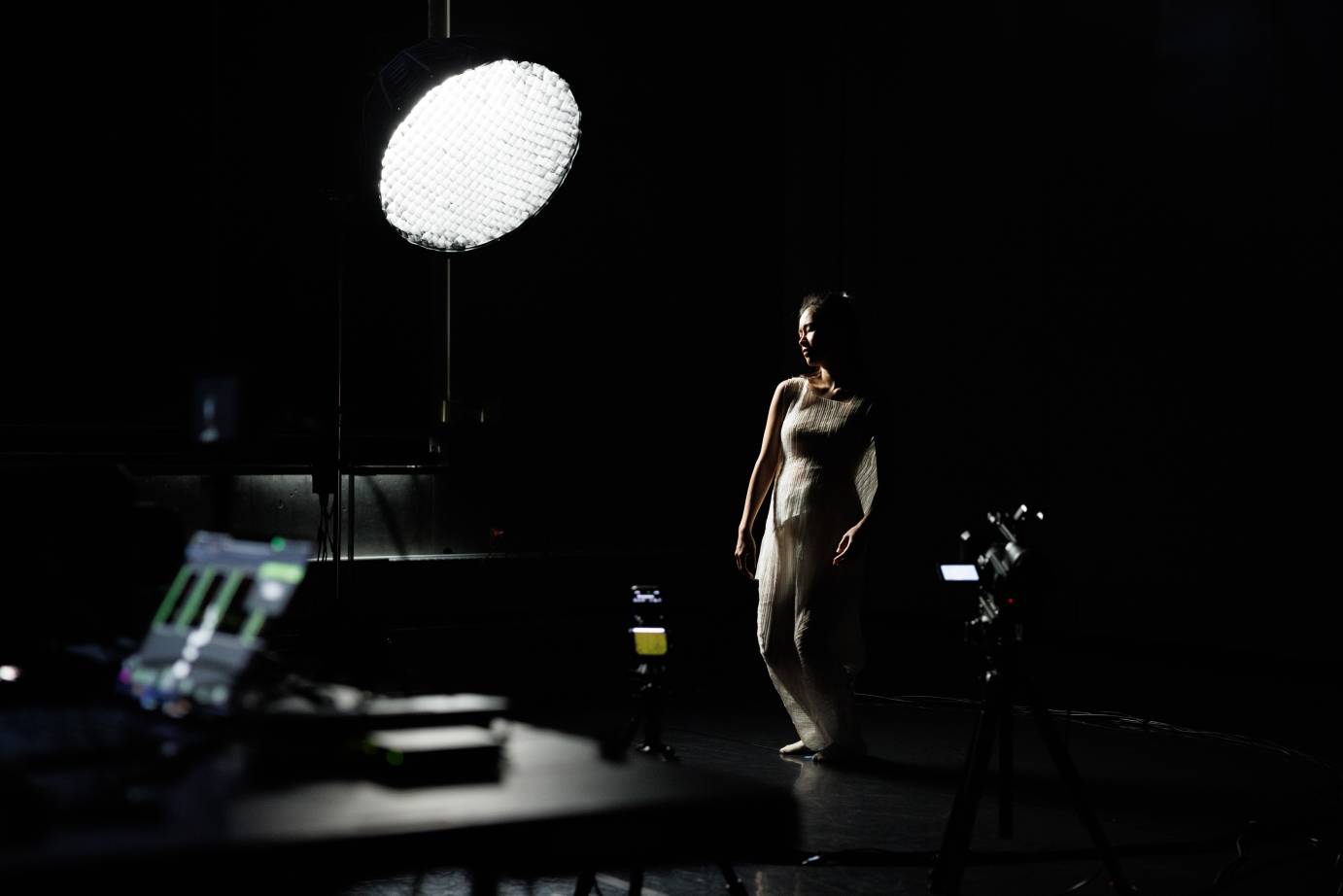
In the studio, Munro monitors a computer that feeds inputs from multiple cameras and sensors through a projector that displays Moon’s live image on the wall behind her. Lengths of black and orange cable snake around the space, bundled together at the center to form a six-foot circle. In this circumscribed arena, Moon unfurls a meditative twenty-minute solo with five cameras as her witnesses. Three cameras perch just outside the circle, aimed at various angles to capture her body up close; two others sit further away to take in the whole scene. Each camera is different, as Munro seeks to evoke distinct connotations — cinematic, surveillance, the everyday — through a range of equipment: older and newer digital cameras, a CCTV camera, and an iPhone, whose static images cycle through an automatic, randomized four-minute loop. Sensors from another phone pick up Moon’s movements and feed them into a wire frame model that tracks points of her body in space; a tall umbrella light with a grid diffuser is cued to Moon’s right shoulder, such that it brightens and dims as she rises and falls. “We’re interested in the body as an input for the construction of space,” says Munro.
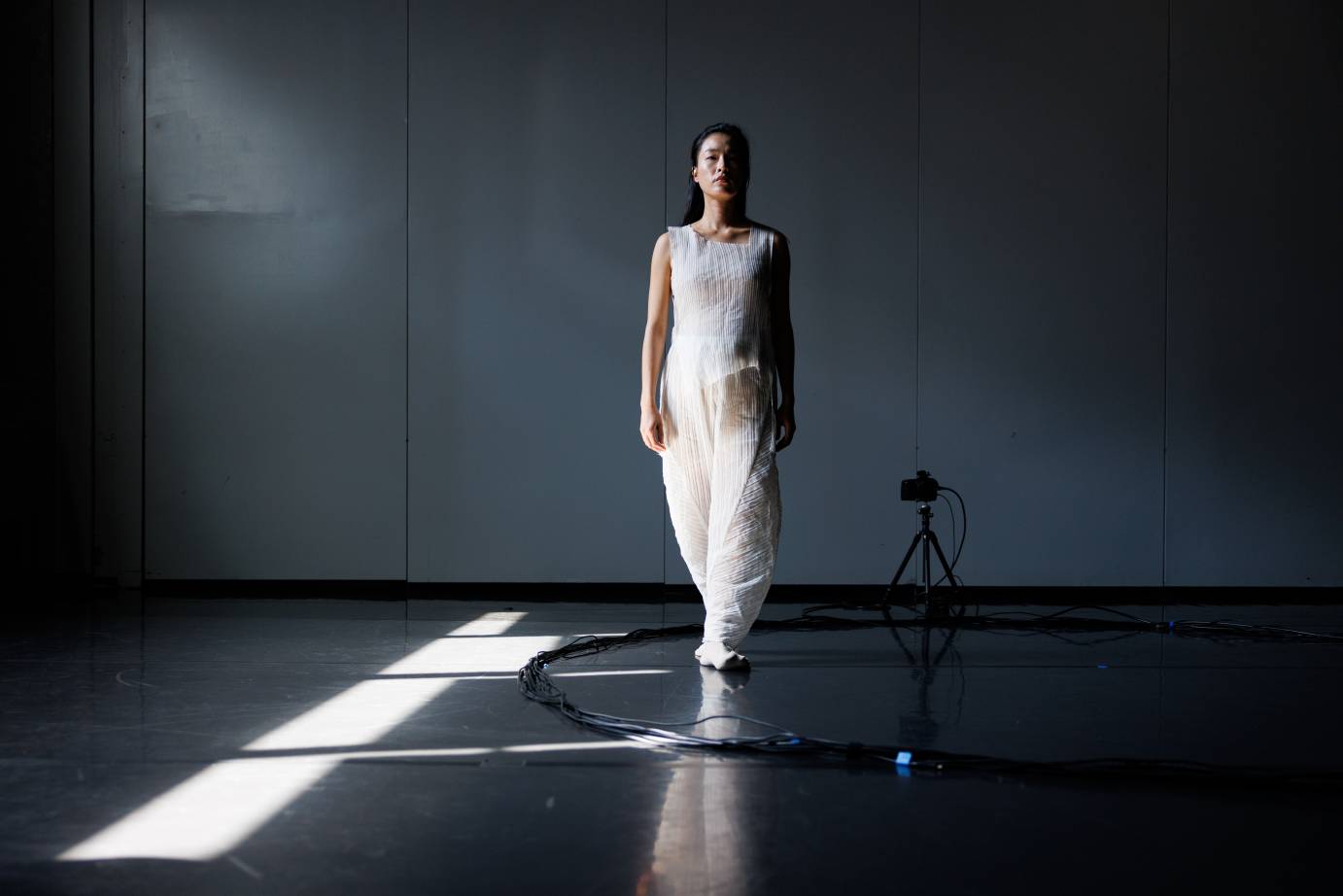
Moon’s choreography evokes impermanence and transformation as she meditates on tangibility in cycles of life and death. She dances with herself, her loved ones, and her ancestors in mind; she is also a few months pregnant. As her customarily lithe frame fills in with maternal life, she deepens into her precise and serene qualities with clear virtuosities of weight and purpose. “I feel like a hippo,” she admits, yet she is elegant and grounded as ever in a diaphanous costume of delicately-pleated white pants and tunic. She steps into the circle and slowly fills it with a spiraling walk, treading out the breadth of possibility in the small space. Her heels pulse a soft rhythm underneath the swirling flow of her torso and arms, ripples and waves punctuated by the muted percussion of her sock feet. Tense fists dig through the air and delicate fingers trail symmetries as she slips to her knees, the light growing dim.
All the while, her image appears and disappears in the cycle of frames behind her: in the narrow panel of the iPhone, I see her face in three-quarter profile, the play of light and shadow distinct from my own view; in the wide shot, signal latency creates a feedback loop on a microsecond delay that replicates the scene in infinite regression, frame within frame within frame. Each camera’s perspective is necessarily situated, always incomplete, just a piece — the piece it sees — just as my perspective is limited by my seat and my eyes. The work’s pacing and tone allow space to contemplate these questions of looking, and its conclusion arrives with these questions still in mind.
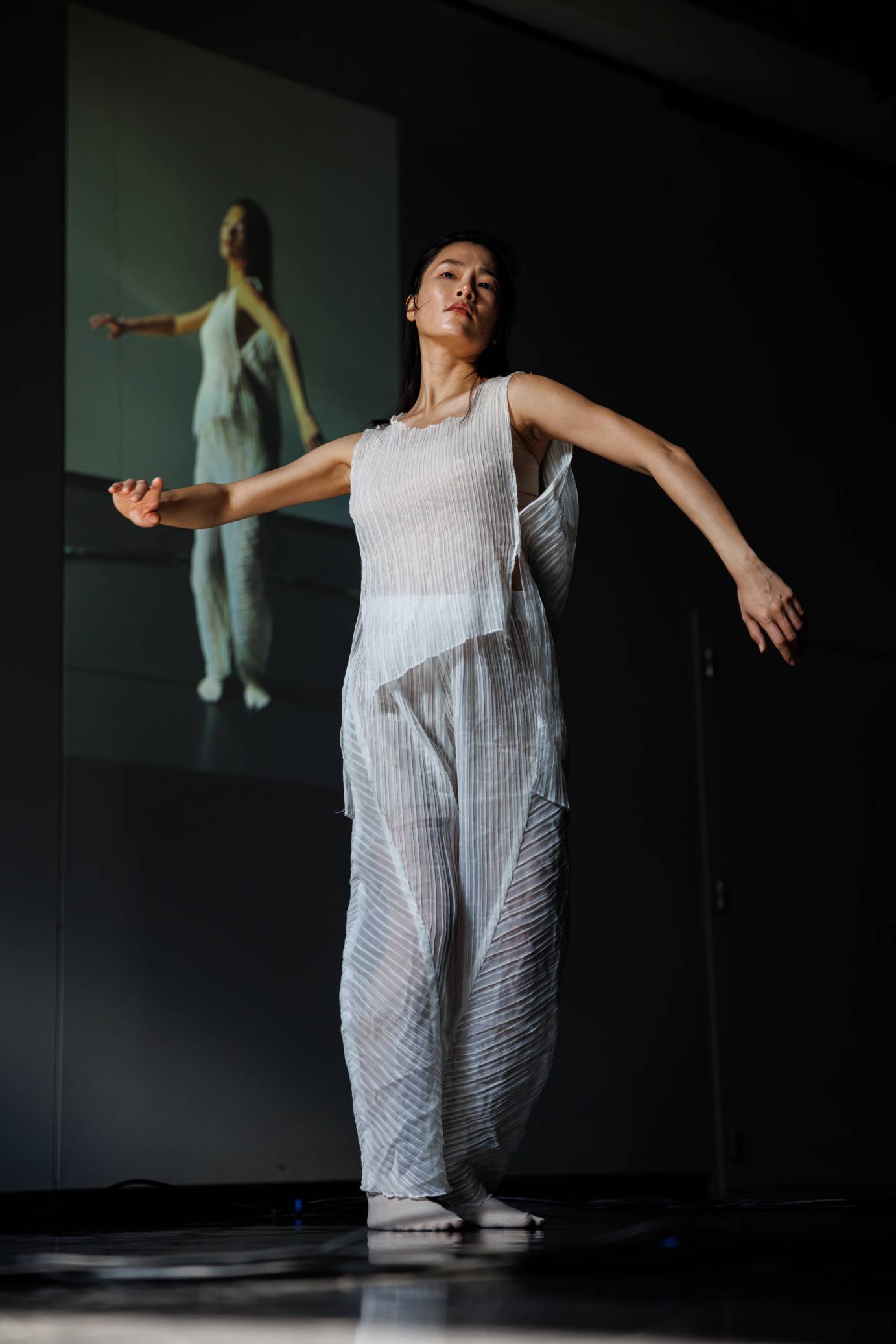
For future iterations, Moon and Munro would like to collaborate with designers to create a responsive sound environment (they used a recorded sound score this time around). They’re also thinking about how to use space to frame a live audience’s perspective around the perspectives of the cameras. At this stage, Munro focused on raw images in relation to the body, but image manipulation through live processing remains a potential avenue to explore. The artists came into their two-week residency with a wealth of questions, and this dedicated opportunity helped them to see what’s possible.
Across very different projects — Monteiro and his dancers, Moon and Munro and their cameras — these artists work consummately in the spirit of the residency, taking risks to work with no other goal in mind than to exercise their creativity. And while both had substantial material to offer in showings for intimate invited audiences, possibly the most fruitful products of their time are the questions they raised to motivate their future work.