



Related Features
IMPRESSIONS: New York Flamenco Festival (Part II)
IMPRESSIONS: Manuel Liñán’s Fiesta Flamenca Co-produced by the 2026 Flamenco Festival and Baryshnikov Arts Center
IMPRESSIONS: New York Flamenco Festival (Part 1)

By Robert Johnson
View Profile |
More From This Author
Published on March 20, 2026
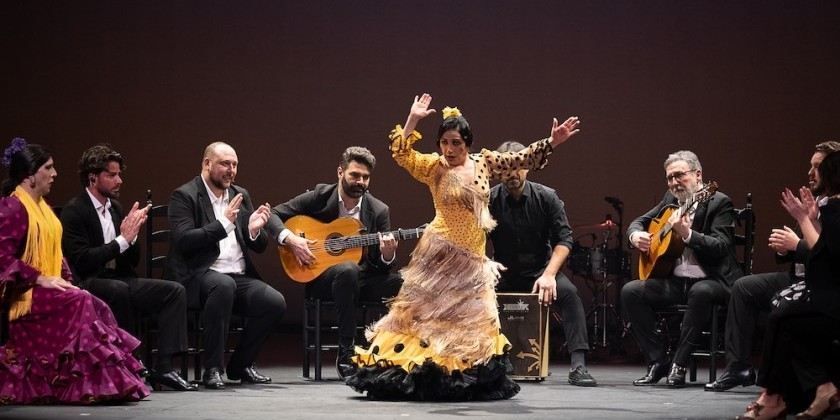
Eva Yerba Buena (center). Photo: Christopher Duggan
At New York City Center and New York University's King Juan Carlos I of Spain Center
Gala Flamenca at New York City Center, February 26, 2026
Director: Manuel Liñán // Concept: Miguel Marín // Lighting design: Valentín Donaire
Sound design: Ángel Olalla // Production: Beatriz Hoyos // Road Manager: Ana Carrasco
Dancers: Eva Yerbabuena, Manuel Liñán, El Farru, Juan Tomás de la Molía
Musicians: Paco Jarana, Guitar; Francisco Vinuesa, Guitar; Mara Rey, Singer; Manuel de Ginés, Singer; Juan de la María, Singer, Sebastián Sánchez, Singer; Daniel Suárez, Percussion
Estévez/Paños y Compañía in La Confluencia at New York City Center, February 27, 2026
Artistic direction and choreography: Rafael Estévez and Valeriano Paños
Composer: Claudio Villanueva // Staging: Rafael Estévez and Valeriano Paños //Scenic design: Estévez/Paños y Compañía // Costume design: Estévez/Paños y Compañía // Lighting design: Olga García // Stage Manager: Coqui Fuenzalida
Dancers: Rafael Estévez, Valeriano Paños, Jesús Perona, Alberto Sellés, Jorge Morera
Musicians: Al-Blanco, Singer; Claudio Villanueva, Guitar; Lito Mánez, Percussion
Landscape + Silencios at the King Juan Carlos I of Spain Center, New York University, March 3, 2026
Dancers and Choreographers: Rafael Estévez and Valeriano Paños, with dancer Yoel Vargas
Interviewer: Diana Vargas
New York remains a source of inspiration for Spanish dancers performing here on tour. While audiences thrill to the sound of stamping heels and the hoarse cry of the cante hondo, the artists, in their leisure moments, look around in wonder and absorb impressions. Rafael Estévez and his colleague Valeriano Paños were among the featured guests at this year’s New York Flamenco Festival. According to Estévez, waves on the East River, subway cars rattling across a bridge, and the impatience of our swirling crowds all have distinctive rhythms that previous visitors sensitive to rhythm — from poet Federico García Lorca and his dancer friend, La Argentinita, to Carmen Amaya and Vicente Escudero — took home with them, when they returned to Spain. Thus, flamenco, an art with its roots in folklore, has assimilated memories of the modern city contributing to its evolution.
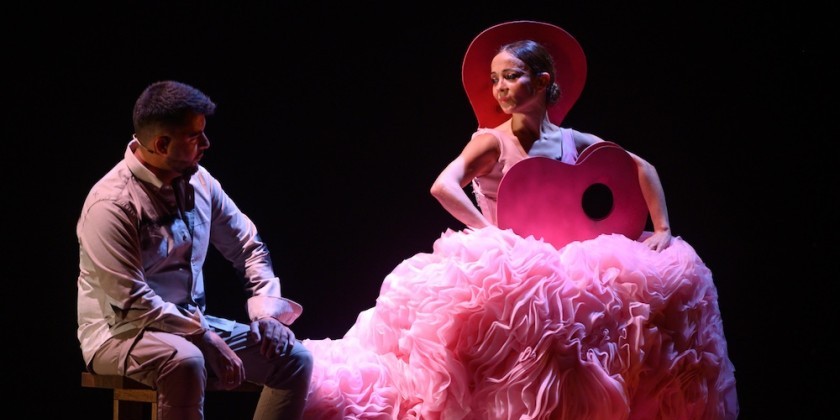
In our times, the locus of these historic exchanges has been the annual New York Flamenco Festival, now celebrating its 25th anniversary. This popular event originally co-produced by the World Music Institute, typically presents a panoply of Spanish dancers and musicians, including legendary stars and emerging talents. This year, the festival encompassed a remarkable 32 events at venues both grand and intimate, from February 25 to March 15, 2026. The inimitable artistry of Eva Yerbabuena crowned the opening Gala Flamenca, at New York City Center, which also featured compelling performances by El Farru, Juan Tomás de la Molía, and singer Mara Rey. Artistic director Miguel Marín introduced the event, while director-performer Manuel Liñán gave the show a playful tweak by appearing throughout the evening in drag.
Liñán’s antics were at odds with the gala’s otherwise sober staging. Apart from his garish makeup and the rigid armature of his bust, scenic effects were minimal, favoring stark contrasts in black and white. The dancers first emerged from columns of light at the rear of the stage, where their lunging figures appeared as elegantly tapered silhouettes. Rearranging the chairs on stage repositioned the vibrant musical ensemble framing explosions of brilliant dancing.
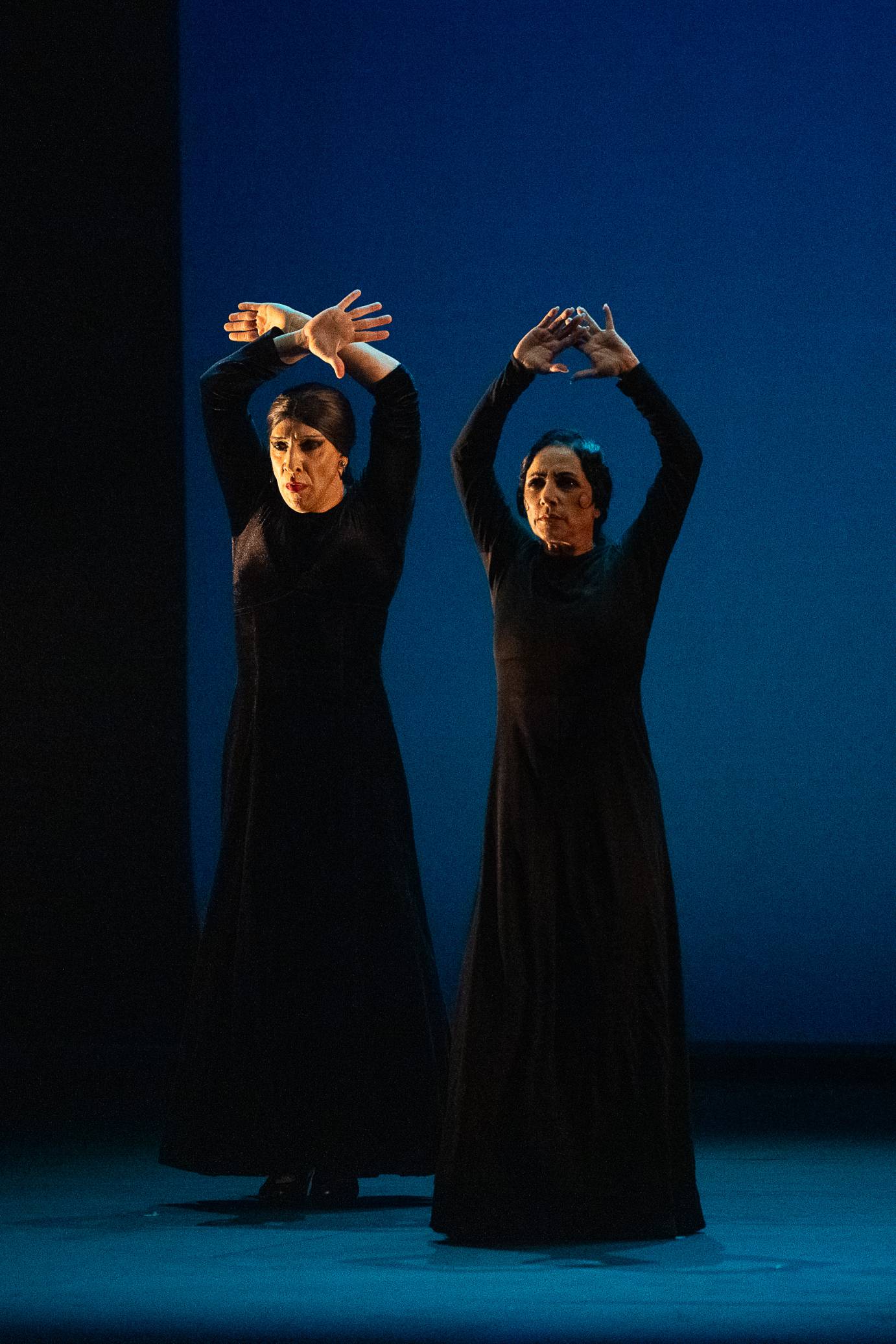
The most dramatic episodes naturally featured Yerbabuena. In the first of these, Liñán appeared as her doppelgänger, the “twin sisters” competing for the spotlight as they took turns dodging in front of each other. They danced side-by-side, and when they turned sharply in profile Liñán rested his elbow on Yerbabuena’s shoulder. With equal suddenness they engulfed each other in an embrace. Completing the symmetry, the dancers once again jockeyed to go first as they returned upstage. Yet, these twins were ill-matched. Liñán appeared to be trolling Yerbabuena and watching her surreptitiously, while she remained serenely independent. Here, too, Yerbabuena gave the first sample of her powers, her lithe body drawn up and expressive even in stillness. Despite the formal restraint of their movements, the atmosphere felt turbulent offering subtle flashes of emotion, hinting at jealousies, and revealing moments of candor. It felt like psychodrama.
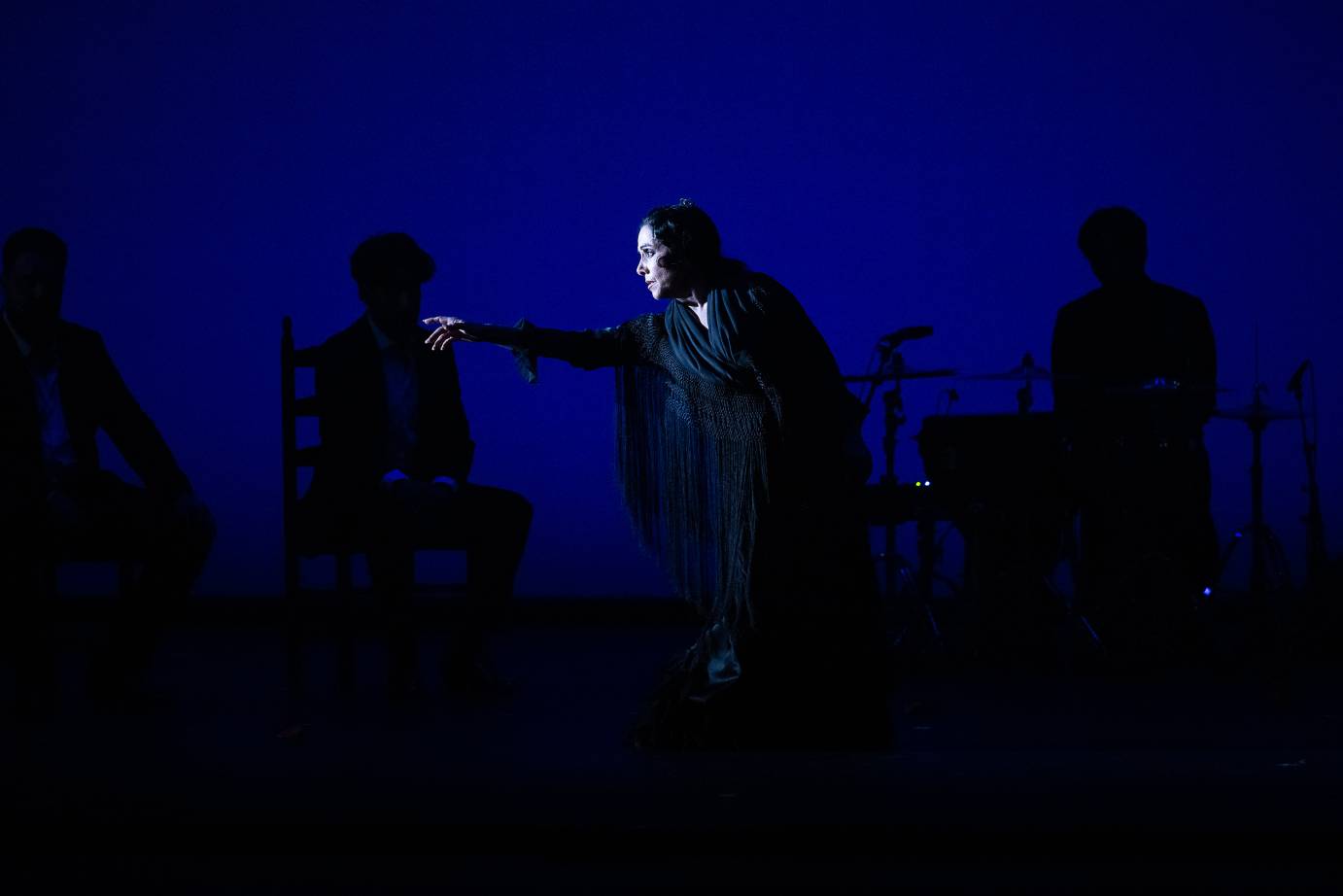
Yerbabuena performed again, magnificently, in an episode that opened with a slow-motion entrance à la Robert Wilson. Shrouded in gloom, her black-draped figure etched against a twilight sky, Yerbabuena paused to turn her face where it caught a passing light, like the moon emerging from behind dark clouds. The quavering of a guitar enhanced the poetry of this image, glinting with a silver mystery. Angular gestures followed, and then, as the stage brightened with the coming of dawn, Yerbabuena erupted in paroxysms, her body hunched and her feet rapping out patterns by turns delicate and savage. Absorbing the musicians’ total attention, she dissolved into the rhythm, her hands curling and carrying her through transitions. Then, once more, she appeared boldly defiant, tossing energy from side to side, her hips thrust forward and her head thrown back in ecstasy. For all her sophistication, Yerbabuena never appeared artificial. Her frictionless movement seemed to tap an occult power, and as her heels rattled the fringes of her black shawl poured down like sheets of rain clinging to the contours of her body. Yerbabuena offered viewers an experience both sensual and mystical. In the rousing fin de fiesta, where the performers took turns centerstage, she would be a one-woman stampede.
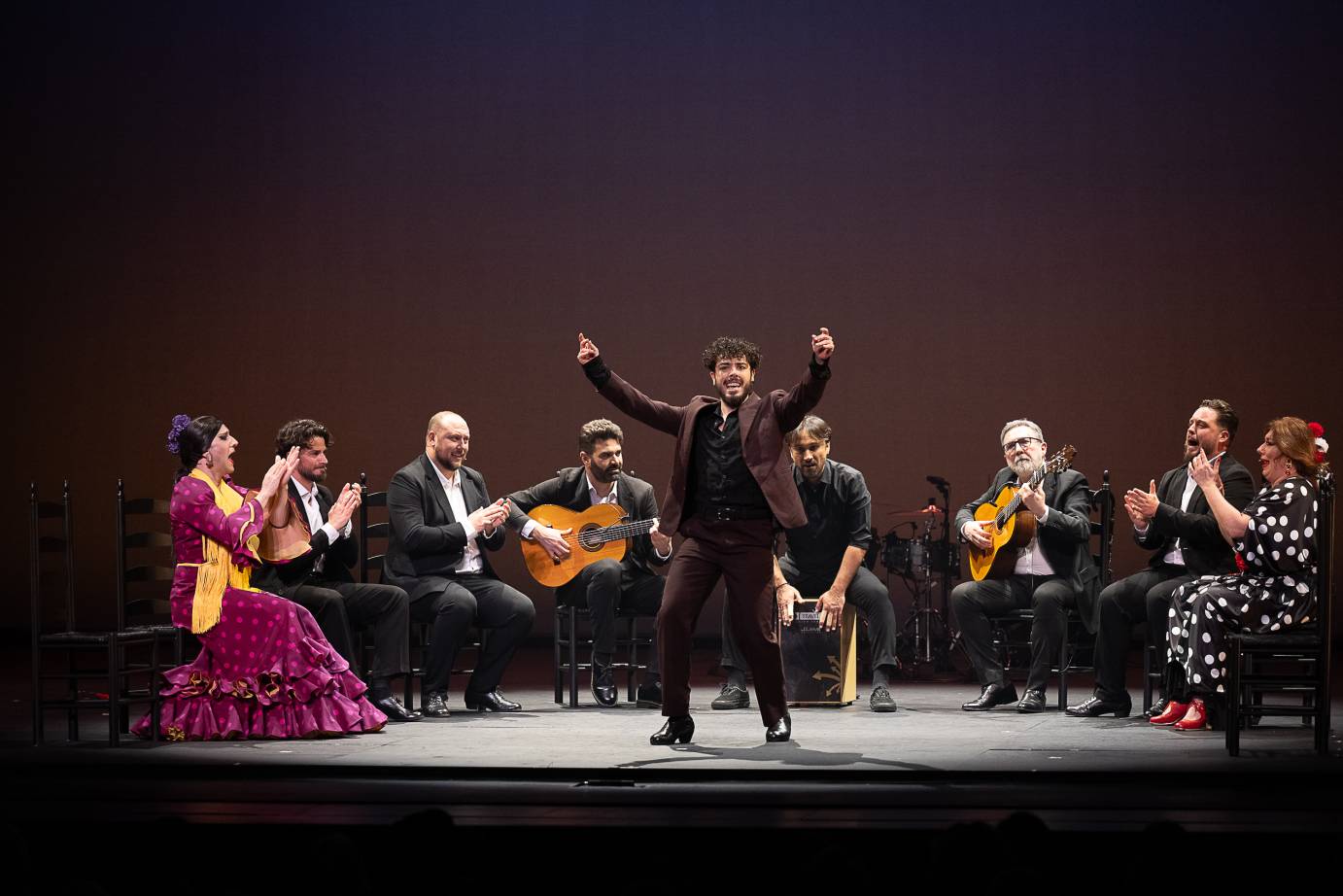
Each of her colleagues took turns adding a personal touch. Disarmingly young, Juan Tomás de la Molía has a sunny personality. When not drilling the floor with his chest puffed out, or sweeping an arm to lead an invisible bull with an invisible cape, he flirted openly with the audience. Unable to contain his excitement, he bared one shoulder and then the other. He opened his hands frankly inviting applause, but when the ovation came, he turned away at once shy and teasing. He is irresistible.
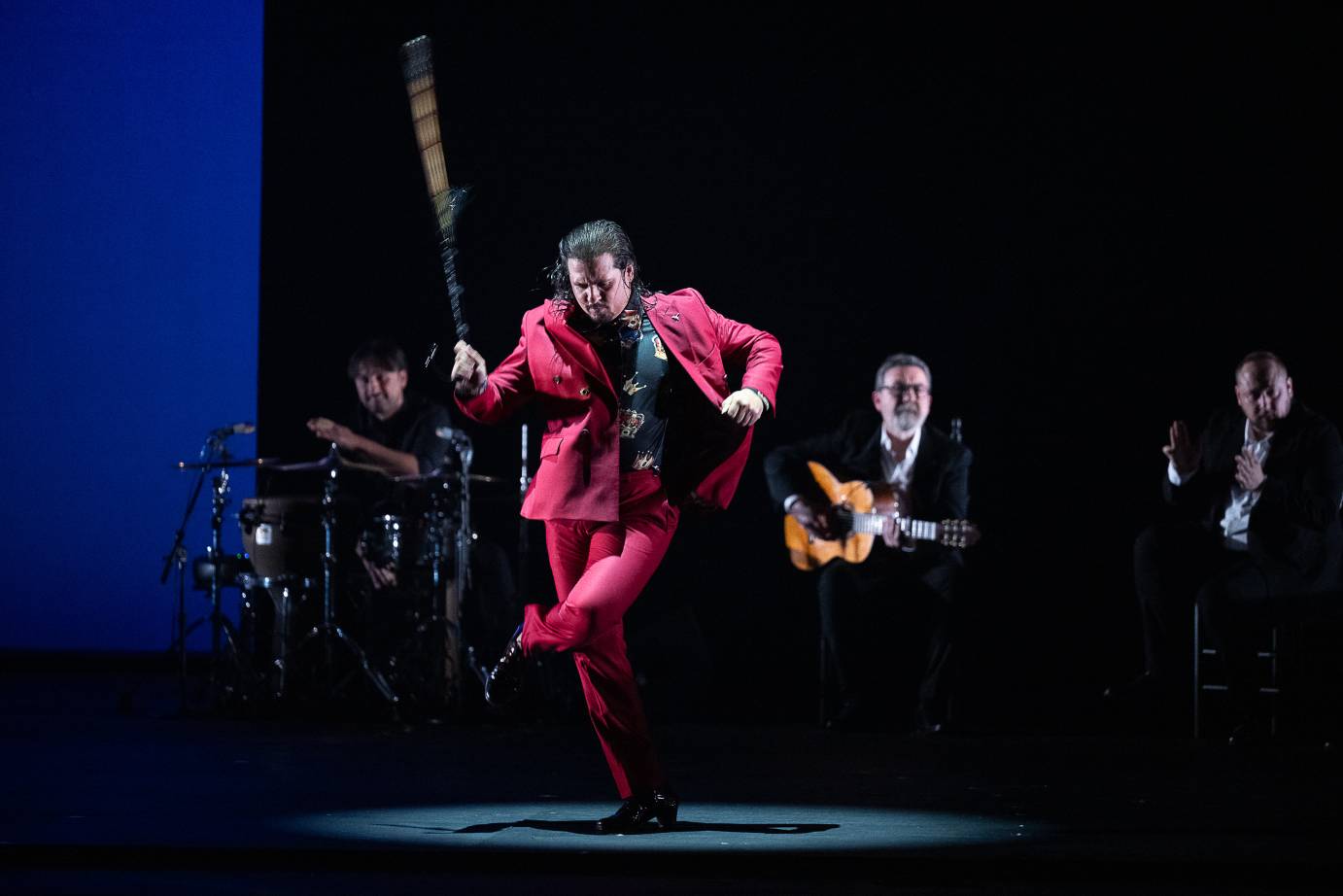
El Farru was not inclined to flirt. In his solo, he revealed a brooding disposition seeming to torment himself with questions and erupting in fierce bursts of rhythm, while his tapping cane telegraphed a secret message. Later, his dancing remained jagged and broken, though El Farru can move with silken ease whenever he chooses, gently scraping the floor or stepping silently. When he picked up a guitar, his playing had the same, wild intensity as his dancing.
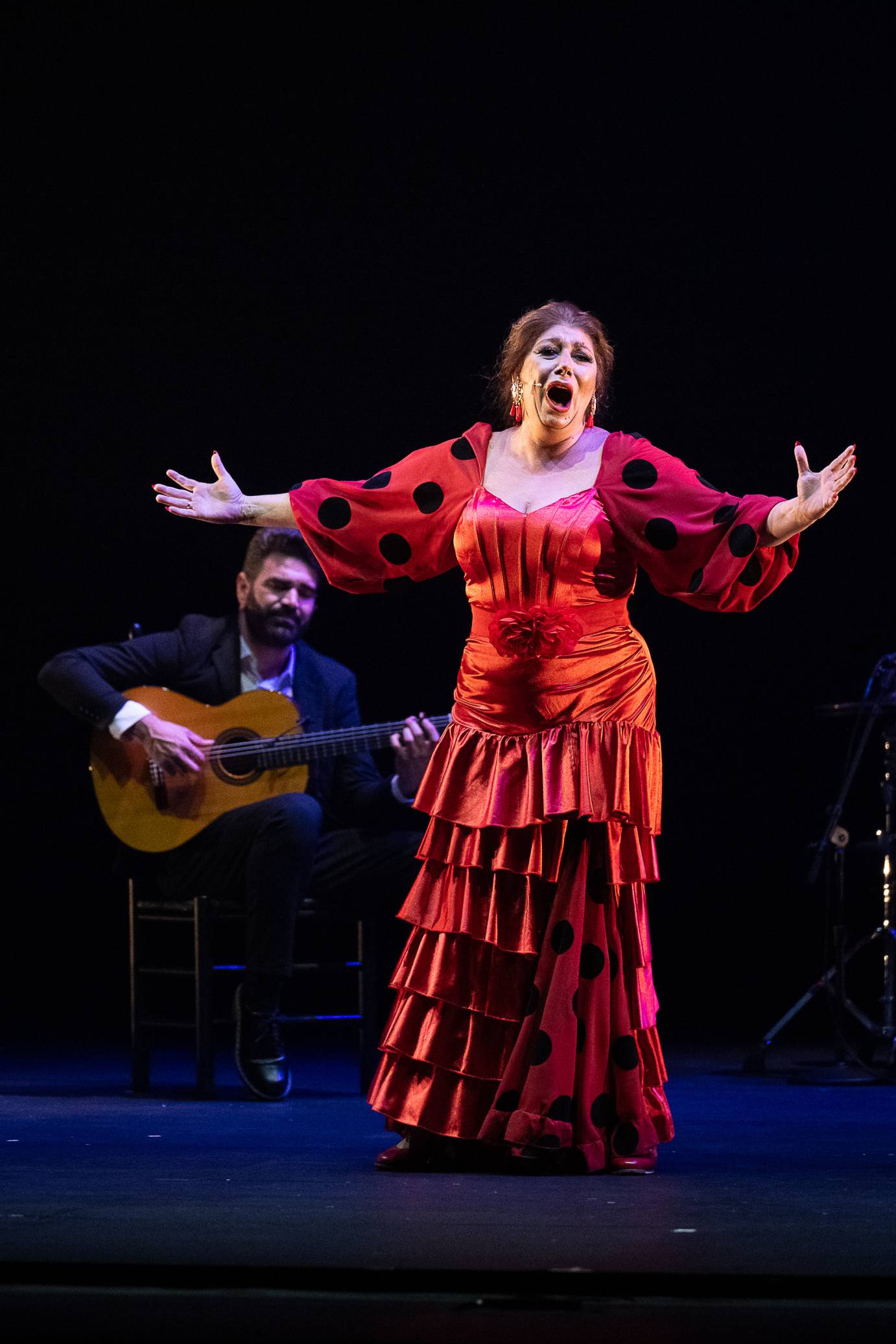
The only musician to receive an extended showcase, singer Mara Rey belted out a torrid love song, Me Muero, supposedly dying of impatience as she longed to caress her lover, unbutton his clothes, and then... Shaken with emotion, stomping, and charging wildly, Rey gave a total physical performance. Though capable of tenderness, she portrayed one of those passionate women who take what they want from life without counting the cost.
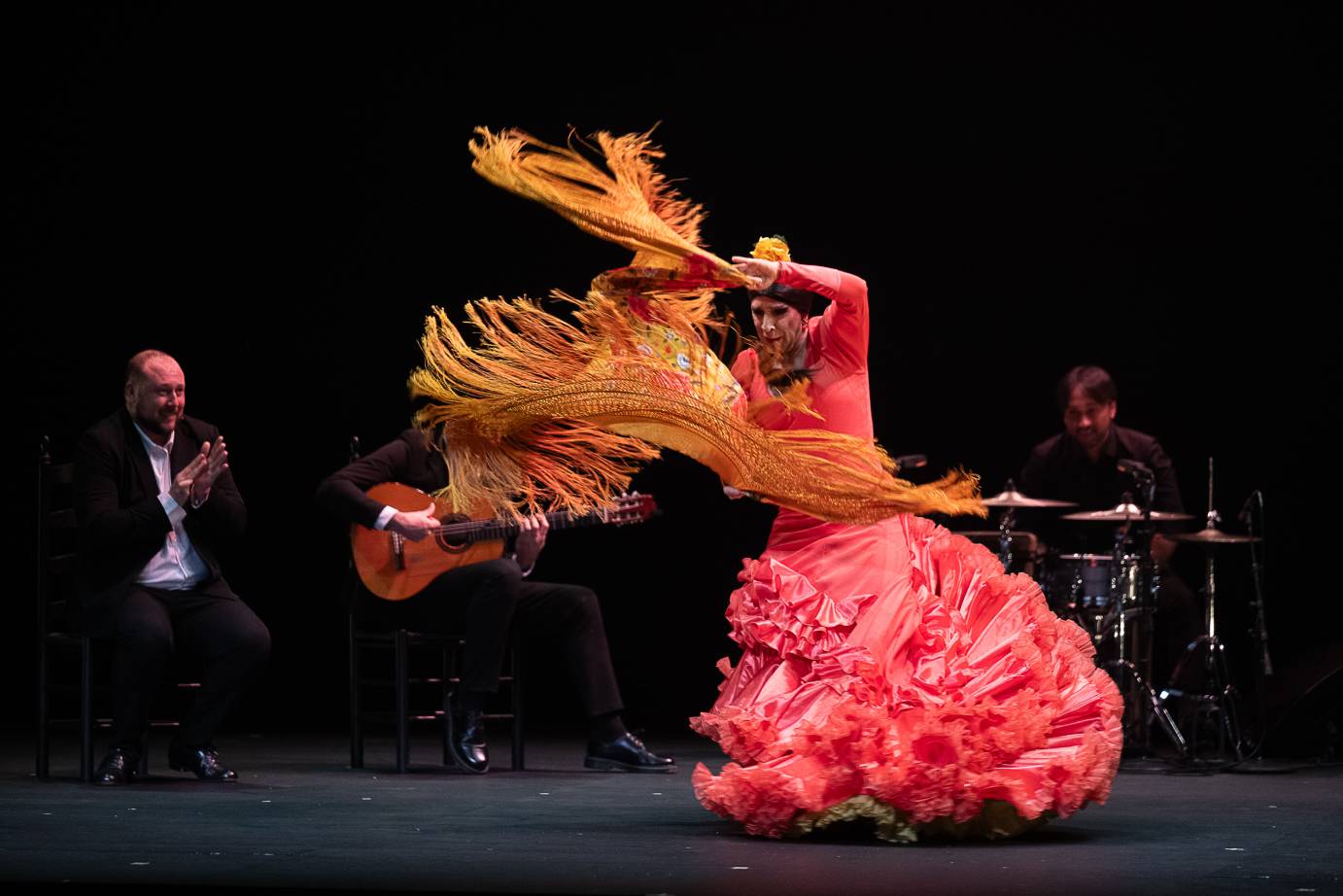
As for Liñán, his big moment came in a solo where he demonstrated how to work the hourglass dress with frothy train known as the “bata de cola,” and how to twirl a fringed mantilla. Of course, Liñán does not exactly have an hourglass figure, nor can he display the piquant contrast between delicacy and firepower that characterizes this dance’s finest female exponents. Liñán is all muscle, and his eye-popping schtick can only carry him so far. Though he has skills, he was not persuasive, and his flouncing did not rise above cliché.
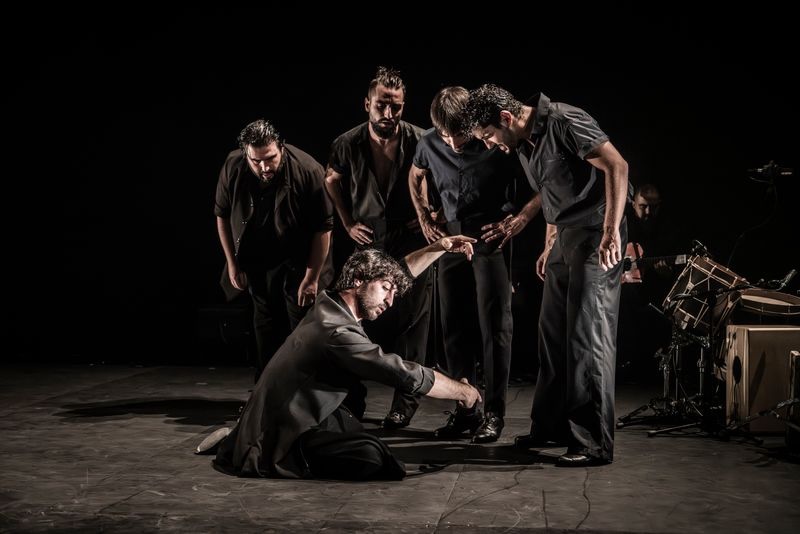
The opposite of cliché, and one of the NY Flamenco Festival’s most successful excursions into contemporary dance, was La Confluencia,which Estévez/Paños y Compañía performed the following night, at City Center. This eclectic piece for five male dancers, including the choreographers, sampled the broad tradition of the Danza Española, incorporating references to bouncy, traveling folk dances and the pirouettes and capers of the Escuela Bolera, as well as flamenco percussion. Modern dance contributes pedestrian movement, freedom of the torso, and a sense of spatial design to La Confluencia, but this dance portrays a community with an ancient, human lineage. Strict, formal patterns gave way to abstract, and increasingly surreal imagery as the piece progressed, but this imaginative grab-bag of a dance also made room for flashy solos, and encounters filled with grief and tenderness.
In a particularly striking image, pairs of men bowed their backs and yoked themselves together with rounded arms their muscular advance suggesting a lumbering ox-cart. Facing each other in the same position, they butted heads. Jorge Morera stood martyred and immobile on a chair, his shirt wrapped around his head; then, like Lazarus, he revived, vibrating, twisting, and tumbling on the floor. Jesús Perona partnered Paños, whose legs whirred like jagged blades in a circling lift; then Paños fainted in Perona’s arms and they spun their pietà. In a virtuosic solo, Paños crackled with electricity, springing up from his knees and later twirling in the air. Estévez, too bulky to be tossed around, was featured in a chair dance. Seated opposite the mellow-voiced singer, Al-Blanco, Estévez responded with fussy, ornamental arm-work.
The men caressed themselves with white handkerchiefs, and later, shrouded in a mysterious darkness, they whispered the words to a classic Siguiriya, as the tinkle of hand-bells suggested the presence of ghosts. Though the past flowed through La Confluencia like a living stream bearing along with it the verses of a medieval romance, the piece also recalled that in days gone by a royal decree prescribed 200 lashes, and more for dancers who rolled their hips lasciviously in public. Nonetheless, we were told, even nuns and small children surrendered to dance-mania scandalizing pious onlookers. La Confluencia honored Spain’s dance traditions and its multi-cultural influences, but the red-lit finale also signaled our distance from the past in a liberating outburst.
As a pendant to this mainstage program, Estévez/Paños also performed excerpts from their repertoire in the narrow lobby of the King Juan Carlos I of Spain Center at New York University, on March 3, 2026. Titled Landscape + Silencios, this program featured a collaboration with Yoel Vargas, a fresh-faced and agile young man trained in a variety of styles. But before Vargas descended the staircase, commanding attention with his proud bearing and spitfire heels, the choreographic duo performed a droll improvisation on the balcony. Only partly visible from below, Estévez aimed a corkscrew gesture at his own chest, while Paños stretched along the railing and ducked out of sight, one leg shooting up at an angle. Then he leaned backward, hooking his arms over the barrier. Virtually two-dimensional, the duo’s antic lines and florid gestures suggested action painting as much as dance, or a kind of puppet theater.
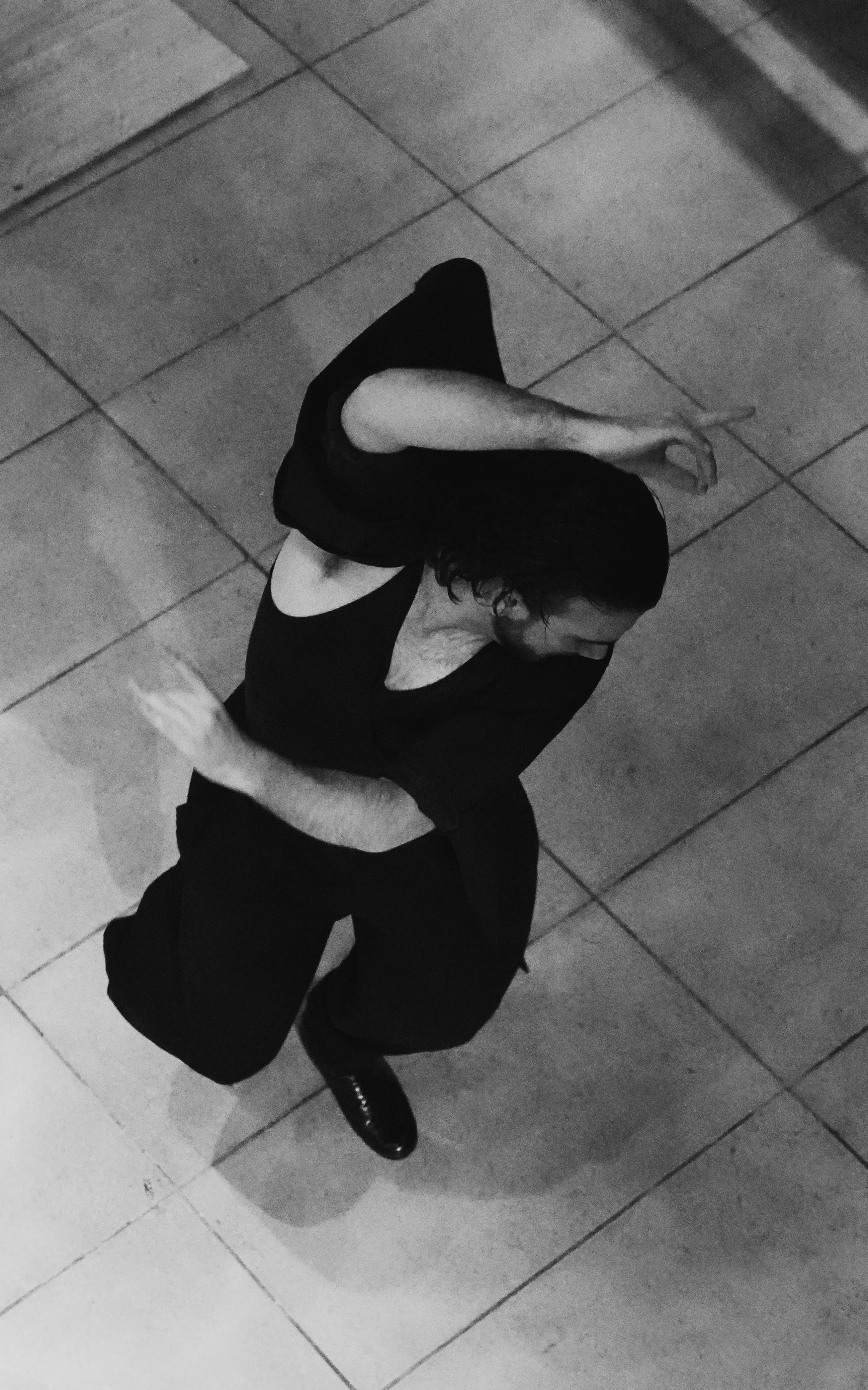
The main event focused on rhythmic exchanges between Estévez, seated at a table from which he coaxed a range of sounds scraping and rapping with busy knuckles and fingers, while Vargas stamped a response on the tile floor or extended a phrase with a smooth spin. In another segment, Vargas added castañets, increasing the dance’s intensity, but keeping his body tautly arched in an elegant promenade. Estévez and Paños followed with their own dialog, the former calling out sequences of numbers, the latter crouching and skulking, and pounding a floor-board with his fist.
During the post-performance discussion hosted by Diana Vargas, the choreographers revealed their fascinating concept, which was influenced by composer John Cage’s experience of silence, in an anechoic chamber at Harvard University, in 1951. Sealed off from the world, Cage nevertheless heard two sounds, one of which turned out to be the operation of his nervous system, while the other was his blood circulating. To these sounds, Estévez and Paños have assigned flamenco rhythms: tangos and siguiriyas. Once again, Spanish artists have crossed the ocean bridging old and new. May these exchanges long continue fertilizing our two countries.