


AUDIENCE REVIEW: Modern Dance: Dissonance in Different Textures
Company:
Dances We Dance
Performance Date:
November 20, 2025
Freeform Review:
I came to the Dances We Dance concert Thursday, November twentieth.
I came to see modern dance repertory.
American Modern Dance is rapidly fading away,
Repertory companies are constantly fighting for relevancy amidst the excitement of new choreography, new movement, and new structures.
Arts in general are clawing to stay alive in the current political climate.
But in the fleeting world of dance, the only way to preserve dances is to dance them.
Witnessing historical work feels urgent.
Dancing historical work has even more potency.
In order for dance to be passed down,
The ideas have to be discussed. The technique has to be analyzed, the choreography has to be embodied on the staging director to teach the movement, then embodied on the dancer to share the art piece with the audience and themselves. They dig for several versions of the piece, and watch multiple recordings- if they exist. The costume is located in someone’s basement. If you are lucky- it fits. At least five different mentors are consulted for historical relevancy. There are late night intellectual discussions, dreams of restaging pieces decades before they are dusted off again for the stage. It is a group effort. It is the work of museum curators, and the weight of retrospective research. There are arguments about structure, body placements, and secret art practices, so specific as to discussing what a dancer might be envisioning, feeling, and seeing during each movement of the dance. Each gesture has been analyzed and sequenced by a choreographer for a very clear purpose.
This is a process of preservation. And a labor of love.
Each modern dance pedagogy is an actual language spoken by the body, mind, and soul. And without the time and love poured into this process these very niche languages disappear. The performers and directors are not only dancers, artists, and athletes, but historians and librarians. They are working to preserve dance lineage for future audiences to witness and discover.
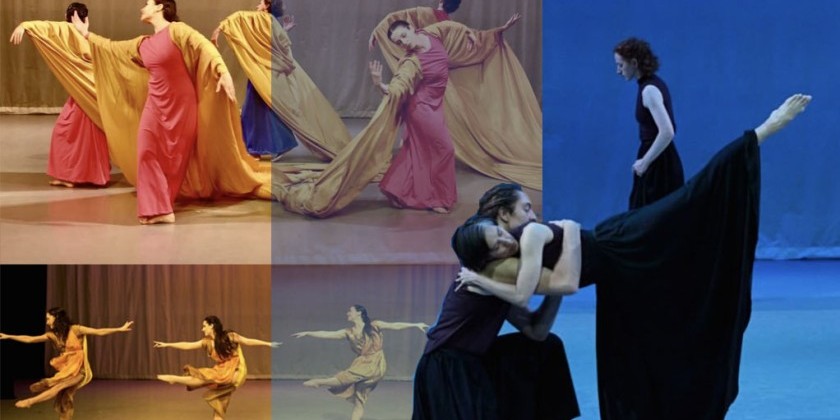
Francesca Todesco offered a brilliant show titled: “Harmonic Dissonance” with her company Dances We Dance, and a collection of guest dance artists. Each piece felt connected to the prior work and the proceeding. My recollection is nothing compared to witnessing these movers in time and space.
The opening piece was “Air for the G String,” by Doris Humphrey.
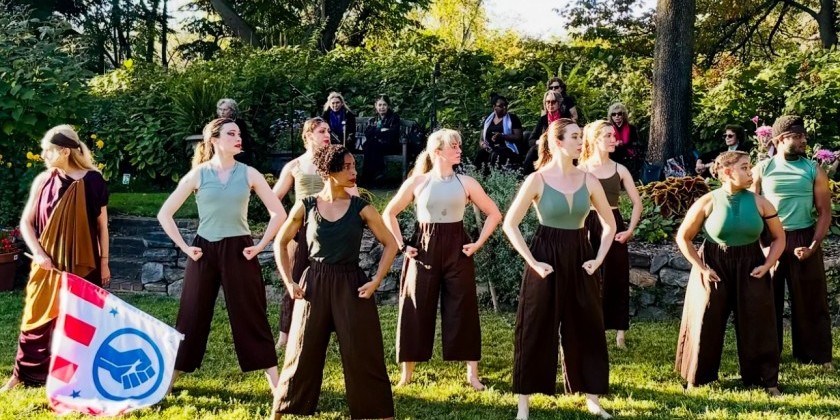
It is an often-restaged Humphrey work. Probably because it is a masterclass on Doris. It was an ethereal rendition. On Thursday evening Gail Corbin was the lead. She has been dancing Humphrey’s work her entire career, spanning a lifetime, and effortlessly introduced ideas of connectivity, elegance, and harmony along with four other gifted dancers. There was a manifestation of strength underneath the simplicity of “Air’s” processional quality. But as with most dances that seem simple, they are often not. “Air” showcased qualities of strength because the dancers had sturdy framed arms to support the slower movement and cascading gowns. They each had control of their torso lending to subtle expression within the stoicism of Bach. The five dancers spoke with their bodies about understanding the necessity of womanhood and unity between them- Bold statements in today's atmosphere.
Then several of the dancers stunned and transformed in “Scherzo” by Isadora Duncan (Schubert Symphony No. 9). The language changed by choreographer, but so did the tone. The statuesque dancers from before became coy hummingbirds. They exhibited an entirely new set of specificity. This time emerging from cascading chests, and emotive hands. Their intentionality was very clear, and felt like watching sunshine flickering on the ocean, or tasting a tart apricot. They were incredibly light on their feet, with precise, precarious jumps. The dancers flirted and played and stood atop punctuated atitudes. Faith Kimberling appeared in a solo with delecate, generous movements that offered her heart to anyone in attendance. If “Air” fed me strength, “Scherzo” fed me belief. The dancers were buoyant and alive, and a reminder of the vitality of Duncan’s repertory work.
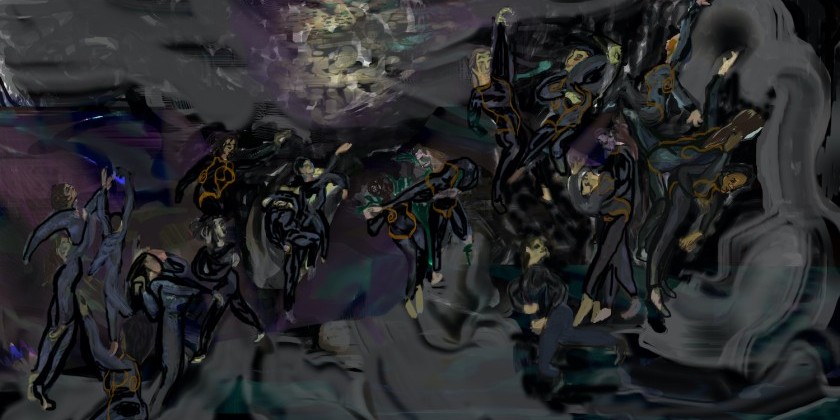
And then the texture of the show changed again with a piece by Claudia Gitelman set on the Sokolow Theatre Dance Ensemble. In “Schubert Impromptu,” strength and hope were still very much prevalent, but there was an emotional depth that the Sokolow dancers know how to convey. Gitelman’s work lends itself to these truths by way of devasting suspensions and hinged falls spilling onto the floor. The dancers moved seamlessly as an ensemble, supporting each other as a unit. The moments oscillated between fleeting and elongated, from frantic spiraling turns to a sustained arabesque by Krista Jansen. Minimalism was loaded with darker layers. A different picture was painted than the structured brightness from earlier pieces in the program. It was the perfect segway to additional defiant works by Isadora that closed the show.
I was grateful for the contribution of so much beautiful dance.
I could have watched this program every evening it was open; there was so much emotion to gather and process and reflect upon. I look forward to the intricate work Dances We Dance programming brings forth in future seasons to come. I'm grateful for the continued efforts of the dance artists who choose to breathe life into modern dance.
Author:
Mary Karl