



More Reviews

Lawton Dance Collective (LDC)'s "Evidence of Damage"

Bill T. Jones/Arnie Zane Company at Wagner Park
AUDIENCE REVIEW: "Evidence of Damage"
Company:
Lawton Dance Collective
Performance Date:
10/24/2026-10/25/2026
Freeform Review:
Entitled “Evidence of Damage”, Lawton Dance Collective (2024) showcased their largest project yet, an evening length work at Dixon Place in New York on September 24th and 25th, 2026. Having had the pleasure of seeing LDC’s performance in the past, I attended this show with brief familiarity of their work as an ensemble, under the direction of Julia Lawton. “Evidence of Damage” ran about an hour with a 15 minute intermission. Featured performers included: Sarah Baghdadi, Erica Caruso, Isabella Gamba, Abby Garcia, Katie Jaffie, Casey Leyden, and Emelia Sikorsky.
As a made-known mission of Lawton Dance Collective, director Julia created this particular work through the exploration of other art mediums, specifically literature; In this case, the company pulled from 1970s feminist Adrienne Rich’s poetry, Diving Into The Wreck. Lawton integrated themes of femininity, patriarchy, disadvantage, identity, and the perception of ‘woman’. Julia mentioned that this show has been in creation and preparation for the last year, giving demonstrative effort and consideration to the poetic concepts of “the complexities and messiness of both personal life experiences and the systems of our world”. In her program note, she drew a metaphoric tie from the experiences of womanhood to a shipwreck, finding the treasures that are left behind the ‘wreck’ of these challenging political and social landscapes.
The piece began with one longer section, “Walking in the Dark”. Amidst floorwork, pedestrian, partnering, and contemporary dance modalities, a narrative of support juxtaposed with communal struggle unfolded. We viewed several interactive moments between dancers, where at times it felt supportive and at other times hierarchical. The dancers ebbed in entering and exiting the space, helping the guide others away or onstage with them. Accompanied by a string-heavy soundscore, different musical compositions often overlapped one another simultaneously; The audience both saw and heard the undertones of this dissonance, which contributed to the themes of discomfort and struggle. Our ears worked to make sense of the organized chaos, as we watched the dancers struggle to find their own meaning within it.
In times where strong group bonds would form, relaying images of community and dependence, a solo would oftentimes break away. In some soloist moments, performers seemed to be on a journey of identity: struggle versus comfort. One soloist was seen completely limp and heavy in defeat with their eyes closed, as others carried and manipulated them in a series of lifts. Others, like dancer Casey Leyden, would be seen moving through more dynamic and aggressive movements, alluding to the result of reprehension towards unfair, patriarchal systems.. I felt a personal connection to this tone of anger and tension in the movement vocabulary, especially with the piercing eye contact from dancers expressing it.
After a brief intermission, we submerged back into the world of Adrienne Rich with a section entitled “the freedom of the wholly mad”. With a refreshing music score, tone, and movement style, we witnessed an energetic and playful quartet. Alluding to feminine play, sensuality, and slight humor, the dancers found a sense of freedom within themselves that they had been searching for previously. As the second half of the show progressed, it was evident that the performers were working within their community to find liberation from the wreck that has defined them. “For A Sister” and “Meditations” were the last two sections featured, which felt familiar to the themes portrayed in “Walking in the Dark”. Despite the differences in journey and context leading up to this section, the dancers find similarity in their struggle. I was reminded of the idea of constants between culture, experience, sociopolitical class/demographic, etc… In spite of our differences, women face a similar battle of disadvantage, oppression, and patriarchal defiance in our existence alone.
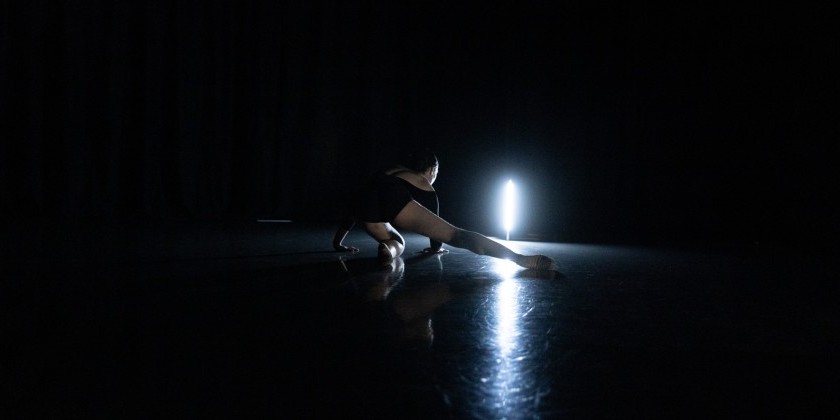
In the conclusion of the work, we were left behind with one memorable image: All the dancers walking solemnly in the dimly lit upstage space, as one dancer is moving alone downstage. This last dancer seems to still be in discourse with their identity and belonging within the system that has hurt them, as they move in an apprehensive quality. Finally, as the dancers are passing in sort of a ‘procession’ upstage, the last dancer is comforted and encouraged again by another to join the group, leaving us with a sense of peace and gratitude for our communities that support us, as well as a sense of hope for change in the future.
“Evidence of Damage” felt important in the regard that performance art and literature allows us to share stories about emotional wreckage and reclamation through tangible demonstrations of struggle. Lawton Dance Collective created a world that felt real and significant to both dancers and audience members witnessing the poetry come to life. It was clear that the dancers put time and consideration into not only Rich’s words, but the greater purpose of their role as modern suffragettes. Julia Lawton and her ensemble build worlds for viewers who are interested in exploring more about themselves from a new perspective as well as the world around them.
Author:
Kierstyn Edore