


Related Features
IMPRESSIONS: Lydia Johnson Dance Leaves Us with a Sense of Caring at New York Live Arts

IMPRESSIONS: Fresh Tracks 2026 at New York Live Arts
IMPRESSIONS: Tere O’Connor Presents “Construct-a-Guy” and “The Lace” at New York Live Arts

By Sarah Cecilia Bukowski
View Profile |
More From This Author
Published on December 10, 2025
Tim Bendernagel. Photo: Maria Baranova
Construct-a-Guy (1984)
Choreography: Tere O’Connor
Performer: Tim Bendernagel
Lighting Design: Michael O’Connor
Music: Diane Martel
The Lace (World Premiere)
Choreography: Tere O’Connor
Performers: Tim Bendernagel, Liony Garcia, Gabriel Bruno Eng Gonzalez, Natalie Green, Aaron Loux, Heather Olson, Emma Judkins (understudy)
Music: Tere O’Connor
Lighting Design: Michael O’Connor
Costume Design: Reid Bartelme and Harriet Jung
Choreographer Tere O’Connor’s dances are dense yet strikingly clear, drawn from a poetic fluency that crosses multiple dance vernaculars while leaving room for that most essential and elusive of grammars: the dancer. It helps that O’Connor’s choreographic phrases seem full of air; even at their weightiest and speediest there is a lightness, a space in the swing of limbs and articulation of joints that lends a deliberate yet unforced quality to each dancer’s interpretation. Precision in repetition and unison prioritizes sensation over geometry as dancers shape themselves from within, not through the dutiful execution of steps, but through the surfacing of their physical thought.
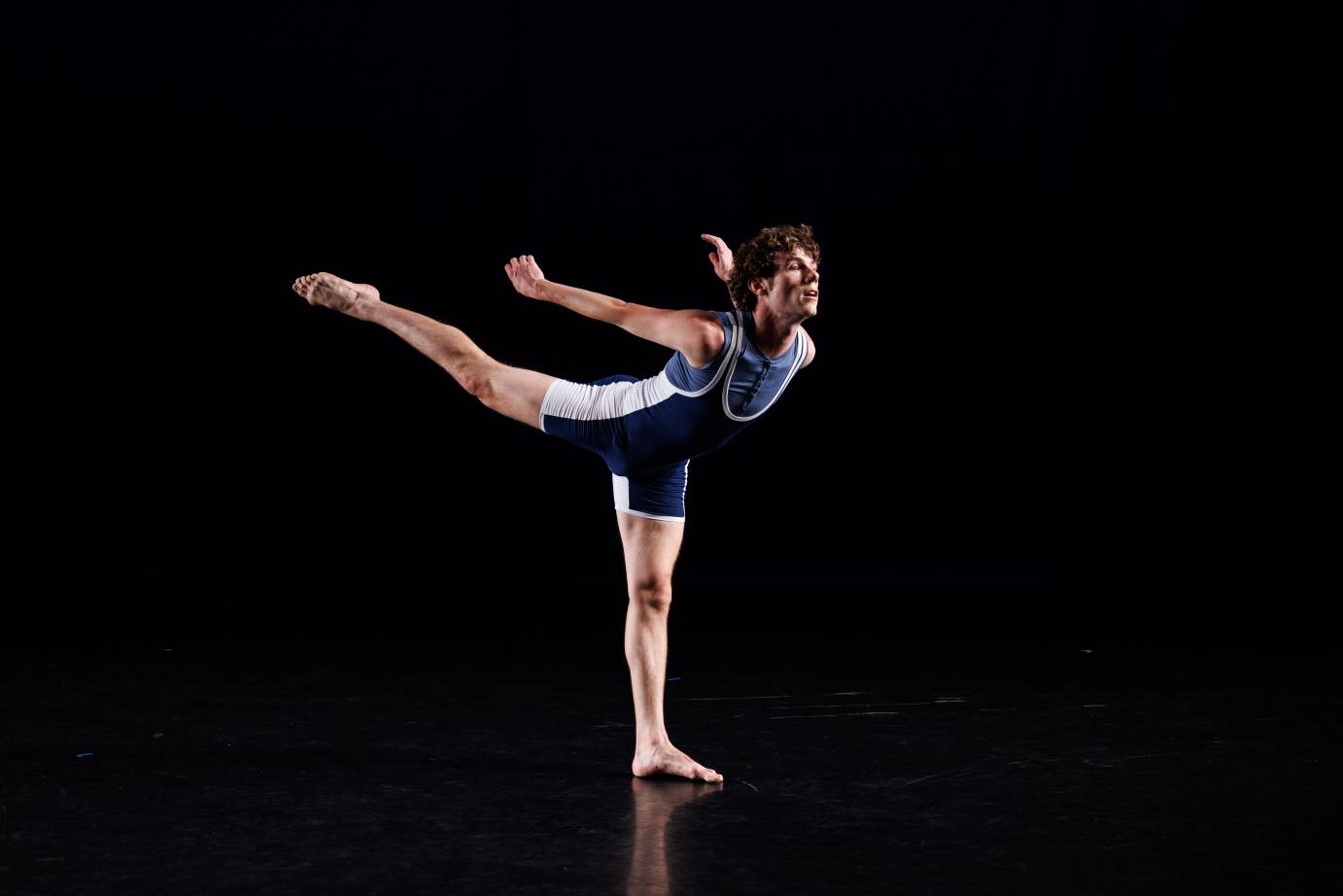
In a double bill at New York Live Arts, O’Connor reaches back to his very first dance, Construct-a-Guy, presented in 1984 on the very same stage — then Dance Theater Workshop — in their Choreographers Showcase program, now known as Fresh Tracks.
Like many emerging artists today, O’Connor created and performed the solo himself as an exploration of his choreographic logic and imagination, as he shared in a brief mid-program talk. Restaging the work for dancer Tim Bendernagel entailed revisiting the ingredients of his early voice: the canonic influences, physical intuitions, and idiosyncratic structures brewing in the mind and body of a young man emerging from the closet.
“Everything was there,” O’Connor reflects, “Dance is an artifact of thought” — one that transcends the expressive capacities of language and the necessary logics and limitations of other more concrete creative acts. Reenlivening this intimate dance artifact alongside an ensemble world premiere, The Lace, O’Connor shows how his voice has evolved while remaining true to his curious, sensitively contrarian nature.
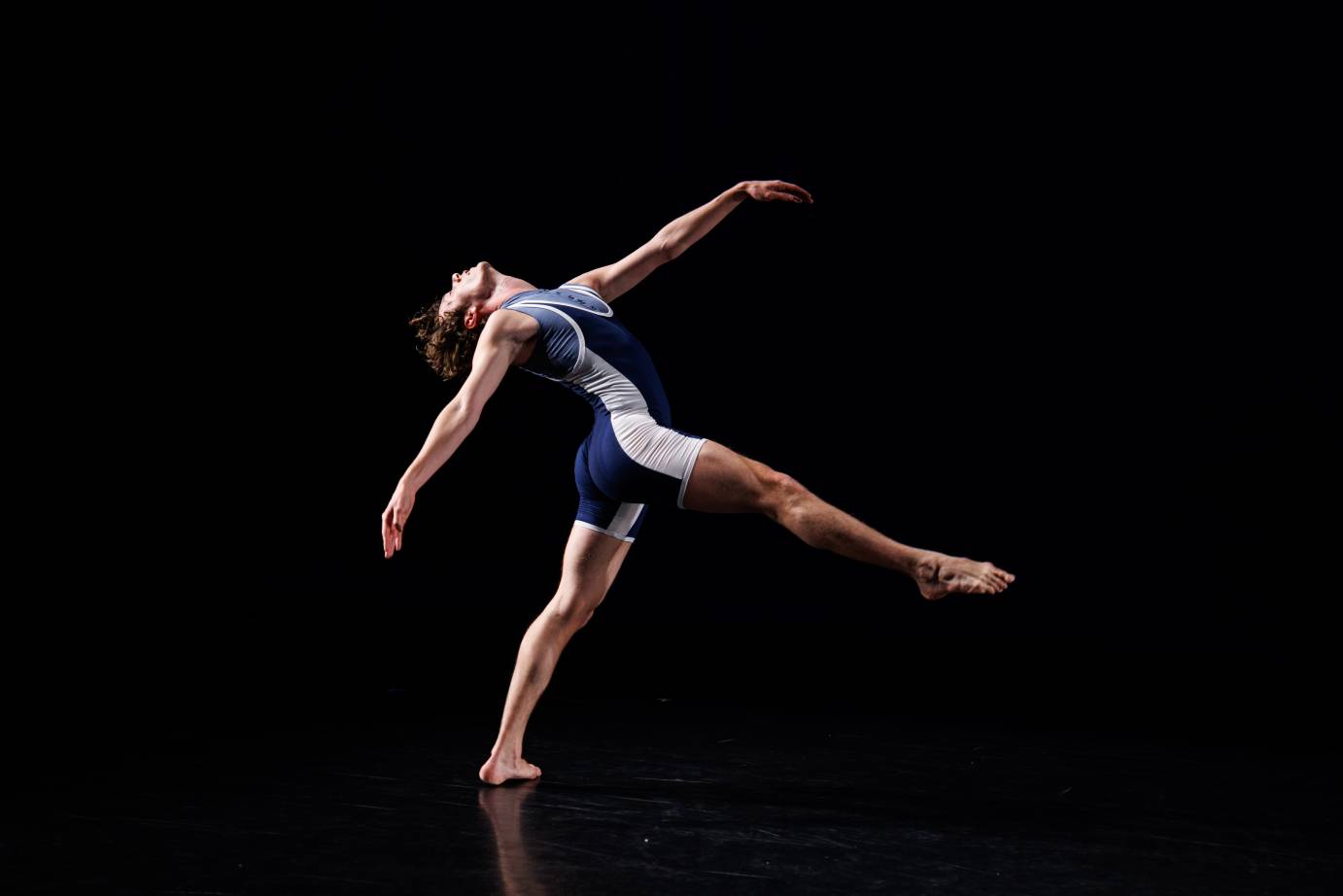
Tim Bendernagel in Tere O'Connor's Construct-a-Guy (1984). Photo: Maria Baranova
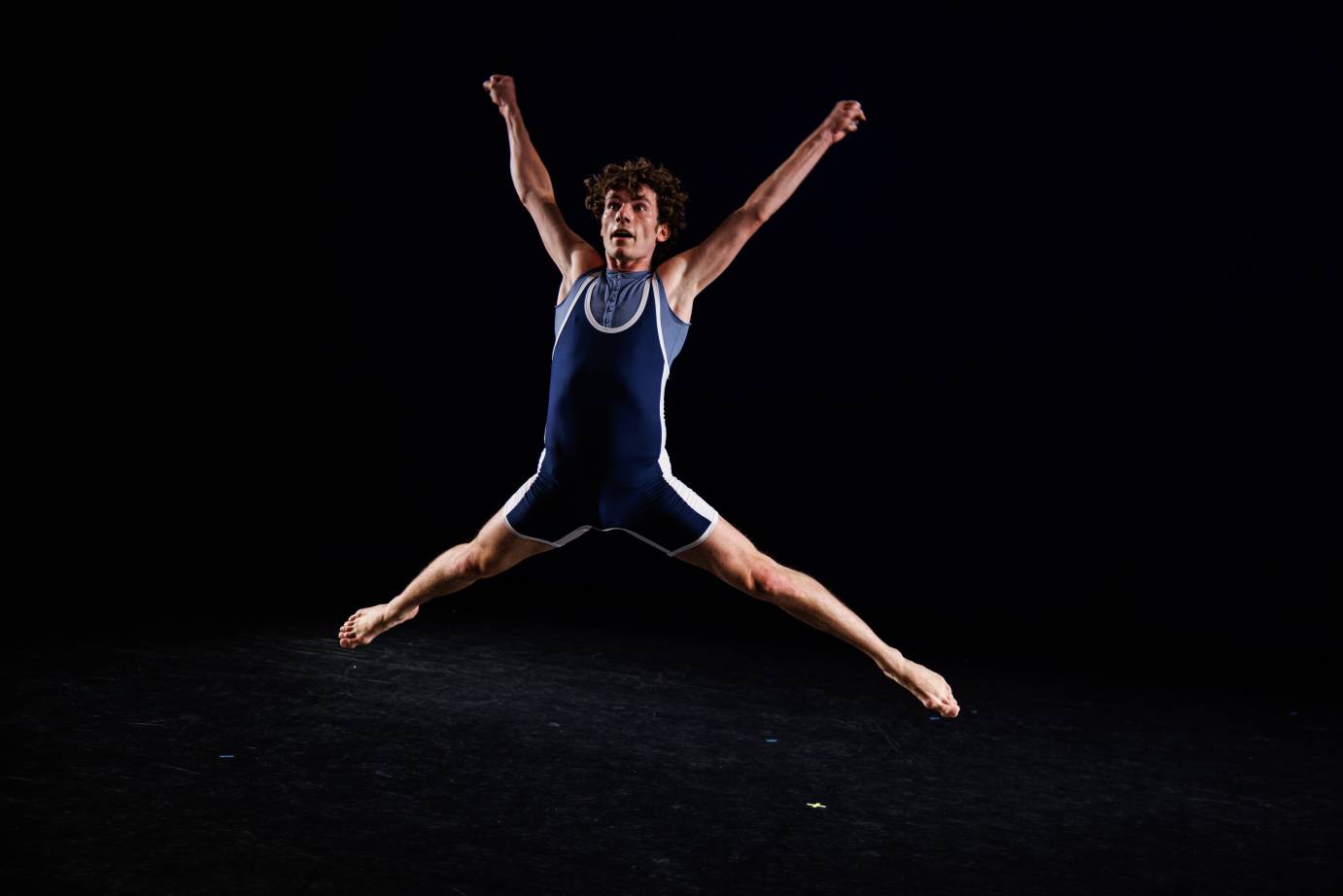
Witnessing Bendernagel’s performance of Construct-a-Guy, I can’t help but wonder what kind of dancer O’Connor was — where he carried the air in his joints, how his weight hovered and fell, the mischievous sparkle in his eye — but the dance speaks for itself, as does the dancer. Bendernagel’s wonderfully ordered yet unruly body offers a fine-tuned command of scale and rhythmic precision (reliably perched on top of the beat), led from a clear-eyed focus.
At once playful and dead serious, he paws and jogs at right angles around the open stage, piecing together strings of swinging phrases interrupted by sprightly jumps and glidingly percussive ball changes. He flattens briefly into angular, two-dimensional shapes; a scoop or spin revives his roundedness. Dancing repetitions, recursions, and redirections in and out of silence, a persistent tune fades up and down at intervals, at times layered with scraping or sawing sounds to renew his restless bop. Construct-a-Guy builds a world of constant contention and negotiation that makes visible the irrepressible freedom and joy of having a body. Bendernagel revels in it.
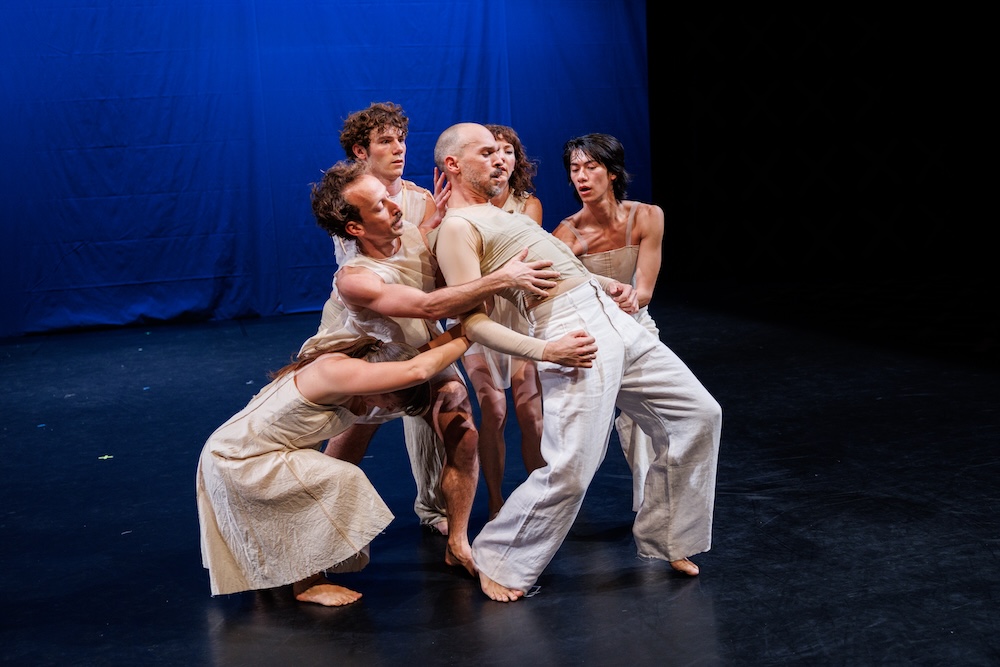
Following this visual primer and O’Connor’s curtain chat, The Lace extends attention to group dynamics and physical relationships through gestural language and energetic connection. Each of the six dancers navigates their shared world on their own, carefully balancing their weight on soft feet. Eye to eye, they build recognition, learning, and acceleration through gesture and breath. Individual voices rise — Liony Garcia’s elastic reach, Heather Olson’s thrashing tension, Aaron Loux’s dip-diving suspensions — and brief pairings spool out tender and spirited exchanges.
O’Connor’s vocabulary and syntax bear his hallmark range and unpredictability; the dance hangs together by a thread (dare I say, a lace) that weaves in and out of legibility while remaining tied to emotion and sensation.
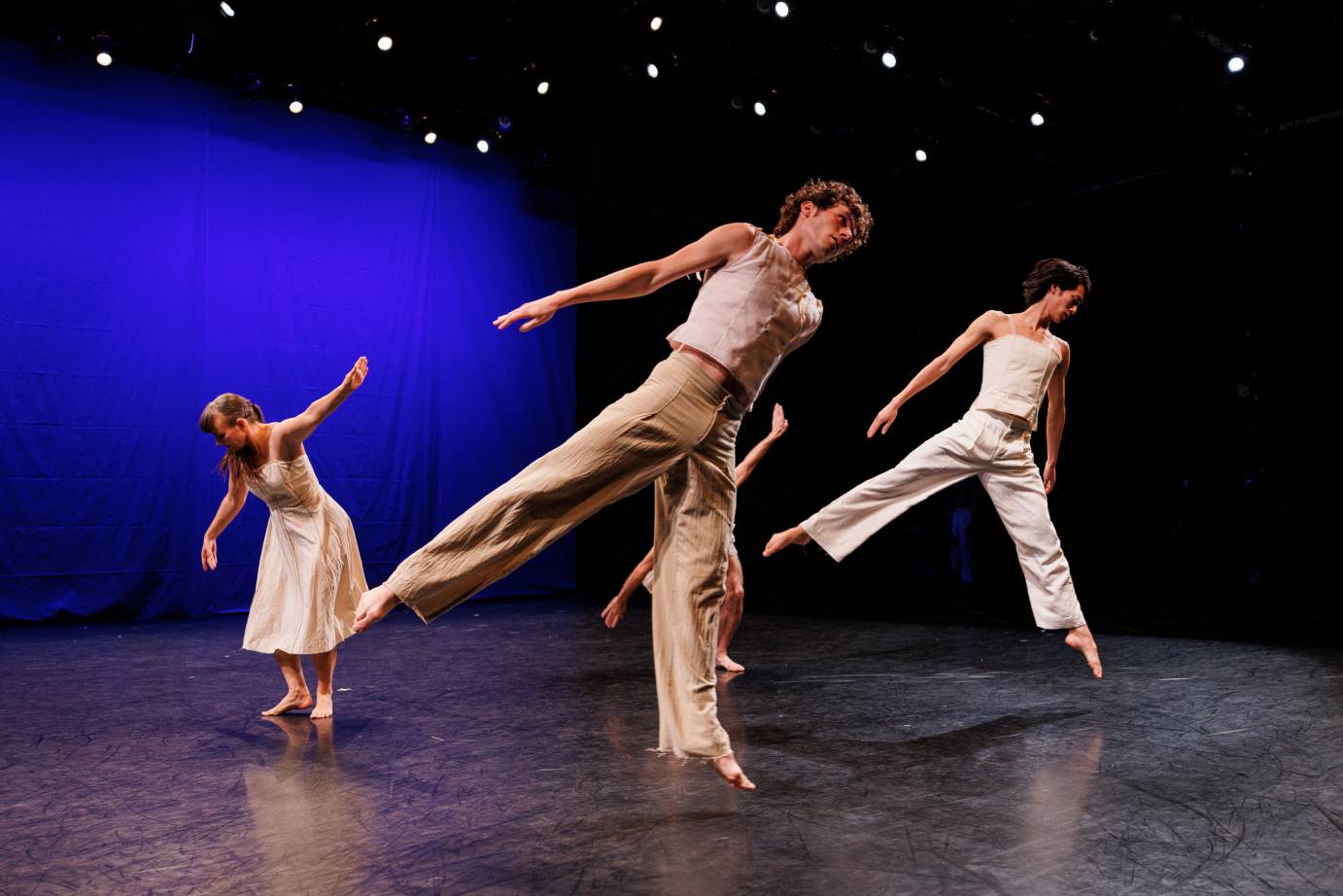
The musical tapestry, also by O’Connor, buoys the dance along with softly-plucked strings, echoing chimes and horns, plaintive voices, and passages for piano and string quartet interspersed with sounds of wind, water, and waves. Clad in Reid Bartelme and Harriet Jung’s beautifully-draped cream-colored costumes, the dancers glow in Michael O’Connor’s subtle light.
Backed by a hum of indigo or a wash of sky blue, they are revealed in clear brightness, their gazes bold and direct, only to shift into a dreamy yellow distance as they turn inward. Their world is an unstable one, equally beset by crisis and tempered by comfort, yet they find assurance in themselves and one another. With soft hands they touch their own bodies, touch the air around them, and reach out to touch each other, tuning their attention through permeable boundaries: inward and outward, self and other, dancer and dance.
41 years on, O’Connor’s voice remains fresh, still full of air and an irascible generosity of sensation that comes through each dancer’s body in its own way. His love of dance — and his love of dancers — shines through his commitment to a world where “choreography becomes a liberatory space.”