



Related Features
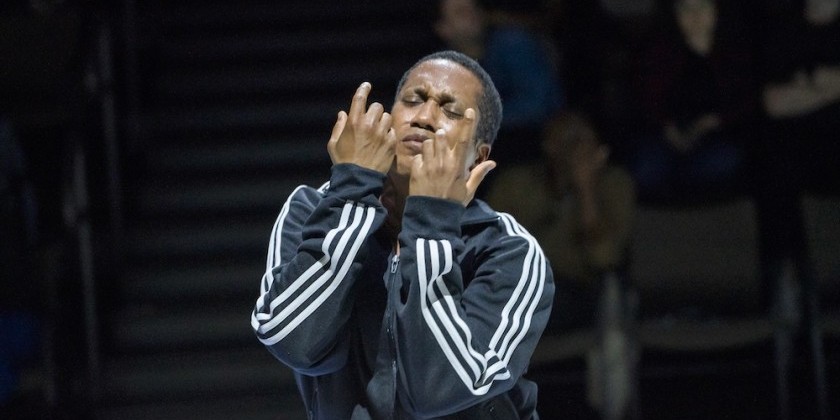
IMPRESSIONS: Benjamin Millepied's "Reflections: A Triptych"
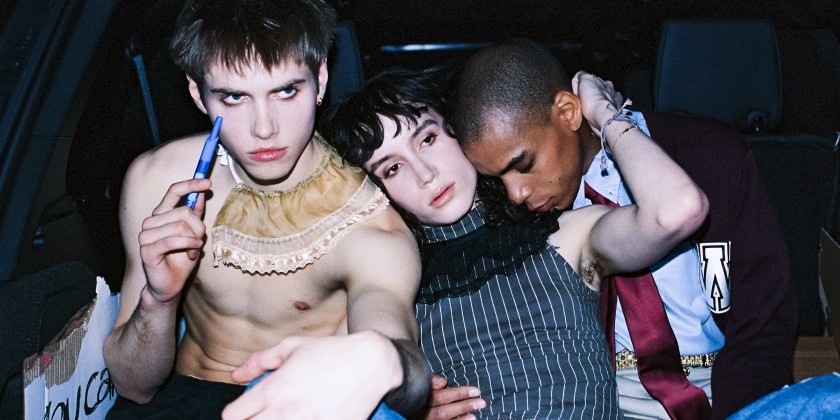
IMPRESSIONS: An Evening of New Work: Baryshnikov Arts Welcomes Back Aszure Barton & Benjamin Millepied

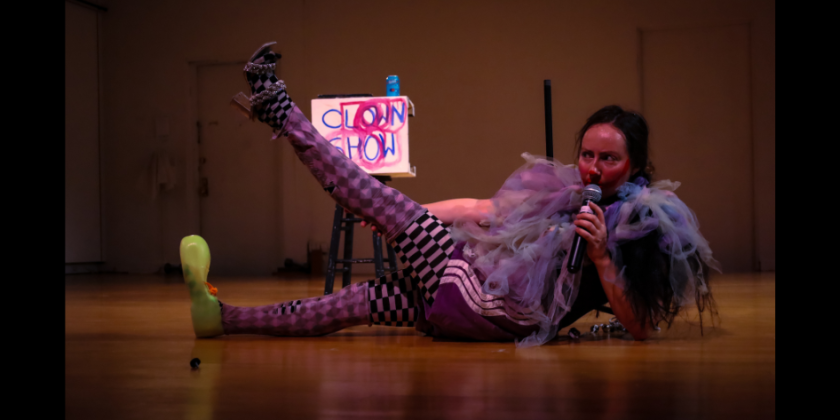
IMPRESSIONS: Benjamin Millepied’s "Romeo & Juliet Suite" at the Park Avenue Armory

By Catherine Tharin
View Profile |
More From This Author
Published on April 20, 2026
Romeo and Juliet Suite. Photo: Stephanie Berger
Presented in Association with L.A. Dance Projects, Paris Danse and Dance Reflections by Van Cleef & Arpels
Park Avenue Armory Presents
In association with L.A. Dance Projects, Paris Danse, and the Festival by Dance Reflections Van Cleef & Arpels
Benjamin Millepied’s Romeo & Juliet Suite
Direction and Choreography: Benjamin Millepied
Music: Sergei Prokofiev
Lighting and Scenic Design: Francoise-Pierre Couture
Costume Design: Camille Assaf
Creative Collaboration, Videography: Benjamin Millepied, Olivier Simola
Company: Arcadian Broad, Marissa Brown, Renan Cerdeiro, Courtney Conovan, Addison Ector, Daphne Fernberger, David Adrian Freeland Jr., Kyle Halford, Robert Hoffer, Rachel Hutsell, She Kinouchi, Clay Koonar, Giacomo Luci, Morgan Lugo, Audrey Sides, Hope Spears, Emma Spinosi, Noah Wang
Camera Operator: Sébastien Marcovici
Park Avenue Armory's Wade Thompson Drill Hall, New York, NY
March 2 - 21, 2026
Walking past the enormous stage, the 1,200-person audience takes their places on risers facing the back of a glowing red sofa with a giant screen hovering behind it. The setting is impressive; one feels Lilliputian in the dark, cavernous Park Avenue Armory, the site of Benjamin Millepied’s Romeo & Juliet Suite, inspired by William Shakespeare’s tragedy and set to the traditional ballet score by Sergei Prokofiev.
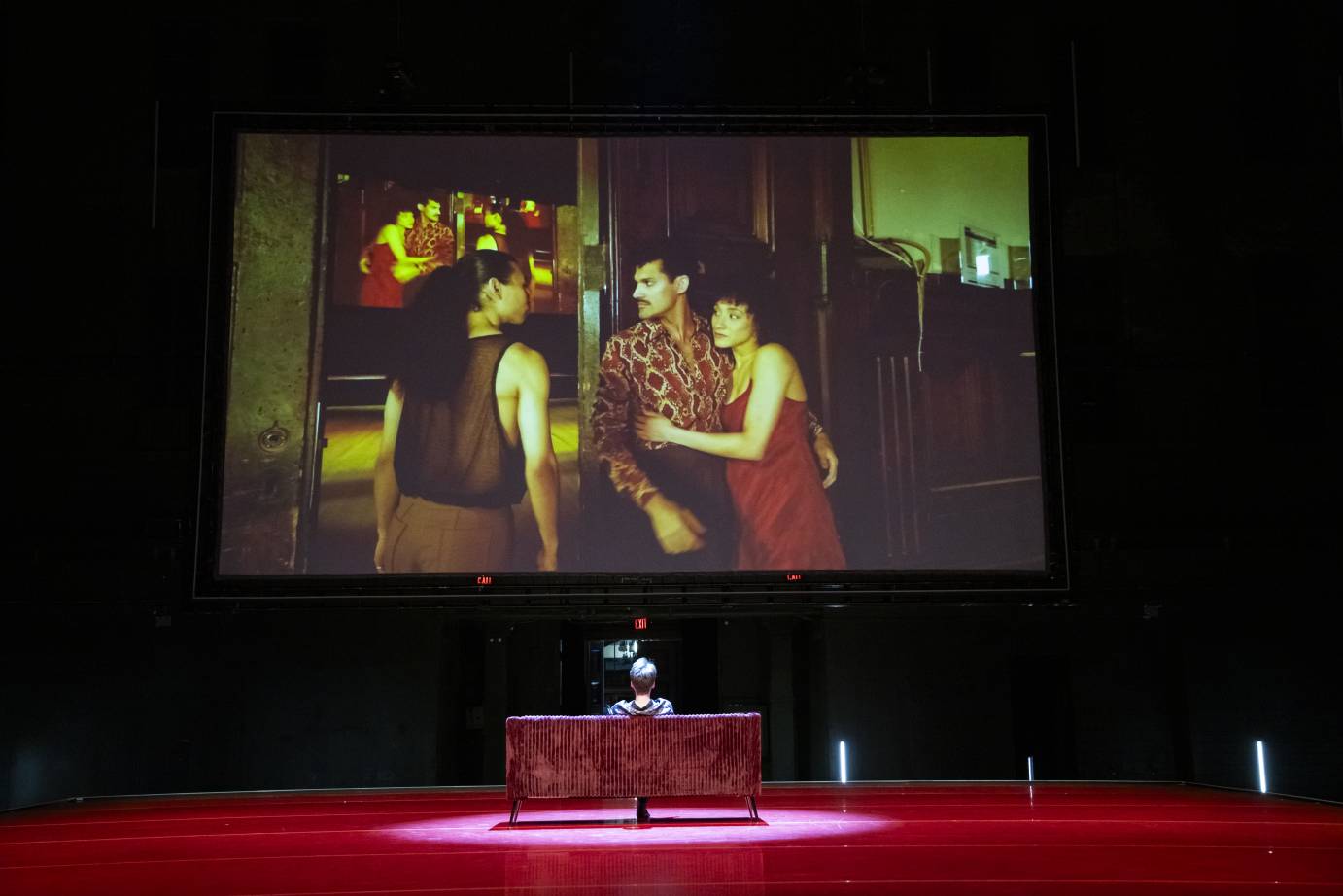
Rather than presenting the ballet conventionally, Millepied builds the production through a layering of live dance, roaming cinematography, and the architecture of the Armory. A camera operator moves among the performers, filming their actions and projecting them onto the screen. At times, the audience sees the dancers directly while their movements appear simultaneously enlarged on the screen; at others, the camera reveals spaces normally hidden from view, such as corridors, staircases, and rooms above and off the main floor, where events unfold before appearing in magnified or multiplied form; at other moments, the stage remains unprojected. The fascination of the production is its inventiveness on a large scale. It’s like a nesting doll of different effects.
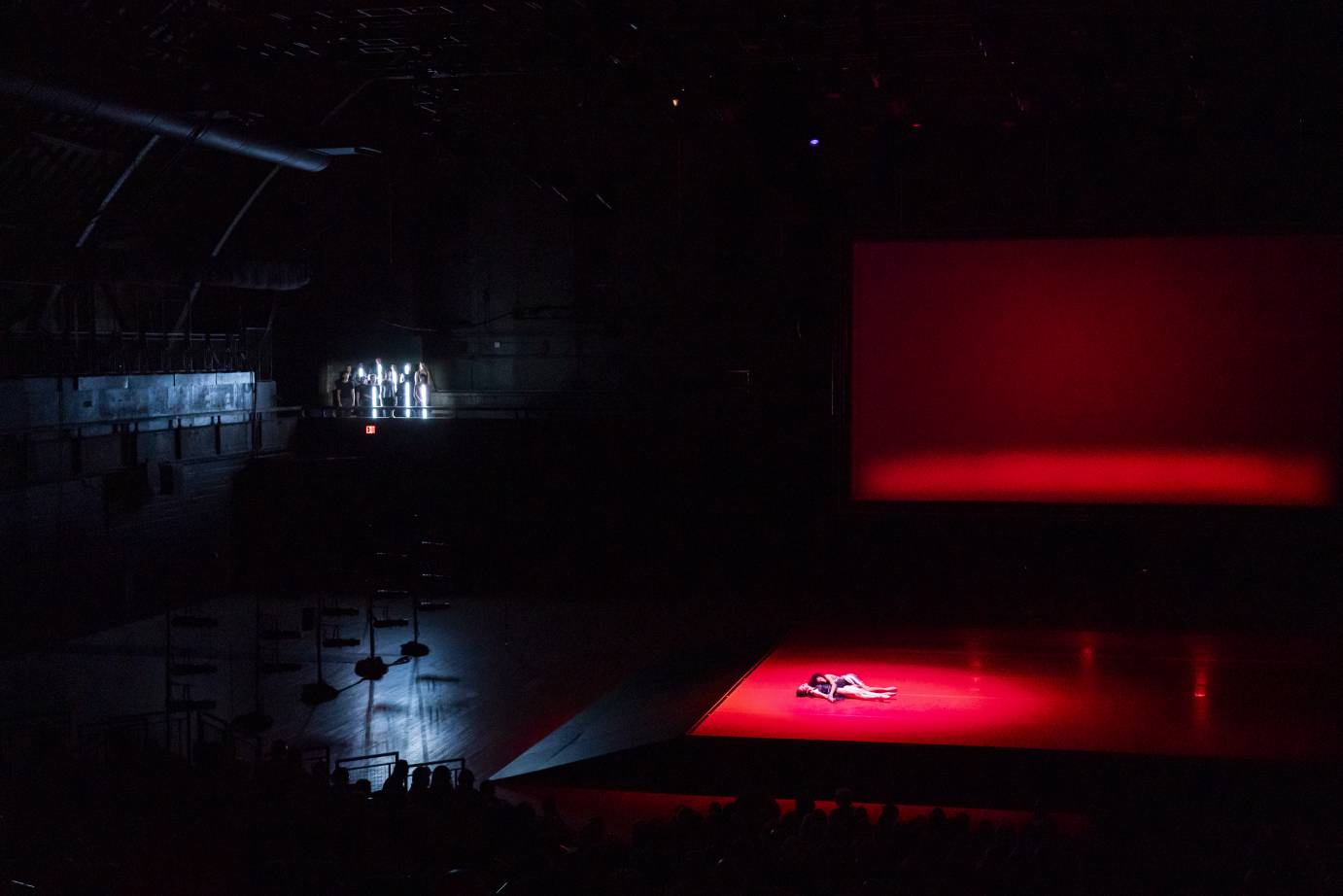
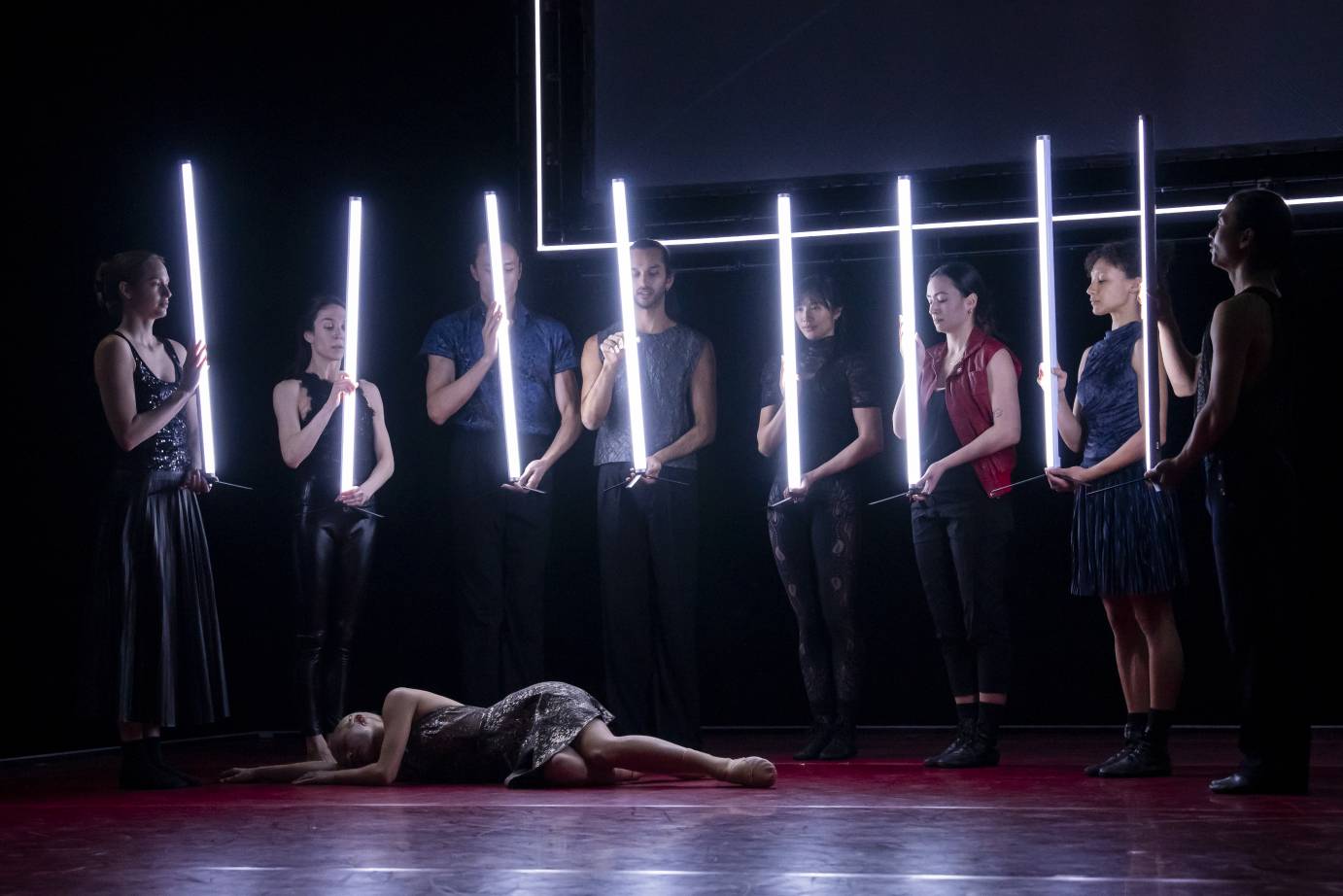
At intervals, motionless dancers, each holding a glaring neon stick, act as a visual chorus. Like ominous markers, their white sticks cut through the darkness, framing the action and hinting at what lies ahead.
The program explains that Millepied cast the lovers in different combinations, departing from conventional gender roles and pairings to emphasize a contemporary view of love. While this is noteworthy, gender-flexible casting in dance has a long history, from choreographers such as Harald Kreutzberg working in the early twentieth century to the 2024 Anne Imhof production DOOM, also based on Romeo & Juliet and presented at the Park Avenue Armory. I attended Millepied’s “straight” version featuring Giacomo Luci as Romeo and Emma Spinosi as Juliet.
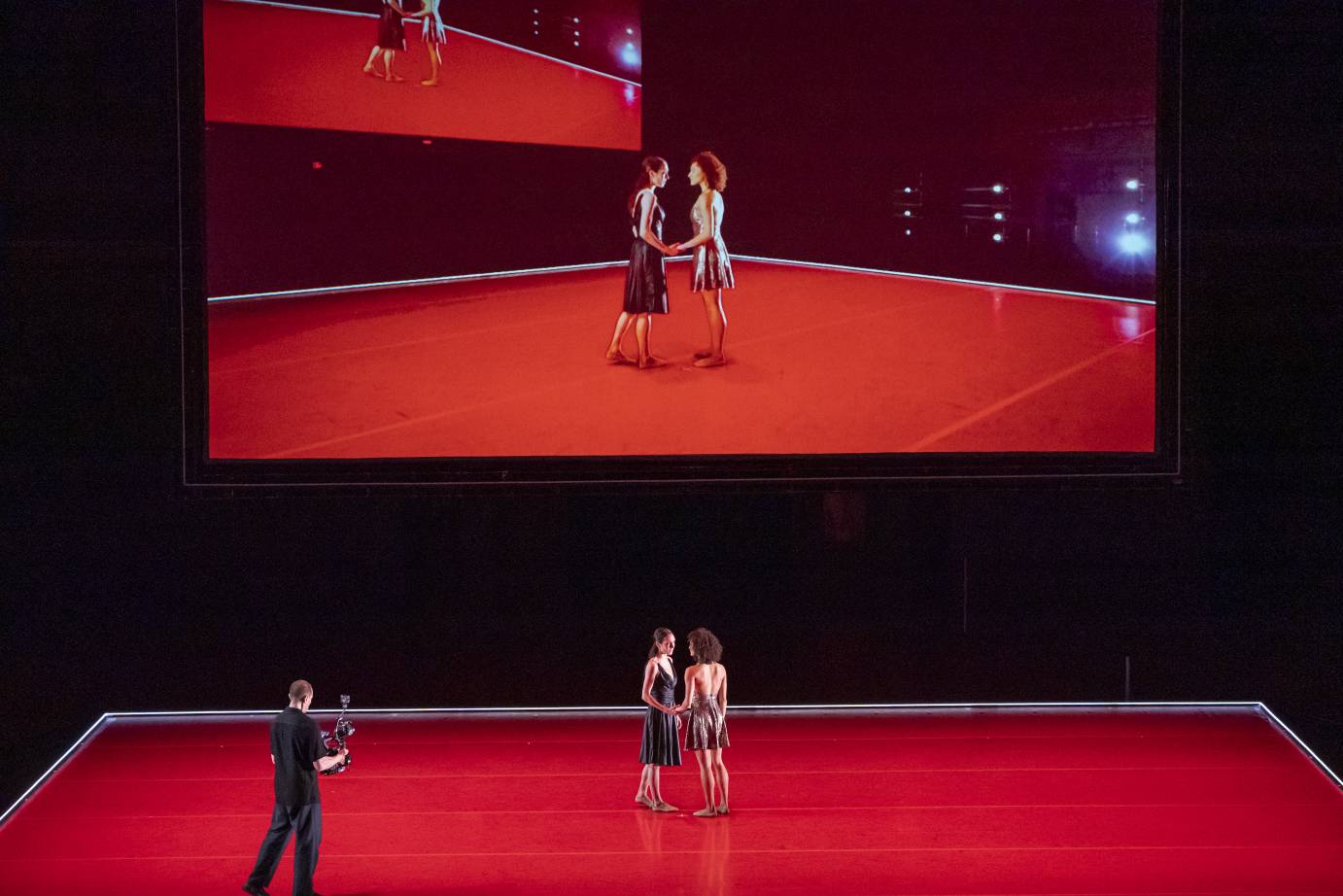
A sound peals, and a small man runs up a dark ramp onto the black stage, beckoning his friends. They lounge on the sofa as if waiting for a film to begin. Former New York City Ballet principal dancer and current L.A. Dance Project associate artistic director Sébastien Marcovici serves as the camera operator, threading through the performers. He records their camaraderie and casual gestures seen both live and magnified on screen, establishing a baseline for the more developed use of the camera that follows.
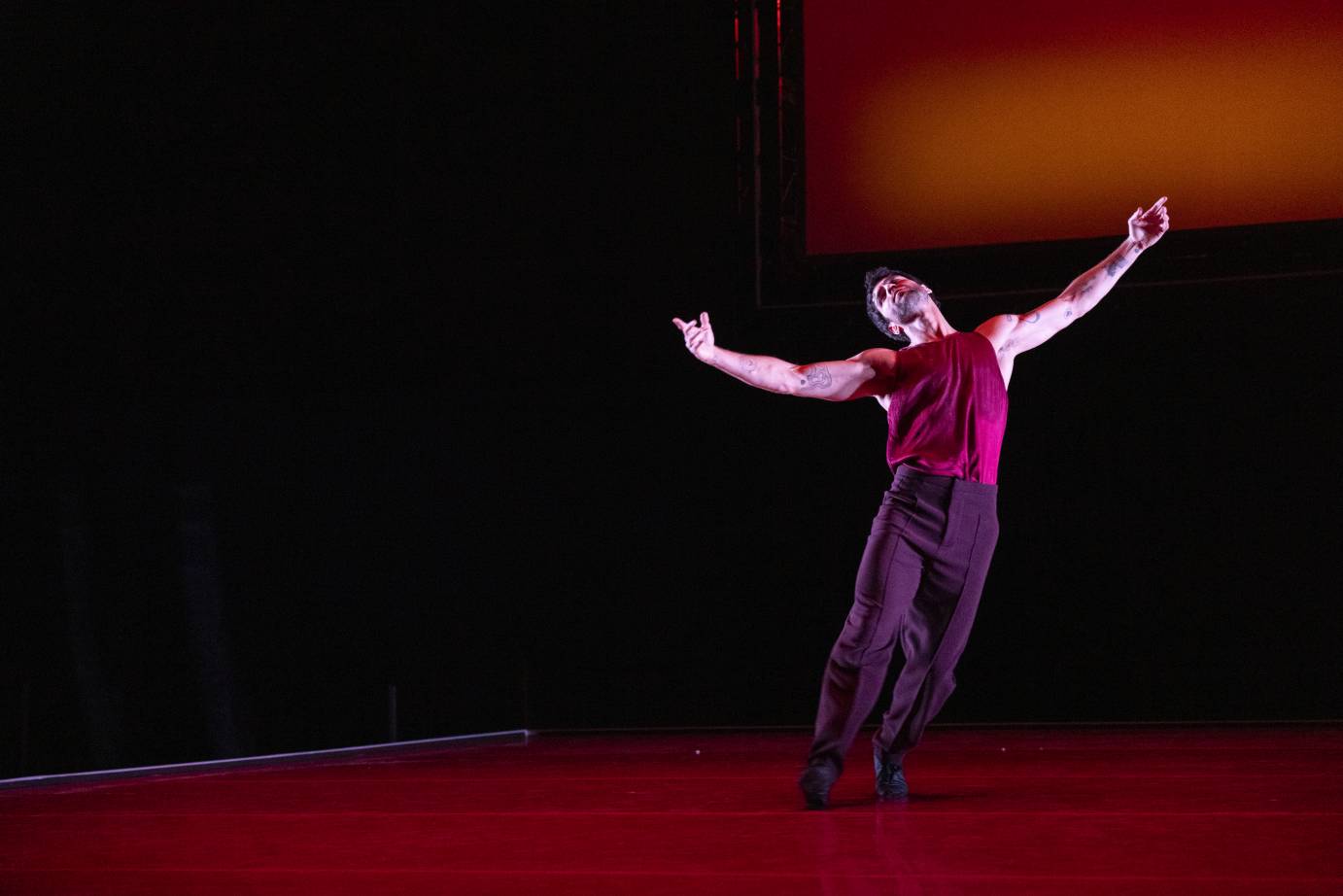
Dark-haired Romeo enters with Mercutio, danced by Kyle Halford, a standout among standouts for the clarity and verve of his dancing. Romeo’s short solo features kicks, leans, leaps, pencil turns, and stretching arms drawn from traditional ballet vocabulary, punctuated by individual movement (an approach adopted by contemporary dance and ballet companies alike). The movement, though expertly performed, is often familiar. But the movement is not necessarily the point. Rather, the point is the spectacle and the cumulative effect of all the elements working together in this masterfully conceived production.
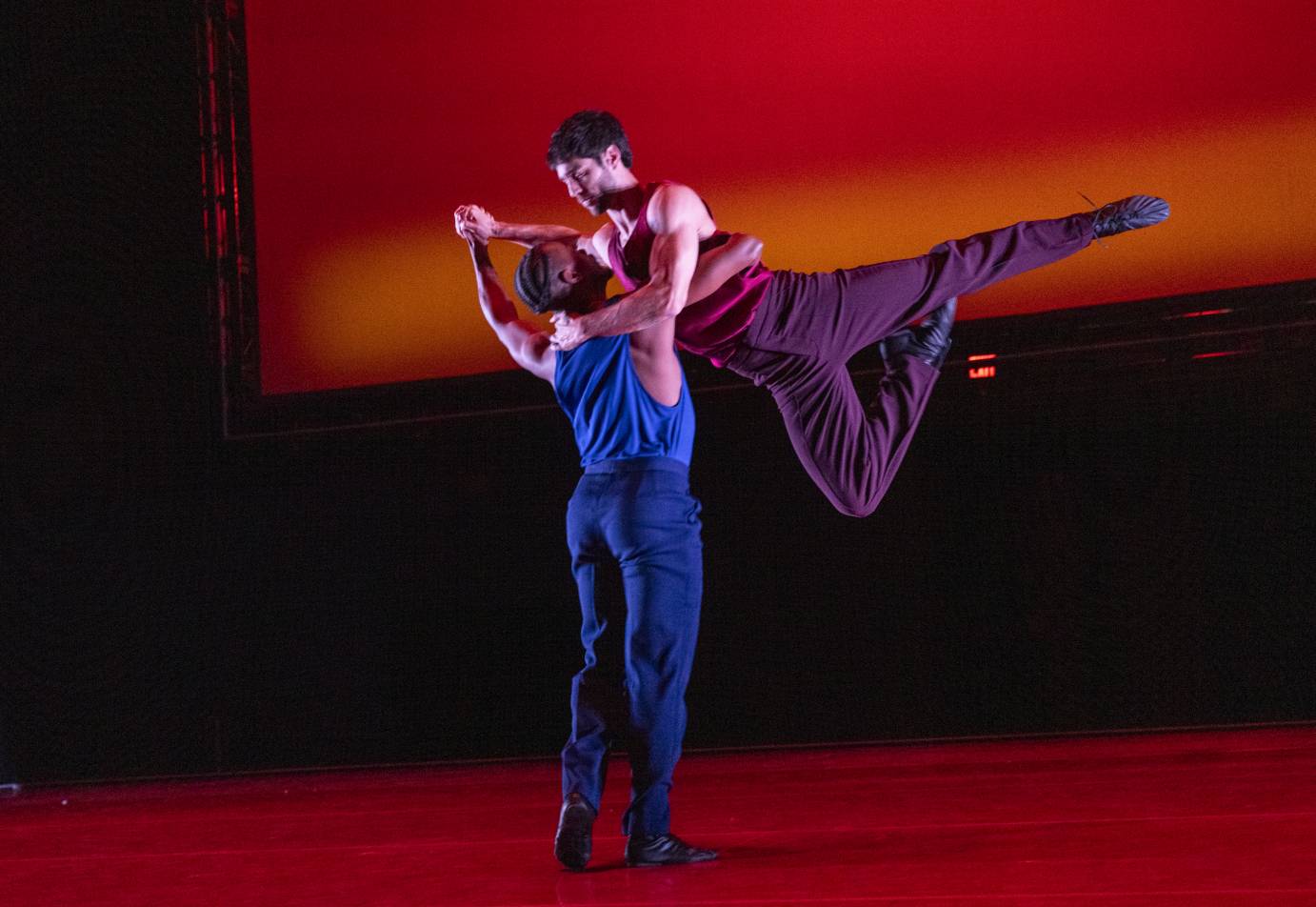
Millepied’s version moves quickly through Shakespeare’s play, condensing the larger story into a series of pivotal scenes.
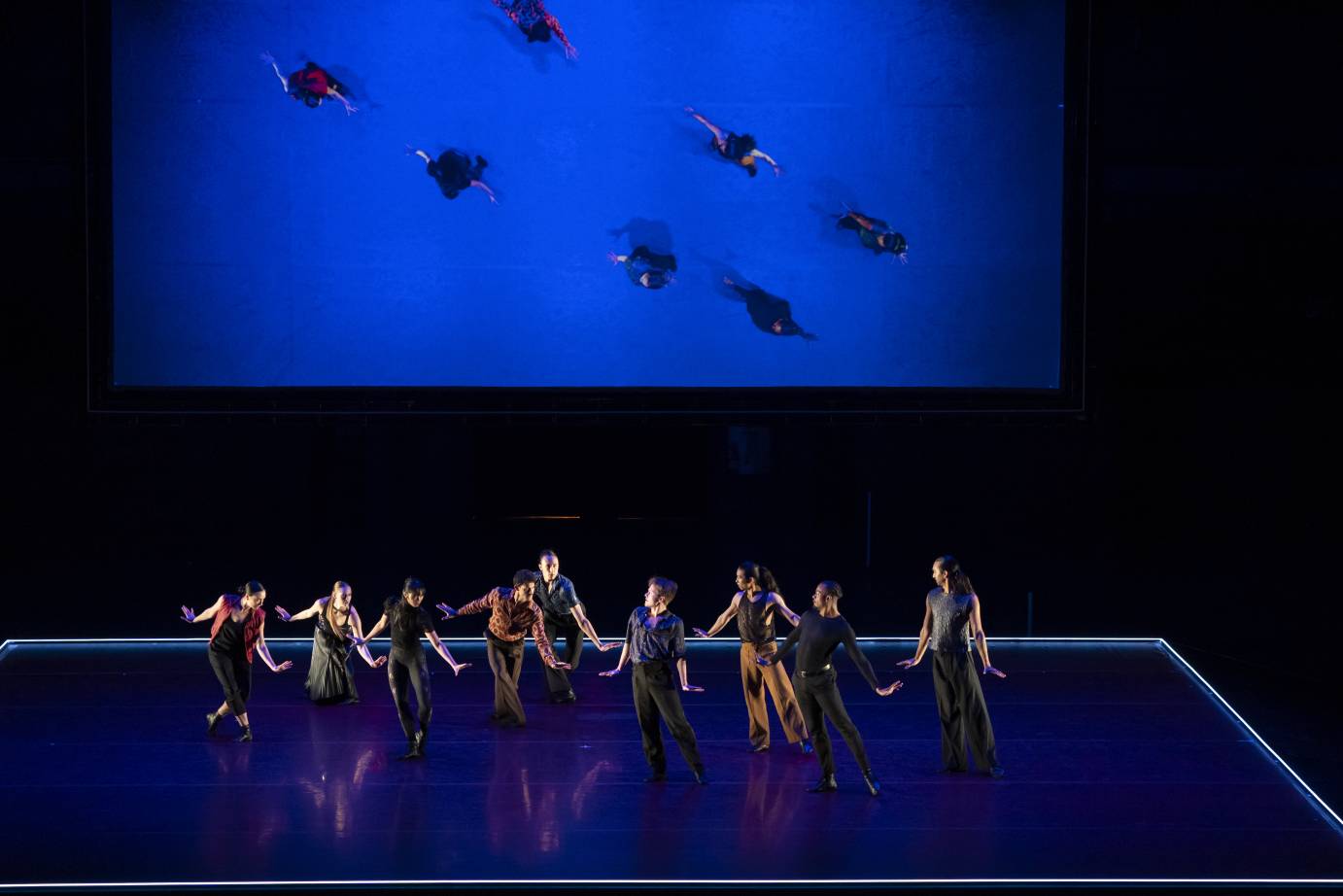
Four men interweave and alternately lift one another at the waist as they move through space. Joined by several others and seen from above, their bodies knot and unknot in shifting patterns, revealing the geometry of the phrases. An intriguing image occurs when a sleeping Romeo is also filmed overhead. This time, his body appears upside down, like a camera obscura projection, seen as an image rather than a figure in motion.
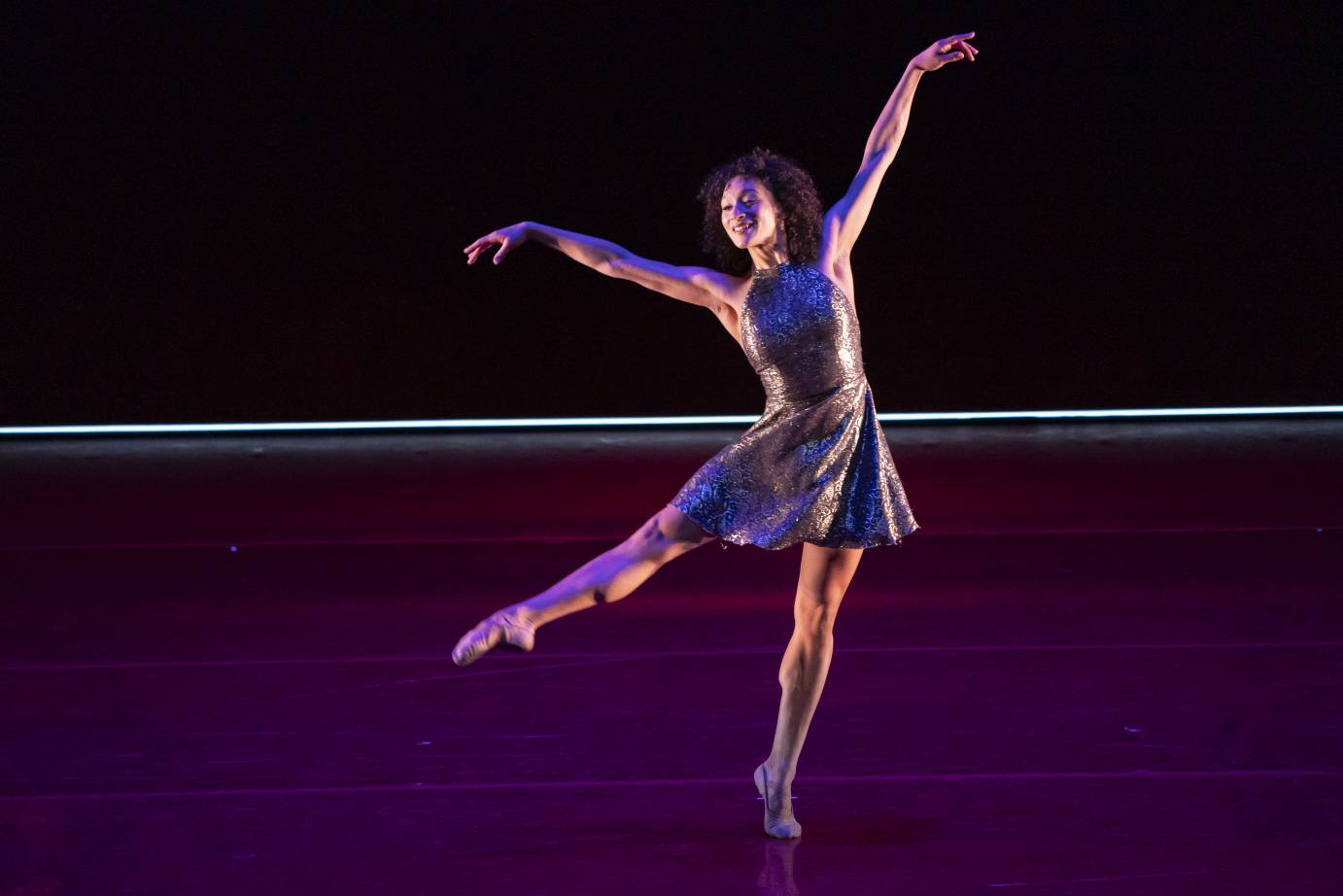
As the focus shifts, Juliet dances to Prokofiev’s Love Story, moving from a sweeping arabesque to a pedestrian jog toward the corners of the stage. Then, with one leg lifted behind her and her arms reaching up, she swirls through a series of turns in place before lowering herself onto the stage floor.
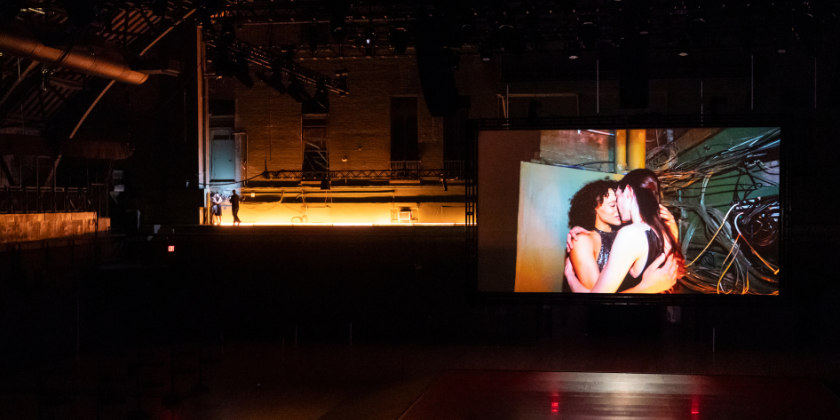
Elsewhere, the camera opens the world beyond the stage. Two rooms off the main Armory floor serve as secondary stages, visible from the audience seating. In one room, a masked ball takes place under a disco ball, scattering whirling white dots across black-and-white costumes. Lips painted red, the dancers seem to coil around one another. The lighting and movement create a claustrophobic and electric atmosphere. From the second room, Tybalt, aggrieved, watches Romeo and Juliet, his image multiplied seemingly to infinity by mirrored surfaces. His fragmented gaze heightens the tension.
.jpg)
Holding hands, Romeo and Juliet escape through a phalanx of light bearers toward the Park Avenue entrance, running up the interior stairs and entering burnished mahogany rooms usually off-limits to the audience. The camera follows closely behind. Palms pressing together, they circle and turn, the energy building as they spin faster and faster. Swept along in momentum and discovery, exhausted and sweaty, they sink down together, basking in their love. Their faces, magnified on the screen, reveal a convincing intimacy.
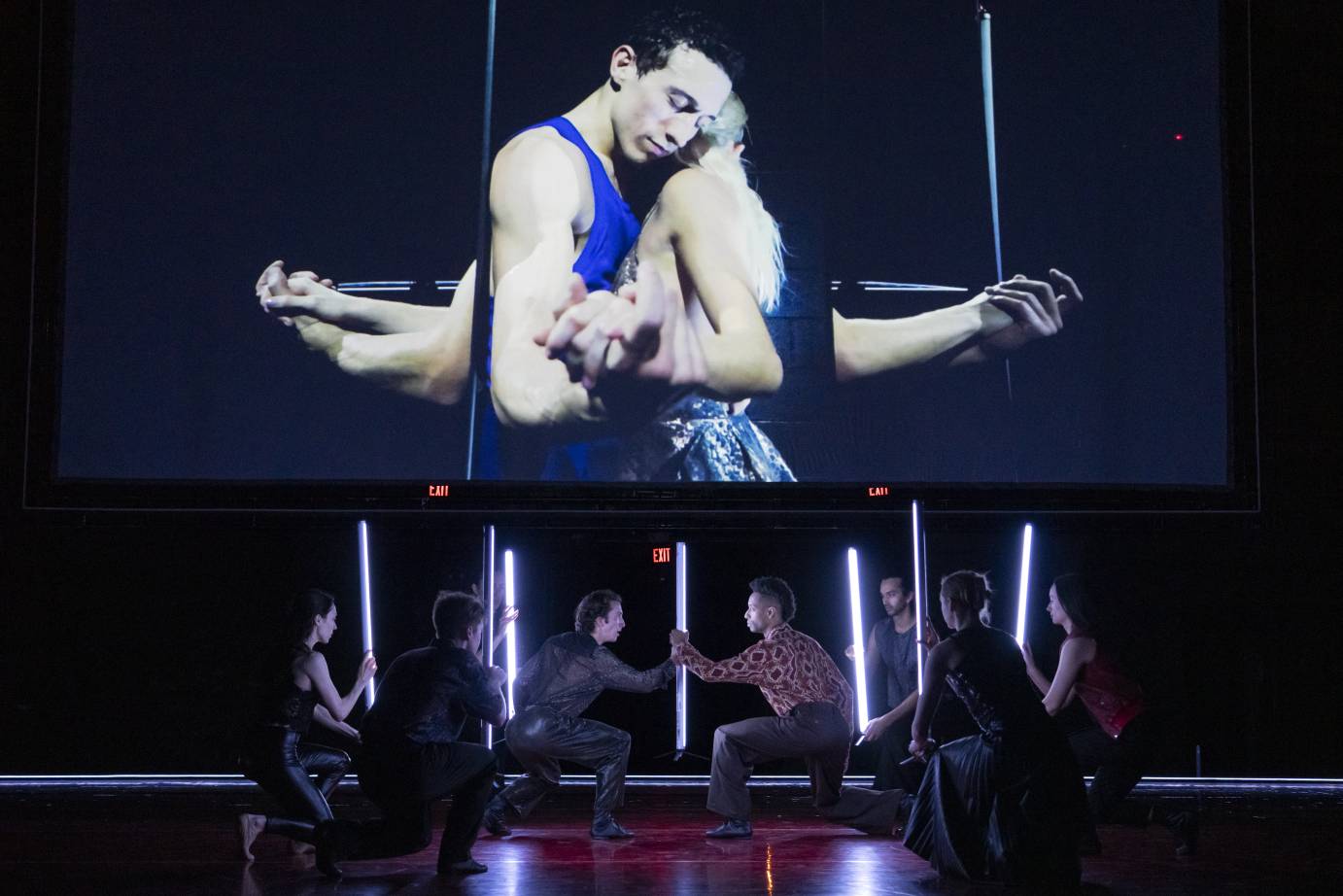
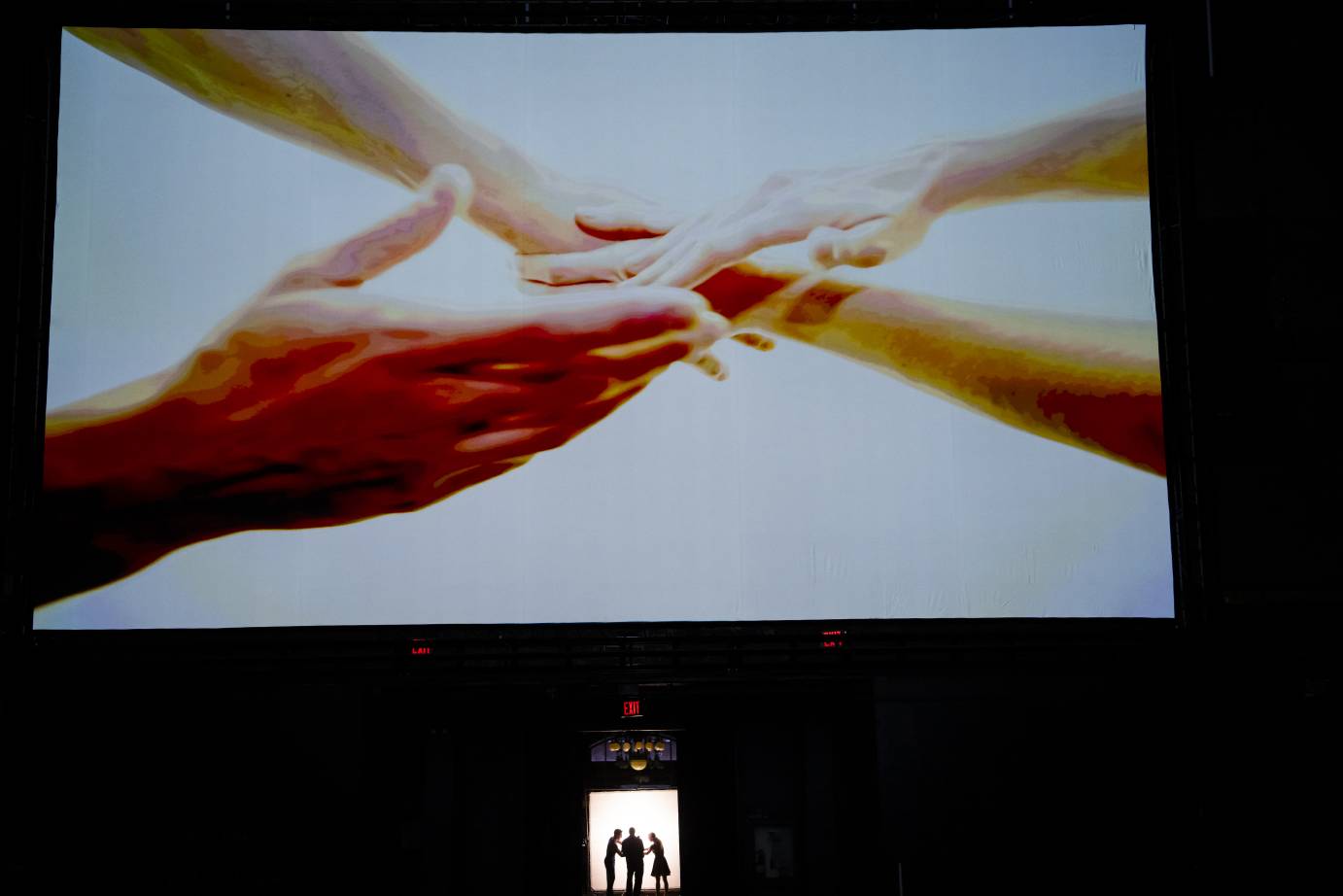
At one point, only their arms are filmed, their hands traveling slowly and sensuously along each other’s forearms. As if reading the surface of the skin, discovering one another through touch, each motion becomes an intimate conversation.
The violence of the feud between the two families erupts as Tybalt pursues Romeo, weaving between stationary light sticks attached to the metal bleachers beneath the seated audience. The chase, visible only through projection, shows the men fighting until Romeo stabs Tybalt. Horns blare. Tybalt screams and collapses. Juliet staggers onto the stage, weeping. She falls, lunges, then leaps into Romeo’s arms.
.jpg)
The narrative moves swiftly toward its conclusion, but what remains most striking is the relationship between live performance and film. On screen, a disembodied hand offers Juliet a dark pill that she swallows. She passes through a corridor of still figures holding their sticks as if weapons, at once guiding her forward and turning away, one hand raised to shield their eyes, unwilling to witness what has been set in motion. The film directs attention by isolating and enlarging what the stage leaves partially obscured, while the live performance plays out in real time, unmediated.
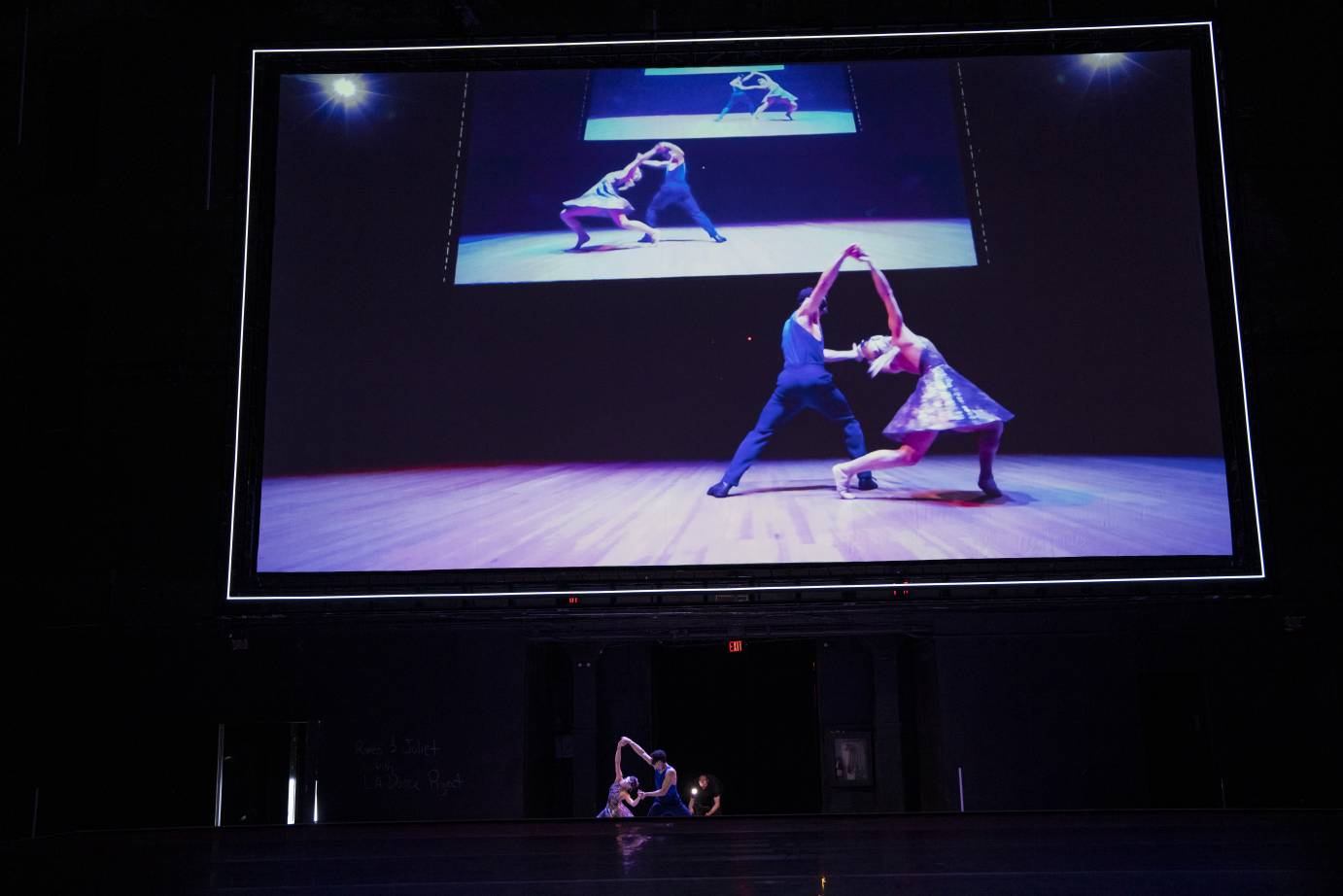
As the lovers reach their end, Romeo discovers Juliet and lifts her limp body, turning her as though trying to reverse time itself. On the red-lit stage, he cuts his wrist and slumps beside her; she awakens too late and slits her wrist, before falling onto him.
Above, the sentries remain on the lit balcony lip near the roof of the Armory, their neon sticks held steady as they look down over the stage. They appear less as witnesses to a conclusion than as figures registering what has just occurred, the moment left unresolved.