



Related Features
IMPRESSIONS: Benjamin Millepied’s "Romeo & Juliet Suite" at the Park Avenue Armory
IMPRESSIONS: The Choreographic Ensemble of the Paris Conservatoire at the L’Alliance New York

IMPRESSIONS: Benjamin Millepied's "Reflections: A Triptych"

By Miranda Stück
View Profile |
More From This Author
Published on March 5, 2026
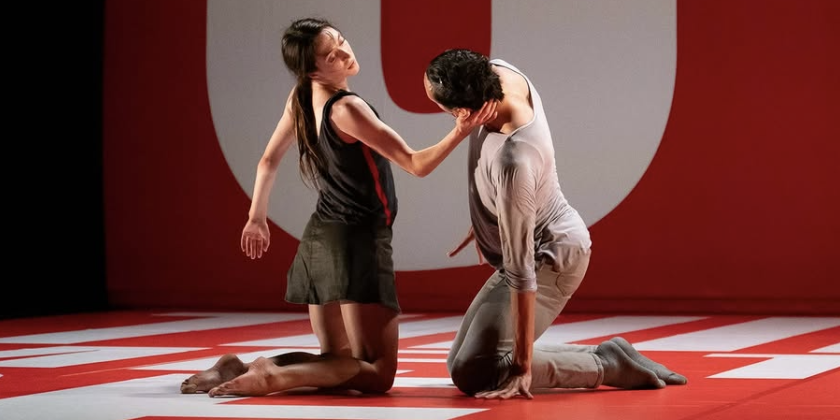
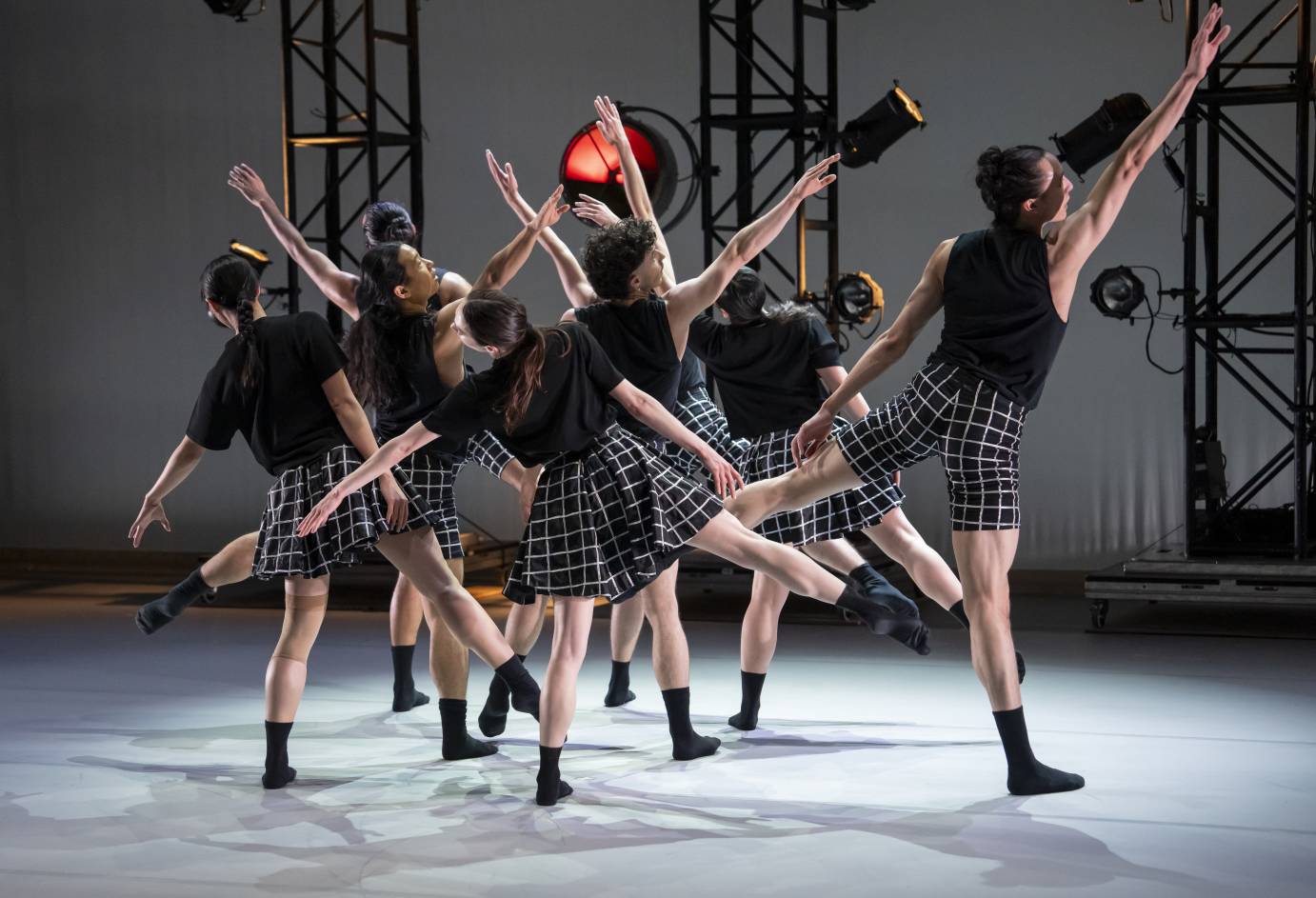
"Reflections: A Triptych." Photo: Jade Ellis
Co-Presented by L.A. Dance Project x Dance Reflections by Van Cleef & Arpels Festival
Choreography: Benjamin Millepied
Reflections section choreography: Benjamin Millepied in collaboration with Julia Eichten, Charlie Hodges, Morgan Lugo, Nathan Makolandra and Amanda Wells
Dancers: Courtney Conovan, Daphne Fernberger, Tom Guilbaud, Robert Hoffer, Shu Kinouchi, Clay Koonar, Audrey Sides, Hope Spears, Noah Wang
Visual Design: Barbara Kruger, Liam Gillick // Lighting Design: Masha Tsimring
Music: David Lang ‘This Was Written by Hand / Memory Pieces’ (Selections), Philip Glass Performed by Kronos Quartet Produced by Judith Sherman, Kurt Munkacsi, and Philip Glass, and Philip Glass performed by Maki Namekawa, Philip Glass, Vanessa Wagner, and Paul Barnes
Costume Design: Barbara Kruger, Janie Taylor, Camille Assaf
Perelman Performing Arts Center (PAC NYC)
February 21 - 22 2026
Benjamin Millepied's Reflections: A Triptych brings together high-caliber visual art, music, and dance in an enchanting production that carries a captivated audience through three distinct worlds.
Reflections, the first section of the work, features a juxtaposition that takes some adjusting to. Visually, the set design is not only bright, but loud. "STAY" reads the upstage wall of the Perelman Performing Arts Center (PAC) in bold white letters popping out of a firetruck red scrim. Out of curiosity, I lean over my seat to read more letters that appear on the stage floor. "Stay thinking of me thinking of you," it reads.
Once David Lang's piano composition and a dancing duet begin, a softness in the music and movement floats above and in front of the words. Silky and expansive, Daphne Fernberger and Noah Wang balance, hold on to one another, and weave through each other. There is no specific love story here; only a revelation of trust.
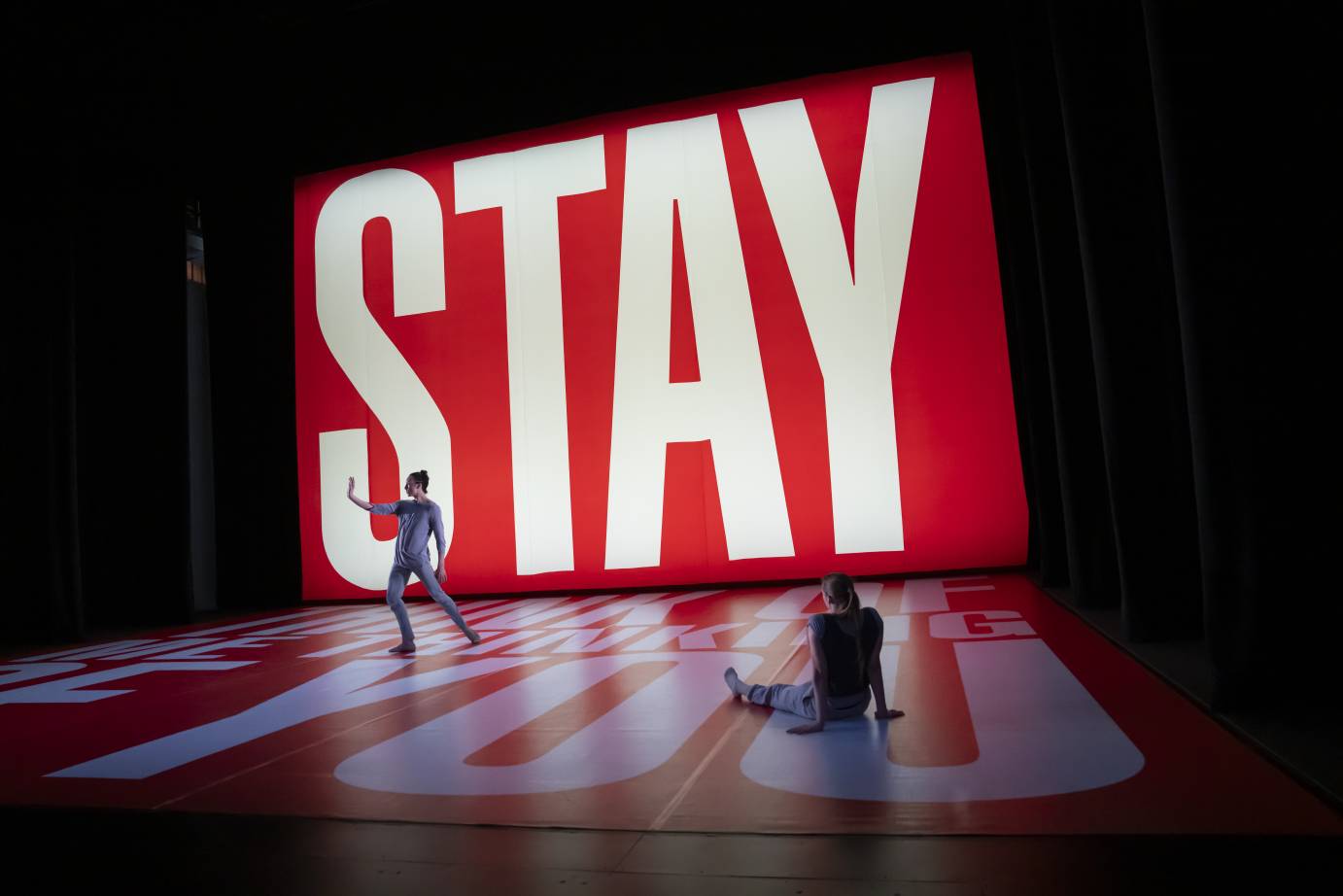
What's fascinating about Millepied's choreography is that no single moment ever seems to replicate. Even within partnering, the dancers' points of contact continually shift from their backs to their hands, to a heel, or to their faces and shoulders. The five-person cast of Reflections…, all members of Millepied's L.A. Dance Project, execute a slew of challenging jumps, turns, and floor work, as their arms, mirroring the cyclical nature of Lang's piano music, move like tender tree branches swept by the wind. Their effortlessness is impressive.
In a brief moment of rippling, high-pitched sound, the stage brightens, introducing a solo by dancer Shu Kinouchi. Performing a rapid series of fast footwork, including flickering jumps that circle the stage, we notice not only Kinouchi's urgency and abandonment to the movement, but also his charisma, which radiates throughout the evening.
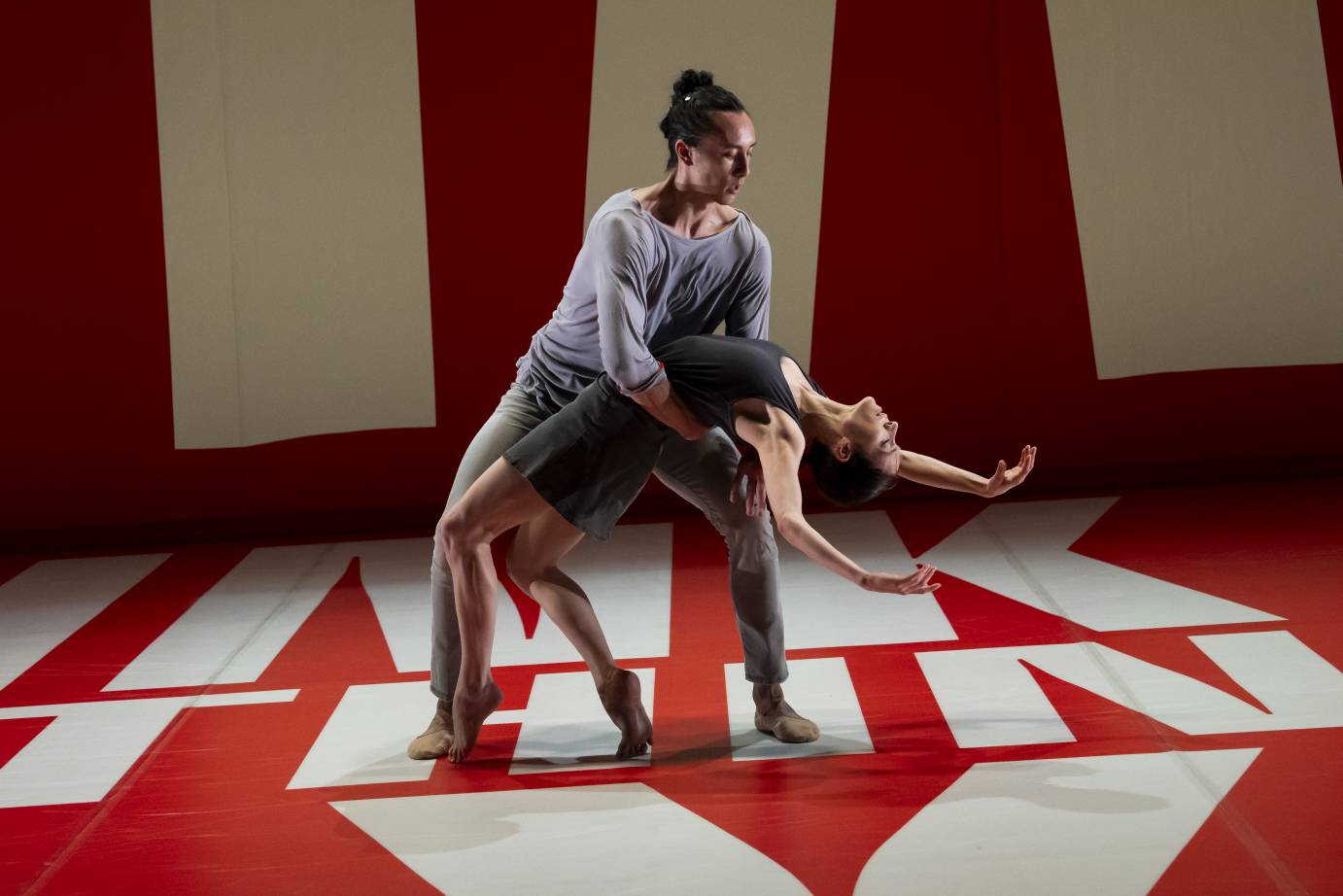
Millepied's fusion of balletic line and modern expansiveness creates a rush of unpredictability. Duets happen in silence. Dance takes place only on certain segments of the stage where one or two words are illuminated. When all five dancers are onstage, they transition among embraces, classical partnering, breakout solos, isolations, and the manipulation of one another's joints beneath Barbara Kruger's dainty, but characterless, garments.
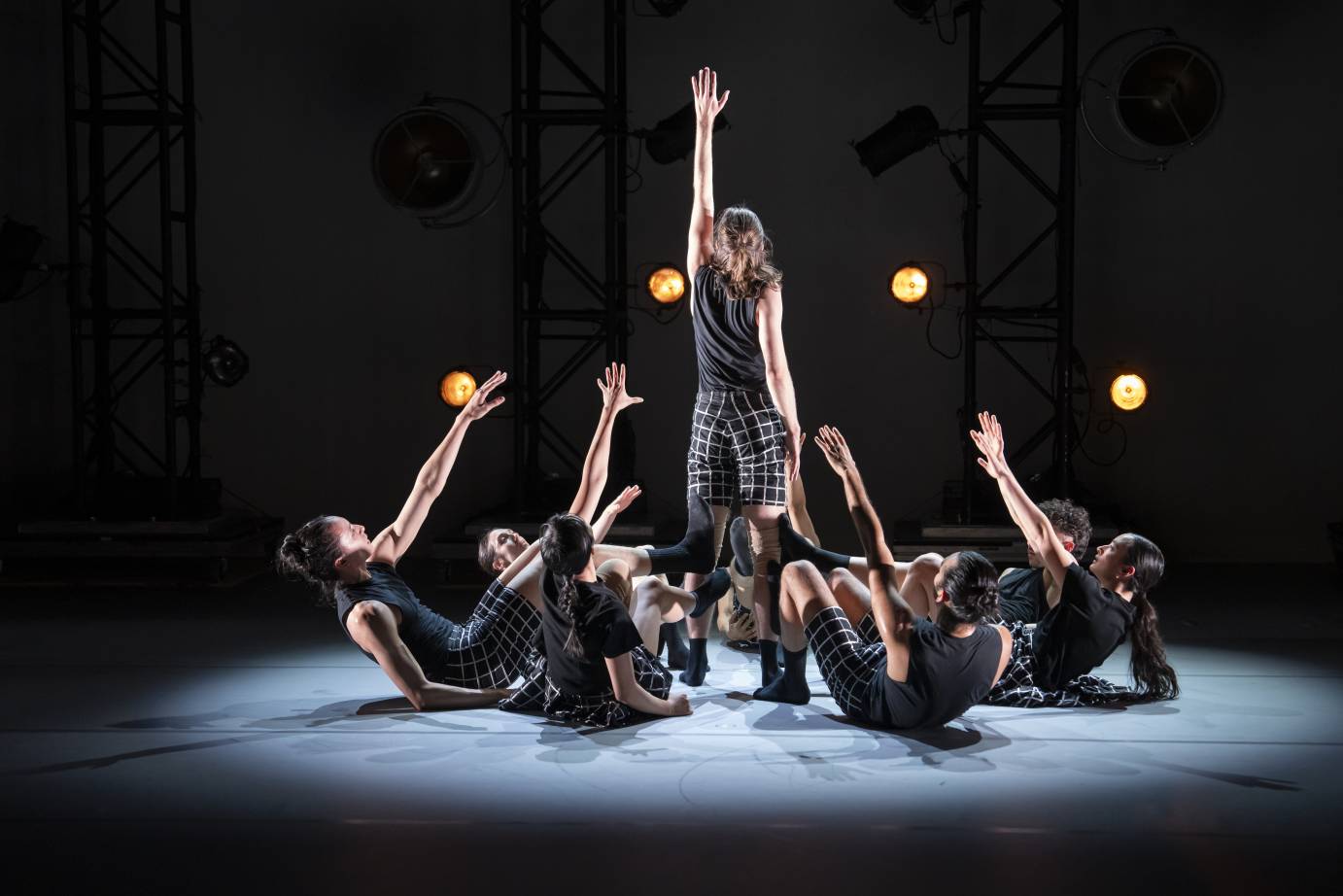
Hearts & Arrows, the second section of the work, is accompanied by a recording of the Kronos Quartet, which overlays the rhythms of multiple Philip Glass songs. Glass's music creates an atmosphere of wonder and lavishness as the dancers move mercurially from one formation to another, weaving in front of four large light stands located upstage. Switching from a soft cursive flow to the jagged angles of block print, the dancers, in black tanks and t-shirts with patterned bike shorts and pleated skirts designed by Janie Taylor, flip their arms between balletic fifth positions and V-shaped Paul-Taylor-inspired shapes.
In the triptych's finale, On the Other Side, the technical emphasis of the earlier sections matures into profound shared intimacy. Dancer Courtney Conovan performs an exceptionally tender solo, pulsing breath into each movement. In a flash of darkness and light, the remaining cast suddenly surround her in support. As she rests backwards into the arms of a fellow dancer, a feeling of unity emerges. The "performance masks" fall away, and the dancers, who transported us during Millepied's two-and-a-half-hour reflection, breathe together and simply stand in wonder amid our echoing applause.