


Related Features
THE DANCE ENTHUSIAST ASKS: Donald Byrd Revisits "Occurrence #14" at La MaMa Moves! Dance Festival
DAY IN THE LIFE OF DANCE: Robert Battle on Getting Back into the Studio with the Paul Taylor Dance Company
IMPRESSIONS: E-Moves Festival Presents "Black Men in Dance" at Harlem Stage

By Miranda Stück
View Profile |
More From This Author
Published on May 27, 2026
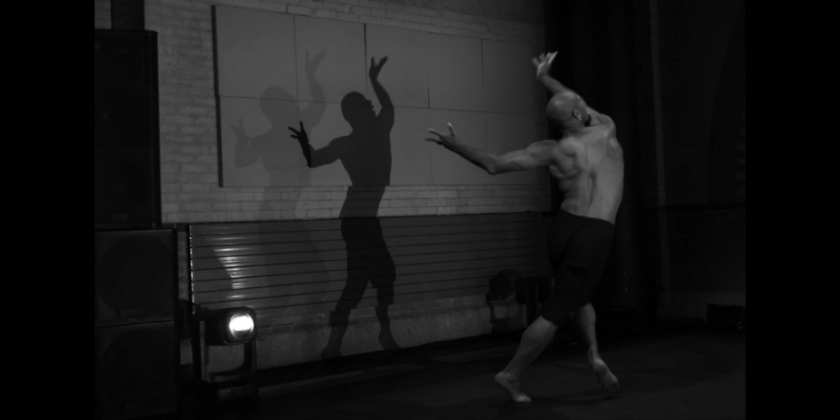
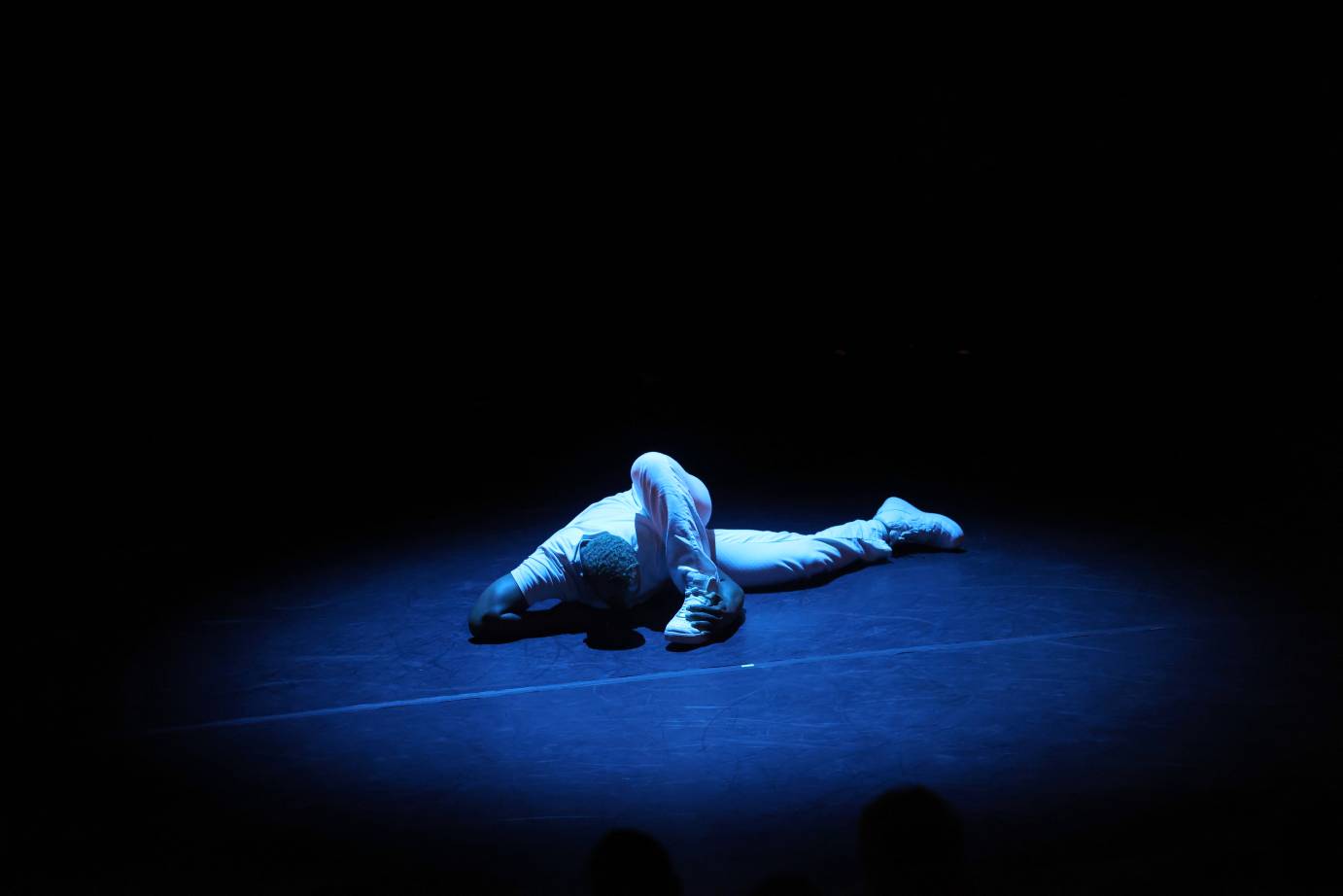
Babatunji Johnson. Photo: Hollis King
The Past in our Bodies. The Future in Our Hands.
Curators & Moderators: Ronald K. Alexander and Calvin Royal III
Panelists: Robert Battle, Lil’ Buck and Donald Byrd
Harlem Stage, 150 Convent Avenue, New York, NY
April 27, 2026
“Here we are together as black men, a majority across the globe, yet a minority in the field of dance,” said American Ballet Theater Principal Dancer Calvin Royal III.
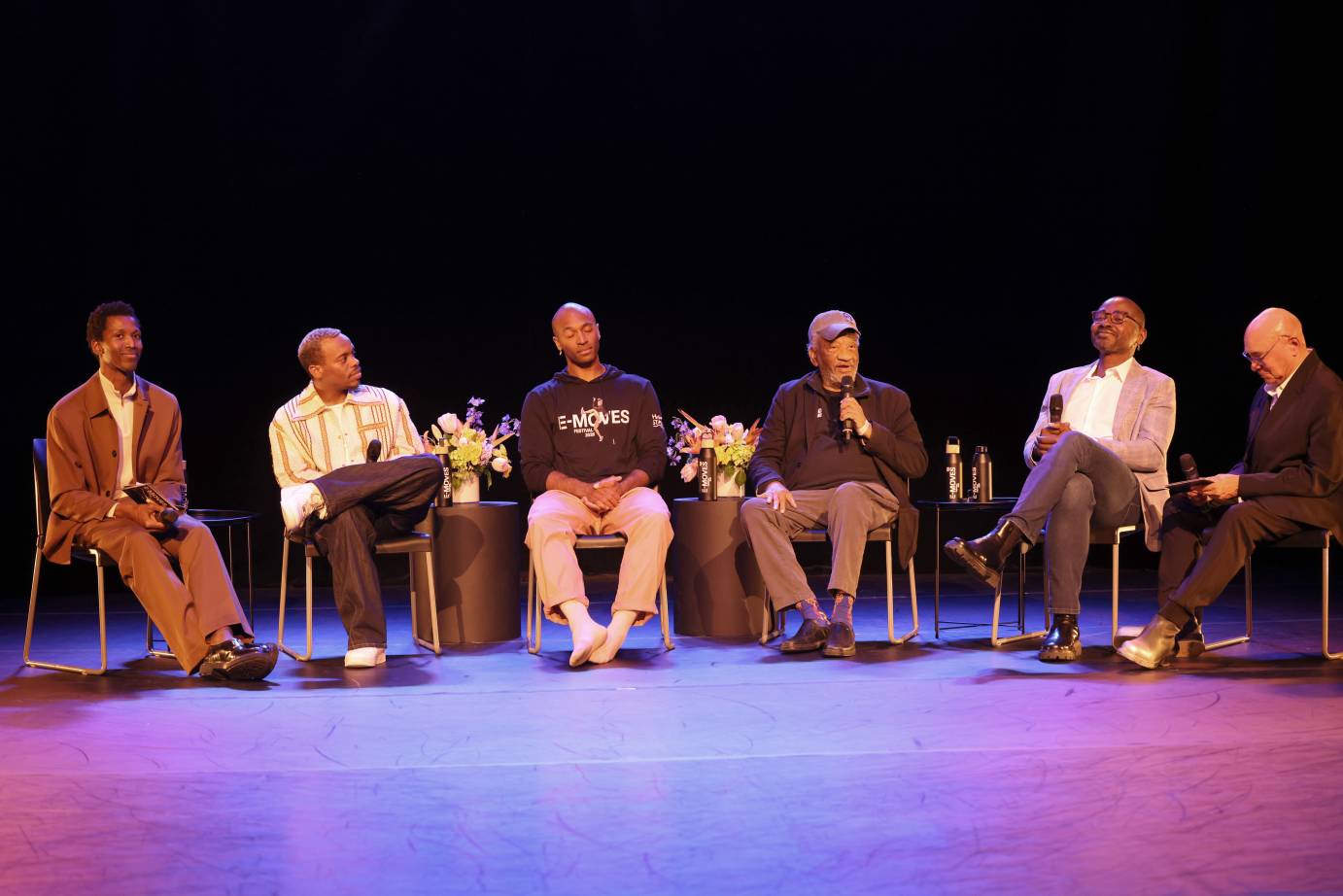
While there are thousands of dance companies and professional dancers worldwide, only a small percentage of them are Black men. Black Men in Dance was the seventh event of E-Moves, a week-long festival celebrating dance and movement at Harlem Stage which has run for over 25 years. The triple bill show featured a discussion between panelists Robert Battle, Lil’ Buck, Babatunji Johnson, and Donald Byrd surrounding the identity, history, and truth of Black men’s stories in dance.
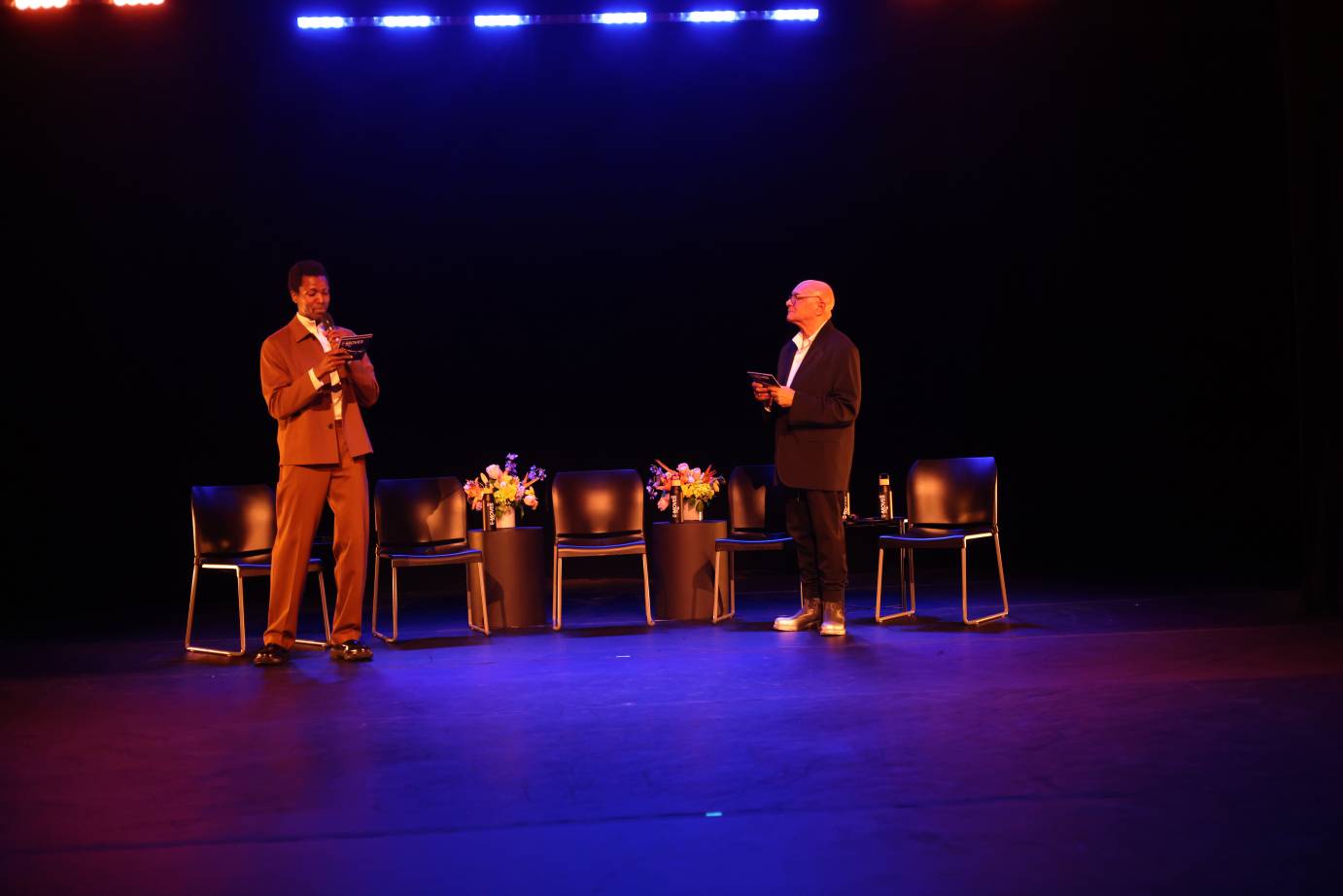
Following a brief welcome and introduction by Royal III and dance educator and choreographer Ronald K. Alexander, Babatunji Johnson begins to dance an excerpt of Alonzo King’s LINES Ballet Deep River entitled "Lift Every Voice and Sing." Johnson, known for his distinctive background in breaking, hip-hop, and ballet, moves with majestic, unrestrained ease.
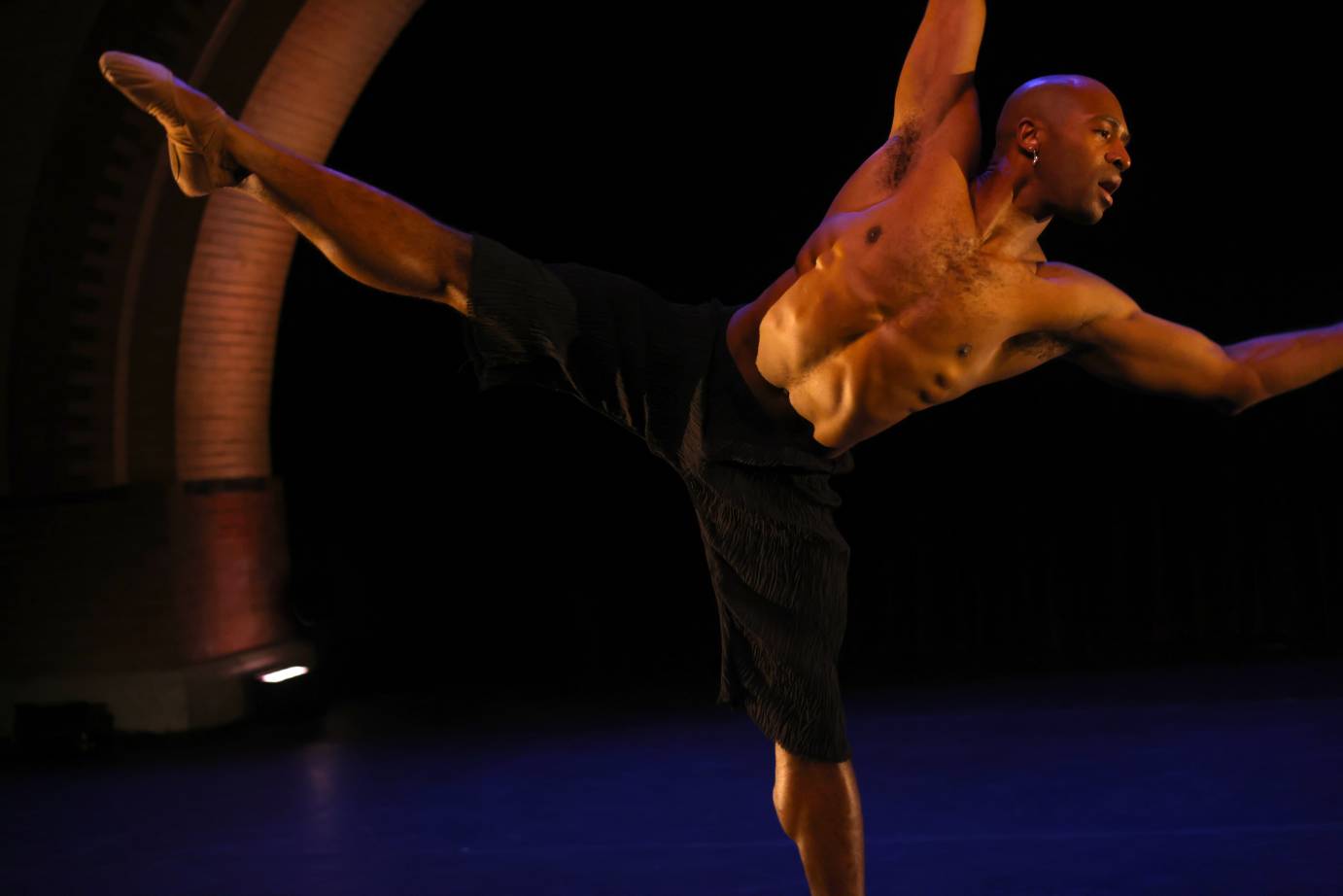
The powerful voice of Grammy-award-winning Lisa Fischer mixed with the hymn’s historical context (Lift Every Voice and Sing is commonly known as the Black national anthem) instantly evokes feelings of hope and liberation. Johnson’s emotive body fills the stage simultaneously with glorious expansion and razor-sharp footwork. His body becomes a vessel that contains the pain and weight of racial injustices, but moves powerfully forward.
Easily traveling across the floor in no more than three steps, Johnson levitates through shapes and hovering jumps, his eyes glimmering with hope and heartache. “I feel like my wings really sprouted,” he shared in a discussion following the solo. “For the first time, "Lift Every Voice" felt like we were building the work together. I was able to share some of my ideas, and [Alonzo King] was willing to implement them.”
In further conversation, the panel discussed collaboration, representation, and the artists' creative processes. Hearing each choreographer and director’s personal anecdotes and learning about the obstacles they faced as Black men in the dance industry was enlightening.
What stood out was Robert Battle's perspective on dancemaking and his reflections on the concept of fear. He referenced and questioned Nina Simone’s definition of freedom as the absence of fear. “For me, that’s the hardest thing, because my last name says I’m supposed to be fearless, and when I create, I certainly don’t feel fearless… If I were truly fearless, would the work be better?” Battle framed fear as a necessary point of friction within the creative process.
Donald Byrd, artistic director of Spectrum Dance Theater and a longtime leader in the dance field, shared his process of learning and unlearning. Having grown up during a time when strict power dynamics often shaped studio settings, Byrd explained that his dancers have become his primary collaborators, with agency to share their opinions. “I make final decisions, but I’m not on top of them,” he said.
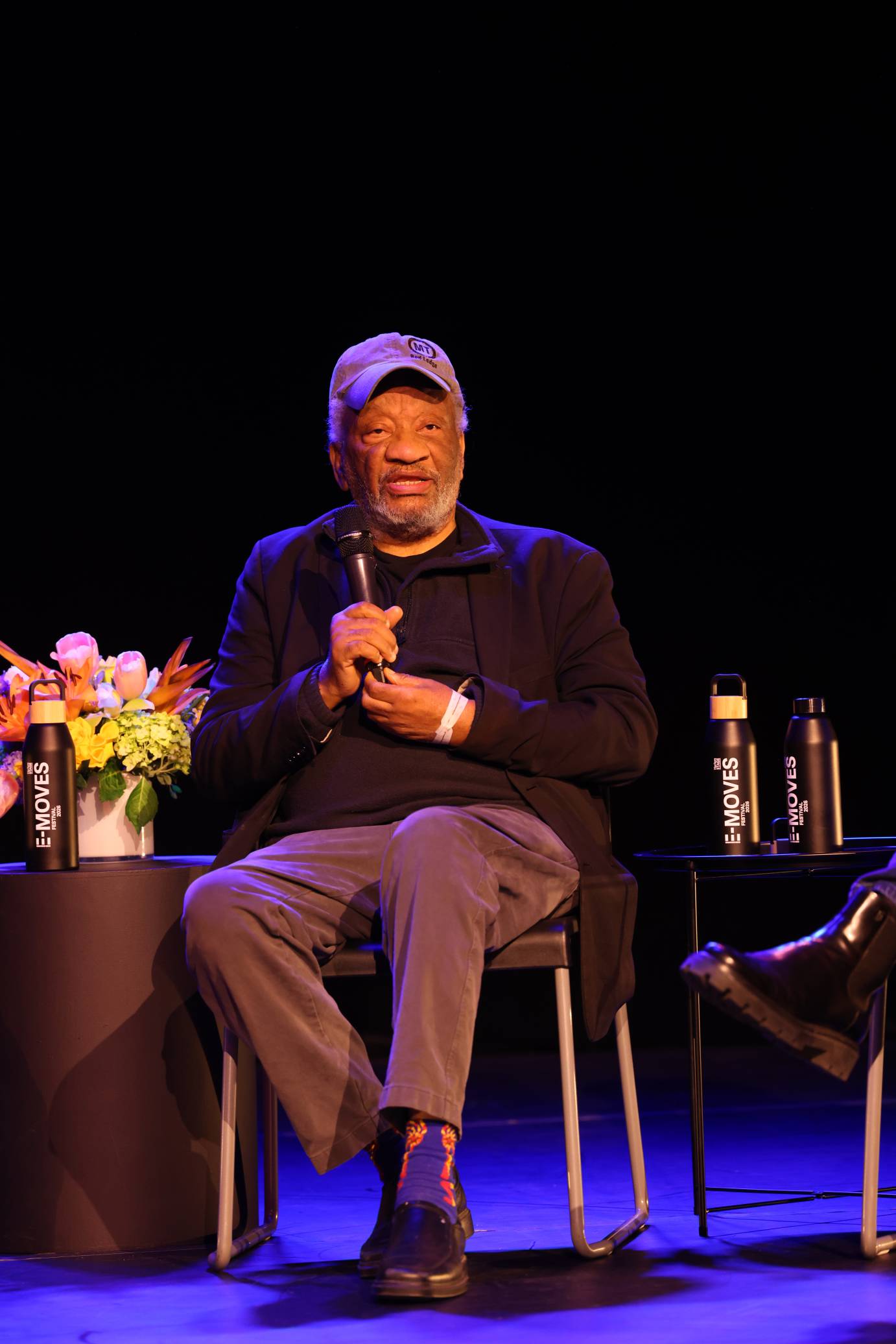
Byrd also reflected on one of the discouraging messages he encountered as a young man: the belief that dance was not “manly.” He recalled a touching conversation with his grandmother about his desire to pursue dance as a career. “Do you think it will make you happy?” she asked. When he said yes, she replied, “Then go do it.”
Johnson returned to perform his self-choreographed solo, Not Without Fear (‘pink socks’), accompanied by composer Tony Anderson’s Detour. In this piece, he appears isolated and constricted, dancing within a rigid box of white light. The motif of restriction occurs throughout the piece. Johnson can only escape when he steps outside the prescribed lines. His pink socks, vivid and visible, signal that this stereotypically feminine color, belongs to anyone and everyone, regardless of gender.
Soft blue light and hard-hitting music envelop Johnson as he stretches, collapses, and isolates, blending a mix of technique styles. The last time Johnson is confined, he begins to tremble, as if collapsing under fear and anxiety. The audience, held in suspense over how he will break out of his panic, watches as he begins punching the air deliberately. Not Without Fear (‘pink socks’) reveals the internal struggles people face on the road to courage.
The evening concluded with Lil' Buck’s acclaimed (and viral) solo The Swan, set to Camille Saint-Saëns’ work from the Carnival of the Animals Suite. A Memphis native, Charles Riley, aka Lil’ Buck, is known for his specialization in jookin, a style of street dance characterized by smooth glides, slick footwork, and toe stands.
Dressed entirely in white, Lil’ Buck sits crossed-legged under a piercing spotlight. Immediately, he evokes the awakening of a swan as he stirs with subtle, robotic precision. Energy ripples through his arms with an almost unbelievable fluidity. Waving feverishly, yet with elegance, his arms become wings. The music guides Lil’ Buck’s swan-like meditation as he isolates joints in his upper body, performing with natural silkiness.
What draws the eye besides his incredible agility, are Buck’s facial expressions. His face flickers with emotion, capturing the wonder and awe of inhabiting the natural world. “I know who I am when I’m dancing,” Lil’ Buck said later in the panel discussion. He constantly stressed the importance of finding his “why” in dance.
As the evening drew to a close, the panelists identified two key takeaways. Creative risk is an act of courage. Artistic bravery doesn’t stand in opposition to masculinity; it is a core part of it. These trailblazing Black men continue to inspire the next generation of Black male artists to take chances, be bold, and never back down.