


Related Features

DANCE NEWS: National Dance Institute Appoints Tiffany Rea-Fisher as 2024 Helen Stambler Neuberger Artist-In-Residence

THE DANCE ENTHUSIAST ASKS: Tiffany Rea-Fisher on the Adirondack Diversity Initiative, Her Purchase Conservatory Education, EMERGE125, and Dancers' Transferable Skills

IMPRESSIONS: Celebrating 10 Years of Tiffany Rea-Fisher’s Artistic Leadership with EMERGE125 at El Museo Del Barrio

By Catherine Tharin
View Profile |
More From This Author
Published on May 9, 2026
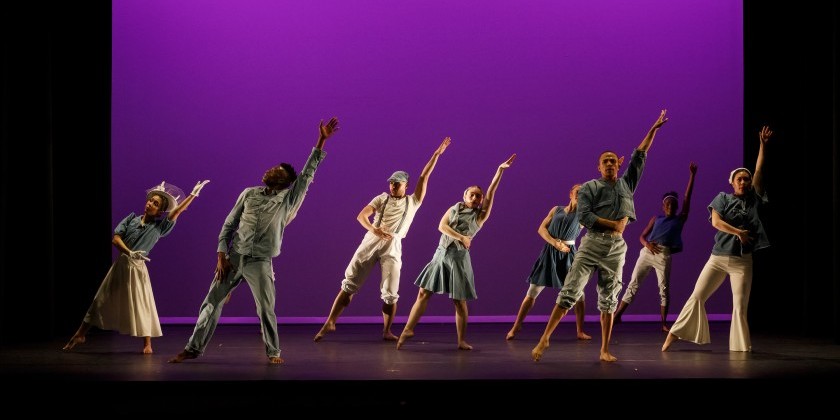
EMERGE125's "Kinetic Dissent." Photo: Tony Turner
EMERGE125's 2026 NYC Season
Artistic Director and Choreographer: Tiffany Rea-Fisher
Executive Director: Juliane Slater
Rehearsal Director: Men Ca
Production Manager & Lighting Designer: Christopher Brusberg
Costume Designer: Rachel Dozier-Ezell
Company Dancers: Madelyn Canaj, Jenna Kulacz, Alyssa Manginaro, Briana Marsiello, Adam Dario Morales, Caitlyn Morgan, Tiffany “2Ts” Terry, Travon Williams, Mark Willis
Guest Dancer: Mars Dunston
Migrate (Premiere)
Composer: Jackson A. Waters
Kinetic Dissent (World Premiere)
Music Consultant: Frederick Kennedy & Deadra Hart
Sound Design: Sabrina Isaacs
Music: Section 1: I Am a Poor Wayfaring Stranger by Jos Slovick, Section 2: Bread and Roses by Judy Collins, 3. How I Feel (feat. Leonard Sumner, Shad & Northern Voice) by The Halluci Nation, Section 4. Early in the Mornin’ by the South Carolina Chain Gang, Section 5. Which Side Are You On? By Florence Reece, Section 6. HEY-OH, WE WON’T BE SILENT by LoFi Plum
Homecoming of the Unforgotten (Work-in-Progress)
Music: Guitar, Drums ‘n’ Bass by Derek Bailey & DJ Ninj; Time Is An Ocean by Chris Murphy; Lullaby by Johannes Brahms.
Music Sourcing & Design: Jo Lampert & Sabrina Isaacs
Text: Octavio Escodedo III, Devlin Gandy, Peter Alagona, & Tiffany Rea-Fisher
Projection Design: Stivo Arnoczy
Research Consultant: Peter Alagona
Tejon Music Composition: Louis Medina
El Museo del Barrio, 1230 5th Ave, New York, NY
April 30 - May 2, 2026
Accolades for Tiffany Rea-Fisher’s dance company EMERGE125, celebrating its 10th year, were numerous. Filmed testimonials by Virginia Johnson, Dante Puleio, Phil Chan, and Camille A. Brown, along with remarks by Misty Copeland, spoke of Rea-Fisher’s impact on the dance community, citing her “vision and consistency.”
Taking the stage at El Museo del Barrio on April 30, Rea-Fisher introduced an evening that departed from the expected retrospective format. Instead, she offered two premieres and one work in progress for her company of ten, noting that she is not looking back but looking forward with appreciation. EMERGE125 takes its name from the idea of artistic evolution and discovery, with “125” referencing the company’s origins in Harlem near 125th Street.
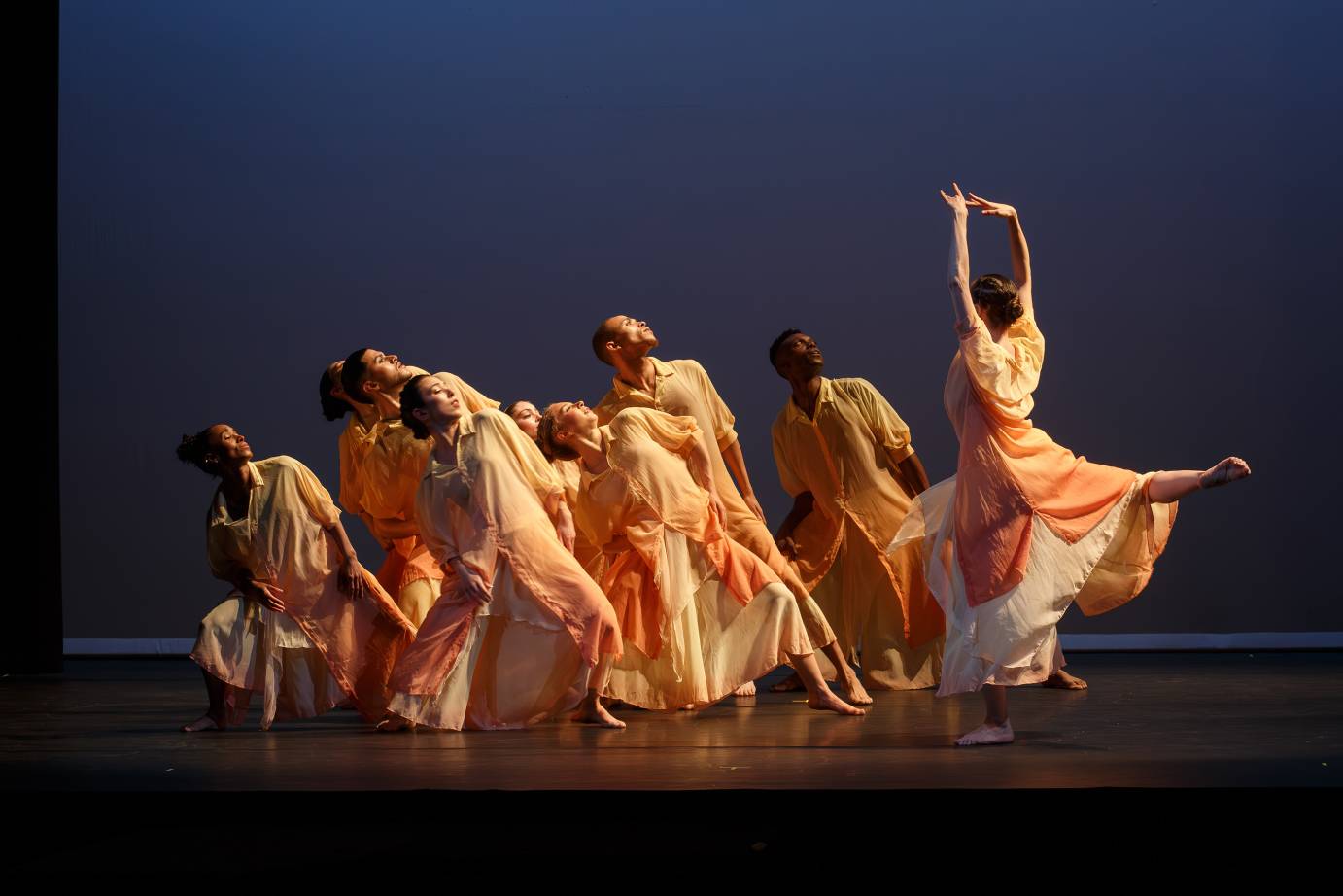
Caitlyn Morgan, Tiffany “2Ts” Terry, Travon Williams and Mark Willis. Photo: Tony Turner
Migrate falls in the traditional modern dance lineage, the choreography full, lush, and expansive. The dancers crossed the stage in groups of braiding lines to form quartets, trios, duets, and solos with seamless entrances and exits. Rachel Dozier-Ezell’s costumes, soft and flowing, in a pleasing sherbet palette of orange and cream, accentuated the swirl, dip, and lift of the choreography. Dancers of varied training shape the movement with distinct phrasing in the reaching arms, side lifts, circling knees, and backward travel in arabesque. Jumps, including a double knee kick front and back, contrast with the deep lunges. The sensuous spine drives the movement. Set to a commissioned piano quartet by the young virtuoso Jackson A. Waters, the dance maintains a unified sensibility.
Kinetic Dissent and Homecoming of the Unforgotten, both works of activism, approach their subjects from different vantage points. Kinetic Dissent, based on six songs from the 19th and 20th centuries, draws on workers’ rights, slavery, and indigenous concerns, assembling a grassroots collection of protest. Some of the costume choices feel overly descriptive, tethering the work to a sentimentalized historical sensibility that reduces some figures to types rather than fully realized presences.
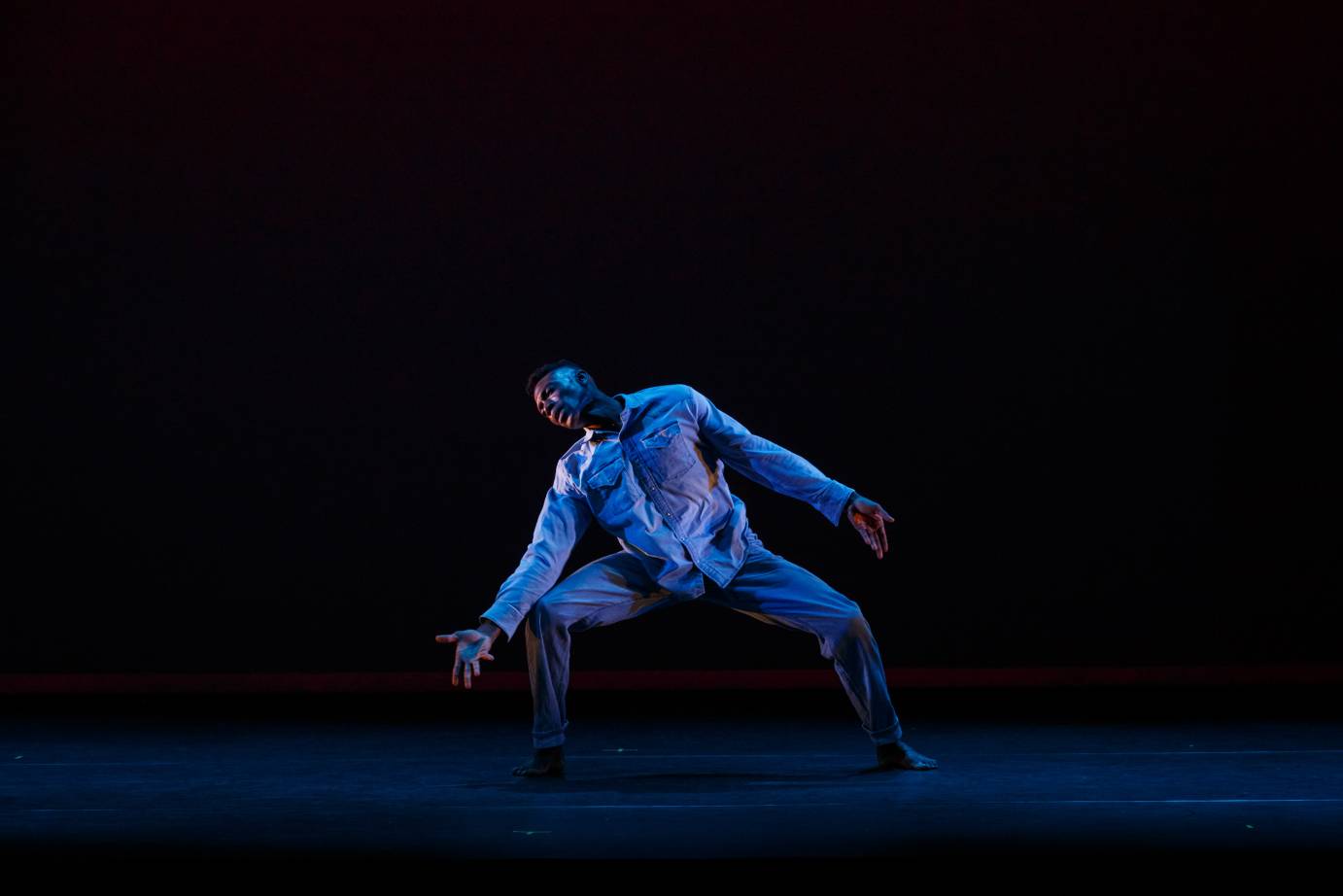
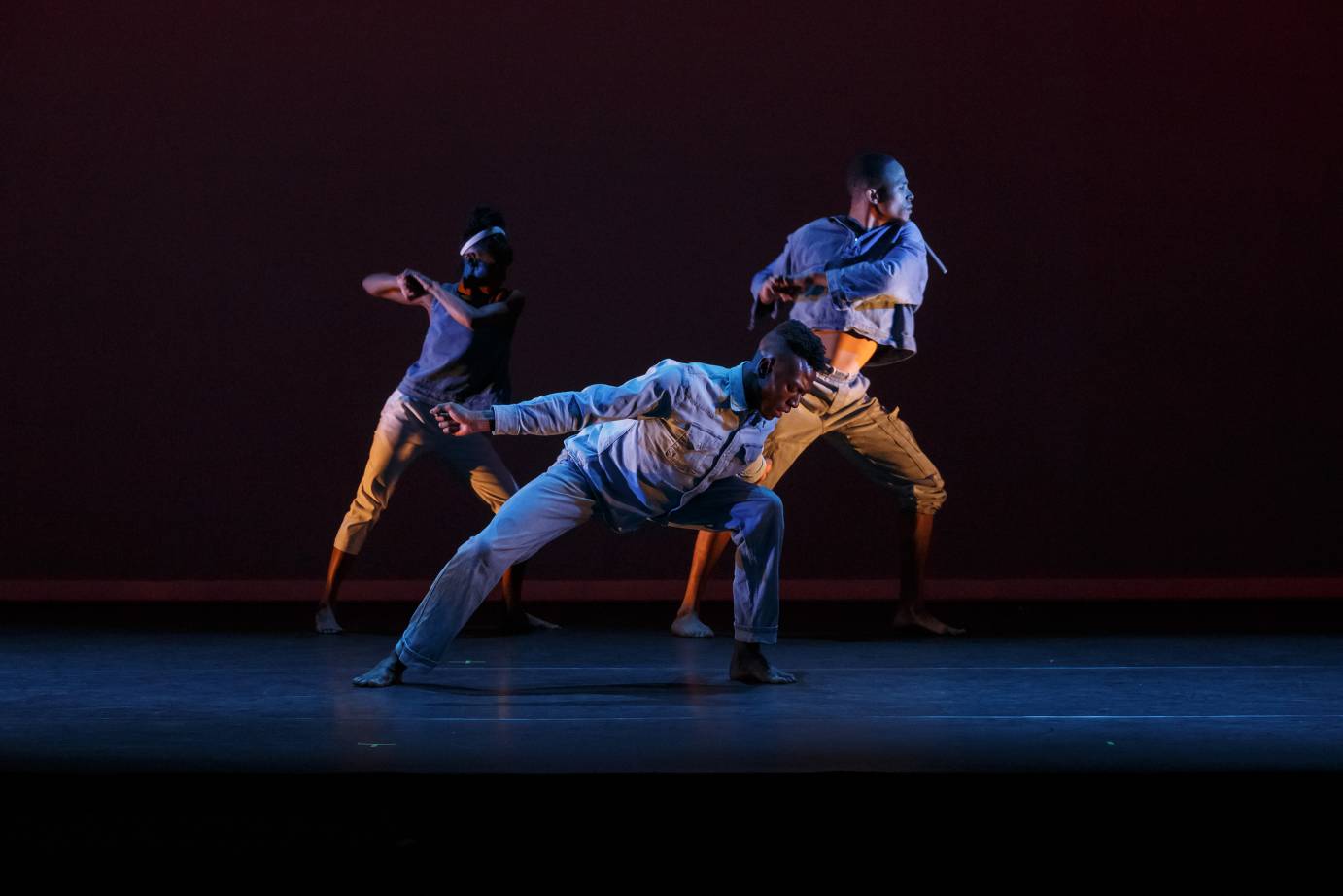
Early in the Mornin’ by the South Carolina Chain Gang stands out for its use of simple yet powerful repetitive movement for the trio of dancers. The traditional plantation and penitentiary work ballad was recorded by the great ethnomusicologist Alan Lomax. Dressed in plain shirts and pants - an effective choice - Tiffany “2Ts” Terry, Mark Willis, and Travon Williams exaggerate a downbeat walk, the front leg catching with a hitch punctuated by small hops and swinging arms, faces angled upward. Unlike other sections, where performers frequently enter and exit, they remain onstage, fully and satisfyingly covering the space. In contrast, a rapped Native peoples' anthem by The Halluci Nation, How I Feel, shows another side of Rea-Fisher's versatility. A large group formation, much to the delight of the audience, compresses into tight, overlapping, and catchy street-inflected phrases.
Most compelling is the in-progress Homecoming of the Unforgotten, which addresses the extinction of the California grizzly. An illuminating documentary film created by Rea-Fisher and filmmaker Stivo Arnoczy brings awareness to the sad plight of this great creature. The grizzly’s numbers were once most numerous in California, but the animal was hunted, tortured, and its body parts displayed. The Tejon Indians were systematically eradicated with the grizzly, the animal revered in their culture, placing both within a history of exploitation and dispossession. With the hope of rewilding the grizzly, the dance, with support from The California Grizzly Alliance, is structured in sections.
Those images of hunted and mutilated grizzlies, bodies displayed with paws and claws removed, are difficult to watch, and the impulse is to look away. Against this, the movement vocabulary remains restrained and does not register the same level of violence, the disjunction unsettling. However, Rea-Fisher is brave to bring such material to the stage.
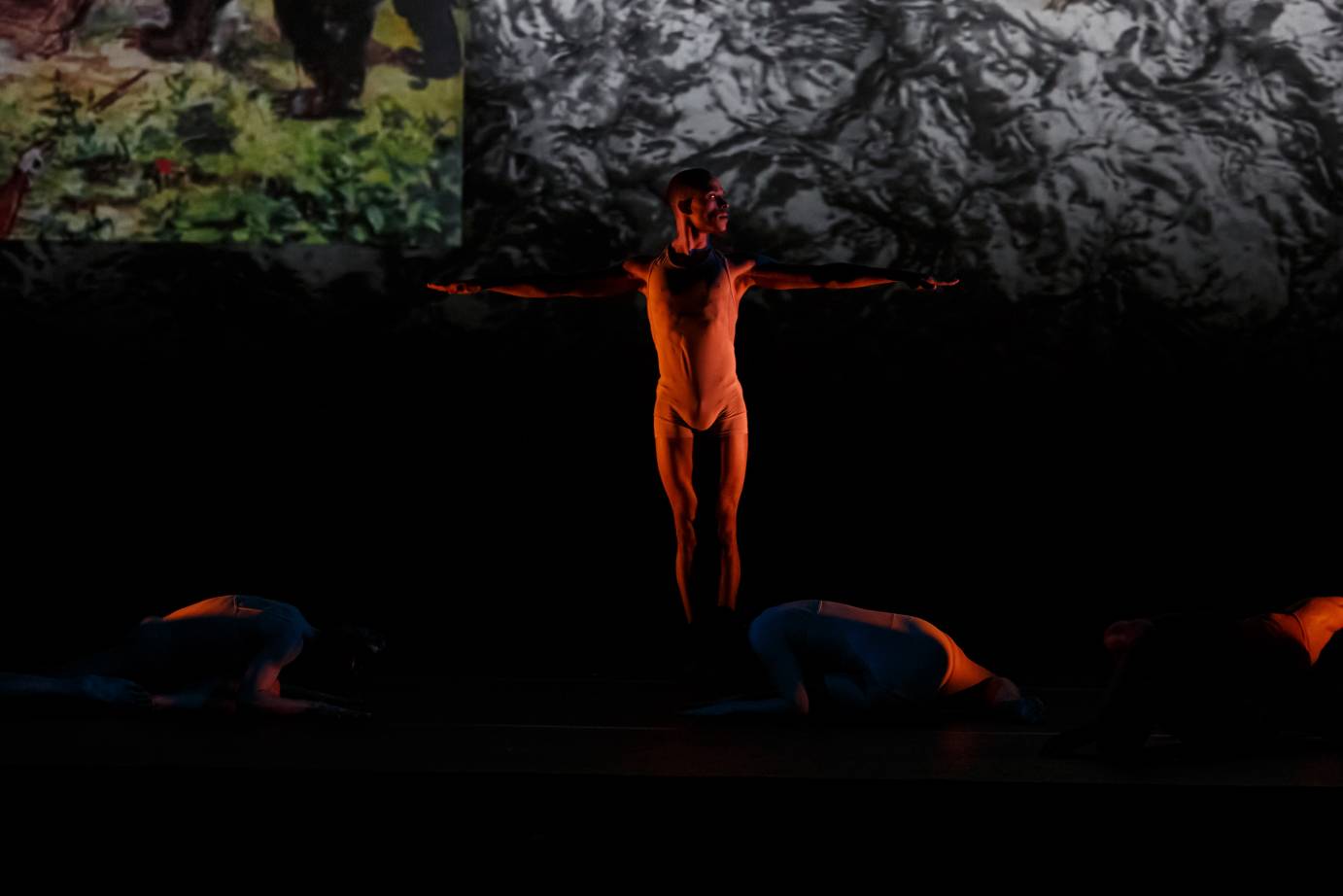
A filmed backdrop of roiling water, overlaid with drawings, paintings, and caricatures of the grizzly, each swallowed by the sea, accompanies two simultaneous duets. In nude leotards, the dancers stay close to the floor, their rippling arms echoing the water’s movement. In low orange light, they slide and crawl.
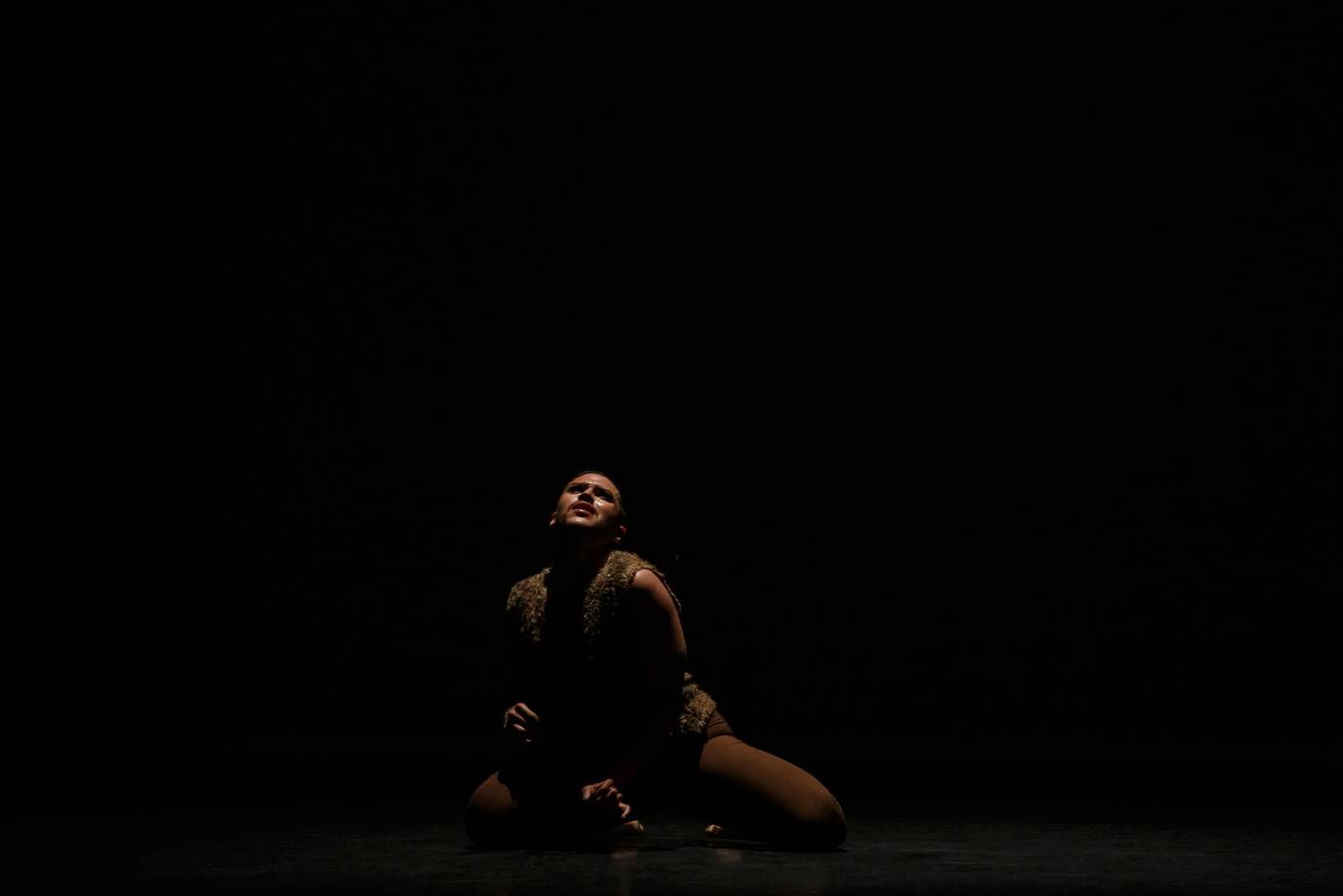
Adam Dario Morales, as the grizzly, wears brown tights and a fur-like vest. He moves from shape to shape, leaning far backward. On all fours, his extended limbs fracture like jagged glass. He prowls and surges toward the front of the stage. He brings a weighted, grounded quality to the movement in the vein of Paul Taylor. Quivering on the floor, gaze lifted, his agitated hands skitter across the stage as he pushes upward into another arch beneath the spotlight. Yet the choreography stops short of the full physical and emotional abandon its imagery suggests.
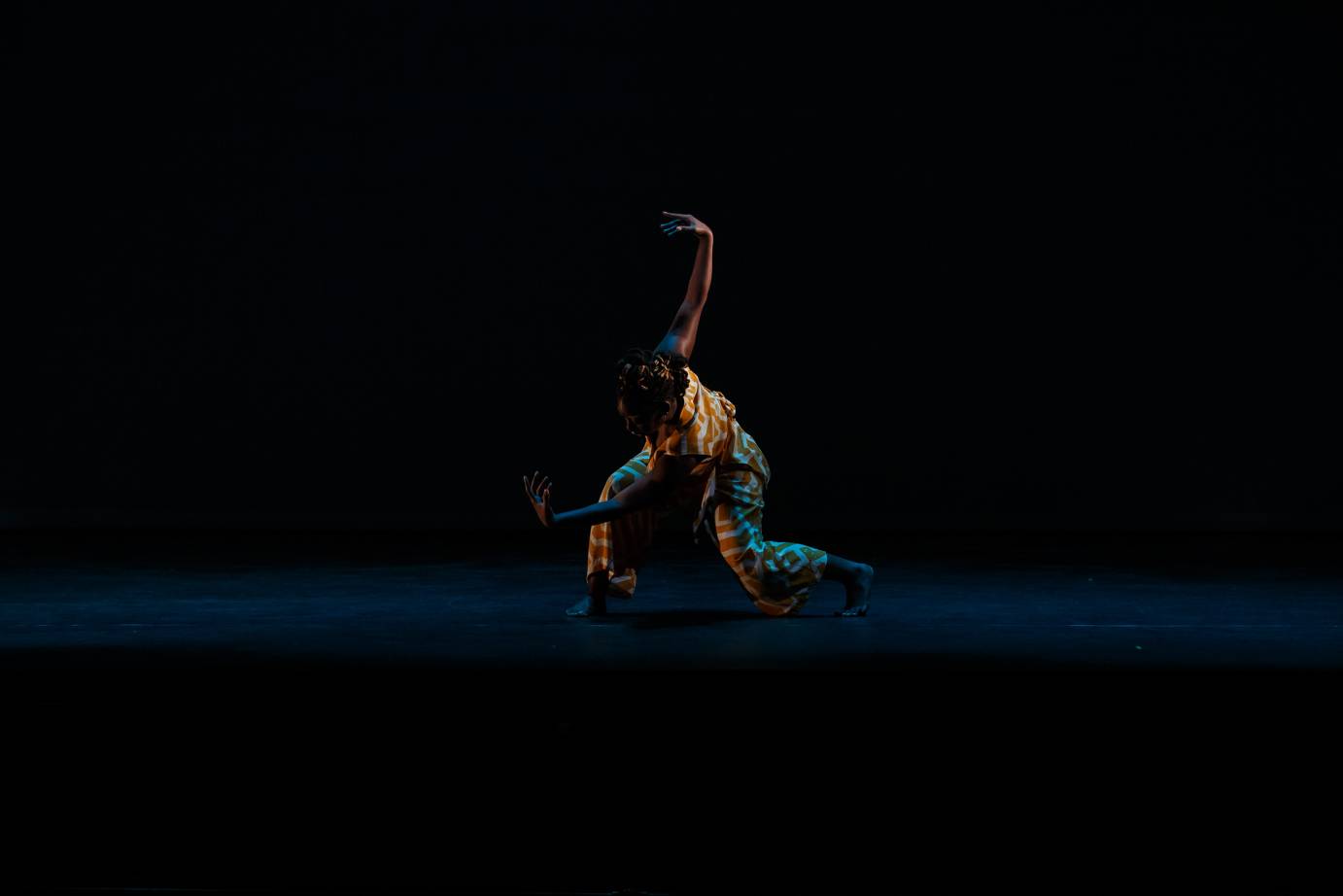
A confessional solo follows. Guest artist Mars Dunston, dressed in patterned orange and white, moves continuously to recorded text by the choreographer, describing a tense introduction to a group of environmentalists. The non-stop movement reflects the anxiety of the speaker. “I’m nervous. I’ve been waiting and practicing, but I start to say my name and I’m sobbing.” Their head slowly tips upward as they softly touch their forehead, nose, and mouth with an open palm, a gesture that calms the unease. Says the speaker, “The end of this will happen when the grizzly is finally able to come home.”
At ten years, EMERGE125 stands on a clear foundation. Migrate affirms Tiffany Rea-Fisher’s command of form, while Kinetic Dissent and Homecoming of the Unforgotten turn that language toward social and environmental concerns. In contrast to more confrontational protest work, Rea-Fisher’s choreography is measured, its edges tempered, its delivery non-combative. That choice gives the work coherence, though it sometimes stops short of the emotional and physical urgency at the core of its subject matter. Yet her commitment remains unmistakable.