


Related Features
IMPRESSIONS: GRAHAM 100 at New York City Center (Part 1)
THE DANCE ENTHUSIAST ASKS: Martha Graham Dance Company's Legacy, Photographed by Deborah Ory and Ken Browar
IMPRESSIONS: GRAHAM 100 at New York City Center (Part 2)

By Robert Johnson
View Profile |
More From This Author
Published on May 19, 2026
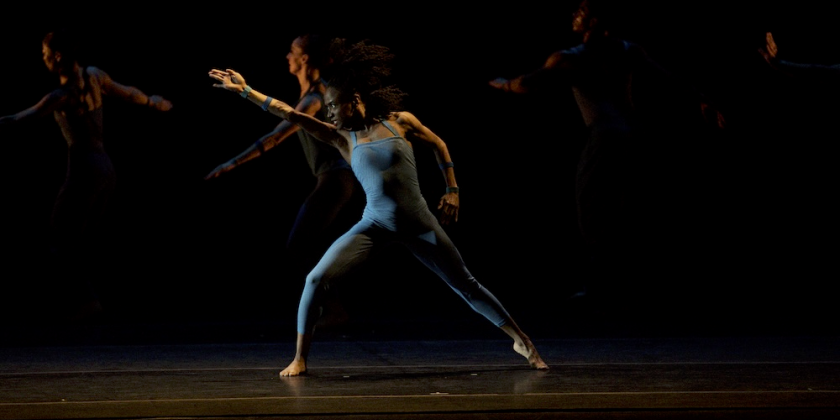
Meagan King in "En Masse." Photo: Melissa Sherwood
The Centennial Celebration of The Martha Graham Dance Company
Presented by: Barbara and Rodgin Cohen, Judith G. Schlosser, Lawrence Stein, and Inger K. Witter
Artistic Director: Janet Eilber
Executive Director: LaRue Allen
The Company: Lloyd Knight, Xin Ying, Leslie Andrea Williams, Anne Souder, Laurel Dalley Smith, So Young An, Marzia Memoli, Devin Loh, Antonio Leone, Meagan King, Ane Arrieta, Zachary Jeppsen-Toy, Amanda Moreira, Jai Perez, Ethan Palma, Isabella Pagano, Grace Sautter
Rehearsal Directors: Ben Schultz, Blakely Angelle White
The Mannes Orchestra, David Hayes conductor
April 8 - 12, 2026
Women are always in the forefront of Graham’s dances. In Appalachian Spring she drew our pioneer mothers from the shadows of history; and in their complexity her heroines rescue women from stereotyping. Nowhere is this more apparent than in Night Journey, a retelling of Greek tragedy from a woman’s perspective. No longer about the hero’s pride and punishment, Graham’s Oedipal drama is about the heroine’s reluctance to confront the truth (her “resistance” in psychoanalytic terms), and about her vanity and sexual need. The journey of the title takes place in Jocasta’s mind, where she follows a tortuous path to self-knowledge and responsibility.
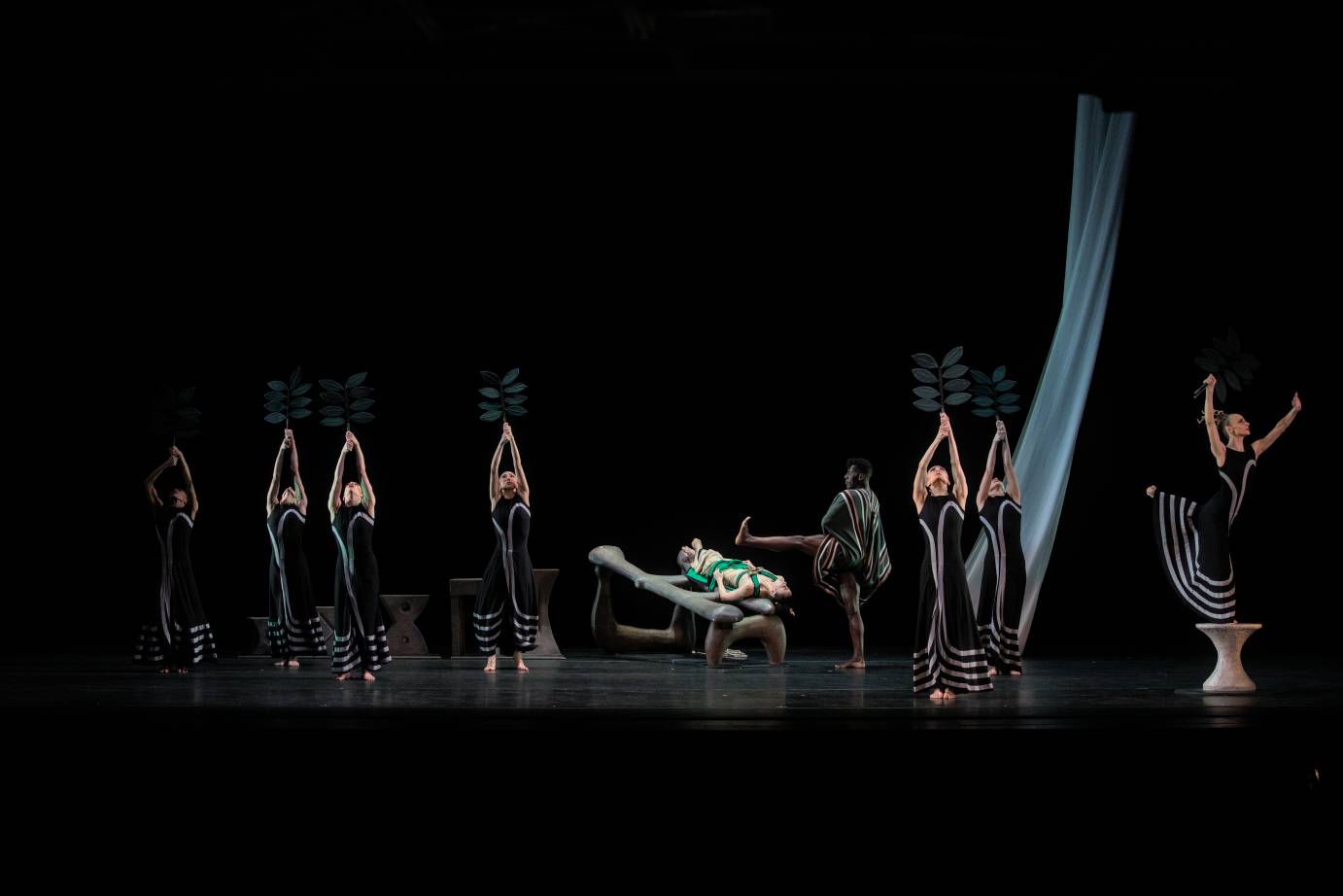
In her 1963 interview with critic Walter Terry (resurrected last fall), Graham claimed innocence for Jocasta. Yet while this might be true of Sophocles’ relatively flat character, Graham’s queen is more interesting. The choreography of Night Journey emphasizes the hero’s flexed foot, as he stands above her and lowers it past her eyes, taking possession of her and crushing her in an intimate act of conquest. This is the same “swollen foot” pierced and scarred when the infant Oedipus was exposed and left to die. Embedded in his name, the evidence Jocasta needs to parry fate also appears in plain sight during Oedipus’ triumphal entry as he proudly plants his foot on a series of steps. Yet Jocasta ignores, or fails to see it. She succumbs.
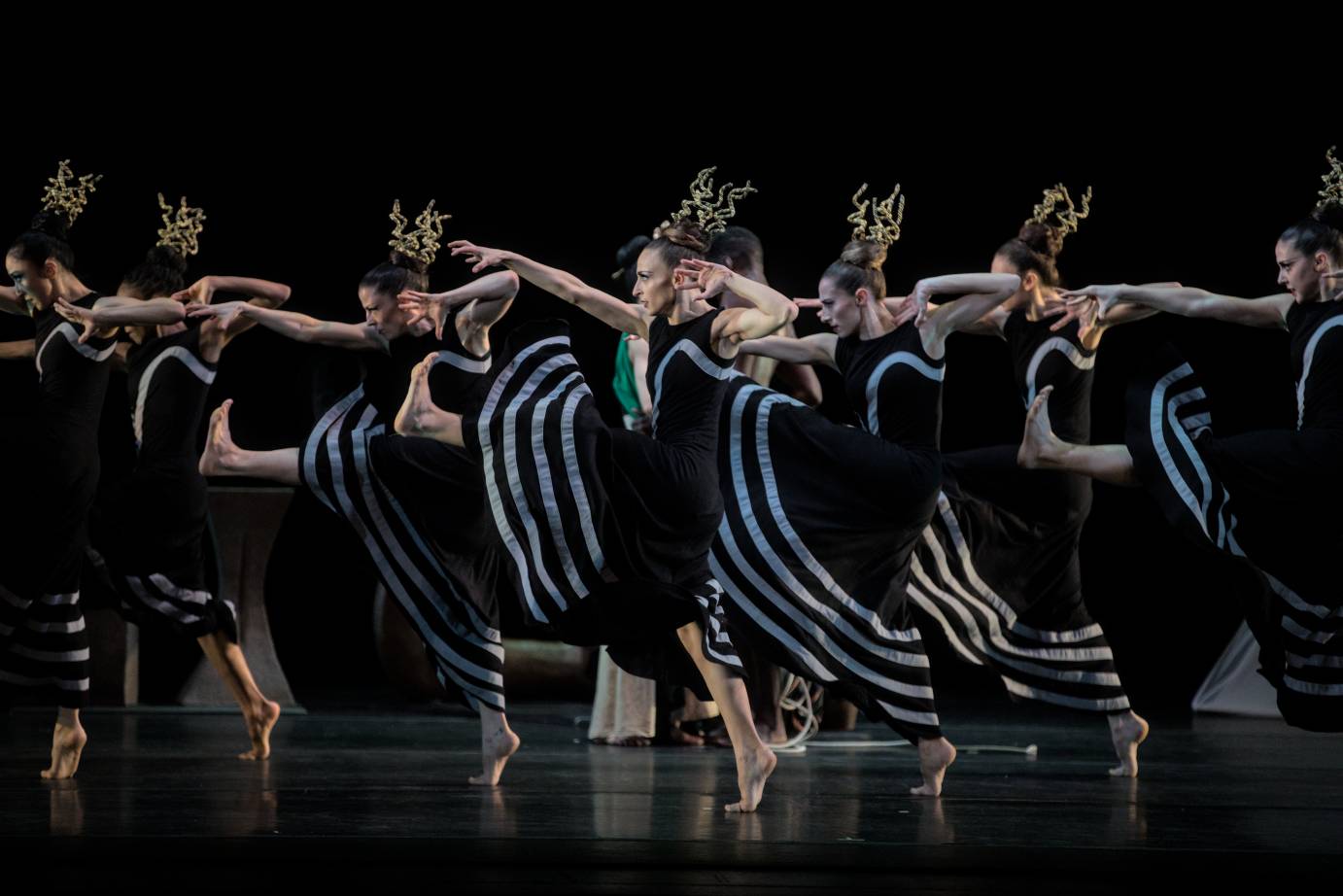
Thus, the silent screams and convulsions of the Daughters of the Night, the all-female chorus led by Marzia Memoli, who are not merely horrified witnesses, but also represent the red-hot pokers of Jocasta’s conscience. Does the seer Teresias (Ethan Palma) draw her attention to an unfathomable mystery with the thudding of his staff? No! He forces her to recall her actions.
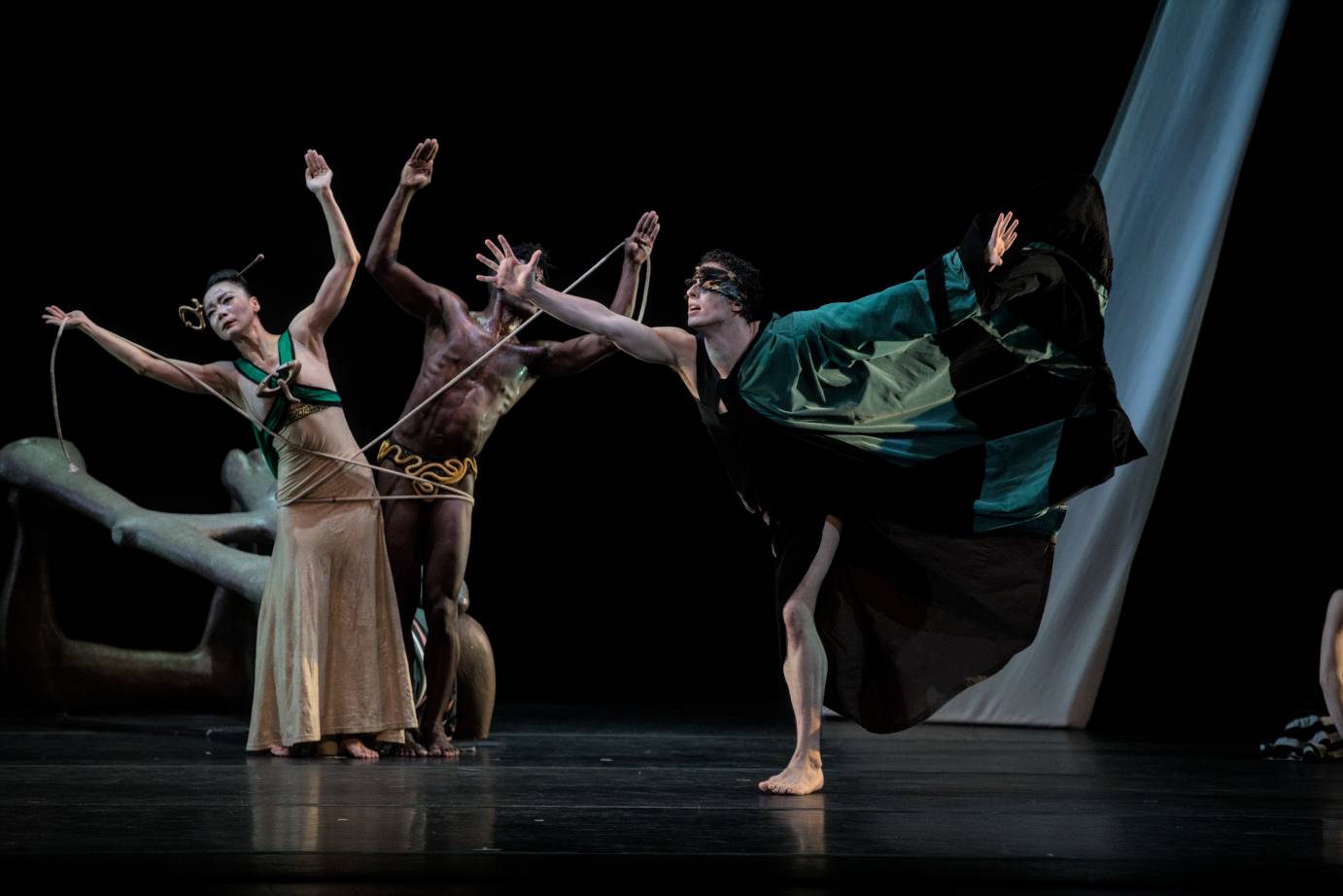
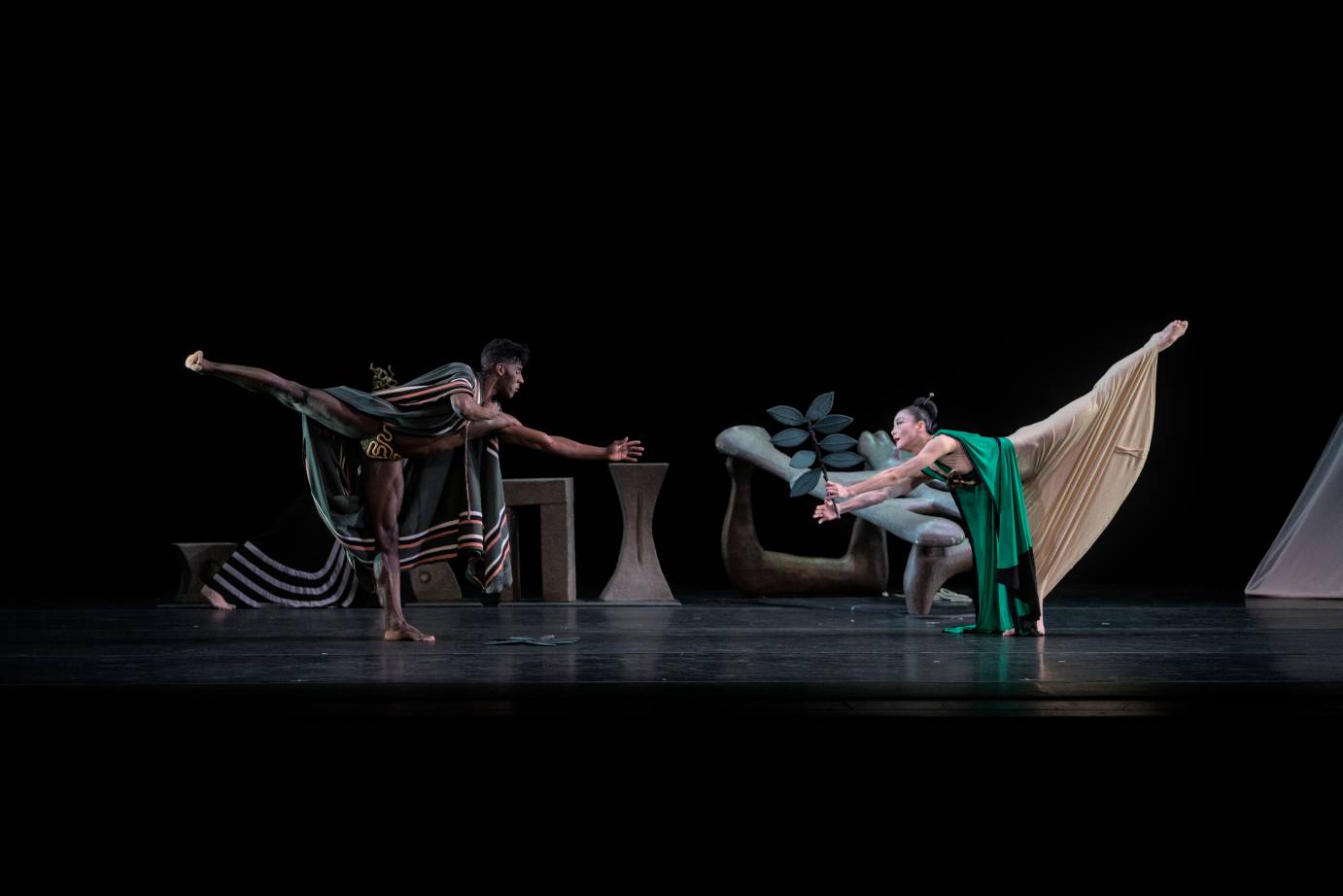
Sex is obviously the point, and while Night Journey contains symbolic elements, no other dance describes wild lovemaking with such honesty. Night Journey is costume drama, but it has the nakedness of the Greeks. As Oedipus, Lloyd Knight throws aside his cloak and reveals a magnificent, rippling physique. Though shielding herself demurely with laurel branches, Xin Ying’s Jocasta is electrified, shuddering with desire. Oedipus makes demands; slapping his hip and punching his fist into his cloak he seems to tell Jocasta what he’s going to do to her. He grabs at her breasts, and dives repeatedly on top of her, helplessly rutting. Yet their duet contains moments of tenderness, in which she cradles him like a baby, and he screws her mouth with a kiss. They fall apart still tense and panting; their desire for each other clearly unspent.
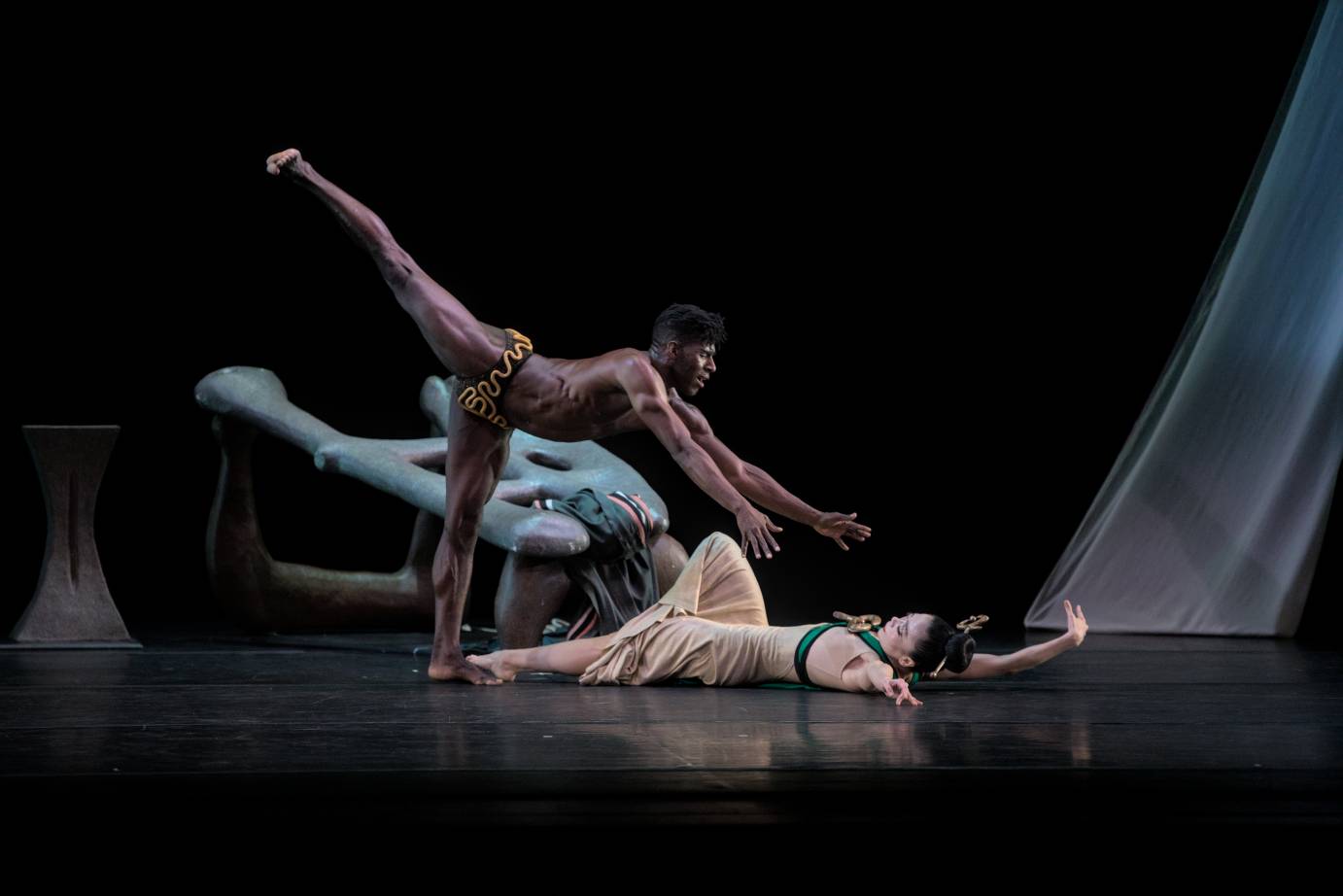
These gymnastics take place on the floor; cleverly, Graham reserves Noguchi’s uncomfortable bed for entanglements with the rope that is both umbilical cord and noose: the beginning and the end of life. As Oedipus and Jocasta pull the cord taut, each tableau is like another orgasm. Perhaps we need reminding that this is not OK. So, Graham sends in the chorus again, shrieking and puking; and Teresias reappears, a bouncing harbinger of doom. Graham does not spare us the grisly denouement in which Oedipus puts out his eyes, stabbing himself with Jocasta’s brooch (loosening it from her costume with a sharp tug, his gesture helps us imagine the needles). Yet after visions of physical and emotional extravagance — Jocasta tossing herself from side to side; Jocasta spun around and dangled upside-down — the final scene of Night Journey overwhelms us with its subtlety. The whole drama has been a glimpse into Jocasta’s mind; and now Graham shows us her heroine’s last thoughts, as the embittered queen resolves to hang herself, though with every fiber of her being she still yearns for life.
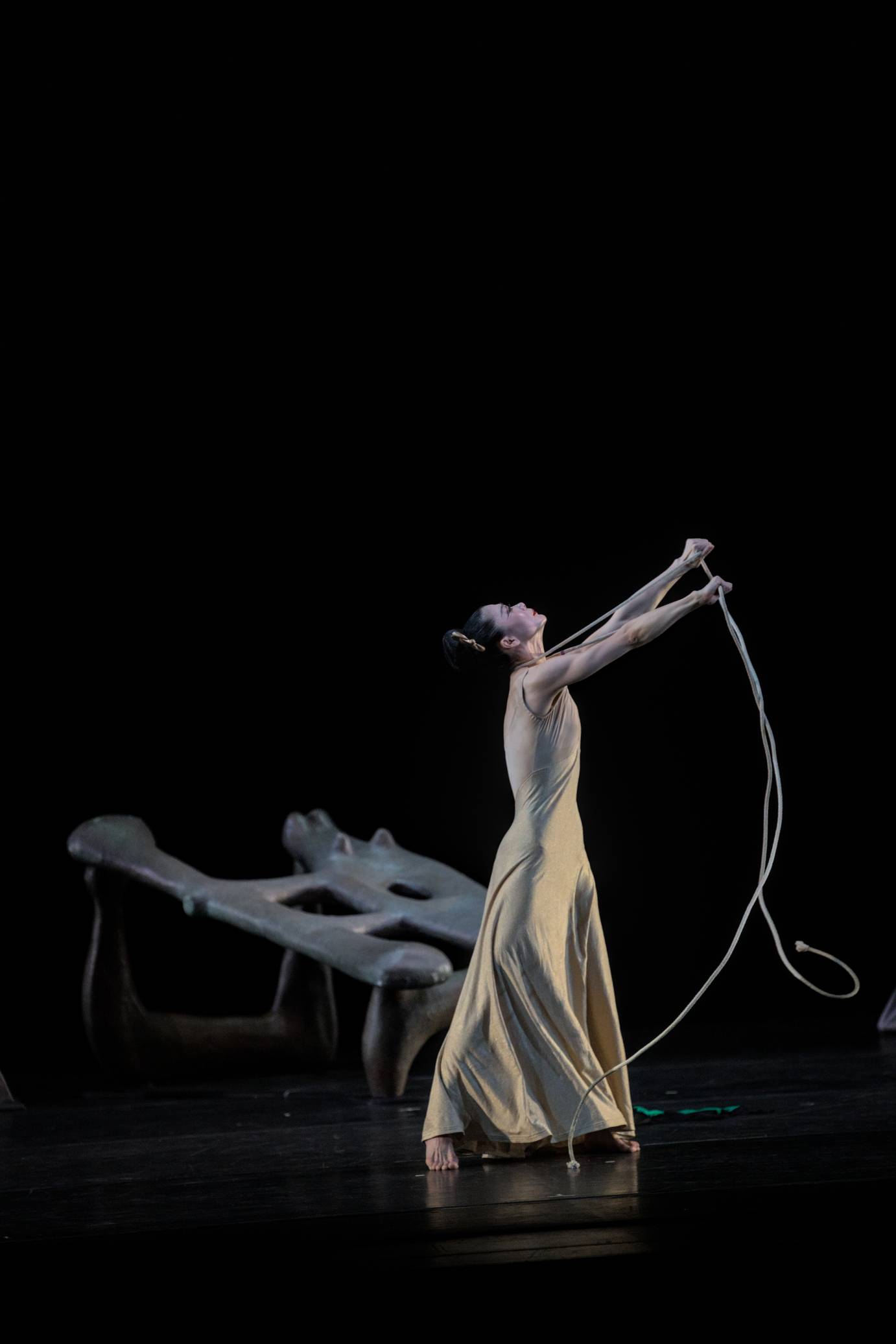
At one time, it seemed impossible to separate Graham herself from the role of Jocasta. Graham was 15 years older than her Oedipus, Erick Hawkins, whom she married the year after Night Journey’s premiere; and her personal life added a frisson to the spectacle of a healthy young man and a powerful, older woman lusting for each other. Yet thanks to Graham’s detailed choreographic imagination, the distance imposed by this ballet’s psychological framework, and the sensitivity of today’s brilliant interpreters, Night Journey remains a thrill. Both Knight and Xin Ying make the most of their juicy, starring roles.
Among the Graham company’s new works, the only one whose aspirations and complexity carry it high enough to reach the founder’s orbit is the 2023 Cortege, by the choreographic duo Baye and Asa. Tense and shadowy, with abrupt “popping” moves borrowed from hip-hop, this allegory of war is framed by a diagonal line of dancers who seem to watch over their own graves. A black sheet flies away releasing them, and returns to shroud them at the end. In between, the stage becomes a wasteland littered with ominous tableaux composed of two or three dancers in attitudes suggesting bereavement or captivity. These snapshots of human misery reappear spectacularly, concentrated in a circle of light where they flicker briefly in and out of existence. Dancers also form a caravan of shell-shocked refugees, and lock together to form inhuman juggernauts whose components may be headless. Added to the original choreography now are scenes where soloists Leslie Andrea Williams and Jai Perez confront a moral dilemma. For the war to do its wicked work, they must take up the padded vests laid out for them — and, however mixed their emotions, they consent. Perhaps such individual decisions, multiplied countless times, are the crux of this tragedy.
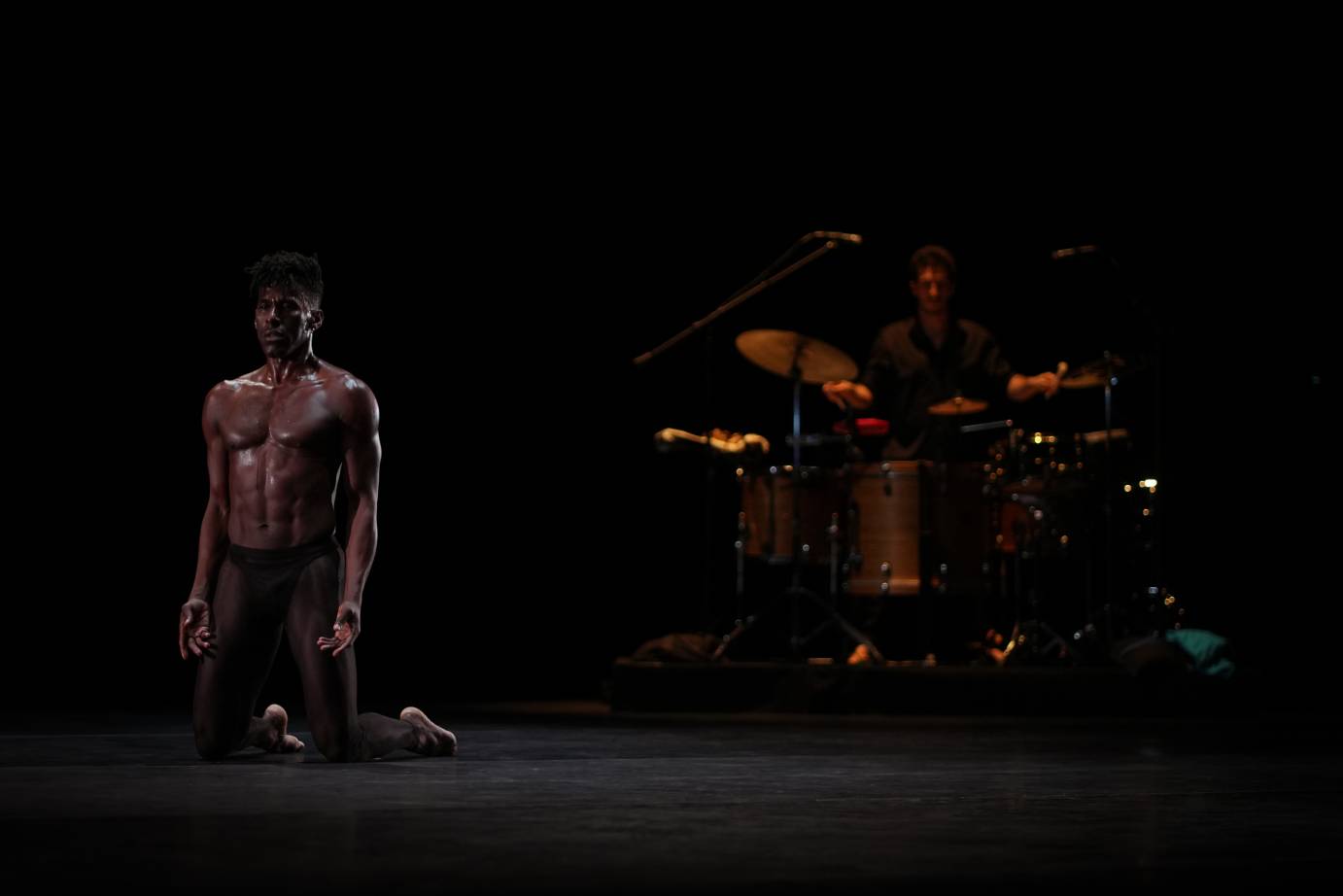
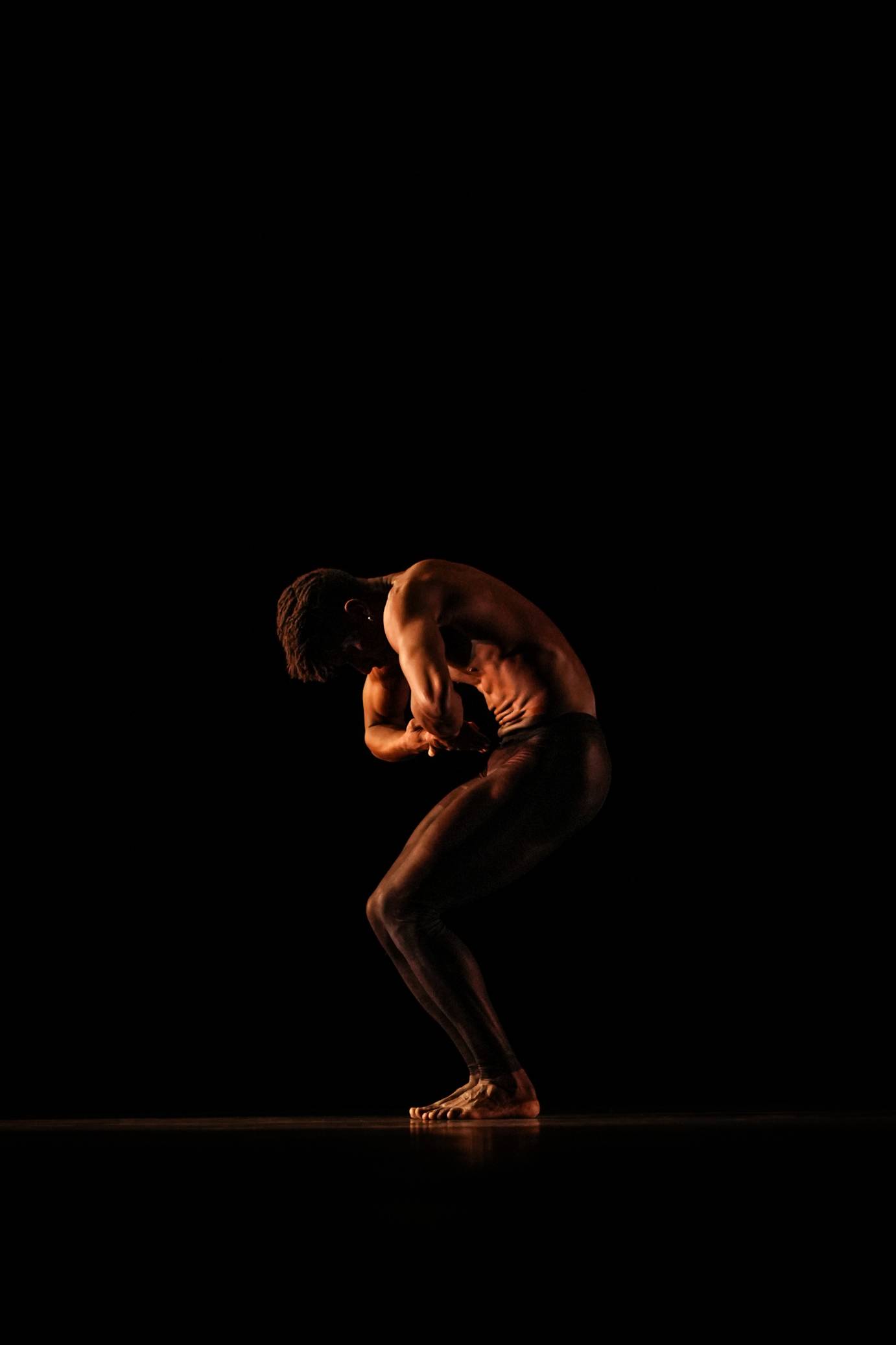
In sharp contrast, To The Brink And Back, Jamar Roberts’ new solo for Lloyd Knight, celebrates the body beautiful. Shirtless and in sheer pants, Knight bows and straightens, or steps side to side, making deft transitions from one chiseled pose to the next in a series of snapshots. He stretches out his hands and clenches them, or slaps his chest, sinking to his knees and throwing back his head. Though the dancer hides his face briefly, this is dance of gorgeous surfaces not mysteries, and one might forget what a powerful actor Knight can be. This magnetic performer deserves a more ambitious showcase---why not a classic, American drama? A play like Tennessee Williams’ Orpheus Descending, translated into dance, would provide much-needed substance, and, evidently, Knight would still be sexy.
Dishing up the season’s other novelty, choreographer Hope Boykin also understands that the Graham company is an ensemble of soloists. Her piece En Masse, set to a musical distillation of Leonard Bernstein’s MASS,contains a handful of fleeting cameos in which individual dancers have a chance to shine. Yet while Bernstein projected a monumental work of protest, Boykin depicts a fragmented society whose isolated or self-absorbed members must learn to hang together. This scene looks familiar, but it does not stir deep emotions.
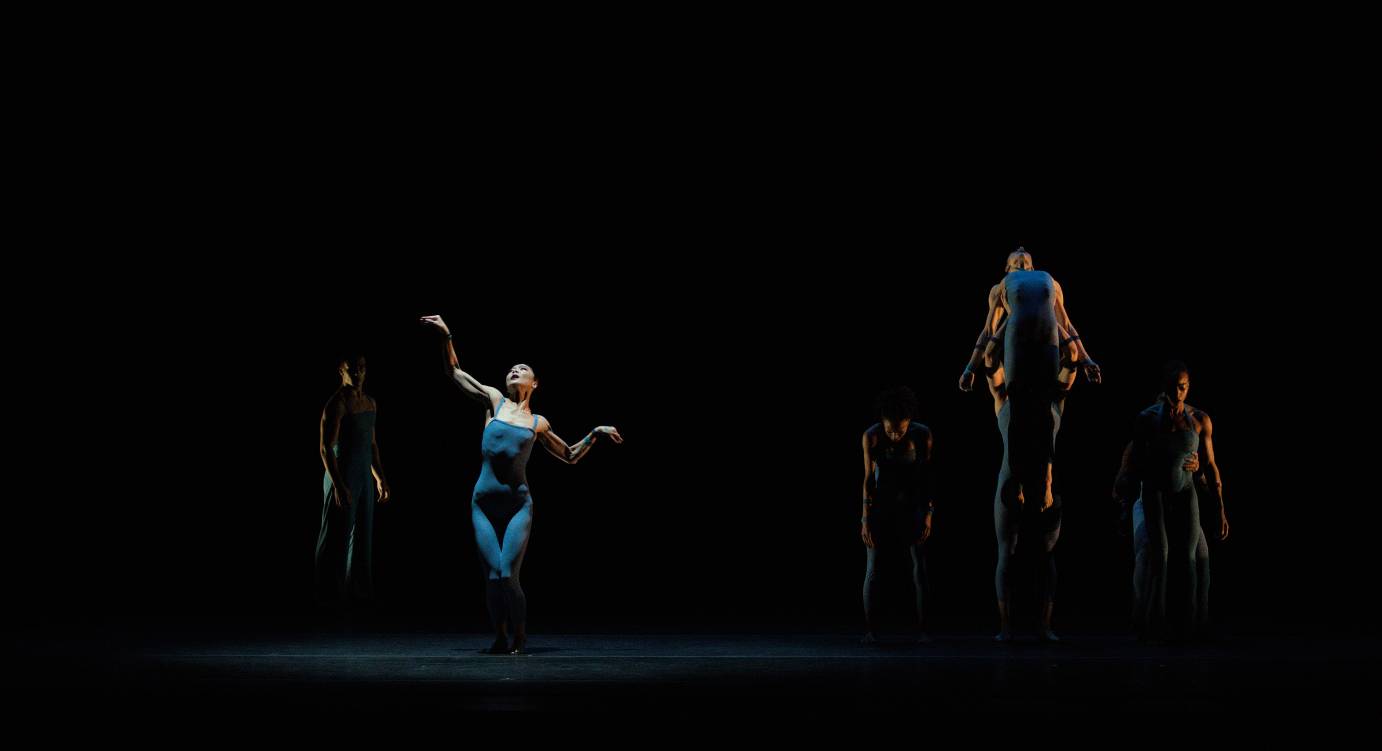
Antonio Leone appears at the outset as a protagonist whose gestural phrases the other dancers will eventually learn to copy. This Christ-like figure threads his way through the dance, standing aside and watching or participating in ensembles. (Think of the Outsider in José Limón’s Missa Brevis, or the female leader in Ronald K. Brown’s Grace.) The ensembles may feign anarchy — with individuals walking or jogging past one another in a choreographic rush-hour. Alternately, the group may unite to create elegant, evolving circles, or rough masses that stomp and stagger as they advance. The patterns are attractive, and Boykin’s movement style allows these dancers to display their lyrical side. Yet some segments appear gratuitous. A trio emerges whose partnering antics are pure fun; while the use of silhouettes, though visually striking, suggests a choreographer hunting for effects. Too often, sections conclude with a defiant pose that becomes tired.
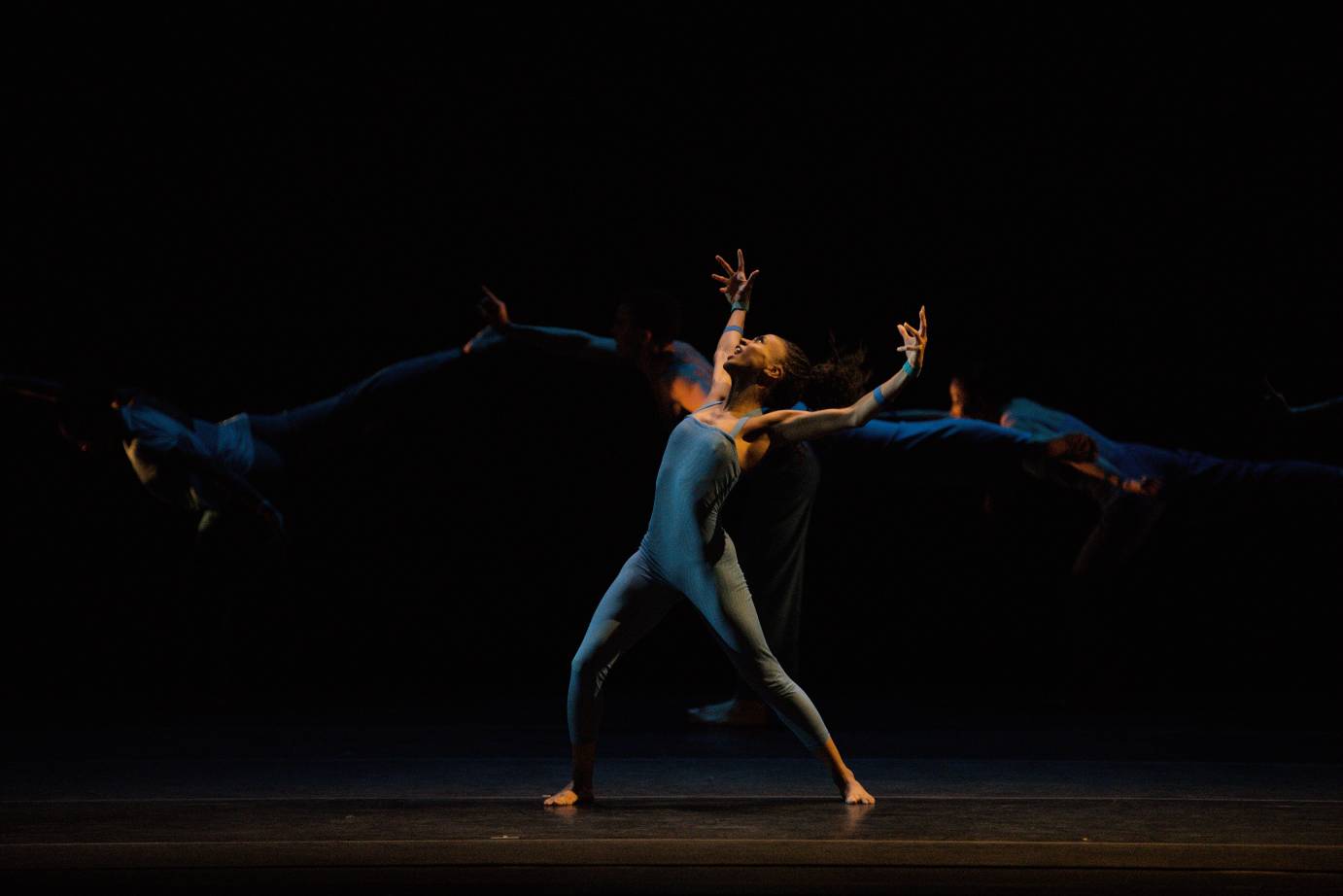
En Masse is only gripping when soloists make the most of it. Ejected from a clot of dancers, and hauled back in, feisty Meagan King goes on to lead the ensemble in stretchy lunges, and she clenches her fists owning her power. Isolated in a circle of light, delicate Xin Ying is repeatedly flung backward, as if shot. Yet she rises again, nodding her head ruefully, as if the violence has made her wiser. Alas, these moments of dramatic clarity are too few; and, like Hofesh Schechter's druggy, modern folk-dance Cave, En Masse becomes less interesting with repeated viewings.