

Related Features
IMPRESSIONS: Lydia Johnson Dance Leaves Us with a Sense of Caring at New York Live Arts

IMPRESSIONS: Fresh Tracks 2026 at New York Live Arts
IMPRESSIONS: French Choreographer Leïla Ka's "Maldonne" is "Womanhood Personified"

By Kristen Hedberg/@kristen.hedberg on Instagram
View Profile |
More From This Author
Published on March 12, 2026
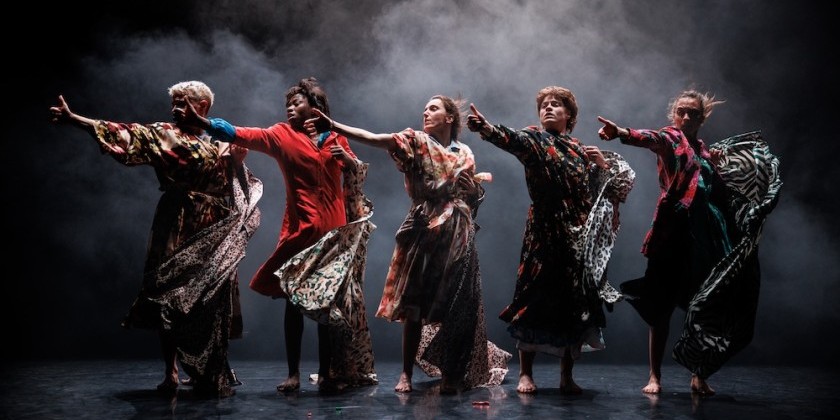
Leïla Ka's "Maldonne." Photo: Maria Baranova
Presented at New York Live Arts as part of Van Cleef & Arpel's Dance Reflections
Choreographer: Leïla Ka
Performers (Alternating): Océane Crouzier, Jennifer Dubreuil Houthemann, Jane Fournier Dumet, Leïla Ka, Jade Logmo, Justine Agator
Choreographer's Assistant: Jane Fournier Dumet
Lighting Designer: Laurent Fallot
Costume Designer: Leïla Ka
Lighting Manager: Clara Coll Bigot
Sound Designer: Rodrig Desa
February 27th, 2026
(*On this date, choreographer and performer Leïla Ka did not perform)
From confidence to conflict, from sensuality to spontaneity, French choreographer Leïla Ka's Maldonne is womanhood personified. The visceral, evening-length quintet weaves five intersecting lives through breath, movement, and 40 dresses.
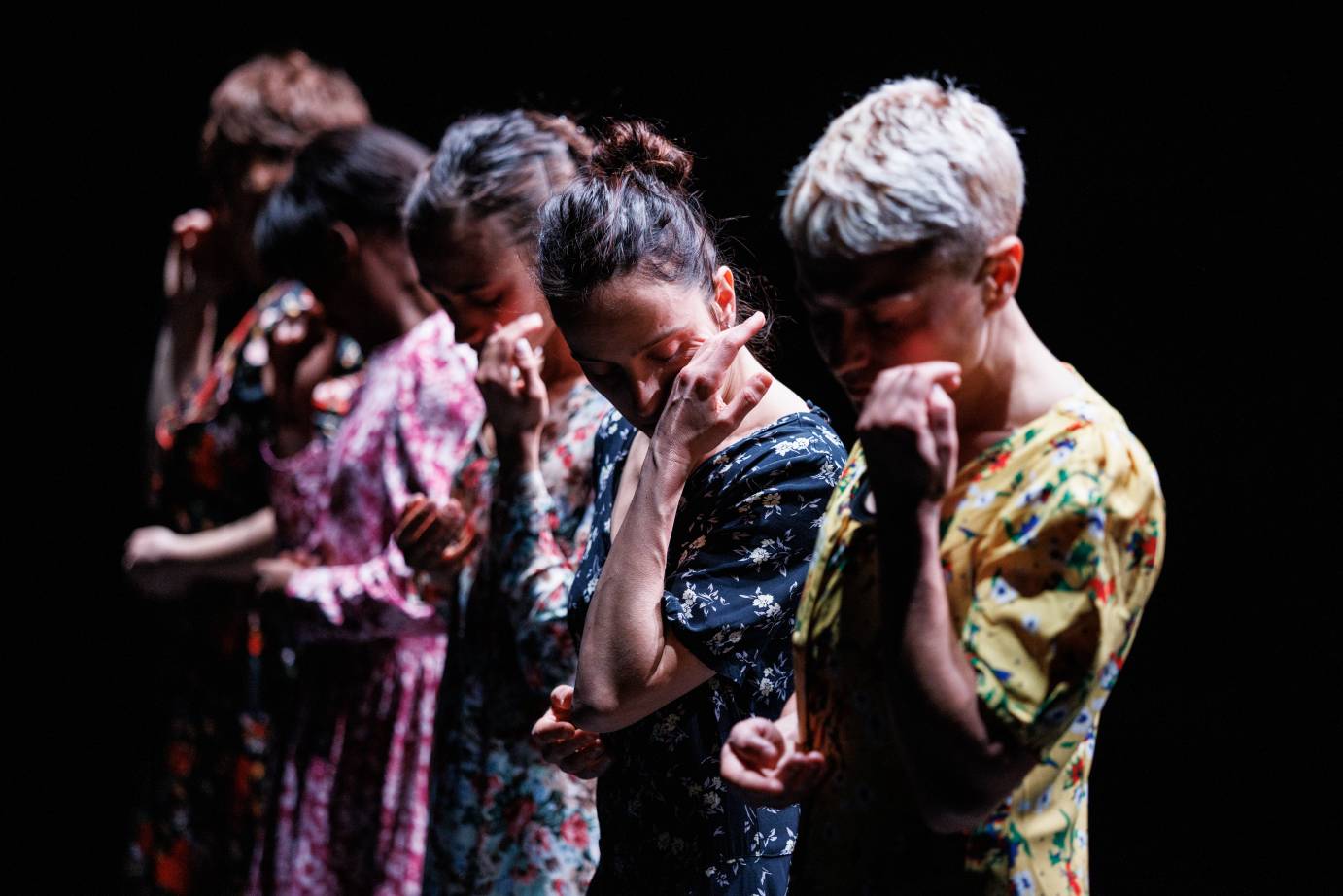
As New York Live Arts' welcome announcements begin, a pulsing beat becomes audible. All the lights black out. Five women — Océane Crouzier, Jennifer Dubreuil Houthemann, Jane Fournier Dumet, Jade Logmo, and Justine Agator — stand side by side serenely on the glowing stage. They wear long, floral, flowing dresses that cover their shoulders and knees.
Leïla Ka's Maldonne. Photo: Maria Baranova, courtesy New York Live Arts
Their hands rise to their faces, gently grazing against their cheeks. They could be wiping a tear away, or a drop of rain. Or perhaps this gesture nods to modesty, as they maintain an internal focus. They lift their elbows angularly, in a statuesque frame.
The calm grows into a poignant canon of movement. The women swing an arm skyward, collapse, roll to their sides, and rise again. The repetition feels both distraught, passionate, and extremely linked, as the canon morphs into unison. The five women share an inner pulse.

Leïla Ka's Maldonne. Photo: Maria Baranova, courtesy New York Live Arts
In this scene, which lingered with me throughout the performance and afterward, there is no music. There is only breath, as the dancers create a vehement score through sharp exhalations, inhalations, and cries. Towards the moment's finale, in the span of a breath, all five are on the floor, and the skin under their skirts shows for the first time. Shortly after, their eyes slowly lift to meet our gaze. This image speaks to women's unyielding strength to rise, time after time, with grace and intent.

The remainder of Ka's work reveals varying realities of womanhood with sincerity and imagination. For instance, in Maldonne's second scene, the five reemerge wearing billowing, long-sleeved dresses in varying prints. Here, their dancing becomes more sensual, evocative, and hard-hitting, allowing their confidence to beam. Hips thrust, thighs open, and the group assumes deep squats, as they hold their gaze on us. I feel their power and assuredness. They continue their use of voice in this scene, emitting sharp "Ha!" or "Ah!" exhalations, a contrast from the previous gasps.
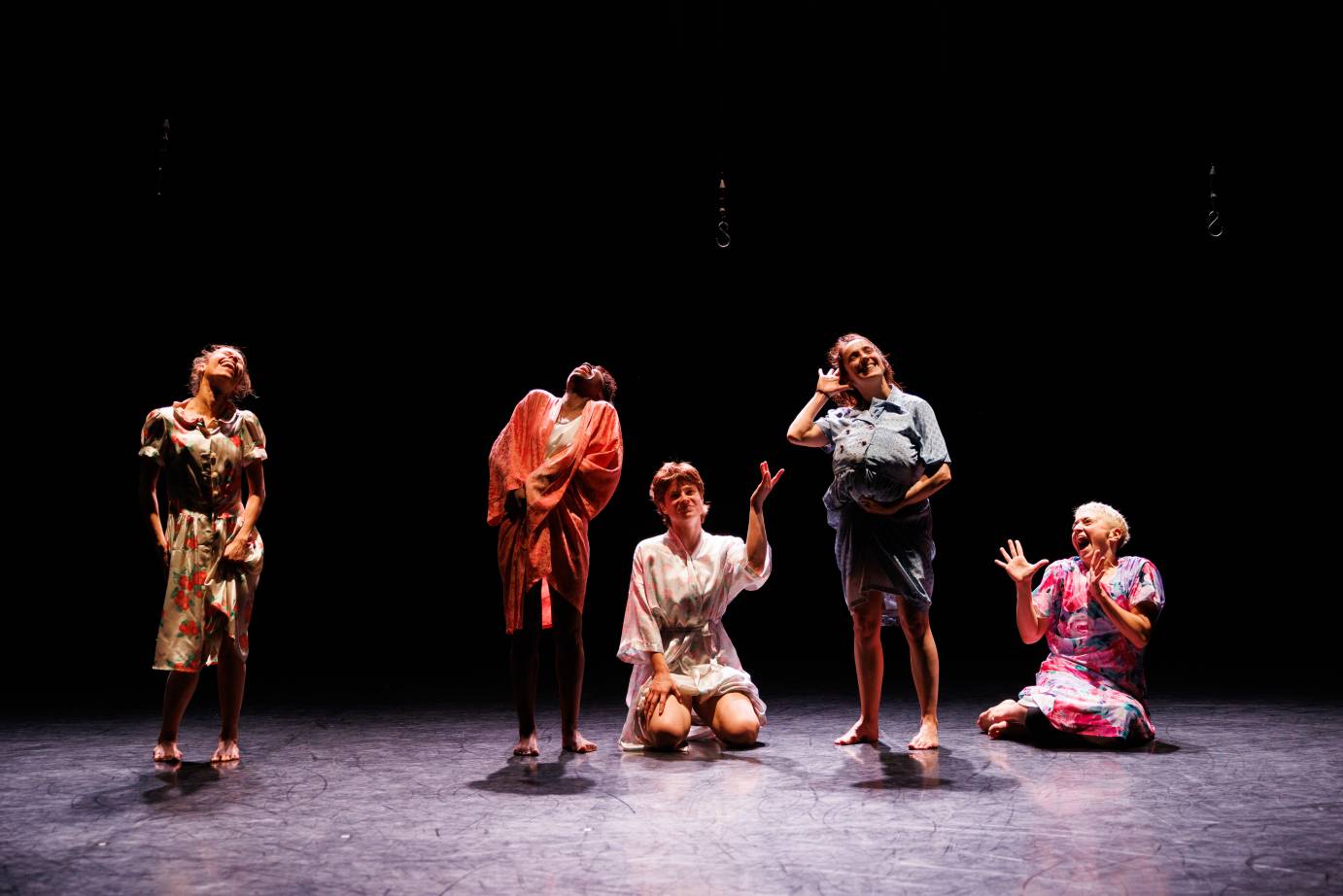
Later, the performers, dressed in printed robes over black undergarments, create a moment of complete abandonment that reminds me of singing in the shower. At first lip-synching a French ballad, Lara Fabian's "Je suis malade," they come to belt out the song, allowing their voices to tear through the space buoyantly.
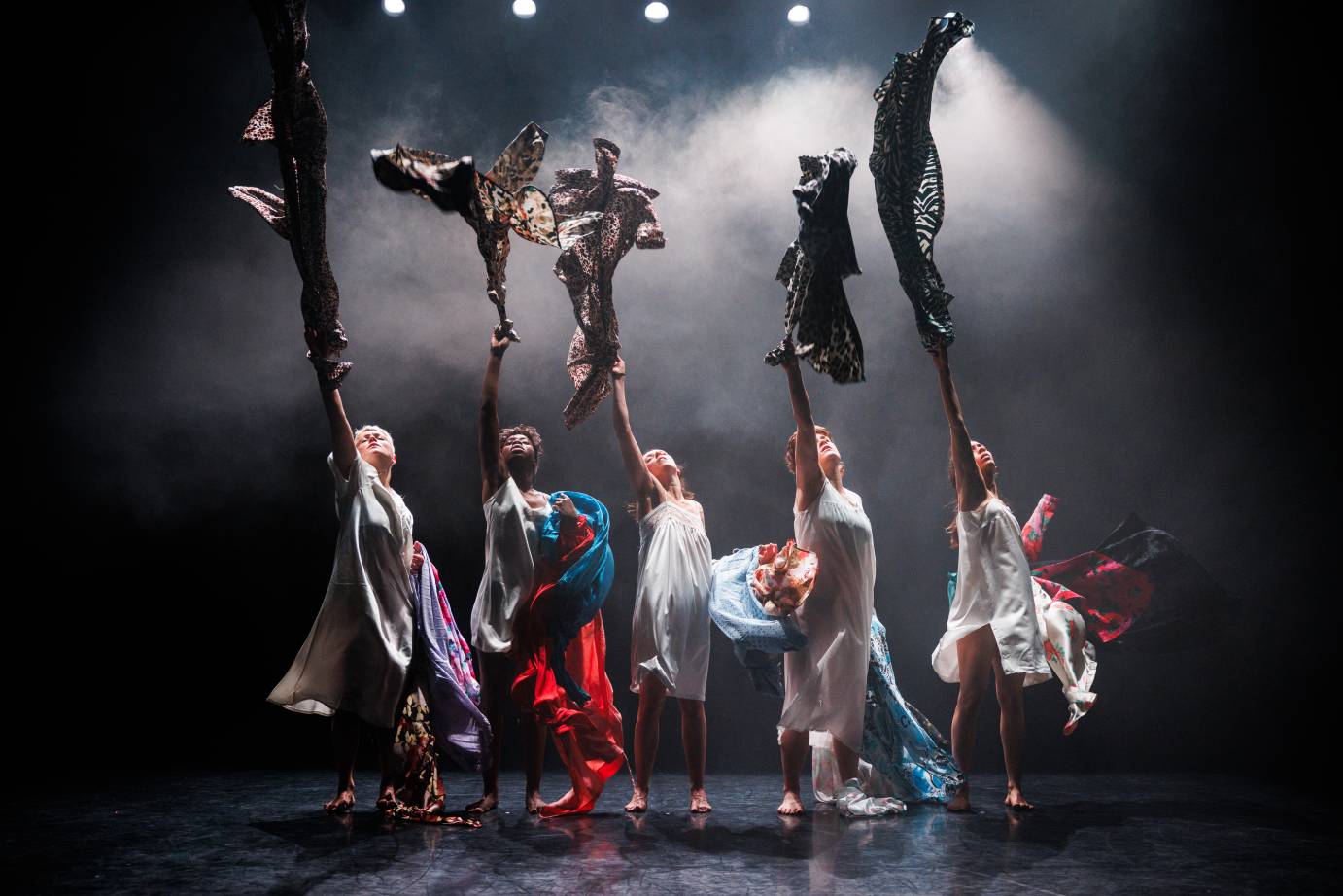
Another memorable image occurs after the cast peels off an outer layer of vibrantly hued dresses, hanging them on hooks that rise to the ceiling. Now in long, black frocks with fitted torsos and swinging skirts, they travel robustly through the space, undulating and rippling in unison. One by one, the performers peel off, continuing to share the same inner pulse as they travel.
In tandem with the artists' compelling performances, dresses continuously amplify the space. Amid a multitude of costume changes, Ka invites us to view womanhood from alternating angles, represented through a wide selection of garment styles: modest, flowing, fitted, long, short, floral, solid, silky, to name a few. The dresses are not only worn, but partnered with, passed around, hung on hooks, raised to the ceiling, flung about, and bundled up. Each dress ripples and breathes energetically, and I am entranced by how the quintet captures so many characters.

In a Bloom Price interview, Ka describes a sense of solidarity in this work, especially among the dancers as they explore ways to escape the societal confines imposed on them as women. There is a contrast that lives between the dresses (which often appear whimsical) and the wrought tension the dancers manifest: "I wanted this contrast because this is what I have in my mind. There is also a contrast between what we do and what we want to do…"
Leïla Ka's Maldonne speaks to the most joyous and tumultuous seasons of a woman's life with imaginative brilliance. It invites us to escape confinement, while holding authenticity and joy close.