


Related Features
BAREFOOTNOTES: Things I Am Learning About: Civic Duty, Dance, and “The Table of Silence”
IMPRESSIONS: Great Jones Repertory in “Aristotle Thinks Again” at LaMaMa ETC
IMPRESSIONS FROM BOSTON: Stefanie Batten Bland and Daniel Bernard Roumain's "CLOSE UP"

By Christine Jowers/Follow @cmmjowers on Instagram
View Profile |
More From This Author
Published on April 9, 2026
Photo by Nina Aladaro
A World Premiere at The Theater at MIT
Created and performed by Stefanie Batten Bland and Daniel Bernard Roumain, both 2025-2026 Gus Solomons Visiting Artists
The Gus Solomons Jr. Visiting Artist Series is a new initiative that brings a contemporary dance artist to the MIT Theater Arts program in order to share and create their work with students and MIT’s broader community.
Dramaturgy by Dan Safer (MIT Senior Lecturer & Director of Dance Programs)
Lighting Design by Jessica Drayton
Costume Design by Shane Ballard
MIT Multimedia Specialist Kevin Fulton
MIT Technical Production Specialist Joseph Lark-Riley
Light Board Operator: Xinyu Xu
Audio Engineer: Christian Frederickson
Created and performed by performance artist Stefanie Batten Bland and composer-musician Daniel Bernard Roumain, CLOSE UP premiered at the Theater at MIT in Cambridge on March 13, 2026. The piece brings together both makers' unique yet intertwined French Creole ancestries - his roots are Haitian, hers Louisiana Creole — with their multifaceted artistic practices. The result is a layered dreamscape, both intimate and theatrical, that unfolds before us.
The program begins virtually in the dark, though we make out a wall of fabric to our right with two chairs in front of it. For some reason, perhaps because of the way the fabric drapes, it reminds me of the back curtain of one of those voluminous royal canopy beds we often see in movies, great houses, and museums.
Whispering voices and giggles — a man's and a woman's, Bernard Roumain's and Batten Bland's — come from behind the curtain, drawing us in. "I love her voice." "I don't speak Creole. I try." A scratchy recording plays: a raspy-voiced older woman singing in a French patois. Is hers a Creole lullaby, an incantation? Whether or not we are familiar with the song or the language, in just these first few seconds of CLOSE UP, we are transported to the past, to memory, and to ancestry.
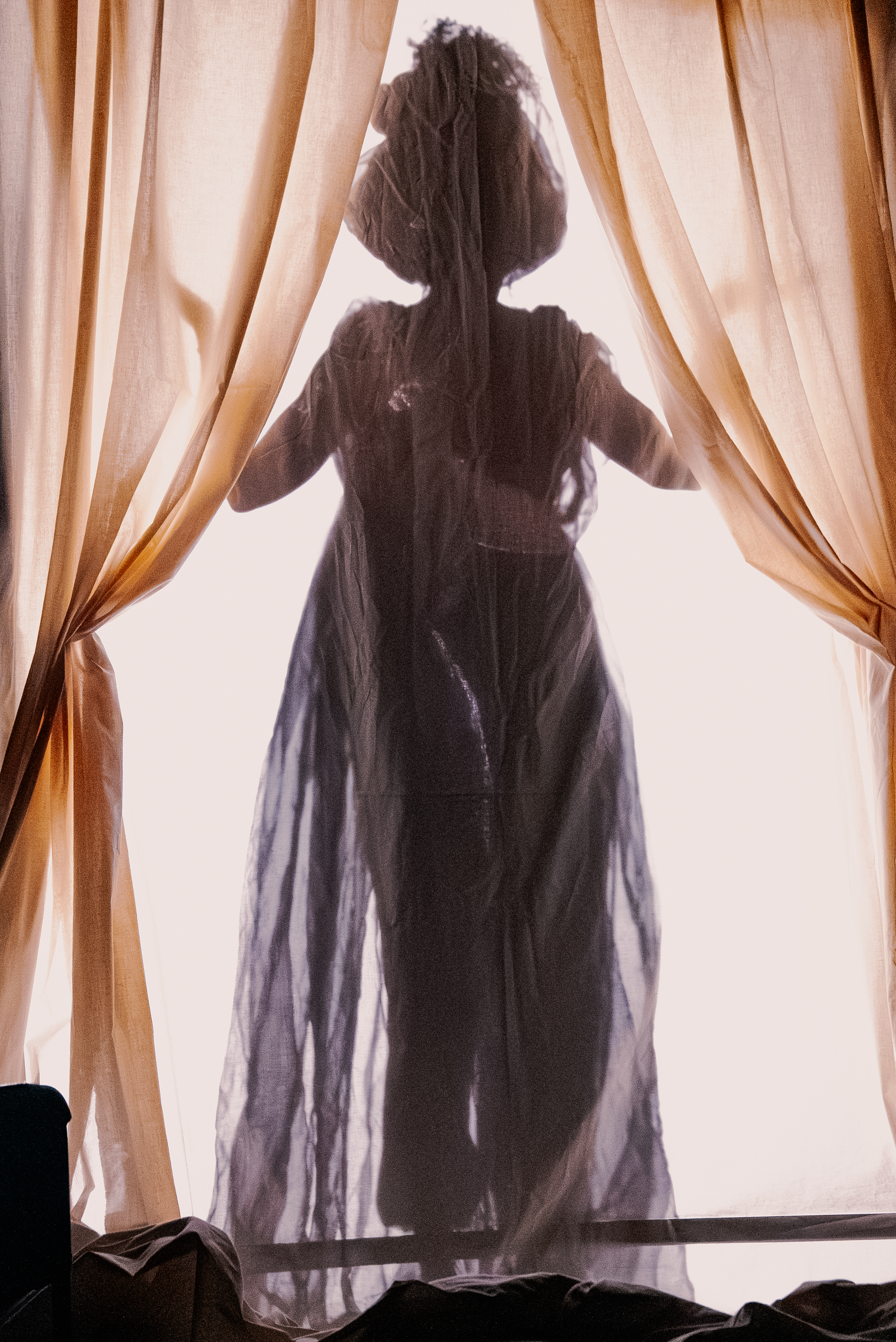
The silhouette of a woman wearing the suggestion of a petticoat emerges on the curtain screen. She bends over in silence, struggling to tame her wild curls beneath a head wrap. From this shadow play, though devoid of color, we understand her to be a Black woman. The skirt suggests a colonial space where European, African, and Indigenous cultures meet: the very definition of Creole. She reaches her index finger to her lips, miming a shhh, as if we should not tell anyone what we have seen. Electric strings reverberate beneath the action.
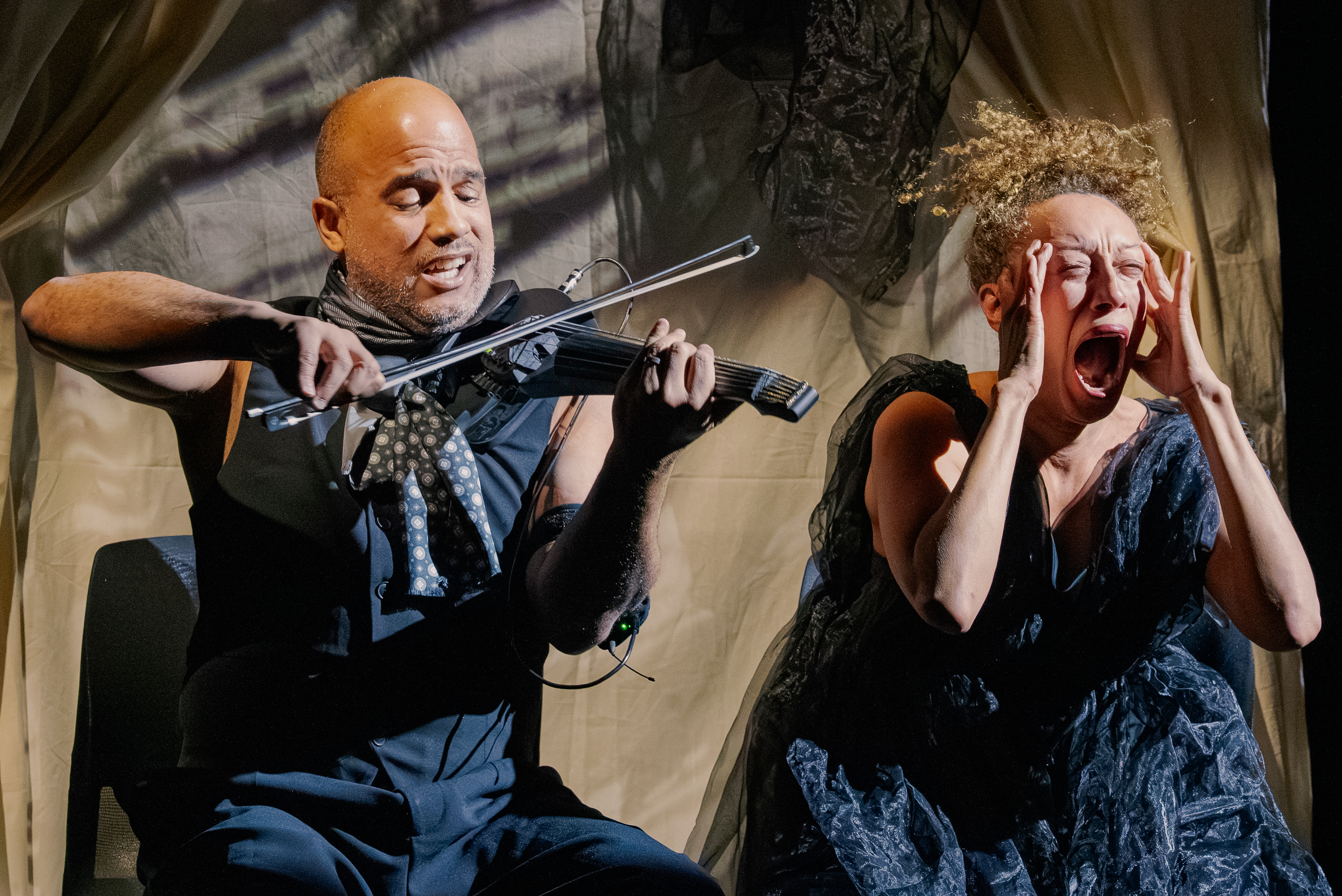
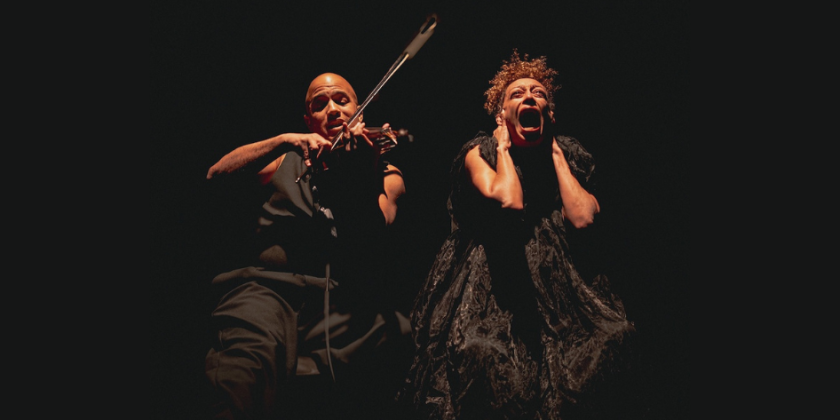
In another scene, shortly after, Bernard Roumain and Batten Bland sit side by side, King and Queen, in front of their curtain, as if in a throne room. He plays his violin fervently as she, at first, sits serenely listening to his performance of "God Bless America." But this version of the hymn is by no means glorious; it strains and lurches off-kilter, almost violently so. With each discordant phrase, Batten Bland's face incrementally distorts, from mimed laughter to wide-mouthed mania to twisted horror, until finally, as the tune devolves into something stranger, she convulses and collapses. Blackout.
What captivates me about CLOSE UP from start to finish is the clarity and force of its images. Vignettes rush past, emerging from darkness; they shift across time and tell nonlinear stories, introducing us to different figures, or spirits, fully inhabited by Batten Bland and Roumain. Characters shift from doom-prophets to sufferers, to bearers of light, beauty, and art. The work unfolds according to a surreal dream logic, and I am swept up in it.
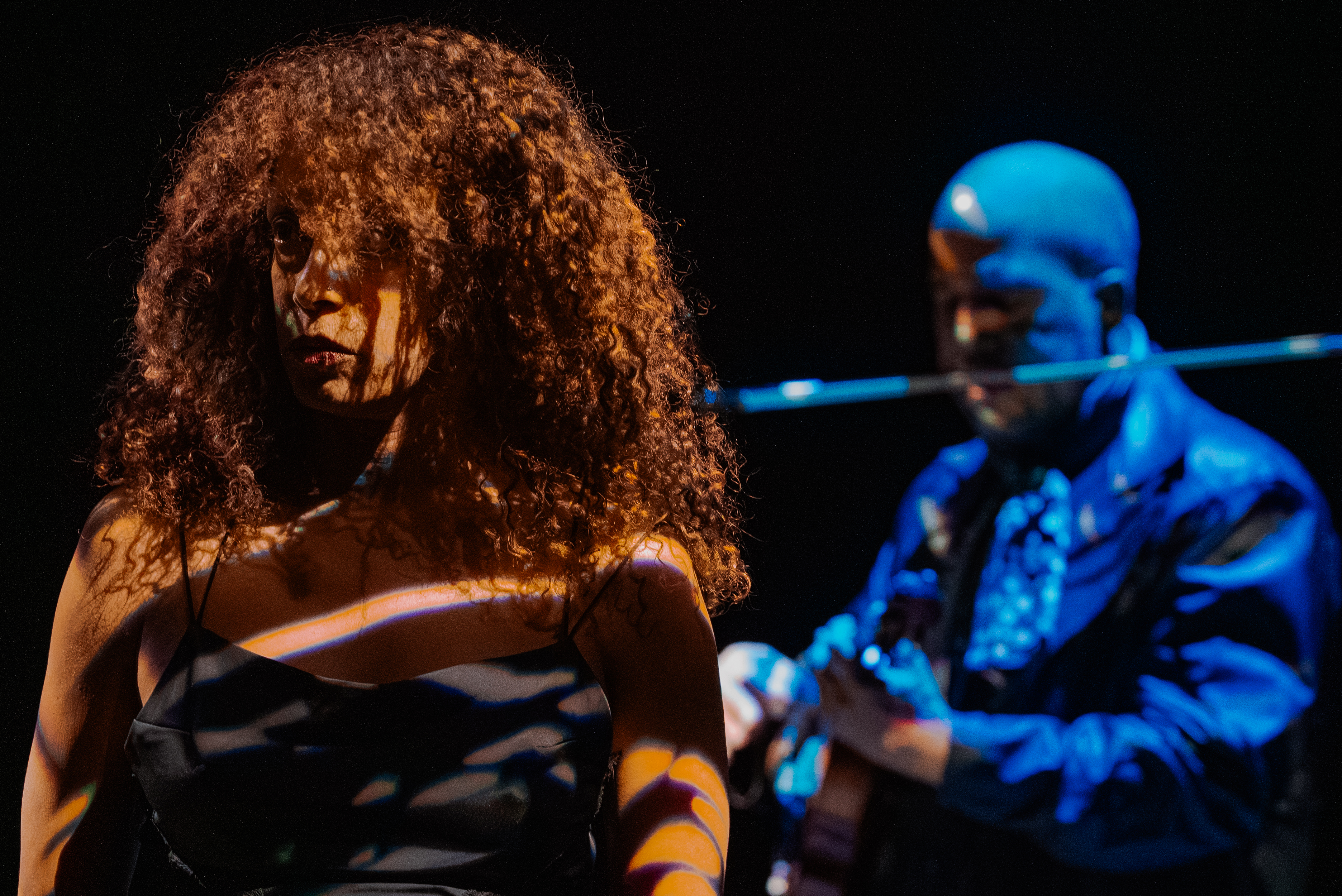
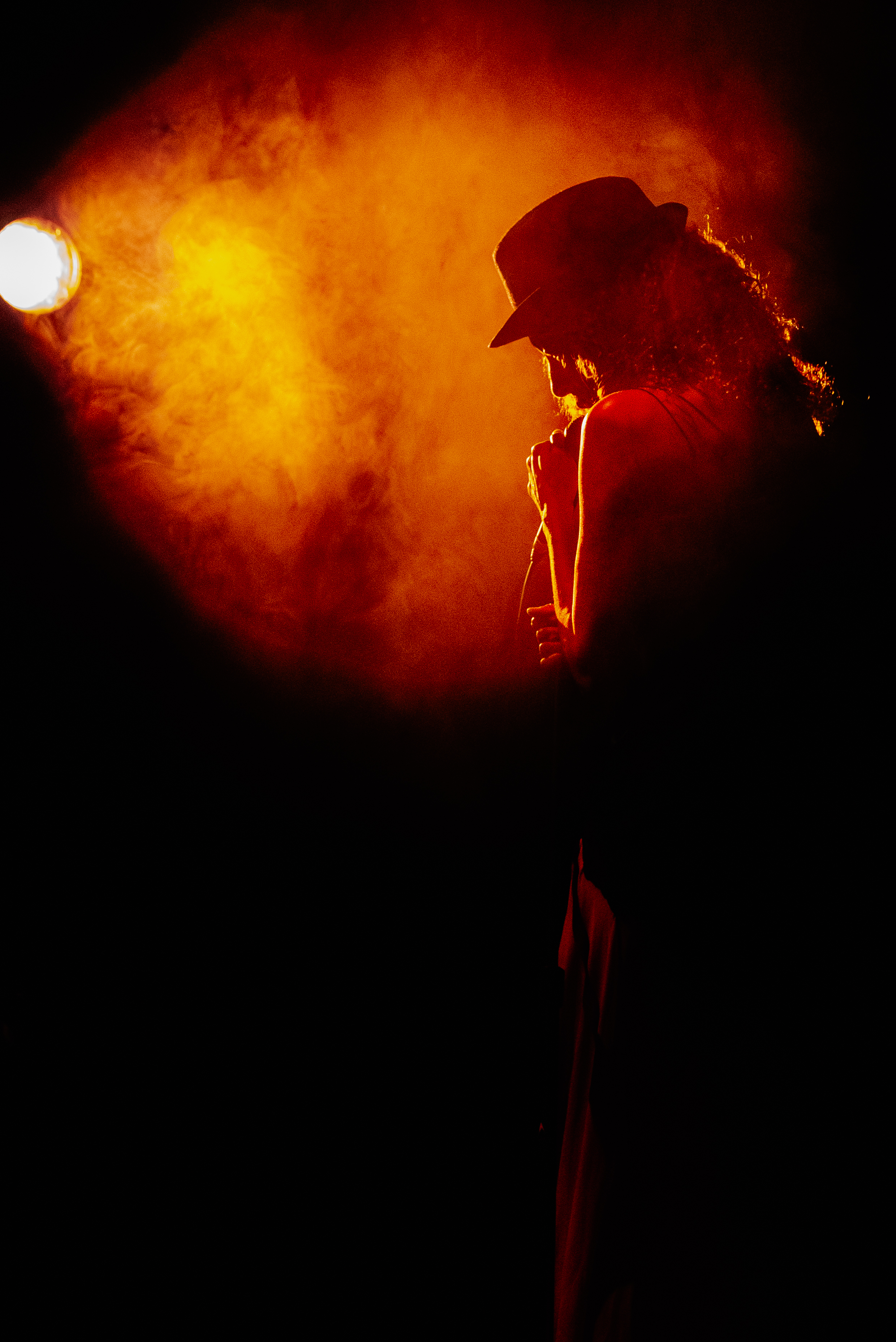
One moment, I am with a barely breathing Batten Bland, who, trapped in a tiny rectangle of bright light, shivers as if she's nearly drowned. As the light around her expands, she spins on her knees, swims across the floor, and stands, feeling for her pulse. Then, convinced she is breathing, she luxuriates in long, high kicks, filling the light with abandon. Later in the piece, she flirts with her partner, becomes a bride, then morphs into a jazz singer with a penchant for whistling, engaging us in her sultry speakeasy cabaret act.
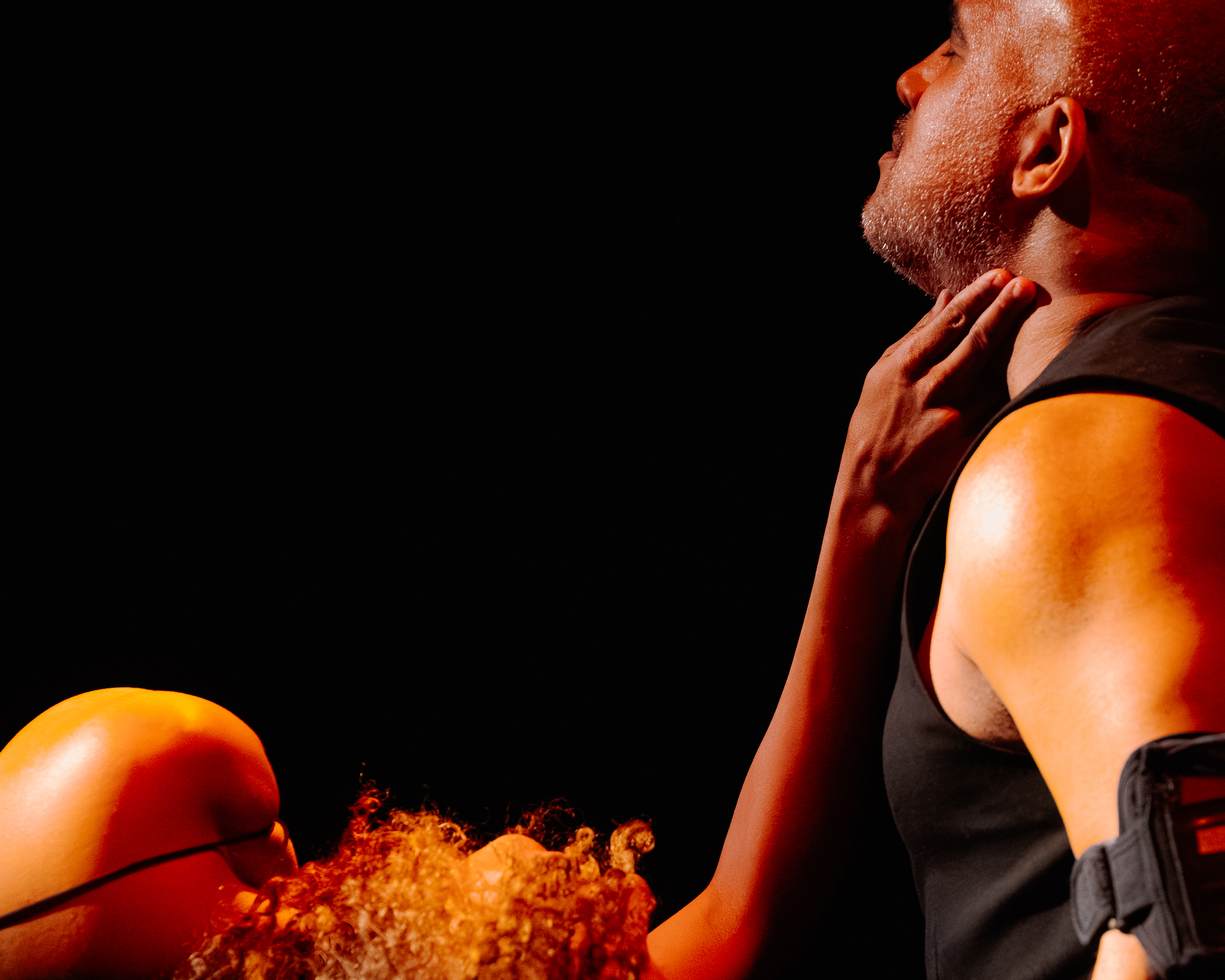
In another moment, Bernard Roumain enters looking like a futuristic figure from a science-fiction film. He holds his violin's bow in his teeth and plays the instrument with his fingers like a heavy metal guitarist. I never knew a violin could sound like that, even an electric one. He feels his neck for a pulse, a theme for both artists throughout the piece, as if wondering whether or not they are truly alive. Later, the tap of his foot introduces a hoedown, which turns into a ballad, then a lament.
Not only does Bernard Roumain eke out every genre of music and atmospheric sound he can from his violin, but at one point, he goes to a baby grand piano, part of the minimalist, symbolic set, and, as if possessed, with his eyes shut, plays. At first, we hear something beautifully structured, maybe Bach, but again, the music degenerates as he pounds the keys with his fists.
Bernard Roumain's music often appears to conjure Batten Bland, who at one point appears sitting flirtatiously atop a tall ladder in a slinky dress, peering down at him. The ladder eventually becomes Batten Bland's wedding veil, later a cage of entrapment.
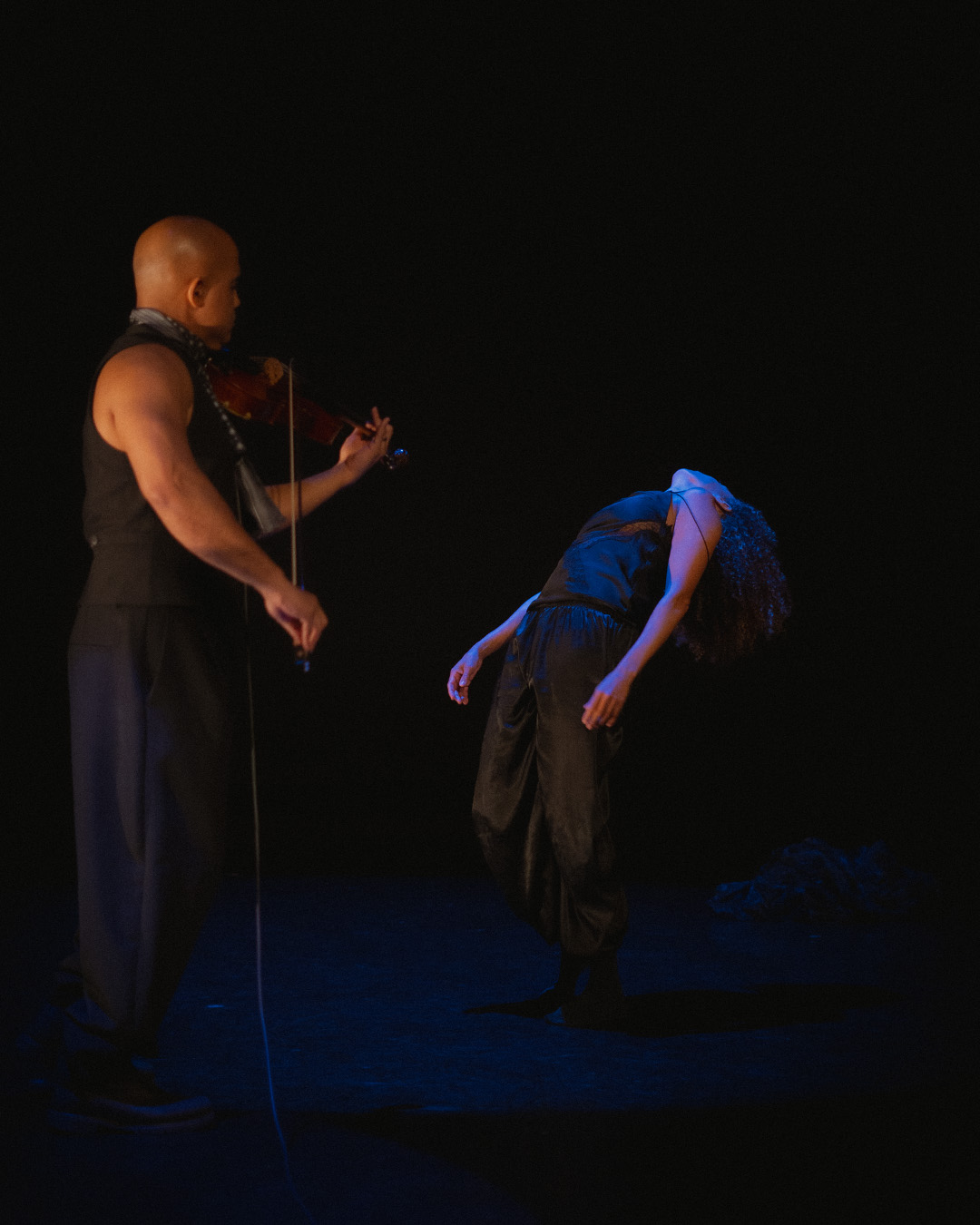
Meanings shift. Characters flip. Some images you will recognize; others you might not. In CLOSE UP, cruelty and beauty exist alongside each other, inseparable. It's a complex entanglement, one reflected in the cultural invention, resilience, and beauty that have emerged, and continue to emerge, from Creole traditions.
At the work's conclusion a black door mysteriously appears. The two artists open it, and we see that this new entryway overflows with ethereal, misty light. As the two figures exit into the radiance, toward whatever comes next, we are left with hope and possibility.
Addendum: I'd always pictured the Massachusetts Institute of Technology as a home for math wizards, engineers, data scientists, and the like. I'd never envisioned its potential as a space for experimental performance. Limited thinking on my part. Of course an institution that prizes imagination and visionary action would value the work of artists like Stefanie Batten Bland, Daniel Bernard Roumain, and Dan Safer. Safer, the avant-garde director of the acclaimed experimental dance-theater company Witness Relocation and the dramaturg for CLOSE UP, is a senior lecturer and director of dance programs at the university. As a new resident to the Boston area and a dance enthusiast, I'm excited to discover that the university is a true player in the contemporary performance scene. I look forward to experiencing more of Safer's pioneering dance-theater work and programming at MIT.