


Related Features

IMPRESSIONS: “The Politics of Movement: When Dance Speaks Out” Presented at the 14Y Theater
DAY IN THE LIFE OF DANCE: Gloria McLean on the 2024 American Dance Guild Festival and Her Dance History
THE DANCE ENTHUSIAST ASKS: American Dance Guild Book Fair Authors on Reading, Writing — and Dancing

By Christine Jowers/Follow @cmmjowers on Instagram
View Profile |
More From This Author
Published on March 20, 2026
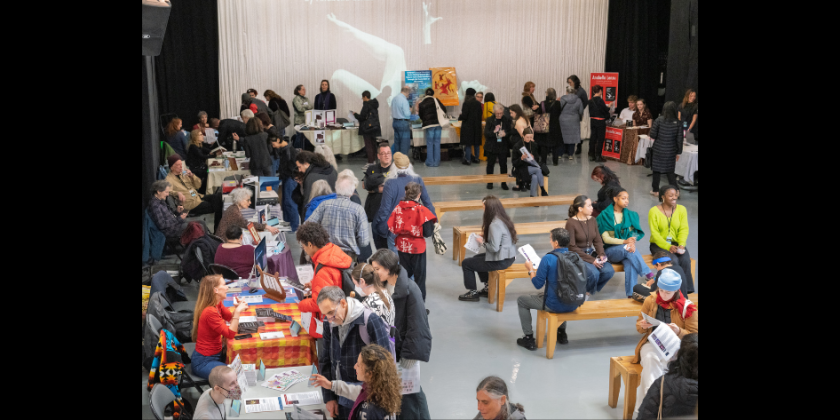
American Dance Guild Book Fair 2025. Photo: Todd Carroll
Don’t Miss American Dance Guild’s Second Annual Book Fair on March 29, 2026
When I was a kid — in the ancient days before personal computers, mobile phones, or even cable TV — one of the highlights of the year was our school book fair. We brought in books we’d already read, laid them out on tables in the school’s courtyard, and sold them to each other for pennies—maybe a dollar for The Tales of Robin Hood and His Merry Men. The money went toward a class trip or something — who can remember?
What I do remember is the anticipation: moving from table to table with my friends, picking up books, scanning covers, flipping through the table of contents, and wondering what might be inside.
That feeling — communal joy over books — isn’t something I’ve experienced much lately. But last year, at the American Dance Guild’s first book fair at Peridance Center, it came back.
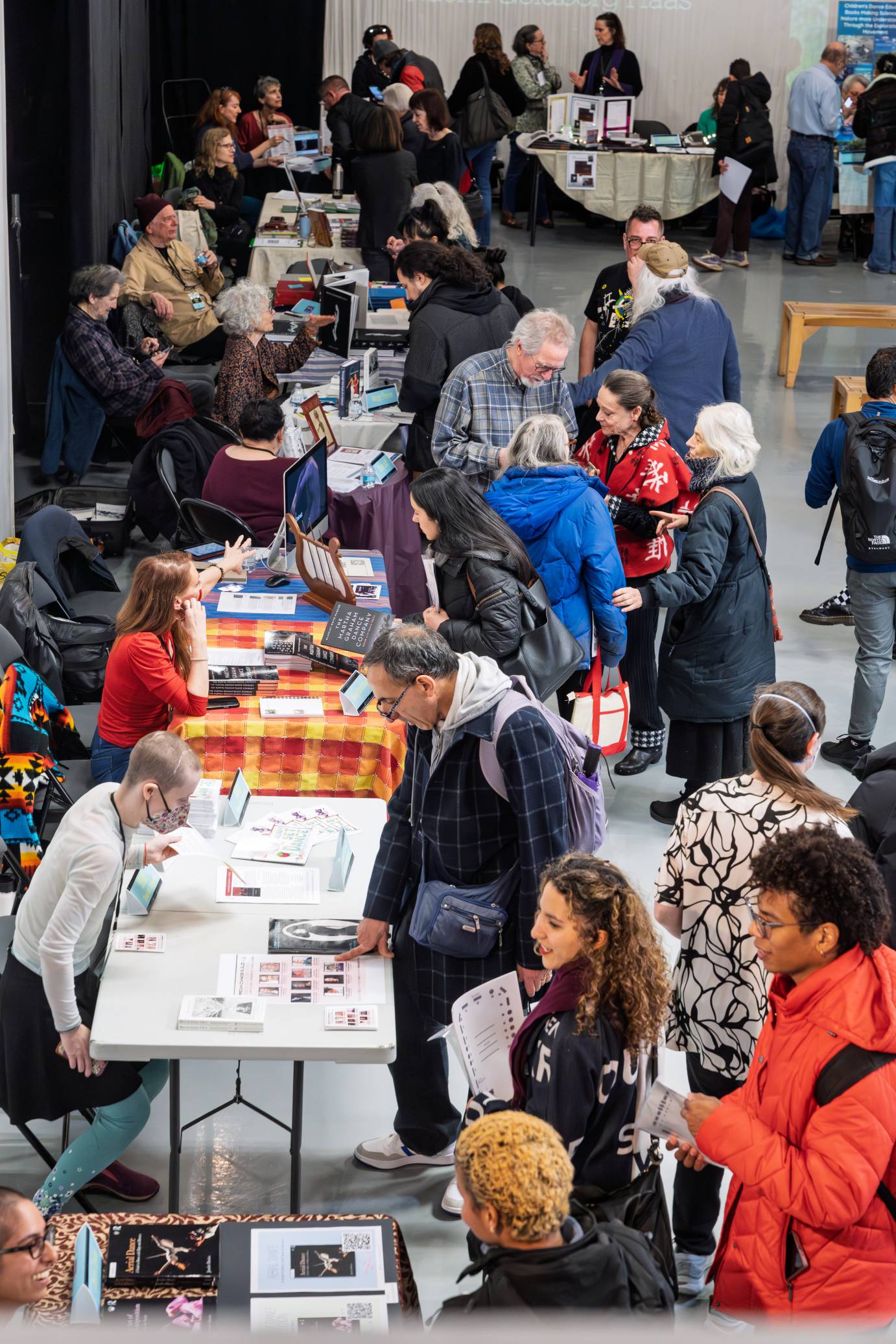
ADG Book Fair 2025. Photo: Todd Carroll
Founded in 1956, the American Dance Guild has long supported dancers and choreographers across the field. With its second annual book fair, it’s continuing to turn its attention to something dance doesn’t always make space for: books.
This year, fifty-seven authors and sixty-three books will be in the room.
While the books aren’t pennies anymore (it’s 2026, people!), the four-hour event is free, the books are new, and the authors — dancers, choreographers, and dance enthusiasts — are there in person, ready to talk, sign copies, share a coffee, and may even help you carry your haul out at the end of the event.
The 2026 ADG Dance Book Fair takes place this Sunday, March 29, from 2 to 6PM at Peridance Center NYC at 126 East 13th Street, New York, NY. Admission is free but registration is recommended at adgfest@gmail.com.
I asked several of last year’s ADG authors to share their thoughts on writing, reading, and dancing for The Dance Enthusiast. Here’s what they had to say.
Christine Jowers for The Dance Enthusiast: What made writing feel necessary for you?
Karen Diaz Ensanian, I Can Make a Water Dance and The Dancing Light (Equus Potentia Publishing):
As an early childhood educator, I was completely amazed at the ability and expressiveness of young children. I saw how using photos, poetry and images of themes could really communicate how to facilitate movement into the subjects that were being taught in the classroom.
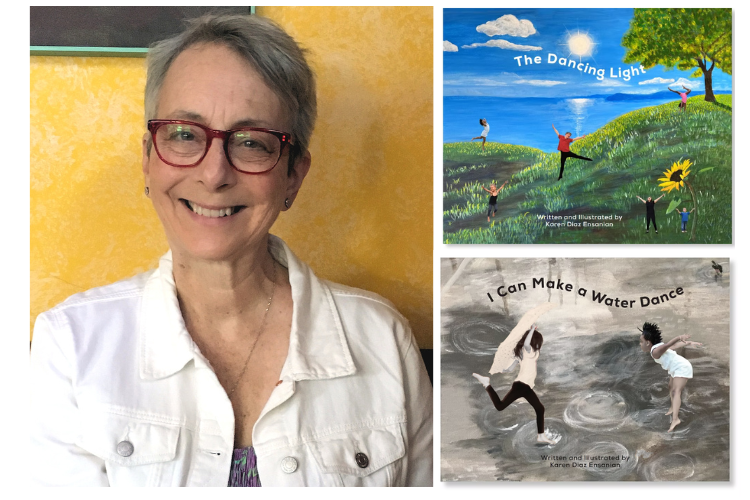
Thomas Locker had done beautiful children’s books using his paintings of landscapes, but not enough movement language, and Bill T. Jones made a gorgeous book of his own photos. I thought that bringing these two book ideas along with lots of movement language could really be an amazing tool.
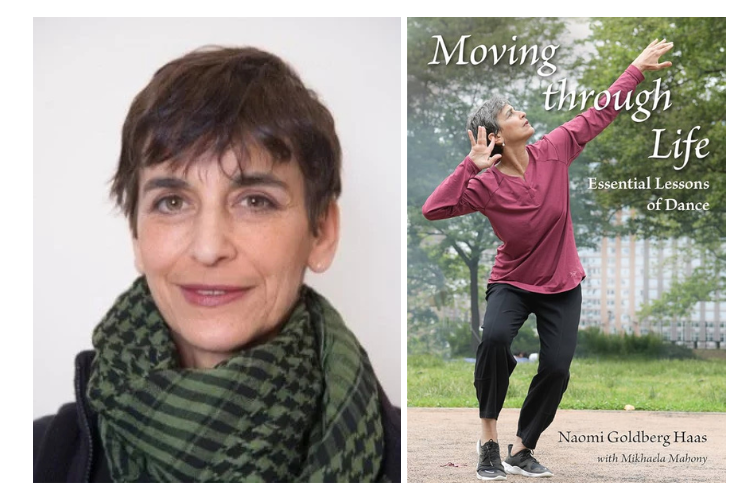
Naomi Goldberg Haas (with Mikhaela Mahony), Moving Through Life: Essential Lessons of Dance (University Press of Florida):
Recently I was diagnosed with Fahr’s syndrome, which developed as a consequence of long-term Lupus, an attack on the brain. The book became a tool for explaining this condition and for sharing the larger story of how movement has sustained me through decades of illness and change. Writing allowed me to reflect on how creativity, discipline, and community can help us navigate the unpredictability of the body and the passage of time.
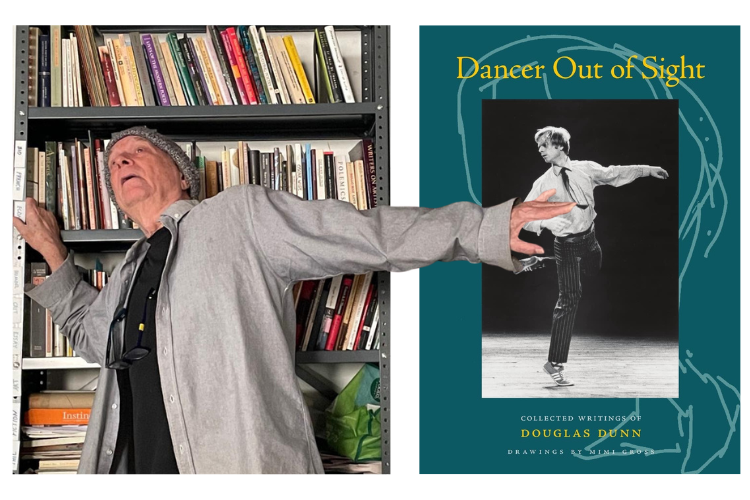
Douglas Dunn, Dancer Out of Sight (Ink Inc. New York): This book collects writings from the ’70s through 2012. Early entries strenuously separate the verbal from the kinetic. Later I give in, to participate in the common discourse of “about.”
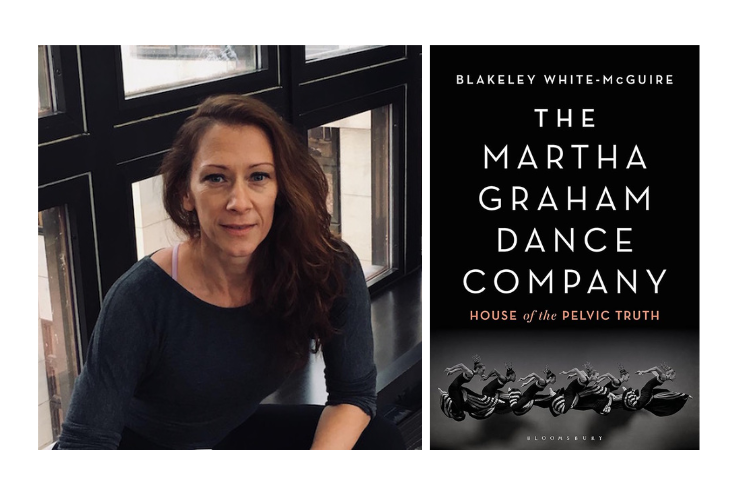
Blakeley White-McGuire, The Martha Graham Dance Company: House of the Pelvic Truth (Bloomsbury Publishing):
Bloomsbury Publishing approached me and asked what I would want to write about the Martha Graham Dance Company. I responded that I would write about the ongoing extended communities of Graham’s work, and also those influenced by the work of the MGCD. I also asked the question “is it important that Martha Graham was a female?” Those are aspects of the Graham dance world that fascinate me.
Ara Fitzgerald, Slow Dancing Is Easy (Still River Books):
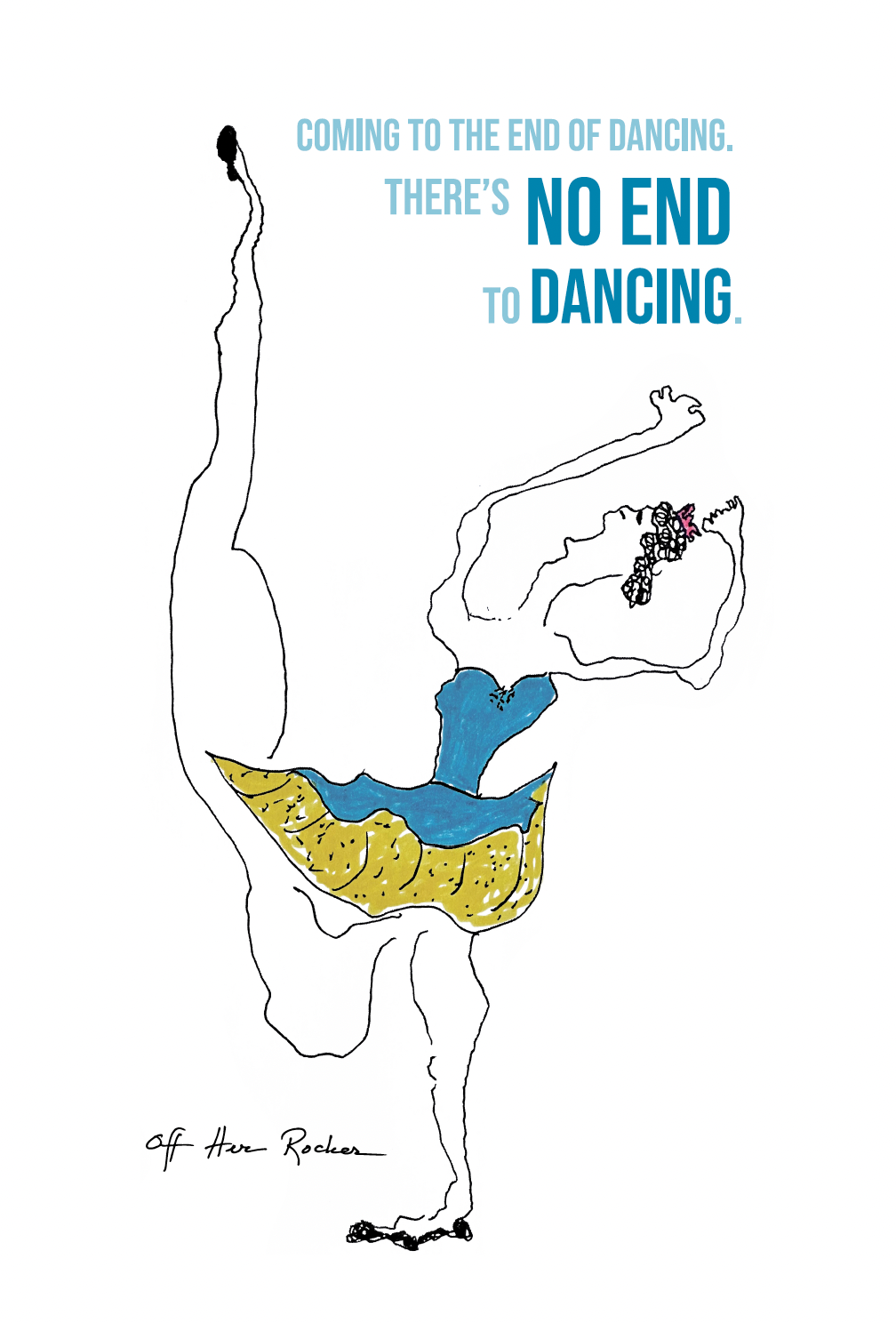
For my entire artistic life, I have worked in an ephemeral art form. I have created and performed dance/theater solos with original text. My partner, Peter Cunningham, challenged me with the idea that the texts might be the basis for a book. “And what about those line drawings you make?”
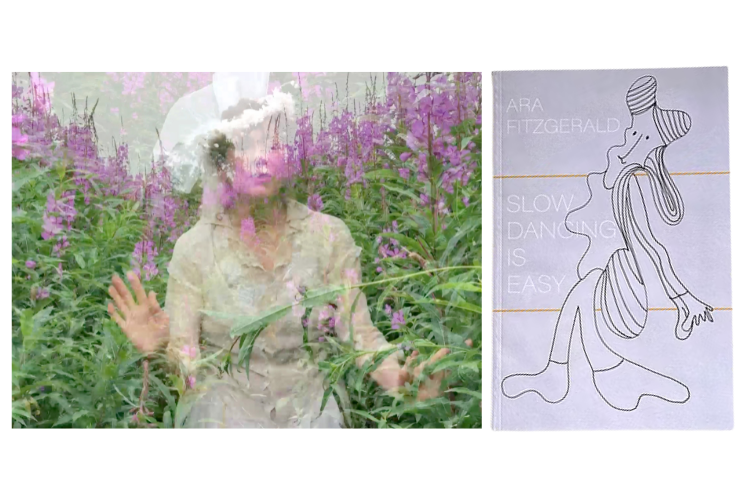
I knew nothing about creating a book but dove in with the energy of a student new to dance, legs akimbo, loving to move. Designer Ola DeKorne joined me and we discovered ways to transform these ‘stories in motion’ from the stage to the page.
What conversations or challenges do you hope your book opens up for readers?
Ensanian: I think my book could inspire many different ideas for creating dance. It would be so much fun to explore that with people.
Dunn: How likes and dislikes get in the way of seeing/sensing dancing. How lame dancing is at telling stories and driving opinions.
Goldberg Haas:
I hope the book encourages people to recognize the possibilities of engaging in creative movement. You don’t have to be a professional dancer to experience the benefits of moving creatively.
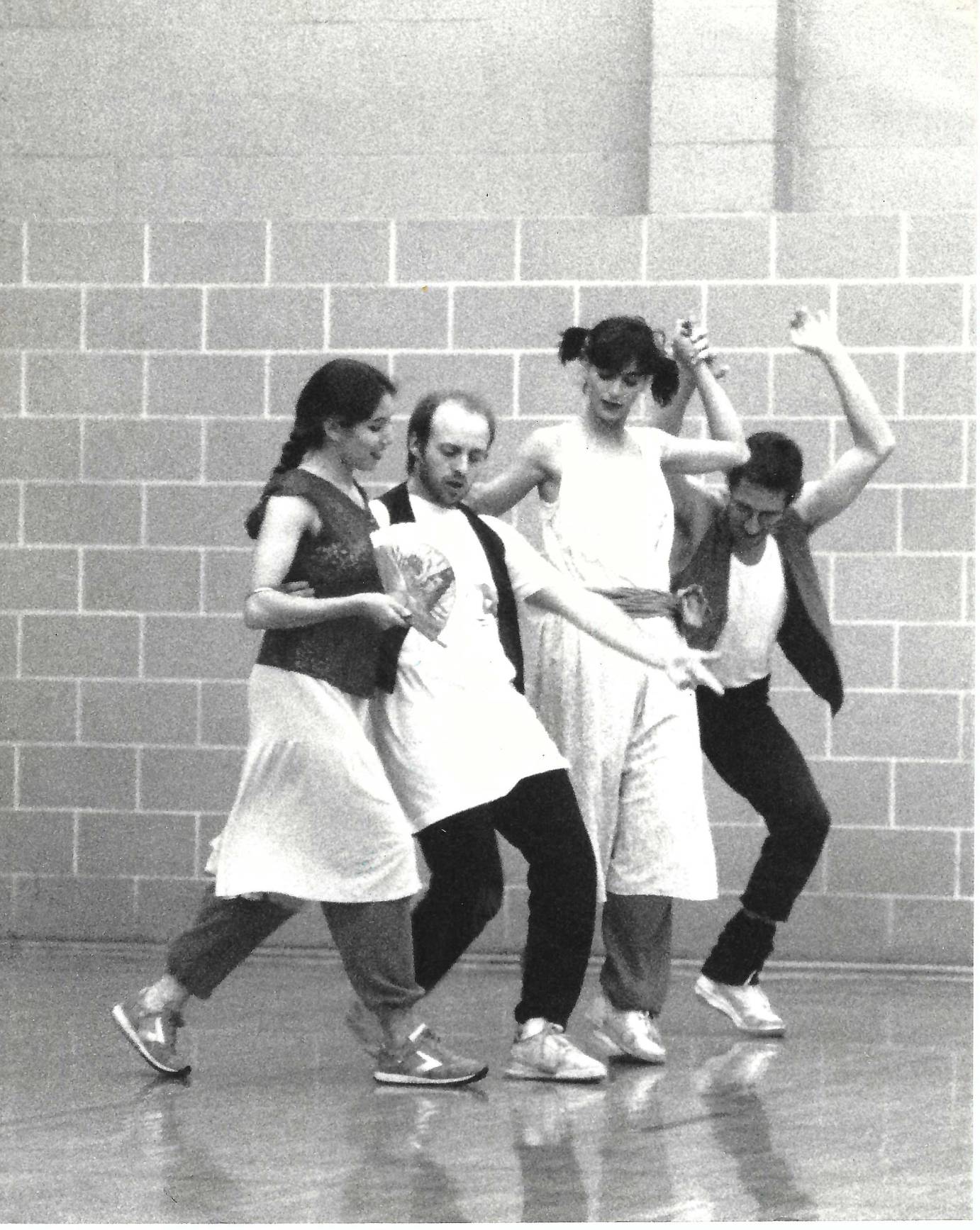
Dance Diner photograph with Roxanne Steinberg, Yehuda Hyman,Naomi Goldberg Haas, and Danny Albert. Photo taken at the Hollywood YMCA, 1988
Where did writing feel like choreography, and where did it diverge?
White-McGuire: The familiar aspect was the groove of writing. It is a similar head or mind space as choreographing, where I get a good feeling doing it.
Fitzgerald: In my case, artistically, writing and dancing are interlaced, I am together with both in the studio. A surprise for me was that the text of the pieces seemed to be so comfortable on the page.
And now the book creates an opportunity for a reverse process. The pieces can return to the stage. I still love performing, but the book enables the possibility for other artists to interpret these scripts in their own bold ways.
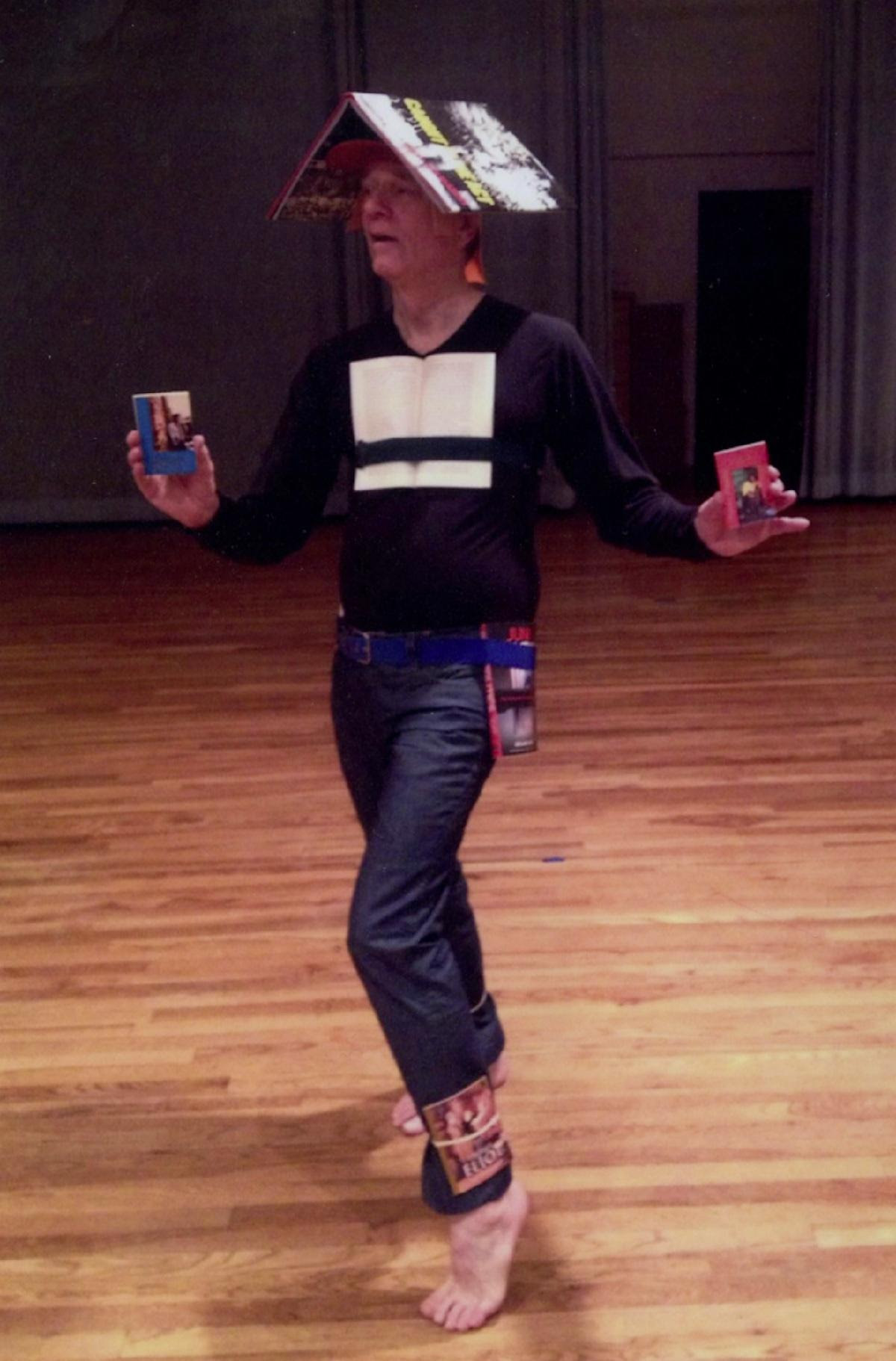
Dunn:
Writing emerges from a semi-rational aspect of my consciousness and requires a great deal of hard work and editing. Making steps and dancing them is easier, more spontaneous, more fun, flowing from a distinctly separate, psycho/physical/existential realm. Call it “Intuition”?
Goldberg Haas: In many ways, expression is satisfying no matter the form. Whether I’m choreographing or writing, I’m trying to clarify an idea and give it shape so that someone else can experience it. In both processes there’s a search for clarity. You know you’re done when the idea finally feels clear.
Do you have a favorite dance book?
White-McGuire: I LOVE Donlin Foreman’s bilingual book of original poetry Out of Martha’s House. It resonates for me, like a shared experience of art and dance.
Ensanian: Bill T. Jones', Dance! with Bill T. Jones, and any of Thomas Locker’s books.
Dunn:
Edwin Denby, Dancers, Buildings and People in the Streets. Mr. Denby connects dancing to all aspects of looking and seeing, without stepping away from the unique, subtle, complex emotions that stylized moving bodies radiate.

Goldberg Haas:
One book that has always inspired me is A Life for Dance by Rudolf Laban. It reminds me that dance is not only performance — it is a way of understanding human behavior, creativity, and community. His work affirms that movement is fundamental to how we think and feel.
Fitzgerald: I can’t choose one. Come to the book fair and dip into the many offerings of books being written right now. I bow down to the authors. Writing is as challenging as choreographing!