


Related Features
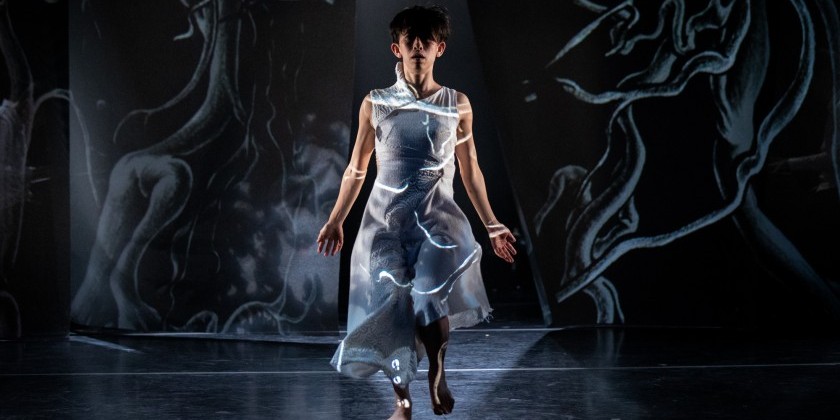
IMPRESSIONS: "Contemporary Dance Festival: Japan + East Asia" at Japan Society
IMPRESSIONS: Nihon Buyō in the 21st Century from Kabuki Dance to Boléro at Japan Society
IMPRESSIONS: "The Seven Bridges (Hashi-zukushi)" at Japan Society

By Robert Johnson
View Profile |
More From This Author
Published on November 25, 2025
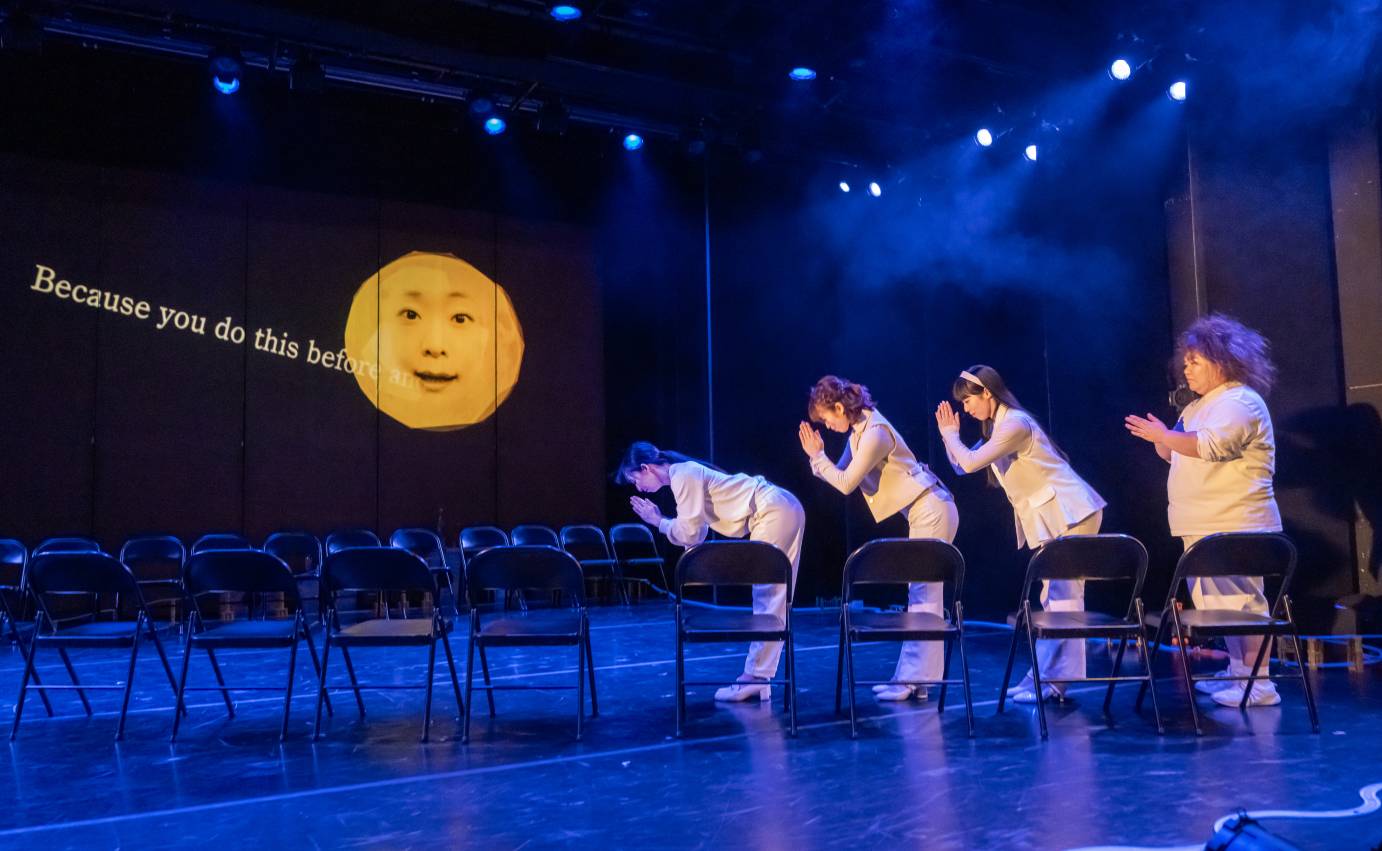
"The Seven Bridges (Hashi-zukushi)." Photo: Richard Termine
The Seven Bridges (Hashi-zukushi)
Performed by CHairoiPLIN
Choreographer: Takuro Suzuki
Cast - Masako: Momo Mimori, Kanako: Lala Kobayashi, Koyumi: Rise Amano, Mina: Jodie, Moon: Yuri Shimizu
Set and Projection Design: Kenichi Aoyama
Lighting Design: Takayuki Tomiyama
Sound Design: Yuki Okubo
Original Music: Yuri Shimizu
Japan Society, 333 E 47th St, New York, New York
November 15-16, 2025
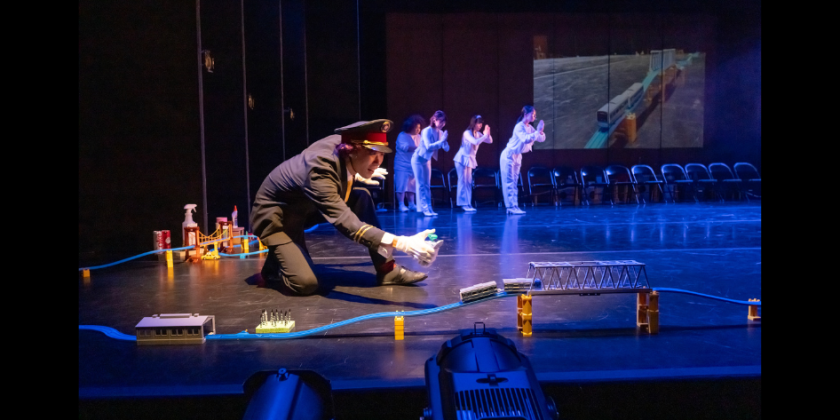
Choreographer Takuro Suzuki takes a light-hearted approach in The Seven Bridges, the enchanting multimedia dance piece that his company CHAiroiPLIN presented at Japan Society, on November 15, 2025. In this rollicking adaptation of a short story by Yukio Mishima, the choreographer shrinks Tokyo to toy-size; and the city appears as a child might build it. Miniature electric trains make a winding circuit around the stage, passing wood-block skyscrapers and crossing bridges of bright plastic.
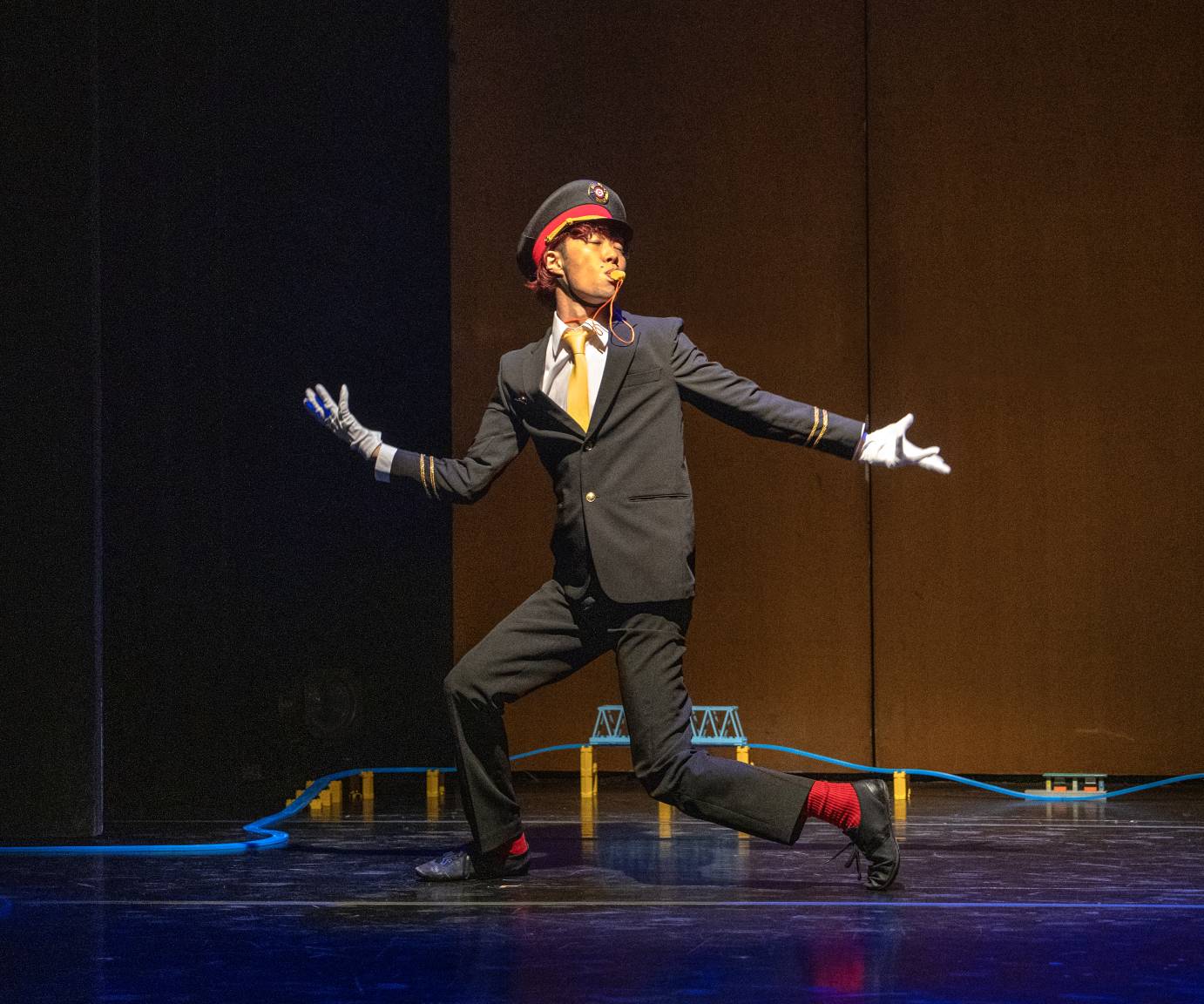
Personifying the Moon, Yuri Shimizu resembles the hostess of a kiddy television show, singing and playing the accordion, while a madcap train conductor (Suzuki himself) acts as our guide. Shimizu has also composed the score, which veers from grunge to Balkan folk music, with sound effects thrown into the mix.
The tale’s four women protagonists resemble children, too. They seem to be playing a rambunctious game, as they set out to cross the seven bridges in silence, hoping that the Moon will grant their secret wishes. This is not exactly how Mishima envisioned them, nor is it what we might expect from the author of searing fiction like Patriotism (another story in the same collection), and The Sailor Who Fell from Grace with the Sea. Yet Suzuki has understood something about Mishima’s characters. Three of these women are essentially childish — selfish, and naïve in their faith that a superstitious ritual will grant their desires. Recalling Maguy Marin’s baby-doll ballet Cendrillon, Suzuki’s kindergarten version of The Seven Bridges adds a psychological dimension to the story.
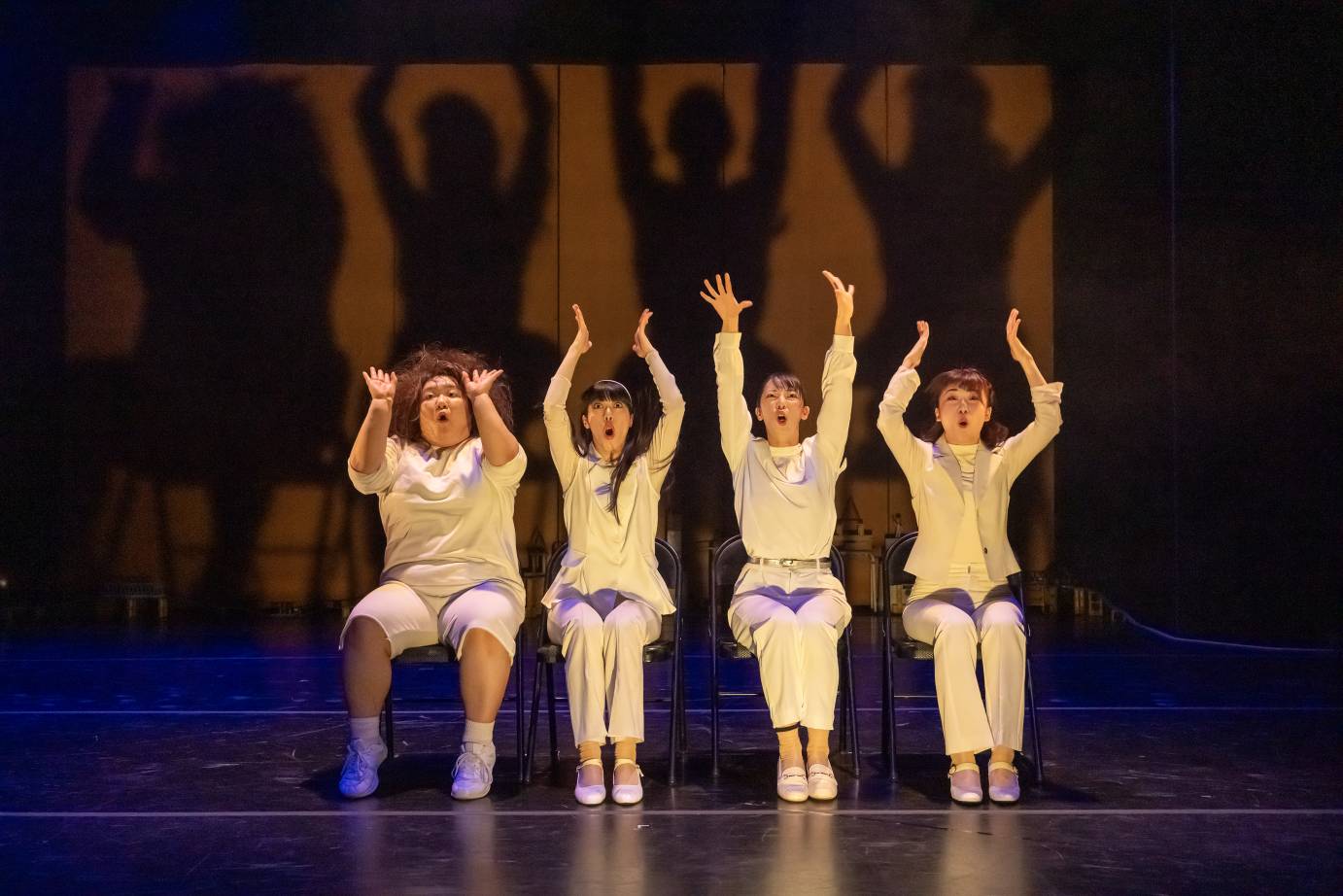
In an introductory group section, the cast mechanically rehearse the ritual of bowing and clapping their hands together in prayer, which they will perform at each bridge along the way. All are in white, though three women wear elegant pants outfits, distinguishing them from the others, who are dressed to reflect their humbler station. When folding chairs appear, the ladies take seats, and begin to perform fatuous gestures, pinching their fingers and snatching at the air, shivering and coughing. The Moon explains the rules of the game — for their wishes to come true, there can be no talking, no turning back, and no blabbing of secrets. We have already learned what the privileged women want, as each calls out cheerfully owning her desire and counting herself present.
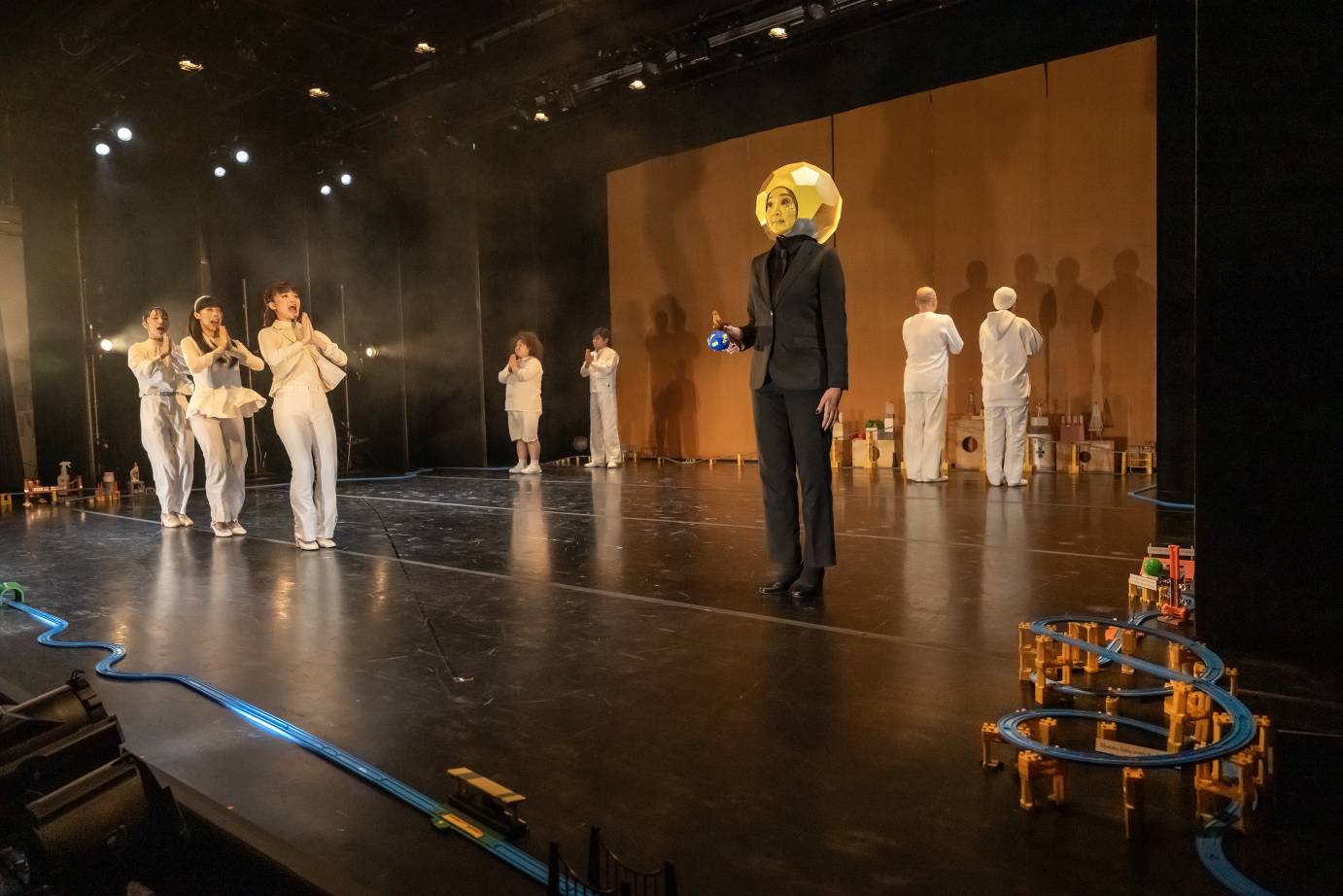
At the outset of the expedition, the three fashionable leaders march forward confidently with thumbs hooked in their pockets. Mina, the dumpy maidservant to one of these spoiled characters, trudges after them dutifully with a blank expression on her face. Station Attendants rush in with more folding chairs, which, arranged in lines, become the bridges that the women must cross gingerly. Though the task seems simple, fate intervenes, and attrition begins to take a toll.
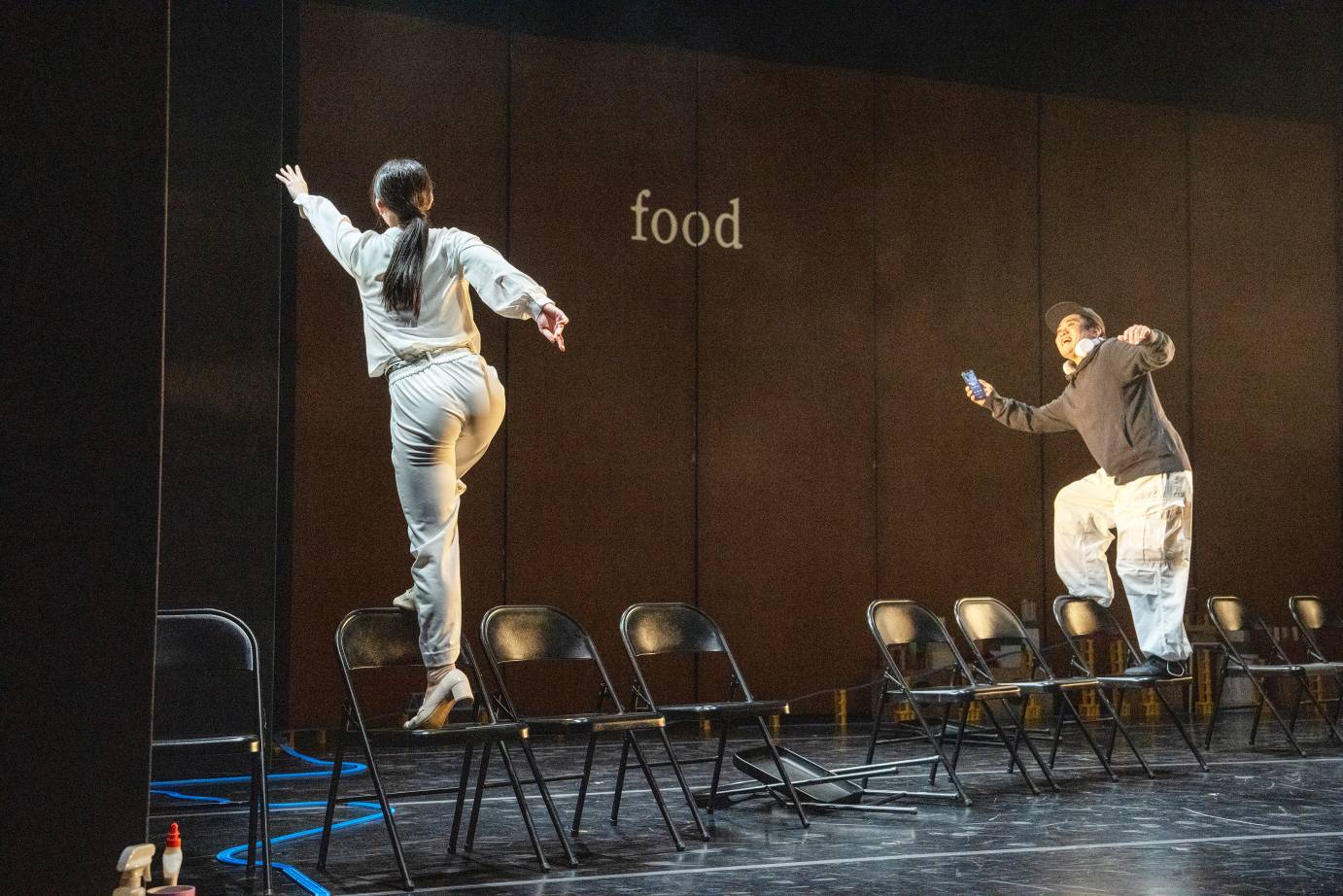
Kanako, who wishes for a patron to support her dancing career, is the first to drop out. Though her longed-for patron appears to partner her in acrobatic, circling lifts, stomach cramps prove her undoing. Knees together, body twisted, Kanako makes a face, and then rushes out bent double with pain. Next comes Koyumi, a food addict who wishes for a feast. At bridge number five, an old acquaintance turns up, and though Koyumi tries to escape him, frantically tipping over chairs as she flees, eventually she must break her vow of silence. Casting a rueful, backward glance, she departs with his hand on her shoulder. This leaves Masako, the silliest of the lot, who is infatuated with a film star, and wishes to marry him.
We learn more about Masako than about the others. Her thoughts are projected on the back panels, revealing sympathy for Kanako and a sense of fatality. Her wish is also dramatized, as her dream lover comes to sit next to her. Yet innocent Masako cannot imagine genuine passion, and during their encounter the actor simply falls asleep, while she becomes frightened, and covers her mouth in nervous embarrassment.
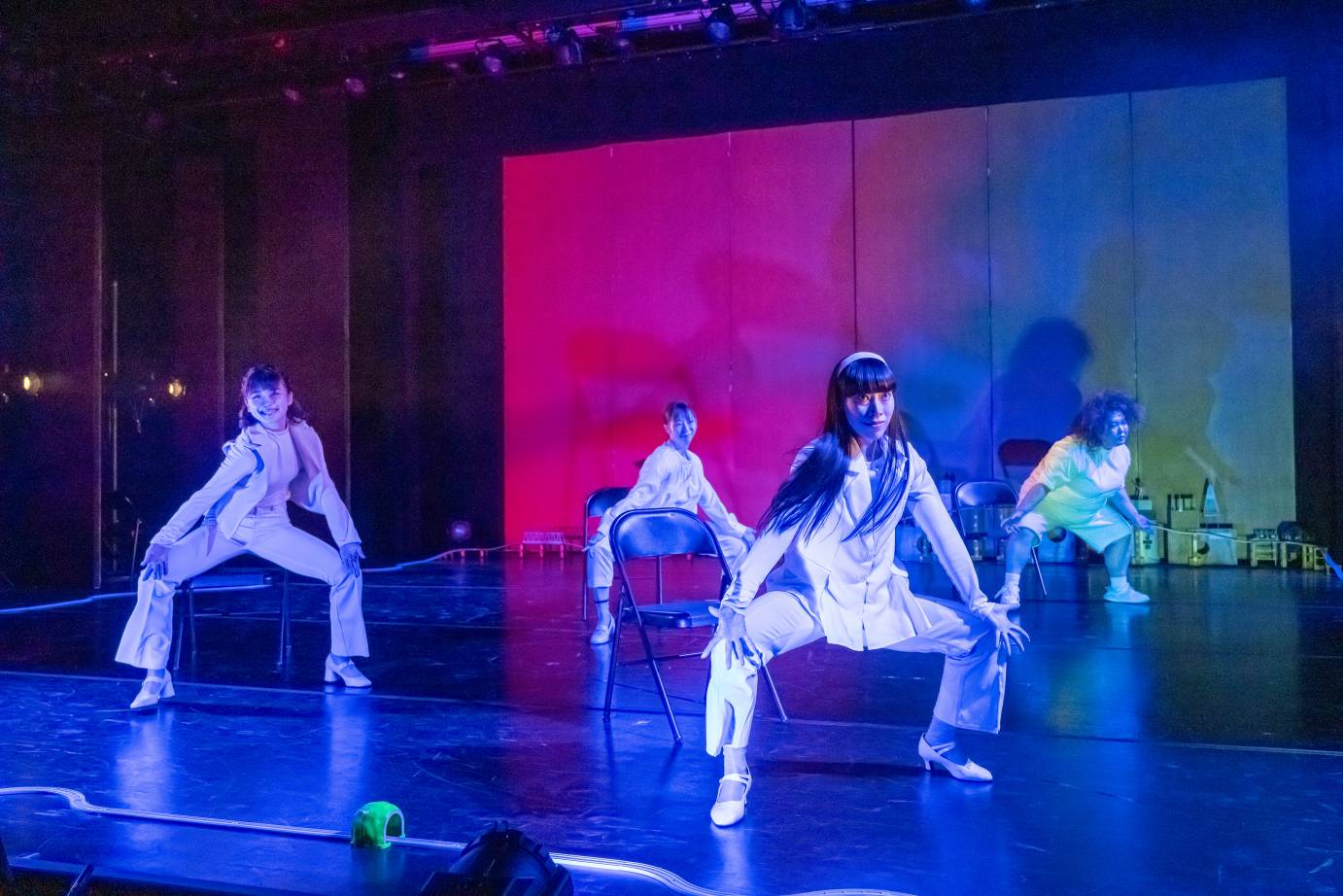
We do not see exactly how Masako falls from grace, but suddenly only a single chair is left, and the ladies circle it greedily, making feints at it. The stage erupts in a burst of strobe-lit calisthenics, and then, her arms extended forward to ensure perfect balance, the maid, Mina, plants her behind firmly in the remaining seat.
“Your wish will come true,” the train conductor tells her, and a smile of triumph lights up her face. We never learn what Mina wishes for, however, because the speech bubble that appears over her head is strangely blank. Either this country bumpkin is too dumb to have a thought — as Masako might say — or she is too clever to give it away.
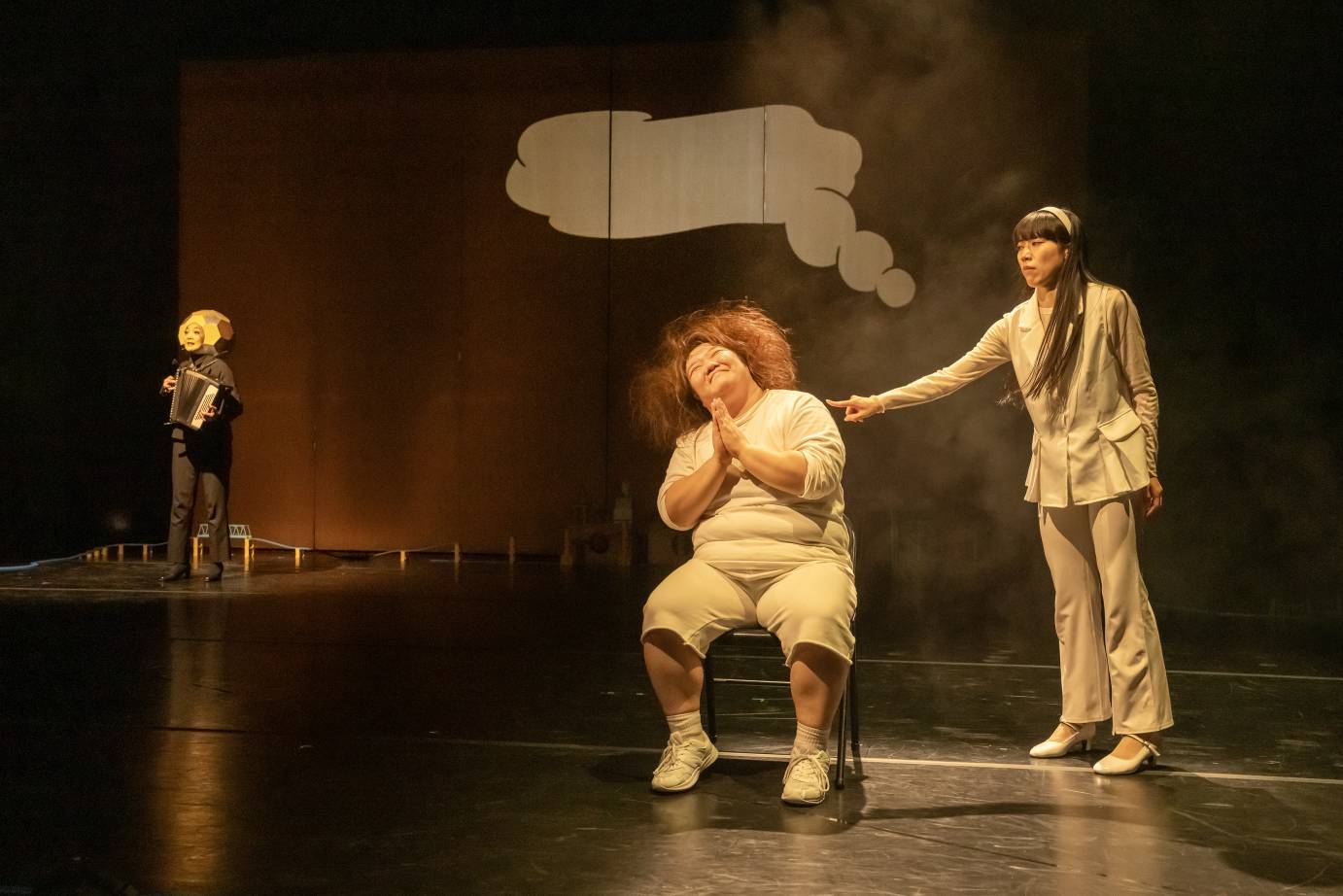
While Suzuki is less subtle in his humor than Mishima, this dance remains as thought-provoking as the author’s original. When Mina unexpectedly wins the wishing game, we may ask whether Mishima intends her victory to suggest the triumph of rude health over decadence. Or does the maid’s ironic success underscore a flaw in society? In The Seven Bridges, only certain people feel entitled to make wishes, and the poor are not supposed to dream.
Japan Society’s artistic director, Yoko Shioya, commissioned The Seven Bridges as part of an ambitious Mishima Centennial celebration this season including dance and theater works. The series concludes this December 4 - 6, 2025 with Mishima’s Muse — Noh Theater, featuring the Hosho Noh School performing plays that Mishima adapted. Visit japansociety.org for details.
Cast: Patron of Kanako/Station Attendant: Toshihiko Kashiwai, Acquaintance of Koyumi/Station Attendant: Yusaku Torigoe, Masako’s Love Interest/Station Attendant: So Aoi, Train Conductor: Takuro Suzuki
Props: Manami Hasegawa
Dramaturg: Yusaku Torigoe
Assistant Choreographer: Lala Kobayashi
Coordinator: Junko Hanamitsu
Producers: Toshihiko Kashiwagi, Misaki Tanaka