



Related Features
IMPRESSIONS: "The Firebird Variations," Details of Enchantment
DAY IN THE LIFE OF DANCE: A Burst of FIREBIRDS as Four Versions of the Iconic 1910 Ballet Take Flight This Spring

IMPRESSIONS: New York City Ballet in Jerome Robbins' "Dances at a Gathering" and George Balanchine's "Diamonds"

By Henning Rübsam
View Profile |
More From This Author
Published on March 10, 2026
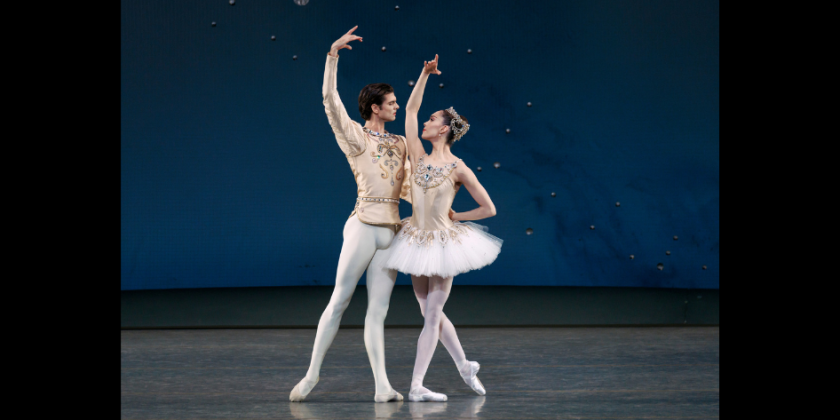
Mira Nadon and Peter Walker in "Diamonds." Photo: Erin Baiano
Winter Season 2026
January 20 – March 1
David H. Koch Theater, Lincoln Center
February 27, Evening show @ 7:30 PM
DANCES AT A GATHERING: Woodward, Gerrity, O. MacKinnon, *LaFreniere, Afanasenkov, Huxley, Chan, *Mabie, Zuniga, Coll [Solo Piano: Kim]
DIAMONDS: **Nadon, **P. Walker [Guest Conductor: Grams]
March 1, Sunday m atiness @ 3 PM
DANCES AT A GATHERING: T. Peck, Nadon, O. MacKinnon (replaces E. Von Enck), M. Fairchild, Hod, Mejia, Tomash, Danchig-Waring, Zuniga (replaces Gabriel), Riccardo [Solo Piano: Kim]
DIAMONDS: Mearns, T. Angle [Guest Conductor: Grams]
* First Time in Role ** NYC Debut
Two glorious performances of Jerome Robbins' masterwork Dances at a Gathering paired with a newly costumed edition of George Balanchine's Diamonds made the New York City Ballet shine and sparkle at the end of its winter season.
Not to worry, the Karinska design for the last gem in the Jewels- triptych is still the same. The fabric and the rhinestones are brand-spanking new, however; and when the curtain opens on the second half of this program, you wish you brought your sunglasses.
Mira Nadon and Peter Walker make their NYC debut in the leading roles, and deliver a stunning interpretation. Walker looks and acts confident. While he partners with aplomb, he knows when to focus on Nadon, and does not compete with her. He delivers long and clean lines in his solo passages; he nails multiple turns with a bravura finish; and his jumps possess a joyful spring. Walker has stepped out of the shadow existence of being that guy who was made principal because he was tall and strong enough to partner. He has now successfully embraced his role as a leading man.
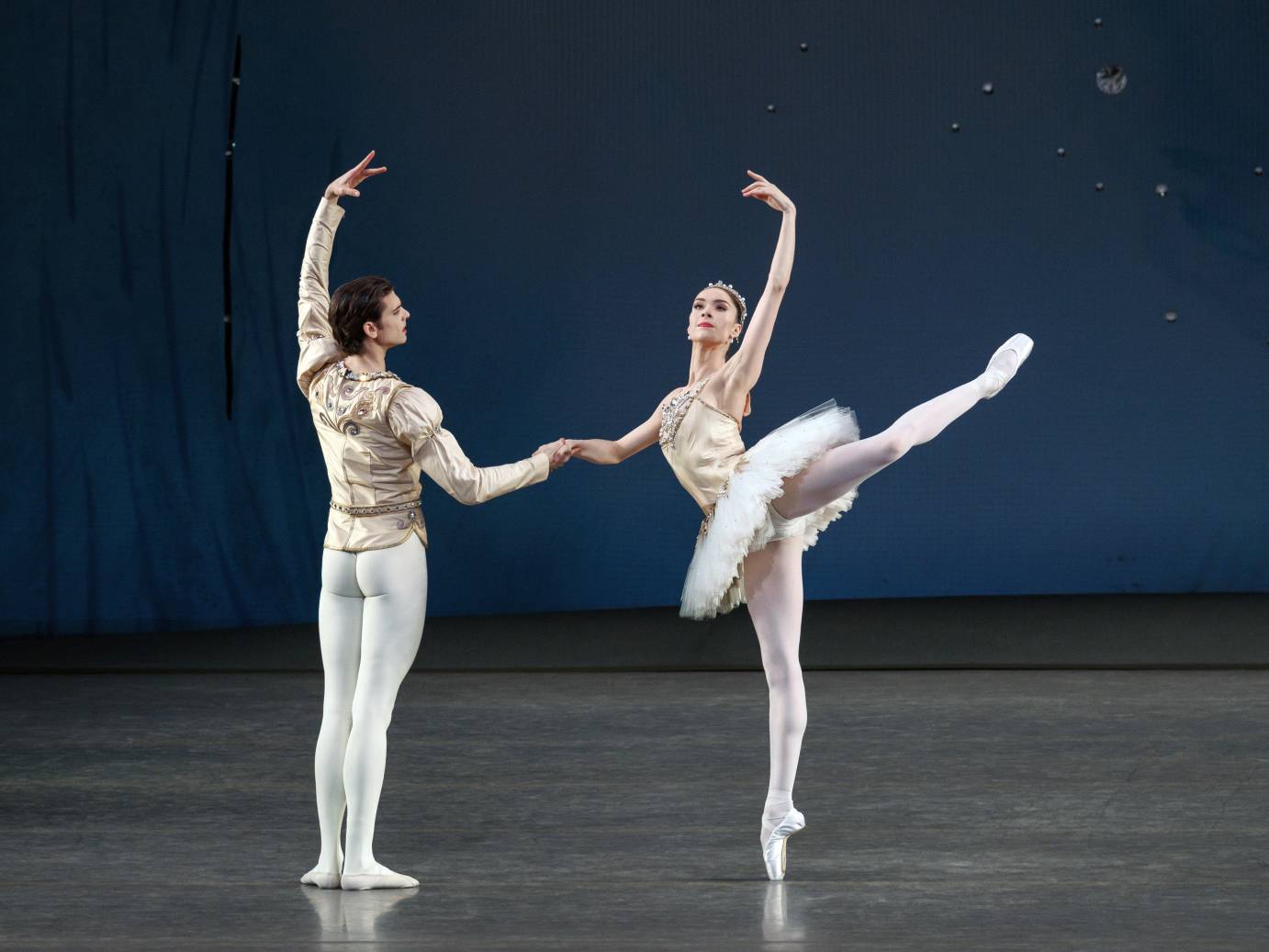
Peter Walker and Mira Nadon in George Balanchine’s Diamonds. Photo: Erin Baiano
After a few seconds of an empty stage, Walker enters from down
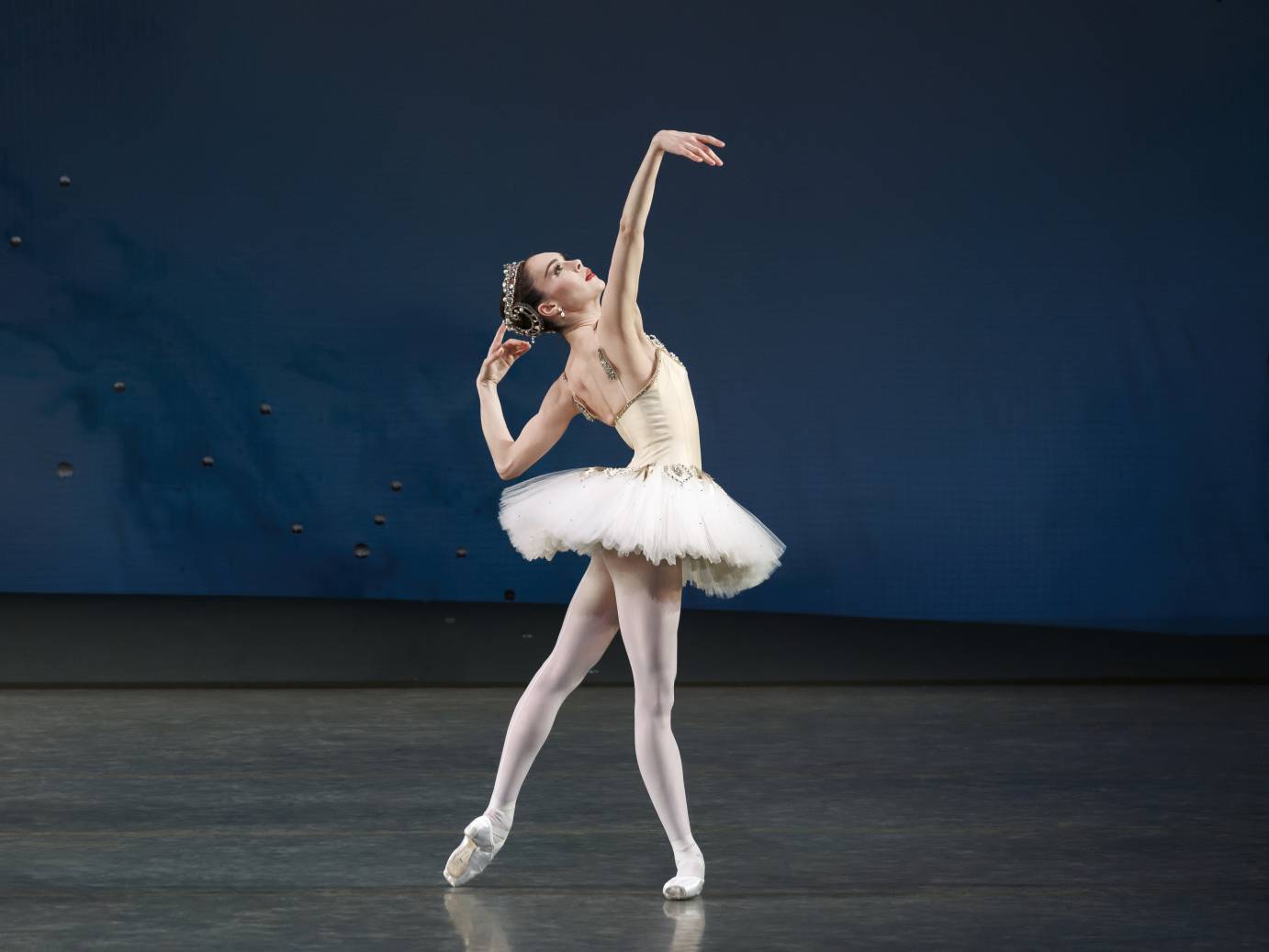
In the final, Sunday afternoon performance, a different journey unfolds. Veteran principal dancers Sara Mearns and Tyler Angle know Diamonds inside and
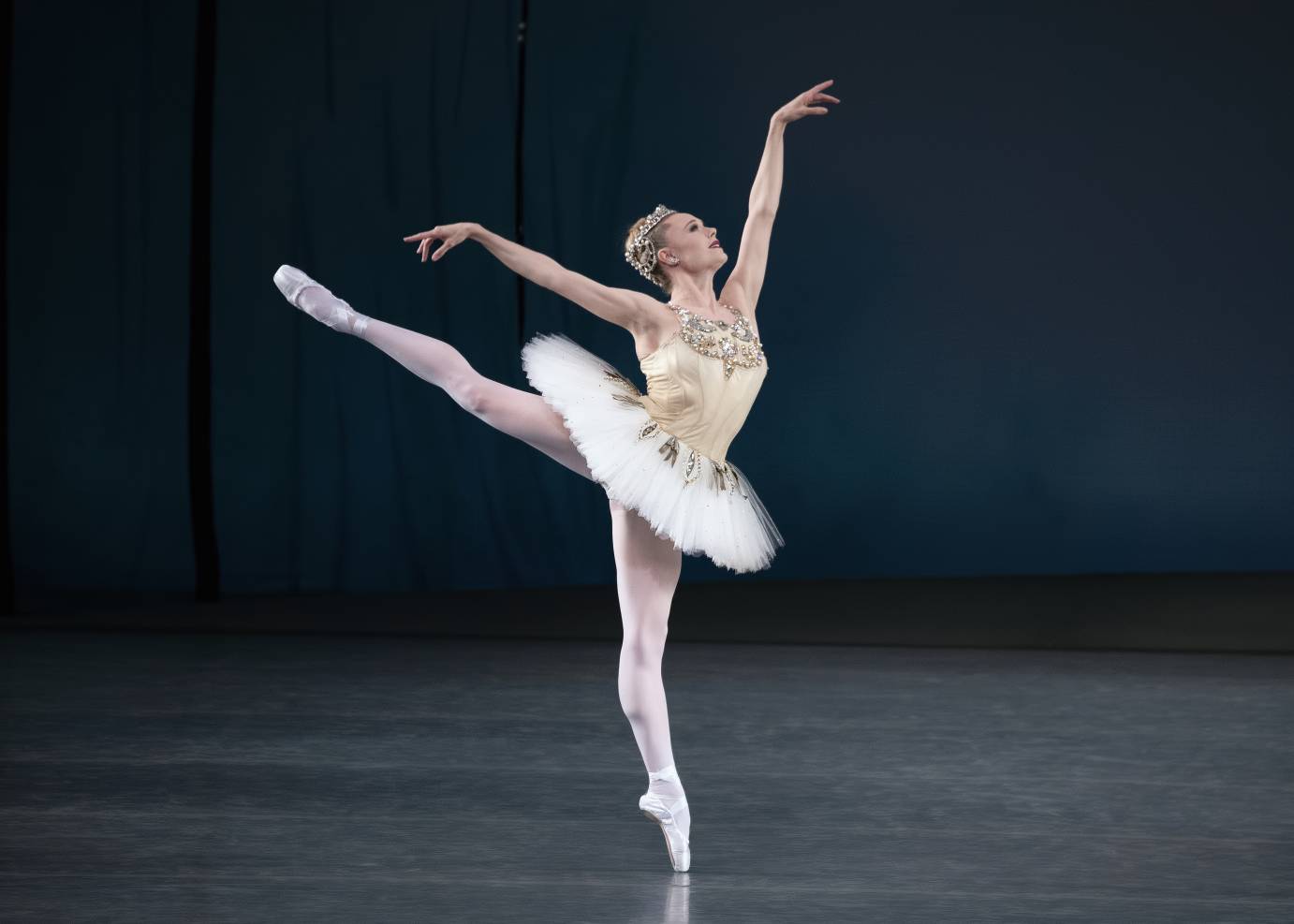
The fantastic redo of the costumes for the whole corps de ballet looks like it cost a fortune. You know it is money well spent, when the audience can’t help but “ooh” and “aah’” applauding the first sight of the tutus when the curtain goes up. Stunning!
The choreography for the corps sections was never revolutiona
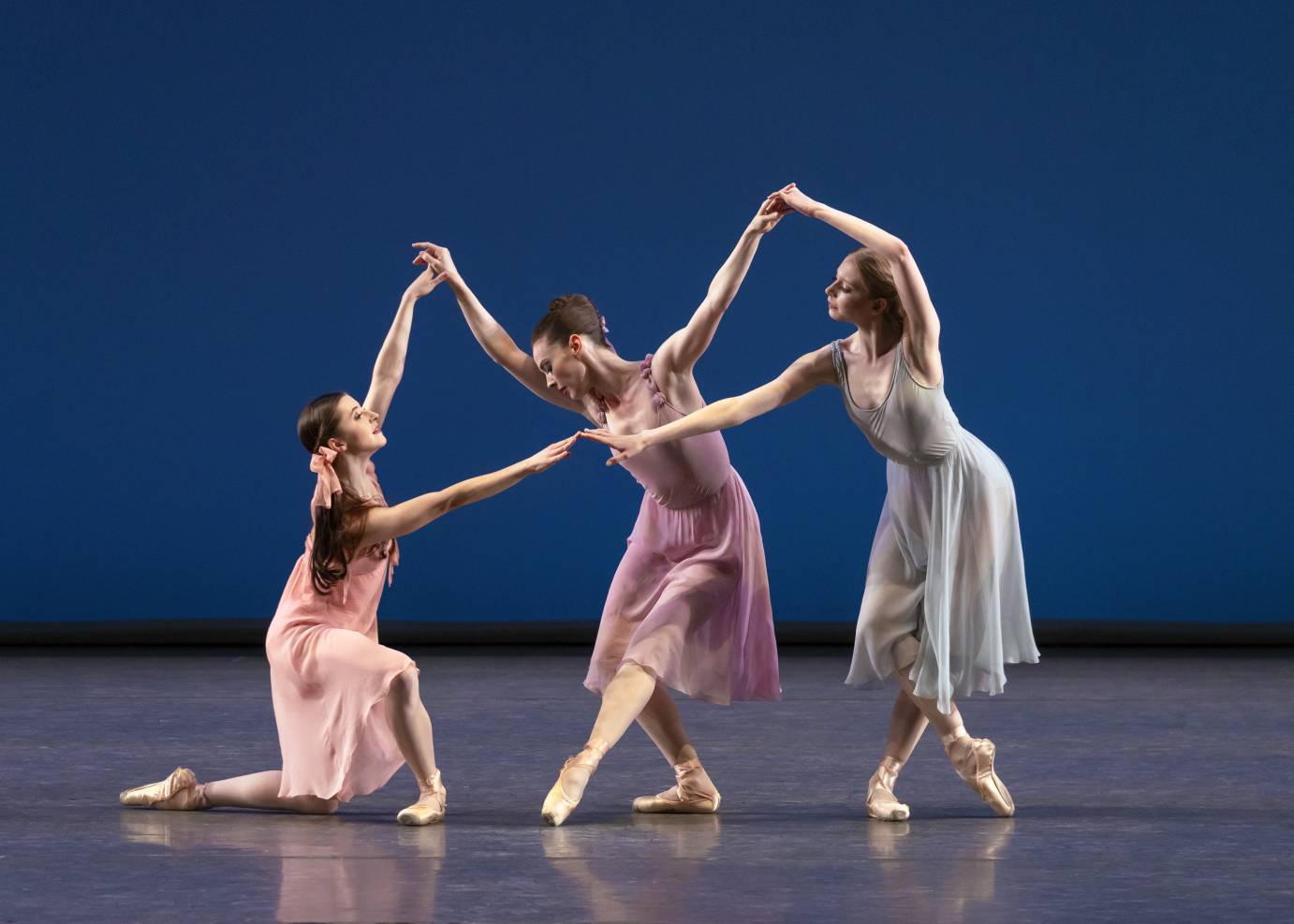
Indiana Woodward, Emilie Gerrity, and Dominika Afanasenkov in Jerome Robbins’ Dances at a Gathering. Photo: Erin Baiano
Dances at a Gathering opens the program, and two different casts take on this reverie to Frédéric Chopin's music
But socio-political concerns aside, let’s take a look at what NYCB pulled off in the last few days of its season. Sunday’s cast goes on with two replacements, but quite a few of the dancers debuted as recently as Thursday, when the program received the first of five performances. Among those debuts were Nadon (in mauve) and Ryan Tomash (in purple). The day after the season, Tomash was named the company’s newest principal dancer.
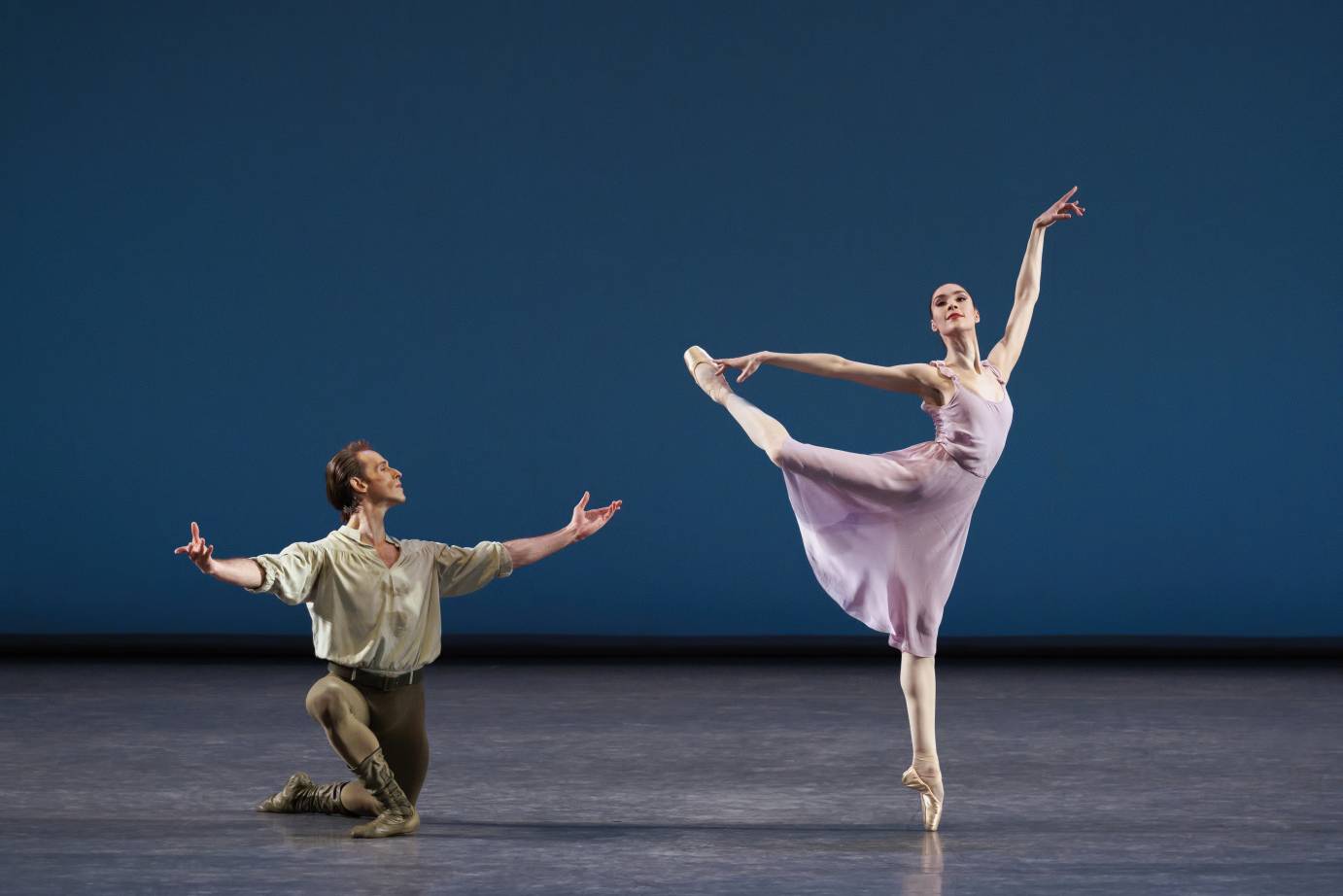
Mira Nadon and Adrian Danchig-Waring in Jerome Robbins’ Dances at a Gathering. Photo: Erin Baiano
When Roman Mejia (in brown) steps on stage, he hesitates. The empty space is vast, and it takes a deep breath of courage to explore and take it in, and maybe conquer it. Mejia is wise to unwind here and there. He allows himself to experience the movement fully, and lets diffe
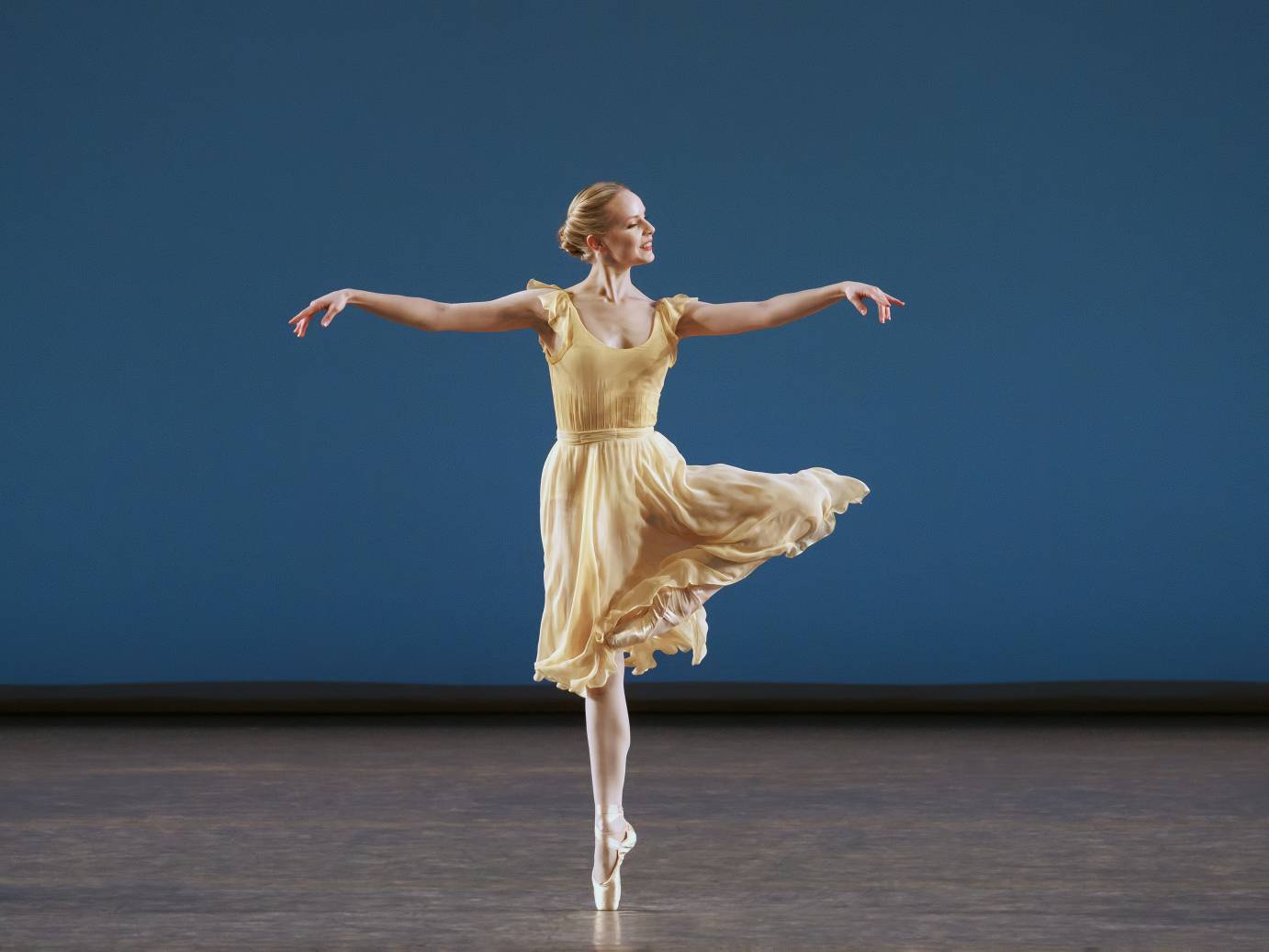
Olivia MacKinnon in Jerome Robbins’ Dances at a Gathering. Photo: Erin Baiano
Tomash lifts Tiler Peck (in pink) in the duet that follows, and tilts her to her side. She opens and closes her legs like a crab. The world is their oyster. A breezy, short solo by Olivia MacKinnon (in apricot) is accompanied on
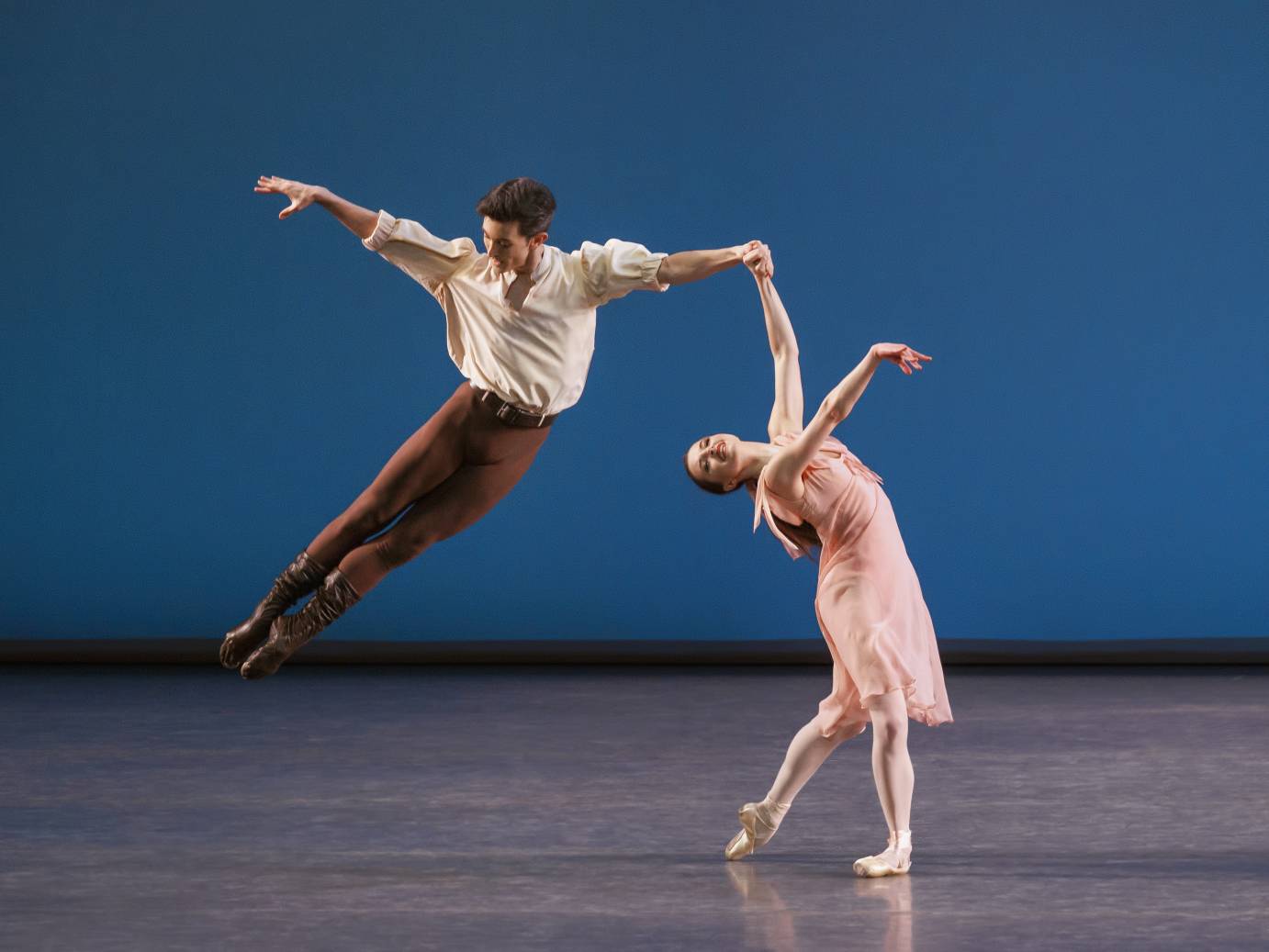
Anthony Huxley and Indiana Wooward in Jerome Robbins’ Dances at a Gathering. Photo: Erin Baiano
Different pairings and groupings throughout the piece allow the dancers to relate to various partners in ways that bring out new sides of their personalities. Robbins allows for a multidimensional human being with a range of emotion. The lady in apricot is mostly jolly, but the woman in pink appears contemplative or, at other times, euphoric. Indiana Woodward, on Friday, gives the feeling that Chun Wai Chan (in purple) could sweep her off her feet, and she would be happily airborne for the rest of her life. In another duet, she has fun challenging Anthony Huxley (in brown) to a duel of loving one-upmanship. Techn
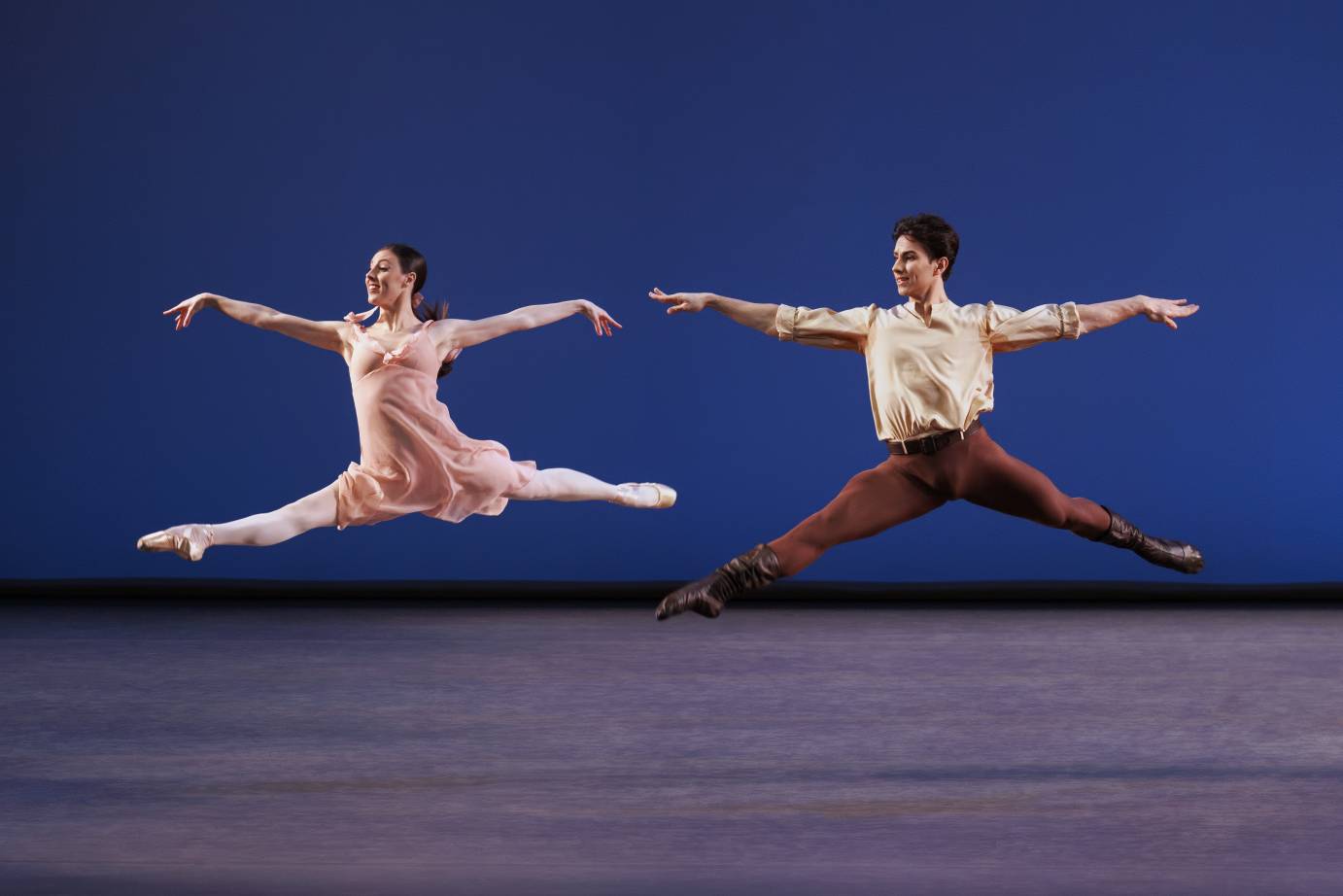
Tiler Peck and Roman Mejia in Jerome Robbins’ Dances at a Gathering. Photo: Erin Baiano
When Nadon is lost in a storm, and recalls the Giselle turn she witnessed her partner, Danchig-Waring,
I look forward to seeing Dances at a Gathering many more times. There is always some detail to discover, and a new dancer to fall in love with, feeling at home in this community of dancers who share their art with each other and with the audience.
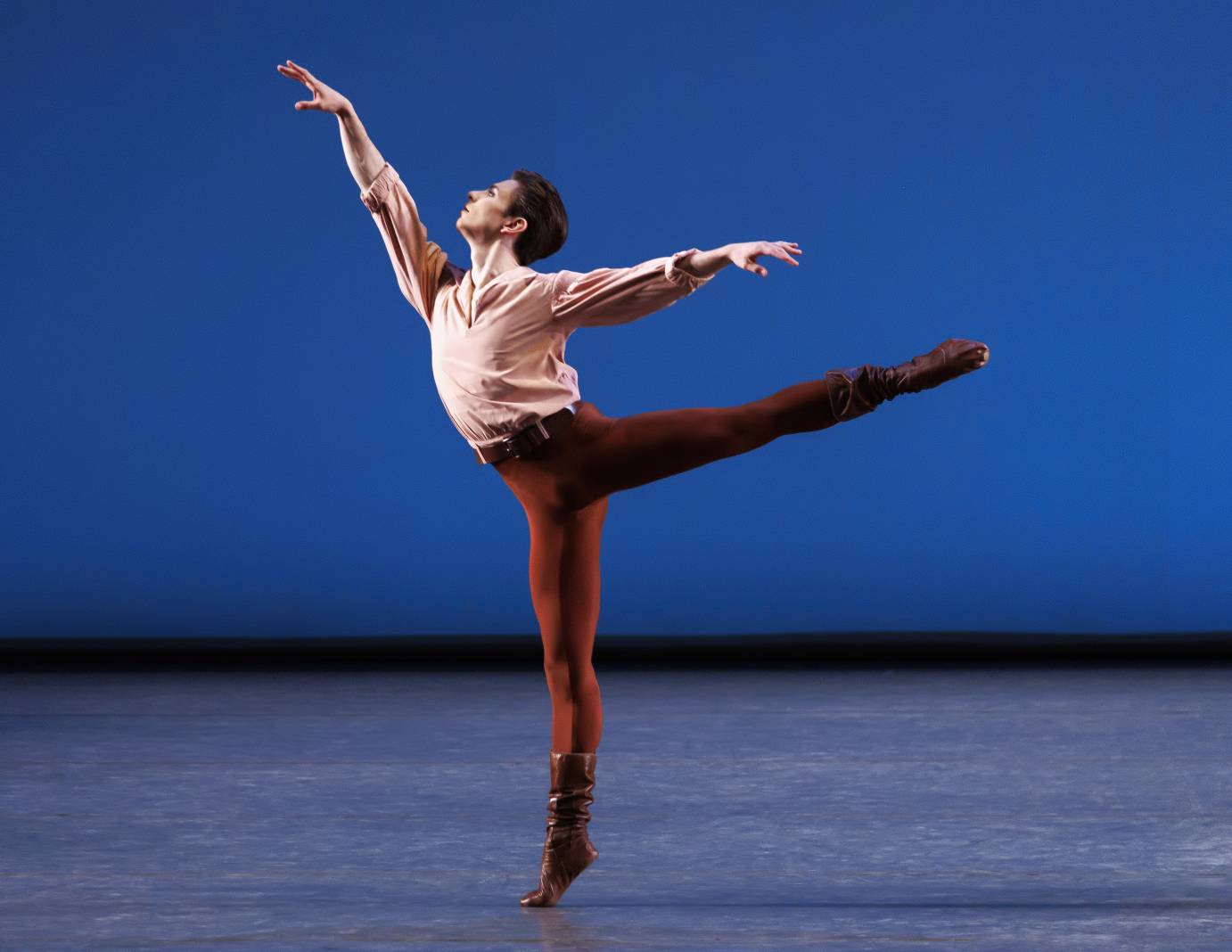
Andres Zuniga in Jerome Robbins’ Dances at a Gathering. Photo: Erin Baiano