

Related Features

MOVING VISIONS: Yvonne H. Chow and Porshia A. Derival, Our Moving Visions 2023 Editors
MOVING VISIONS: Of Times Before and Ahead — Celia Ipiotis Spotlights the One and Only Danni Gee
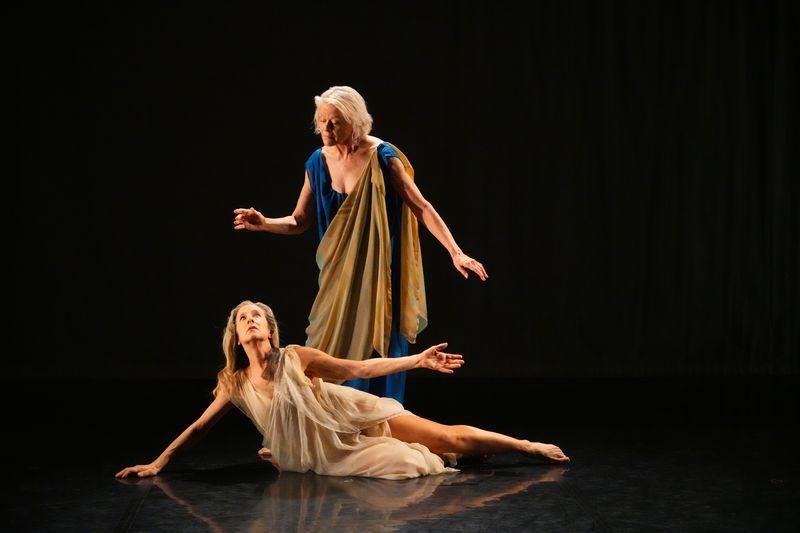
IMPRESSIONS: Loretta Thomas and Moving Visions' "The Widening Gyre" at The Mark O’Donnell Theater

By Henning Rübsam
View Profile |
More From This Author
Published on March 23, 2026
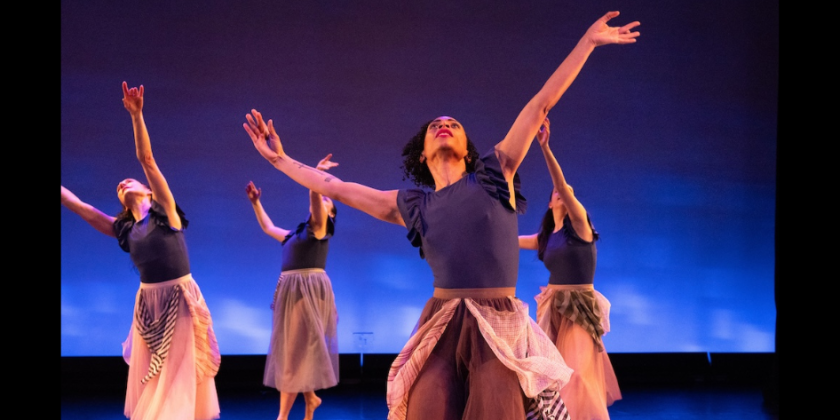
Moving Visions Dancers. Photo: Steven Pisano
Loretta Thomas & Moving Visions presents
The Widening Gyre
Celebrating International Women's Day, March 8th, with an all-female production
Guest Artist: Catherine Gallant
Pianist: Nathaniel LaNasa
Moving Visions Dancers: Camille Constanti, Alexandra DiCastro, Mia Generoso, Rosy Gentle, Katie Kennedy, Faith Kimberling, Jessie King, Holly Mitchell, Anne Parichon-Buoncore, Hannah Schayes, Corinne Shearer, Loretta Thomas
Lighting Design: Kathy Kaufman
Costume Design: Ivana Drezic
The Mark O'Donnell Theater, 160 Schermerhorn, New York, NY
March 6 - 8, 2026
Veteran dancer Loretta Thomas teaches young female students of all shapes and sizes at her Moving Visions dance studio. On March 8, she assembles them on stage around herself and a couple of other veterans, namely Catherine Gallant and Faith Kimberling, in her ambitious and mostly beautiful program, The Widening Gyre, at The Mark O’Donnell Theater in Brooklyn.
Even if Thomas falls into the trap of using the all-too-enticing backdrop screen to show an overlong movie, which opens the program on a low note, she more than redeems herself with her heartfelt, live stagings of works by dance pioneer Isadora Duncan that close both acts.
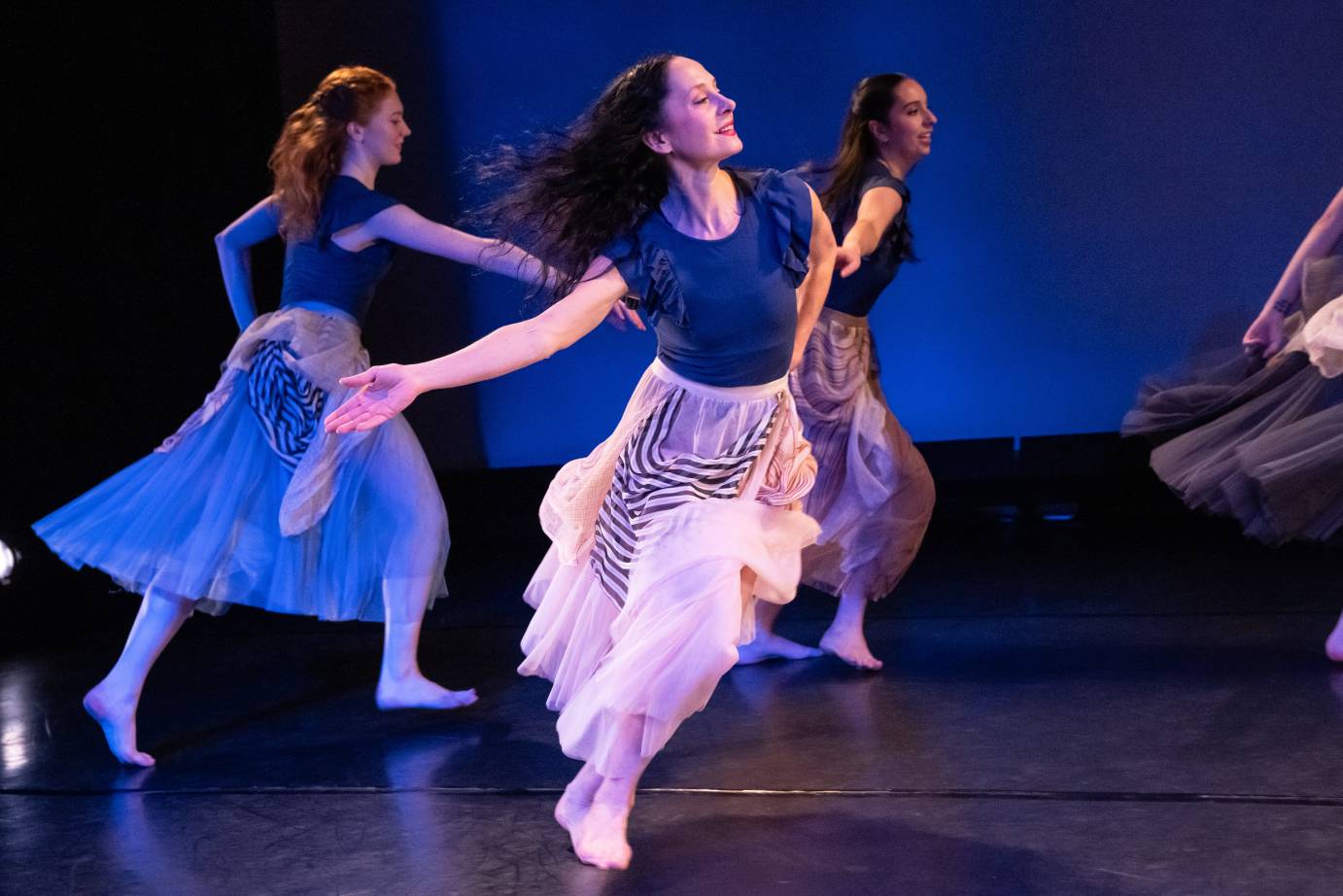
Stomping Ground, a septet by Thomas, lifts the mood alternating unison sections with the juxtaposition of a trio and a quartet. A momentary solo becomes a duet in which one dancer comforts another, and, in response to their thoughtful interaction, they both seem to realize possibilities on the horizon. The rest of the group then mirrors this hopefulness; and a more intimate group form of 2/2/3 evolves before the group comes together and dissolves again. It’s tender stomping for sure.
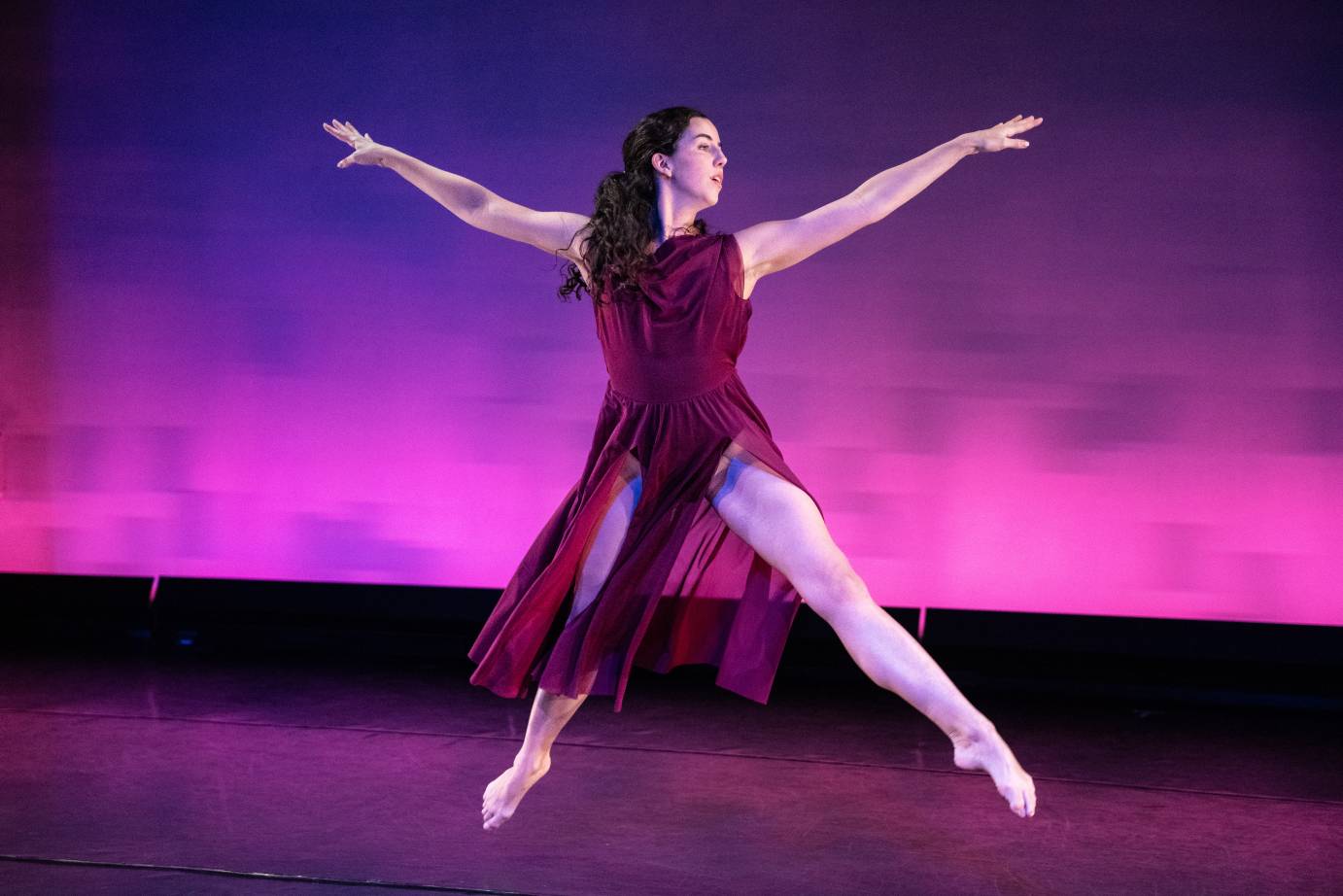
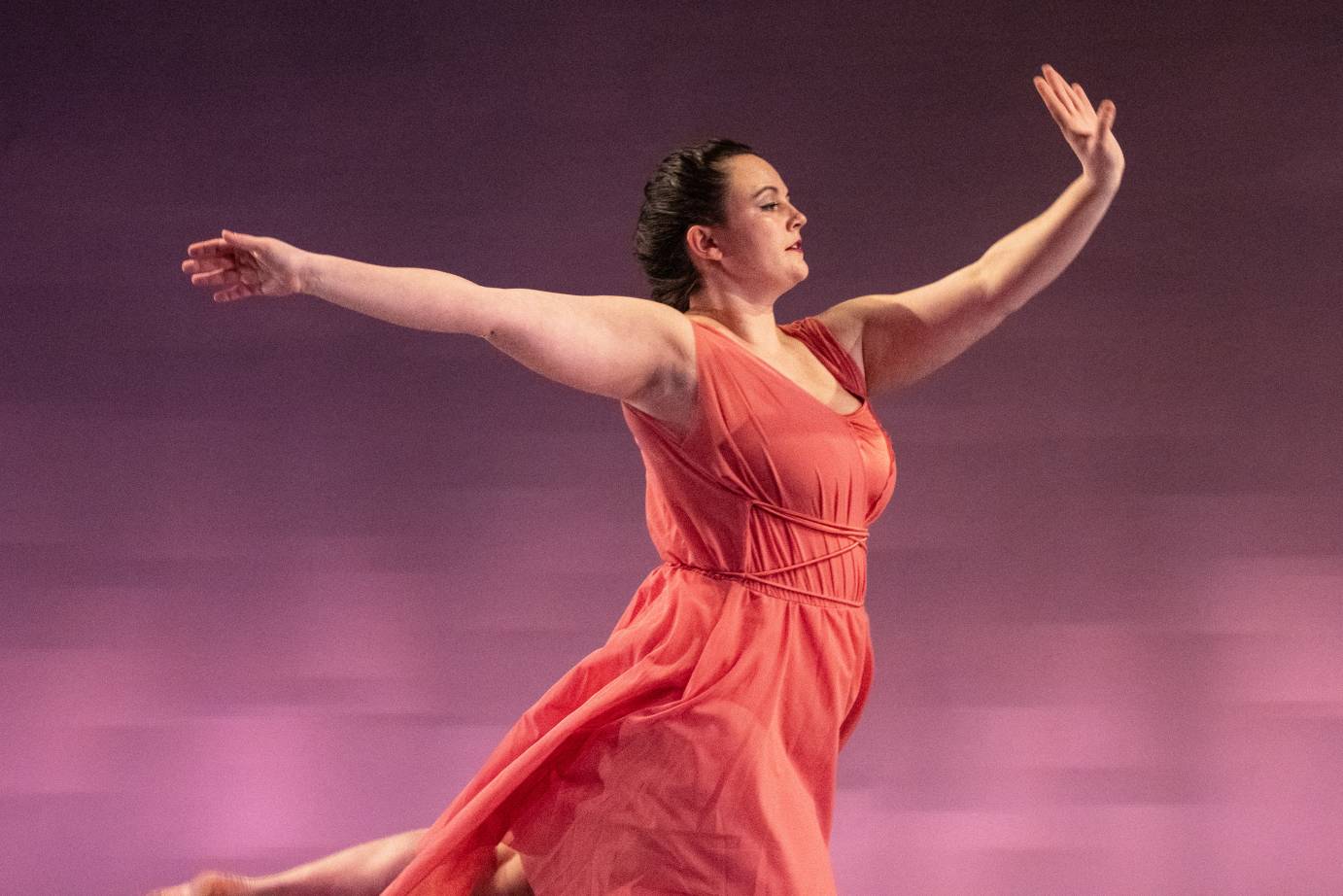
Brief solos introduce four dancers to the music of Darius Milhaud in Thomas’s Saudade. Their gorgeous tunic dresses all differ in color and design, and allow the movement to flow in harmony. While the first solo in light blue comes across as tentative, the maroon adds life. With its witty phrasing, the dark blue slaps on a dash of humor; and the salmon-colored one offers a return to melodic line. Not every one of these dancers is experienced enough, but the work compels me to watch with interest, if not always with ease.
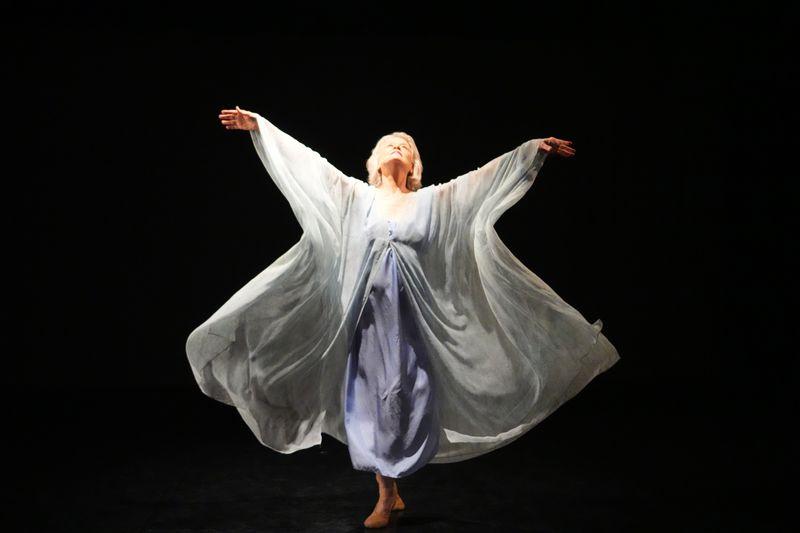
Etudes, a Duncan work to piano music by Alexander Scriabin, played live by Nathaniel LaNasa, presents the three seasoned dancers in solos. Kimberling reaches in all possible diagonals in Crossing. Rooted, but open to the call of change, she delivers a memorable rendition. Thomas’s presence as “Mother,” in the following segment, comes across as loving and genuine. Although her movement may be sparse, each step and gesture has purpose. The first half of the program ends with Gallant’s interpretation of the “Revolutionary.” The three women, all older than Duncan ever got to be, show that commitment to their art form pays off. Their performances will inspire the younger generation.
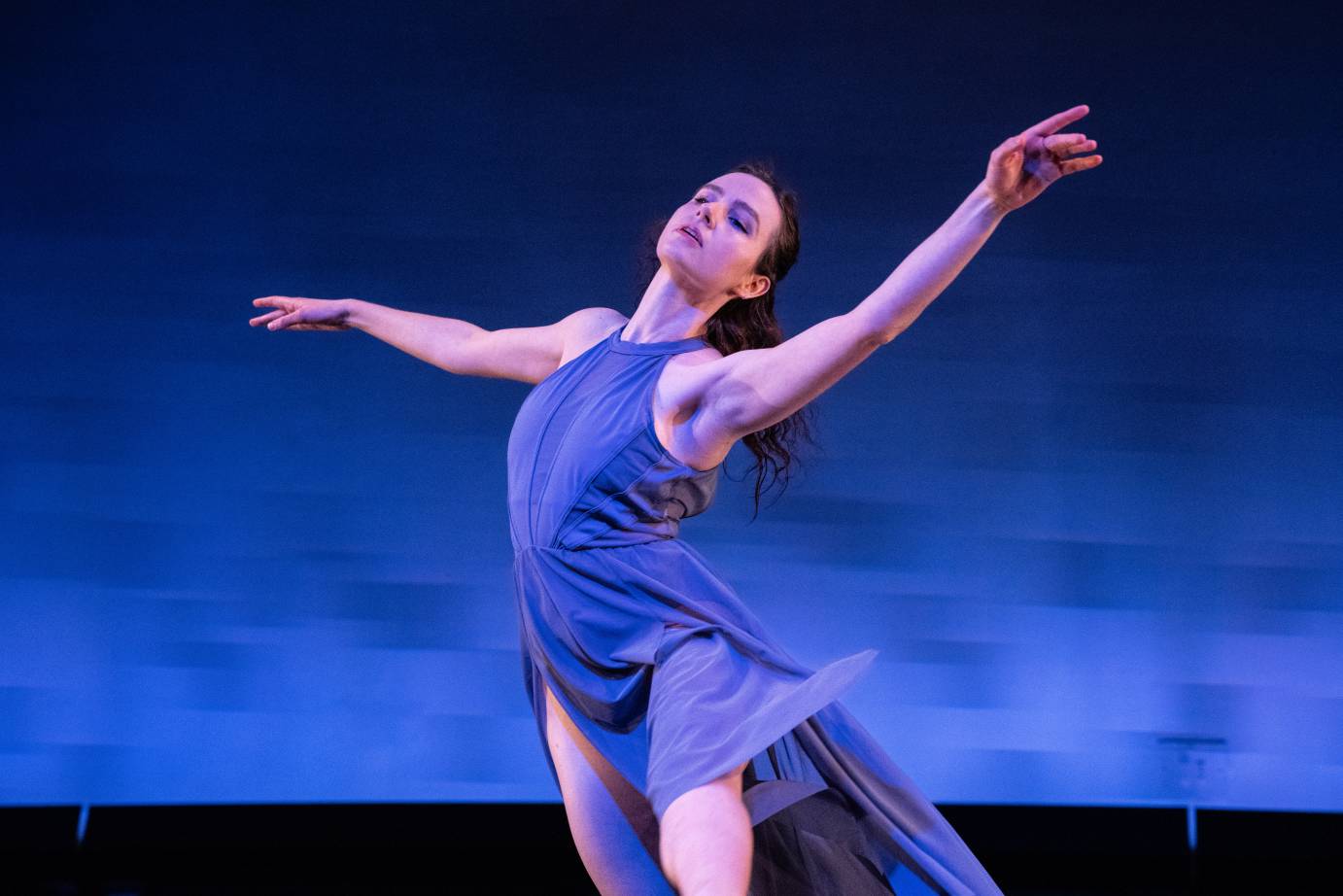
After intermission, The Widening Gyre, is an octet, in which the elegantly attired Thomas and an attendant in similar garb seem to oppose Gallant, who is dressed as a gnome, while the rest of the cast sport flowing dresses. Does this obscure work allude to the continuation and widening of Duncan’s circle?
Chopin Suite closes the program. These Duncan solos, duets, trios, and quartets thrill me in their freshness. Here the young dancers impress throughout, since they have been meticulously coached. Thomas’s work ethic and dedication successfully transcend; and the whole cast looks at home. They enjoy performing to Frédéric Chopin's Mazurkas, Waltzes, and Nocturnes. A playful duet named “Sisters,” to Mazurka Op 17 #1, makes Alexandra DiCastro and Hanna Schayes repeatedly jump away from the audience with their back leg in an inviting attitude. I am ready to get up from my seat to join them, but decide not to steal the spotlight. LaNasa’s wizardry at the piano would be even more moving had he an instrument worthy of Chopin and his own interpretive skills. One of this tinny piano’s strings must have broken before the performance; and each time a natural middle b appears in the score, a sigh emanates from the wooden box. Exquisite costuming by Ivana Drezic, and a lighting design by Kathy Kaufman that makes everyone shine contribute to the success of Thomas’s heroic effort.