

Related Features
IMPRESSIONS: Compagnie Hervé Koubi's "Sol Invictus" at The Joyce Theater
IMPRESSIONS: GALLIM in "Mother" at The Joyce Theater
IMPRESSIONS: Choreographer David Parker on Trinity Irish Dance Company at The Joyce Theater

By David Parker
View Profile |
More From This Author
Published on March 11, 2026
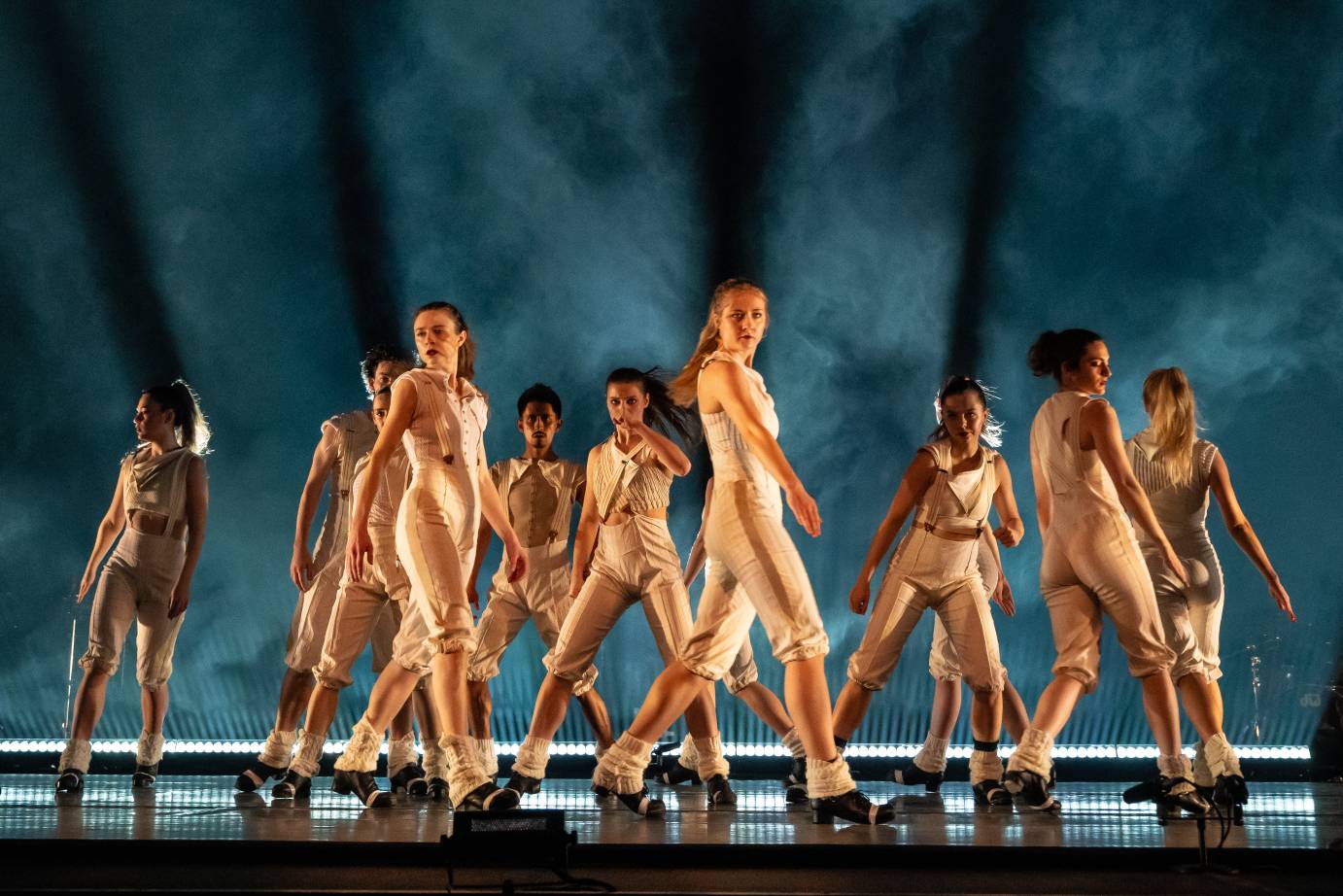
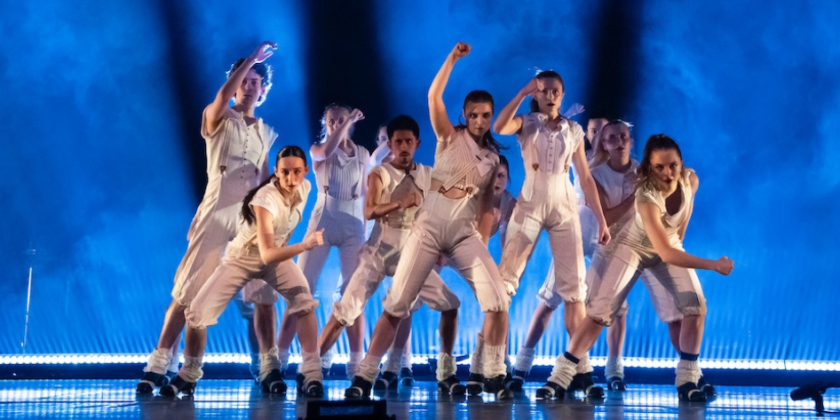
Trinity Irish Dance Company. Photo: Steven Pisano
Artistic Director: Mark Howard
Associate Artistic Director: Chelsea Hoy
Live Music: TIDC band, fronted by Killarney-raised, New York-based Brenoshea
Guest Choreographer: Michelle Dorrance
February 22, 2026
EDITORS NOTE: An earlier version of this article incorrectly described the first piece of the program as Michelle Dorrance's , SÉSEACHT.
As a choreographer, I went, with great anticipation, to The Joyce Theater to see Trinity Irish Dance Company. I too toil in the domain of percussive dance and, no matter how contemporary a frame I give my work, or how wide-ranging the movement is, my first love is hoofing. I expected Trinity's dancers to lay down choreographic dialogues about tradition, innovation, and genre along with their taps, and I was not wrong. But what surprised me was the warmth and directness with which they did it.

Yes, there are evocations of British colonialism, Orange marches, the Troubles, and other major components of Irish identity. But, there was a sweetness, an exuberance, and a jubilance in this that was contagious. This was also due, in large measure, to the laid-back yet forceful performances of the live musicians in their songs, solo instrumentals, and, alternately, in their plaintive and driving accompaniment. Throughout the show, dancers and musicians moved among each other onstage, forging a single identity as music-makers.
The program begins with COMMUNION (2014/2024) choreographed for the company by Mark Howard, Trinity’s founding artistic director, and Sandy Silva, acclaimed Montreal-based percussive dancer, choreographer, and producer. The lucidity with which the dance gradually accumulates shards of step dancing as it builds is accomplished with great power and precision. Howard and Silva stretch the genre while seeking out its roots in pure rhythm and pattern.

All the other dances on the program showcased a range of stylistic profiles, permeable to new influences while remaining firmly rooted in Irish dance mores. In hard shoe dances, there are accents from tap dancing, like heel drops for syncopation, the paddle-and-roll, and the spiraling legwork tap dancers use for turning. Use of the tips of the shoes for toe stands, moonwalks, and full turns on "pointe" adds some sass. The firm rhythms go from sly to driving and generate emotion as well as heat; some even reverberate with politics and social justice.

Howard's The Sash combines dance with film and music composed by Kevin Sharkey. Here, we see a film that evokes memories of the Troubles and a fantasy of dance as a form of reconciliation. There's no fuss or agitprop. The build of intensity and layered patterns as the dancers advance in straight lines, faster and faster, toward each other and the audience, exudes a fitting urgency.
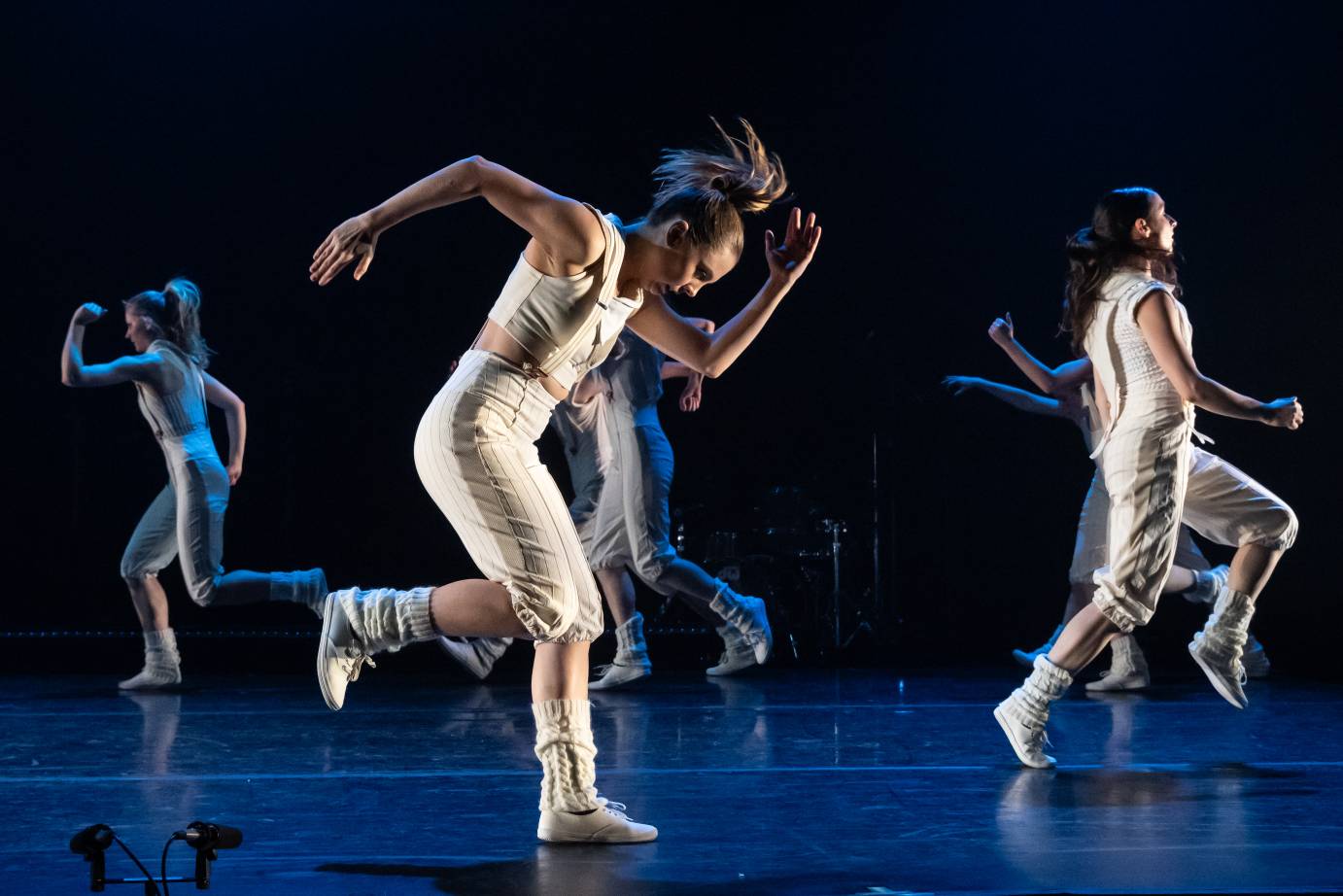
The Sash features both hard and soft soled dancing, explosive straight-up jumps, and a fraught barefoot soloist caught between opposing groups. The piece dances to a conclusion after everyone removes their shoes and leaves them at the foot of the stage. Barefoot equity achieved. End of act one.
Later, we see dancers on their knees on the floor whacking drumsticks in dense polyrhythms. Sometimes they dance in the familiar upright posture, with arms held long and tight by their sides, and feverish, ratcheting feet below; sometimes they swing their arms and ripple their backs. Soloists play call and response in spotlit circles and improvise against a group that beats out a base pattern. We see virtuosos among them. They tell us who they are through their sound.
A recorded voice earlier in the program said that the company seeks to avoid "an endless chase for approval, individuals slotted into an overproduced formula." Mission accomplished.