


Related Features
POSTCARDS: Sean Howe on Receiving GALLIM's First-Ever Choreographic Commission
POSTCARDS: Martín Almirón on Opening the Stage to the Community That Sustains Tango
POSTCARDS: Tomo Sone's from a Three-Cornered World: Inside the Making of "Car Deshe"
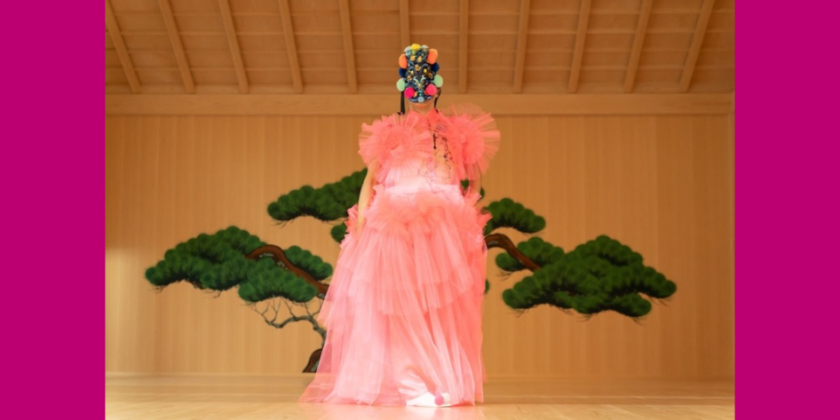
Sone's "Car Deshe" Can be seen December 3rd, at the 14th Street Y Theater
Car Deshe by Tomo Sone
Cover Image Full Credit *Tomo Sone in Cassandra’s Field of Flowers. Photo by Yoshikazu Inoue.
Part of LABAlive III: Last Name
Date & Time: Thursday, December 3, 2026 at 7:30 PM
Location: 14th Street Y Theater
Tickets: https://www.14streety.org/labalive-2026-season-name/
Every journey leaves a trace—a memory held in the body, people I have met, or a postcard sent home from somewhere unfamiliar.
Over the past several months in New York, my creative journey has unfolded inside the studios of the 14th Street Y as a fellow with LABA New York, a laboratory for Jewish culture where artists study classical texts around an annual theme.
When I began working on this year’s theme, “Name,” I started by researching my own first name, Tomo. In Japanese, it is written with the kanji character 知, meaning knowledge or wisdom. This character was taken from the famous opening passage of Natsume Sōseki’s 1906 novel Kusamakura, which follows a painter’s journey into the mountains to discover the essence of art and life. The novel begins with: “Approach everything rationally (知), and you become harsh.”
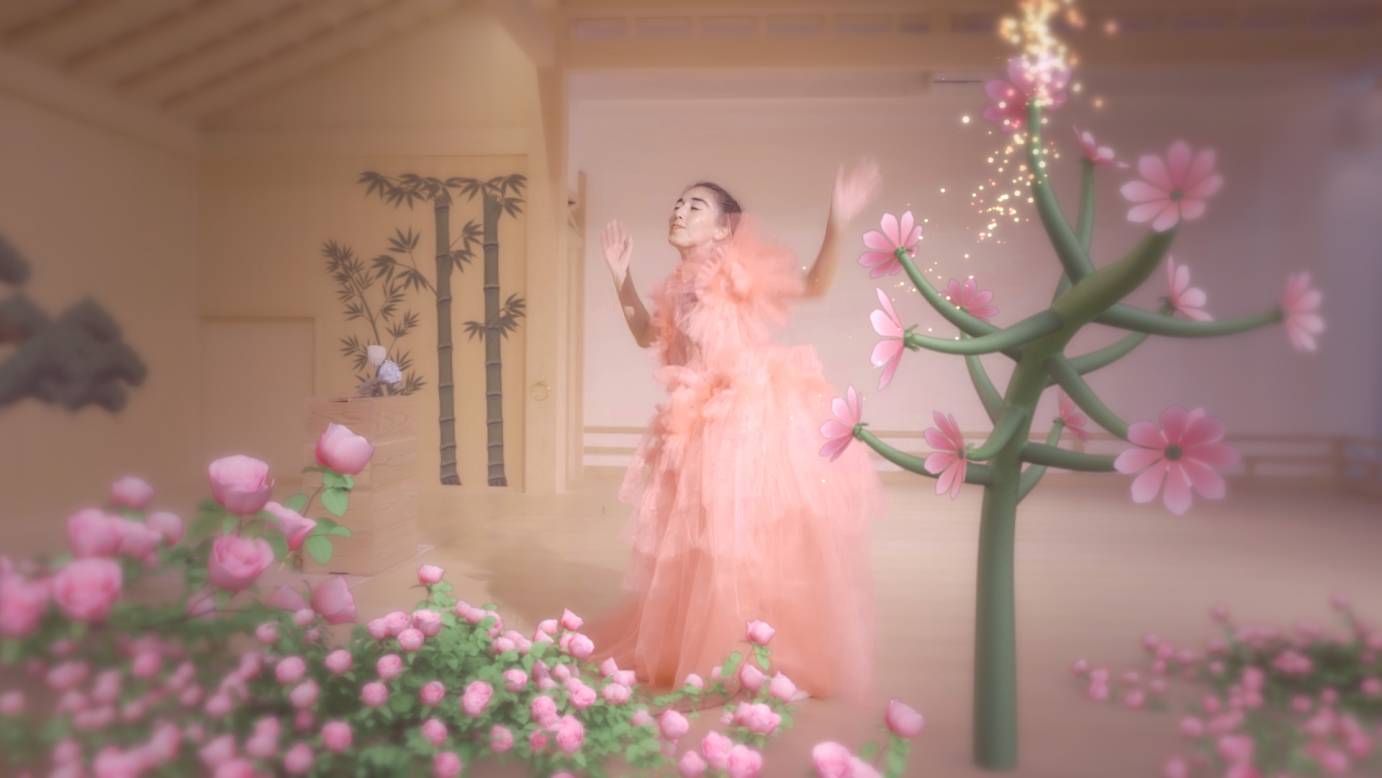
Still from the film version of Cassandra’s Field of Flowers. Video by Sou Matsuzawa; AR art by Akane.
At first, studying the Jewish text within the LABA fellowship felt deeply challenging. Also, once I realized that studying and interpreting the Bible cannot be visualized, I felt it was almost impossible to create a dance piece from it.
Yet during our text study with Scholar Ruby, I found myself drawn to the story of Jacob—examining how he used his knowledge and wit to survive, and the complex, unanswered consequences that followed. Gradually, Jacob’s wandering began to overlap in my imagination with the painter’s journey in Kusamakura. Across two vastly different traditions, I started seeing questions of fundamental humanity.
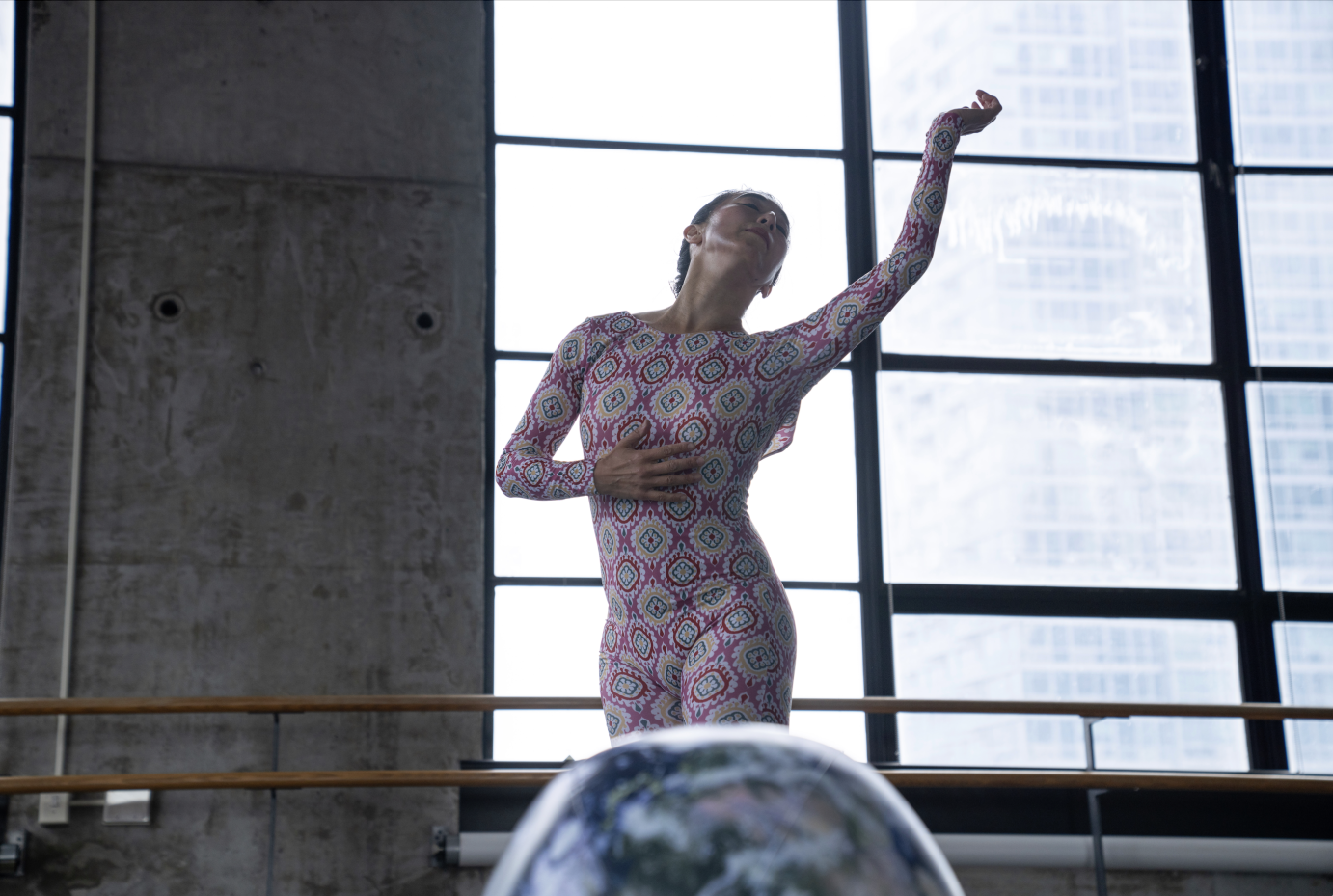
Tomo Sone in studio rehearsal for Invisible Chaos. Photo by Alexander Sargent.
In English, Sōseki’s novel was published as The Three-Cornered World, a phrase drawn from the author’s definition of an artist: someone who lives in the triangle that remains after the fourth corner—common sense—has been removed from this four-cornered world. Literally, however, Kusamakura translates as “Grass Pillow,” a classic poetic phrase in Japanese literature signifying a journey. Translated into poetic Hebrew, that phrase becomes the title of my new 20-minute work: Car Deshe.
The concept of a journey also mirrors my personal life. I have obtained a great deal of knowledge from my journey across places and time, and I have learned so much from it. Through my medical training as an OB/GYN in Japan, I developed a scientific eye and learned to observe the world with mathematics and precision. Over the years—moving from medicine to years of dancing and researching movement, studying traditional Noh theater in Kyoto, and now creating in New York—the center of gravity in my life has shifted from scientist to artist. In many ways, this turn toward choreography might be my personal answer to Sōseki’s warning about rationality: a search for a wider sense of empathy and healing.
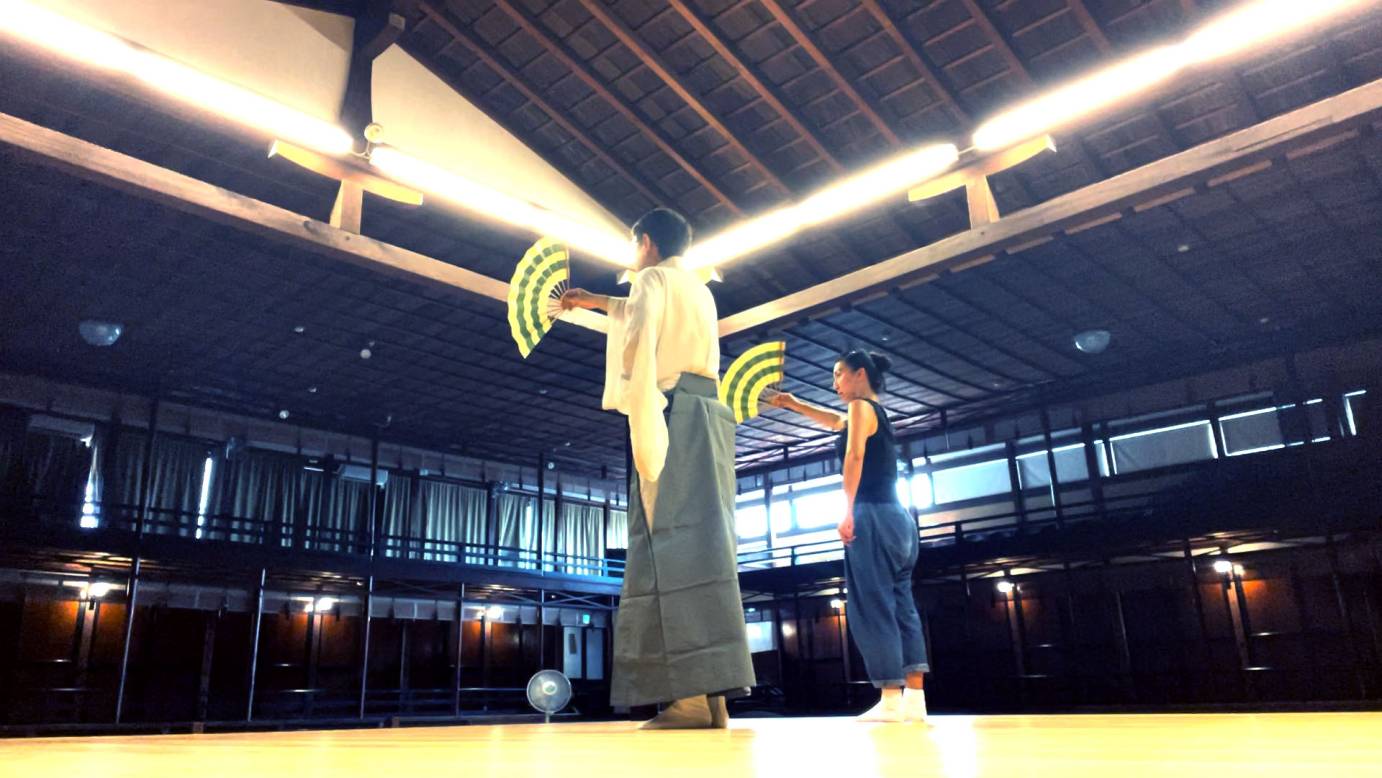
Studying traditional Noh theater and fan movement in Kyoto—a gesture expressed directly in Car Deshe. Video still courtesy of the artist.
In the studio, Car Deshe draws directly from the aesthetic world of the novel’s painter, who tries to view life through the non-logical, "three-cornered" lens of Japanese Noh theater—only to discover that true art requires acknowledging the raw human emotions stirring beneath the surface. Alongside classical ballet and contemporary movement, my choreography incorporates subtle Noh physicality and principles: walking in a wide circle to signify that time and space have warped, or allowing a single Japanese fan to transform into various objects and emotional states.
Written as war approached Japan, Kusamakura contrasts Sir John Everett Millais’s painting Ophelia—which Sōseki saw as a symbol of a Western sensibility that aestheticizes tragedy—with the bright, upward song of a skylark as a symbol of hope. In bringing these textures together onstage, I am searching for a different way to hold grief, survival, and tenderness inside the moving body.
Whenever I have traveled to new places over the years, I used to send postcards back home. No matter where I was in the world, the postcards I found in each place carried their own distinct beauty.
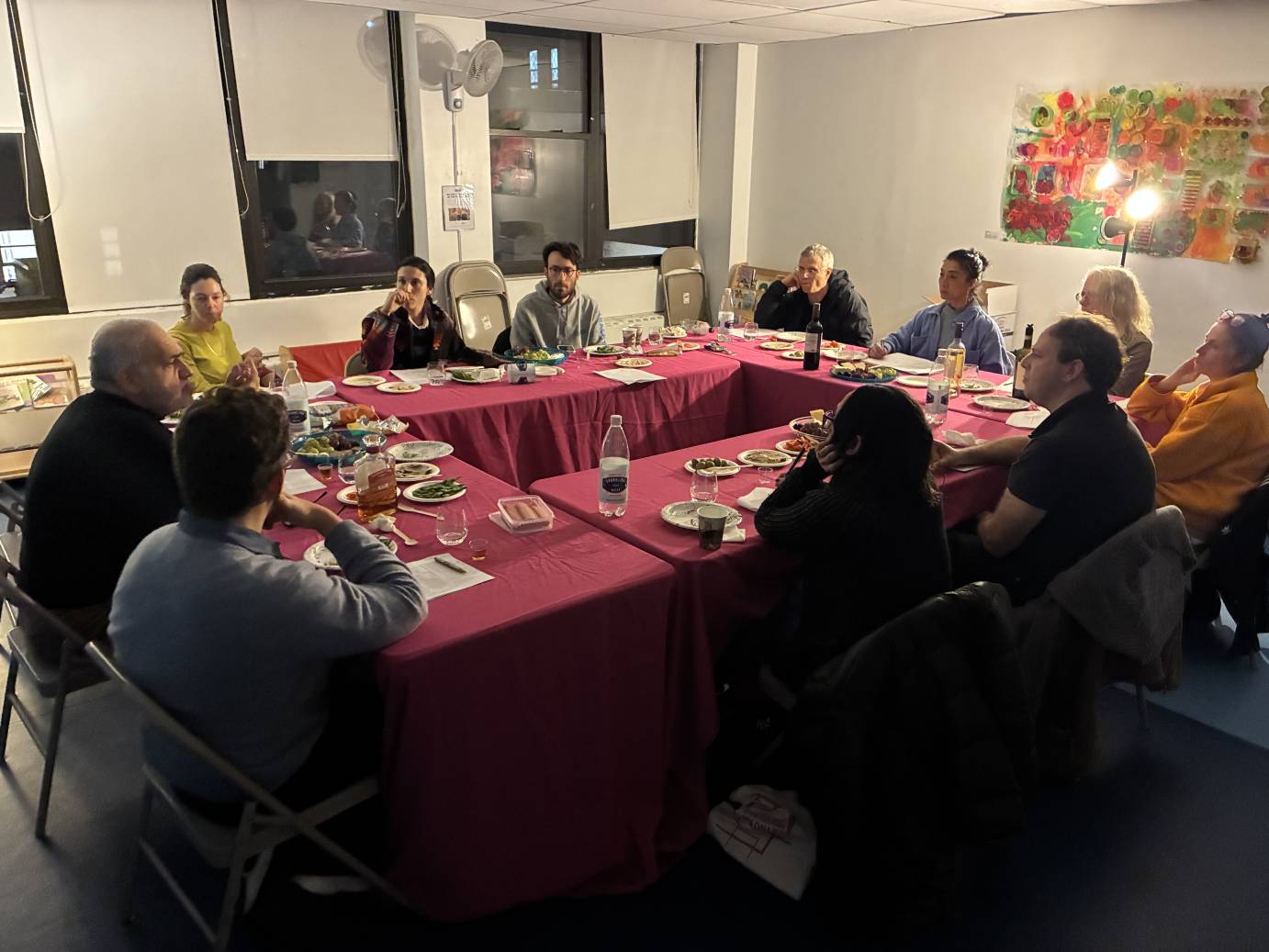
LABA New York fellowship text-study session at the 14th Street Y (Tomo Sone seated on the right in light blue). Courtesy of the artist.
Today, creating Car Deshe feels like sending another kind of postcard—one written through movement rather than ink, reaching across cultures to find shared empathy on the other side. Of course, I put the name which I love at the end of the postcard,
From Tomo