


Related Features
IMPRESSIONS: Kat Mustatea’s "The Mutables" at HERE Arts Center
IMPRESSIONS: Loco7 Dance Puppet Theatre Company's "Lunch with Sonia"
THE DANCE ENTHUSIAST ASKS: Basil Twist and Annalisa Dias on "Puppetopia!" at HERE Arts Center

By Theo Boguszewski
View Profile |
More From This Author
Published on February 21, 2026
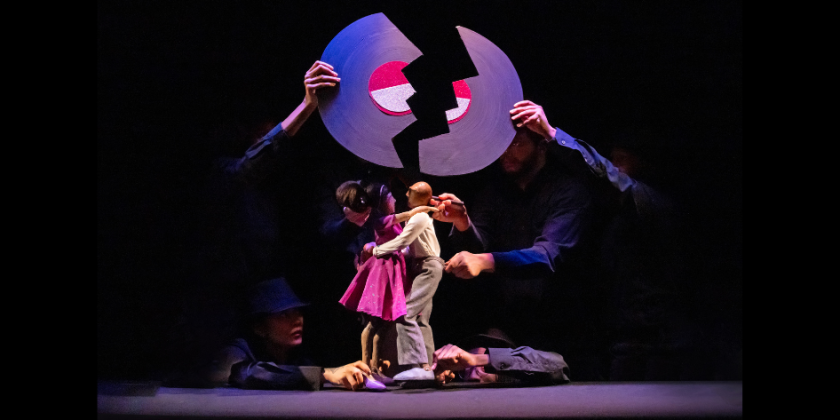
Jessica Simon's "RUBY & CHARLIE." Photo courtesy of HERE Arts
A Puppetry Takeover in Lower Manhattan from Now Through March 1, 2026
For more than three decades, HERE Arts Center has been at the forefront of genre-blurring performance in downtown New York City, championing bold, interdisciplinary artists. Among its most enduring initiatives is the Dream Music Puppetry Program — founded by Barbara Busackino and master puppeteer Basil Twist —which has helped establish the center as a national home for contemporary puppetry.
This month, that legacy culminates in Puppetopia 2026, a building-wide festival that celebrates the alchemy of puppetry and music through three ambitious works: Parched, Ruby & Charlie, and The Magnificent Ms. Pham.
The Dance Enthusiast’s Theo Boguszewski speaks with Basil Twist and Annalisa Dias, co-director of HERE Arts Center, about the legacy and future of Dream Music Puppetry, and the creative sparks driving Puppetopia 2026.
Theo Boguszewski for The Dance Enthusiast: Can you share a bit about the history of HERE Arts Center?
Annalisa Dias: HERE is a multidisciplinary performing arts organization. We have a venue in lower Manhattan that has two theaters, and we program work that is genre blending and boundary defying. We showcase anything from opera to poetry, to puppetry to dance, to theater to comedy. You name the discipline, and we've probably done it here.
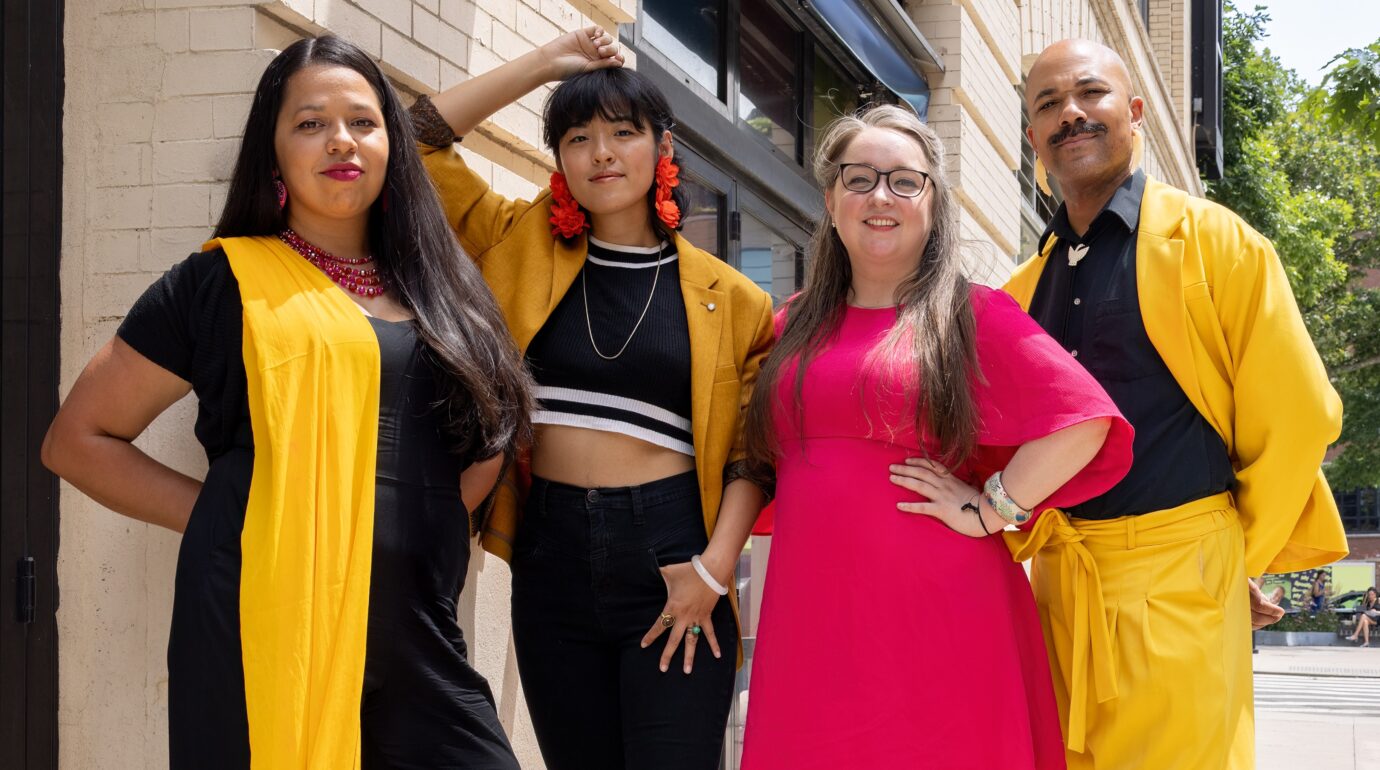
I'm one of the co-directors at HERE. There are three of us — myself, Jesse Alick, and Lanxing Fu — and we started in July of 2024. HERE was run for 30 years by one of its co-founders, Kristin Marting, and we are a new generation of leadership. So it's like a new era of HERE, which we're very excited about.
The new team remains committed to making space for a wide variety of artists in a wide variety of disciplines, including dance. And we're really excited to bring our relationships with artists from across the city and across the country to HERE and make space for a new generation of artists to do their work.
How did Dream Music Puppetry come about?
Dias: The Dream Music Puppetry Program has been part of HERE since its founding. Barbara Busackino is the Dream Music Puppetry Program producer, and she is one of HERE’s founders. Basil also has been around as part of the Dream Music Puppetry Program since the beginnings of HERE. And he is the lead curator and artistic director for Dream Music Puppetry.
This particular program is really trying to blend live music with puppetry, which is one of the things that makes it unique. That is partially driven by Basil's grandfather, Griff Williams, who was both a puppeteer and musician. We have a collection of Griff's puppets in our building; it's six puppets of a band. It's very sweet. And there's a long family history with Basil. Our downstairs theater space is named for his grandmother, Dorothy B. Williams. The Dorothy B. Williams Theater, lovingly known as “the DOT”, is where we do most of our puppetry programming. It's a smaller space, and a really intimate experience for the audience. You're right in the action. It’s perfect for puppetry, which can be so detailed.
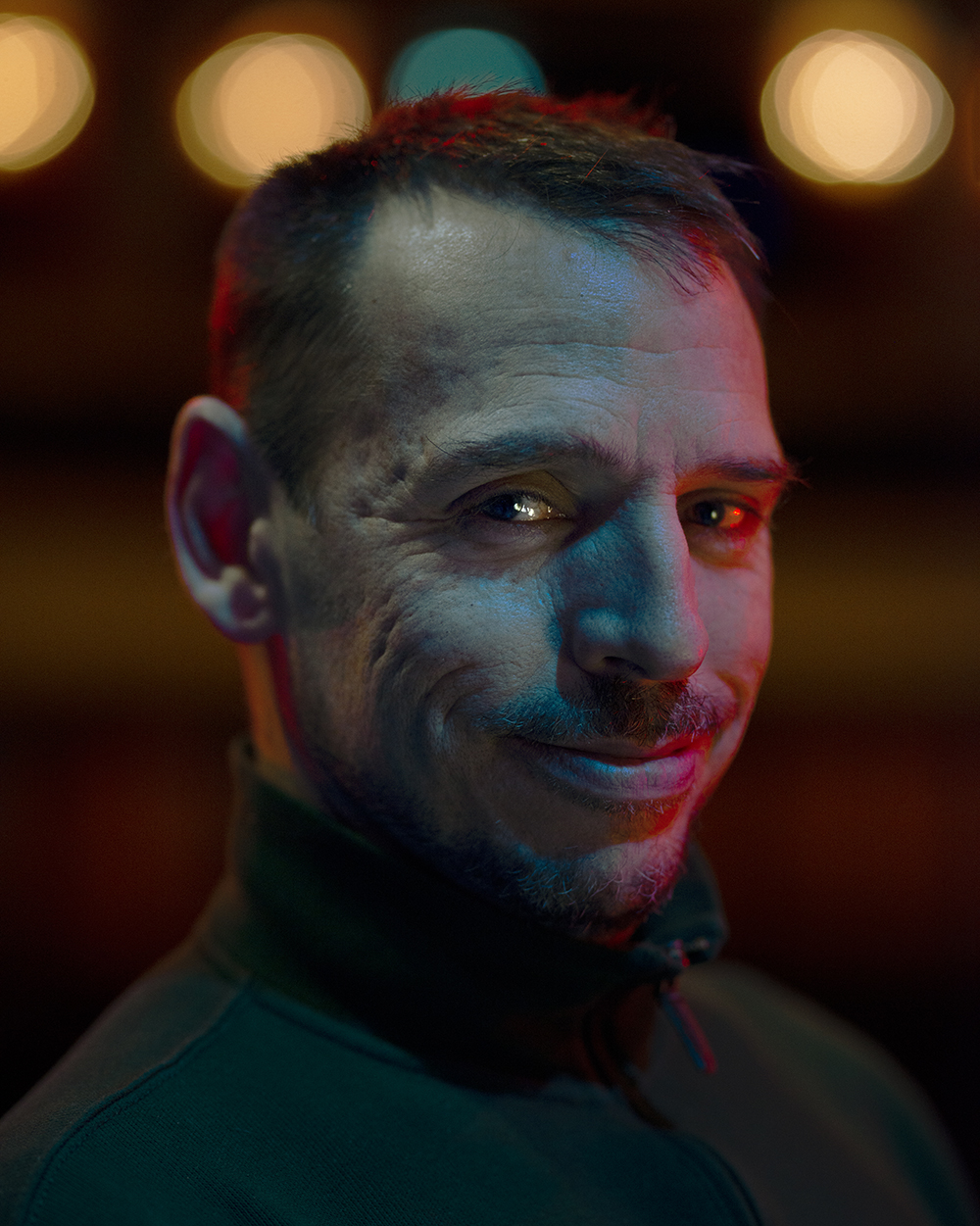
Basil Twist: My mother was an amateur puppeteer when I was a kid. She and a bunch of other moms had a puppet group and they performed at birthday parties and hospitals. I was totally into it and was often backstage. But also, my grandfather was primarily a musician. His name was Griff Williams and he was a big band leader in the 30s and 40s. He had a dance band, and sometimes as a bonus he had these puppets that he brought out, of famous band leaders like Harry James or Cab Calloway.
And so there's this puppetry thing in my family. I was fascinated as a kid. There was a moment, when I was about 10 years old, that my grandmother gave me my grandfather's puppets (he died before I was born, so I never met him). When my grandmother gave me those puppets, it felt like sealing the deal that I was going to be a puppeteer. And I still have those puppets; they’re on display currently here at the HERE Arts Center, in a little case by the theater.
That theater is named after my grandmother. And our puppetry program is called the “Dream Music Puppetry Program” because that was my grandfather Griff Williams’ theme song, Dream Music.
How has Dream Music Puppetry's presence influenced HERE?
Dias: When you think about puppetry as a discipline within the whole performing arts ecosystem, it's relatively small. And HERE for the last 32 years has been a real artistic home for the puppetry community both in New York and across the country. It is one of the things that we are known for as an organization and have a real investment in continuing. In terms of how it's impacted our audiences, I would say that there are audience members who specifically come to HERE for the Dream Music Puppetry program. And we love that.
Puppetopia is coming up. Is that the apex of Dream Music Puppetry's programming throughout the year?
Dias: It's one of them. It’s become a real tradition at HERE over the last several years — it's a festival format where we take over the whole building and we have shows basically every day of the week in both theater spaces.
The Dream Music Puppetry Program had for many years been doing a week of performances of two shows, one in the upstairs theater and one in the down. So there had always been this impulse to have a puppetry takeover. And then there was significant funding from the Jim Henson Foundation.
Tell me a bit about the shows being presented at this year’s Puppetopia (Parched, Ruby & Charlie, The Magnificent Ms. Pham). How did you come to select these works?
Twist: It's an organic process, and it’s different for every piece. Ruby & Charlie is a show that had been in development for a while, and it kind of got hit by the pandemic and never had its due. I reconnected with the creator a year ago and said, “Hey, we should do your show.”
And then Parched is an incredible show – it’s very ambitious. The team who made it – Dorothy James and Andy Manjuck – they did Bill's 44th. And we invited them to make another show, and participated with them in producing it. So Parched is a premiere, and Ruby & Charlie is also a premiere, but it was developed earlier.
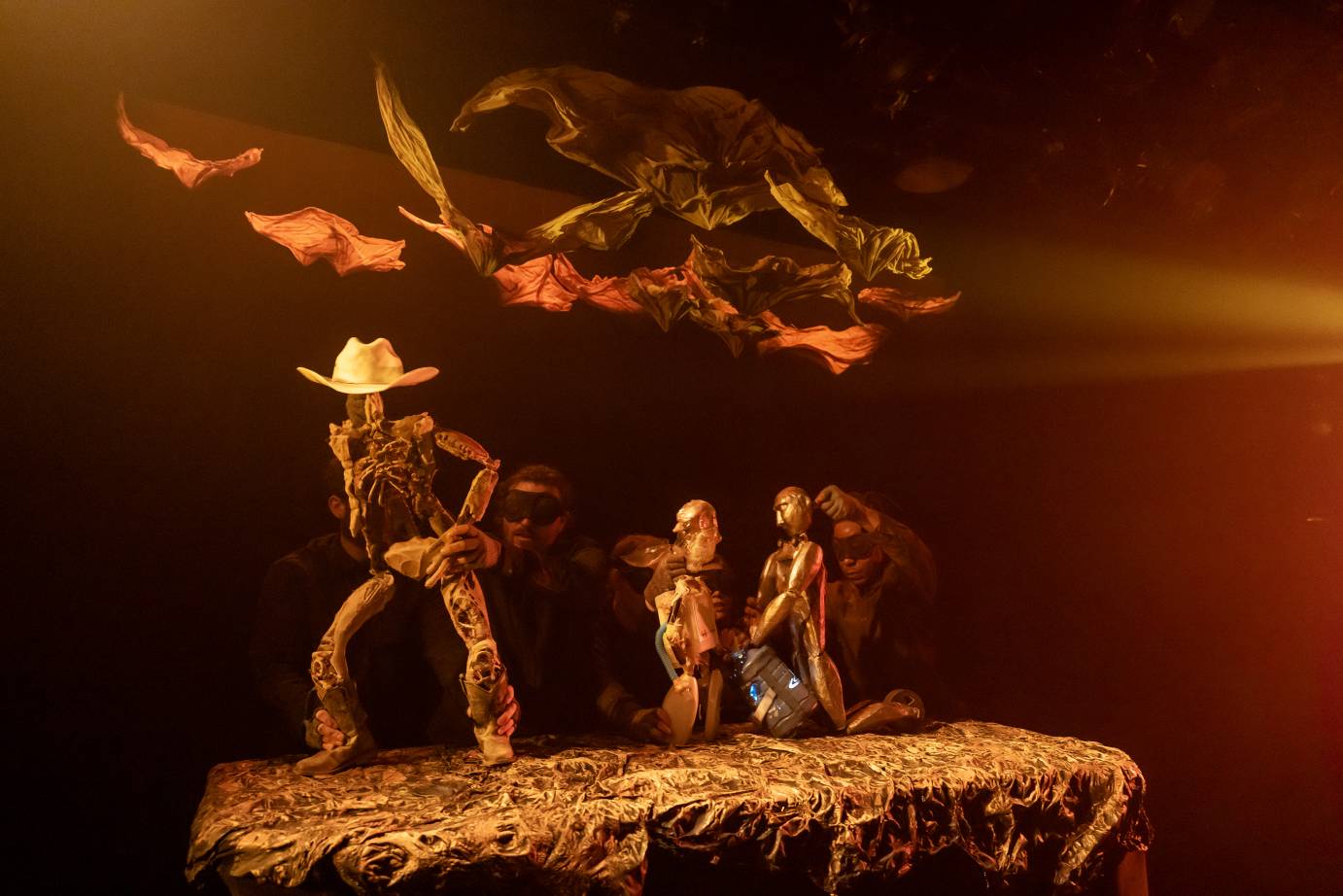
Parched has live music too, and it’s just this amazing soundscape. They have a banjo. Their show is unreal – it’s unlike anything you've seen on stage. Choreographing beautiful, ecstatic chaos. It's genius. Don't miss it, everybody.
And then The Magnificent Ms. Pham feels like it happened at the last second. We are super excited to have Tommy (Nguyen)’s piece. It's a Vietnamese water puppetry tradition, which is super duper cool. It harkens back to the origins of the Dream Music Puppetry program with Symphony Fantastique, where we had a tank of water in the theater. And it also has fantastic original music.
There's just an incredible puppetry community that I'm a part of. Puppetopia is a great example of the range and scope and talent and ambitions of puppeteers in general. But in New York City especially, it's all great work.
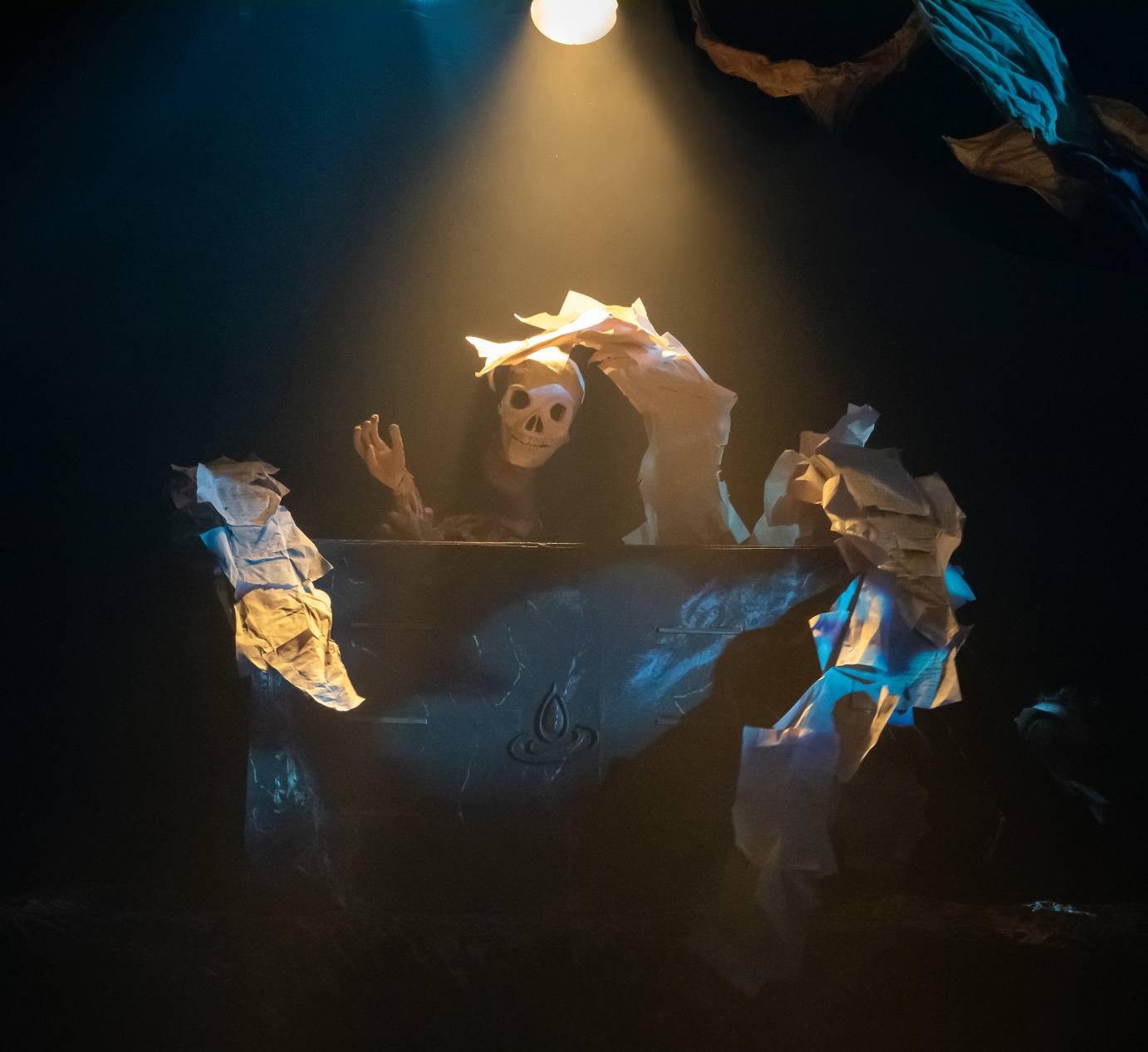
Dias: One of the shows which is in our upstairs mainstage space is called Parched. I want everybody to see this show. It's just really beautiful. It's by a company, Official Puppet Business. They're longtime friends of HERE. Parched is a Dream Music Puppetry commission and we're just really thrilled to be able to support it. It's like a sci-fi western that’s set in the future and all the water has dried up and there's cowboys and sentient mushrooms and it's a really good time and really beautiful.
And then Tommy Nguyen is one of the founders of Puppetual Motion and the lead artist on The Magnificent Ms. Pham. He says that it's the first ever Vietnamese American water puppetry show. Vietnamese water puppetry is a long millennia's old tradition in Vietnam. But what Tommy is creating is a form that is specifically Vietnamese American. So we're really excited to support that.
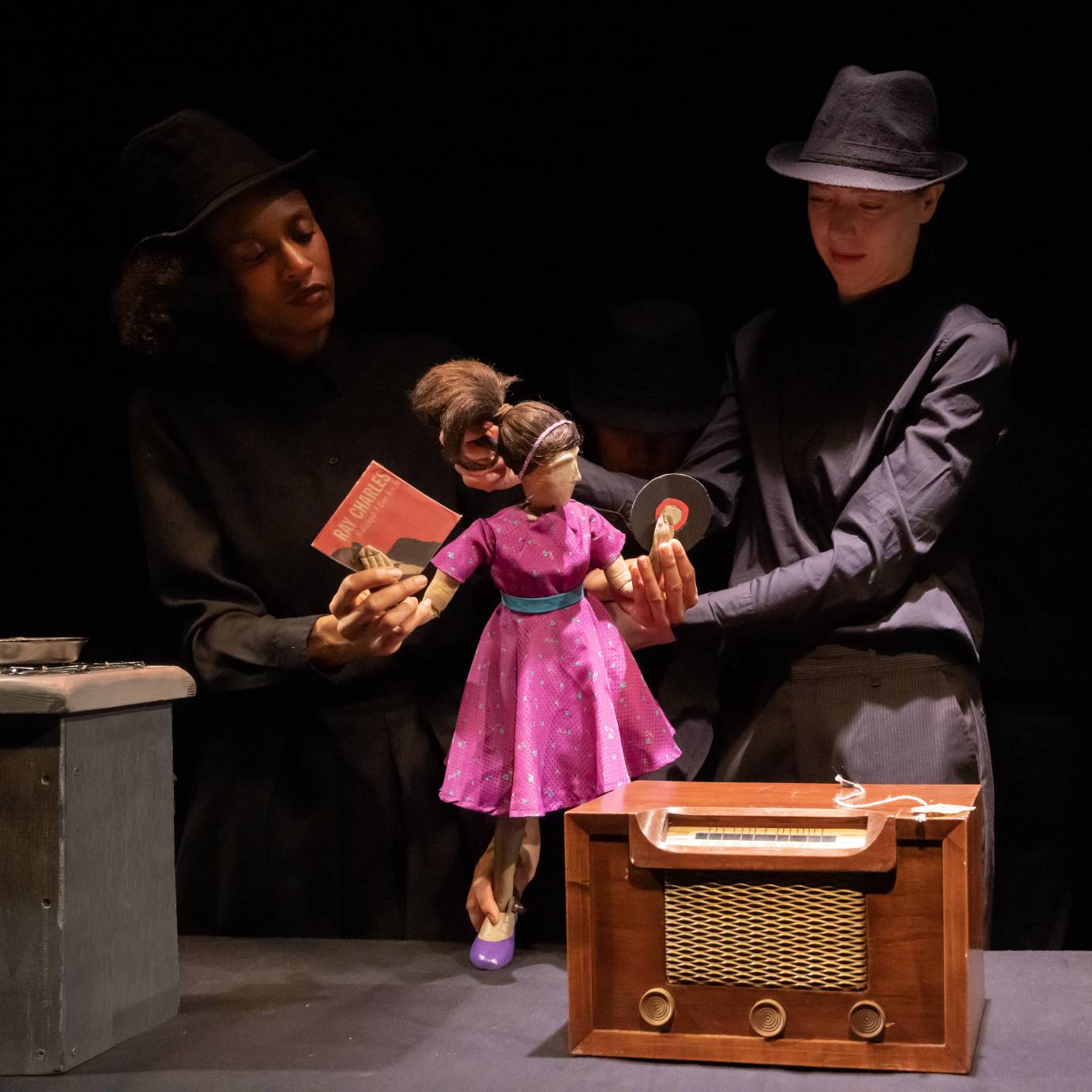
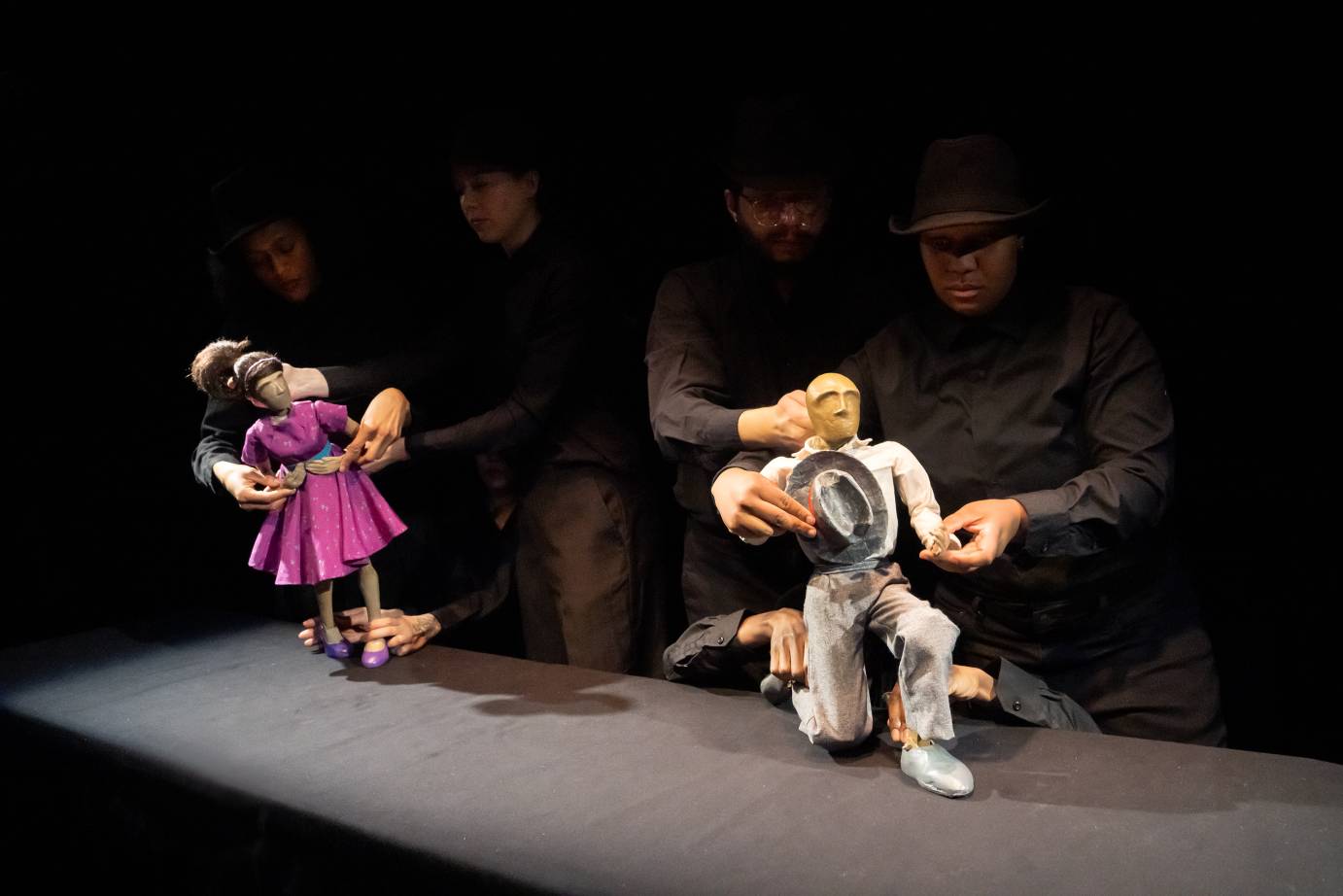
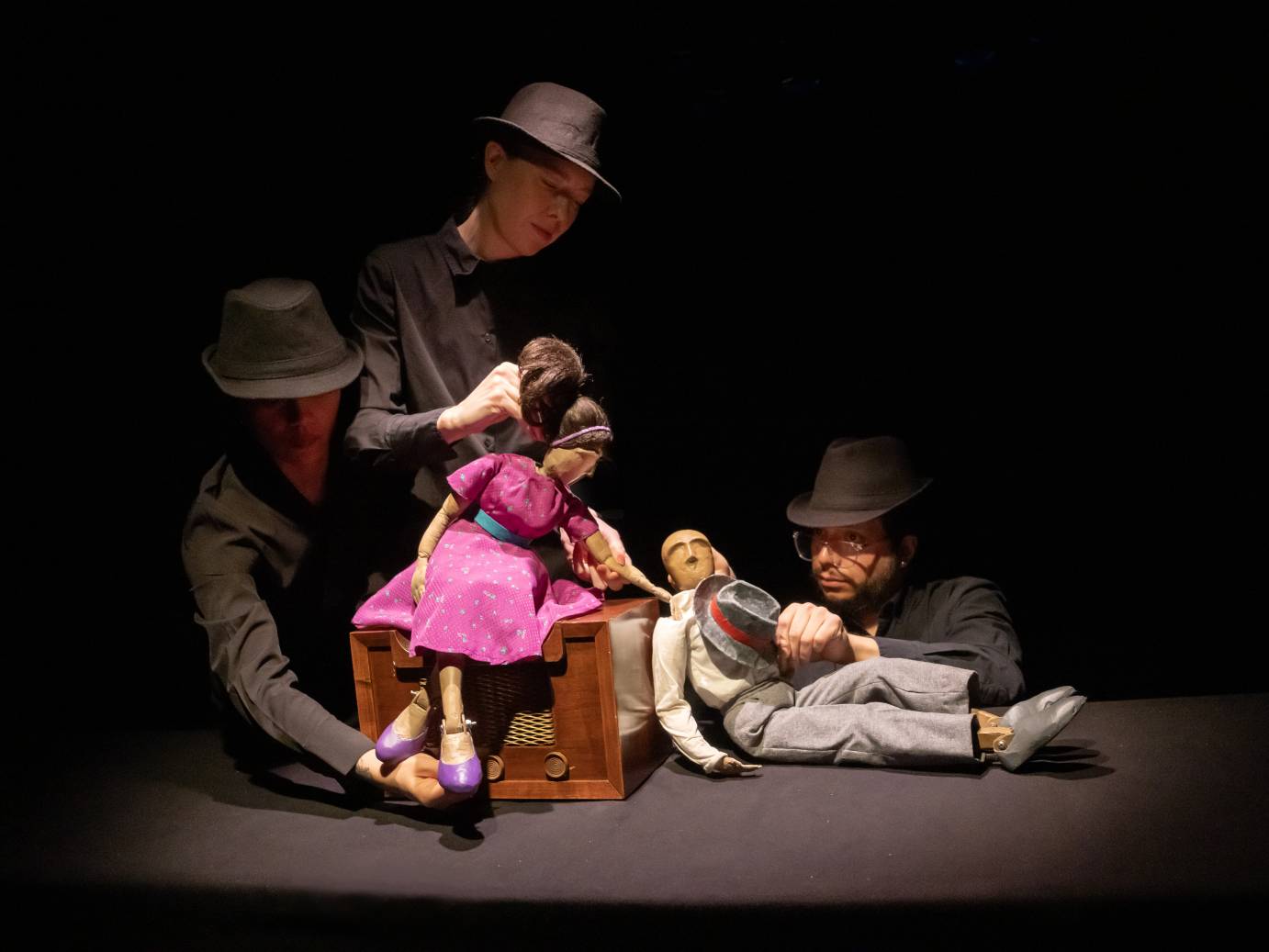
And Ruby & Charlie, which is the third of the three shows that we're showcasing, is a swing dance show. It has puppets that do swing dance. And the show is beautiful. And at the end, with its live band, there is an opportunity for the audience to get up and swing dance together. So it’s a live dance opportunity for audiences to come and engage with after the puppet show.
Live music plays a central role across all three productions this season. Why has the relationship between puppetry and live, original music been so essential to Dream Music Puppetry Program’s artistic philosophy?
Twist: Dream Music Puppetry started in 1998 with my show Symphony Fantastique, which inaugurated the theater and puppetry program. And that show definitely had music; it was a more abstract underwater interpretation of a famous romantic symphony. And it was a little bit of a sensation here when it happened. And after that, we started this puppetry program to continue that kind of work.
I think in general that I have always felt more aligned with dance than theater. Puppetry is one of those in-between arts. I mean, I believe that it is its own art form, but it often falls into the theater category, which is more literate. But I think that with puppetry, movement is essentially the most important thing and as such, it's more akin to dance. And music supports that. It's a great formula.
Most of my shows don't have any language or text in them. They're almost always music. It's just something that I like in my work. It's not necessarily true in all the work that we present. There are other shows that do have text. Ruby & Charlie is wordless. And so is Parched.
Why do you think puppetry is so often thought of as a children's art form? And how does Puppetopia challenge that perception?
Twist: Well, kids love puppetry, that's for sure. And a lot of puppetry is therefore geared towards them. But I think that puppetry is not kids play. It's actually quite serious — there’s a profound message that's buried within puppetry, which is about spirit and the line between things that are living or dead. I know this all sounds very heavy, but it is. It's part of the ancient mystery of being alive. So that is not child's play. But children are closer to the mystery because… they're new.
These shows, I think that kids could get into them. It's not aimed for children, but children would still dig it. And they might find it intense, actually. We have an age limit of not younger than 12. We welcome young people, but we don't aim for a children's audience.
What do you hope audiences walk away from Puppetopia with?
Twist: I hope that it connects them. We all participate in being alive. Puppetry is a magic trick that we're witnessing and that opens a door to seeing ourselves. Puppetry is its own essential human art form to see life in things, to see things come alive and see faces in the clouds. And that kind of spirit is part of puppetry. I want people to leave with wonder and delight and appreciation for the skill of the artists who are really going for it.
Dias: First and foremost, I hope everybody has a wonderful time and enjoys themselves. And I hope that people leave feeling a sense of belonging and community and feel well taken care of by our staff. And that they want to come back and enjoy more work. I hope that they leave with a sense of surprise and wonder.
There’s always something going on at HERE. There's something for everybody. So I also hope that people want to come back and check out what is here next week or next month.