

Related Features
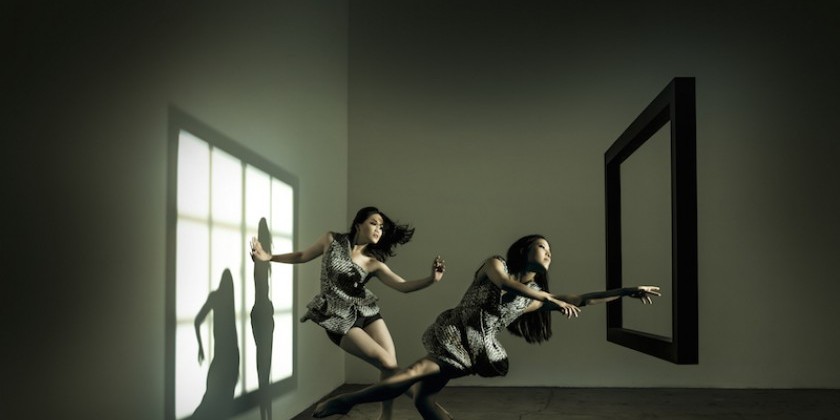
THE DANCE ENTHUSIAST ASKS: Basil Twist and Annalisa Dias on "Puppetopia!" at HERE Arts Center
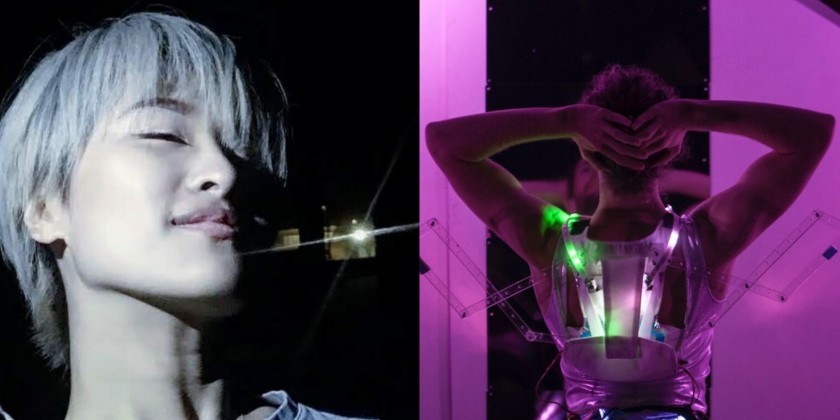
IMPRESSIONS: MAXlive Festival 2023: Where Is My Body?
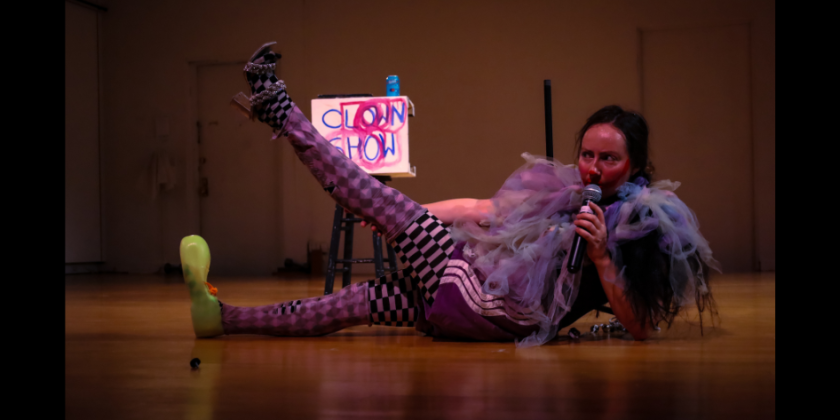
IMPRESSIONS: Kat Mustatea’s "The Mutables" at HERE Arts Center

By Miranda Stück
View Profile |
More From This Author
Published on November 10, 2025
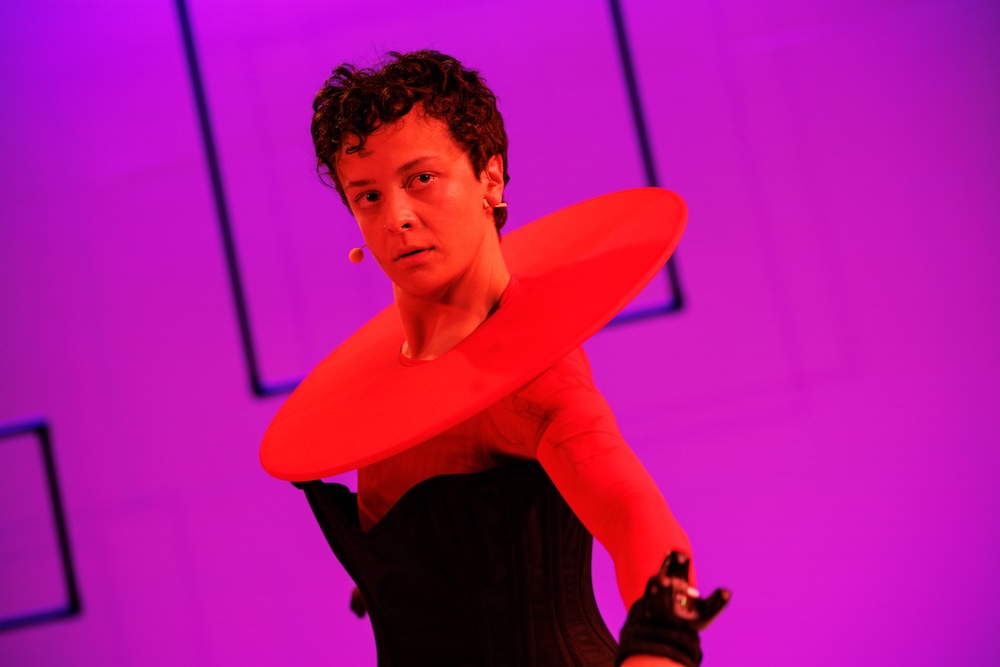
"The Mutables." Photo by Maria Baranova
Writer & Directer: Kat Mustatea
Producer: Alex Darby
Cast: Rocky Duval, Marie Lloyd Paspe, Felix Bryan, Lo Poppy, Jonathan Colafrancesco
Musicians: Kamala Sankaram // Associate Choreography: Marie Lloyd Paspe // Interactive Technology: Yonatan Rozin
Creative Production: The Hybrid Studio // Technical Direction: Alex Darby // Costume Design: Paulina Olivares
Lighting Designer: Christina F. Tang // Sound Designer: Jimmy Kavetas
In this digital age, it’s unsettling to imagine how technology will influence dance in the future. In transmedia playwright Kat Mustatea’s The Mutables, elements of live dance and technology have already collided, and it's eerily provocative.
Presented at HERE Arts Center, The Mutables brings movement to a meditation on Mustatea’s most pressing question: What does it mean to have a voice? Vocals are a prominent element in the work, intertwining dance with live opera, spoken word, and movement-generated speech through her sound-movement instrument BodyMouth.
BodyMouth lives up to its name — the wearable technology allows the dancers to verbalize through their bodies. Wearing black monitors on their wrists and ankles, they produce speech through spatial data computed from a variety of sequenced movements. As a viewer, the process is unfamiliar and slightly uncomfortable; my eye gets distracted by two screens in the downstage corners that display small, neon green circles corresponding to the dancers’ every move. I also notice the brightly-lit faces of fellow audience members, whose seats wrap around three sides of the black box stage.
As the lights brighten, our focus is pulled by a single dancer who places herself in the center of the floor.
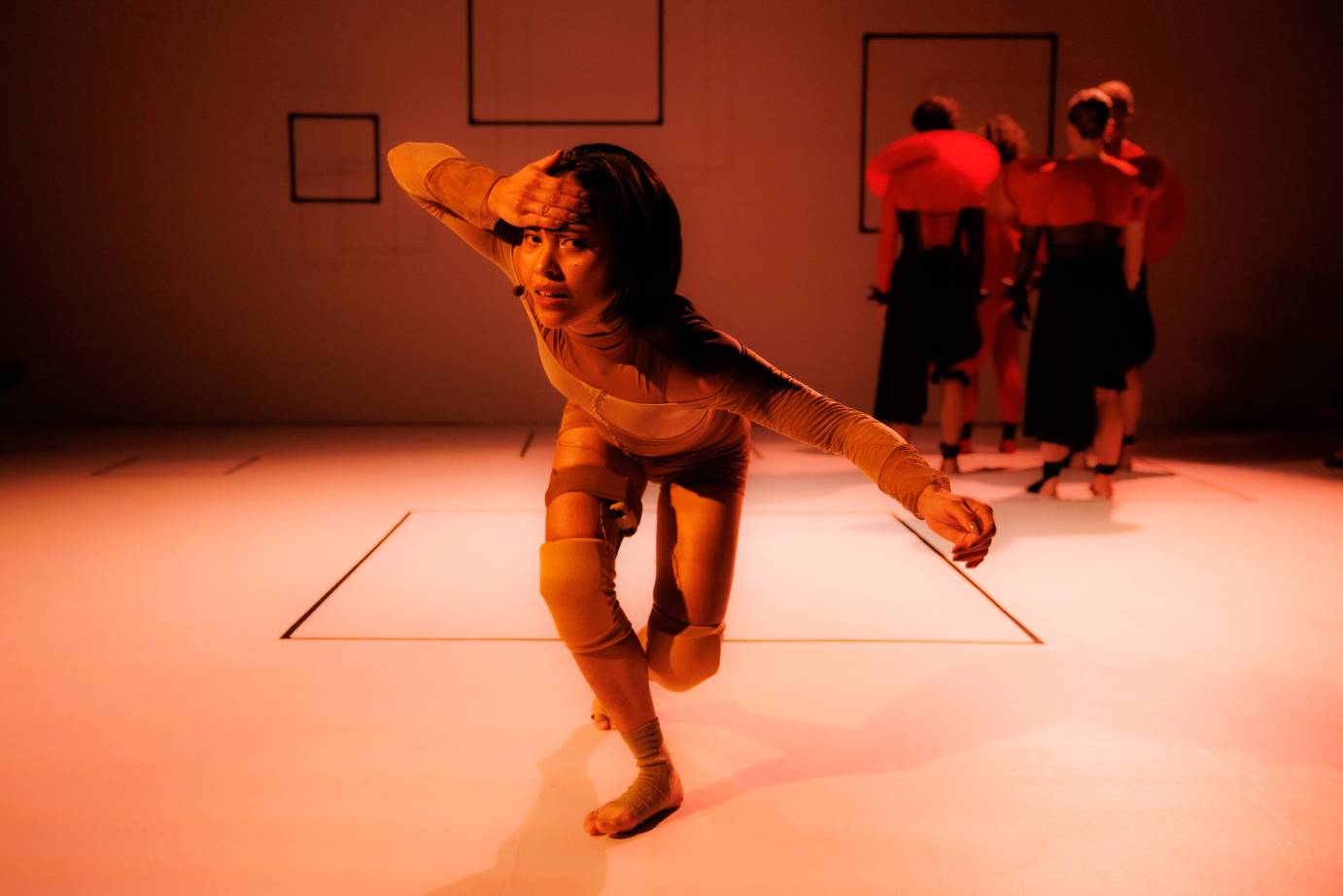
“Am I hurt?” asks Marie Lloyd Paspe, curled on the floor in flesh-toned garments and kneepads. Paspe is confined to one of the ten black-taped squares placed on the back wall and floor. She splays her spine, jutting herself off balance while executing quirky floorwork that crumples and extends in a heartbeat. Her trust in gravity is impressive as she continues to speak, peering out to the audience for support. She reflects, “A better question to ask is, how am I hurt?”
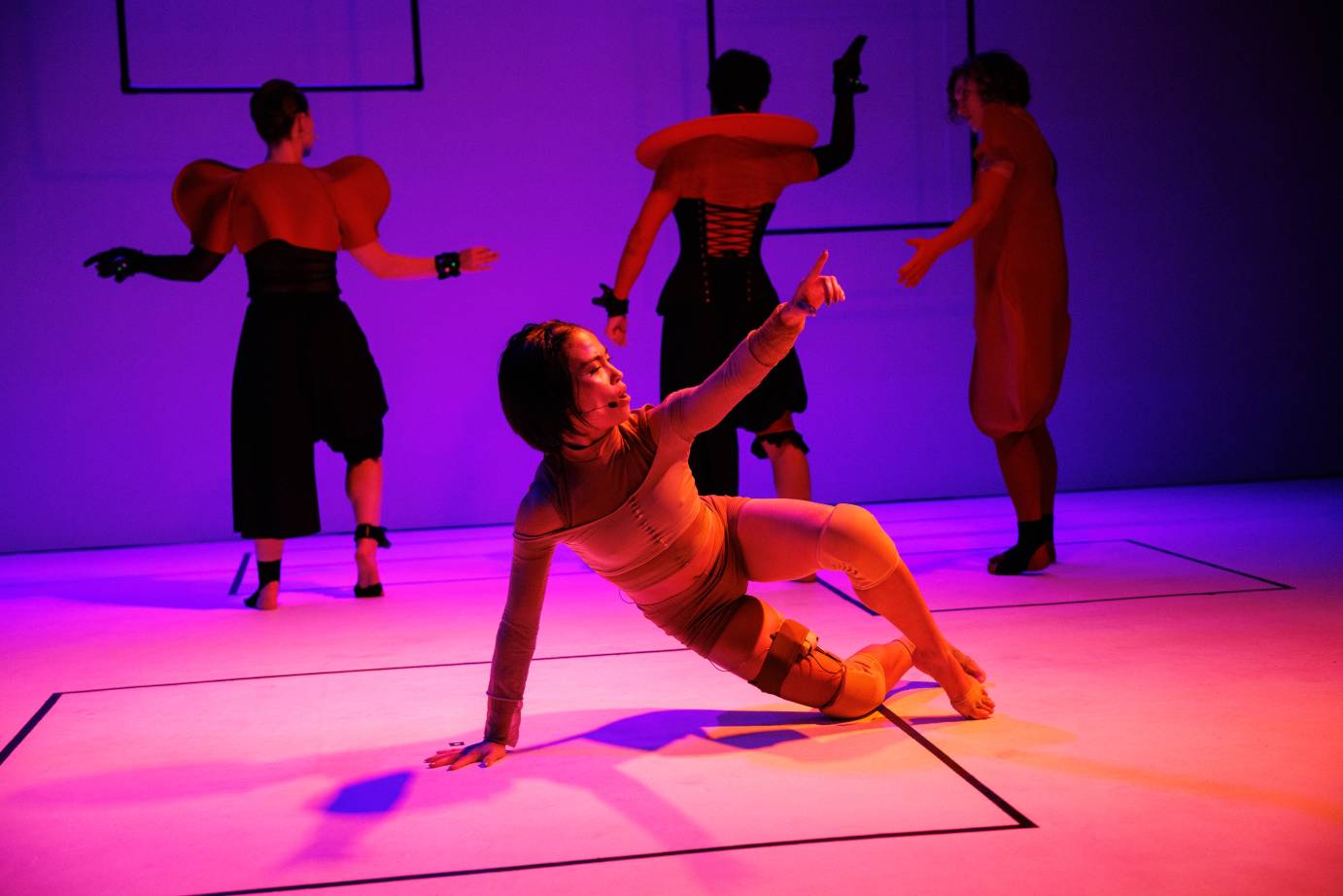
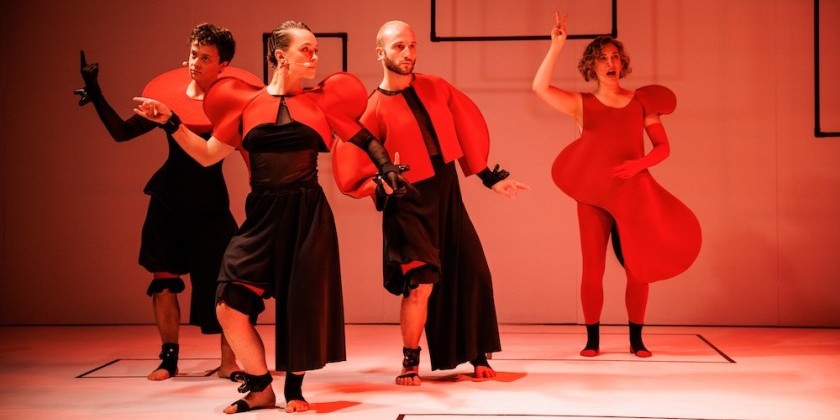
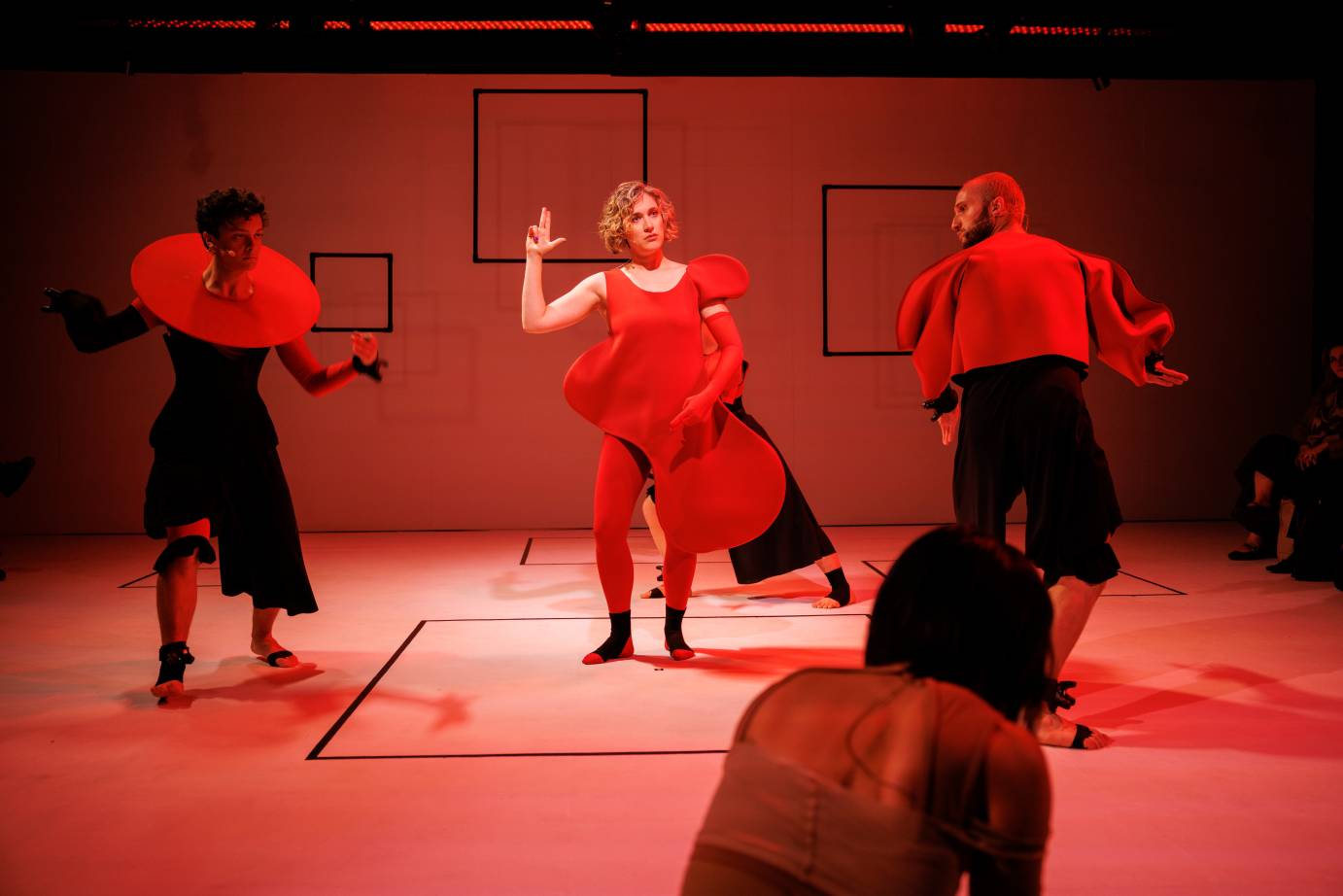
During this solo, four figures dressed in piercing red and black loom in the corner, facing away from us. When a gigantic booming noise interferes with Paspe’s solo, all four turn around, revealing three dancers and opera singer Rocky Duval. Paulina Olivares’s exquisitely precise costume design transforms the dancers into works of art, their bodies wrapped in black mesh and corsets layered with structured cropped jackets, boleros, and outerwear. Duval, who appears in a one-shouldered garment and glove, is dressed head to toe in red. She begins singing with calm confidence, maintaining eye contact with all members of the audience as Kamala Sankaram’s crackling sound score underlies her vibrato.
As Duval’s notes pierce the room, dancers Felix Bryan, Lo Poppy, and Jonathan Colafrancesco execute abrupt, awkward movements that fuse familiar hand gestures such as peace signs and pointing with uncontrollable tics. The sensation is undeniably strange, and some may find it uncomfortable when the dancers deliberately stare at us. The dancers move like roaming robotic agents, accompanying Duval as she steps into her position as main character.
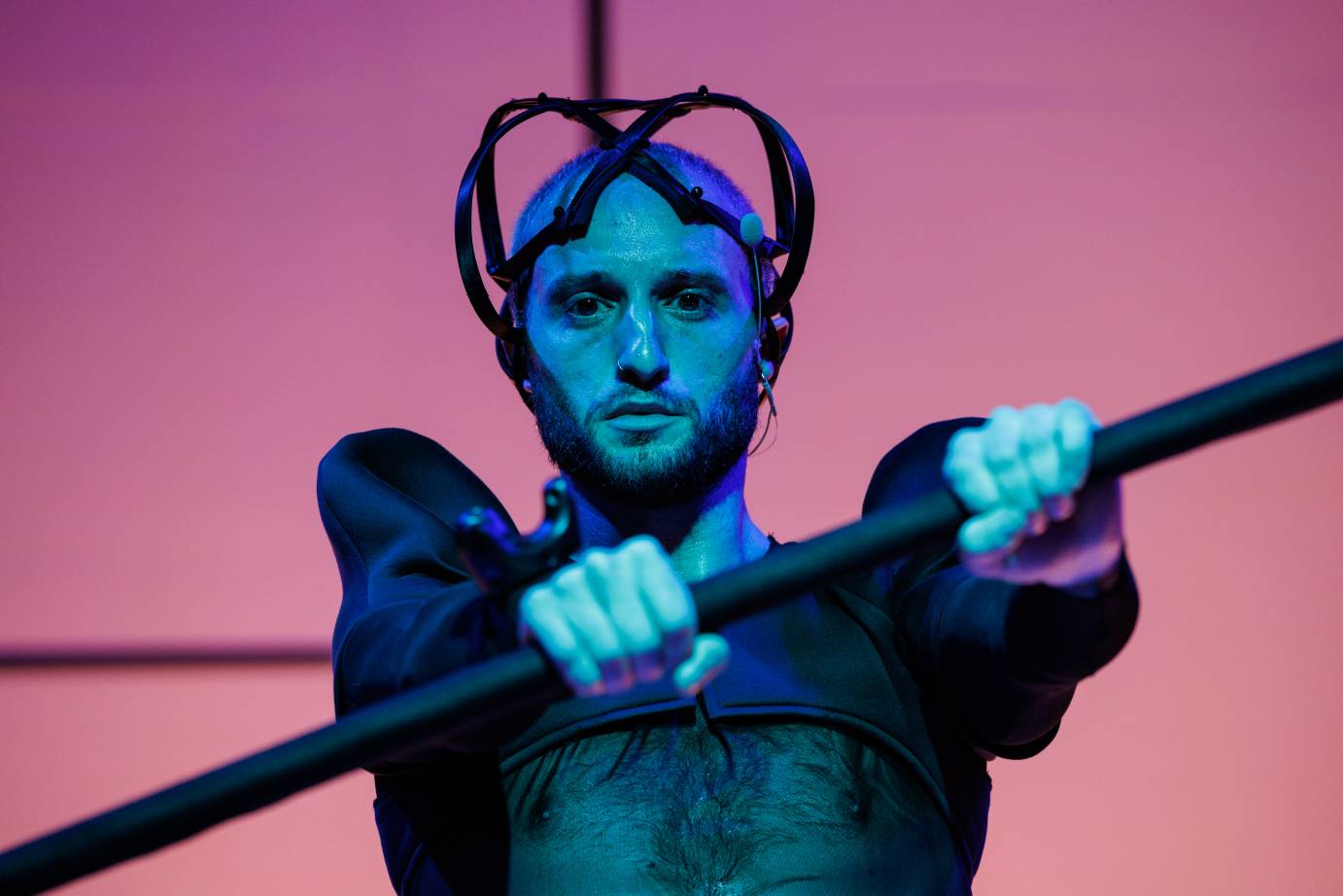
Mustatea divides the script for The Mutables into two chapters, “ielele” and “Helicopter,” and the starkest transition within the work occurs between these chapters. Following the boldly vocal first chapter, the cast re-emerges for the second chapter in full black BDSM-like attire, complete with restrictive neck and headpieces and combat-like sticks.
The world of “Helicopter” is dark, vigorous, and hollow. Throughout the work, transitions between solo and group work are made multidimensional by Christina F. Tang’s graphic, vibrantly-colored lighting. Tang’s design illuminates specific squares on the floor, at times drawing attention to a box of neon orange light so bright it feels otherworldly.
There is no proper resolution in the world of The Mutables, a feeling that persists in every element of the work. Deep, strung-out vocal fry and inaudible sentences accompany the dancers who repeat their motions every time a specific sound reverberates. As if breaking down, they mechanically mimic themselves, gradually losing stage presence to focus on internal tasks. Have they lost their voices, or are they strengthening them within?
In The Mutables, Mustatea presents an active internal battle between the voice and body of an artist. Her exploration of technology emphasizes its power to, in a matter of seconds, either bolster or eradicate our humanity.