



Related Features
IMPRESSIONS: (VACA) Valentina Baché’s “Dog God//Germ Angels” Presented by Triskelion Arts
IMPRESSIONS: Triskelion Arts' Split Bill #47 Presents Ariana Speight and Cristina Moya-Palacios

IMPRESSIONS: 2nd Best Dance Company Reimagines Sleeping Beauty in “Slumber” at Triskelion Arts

By Catherine Tharin
View Profile |
More From This Author
Published on January 21, 2026
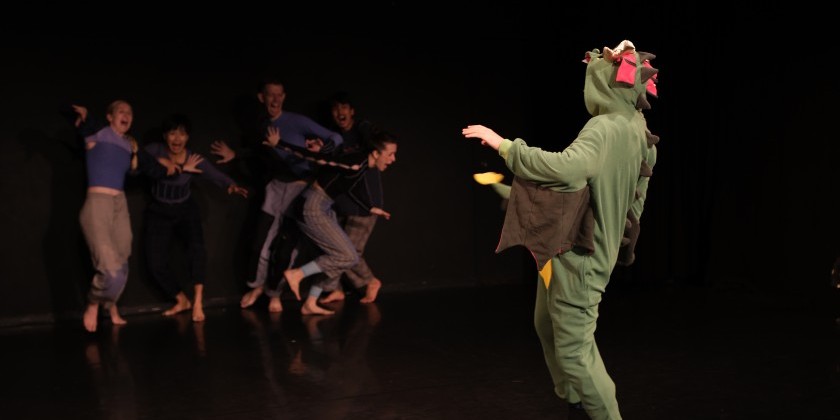
2nd Best Dance Company in "Slumber." Photo: Alice Chacon
Slumber
2nd Best Dance Company
Written, directed, and choreographed by Hannah Garner in collaboration with the performers
Dancers: Courtney Barth, Hannah Garner, Hsiao-Jou Tang, Will Noling, Ryan Yamauchi
Understudy: Céline Maillard
Costumes: CM Carney
Directorial Assistance: Ann Noling
Lighting Design: Matt Morris
Triskelion Arts
December 11 - 13, 2025
2nd Best Dance Company’s Slumber, presented at Triskelion Arts in December, reimagines Sleeping Beauty through a blend of fairy tale and contemporary theatrical strategies. Written, directed, and choreographed by company founder Hannah Garner, the piece is performed by five deft dancer-actors. The work approaches the familiar story with affection and self-awareness, drawing on humor and theatrical layering. Sleeping Beauty is treated with an equality-minded seriousness that remains playful.

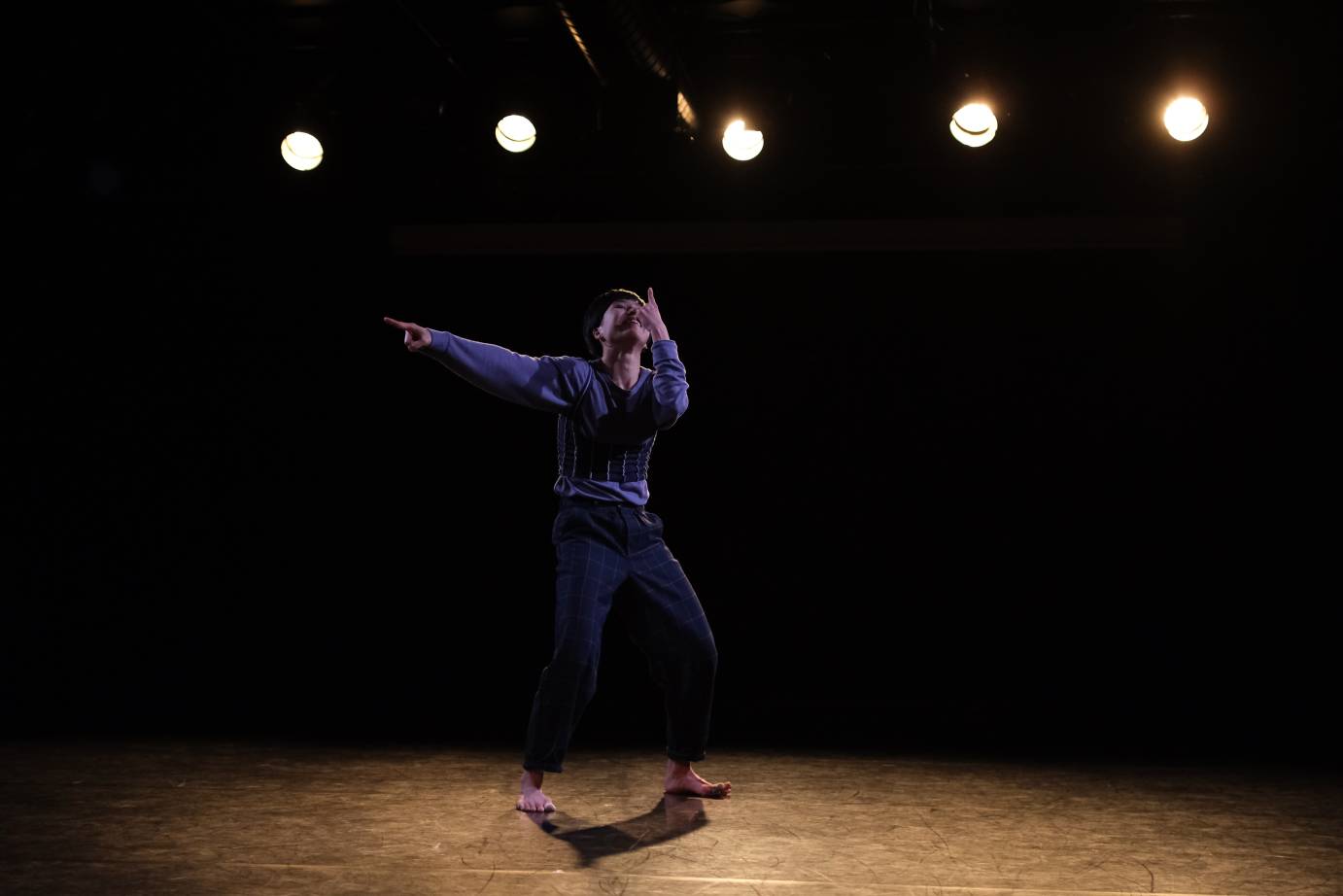
The evening opens in near darkness. A spotlight isolates Will Noling who, in a deep lunge with one arm reaching overhead and the other stretched horizontally, speaks to the audience. “Suppose this dance is partly planned and partly not,” Noling begins, sketching the fairy tale that includes a kingdom, a princess on her sixteenth birthday, spindles banished and then returned. “Life goes on as it does,” Noling says. “The world changed, and she changed.” From the outset, Slumber makes its process visible, inviting the audience into the act of construction.
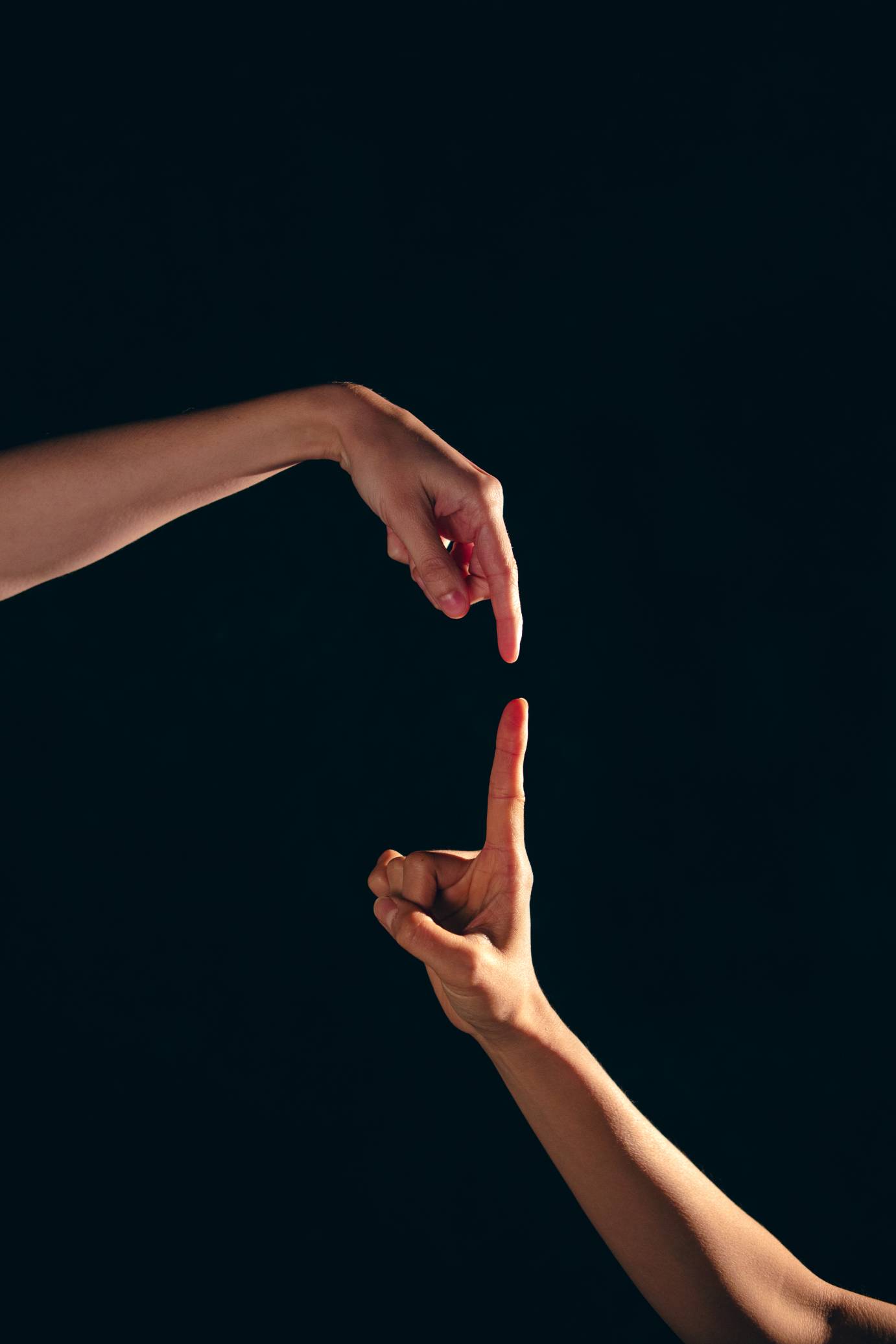
That permeability continues immediately in a spindle scene danced by Hsiao-Jou Tang. Standing on a folding chair, Tang rotates her hips like the turning of a spindle. Beauty wastes no time, touching Spindle’s pointer finger and setting the narrative in motion. Tang then steps outside its fictional frame. She thanks her husband for supporting her career, and asks, with disarming directness, whether anyone from the Bessies might be in the audience. As if collecting an award, she offers a cascade of thank-yous and declarations of love, a familiar comic turn that brings together fairy tale, career reality, and the audience itself. The scene underscores how often Slumber moves between character, self, and audience.
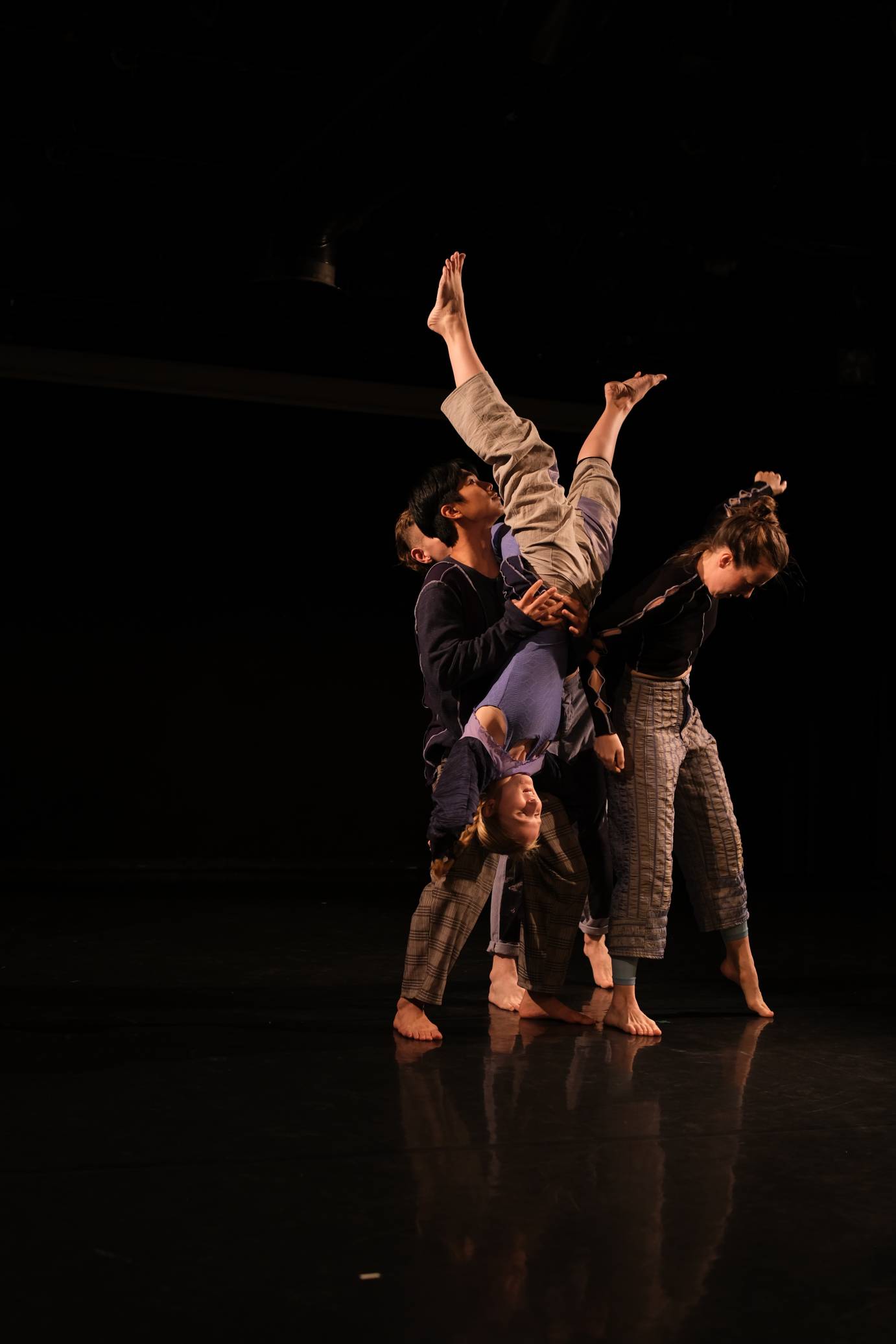
After these opening scenes, the work shifts toward extended passages of dancing. A scratchy recording of Enrico Caruso accompanies bodies inventively lifted, tumbling in and out of balance, and slamming against the wall and sliding down. The choreography is physically satisfying, with weight and risk in play and bodies carrying real momentum.
Garner has described Slumber as a work about waiting, not as sleep or stasis, but as an active state. In some sections, we wait for time to pass. Although the work speaks about change, there is little sense that some sections are moving toward change. Its choreographic structures tend to circle rather than evolve. Many scenes carry the work forward, but they run past the point at which their ideas have been fully articulated. Individually, they have merit; collectively, their length tips toward indulgence, closer to process than to a shaped theatrical event. What is missing is not invention, but restraint. The issue is not a lack of material, but an excess of it.
One example comes later, when the group races repeatedly from one end of the stage to the other, each pass introducing a small adjustment. At first, the accumulation of detail is engaging, but after numerous repetitions the structure becomes predictable. Rather than developing action, what remains is closer to a choreographic exercise than to a fully shaped section of the work.
Audience involvement recurs throughout. In one instance, an audience member is recruited and costumed as a dragon, a simple metaphor for what the group identifies as scary. In a pointed and powerful scene, Courtney Barth, who plays Beauty, sits close to the audience under a tight spotlight and asks spectators to clap for her, becoming increasingly insistent as she calls out specific audience members by name. Whether the moment belongs to the fairy tale, or steps outside it is left deliberately unclear, and the effect is unsettling.
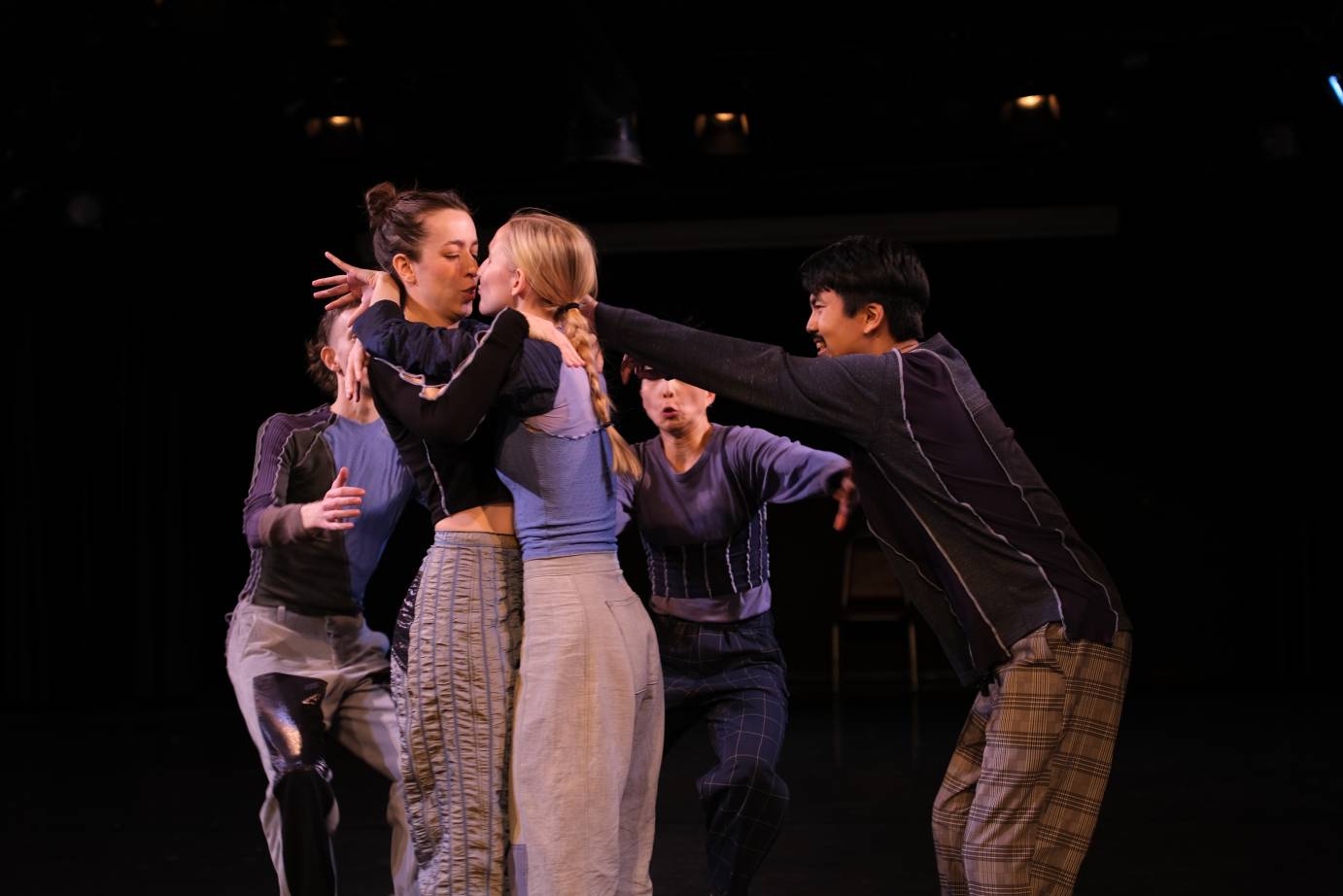
The attractive costumes remain understated, favoring plaids, stripes, and muted blues and blacks; and Ryan Yamauchi’s genial, nerdish presence adds a welcome note of levity throughout the evening. The awakening kiss, delivered by a woman rather than a prince, subtly reorients the familiar fairy tale, though it does not become the work’s central argument.
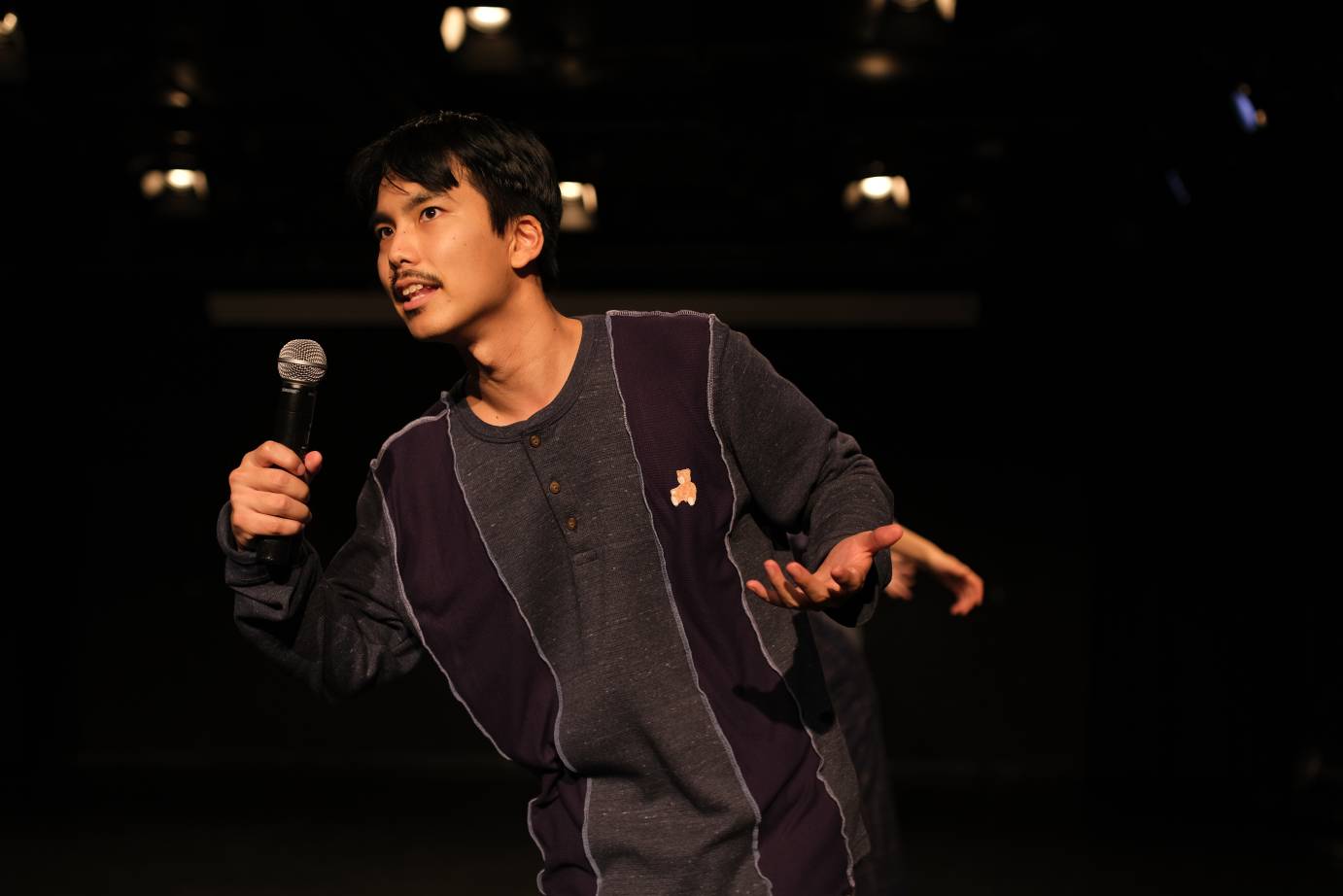
Slumber contains moments of genuine theatrical and choreographic clarity and impact. Yet the accumulation of scenes ultimately outweighs their transformation. What remains is a sense of lively excess, engaging in the moment, but unable to consolidate into an experience that accrues consequence as the evening unfolds.

![IMPRESSIONS: [RE]DEFINING [SPACE] at Triskelion Arts](/images/features_large/3_Trisk_day_3_selects_by_caroline_alarcon_loor_064.png)