

Related Features
IMPRESSIONS: A Sunday in Spring 2026: Cathy Weis Projects’ Sundays on Broadway
IMPRESSIONS: Karley Wasaff’s "Growing Takes Time" at Noo Arts Wildflower's Green Roof
IMPRESSIONS: Alessandra Corona Performing Works at the Theater at St. Jean

By Stacey Menchel Kussell
View Profile |
More From This Author
Published on May 19, 2026
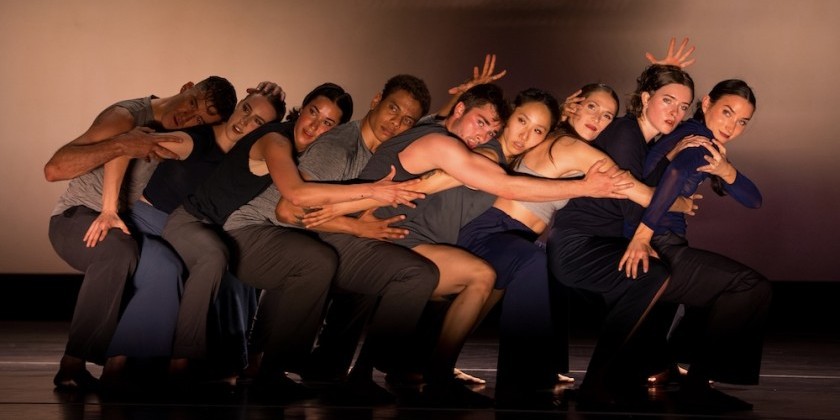
ACPW in "Hold and Hinder." Photo by Joan Dwiartanto
Choreographers: Madeline Burr, Miguel Miranda, Wesley Ensminger, Alessandra Corona
Cast: Maria Vittoria Villa, Brian Castillo, Halle Augenstein, Juan Viveros, Madeline Burr, Caleb Ballentine, Aviana Goodman-Fish, Sky Poole, Jei Yoo
Creative Team: Artistic Director, Alessandra Corona | Composer, Thomas Lentakis | Lighting Designer, Robert Virzera | Videographer, Joan Dwiartanto | Photographer, Sierra Hendrix
May 1 - 3, 2026
The dancers stood onstage, hand-in-hand after taking their bows, and Alessandra Corona entered from the wings. “I want to thank you all for coming today,” she said addressing the crowd with a broad smile. “And I want to introduce to you my dancers, because I am so proud of them.” She then named each dancer, instructing them to come forward to receive their own moment of individual applause.
In most contemporary dance concerts, the ensemble remains anonymous. Each dancer contributes to the group like tiles that make up a mosaic, and their names are written only in the pages of the program for later reference. Gracious and warm, Corona demonstrated a deep appreciation of her dancers in this moment and reinforced the strong sense of community that she prioritizes in her company.
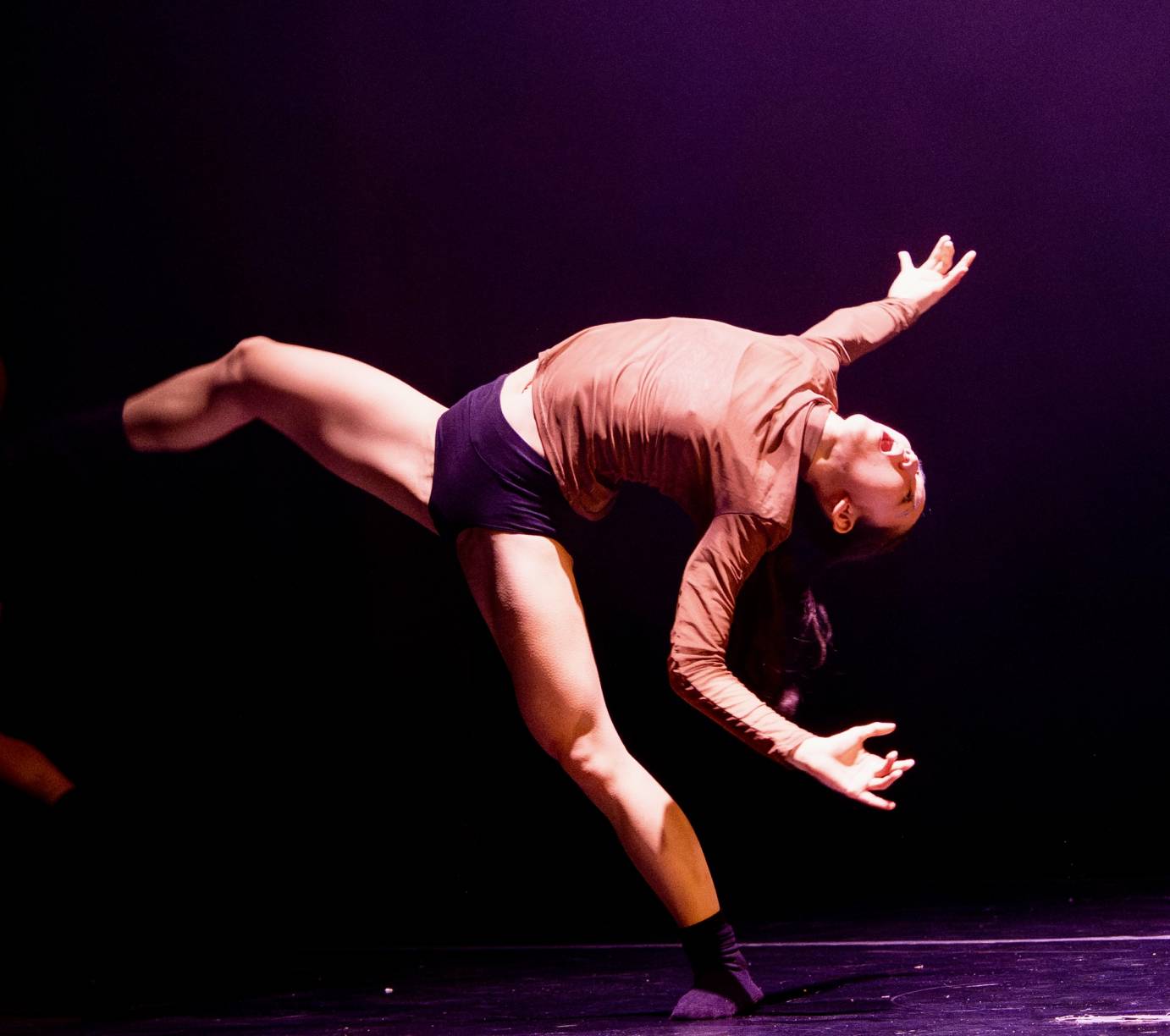
Chew by Madeline Burr and Company. Photo: Joan Dwiartanto
From May 1 to 3, 2026 at the Theater at St. Jean, Alessandra Corona Performing Works (ACPW) delivered a program of four short pieces. The cast of eight danced in works by Madeline Burr, Miguel Miranda, Wesley Ensminger, and a final slightly longer work by Corona. The choreography came together in a five-week workshop under Corona’s curation and supervision, and each choreographer was given one week to create a ten minute piece for the showcase.
Chew, choreographed by ACPW dancer Burr, started the program with an intense psychological study. Clustered together tightly in staggered lines, the dancers stared out into the crowd or perhaps into an invisible mirror, compulsively adjusting and tugging at their faces.
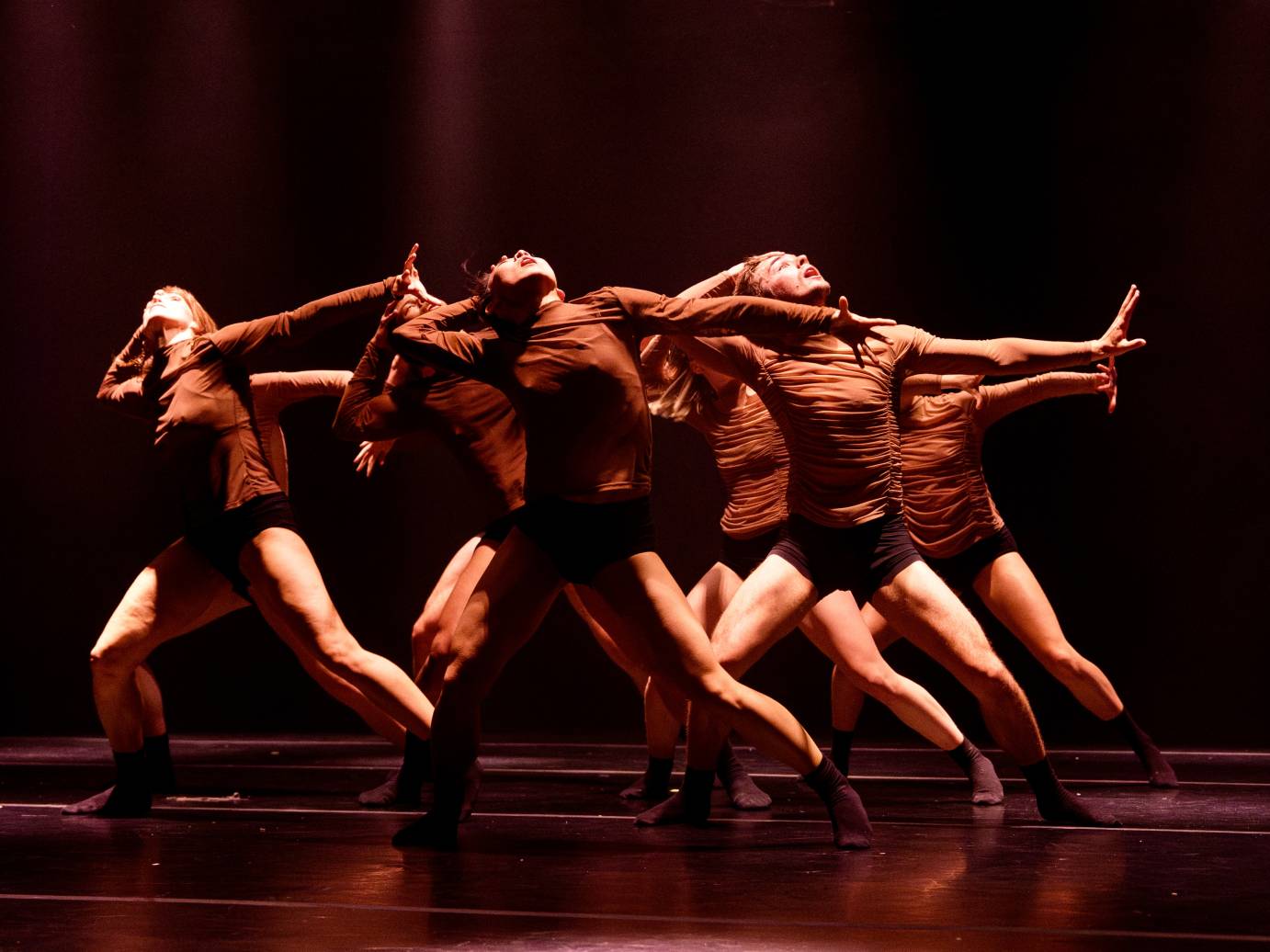
According to the program notes, “Chew unravels labels and appearances, moving between a tightly held sense of self and a complete disintegration.” Clad in brown, clinging tunics and black shorts, the dancer’s limbs quivered as they swarmed through the space. These animalistic episodes, replete with big jumps and leaps, continued throughout the piece. At the conclusion, the group seemed trapped — imprisoned creatures banging on the walls of a glass tank.
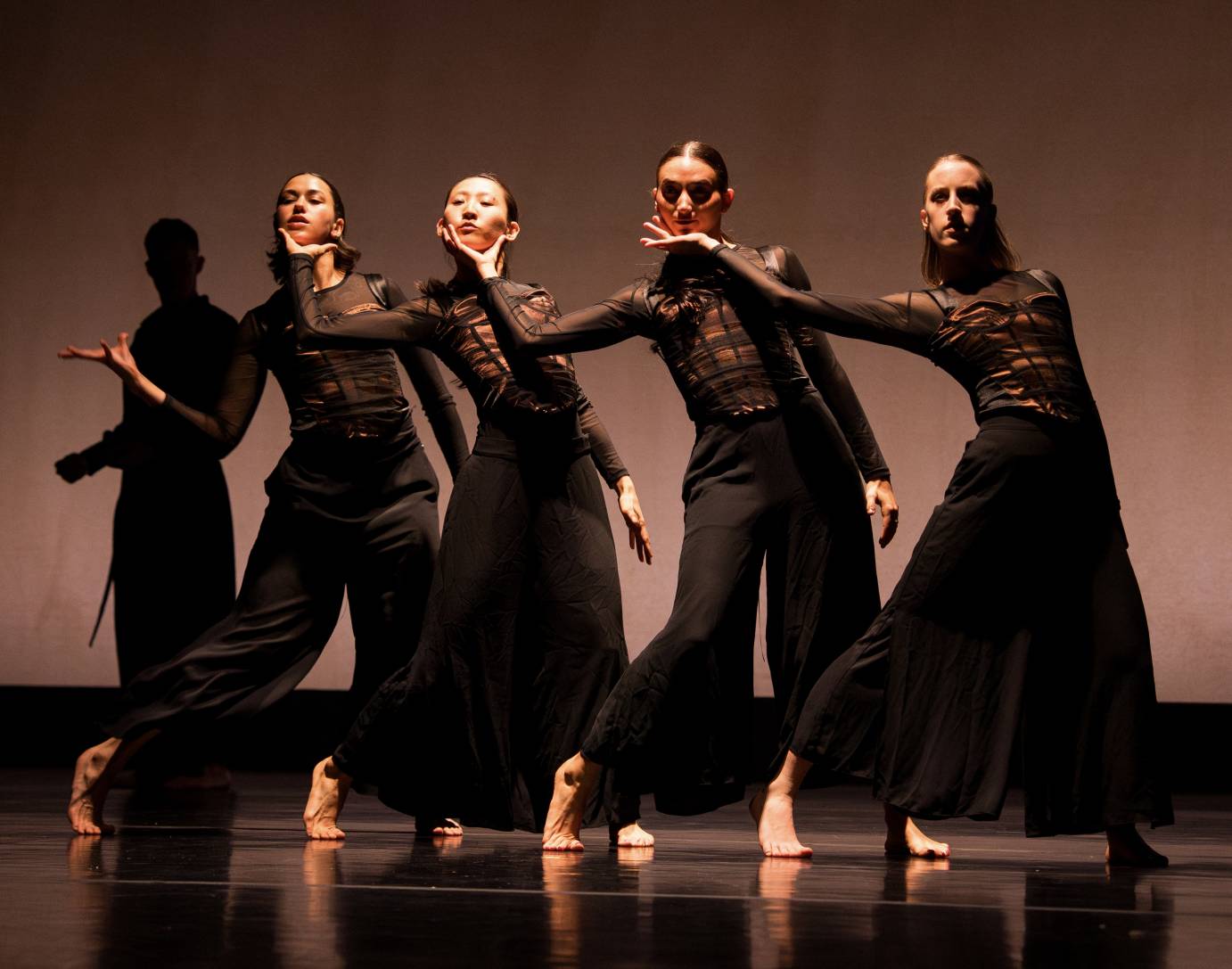
Miranda’s Kawsay kept up a similar fast pace. The lighting by Robert Virzera, created a striking silhouette in the first scene, transporting the audience to the darkness of a field at night. Earthy and grounded, the dancer’s deep plies and circular port de bras suggested a martial arts kata. The performer’s flowing black tunics with corseted tops enhanced the fierce, warrior-esque aesthetics. The piece commenced gently but built up speed over time, featuring a dramatic solo towards the end by Aviana Goodman-Fish.
Reflecting on human connection, Ensminger’s Hold, Hinder presented breathtaking displays of group partnering. The program notes mentioned his piece was “tracing moments across past and present” and capturing “the fleeting intersections that shape memory and meaning.” His choreography showcased a mix of influences, a deep rooting in release technique and skilled floorwork, coupled with stunning, ethereal lifts. The music, a composition arranged by Ensminger featuring tracks by Nate Archer and Yair Elazar Glotman, infused the stage with a celestial atmosphere. Dressed in various shades of light and dark blue tank tops and leggings, the cast shaped themselves in formations reminiscent of cirrus and stratus clouds in an overcast sky.
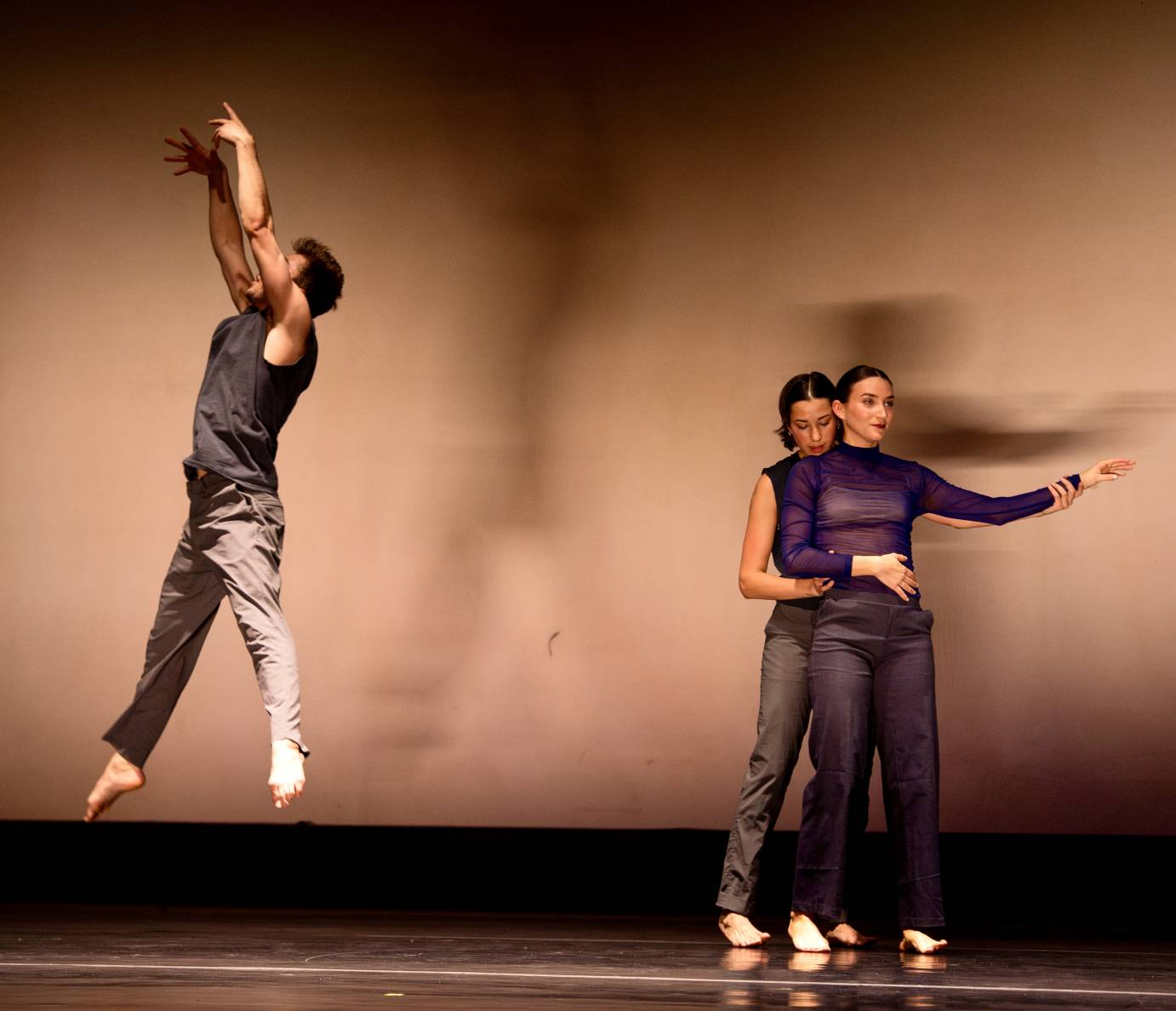
Hold, Hinder by Wesley Ensminger and Company; Photo: Joan Dwiartanto
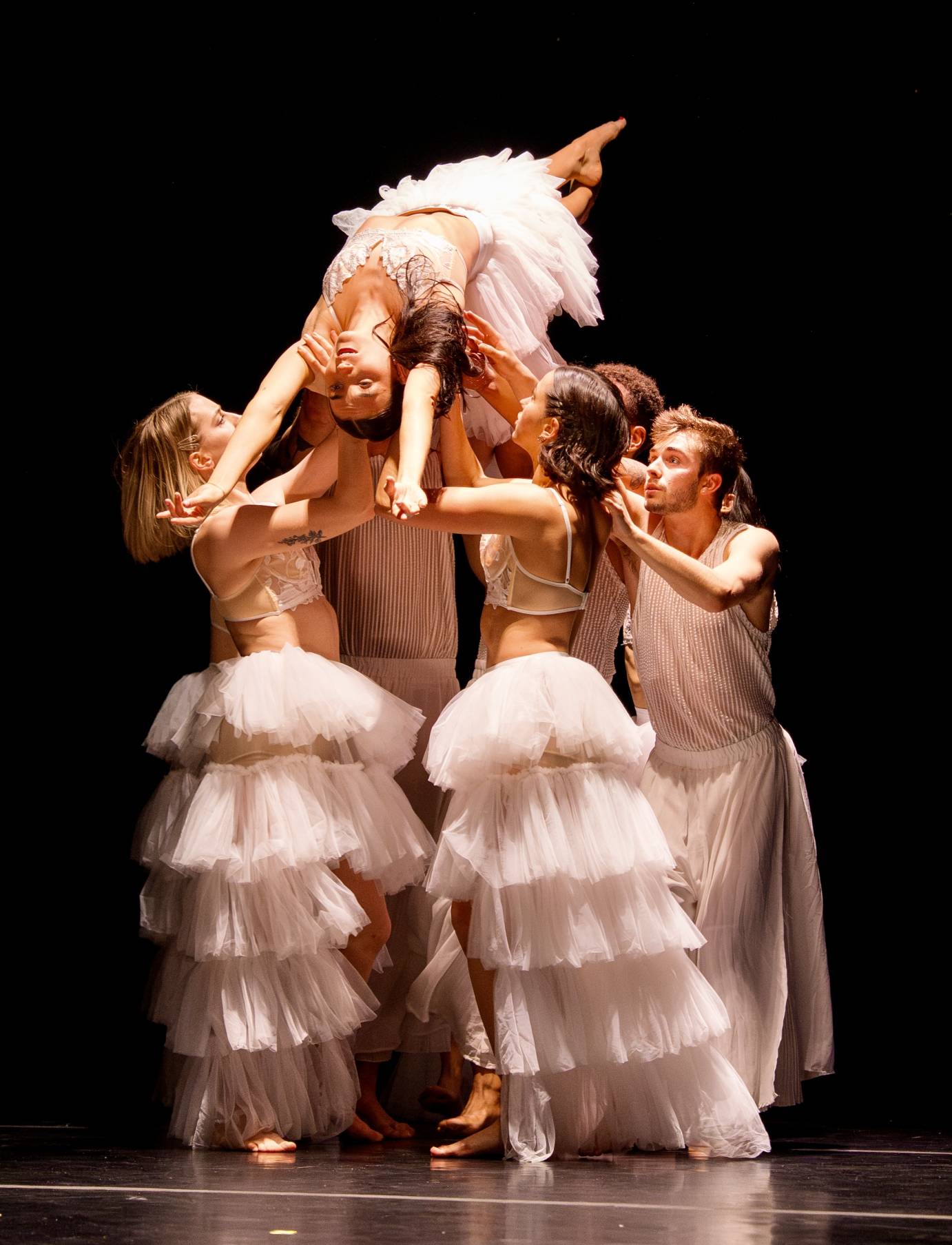
An Unexpected Gift, reflected on grief and the surprising strength one can feel when recovering from loss. Inspired by the recent passing of her mother, Corona channelled her personal experience into a resplendent short ballet. The costumes, long white tulle skirts paired with a white embroidered camisoles for the women and sheer tops and flowing white pants for the men, added depth and volume to the many turns and arabesques. Soft, delicate gestures, the touching of the eyes and face, indicated sadness and vulnerability, and the otherworldly set featured an upside-down tree root hanging from the ceiling. There were particularly stunning lifts repeated several times in the piece, including one with a single dancer carried overhead by the whole ensemble. In these moments, as if passing over from one life to the next, Madeline Burr, Maria Vittoria Villa, and Jei Yoo exhibited sinuous fluidity and textured, emotional range.
Corona began her company in 2012, wanting to develop her own choreography and performance opportunities, after sustaining an impressively lengthy career as a dancer. Born in Sardinia, Italy the veteran dancer performed with several companies in Rome before moving to New York to join Ballet Hispánico in 1991, under the direction of Tina Ramirez. She was a principal dancer for more than a decade with the company, and later performed in a plethora of other productions including with Anne Reinking’s international tour of Fosse.
ACPW’s next project begins shortly and will be Corona’s first creation of a full-length ballet, an interpretation of Carmen that will be presented later in 2027. “I am thrilled to create a full evening piece, and especially to engage with a story that is so well known and loved,” she commented. “It will be exciting to revisit and reinterpret these themes of power, courage, and freedom.”