

Related Features

IMPRESSIONS FROM PARIS: “Figures in Extinction” by Crystal Pite & Simon McBurney Conveys "Yearning for Connection"
IMPRESSIONS: Fall for Dance (Programs Four and Five) at New York City Center
IMPRESSIONS FROM CANADA: Ballet BC Presents INFINITY at the Queen Elizabeth Theatre

By Wendy Perron
View Profile |
More From This Author
Published on March 18, 2026
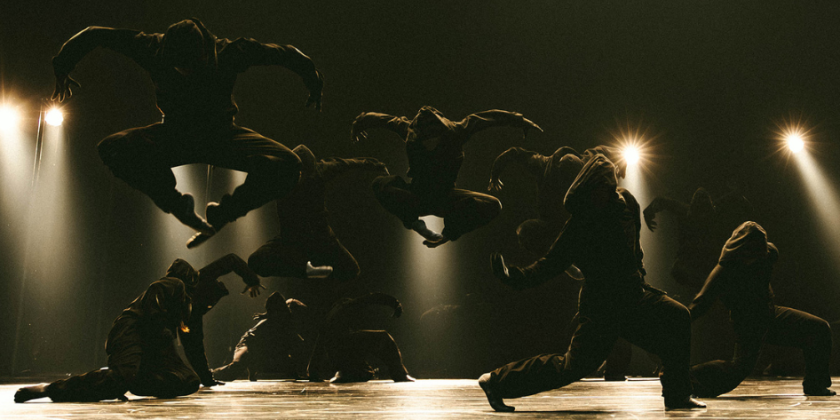
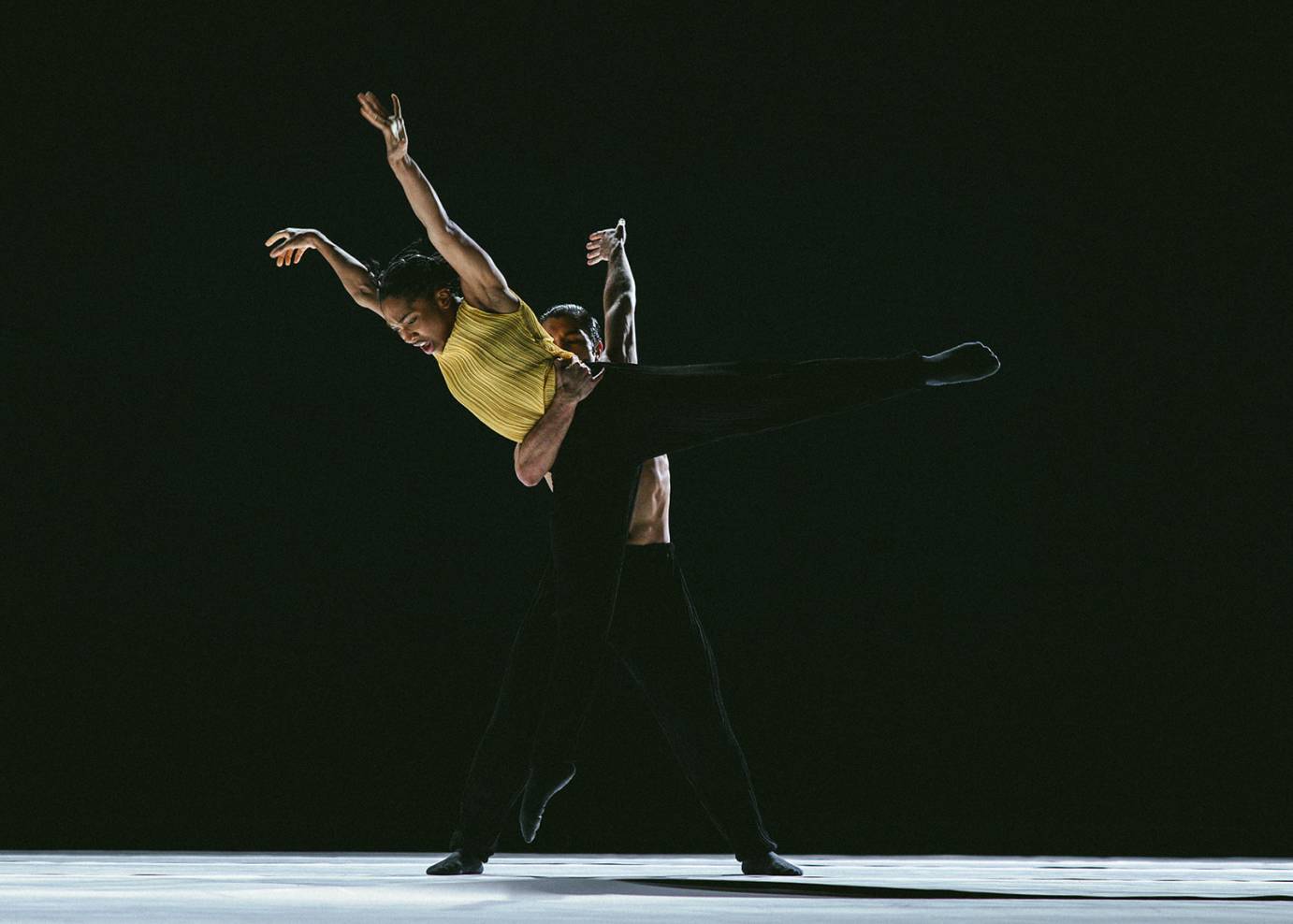
Ballet BC in "Frontier."Photo: Millissa Martin
The Dance Enthusiast Goes to Vancouver, BC
Artistic Director: Medhi Walerski
INFINITY: Ballets by Kylián and Pite
Frontier (2008)
Choreography by Crystal Pite, Music by Owen Belton and Eric Whitacre, originally created in 2008 and re-imagined for Ballet BC in 2024
27'52" (2002) A Canadian Premiere
Choreography Jiří Kylián, Music by Dirk Haubrich
Queen Elizabeth Theatre, Vancouver, British Columbia, Canada
February 28, 2026
Ballet BC knocked it out of the park with their INFINITY program, which juxtaposed two brilliant choreographers: Jîrí Kylián and Crystal Pite. Both were dealing with deeply psychic processes in poetic ways.
The program began before the usual beginning. One by one, the six dancers came out onstage while the house lights were still on. They were practicing specific moves from Kylián’s 27':52", allowing us to become familiar with the choreographer’s vocabulary: sharp gestures, quick sideways ripples, sudden expansive stretches. It was as if Kylián were opening the door for us, saying, “Welcome to my world.”
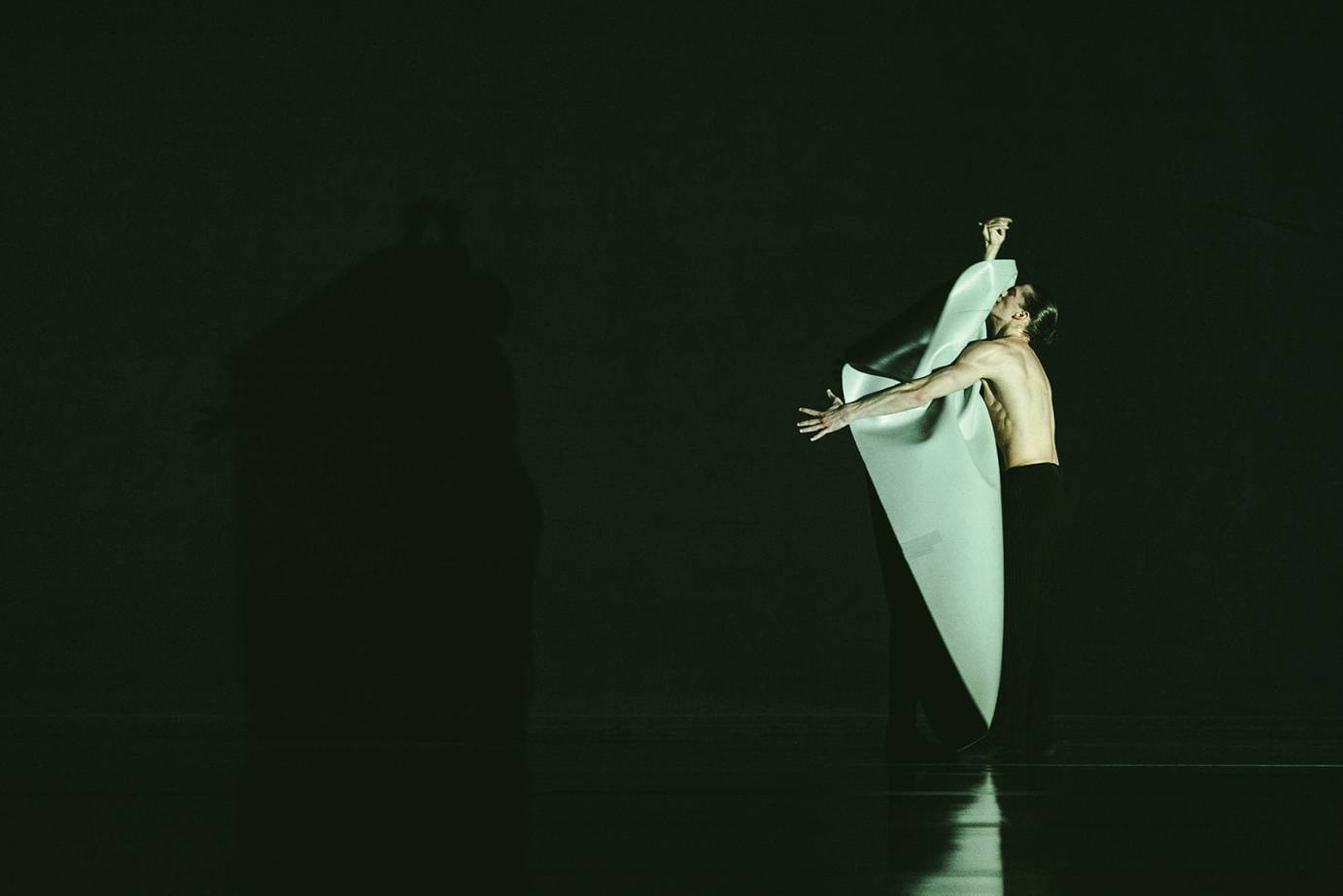
And what a stimulating, visceral world! The duets sometimes looked like puzzle pieces springing into place. One dancer lifted another by the crook of the knee. A recurring motif highlighted hiding behind or under large swaths of white Marley. One dancer raised the corner of the floor covering while another dashed to slide under it. Whether from curiosity or fear, the actions were impulsive. The visible person sometimes embraced the hidden person. In one non-Marley duet, the two were racked by little explosions in the chest or legs. With the percussive sound composition by Dirk Haubrich, it almost seemed like they were being shot again and again.
The dancers have speed, power, and urgency with occasional moments of loft. The piece was so much about hiding that when Kiana Jung danced a topless duet with Eduardo Jimenez Cabrera, it was startling to see her dance with exposed breasts. This duet, more elongated in shape and time than the others, was performed upstage in dimness. In Kylián’s aggressive world, Jung was so vulnerable and danced so bravely that the duet lent a trembling sense of drama.
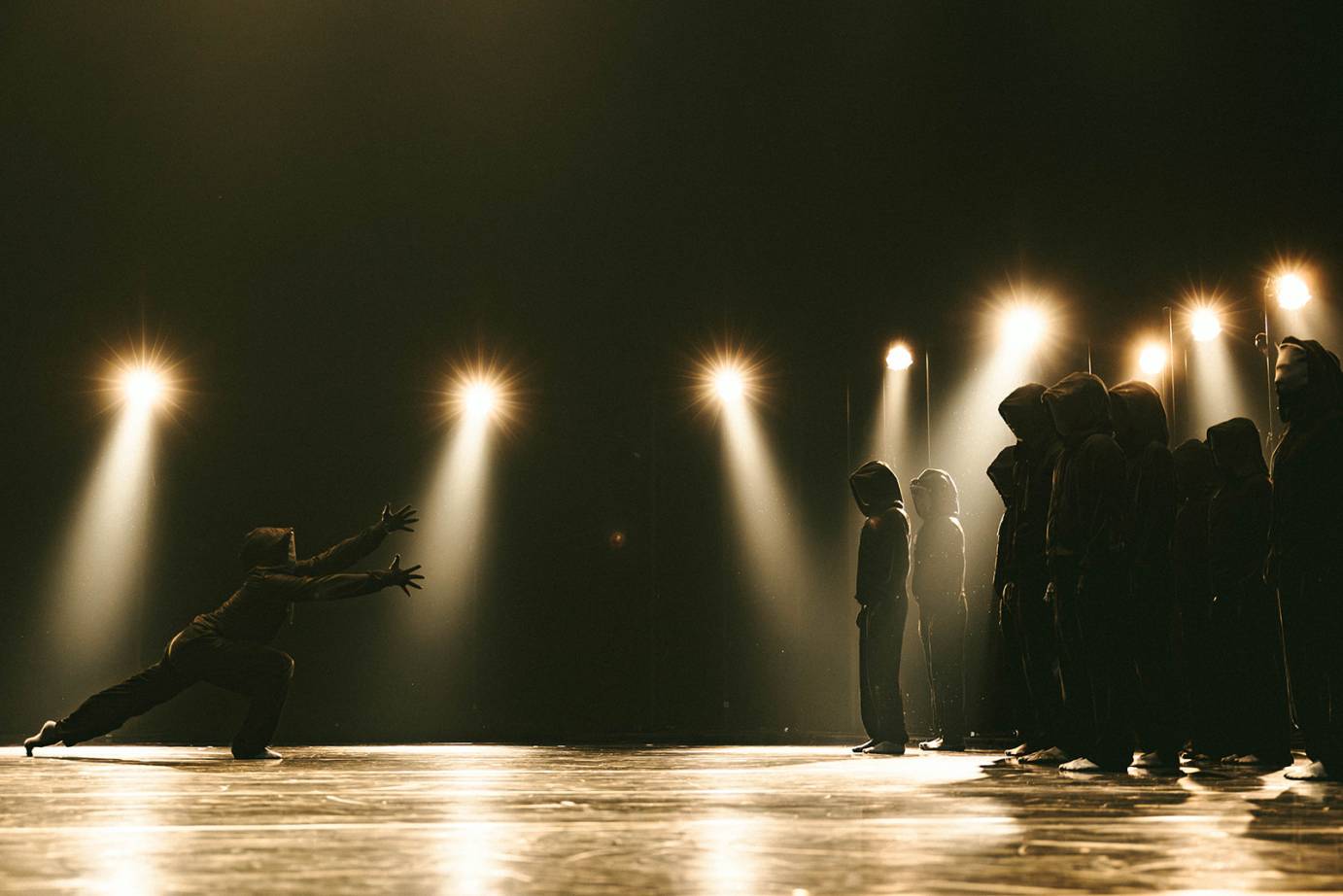
Pite is a master at portraying dark forces. In Frontier, black-clad figures rolled onto the front of the stage from the depths of the orchestra pit. They shadowed or manipulated six dancers in white. Those six, perhaps representing consciousness itself, explored a variety of dynamics; particularly dazzling was Joziah German powering through a solo of quick, almost fitful changes.
The dark, hooded figures were the subconscious, lifting, wrapping, or imitating those in white. At times, they reminded me of the winged monkeys scampering about at the command of the wicked witch in The Wizard of Oz. Other times, they blended solemnly into the darkness or stood in judgment with dungeon-like lights behind them.
When the number of shadows mysteriously expanded into a larger mass — all 24 of the cast — they surged threateningly. Perhaps the shadows engulfed their conscious, adult counterparts. Then, in silence, a single, forlorn shadow figure took on a more sympathetic character. While curled up and drooping, that individual, performed by Emanuel Dostine in the cast I saw, seemed to be overtaken by loneliness or sadness. Not just a shadow of another being anymore, he was pulled into the consoling community of his own shadowy siblings.
For me, dance itself is infinity, so any dance program could earn that title. A more specific name for this program might be “UNDERNEATH.” In both ballets, there was a feeling, a curiosity to dig under the surface. The excellent dancers of Ballet BC illuminated this work with verve, technique galore, and emotional resonance. Bravo!
(Disclosure: Some of the dancers have been my students at Juilliard.)