

Related Features

DANCE NEWS: The Dance Enthusiast Launches Fall 2026 “Your Voice Matters” Audience Review Contest

DANCE NEWS: Boston's The Platform Kendall Opens In November 2026

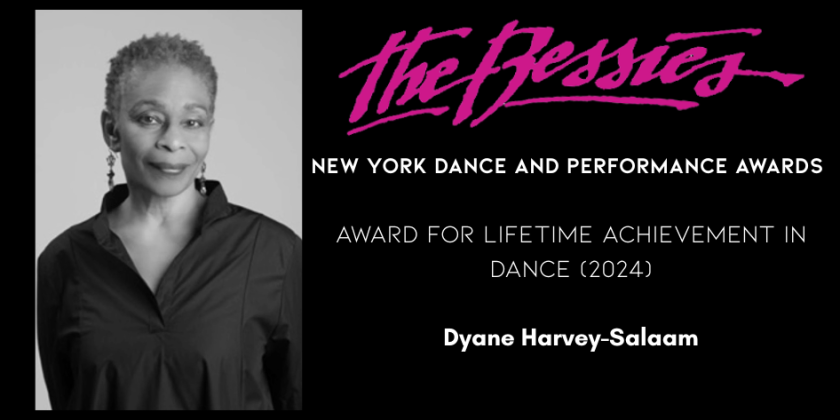
THE DANCE ENTHUSIAST ASKS: Dyane Harvey-Salaam, Recipient of The Bessies Lifetime Achievement Award (2024), Reflects on Her Storied Career

By Theo Boguszewski
View Profile |
More From This Author
Published on January 18, 2026
Photo courtesy of The Bessies
At a moment when the dance community is reflecting on both its lineage and its future, the Bessie Awards — upcoming dance awards honoring outstanding creative work in the field — offer a space where individual artistry and collective service are honored side by side. In conversation with Dyane Harvey-Salaam, recipient of the Lifetime Achievement Award, and Gina Gibney, founder, artistic director, and CEO of Gibney Dance, recipient of the Bessies’ Service to the Field Award, two intertwined paths of New York City dance artists are revealed: one shaped by a lifetime of cultural exploration and creative experimentation, and the other by decades of building space, structure, and access for artists and communities. Together, their voices illuminate how the Bessies recognize not only what happens onstage, but the daily work that keeps dance alive in NYC.
The Bessies will take place on Tuesday, January 20 at 7 PM (ET). In-person attendance is no longer available. For live streaming viewing, click here.
Here, The Dance Enthusiast’s Theo Boguszewski speaks with Dyane Harvey-Salaam, recipient of the Lifetime Achievement Award (2024).
Theo Boguszewski for The Dance Enthusiast: Dyane, what was your initial reaction when you learned you would receive the Lifetime Achievement honor? What does this recognition mean to you personally?
Dyane-Harvey: You know, I didn't get an email. I knew that I was nominated for Sydnie L. Mosley’s PURPLE: A Ritual In Nine Spells for performance — and I'm just so grateful. But then three days later I got a text message: “Congratulations, you have been chosen to receive the Lifetime Achievement Award.” And I'm like, “Come on, you’re confused. I mean, literally… I can't.”
And then I walked into our den with my husband, Abdel R. Salaam, and I said to him, “Did you know about this?” And he looked at me and he had this little twinkle in his eye. I felt like I couldn't breathe. And then I just… I took this fist and I punched him. “How could you not tell me!?” He just said “it wasn't my place to tell you.” They say this happens when you die or you're reborn; all these memories started flooding and intermingling, all these memories from being the only little Black girl in ballet school. I had to sit down. I had to let it wash over me.
Since you mentioned all the memories flooding in, looking back, what moments, relationships, or collaborations do you feel were most pivotal in shaping who you are as an artist today?
There are many highlights. It started with learning a new form, leaving the structure of ballet. Meeting Eleo Pomare, and his influence and molding of my consciousness about how dance is language and how to express emotions through movement. Working with him really laid an incredible foundation for me.
Paul Sanasardo was also important; he gave me a scholarship and provided that place for me to be seen and seen. All of the early Ailey people would come to Paul to get their technique tightened up. And then the opportunity to work with Alvin Ailey on Ailey Celebrates Ellington. Watching the dynamics between Alvin and the school and the other dancers.
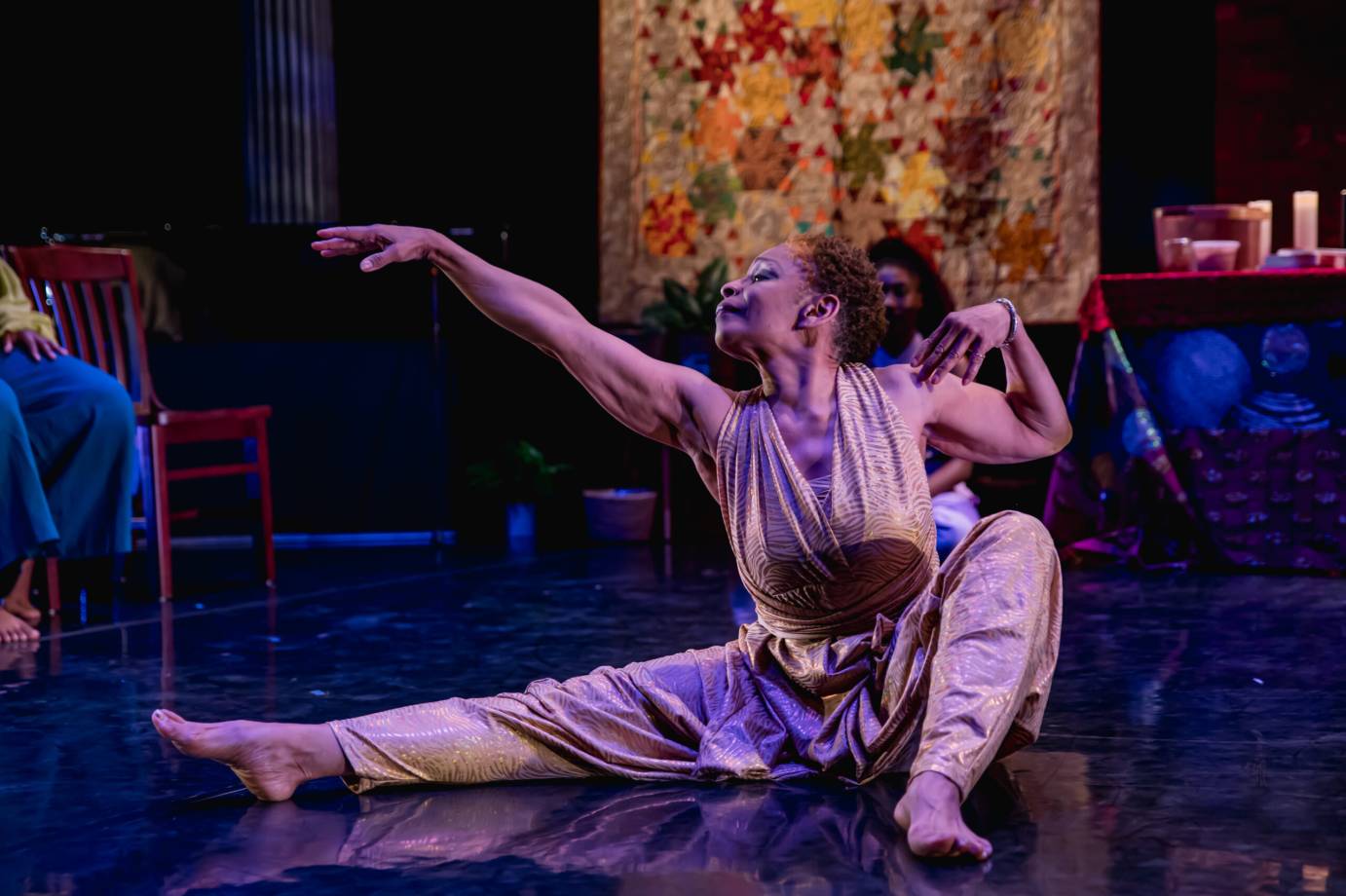
And the experience of working with George Faison and his company. That was just wild. I really enjoyed the way George moved because it was a little closer to ballet. This was the end of the Black Arts Movement, so Black dancers were using their art form to speak their truth, to speak about their experiences. And that experience with George gave me the opportunity to then go into some commercial dance. I did The Wiz. And my Wiz days were highly blessed. To meet the Black theater world, to be on Broadway…
Then after that was Timbuktu! I got a chance to work with Eartha Kitt and William Marshall and Geoffrey Holder touring with Timbuktu! Our costumes were the most provocative thing. We were basically nude. I just remember that first day of putting this thing on and walking to the musician's pit, and I stopped there because I needed to feel okay with people seeing my nipples. And the musicians looked, and then they went back to doing what they were doing. Instruments. And I was like, “Oh, it's that easy? Yeah, I'm fine”.
When my husband and I got married, one of the things that he was very passionate about was building a company. And so we built and nurtured the Forces of Nature Dance Theater, alongside our daughter — so we had two children.
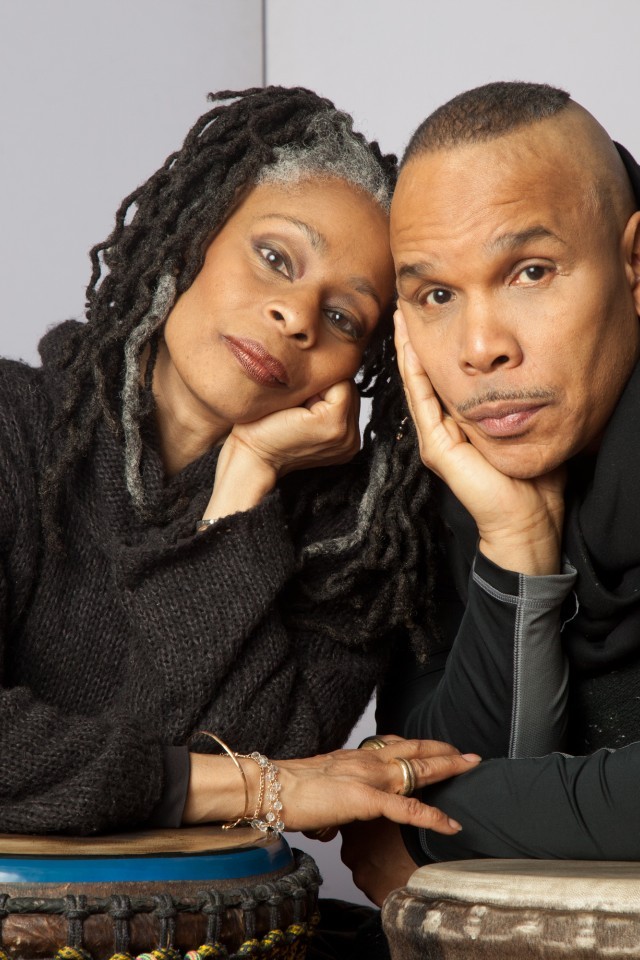
Sydnie Mosley is another. And Purple. If you're able to see the work, you will walk out a different person. You will be asked to contribute; not just sit there like a bump on a log, but contribute in a way that will spark your own imagination.
You were a guest writer for The Dance Enthusiast last year (writing about Dance Africa at BAM). What role does writing play for you as an artist?
That was the most interesting experience for me, being on the inside of Dance Africa. Classical training was my first language, then I was slowly introduced to many other techniques and styles. Particularly in African dance tradition, I started really being able to see how the various people of the continent migrated and shared their movement, history, and cultural practices. It just blew my mind.
To what extent has teaching and mentoring young artists contributed to your own creative growth throughout your career?
I hated teaching when I first started because I didn't feel like I knew from whose language I wanted to pull. I'm like, “Oh, that was a little bit of George. Oh, that's definitely Eleo. Oh, that's ballet.” Then I realized, you need to go ahead and braid it all together, and then something will come out that may be uniquely yours.
My teaching keeps shifting based on who's in the room. I realized maybe three years ago that they were coming to get little pieces of me and that I need to focus on what I want to share with them and to hone that and to make them really better human beings.
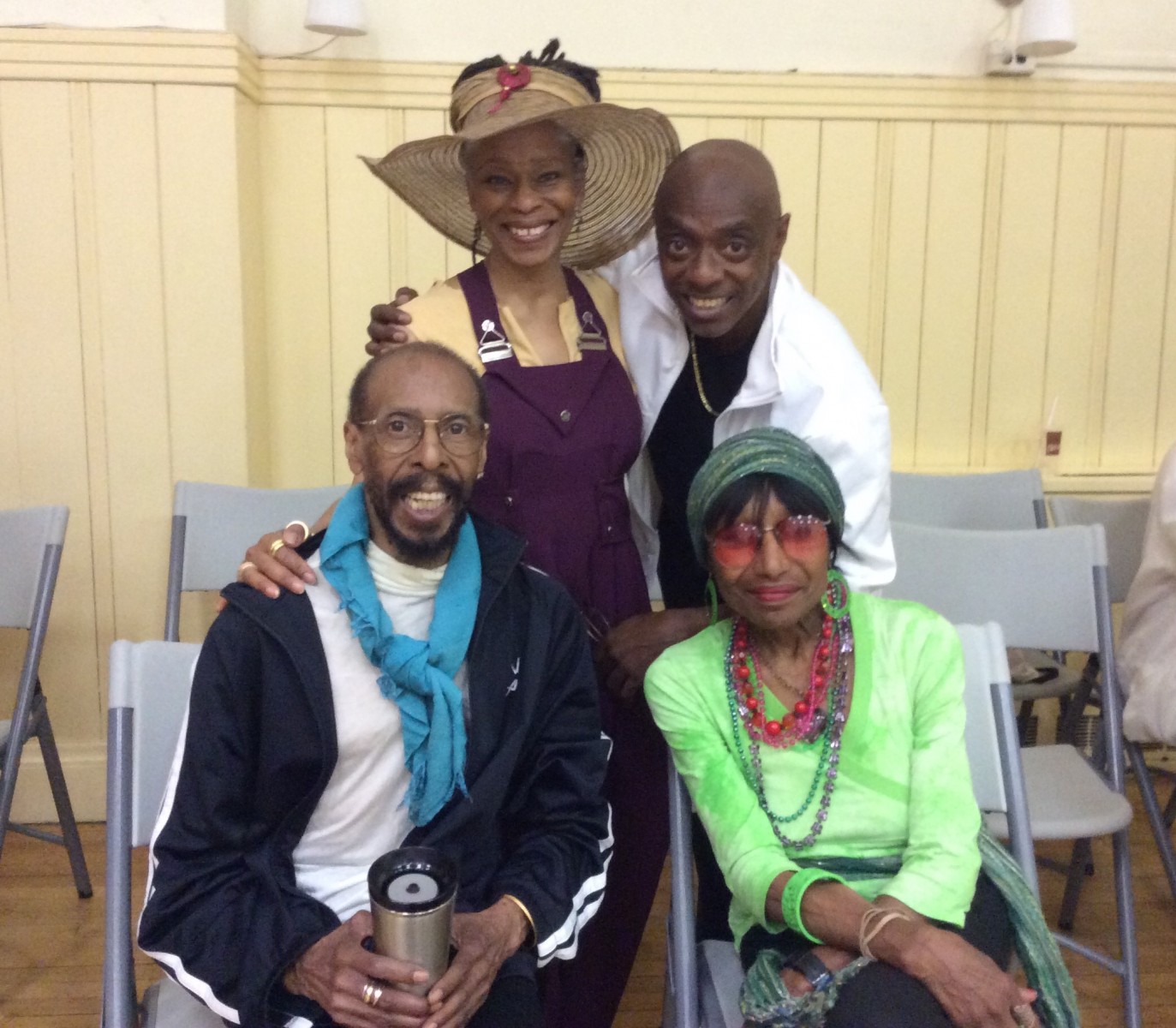
Dudley Williams and Loretta Abbot (seated) Dyane Harvey-Salaam and Bruce Heath ( standing). Photo: Christine Jowers
What are some of the challenges that you face in sustaining a long term career in dance? And how have you worked to overcome those?
So, there was one more person I want to speak about, she's an ancestor now, and that is Janet Panetta. Working with her and learning how the body works from her was a staple for me. And there's one more — Judy Covan, who was my first Pilates teacher. I was introduced to her and her approach to Pilates when I blew out my knee at 19. It is very different from what is being done now. Then I went to a dear friend and colleague, Christopher Apostol, who has Adept Physical Therapy. He is cutthroat. He gives you seriously tough love. That was the first big injury that I had to deal with. The next one was recently, like almost two years ago. I can't say it was a surprise. If we are in conversation with our bodies, most of the time, the body will give warnings.
Where are you spending your creative energy right now? What are you looking forward to this year?
I'm working with Sydnie, and we're adapting Purple as we go to Ithaca College. I'm working on a project with my dear colleague, sister, friend, Peggy Choy, and three musicians. We're building a piece called Rice Food Land, where we're exploring and exposing the relationship of Asian and African connections.
How do you think your work has contributed to expanding narratives around Black artists, women artists and experimental performance?
I think that, in a way, I have been charged with always bringing the Black perspective to the front of my work. My mother was heavily involved in social activism, Black identity. I came to New York City at the tail end of the Black Arts Movement. Once I left Schenectady and came to New York, where this huge, vibrant community of Black artists were expressing themselves and being empowered by each other, I recognized the connections between Black people and then ultimately between all people, and I want to really honor and empower our lineage, our path, and pass that information forward.
And then women. Women's power is so often either negated or ignored or taken for granted. I am blessed to be married to a man whose mission also is uplifting the Black community and uplifting women. I believe that women are the carriers of humanity, civilization and culture itself. Whether as creatives or as vessels of embodiment, the role of women in the arts is profound.
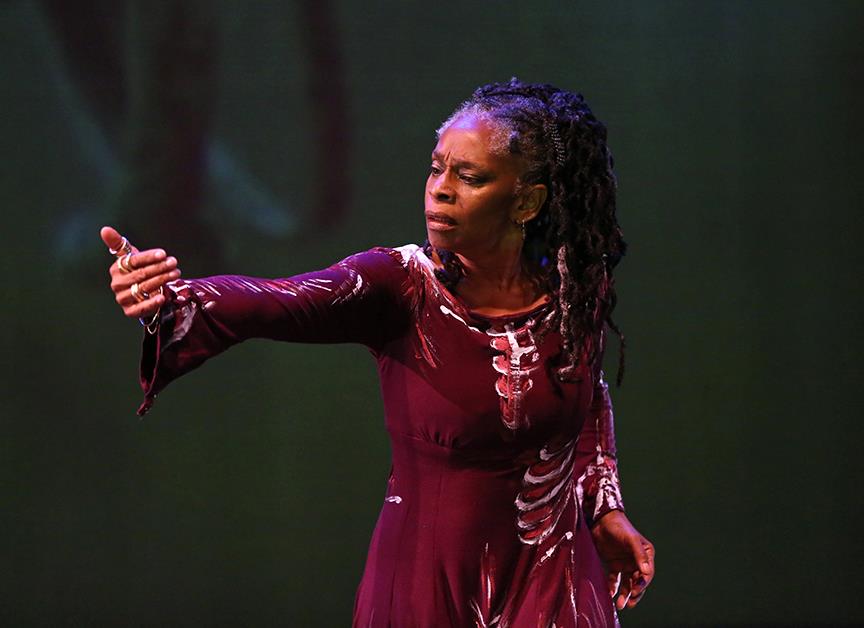
And experimental performance. I love it. I love the freedom of connecting in different ways. I also love the challenge of interacting with your audience. Not only do environments help define experimentalism, but the actual concepts that are explored. Ntozake Shange’s choreo-poem concept is an amazing example of the use of language and movement. When I worked with Makeda Thomas in the Delaware Art Museum, her usage of language and visual art also served to move the work in a unique direction. My husband’s curiosity with technology resulted in the usage of AI, film and extravagant costuming last season in Dance Africa, and Sydnie Mosely’s iterations of Purple is conceptually designed to break the fourth wall and invite audiences to fully embody the evening. So, I welcome experimentation and believe it is refreshing and needed.