

Related Features

DAY IN THE LIFE OF DANCE: Dance Grenada International Dance Festival 2021: How The 2nd Edition Embodies Afro-Futurism
The Children’s Museum of Manhattan's First “Dance Your Way Through December” Festival
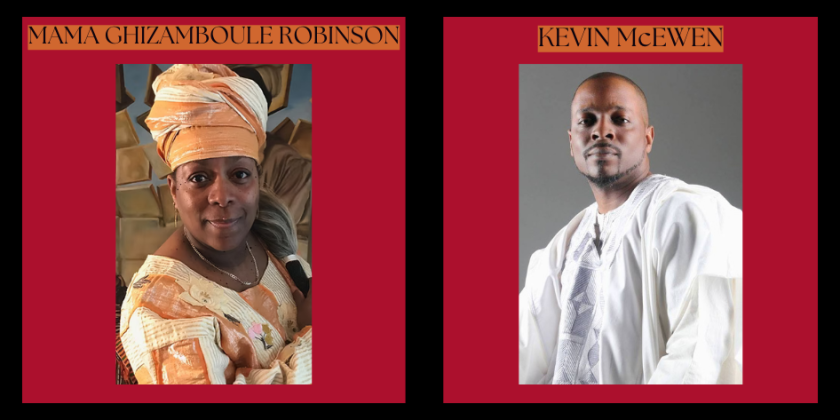
THE DANCE ENTHUSIAST ASKS: Mama Ghizamboule Robinson and Kevin McEwen on West African Dance

By Christine Jowers/Follow @cmmjowers on Instagram
View Profile |
More From This Author
Published on February 26, 2026
Photos courtesy of JCAL
Kofago Dance Ensemble and FANIKE! African Dance Troupe Celebrate Black History Month at JCAL
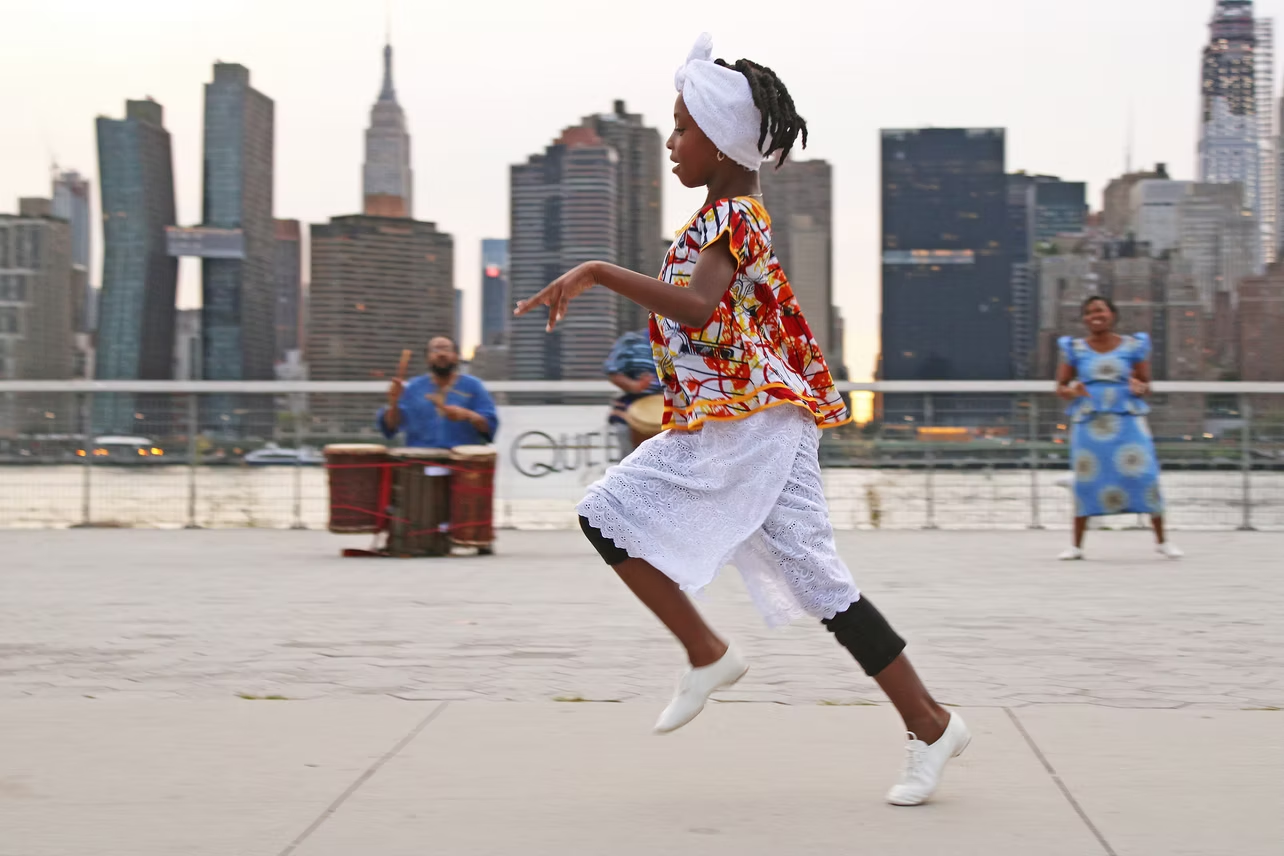
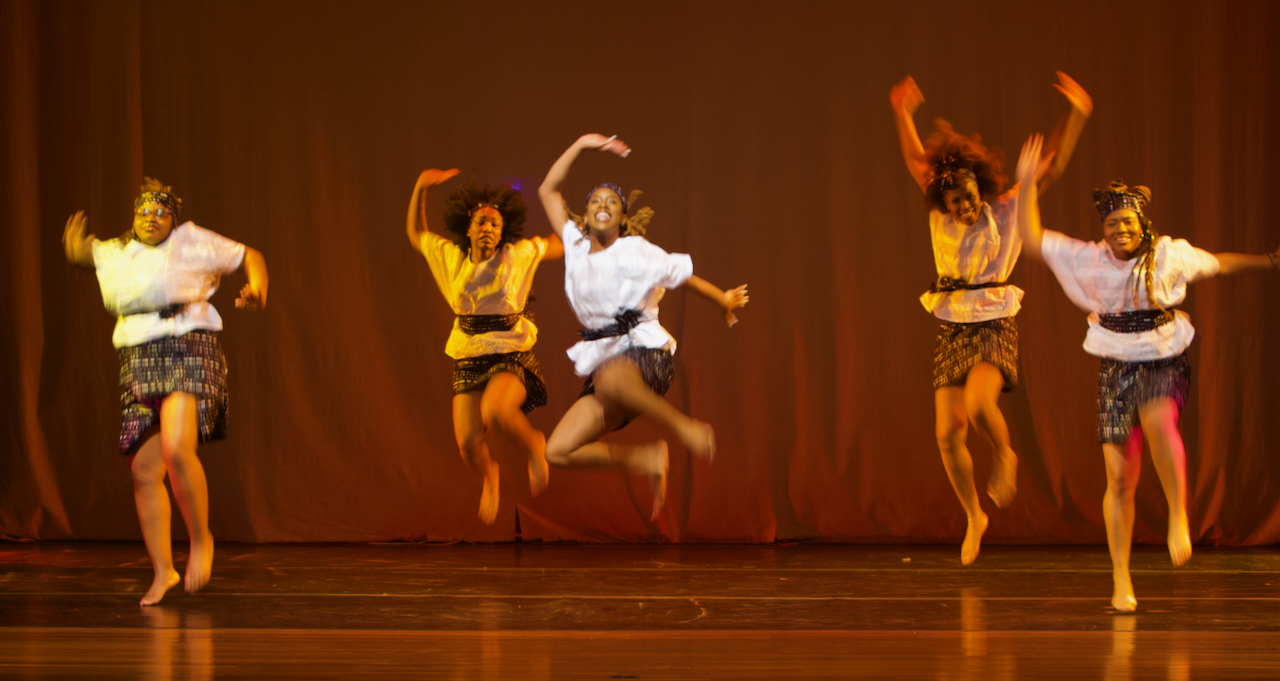
A Weekend of West African Dance at JCAL: A Black History Month Presentation returns to the Jamaica Center for Arts & Learning (JCAL) in Queens for two evenings, centering on lineage, rhythm, and embodied history. This annual gathering brings West African dance into focus with performances by Kevin McEwen's Kofago Dance Ensemble and Mama Ghizamboule Robinson's FANIKE! African Dance Troupe.
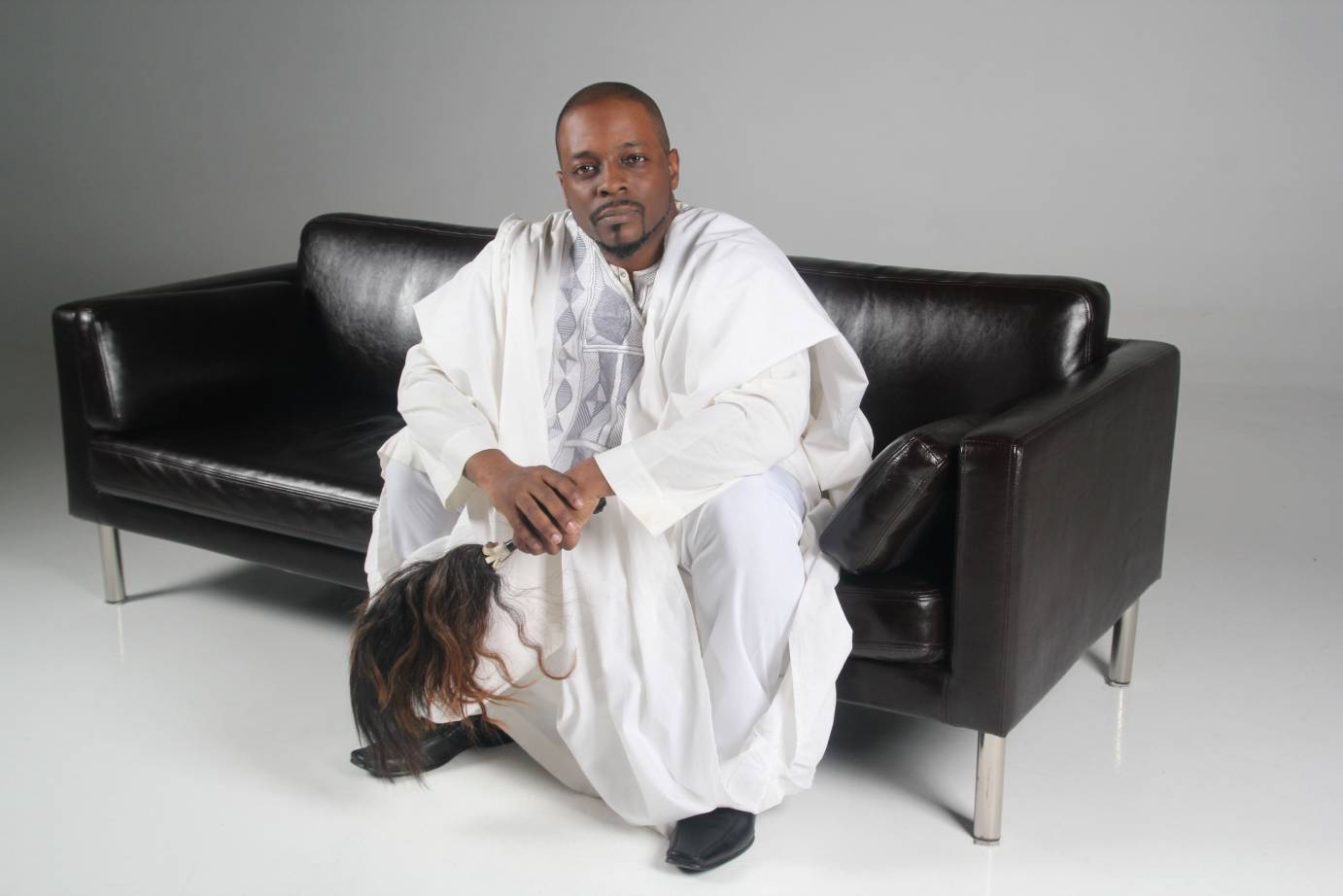
Kofago Dance Ensemble takes its name from a blending of spiritual and cultural principles central to its founder, Kevin McEwen: "Kofa" from Ghana's Sankofa — "go back and get it" — a call to honor one's past and reclaim ancestral wisdom, and "go" from Shango, the Yoruba deity associated with thunder, dance, drumming, and vitality. The name itself reflects a grounding in lineage and force. For McEwen, the work "embodies healing and promotes education and social transformation."
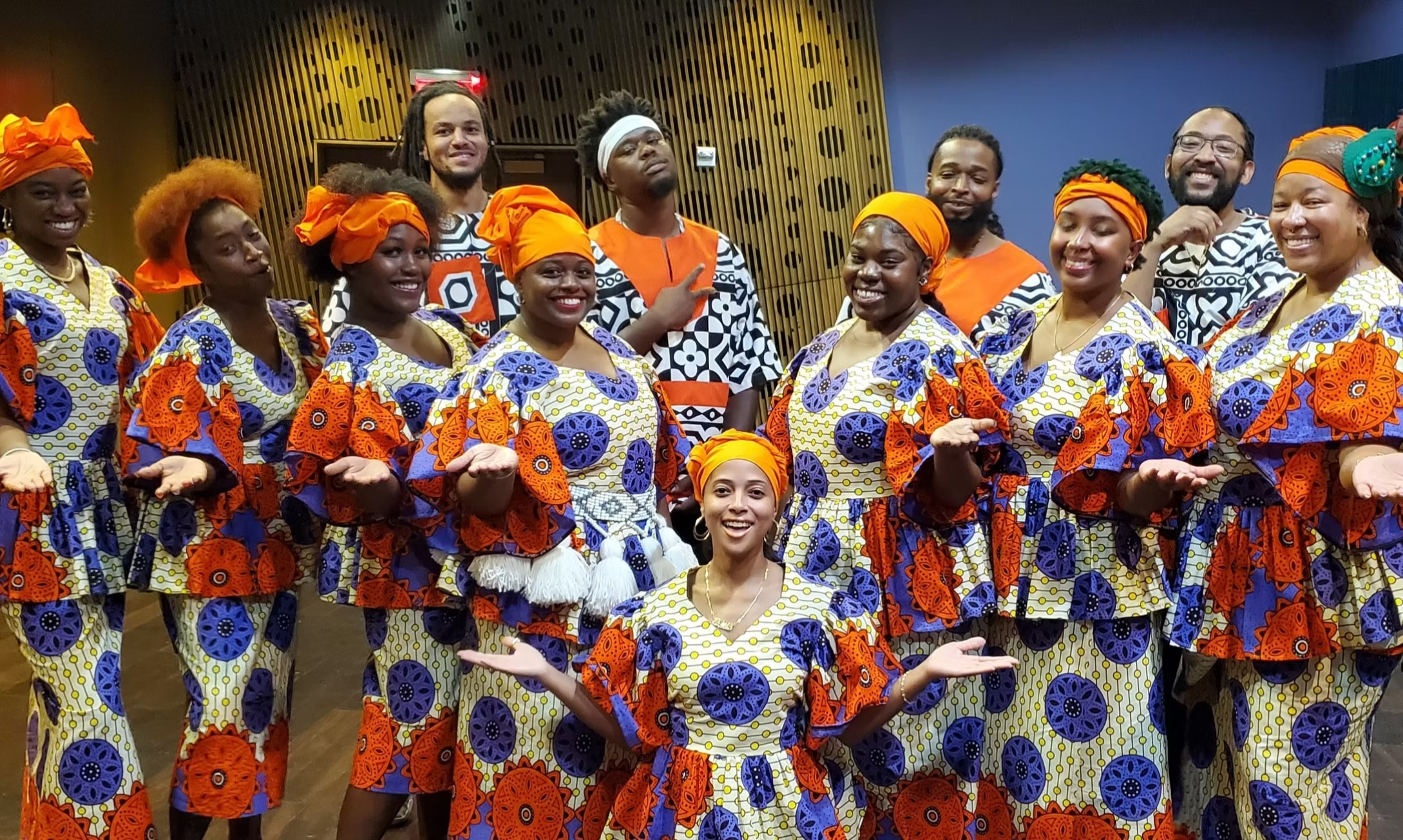
Under the direction of Mama Ghizamboule Robinson, FANIKE! African Dance Troupe centers uplift as both mission and practice. Robinson notes that fanike means "to uplift" in one of the languages of Senegal — a meaning that shapes the company's commitment to sustaining and celebrating African and African Diaspora culture through dance and live percussion.
Recently, I had the privilege of speaking with Kevin McEwen and Mama Ghizamboule Robinson about their commitment to sharing African dance within their communities, the inseparable relationship between music and movement in their traditions, their responsibility to the ancestors, and the spirituality and community at the heart of their work.
Purchase tickets: CLICK HERE
Christine Jowers for The Dance Enthusiast: What does it mean for both of you to present your work in Queens at JCAL?
Mama Ghizamboule Robinson: I'm born and raised in Queens. I was born in Jamaica Hospital, and actually have been a part of the African dance and drum community here for decades. I will say decades, I won't tell you how old I am, but I will say decades.
Kevin McEwen: My days in Queens go back to being raised by two grandparents who owned a house in Southeast Queens and St Albans. I grew up off Farmers Boulevard and Liberty Avenue. I went to Francis Lewis High School and graduated from there. It's a full-circle moment: returning to Queens as an educator. I'm an adjunct faculty member at Queensborough Community College. When I created Kofago, our very first performance was here at the Jamaica Center for Arts and Learning… Queens is our home.
How did you become involved in West African Dance?
Mama Ghizamboule: It connects to my heartbeat, and it connects to my spirit. I remember, I graduated from York College, and I was in the bookstore when someone yelled out, "Who wants to go to a dance class?" They just yelled it out. And I yelled back, "I do." I went to the Armory in Brooklyn, and that was my first exposure to a real, traditional class, and I was just hooked. I was always physically active, always a dancer, but I was also pursuing culture.
When we say West Africa, that's a big swath of the continent. And so you have many countries that are within that area, and within each country, they have different groups of people, there's so much to learn. I guess that's another part of my excitement — there's always more to learn about the different tribes and groups of people, and how dance integrates with the culture.
McEwen: My journey to the culture was a little bit different. I was probably about 23 when I moved to Washington, DC. While I was in DC, I had my first exposure to KanKouran West African Dance Company. That's my lineage. I saw them at a Black History Month show, and I thought one of the dancers was cute. I had no idea of the culture or anything like that. I wanted to get her number. I tried to get her number, and she ignored me. I went to a class, and I was like, "Oh, this is amazing." I became an apprentice dancer.
And what about your relationship to the drums?
McEwen: Funny enough. I always tell people I'm a drummer who happens to dance, or a dancer who happens to drum. That's the better way of saying it. At one time, I twisted my ankle badly. I couldn't dance for a number of months, so that's when I learned… It's often said that if a dancer takes the time to learn drumming, it'll make them a better dancer. Drumming is intricately tied to the dance in the work that we do, as well as singing. I just can't sing. But it is all three of those aspects [dancing, drumming, singing] that are tied to each other. You can't have one without the other. I often tell my students here in America that you can come up with a whole dance and then find the music later. [But in West African dance] No, the music informs the dance, and it's very critical. The music comes first.
Mama Ghizamboule: I'm glad you shared that, Kevin. It's interesting how everybody's path is similar, but different. So my path came through Marie Basse-Wiles, who I studied and traveled with for many years as part of the Maimouna Keita School of African Dance, and through Youssouf Koumbassa. He does the Guinea style, and Maimouna Keita does Senegalese. I'll say Senegalese, but there are many different tribes.
And I had the opportunity, many years ago, to meet and perform with Papa Doudou N'Diaye Rose and to be a part of an all-women's Sabar drum group, Les Marrettes, which mirrored the Rosettes, his female drum group, made up of his daughters and granddaughters.
Video tribute to Papa Doudou N'Diaye Rose featuring Les Rosettes collaborating with Ben Aylon
With Sabar, the dance happens on one side and the drum are on the other side, and they weave together. It's all integrated. And the songs, I used to call them jewels, the songs are like the jewels in the crown, because they are so precious. You didn't get them all the time. Songs maintain the language. We know on the planet, languages from all over the world, not just in Africa, are being lost because they're not necessarily spoken, and an African-American searching for culture, you know, the songs are just precious to me.
How much of what you do is traditional dance, and what is newly choreographed? What is the relationship between preserving and creating?
McEwen: What we're trying to do is maintain traditions. We're also trying to connect with energies that are ancestral. You also have to leave space for creativity in that.
For me, it's about having a clear understanding of the message you are trying to deliver. It has to reach people in a way that goes even beyond choreography. It has to be something that intrinsically connects within. You are connecting to information that goes beyond the movements of a dance. There is ethnography, pedagogy, and it is deep.
As you're connecting to this information, you are honor-bound to respect it, but you also have to translate the information into something that is digestible to people who are not necessarily going as deep as you are into it. It is necessary for me, in that balance, to make sure I'm connected to my elders, the people who have come before me, knowing that I'm just a vessel to transmit the information to the next generation. It is a delicate balance.
That sounds like a lot of responsibility. Is it?
Mama Ghizamboule: Because I love, love, love, African dance and culture, it doesn't feel like a responsibility, in the sense of being heavy. But there absolutely is a responsibility to respect the tradition, and I respect my traditional base. I studied for decades, where I did what I was taught. I followed, listened to what my teacher said, and absorbed. I combined all the information I got from the teachers and have a very strong base. But much like what Kevin is saying, when you're presenting it on stage, there's a difference to how dance is done there and in the village. You want to make it palatable to people who are not as deeply involved. Well said, Kevin. They have to get the message. I get it deep in my heart and my soul. But they also have to get it. And tradition changes, right?
When I learned the Donunba, [people were saying], "It's the man's dance of strength. Women don't do this dance." Well, now, guess what? Back home, the women are doing that dance, and we're doing it too! And I always tease my sister, and, dancing friends, I say, "Yeah, I'm doing the 1980 Sabar." They're doing a whole different thing now.
There has to be opportunity for growth, not to be so stuck and static. And as artists, that's who we are. We allow ourselves to grow and be inspired. In the way I put my programs together, I include different elements. We perform traditional dances as per my knowledge, as per the choreographer's knowledge, but we interweave them into modern-day situations, or, you know, stories that are important now.
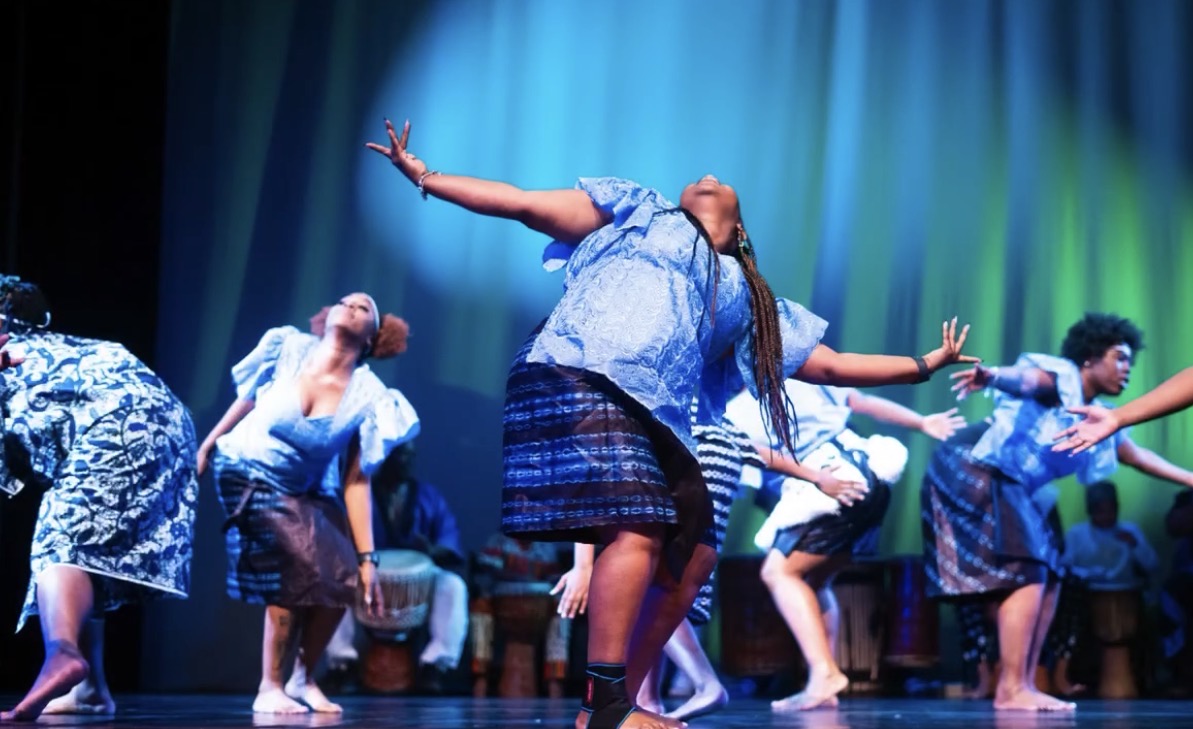
Our show this year really speaks to tradition, and all the distractions that the young people have today as well as to the decisions that they have to make around, whether or not they are going to follow the tradition, "walk in the way of my mother," or "walk with my mother but walk my own path" So yeah, it's a constant balance between the tradition, the dance, and how you're going to present it. How you're going to make it speak not only to your audience, but to your artists.
The experience at JCAL isn't only about performances, though, is it? It seems the focus is on having everyone in the community involved. How do you find that?
McEwen: Jamaica Center for Arts and Learning is very good at promoting West African dance, culture, and activities for the community. So, usually, what we do, both Fanike! and Kofago, is the week prior, we have dance workshops that are in the same facility that the show will be in. They clear the chairs out of the Performing Arts Center, and we have classes. Fanike had their class last Tuesday; Kofago had their class last Wednesday. The thing I love about the class is that JCAL is making it affordable. You can get two for one. And what I've seen is that both classes were highly attended.
People definitely want more of that. They're physically asking for it. And I think in this day and age that we're dealing with, people are looking to have a connection to a community, to information, and a piece of culture that they can identify with, and those classes set them up for what they're about to experience this upcoming weekend.
Mama Ghizamboule: Yes, and [the classes and talkbacks after the show] allow us to make a multigenerational connection. Because the elders that come, they'll be able to sit down and talk afterwards, or, you know, the people that come into class and learn the steps, may even say, "Not only do I see that step, but I actually did that step. I know how it feels, and maybe I'll pursue it afterwards." This is an immersive experience.
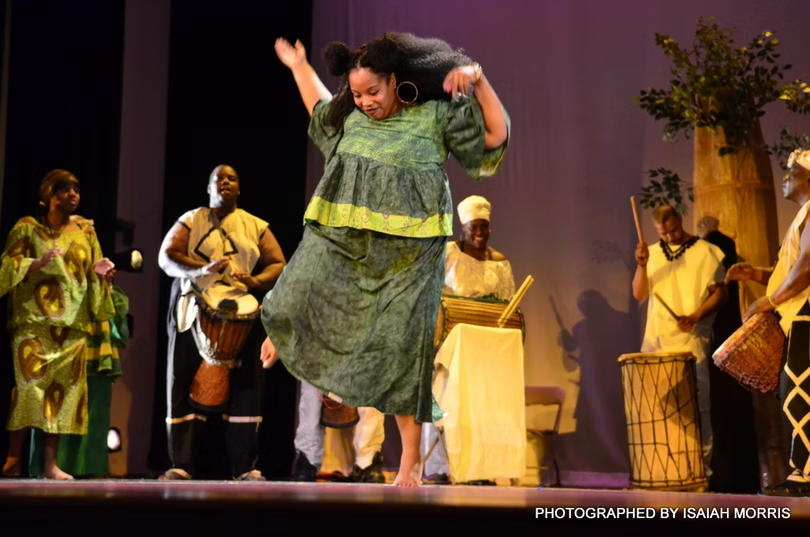
For Black History Month, but really for every month, it feels important to be connected to art forms with such depth and a spiritual sense of connection. What do you have to say about spiritual connection and community connection in West African Dance?
McEwen: There is something to be said about the drumming and the singing there. There is an alignment of frequency and an alignment of energy that happens.
You notice that when you've got a good drummer, and they are in lockstep with every move you're making, it touches you on the inside. For me, that's always been the case, whether it's the Sabar, Kutiro or Djembe, there's a connection, a synchronizing of energy.
You're talking about energy that is internal, intrinsic to the individual. And for me, that is the finest spirit. You can see it, and you can feel it anytime, whether it's a good rehearsal, a good show, there are always these internal and intrinsic moments where you are connecting with the people, the music, the culture and those moments in time are to me, when spirit is aware, acknowledged, and manifested. That's one aspect.
The second aspect is where I consider a deeper dialogue on ancestral veneration that we acknowledge those who came before us. We are acknowledge those — whether it's parents, grandparents, aunties, uncles, teachers — who are no longer here. Mama Ghizamboule listed a number of amazing pillars in the West African dance community that are no longer with us, but we acknowledge them each and every single time we go on the dance floor. That is another aspect of the spiritual side of what we do. And so there are certain protocols that we have in this community where it is essential that we acknowledge those who came before us.
Combining all of that is, to me, spiritual dynamics, spiritual ebbs and flows of information that are critical to what it is that we do. And that's about as succinct as I can be, not being able to go deeper into the conversation, but that's what it means to me.
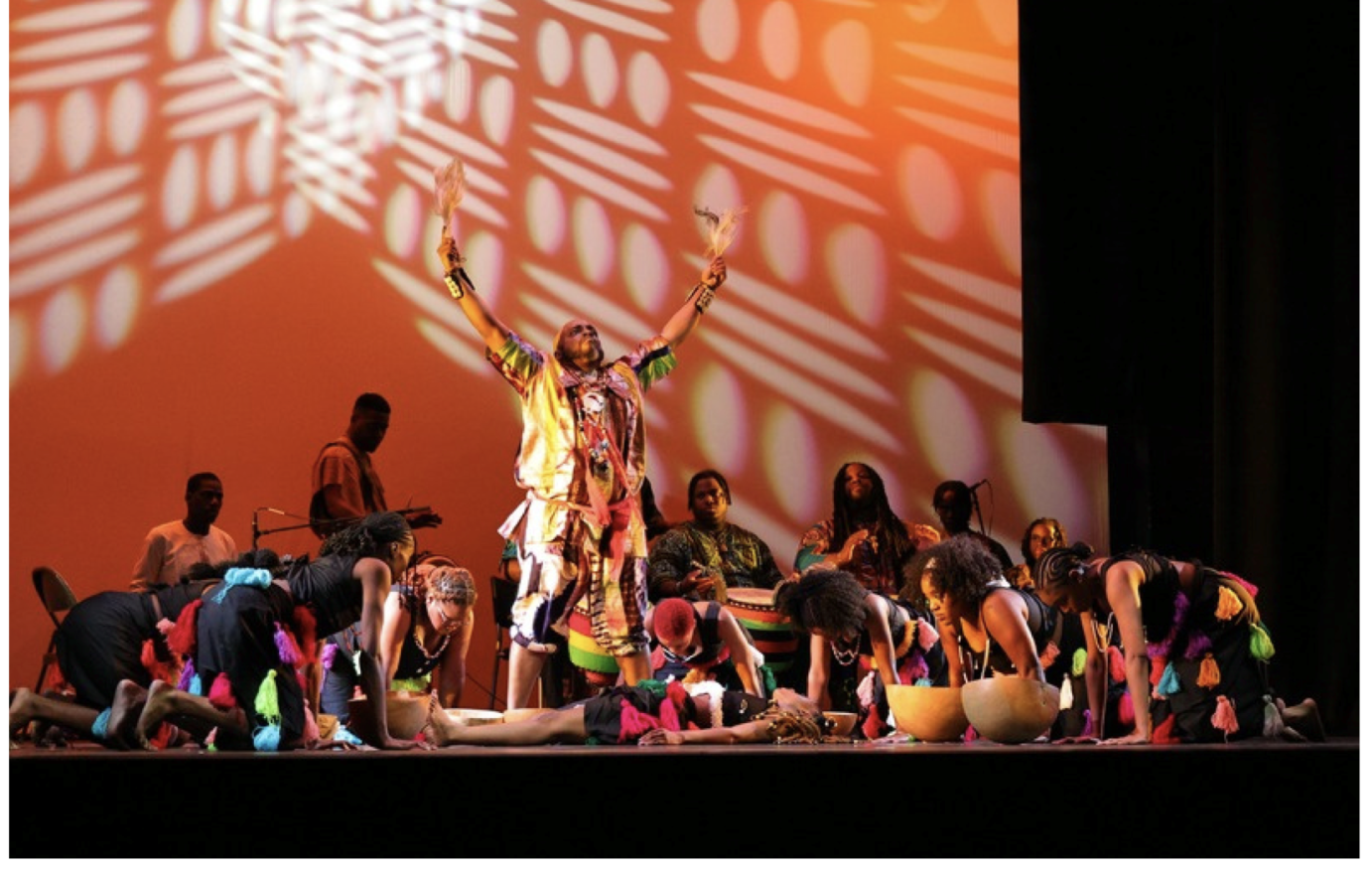
Mama Ghizamboule: I'd like to say that I started working with many of my artists when they were pre-teens, so I've had the opportunity to watch them blossom as young women and men, mothers, and full-time members of society. That's been beautiful. And what has happened is that they bring their children with them to rehearsals. Actually, the young lady that we're featuring this year grew up in the company. We have pictures of her when she was four and five years old, and now she's full-blown dancing. It's really great. This is a journey, and a process. This dance and culture will keep you healthy — physically, spiritually, and mentally. It's something that you'll be able to participate in and keep a part of your lifestyle for years.