


Related Features

IMPRESSIONS: Anna Sperber's “Beacons” at The Chocolate Factory Theater

IMPRESSIONS: Leslie Cuyjet's “For All Your Life” at The Chocolate Factory Theater
IMPRESSIONS: "Plato Caves: Screens vs Shadows" at The Chocolate Factory Theater

By Kate Purdum
View Profile |
More From This Author
Published on April 28, 2026
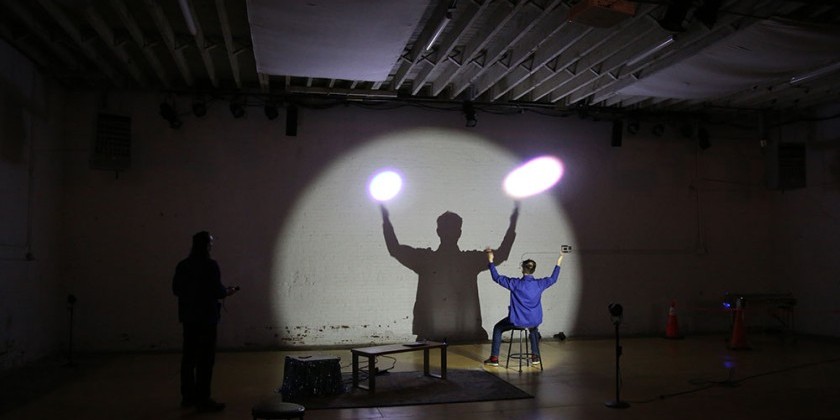
"Plato Caves: Screens vs Shadows." Photo: Shana Crawford
Plato Caves: Screens vs Shadows
Creator/Performers: Steven Wendt and Wes Day
The Chocolate Factory Theater
March 27 – 29, 2026
Steven Wendt and Wes Day’s Plato Caves: Screens vs Shadows was, on the sunny Sunday afternoon performance I attended, a massive delight for a rapt audience of children. The event is The Chocolate Factory Theater’s first venture into theatre for young audiences (TYA), and unlike other TYA shows I’ve attended (including in my own childhood), this one gave the adults in the room something real to think about: our dependence on screens.
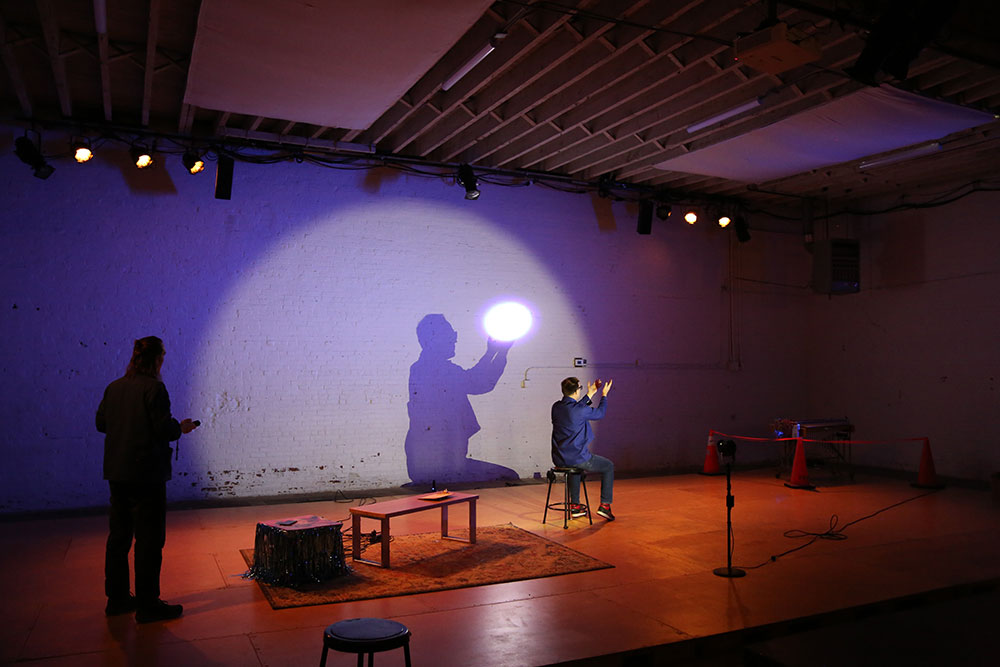
The title references Plato’s Allegory of the Cave, a foundational text in philosophy and performance studies that centers on the interplay between perception and reality as prisoners in a cave mistake shadows on the wall for real images. It’s a nod, too, of course, to Play-Doh — famously interchangeable with Plato in pronunciation — and to the childlike wonder of making shapes, colors, and stories with your own two hands.
In a world where it’s common to encounter toddlers in the wild who have smart devices of their own, Wendt and Day’s focus on the analog possibilities for childhood magic-making was creatively wondrous and politically galvanizing. Watching an audience of young people, whose dependence on screens has not yet been cemented in their developing brains, be presented with a very clear invitation to fully invest in real life was touching in a way I didn’t anticipate from a shadow puppetry matinee.
Wendt and Day’s performance, though, went far beyond the realm of shadow puppetry. In the cavernous garage space of The Chocolate Factory, their setup was small and simple: a carpet, a bench, a blue glitter tinsel-wrapped theatre block, and an enormous vibraphone behind a makeshift stanchion. Wendt’s first entrance, punctuated by canned applause and squeaky-shoe noises (generated from a Wii remote rigged to play practical sound), establishes an atmosphere of clownery. When Day joins him, the two have a jokey rapport that focuses on Day’s inability — or unwillingness — to put down his phone and pay attention to Wendt. Dressed in almost-matching blue jackets, their routine is played for one-upsmanship that emphasizes the differences in their abilities. Wendt initiates a game called “Shadow Master,” played with handheld flashlights, wherein he teaches Day how to project cameo-brooch style silhouettes onto the whitewashed brick walls. Throughout, Day’s phone rings and interrupts the fun, a diversion that Wendt grows increasingly frustrated with.
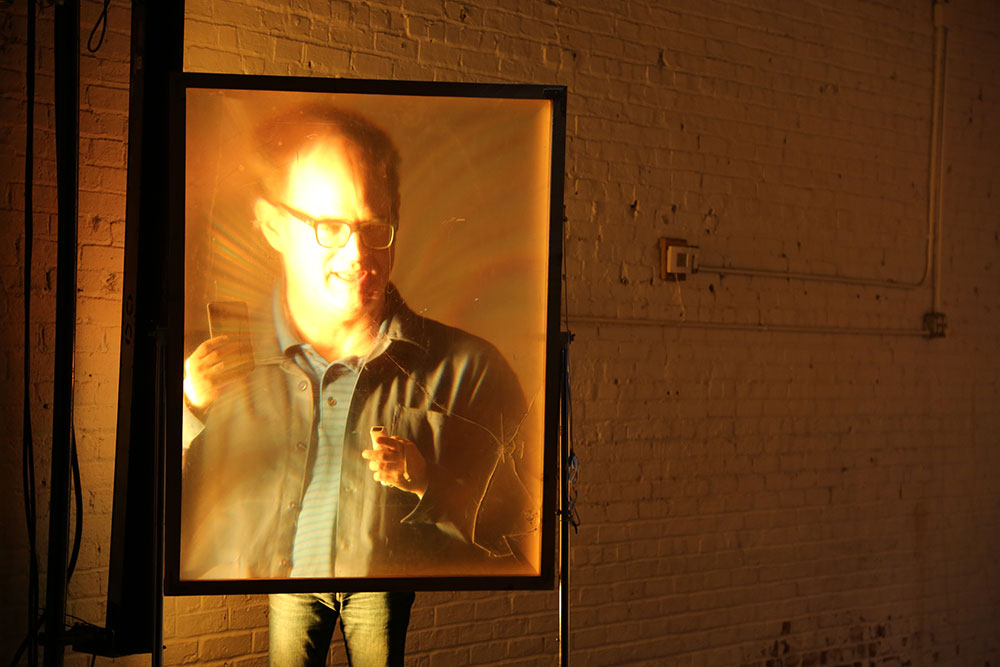
Out of frustration with his scene partner — and a genuine desire to impart some cool lessons — Wendt plays increasingly to the audience, beginning a tutorial in the manipulation of light, space, and perspective. Believe it or not, Wendt tells us, we can manipulate light and shadow to mimic the way that screens work. There’s a scientific curiosity with which he approaches this creative task, a playful willingness to bend the laws of space and time to his whims. Sound, too, is introduced as a variable, through experimentation with different genres of shadow puppetry (horror, romance) set to different scores. Wendt is renowned for his shadow hand puppetry, and this performance was no exception: a woman becomes two people dancing, which transforms into a mother rocking her baby, which morphs into any number of incredible animals. Day provides the vocal stylings for these shadow creatures, singing Willie Nelson’s On the Road Again as a bird while Wendt flaps away.
At this point, they invite the audience to participate. Kids get to come up to a microphone to add their own narration to the parade of shadow animals, which is then fed into the vibraphone and translated into a gentle, xylophonic score for their vivid descriptions. One little girl is so delighted by the image of a shadowy man riding horseback that all she can do is giggle into the mic, which ripples back through the vibraphone as soft, twinkly music.
At a pivotal moment, Day’s phone begins to vibrate violently, and the lights go berserk — cycling through rainbow colors — until, finally, the beast is thwarted. The children erupt in cheers! “I’m glad my phone is dead,” he says. Freed from that burden, he and Wendt amp their “Shadow Master” levels up and up until Day himself is a backlit shadow, “throwing” a ball of light from a flashlight manipulated by Wendt. The effect created is one of a man playing basketball with the sun.
The performance was incredibly dynamic and displayed a nuanced understanding of physics, both how actual objects move and how to manipulate shadow and light to create illusions of objects behaving within the laws of gravity. More than just a children’s show, Plato Caves is a fantastic analog for creative education for life.
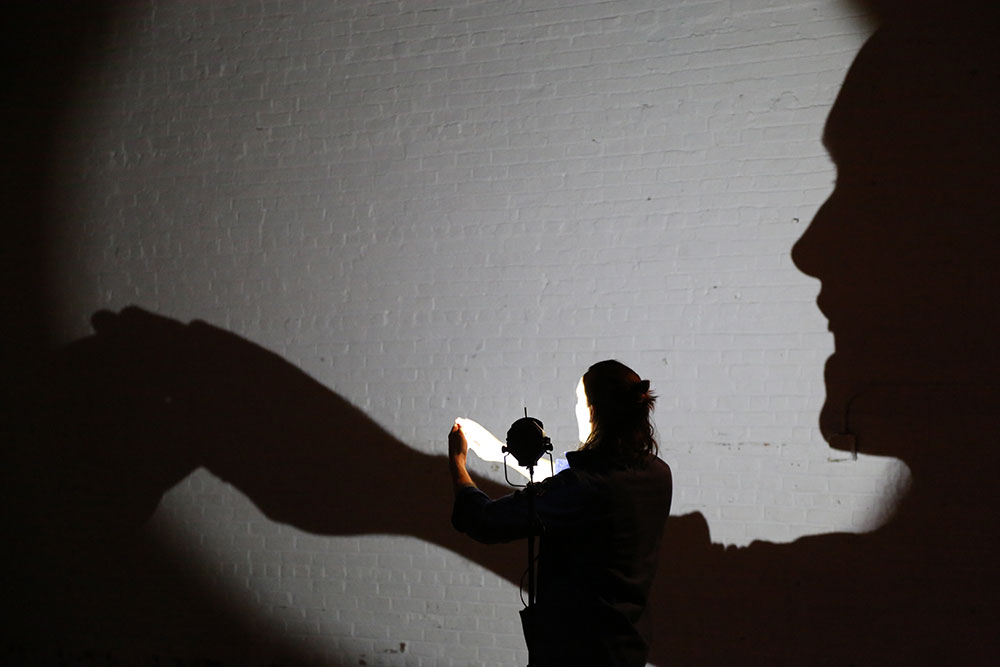
I left hopeful that the parents in attendance would take away a renewed commitment to creating lush, wondrous lives for their children without an over-reliance on all the ways screens can be soothing for kids and adults alike. Far from the numbing effect of endlessly scrolling, Plato Caves was an energizing reminder that your own two hands have more creative power than miles of microchips.