


Related Features
IMPRESSIONS: Jane Comfort at La MaMa Experimental Theatre Club's Ellen Stewart Theatre
THE DANCE ENTHUSIAST ASKS: Donald Byrd Revisits "Occurrence #14" at La MaMa Moves! Dance Festival

DAY IN THE LIFE OF DANCE: Marla Phelan's “Birth + Carnage” Threads Galaxies


By Kristen Hedberg/@kristen.hedberg on Instagram
View Profile |
More From This Author
Published on December 16, 2025
Photo courtesy of the company
Premiering at La MaMa’s Ellen Stewart Theatre This December 19 - 21, 2025
Choreographer + Director: Marla Phelan
Director: Tim Richardson
Composer: James Newberry
Video Artist: klsr | Video Artist: reinfected.me
Astrophysicist: Dr. Blakesley Burkhart
Lighting Designer: Devin Cameron | Assistant Director: Kelly Ashton Todd
Dramaturg: Catherine Correa | Costume Designer: Elanur Erdogan
Producers: Yazmany Arboleda, The People’s Creative Institute; Cameron Sczempka, Polymath Production; Lisa kjerulff; Movement Museum
Choreographed in collaboration with Dancers: Damontae Hack, Sydney Hirai, Mizuho Kappa, Eleni Loving, Sayer Mansfield, Meenah Nehme, Marla Phelan, Wyeth Walker, Paul Zivkovich
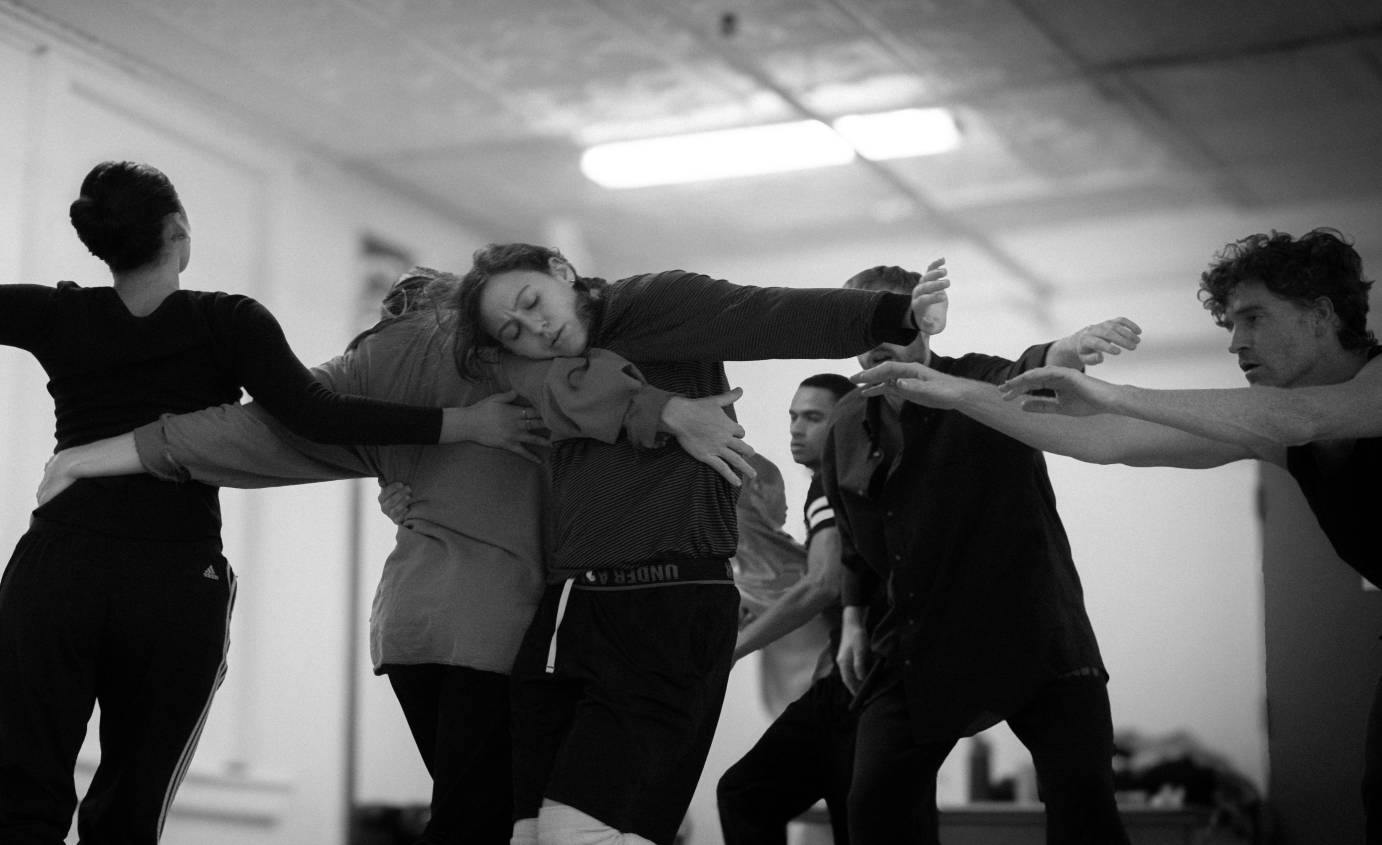
Cover photo: Director Tim Richardson with dancers Sydney Hirai, Meenah Nehme, Wyeth Walker, Paul Zivkovich, Sayer Mansfield, and Damontae Hack
On December 9, 2025 at the Brooklyn Academy of Music, the Hillman Attic Studio hums. Eight phenomenal dancers are rehearsing for Marla Phelan's upcoming premiere of Birth + Carnage, which will run at La MaMa Experimental Theatre Club's Ellen Stewart Theatre from December 19 to 21, 2025.
“[This work] began in 2022 when I had a residency with The Simons Foundation and Gibney Company called Open Interval,” says Phelan, who directs and dances in the piece. Open Interval facilitates exchange between a scientist and a dancer without any pressure or expectation of a final product. Phelan’s teaming up with computational astrophysicist, Dr. Blakesley Burkhart, began nine months of collaborative research. Their partnership paved the way for Birth + Carnage, and the artist and astrophysicist remain dear friends.
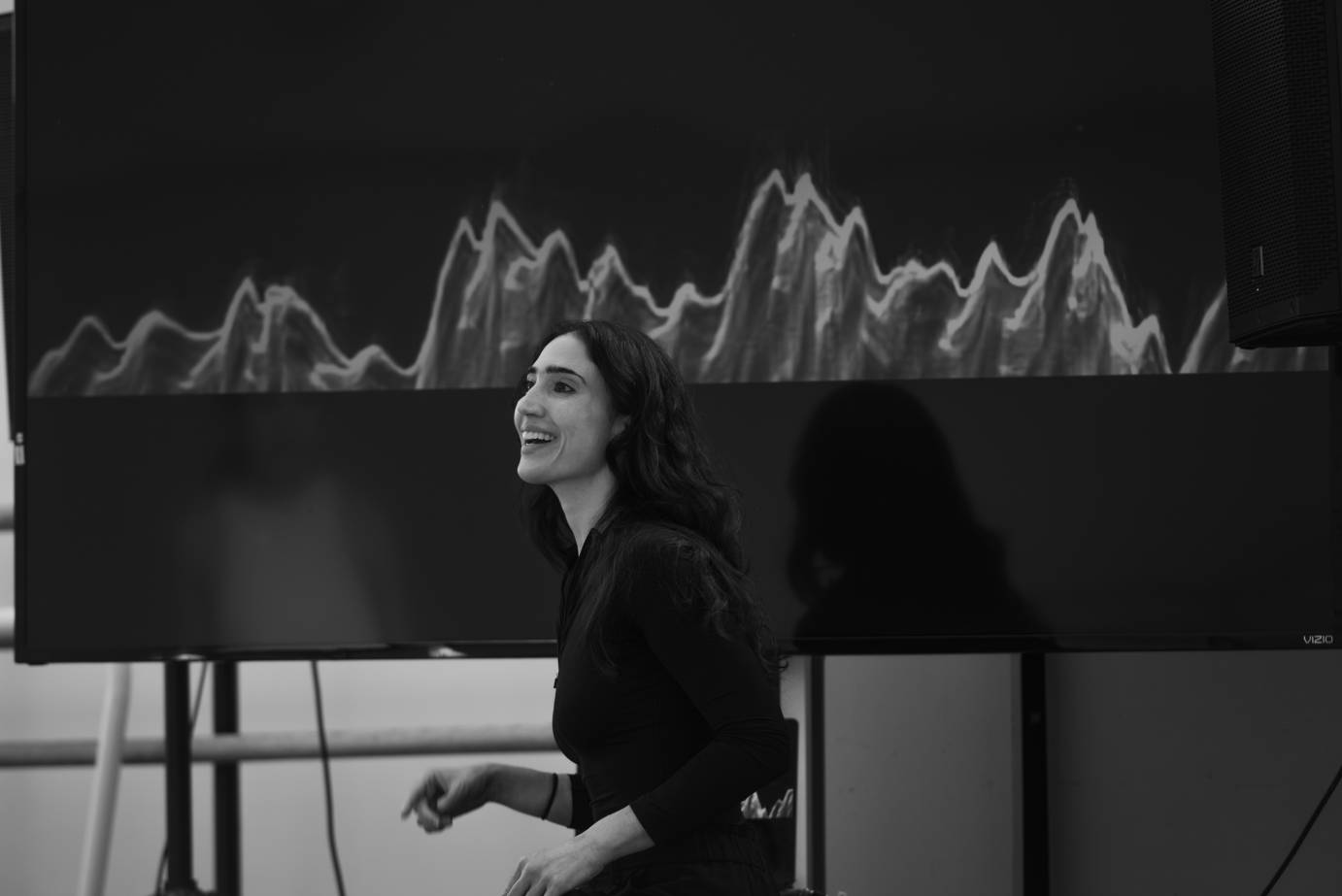
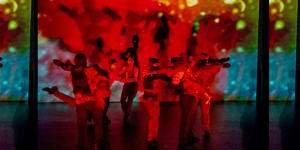
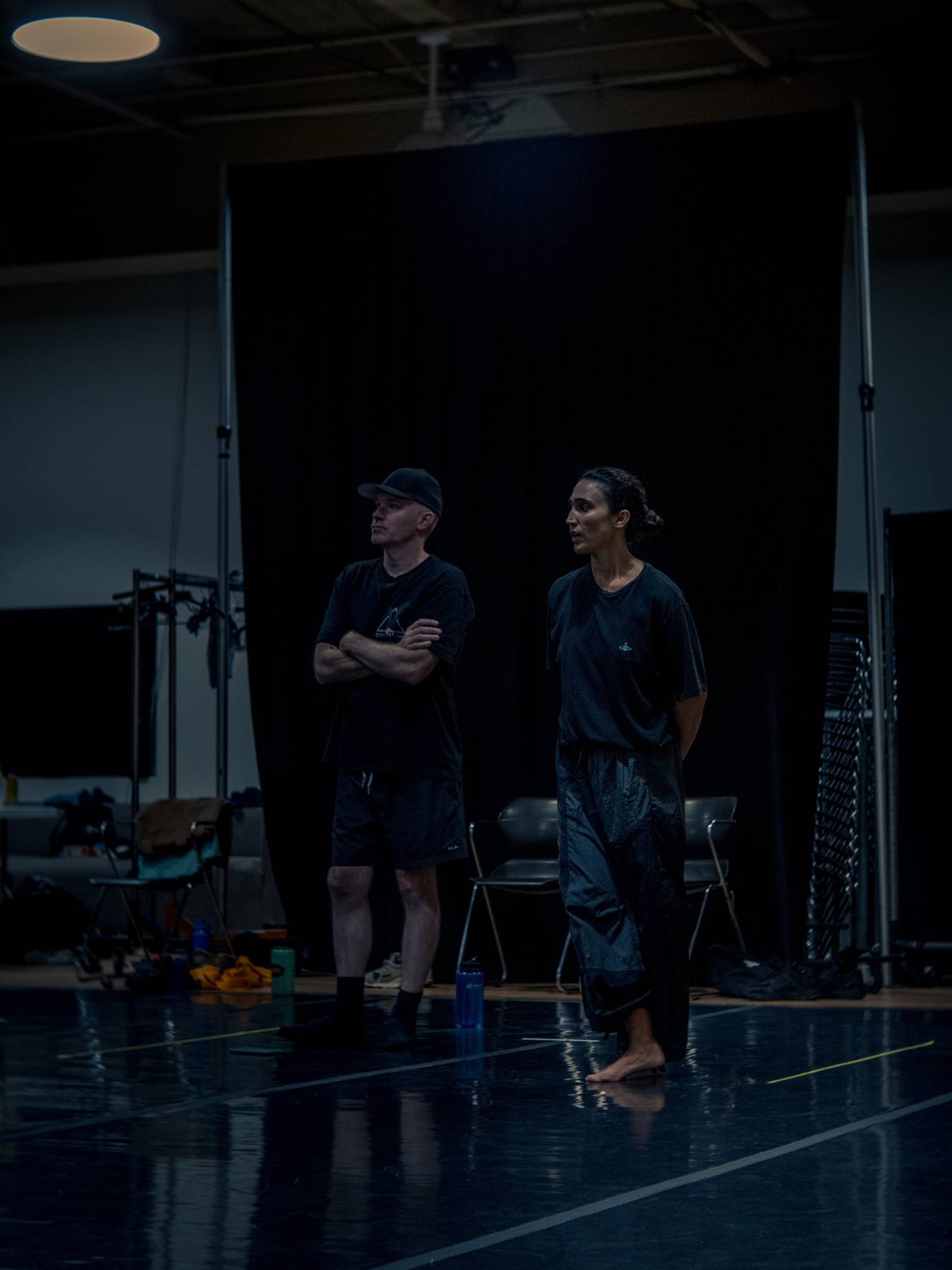
Director Tim Richardson, assistant director Kelly Ashton Todd, and dramaturg Catherine Correa are also in the rehearsal studio supporting the process. Richardson graciously shows me a sneak preview of the video installation he created in collaboration with video artists klsr and reinfected.me. The artists refer to the dazzling, morphing cloud-like installation as “the monolith.” It will exist upstage and play in tandem with the performers.
As I enter their studio, the artists navigate a group lifting section. They practice changing multiple formations, which transition almost imperceptibly. Audible breaths preface dynamic catches, suspensions, and level changes. I’m fascinated by the ease of these shifts amid the full-throttle action.
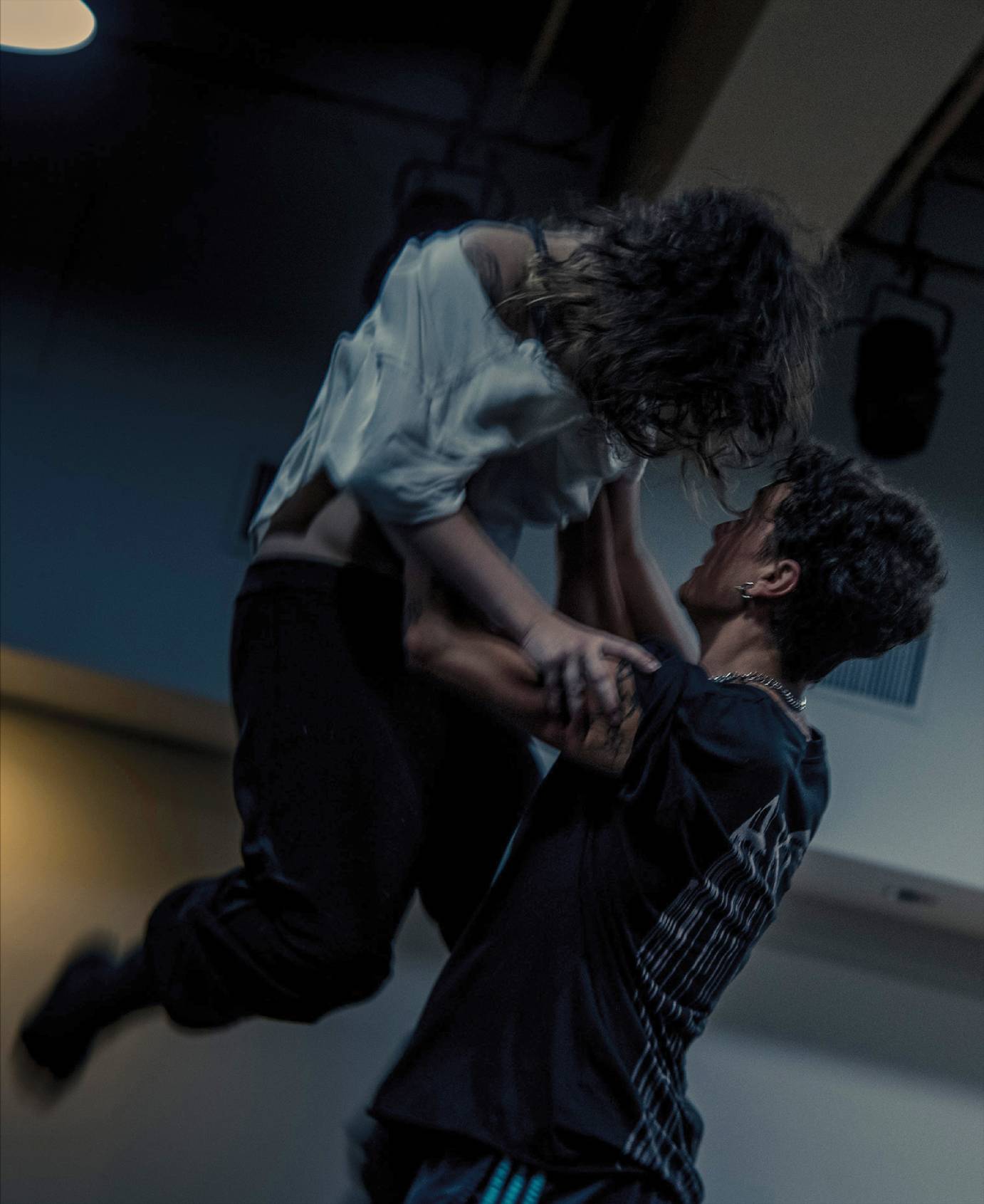
Witnessing a full run of Birth + Carnage brings me further into the artists’ stimulating universe. Through dance, media, and an original score by James Newberry, the 55-minute work threads galaxies. Celestial friction and patterns converse with the turbulent, yet heartfelt, realities of the human experience.
Following the rehearsal, I had the opportunity to chat with Phelan and Richardson to learn more about their process and discoveries.
Phelan describes the initial spark for the piece: “Dr. Burkhart introduced me to N-body simulations of gravity — how different masses in space interact with each other. Our first layer was exploring the topography of these masses… that began with three dots, which then multiplied into four, fifteen, forty dots all darting around. It was so beautiful! I wondered what would happen if we began to map them out.”

“What struck me more than anything,” continues Phelan, “was the amount of friction that it takes for a star to be born - or for anything to be created. I found it inspiring as a mirror for the systems of space, and how it reflects the systems that we have built or experienced as people. I asked myself: What's the human layer? We discovered that it's the fight to survive. Survival is what the piece is really built on…and the [idea that the] universe is inherently emotional. Because we’re not inanimate rocks floating around in space, we replace the force of gravity with the force of love, attraction, hate, or repulsion.”
“I keep coming back to things Dr. Burkhart said to us,” says Richardson. “How it’s a miracle that a star is born. It's like thousands of suns dying at once, and there are millions of versions of that.”
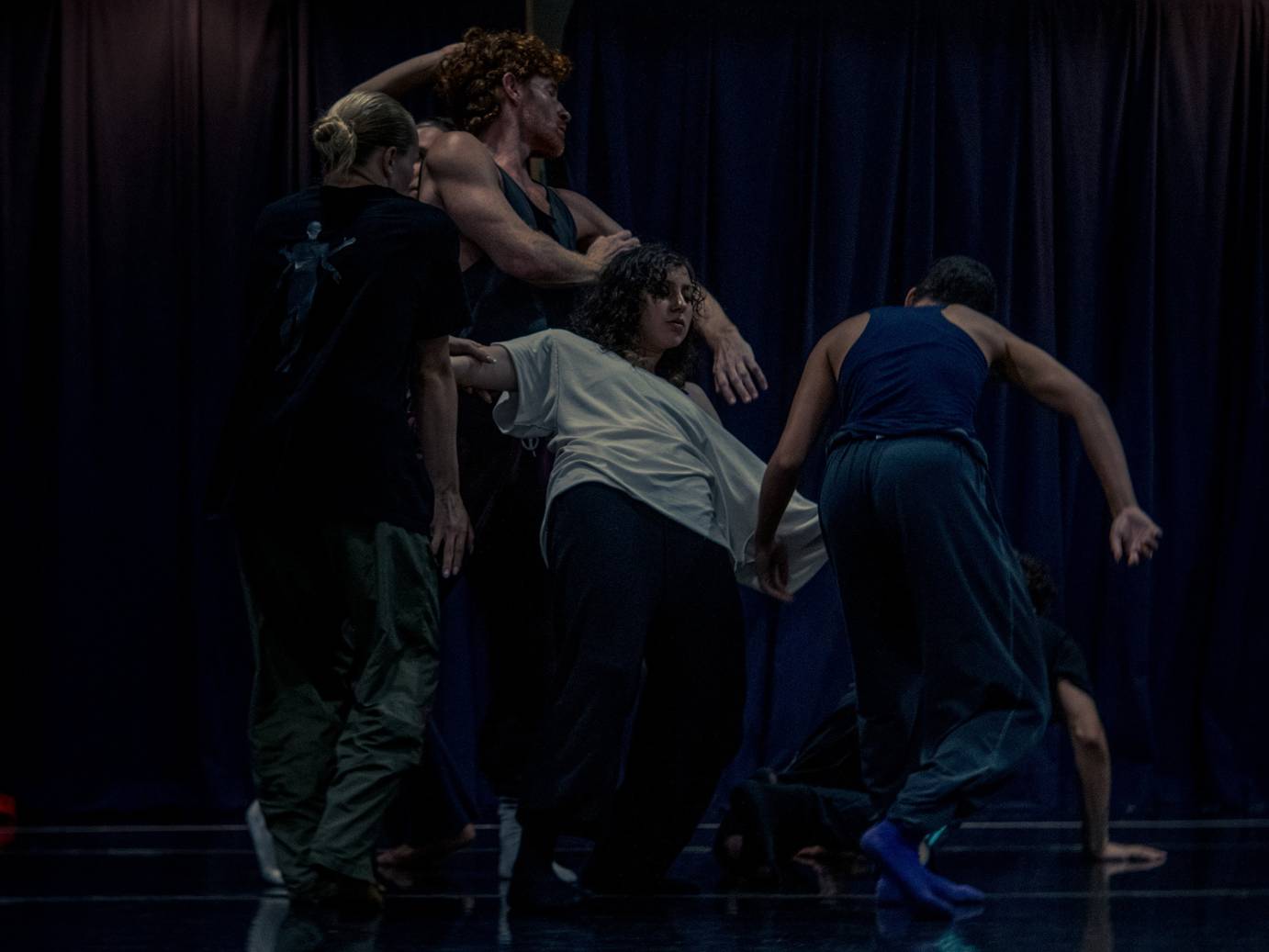
As Birth + Carnage developed, the team was committed to the idea that each element of the project — movement, media, and music — would carry equal weight.
“We’re giving the audience the opportunity to invest on different levels. And that’s the trickiest nuance: how does one thing not just completely dominate the other? How do they amplify each other?” Richardson explains.
Alongside her movement collaborators, Phelan emphasizes the importance of finding a shared language. “We begin every rehearsal with a warm up together, and we’ve spent a lot of time diving into my movement modality. Early on, we would have long improvisations together to find — for example — the language of stars forming, rather than approaching a phrase built from preconceived movement lenses. Together as a company, we found this very elastic quality, which felt like tension and gravity pulling, and slingshotting in. This became a base of what we made.”
Birth + Carnage resonated with me deeply, and I look forward to its premiere on December 19, 2025. In closing, I inquire what Phelan and Richardson hope audiences will carry with them after experiencing the work.
Phelan expresses her gratitude for the journey: “Being able to put dance as the centerfold of a [larger] experience is huge.” Dance is often considered as “spectacle.”
“We want people to see the possibilities of dance when you are doing something that’s outside its normal frame of reference,” Richardson concurs. I feel like we’re holistically connecting the content of the screen (or monolith), the story of the screen, and the story of the dance, of the light. I hope people walk away reinvigorated, and willing to look at dance and accept it in a new way. [We want] to crack through that glass ceiling of definitions.”