


Related Features
IMPRESSIONS: "The Firebird Variations," Details of Enchantment
IMPRESSIONS: American Ballet Theatre's 2026 Spring Season at Lincoln Center
IMPRESSIONS: American Ballet Theatre in Lar Lubovitch's "Othello: A Dance in Three Acts" at Lincoln Center

By Lisa Jo Sagolla
View Profile |
More From This Author
Published on March 19, 2026
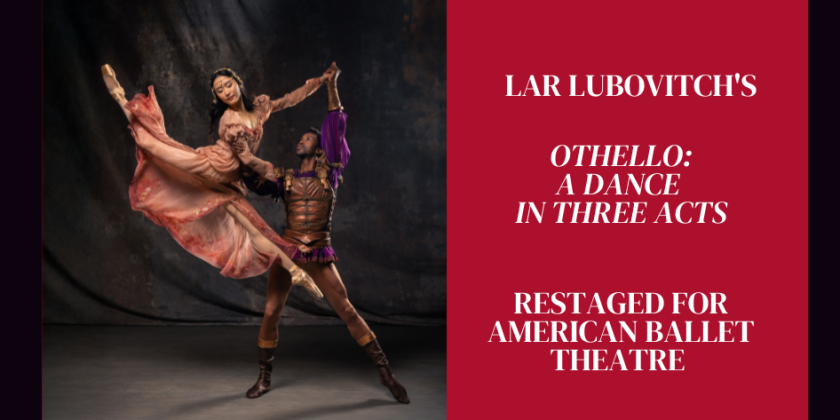
"Othello: A Dance in Three Acts." Photo: Steven Pisano
American Ballet Theatre presents
Othello: A Dance in Three Acts
Choreography: Lar Lubovitch
Music: Elliot Goldenthal
Scenic Design: George Tsypin
Costumes: Ann Hould-Ward
Lighting: Jack Mehler
Projections: Wendall K. Harrington
Featured Dancers: Calvin Royal III (Othello), James Whiteside (Iago), Jake Roxander (Cassio), Fangqi Li (Desdemona), Madison Brown (Emilia), Breanne Granlund (Bianca)
David H. Koch Theater at Lincoln Center
March 6 - 20, 2026
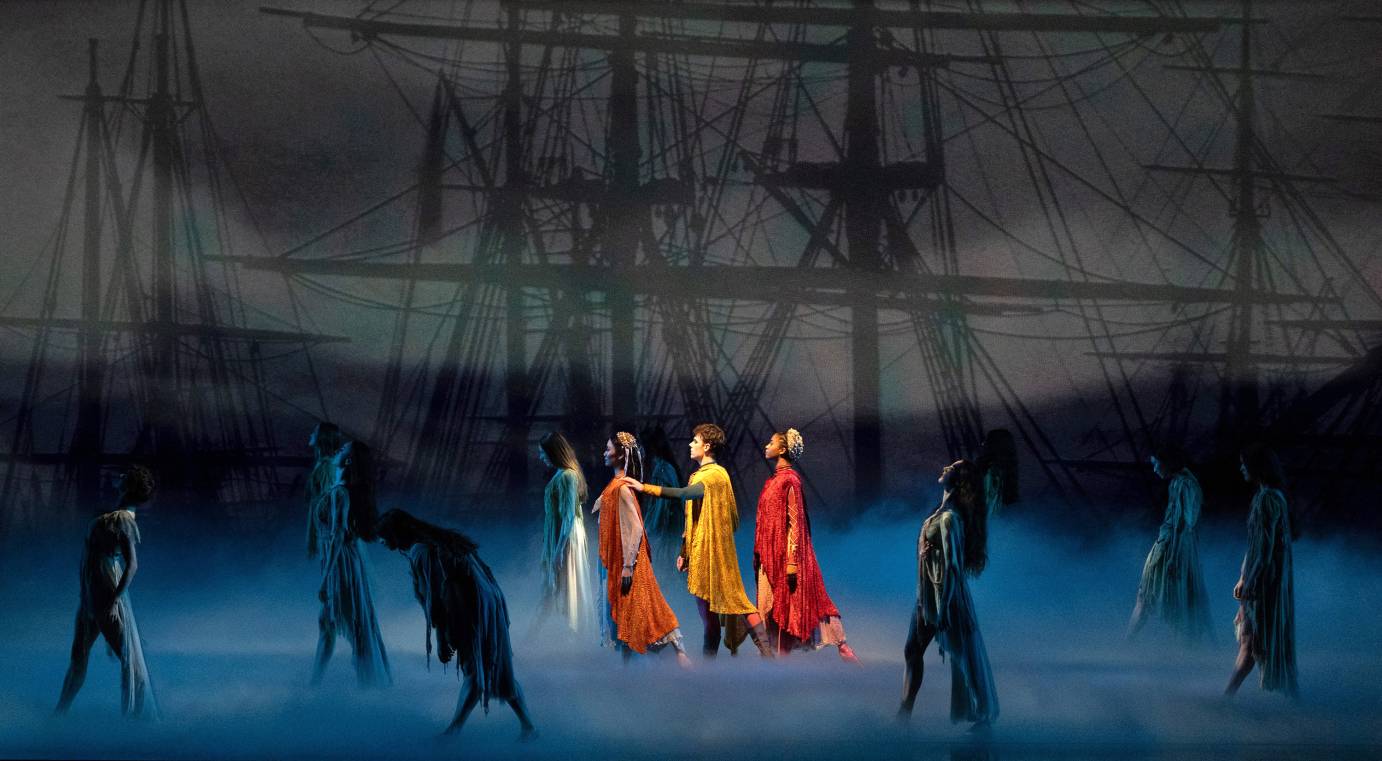
American Ballet Theatre opened its three-week spring season at Lincoln Center with “easy viewing” — choreographer Lar Lubovitch's highly accessible Othello: A Dance in Three Acts (1997). Its story of jealousy and betrayal is easy to understand. Its plot, conveyed through crystal-clear gestures and astute staging, is not hard to follow, and its full-blown emotions are easily felt. The dramatic actions referenced in its tailor-made score by Elliot Goldenthal, heavily orchestrated with brass and percussion, are not difficult to discern. And thanks to Jack Mehler’s shimmering lighting, Ann Hould-Ward’s Renaissance-suggesting costumes, Wendall K. Harrington’s raging-sea projections, and George Tsypin’s sleekly majestic sets, visually, it’s all very easy on the eyes. This ballet won’t satisfy those looking for a challenging evening of provocative dance, but as diverting balletic drama it certainly will do.
Rooted in an old Venetian folk tale, famously dramatized by Shakespeare, Lubovitch’s work — the first full-length ABT-commissioned ballet — tells the tragic story of the Moorish general, Othello, who is manipulated by his revengeful (passed-over-for-promotion) ensign Iago to falsely believe that Desdemona, Othello’s wife, cheated on him, with Cassio, Othello’s trusted (recently-promoted) lieutenant.
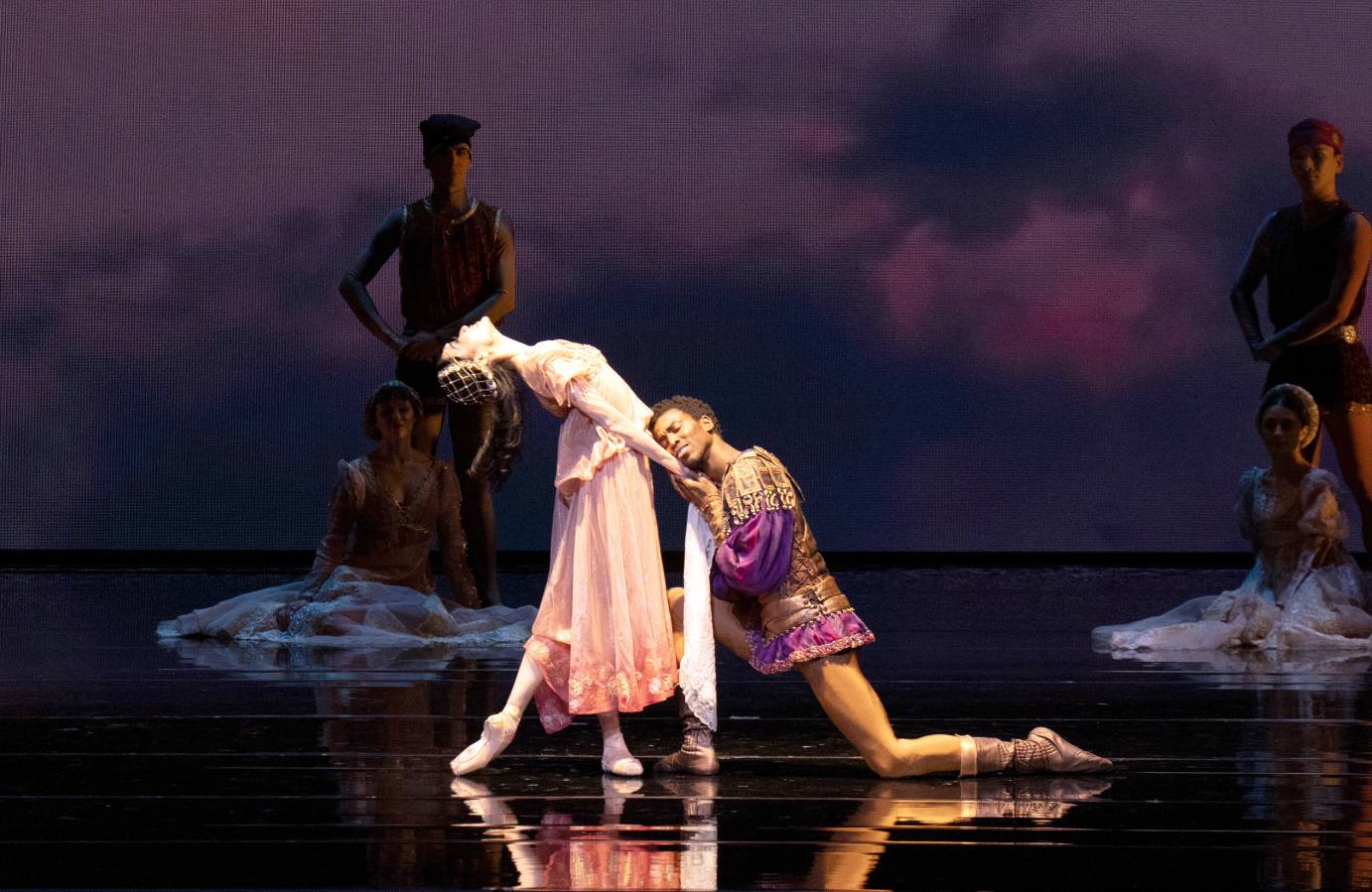
The ballet launches with a jump-out-of-your-seat blast from the orchestra that explodes into lively, loud, dissonant music signaling a thrill ride is ahead. As the curtain ascends we see Othello down on his knees, praying, his torso swaying, stretching, and contracting in ways reminiscent of Martha Graham-style modernism. One immediately thinks of The Moor’s Pavanne, choreographer José Limón’s classic modern-dance rendering of the Othello tragedy. But whereas Limón’s piece is a spare quartet, tightly focused on the personal relationships among four key characters, Lubovitch’s ballet is a larger, lavish, theatrical endeavor. Though both works make powerful use of nuanced gestures to convey character and emotion, Lubovitch’s opens out to situate the intimate actions within broader environments.
In the opening scene, played within a gold-tinged Catholic church setting, we watch Othello and Desdemona marry, while a highly annoyed Iago looks on. Tiny head, arm, and chest movements tell everything we need to know about the couple’s respectful love for one another, and of Iago’s deep resentments. Not solely gestural, Lubovitch’s movement language also employs full-bodied ballet and modern vocabulary, such that the overall choreography strikes a pleasing balance between “storytelling” and “dancey-ness.” And not only does Lubovitch pack a lot of emotional “information” into brief gestures, but the dramatic moves blend into, and never interrupt, the choreography’s larger kinetic momentum. This is no surprise, as Lubovitch’s long-admired strength as a choreographer is his flowing approach to movement phrasing. There’s a beautiful circularity to his choreography, one action smoothly turning its way into the next.
Despite its incorporation of classical vocabulary — which sometimes feels inserted into solo passages only to display the technical skills of ABT’s world-class dancers — Lubovitch’s work looks more like a modern piece than a ballet, particularly in its ensemble sections. Act II, titled The Tarantella, kicks off with a heated dance by Cypriot women celebrating the return of their seamen husbands. Though tarantella-like in rhythm and spirit, the movement vocabulary — with its skipping, parallel-legged front and back attitudes and naturalistic arm swings — looks more Isadora Duncan than earthy folk dance. When the principal tarantella dancer is lifted in grand jeté, her deliberately flexed ankles read like blatant modern-dance branding.
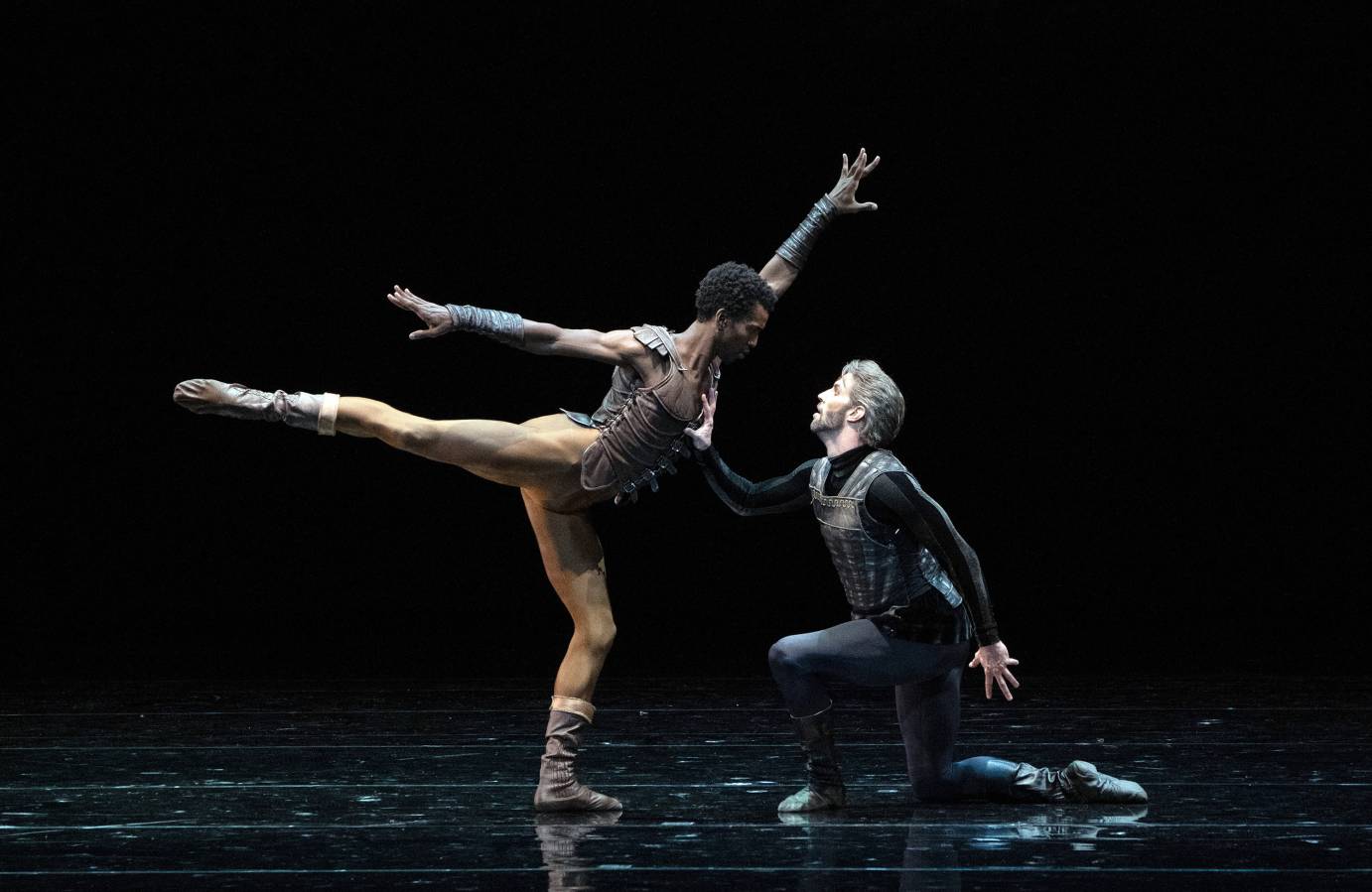
Amid the energetic ensemble dancing, the principal characters play out the drama of Desdemona losing her precious white handkerchief. The all-important prop is found by her maid, Emilia, then given to Iago who plants it on Cassio as evidence to convince Othello of Desdemona’s infidelity. Smartly, Lubovitch clears the stage of the corps de ballet each time an important plot point needs to be communicated by the principals, resulting in cinematic shifting between spotlighted individual actions on a bare stage and big group sequences populating the space with lots of wildly moving bodies. The back and forth keeps us continuously amused, while edifyingly “in the know.”
Our ease in comprehending the goings-on is also enhanced by the long, sustained notes that permeate the musical score. Not only do they underline the sustained energies of the choreographic phrases, but they create suspense, warning us to remain on “high alert” each time something important is about to occur. The held sounds sometimes ride above rhythmic gestures in the choreography, so we sense that what is happening before our eyes is not the whole story.
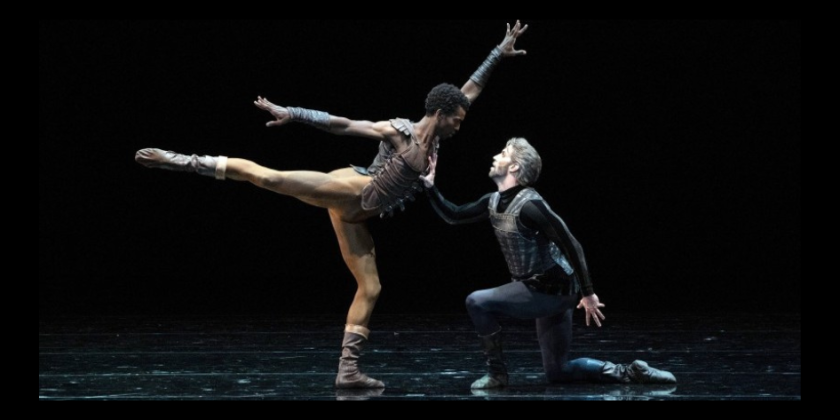
Contributing significantly to the ballet’s storytelling clarity throughout, and immeasurably in Act III, were the superb performers I saw in the leading roles opening night: Jake Roxander (Cassio), James Whiteside (Iago), Fangqi Li (Desdemona), and Calvin Royal III (Othello). An astounding technician, Roxander not only wows with his athletic leaps, but exudes a disarming boy-next-door likability that has us swooning upon his every appearance. Whiteside is a delicious Iago, his anger bursting out, from time to time, in quick series of sharp, slicing, maniacal gestures after which he “collects” himself, neatly yanking down each of his sleeves, or returning “calmly” to one of his dishonestly deferential stances or servile bows. A winning combination of the subtle and the broad, Whiteside’s relatable performance imbues the despicable Iago with comic qualities that, while not always dramatically appropriate, are marvelously entertaining.
Yet the ballet remains Royal’s show. His presence is so regal, his movements so strong and effortless, that we consistently see his Othello as the worthy tragic hero. In the final scene, dancing alongside Li — whose airy movement quality conjures an amazing sense of fragility — Royal carries the day. Except for one memorable moment — when an airborne Li opens her legs 180 degrees, suspended by what looks to be nothing more than her partner’s imposing hands, one on either side of her face — the briskly-directed, climactic pas de deux is not choreographically gripping. But Royal makes us feel it. We become frightened as his treatment of Desdemona grows more forceful by the second, and one barely has time to register the breath leaving Desdemona’s body before Othello plunges a knife into his stomach. Even though we know what’s coming, the ending is a shocker. I was still gasping, my mouth wide open, long after the final curtain hit the floor.