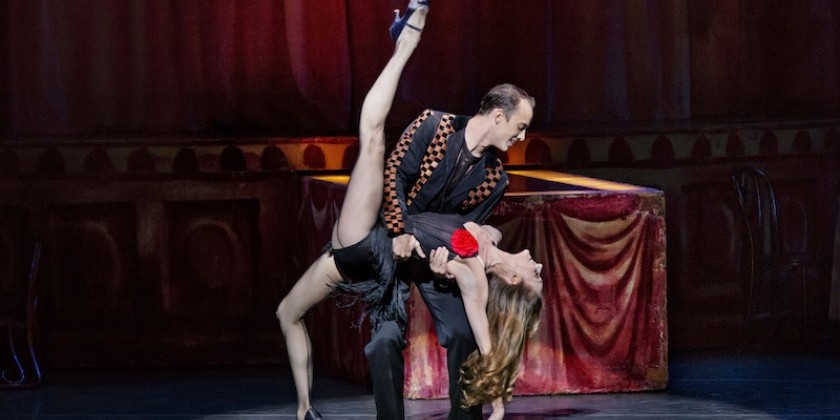




Related Features
DAY IN THE LIFE OF DANCE: “Watching American Dance Machine for the 21st Century’s Virtual Videos” by MOVING VISIONS Editor Lisa Jo Sagolla

The Dance Enthusiast Asks Movers and Shakers of Our Dance Community, "What are You Excited About this Fall?"
IMPRESSIONS: American Dance Machine for the 21st Century in "Gotta Dance!"

By Lisa Jo Sagolla
View Profile |
More From This Author
Published on December 16, 2025
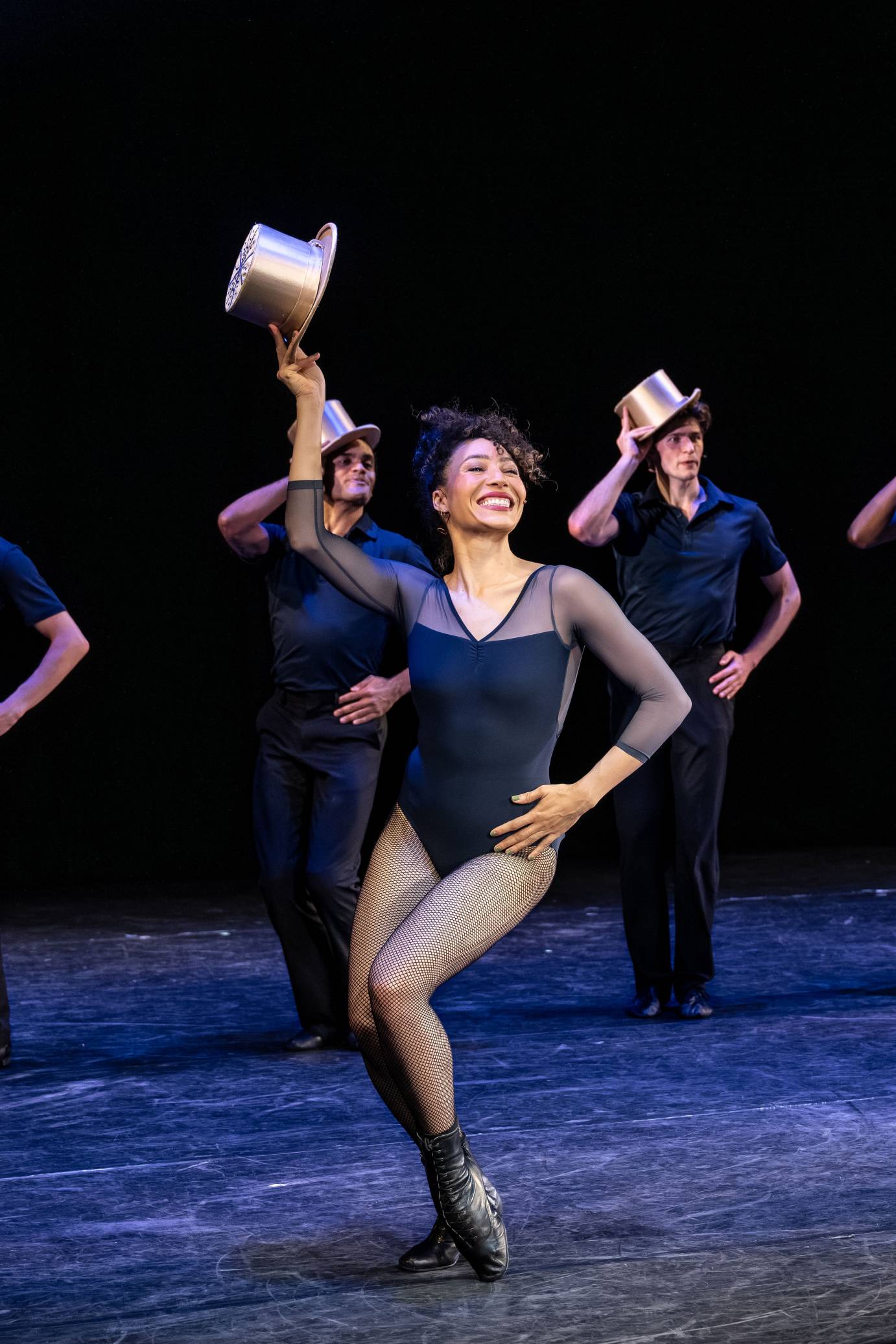
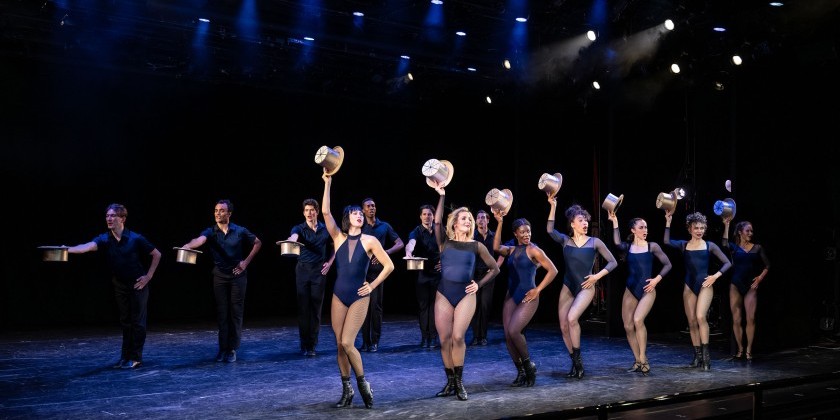
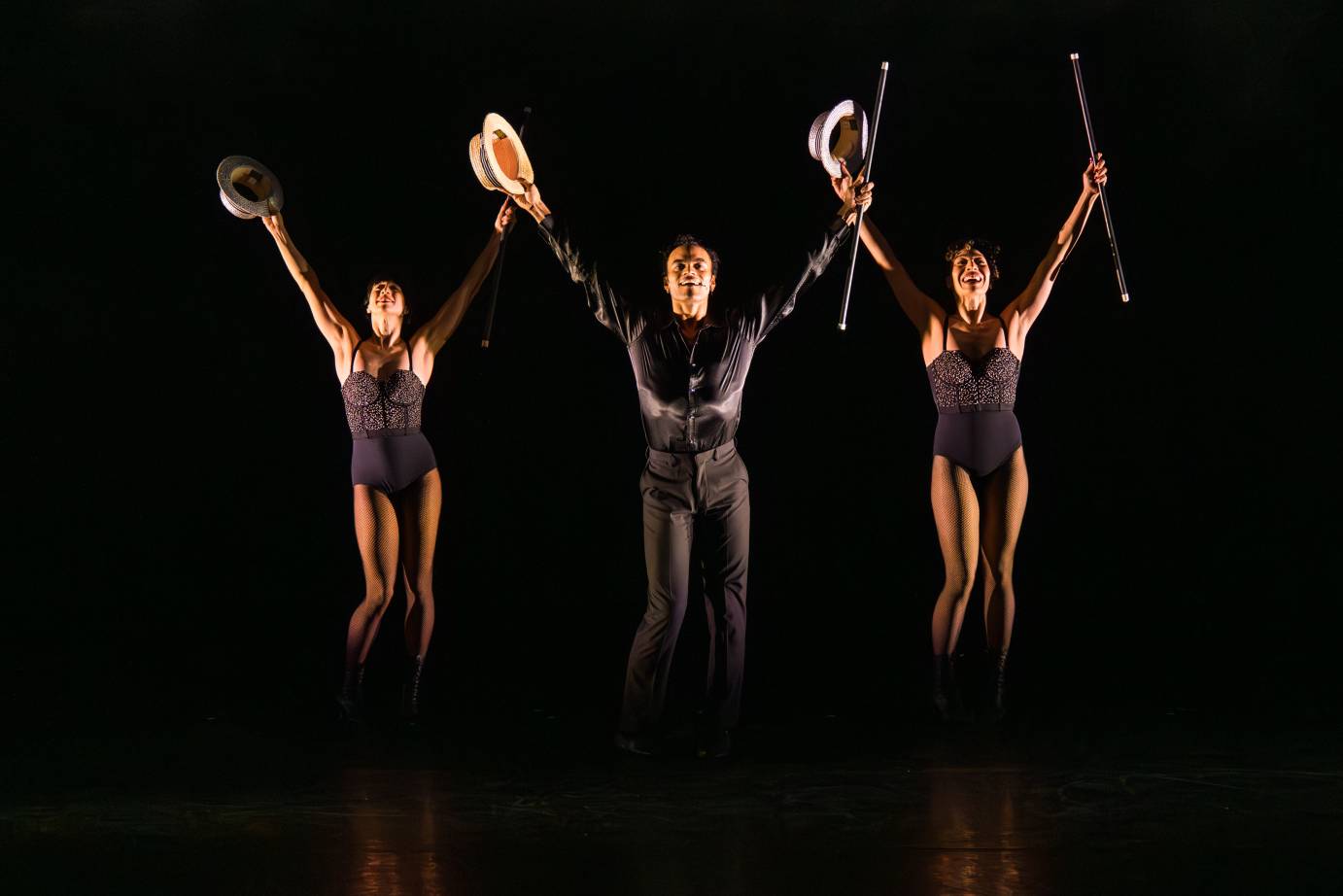
"One" inGotta Dance! Photo: Shawn Salley
See It from Now until December 28, 2025 at the York Theatre
Conception: Nikki Feirt Atkins
Direction: Nikki Feirt Atkins and Randy Skinner
Choreography: Gene Kelly, Stanley Donen, Bob Fosse, Jerome Robbins, Susan Stroman, Randy Skinner, Joey McNeely, Lynne Taylor-Corbett, Billy Wilson, Christopher Wheeldon, Michael Bennett, Bob Avian
Staging: Tome Cousin, Kelly Gleason, Robert LaFosse, Brian Lawton, Dustin Layton, Baayork Lee, Donna McKechnie, Stephanie Pope, Sean Quinn, Lars Rosager, Pamela Sousa, Caleb Teicher, Alexis Wilson
Music & Lyrics: George & Ira Gershwin, Cy Coleman, Jule Styne & Stephen Sondheim, Robert Palmer, Mike Stoller & Jerry Lieber, Herb Nacio Brown & Arthur Freed, Stephen Schwartz, Leonard Bernstein & Stephen Sondheim, Louis Prima, Ben Bernie and Maceo Pinkard & Kenneth Casey, Irving Berlin, Marvin Hamlisch & Edward Kleban
Musical Direction: Eugene Gwozdz
Lighting Design: Ken Billington // Costume Design: Marlene Olson Hamm, David C. Woolard, William Ivey Long // Sound Design: Peter Brucker // Scenic Coordinator/Props: Noah Glaister // Projection Design: Brian C. Staton
Dancers: Brandon Burks, Anthony Cannarella, Barton Cowperthwaite, Deanna Doyle, Paloma Garcia-Lee, Jessica Lee Goldyn, Afra Hines, Jess LeProtto, Kendall Leshanti, Drew Minard, Georgina Pazcoguin, Samantha Siegel, Taylor Stanley, Blake Zelesnikar
December 3 - 28, 2025
If you are a fan of traditional American musicals, you don’t want to miss Gotta Dance!, one of the most entertaining shows I’ve seen in ages. The newest offering from American Dance Machine for the 21st Century — a company dedicated to the preservation and performance of musical theatre choreography — is a 90-minute compilation of 16 fabulous numbers from Broadway and Hollywood musicals is playing at New York’s intimate Theatre at St. Jean’s until December 28, 2025.
While the dancing — performed by a 14-member cast drawn from today’s finest Broadway terps — is top drawer, the show’s success lies in its astute inclusion of contextualizing song, spoken word, and theatrical production elements. Despite my fervent interest in musical-theatre dance, I’m typically disappointed by full-evening productions comprising discrete dance numbers from different Broadway shows. I find myself appreciating those dances as “artifacts” for scholarly analysis. Because musical theatre is such an integrated art form, when presented “out of context” its choreography loses much of its eloquence. But here, I felt none of that academic “distancing” as I was completely caught up in the drama put forth by each excerpt.
In this show — smartly conceived by ADM21 founder Nikki Feirt Atkins, and co-directed by Atkins and Randy Skinner — the dance numbers are presented within extended scenes that include surrounding dialogue and accompanying songs that the choreography was originally created to heighten. Additionally, each scene is played against an evocative video projection. Designed by Brian C. Staton, the projected images recall the set designs from the various musicals, and are kicked off with quick bits of text that identify the choreographer and situate the scene within the musical’s larger narrative. All of this works magnificently to set us up with the “information” we need to experience the dancing as convincing dramatic expression, not just as choreographic “history.”
And then, of course, there’s the music. Wow! Helmed by Eugene Gwozdz, a live pit orchestra fuels the evening with high-octane performances of excitingly-orchestrated show tunes by some of Broadway’s greatest songwriters — Irving Berlin, Leonard Bernstein, the Gershwins, Stephen Sondheim, Cy Coleman, and Jule Styne, among others. While brilliantly energizing the dancing, the music also buttresses the choreography’s expressive capacity, most notably with the blaring, snazzy sounds of “I’m a Brass Band” (Sweet Charity – 1966), which underline Bob Fosse’s witty take on drum-major maneuvers, and in the arty “Mr. Monotony” (Jerome Robbins’ Broadway, 1989), where wailing brass, a mischievous clarinet, and insistent percussion mirror characters in the love triangle playing out in Jerome Robbins’s choreography.
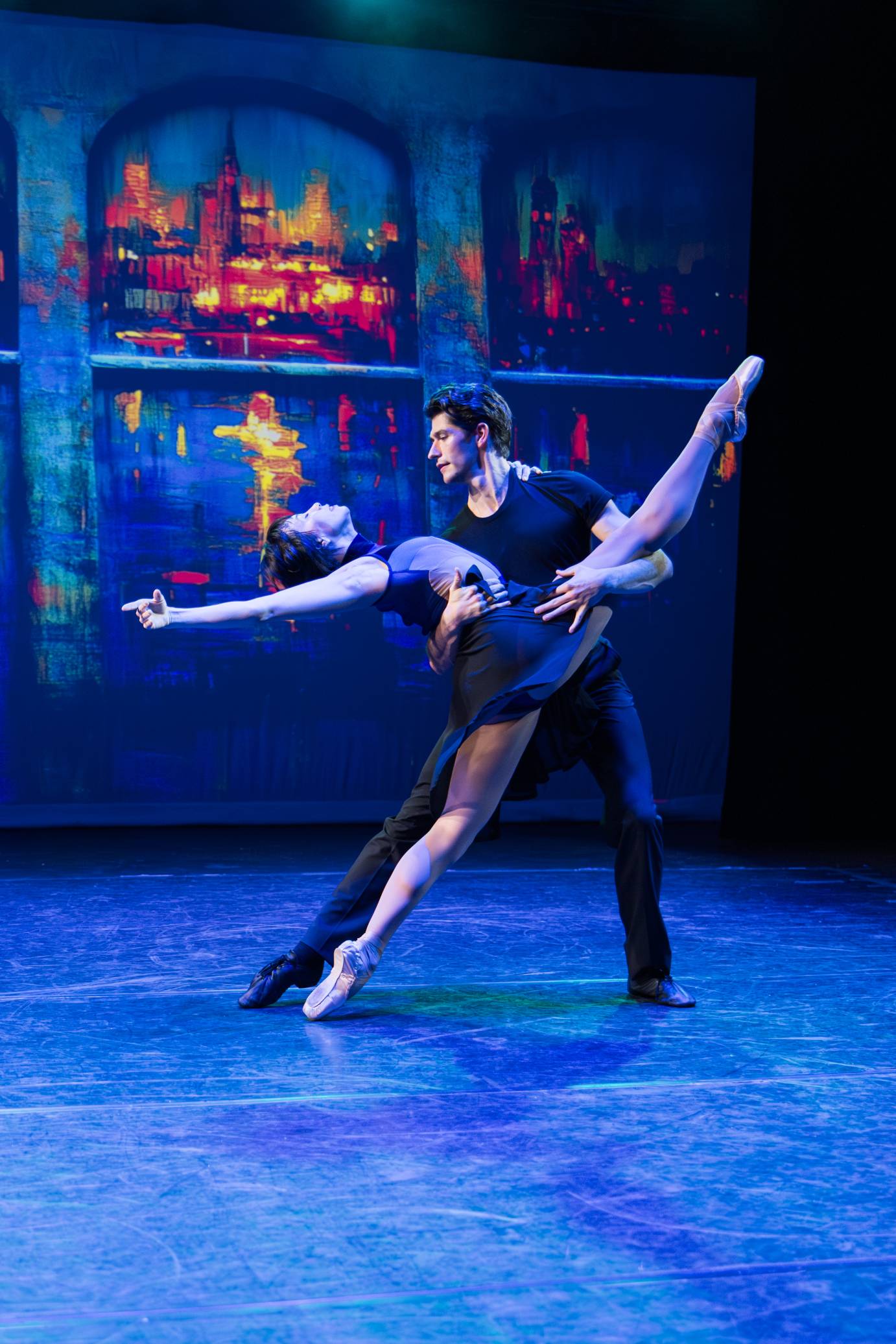
But despite how dazzlingly framed it all is, the real star of the show is the choreography. We are treated to impeccable re-creations of memorable dance numbers from stage and screen musicals choreographed by Fosse, Robbins, Susan Stroman, Joey McNeely, Lynne Taylor-Corbett, Michael Bennett & Bob Avian, Christopher Wheeldon, Randy Skinner, Billy Wilson, and Gene Kelly & Stanley Donen. While the line-up includes numbers from two 21st-century shows — Wheeldon’s romantic pas deux from 2015’s An American in Paris and Skinner’s elegant tap routine to “I Love a Piano” from 2008’s Irving Berlin’s White Christmas — the production feels like a nostalgic trip back in time, to an era when theatre dance had not yet begun to absorb hip-hop influences. Completely absent is the gesture-driven, street-dance vocabulary that permeates so much of what we see on Broadway and in films today. The choreography celebrated here represents an era when ballet, jazz, and theatrical-style tap formed the foundational languages of musical-theatre choreography. Even Stroman’s sexy bar-scene number, “Simply Irresistible” from Contact (2000), is essentially jazz dance, albeit heavily seasoned with the style and steps of country-western line-dancing — a pertinent reminder of how Broadway dance often reflects not only the time and place of a musical’s storyline, but also the period in which the show itself was produced. (Remember that late-1990s country-line-dance fad that invaded clubs everywhere, even in urban areas?)
Fully appreciating the abundance of well-crafted ensemble choreography this show has to offer can be challenging, however, as every cast member is a stand-out performer who really captures the Broadway style (ya’ gotta’ sell it!).
Often, I found myself so captivated by an individual dancer that my gaze followed them throughout an entire number, and I forgot to attend to the larger choreographic picture. I couldn’t take my eyes off New York City Ballet principal dancer Taylor Stanley shimmying away as a high-stepping marcher in “Brass Band,” punching out the swiveling moves of Fosse’s “Manson Trio” (Pippin, 1972), and getting down with jazzy percussiveness in Wilson’s bluesy “Sweet Georgia Brown” (Bubbling Brown Sugar, 1976).
And you can forget about noticing anything else once your eyes light upon the sparkling Barton Cowperthwaite who brings exceptionally high wattage to every step he takes.
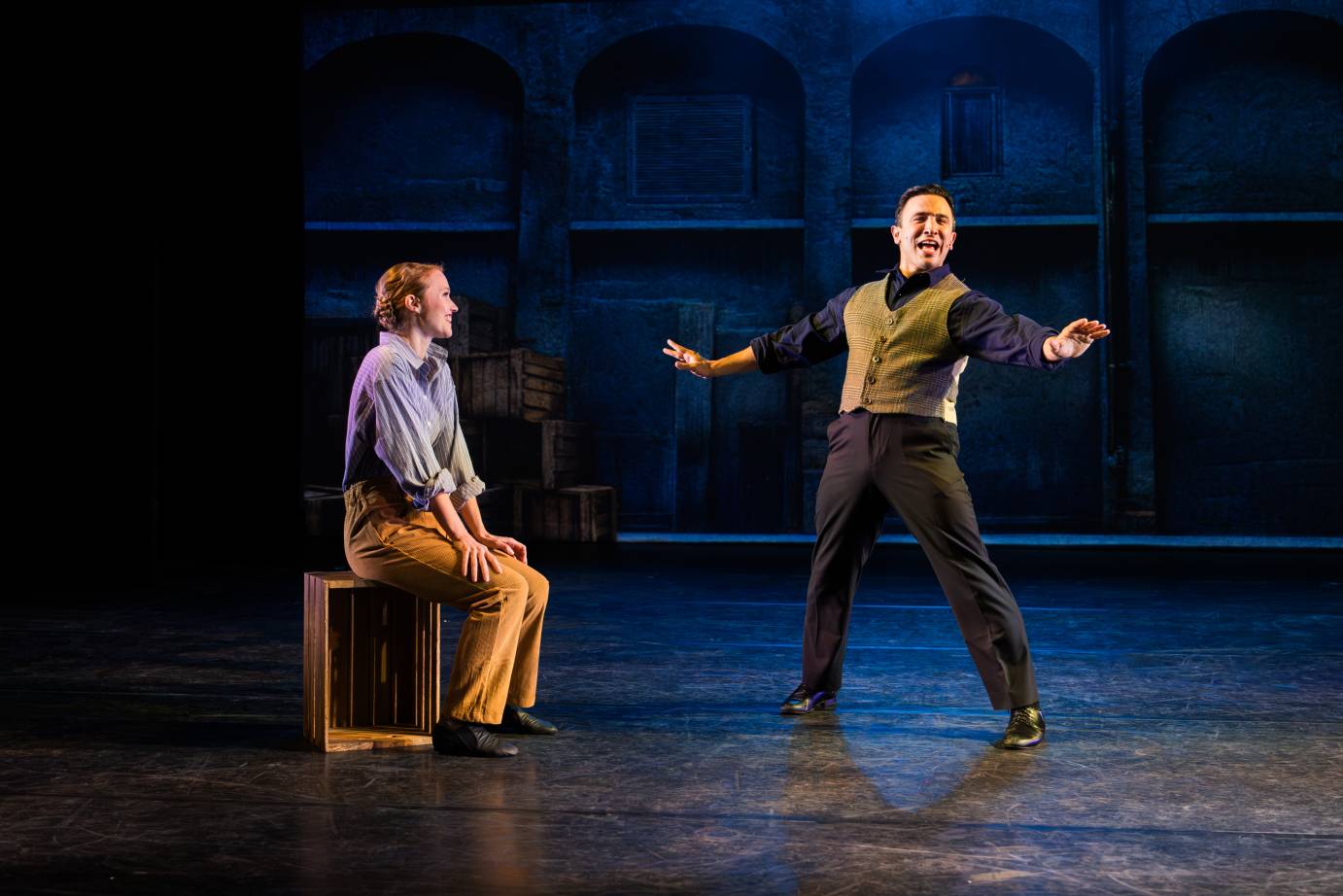
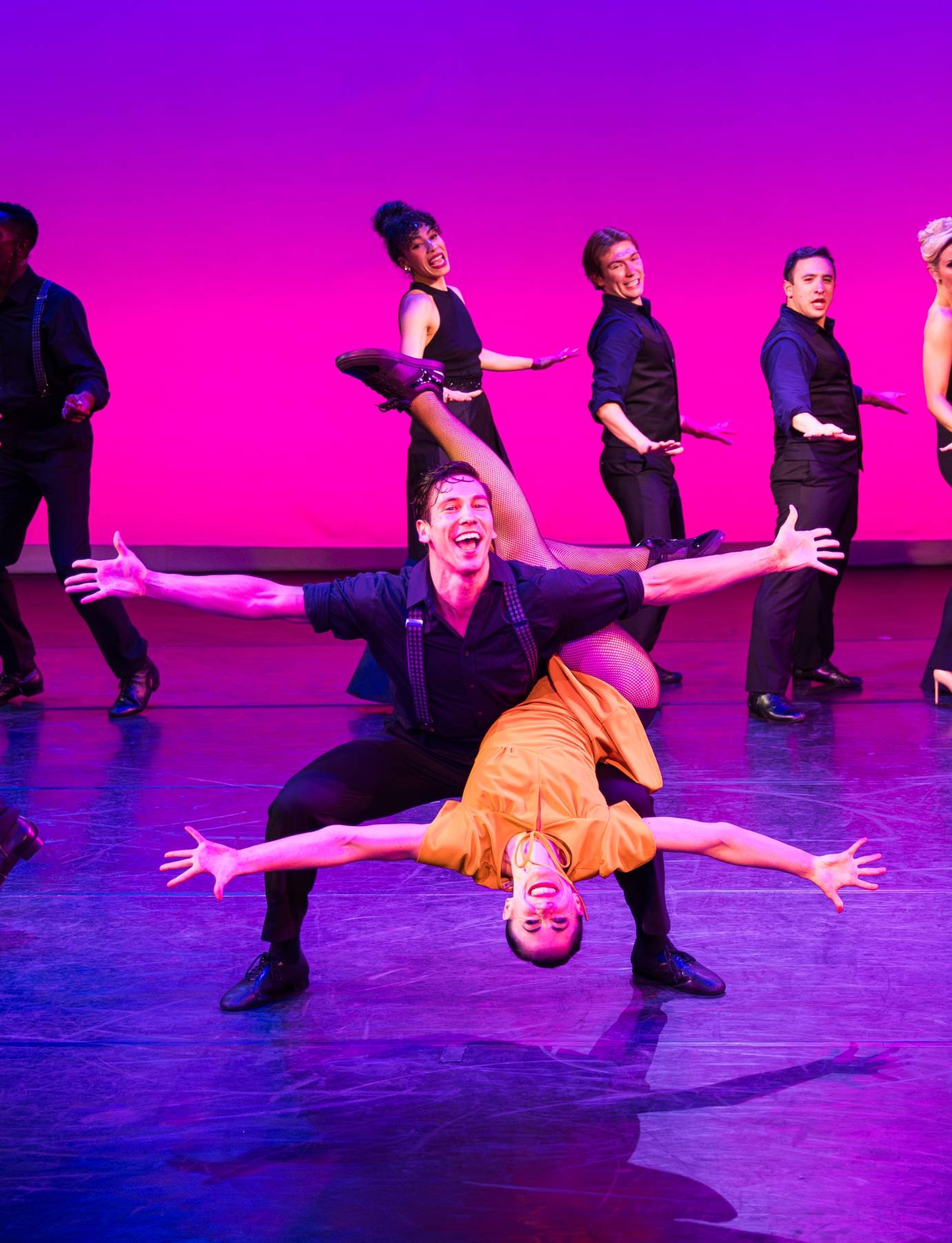
The show’s most surprising performances come from Jess LeProtto, the virtuoso dance technician and stylist who has been winning the hearts of audiences for years with his dancing’s warmth and pizzazz. Here, we discover he can also sing and do comedy. Not only does he show great partnering strength in the difficult held lifts of “Broadway Melody” and tap up a storm alongside Brandon Burks in “Moses Supposes” (Singin’ in the Rain – 1952), both choreographed by Kelly & Donen, but with Deanna Doyle LeProtto gives endearing interpretation to the comic scene-song-and-dance “All I Need is the Girl” (Gypsy – 1959). In that number, watching LeProtto seamlessly punctuate his words and lyrics with the steps of Robbins’s choreography is like “seeing” the definition of the integrated musical embodied in a single performer.
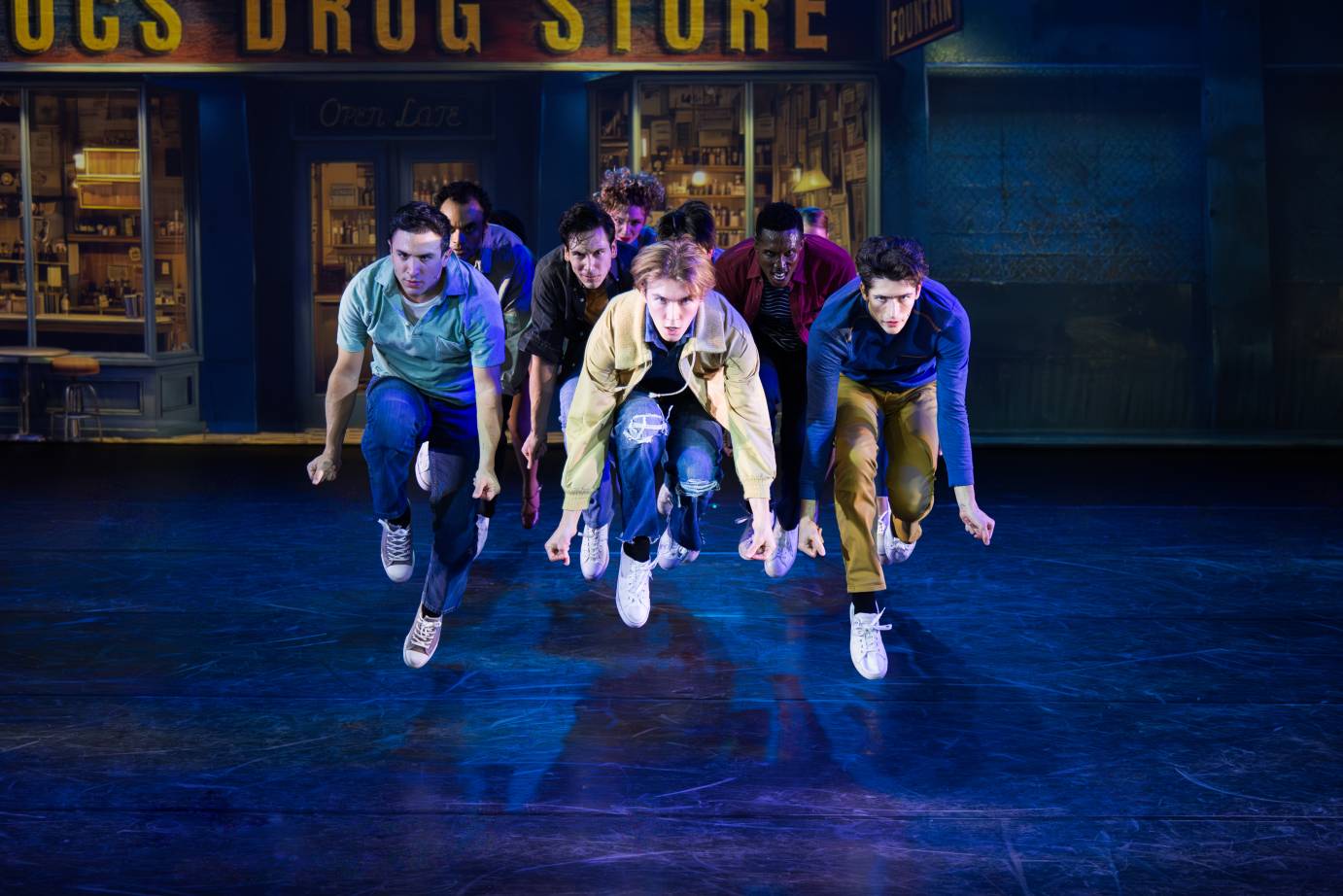
Other highlights of the evening include a slick performance of “Cool” from Robbins’ West Side Story (1957), well-sung by Drew Minard as the Jets’ leader, Riff, and an exciting scene from Taylor-Corbett’s Swing! (1999) that incorporates acrobatic Lindy Hopping and tight four-part scatting to evoke a Swing Era supper club.
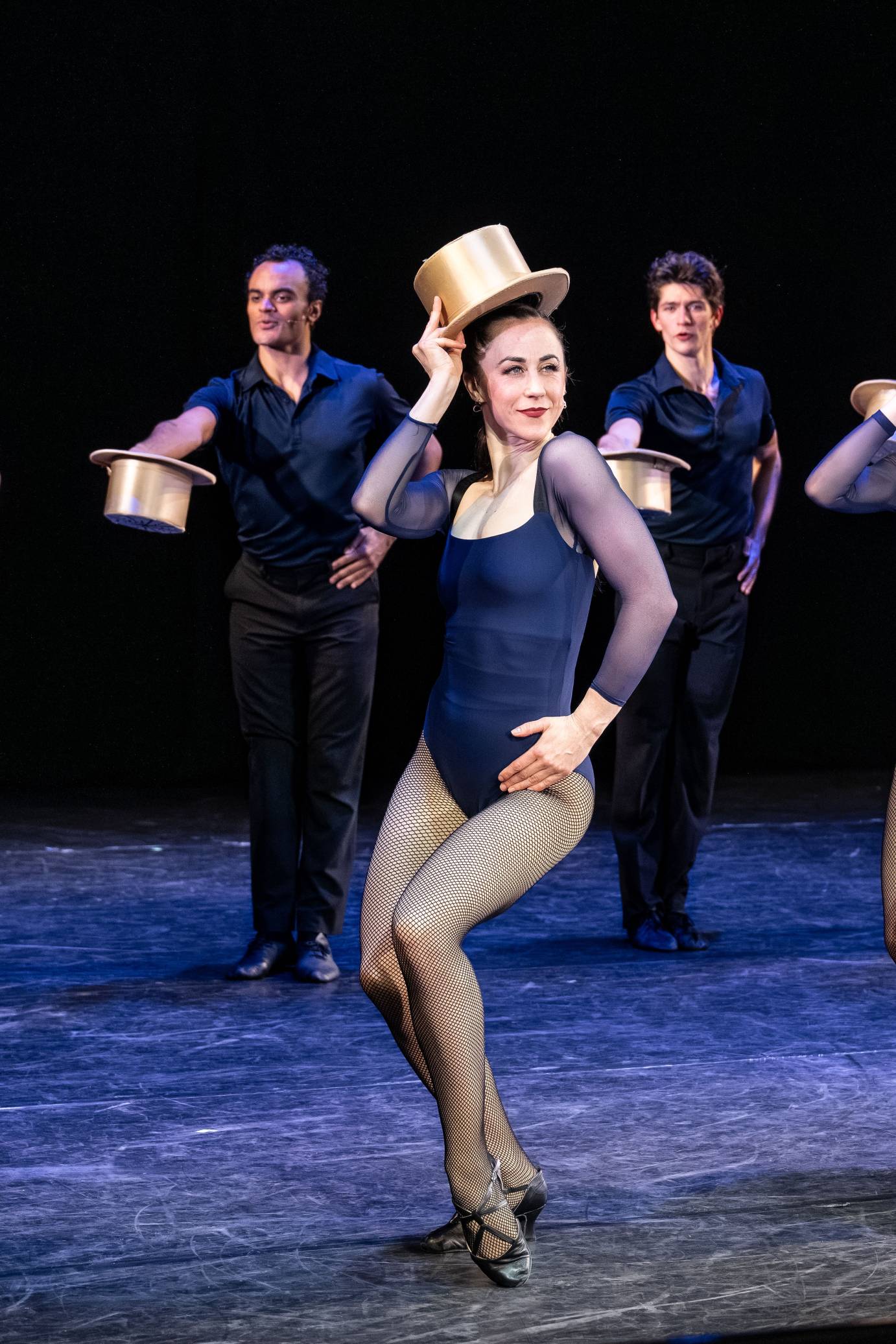
Fittingly, the show ends with two numbers, “The Music and the Mirror” and “One,” from Bennett & Avian’s A Chorus Line (1975), the musical that most outrightly honors Broadway’s dancers. The first is stunningly performed by a true triple threat, Jessica Lee Goldyn – I honestly can’t say which is most compellingly, her fiercely accented dancing, her rich belt, or her heartfelt acting, as a Hollywood failure pleading for a dance job in a Broadway ensemble. When she utters the musical’s iconic line, “I’m a dancer,” I suspect every terp in the audience will shed a tear.

And if not at that point, then certainly soon after, when the rest of the company enters — one by one from the down-stage-right wing, bowing with a tip of their gold top hat before taking off into that most famous of finales, “One.” Though its precision chorus-line choreography is spectacular throughout, it’s when the number builds to that linked-arms circle formation of accelerating grapevines that the audience breaks out in ecstatic applause and there will not be a dry eye in the house — at least not among those of us fortunate enough to feel kinship with this thrilling genre of theatrical dance.