

Related Features
IMPRESSIONS: Compagnie Hervé Koubi's "Sol Invictus" at The Joyce Theater
IMPRESSIONS: Ayodele Casel’s "The Remix" at The Joyce Theater
IMPRESSIONS: GALLIM in "Mother" at The Joyce Theater

By Kristen Hedberg/@kristen.hedberg on Instagram
View Profile |
More From This Author
Published on November 14, 2025
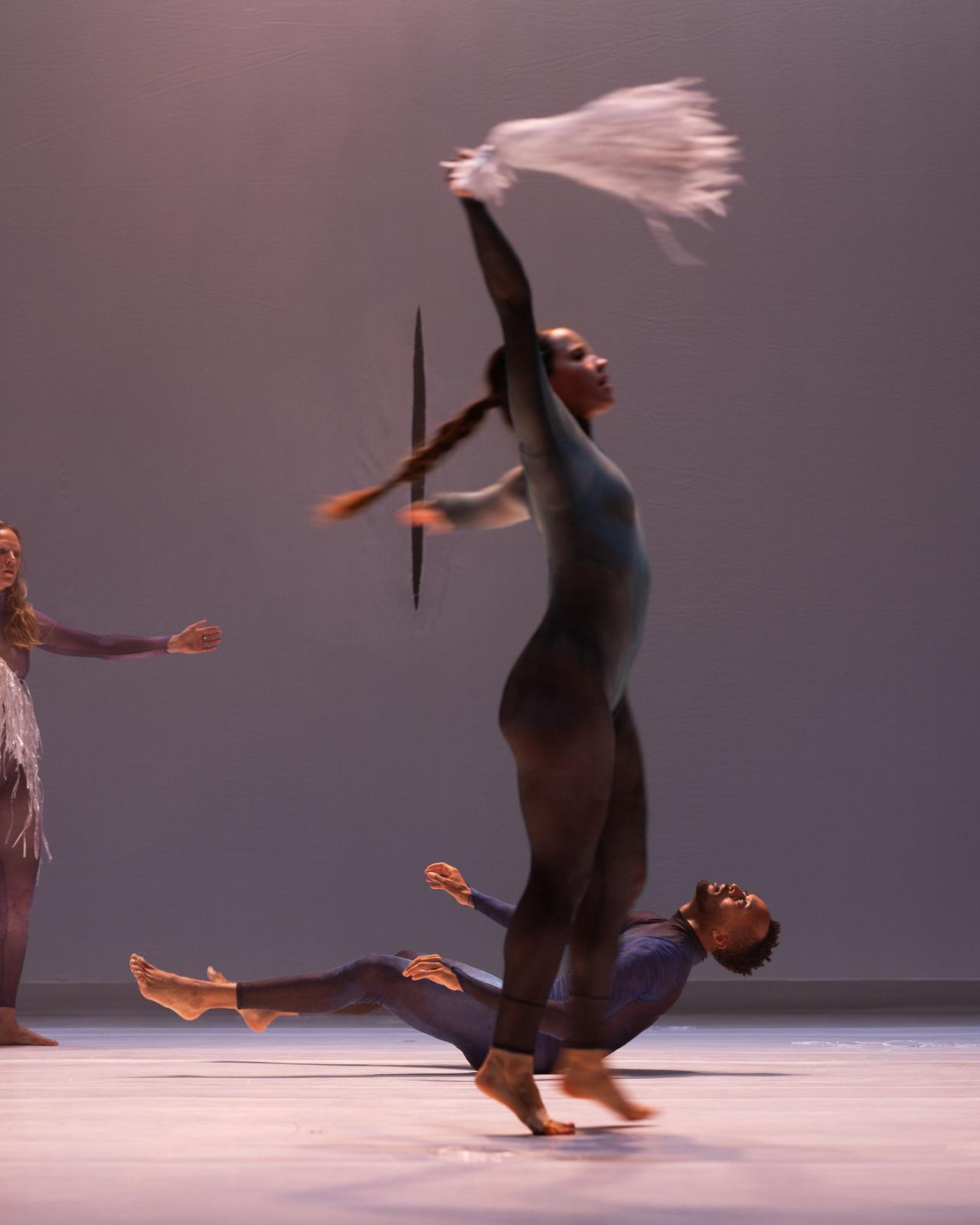
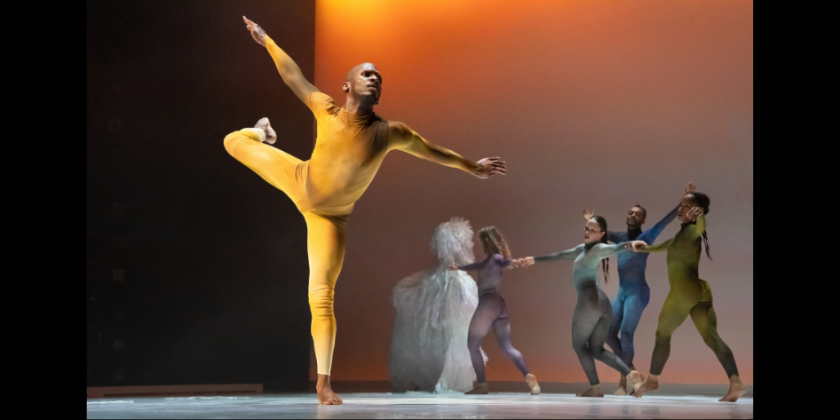
Donovan Reed and Gallim Company. Photo: Steven Pisano
GALLIM presents MOTHER
Founder & Artistic Director: Andrea Miller
Executive Director: Erin Fogarty
Choreography: Andrea Miller
GALLIM Artists: Jasmine Alisca, Billy Barry, Donterreo Culp, Victoria Chassé Dominguez, Marc Anthony Gutierrez, India Hobbs, Antonia Luz, Vivian Pakkanen, Donovan Reed
Rehearsal Director: Georgia Usborne // Rehearsal Assistant: Zina Zinchenko // Production Stage Manager: Morgan Lemos // Lighting Designer: Vincent Vigilante // Lighting Assistant: Sage Green // Production Intern: Poppy Miller // Wardrobe Supervisor: Peggy Casey // Season Photography: Dan Chen
Wednesday, November 5th 2025
Entering The Joyce Theater for Andrea Miller's MOTHER for GALLIM, I carried only the title in mind. No program notes, no social media hints: just curiosities about creation, care, and renewal.
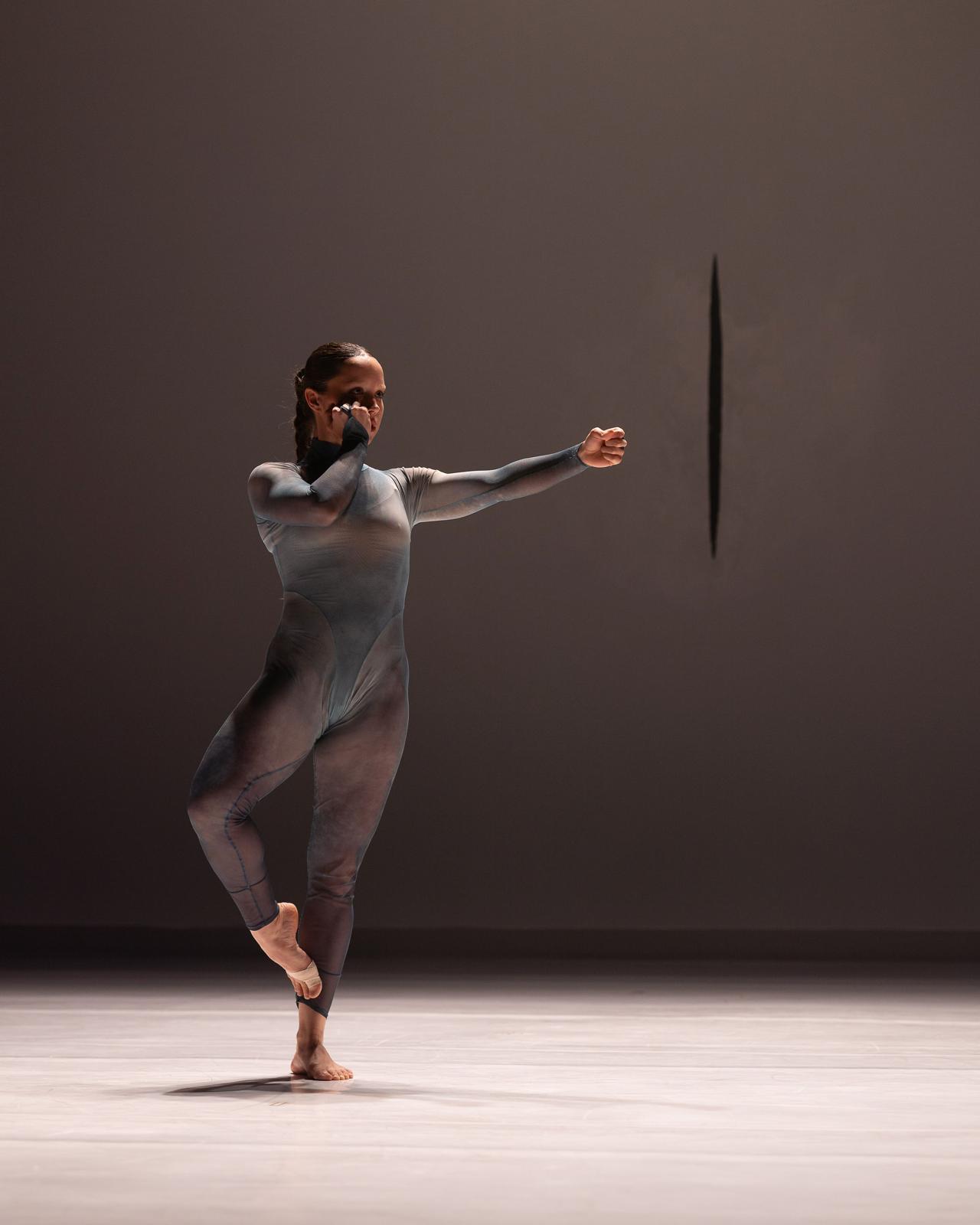
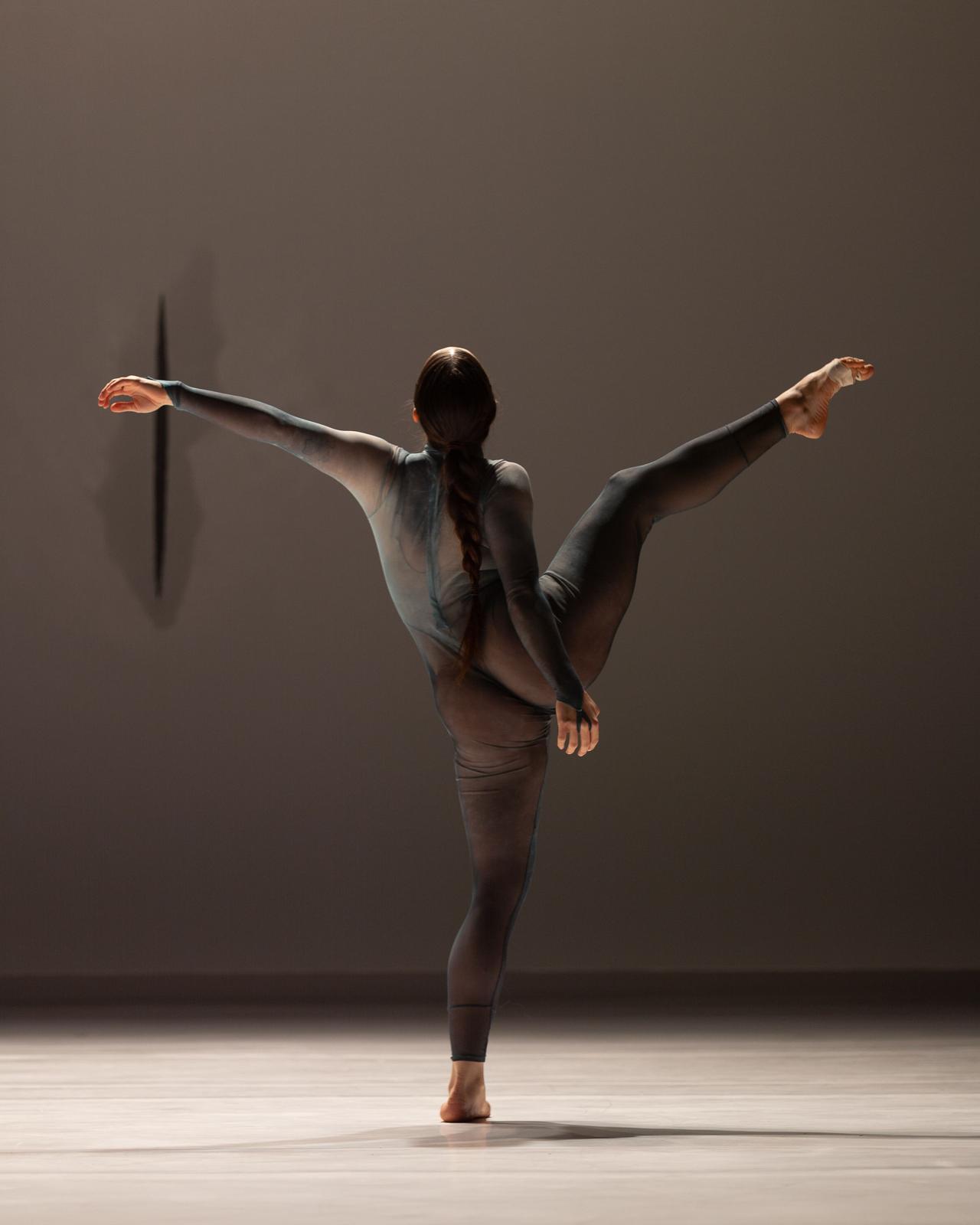
The evening-length piece is born in serene power, beneath the gentle sounds of flowing water and soft vocals that suffuse Frédéric Despierre’s original score. Here, Victoria Chassé Dominguez holds the stage, grounded in a deep squat facing away from us. She wears a green unitard, its hues vibrant against the bare white backdrop that stretches from walls to floor. A gaping tear in the upstage canvas evokes rupture and birth. Dominguez’s calm radiates as she inverts her feet, taps one calf with her other foot, and strikes sustained balances on one leg. Her quiet strength commands attention as the lights fade to a blackout.
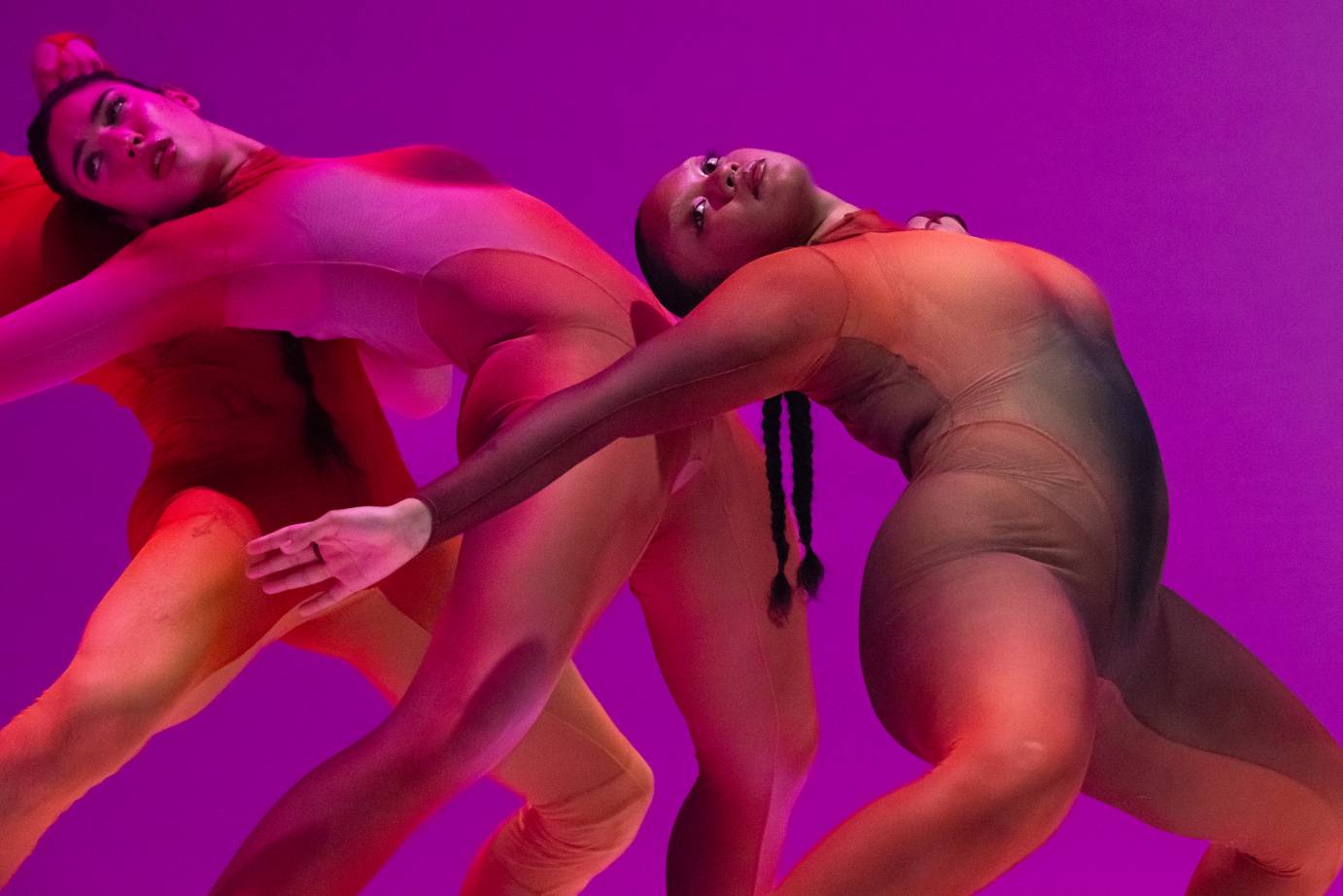
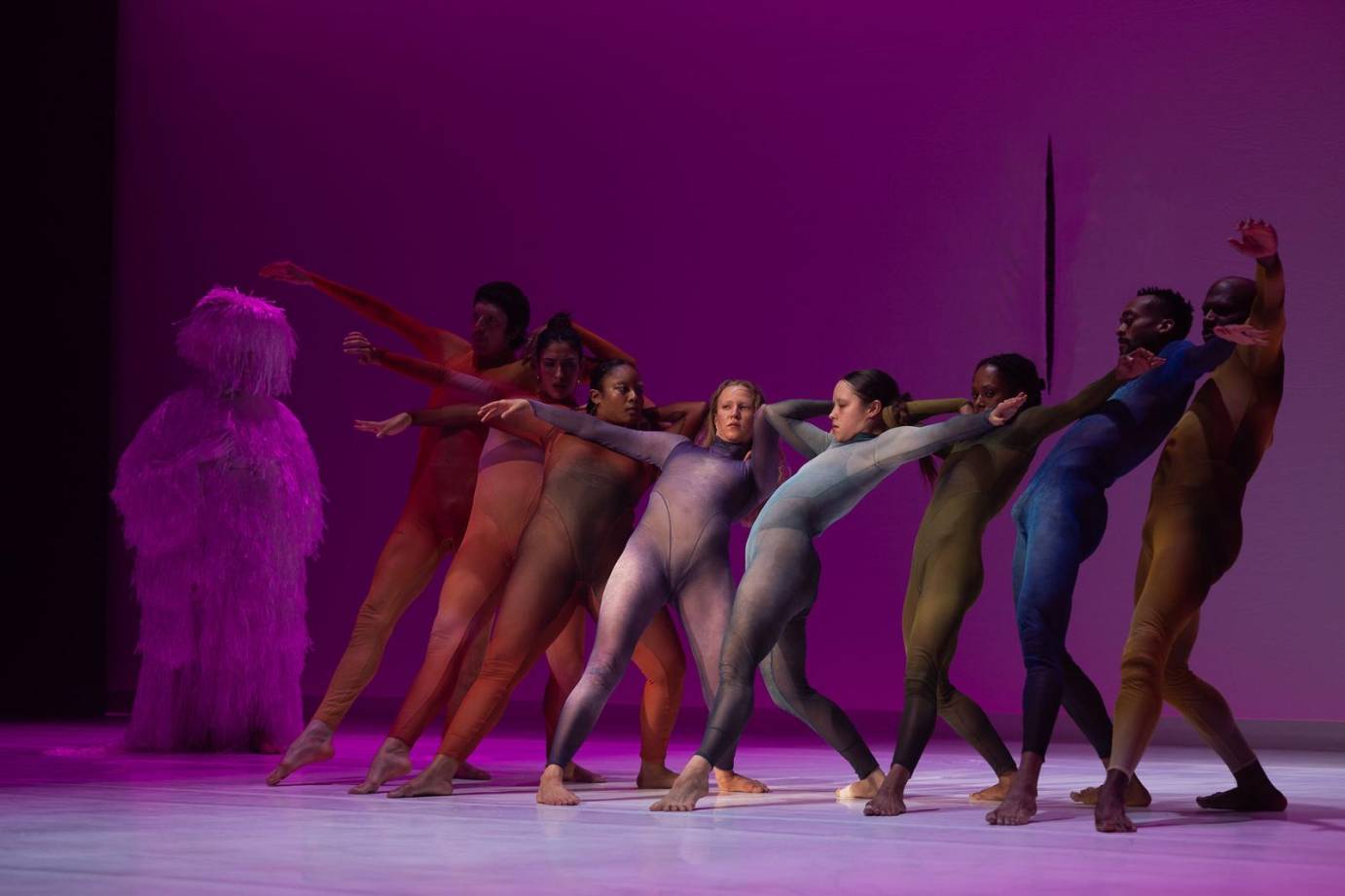
When the lights rise again, nine silhouettes flank the stage and we hear a pulsating, electronic score. Two exchange a sinuous duet while seven figures lounge on the floor transfixed. Each dancer, wearing a unitard in varying shades of the rainbow, glows under Vincent Vigilante’s brilliant, highlighter-bright lighting, which transforms the stage into a living painting. The dancers embody balletic shapes — arabesques, penchés, splits — and molten, elastic movements, at times taught with sculptural precision, at others, melting into an almost boneless fluidity.
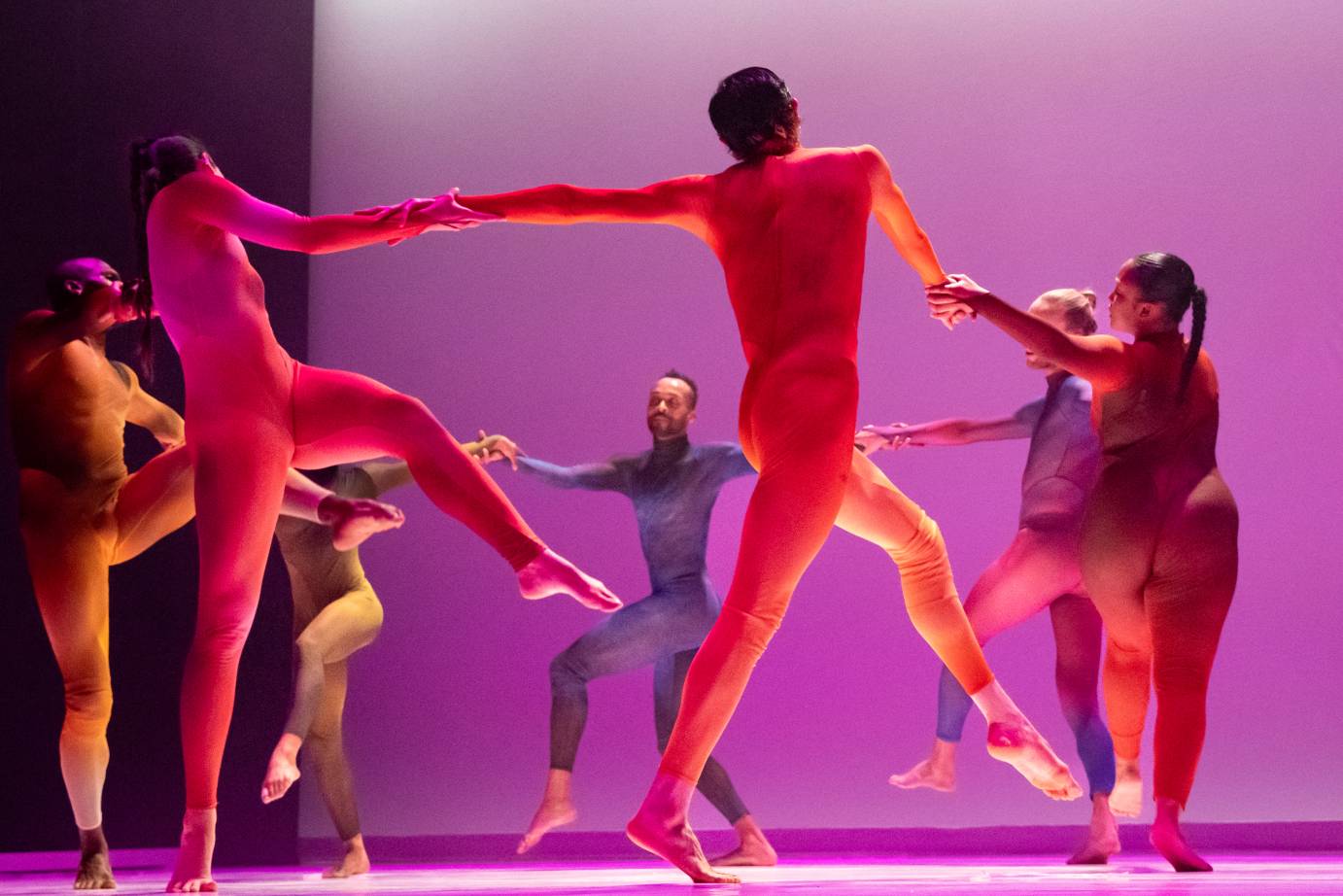
I begin to wonder if MOTHER is not a single figure, but a collective body. An ensemble presence remains near constant in the work, with solos or duets that break away from the group’s shifting clusters. The cast frames the space, holding hands or rearranging within their group, lifting one another up or breaking away in canon. So much beauty unfolds at once that I don’t always know where to look. Spotlights guide my gaze to featured moments, yet I long to take in everything. Miller’s movement language marries sharp control with an organic slipperiness, and each dancer’s individuality enriches the whole. I love watching Jasmine Alisca in particular: her stage presence is magnetic, her movements smooth and sublime.
A duet between India Hobbs and Marc Anthony Gutierrez fills the stage with seamless connection. Their lifts and swirls unfold with such ease that the effort behind them disappears. When Hobbs climbs and steadies herself on Gutierrez’s chest, the image reads with calm strength suspended over risk. Later, as Gutierrez drags Hobbs across the floor in a split, their closeness feels both intimate and exposed.
I feel a shift in their world as Vivian Pakkanen strides on stage alone, her long hair hanging loose (a contrast to the braids and updos worn by the ensemble). Dancing in silence, we hear only her breath. At times, she hums an eerie “whoooo” as she moves, transitioning from standing splits to the floor, where she rolls and convulses vulnerably. I feel curious in this moment, as the work dissolves into a more private space of searching.
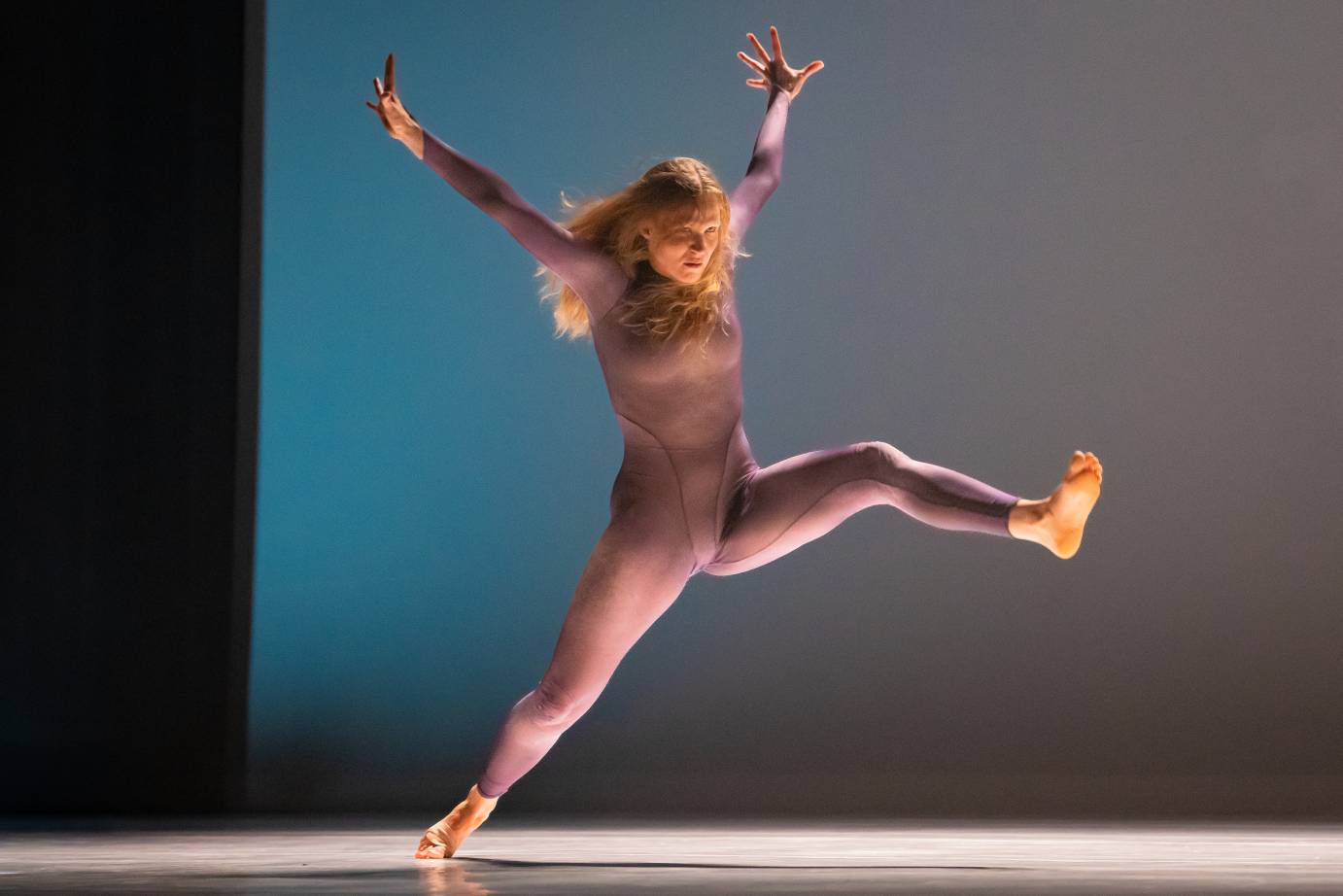
When Billy Barry enters draped in an expansive white shift dress with tassels hanging from every inch, headpiece to floor, I feel astonished. Part spirit, part force of nature, Barry moves with grounded grace, immediately drawn to Pakkanen. Their interaction fascinates: mirroring, partnering, and merging with a slow, tidal rhythm that melds body and spirit, form and formlessness.
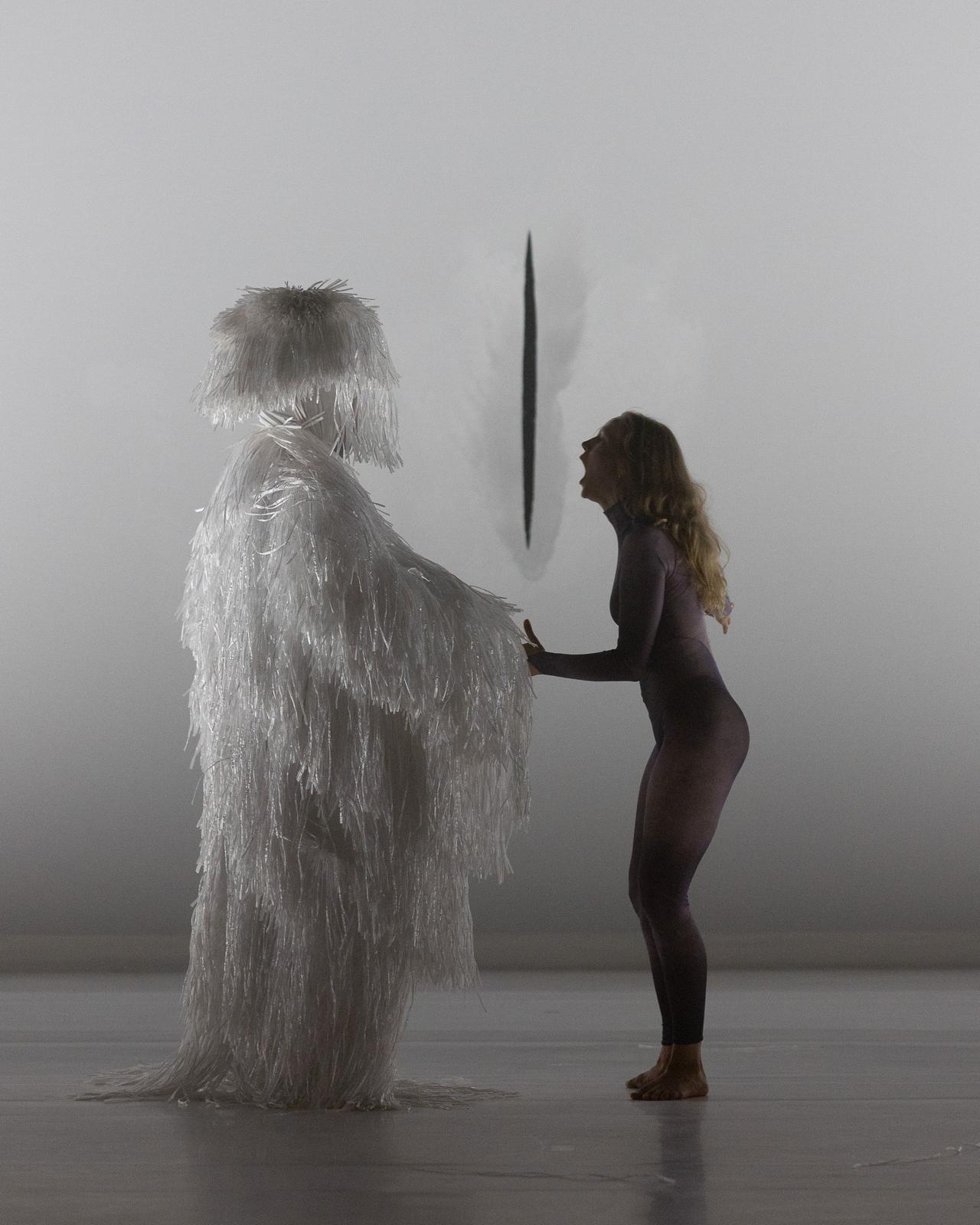
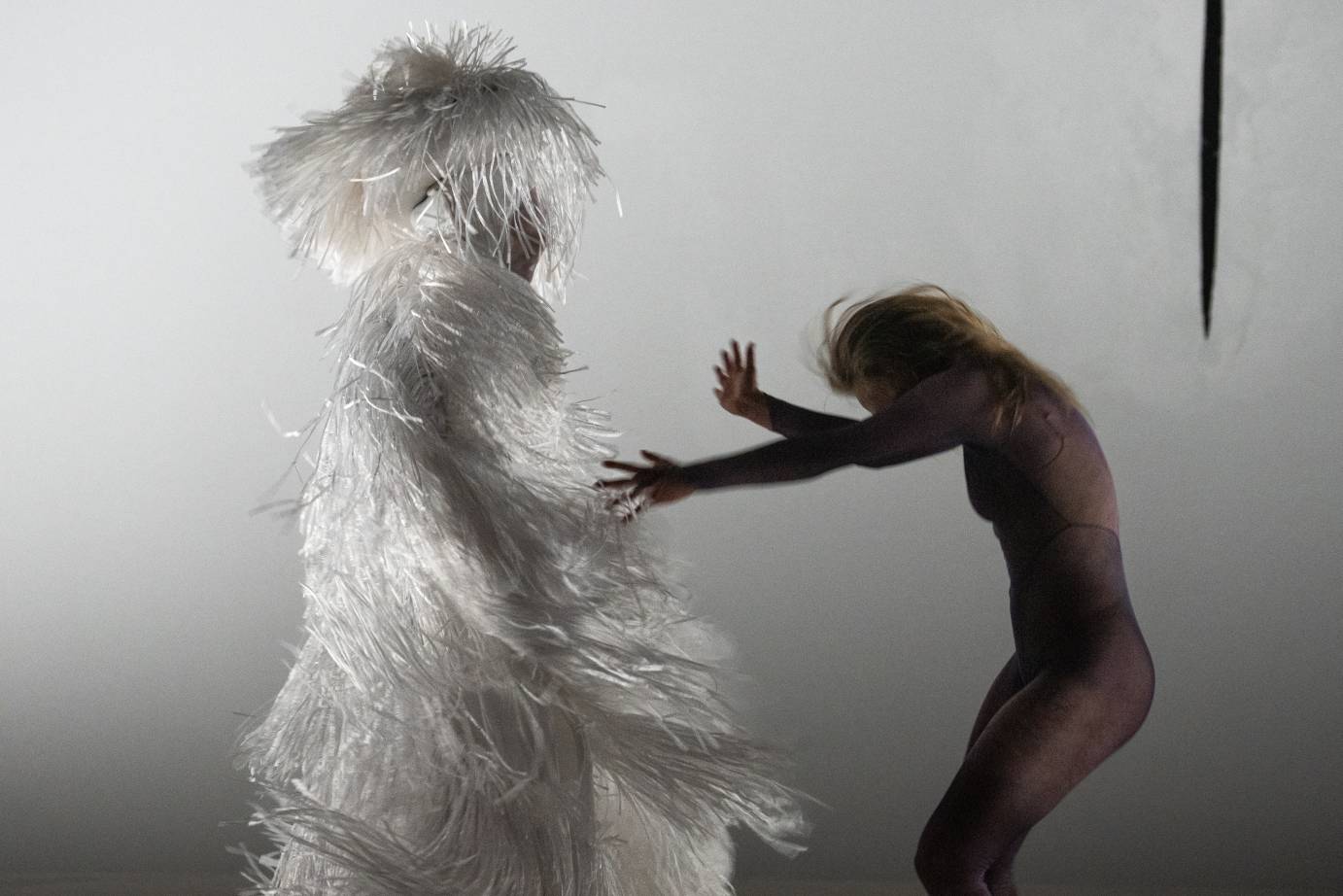
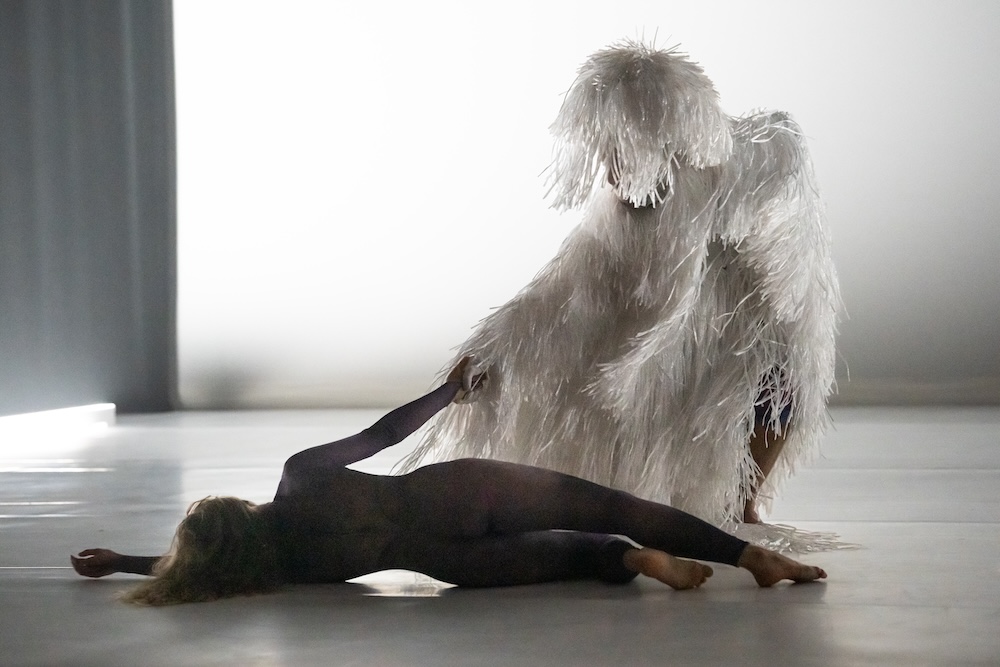
As the ensemble returns, the stage pulses with renewal. A satisfying moment of collectivity unfolds as a line of dancers enters from the side of the stage, standing so tightly together that their pelvises connect. They take long, measured strides with pointed feet, moving slowly and allowing the image to settle. From here, the dancers dissolve into larger, more expansive movements, and Barry joins their midst.
In the closing passage, Pakkanen and Dominguez reappear, carrying fragments of Barry’s costume. The ensemble gathers as the lights begin to dissolve, still dancing, the once-whole garment now torn in two. Like the ripped canvas, this image suggests both rupture and inheritance. As the curtain falls, I return to my initial curiosities of creation, care, and renewal, and I’m left with the sense that MOTHER is not one figure, but a shared pulse of becoming.