

Related Features
IMPRESSIONS: "Solace of Surrender" by Choreographer Loni Landon and Harpist Mary Lattimore, Co-presented and Co-produced by Green-Wood Cemetery and four/four presents
IMPRESSIONS: "The Nutcracker" by Troy Schumacher's BalletCollective at Wethersfield
IMPRESSIONS: Scottish Ballet in "Mary, Queen of Scots" at Lincoln Center

By Lisa Jo Sagolla
View Profile |
More From This Author
Published on June 9, 2026
Scottish Ballet's "Mary, Queen of Scots." Photo: Andy Ross
Choreography and Co-Creation: Sophie Laplane
Direction and Co-Creation: James Bonas
Original Score: Mikael Karlsson & Michael P Atkinson
Set and Costume Design: Soutra Gilmour
Lighting Design: Bonnie Beecher
Projection & Video Design: Anouar Brissel
Featured Dancers: Roseanna Leney (Mary), Charlotta Öfverholm (Older Elizabeth), Harvey Littlefield (Younger Elizabeth), Nicol Edmonds (Darnley), Bruno Micchiardi (Rizzio), Thomas Edwards (Walsingham), Kayla-Maree Tarantolo (Jester), Madeline Squire (Catherine de’ Medici/James VI and I), James Garrington (Dauphin), Anna Williams (Proxy Mary), Grace Horler (Proxy Elizabeth)
Musicians: Principal Guest Conductor Martin Yates and the New York City Ballet Orchestra
David H. Koch Theater
June 4 - 7, 2026
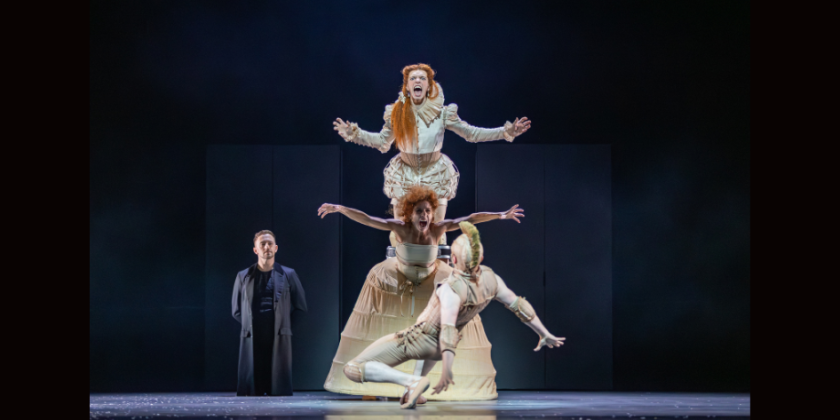
Header photo: Charlotta Öfverholm as Older Elizabeth and Harvey Littlefield as Younger Elizabeth in Scottish Ballet's "Mary, Queen of Scots." Photo by Andy Ross
If you don’t know much about the title character, Scottish Ballet’s exciting, two-hour narrative ballet Mary, Queen of Scots will not fill out your historical knowledge and may even serve to confuse those well-versed in the story of the 16th-century Scottish Queen put to death by her political rival and cousin, England’s Elizabeth I. But rather than ballet attempting to teach history, here iconic historical characters serve simply — and deliciously! — as inspiration for inventive theatrical dance.
Co-created by its choreographer, Sophie Laplane, and its director, James Bonas, Mary, Queen of Scots premiered at the Edinburgh International Festival last August and was presented in May at the Spoleto Festival USA. It had its first New York showing in June, at Lincoln Center, where I caught the opening-night performance.
While not a history lesson, the stylish, contemporary ballet, educates emotionally and titillates sensually, so it’s okay that the plot is hard to follow and the historical facts are fragmentary or sometimes imagined. Concept-wise, it makes perfect sense, as the ballet relates Mary’s story, not objectively, but via the deteriorating, conflicted memories of a guilt-ridden, 69-year-old Elizabeth, on the final day of her life.
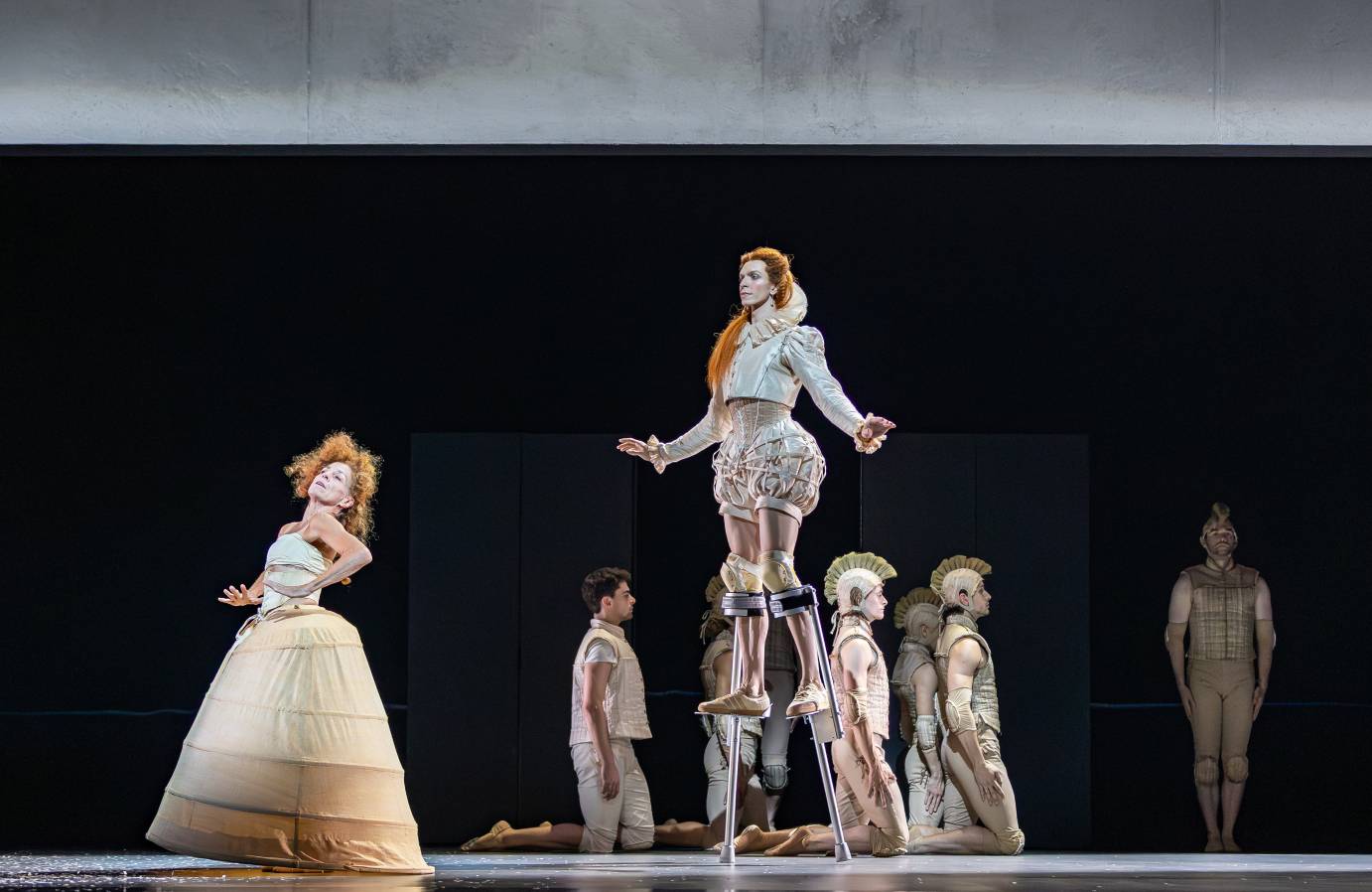
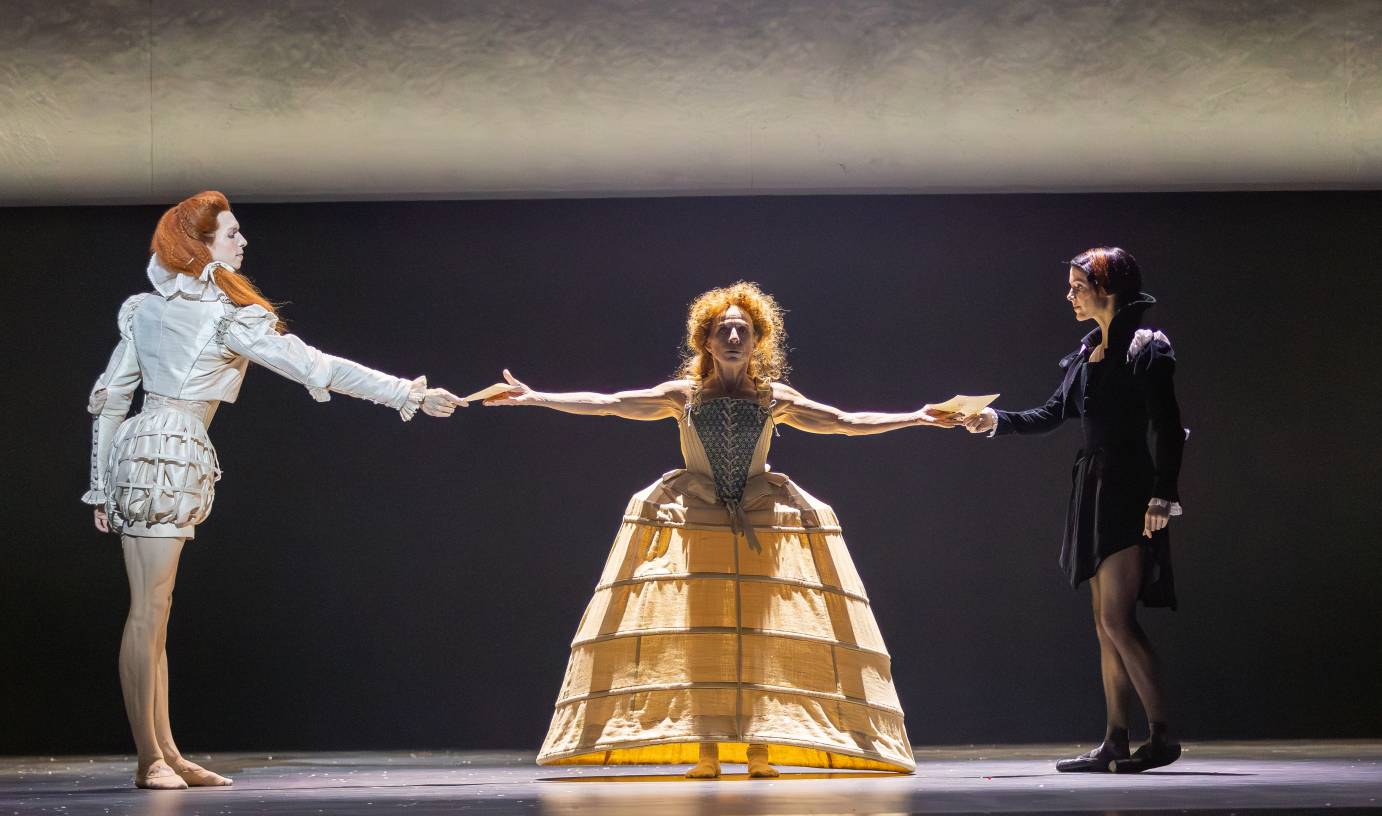
That conceit is established immediately from the ballet’s opening moments when we meet the anguished Older Elizabeth (Charlotta Öfverholm), clad in her underwear. She writhes through an angsty solo of awkward, uncomfortable movements, mime-like at times. Her gestures, pained wailing, and the accompanying Scottish-flavored music tell us she is remembering her shared past with Mary. We are then ushered into the plot’s flashbacks by the entrance of Younger Elizabeth (Harvey Littlefield), outfitted in that Renaissance collar of folds integral to any image one has of Queen Elizabeth. Costume designer Soutra Gilmour (who also devised the ballet’s spare, highly-functional set) strategically ornaments otherwise plain, body-revealing costumes with sparkling bits of 16th-century attire that convey a sense of period, as well as key character-identifying information, without hiding or hindering the dancers’ movements.
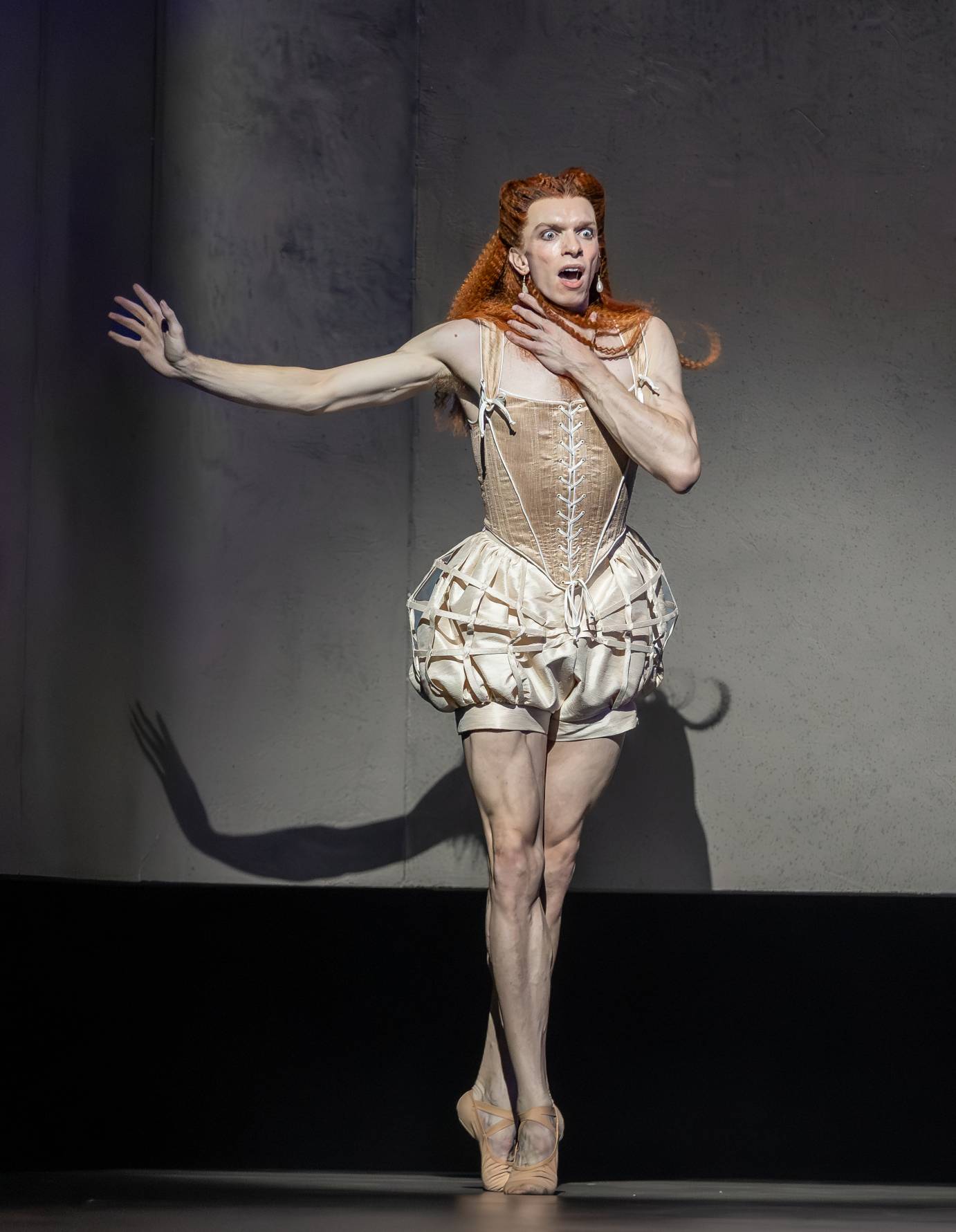
As the Younger Elizabeth moves through stately phrases of ballet vocabulary, displaying gorgeous classical lines, we are struck by what a brilliant bit of casting this is. Littlefield, a truly regal mover, stands a head taller than the rest of the cast, and appears, in some scenes, on stilts. Towering over the others, as the dancer walks majestically across the space, or even just stands in one place, we come to see Elizabeth as nothing less than a gigantic historical figure. Mary (Roseanna Leney), on the other hand, moves with a dynamic sexiness. When she prances about on pointe, sharply poking the floor with her toes, she’s a bit taller than the others, so we understand she’s a queen, but she’s often wildly emotional, and tackles fast phrases of contemporary choreography with a warmth and jazziness unpossessed by Elizabeth.
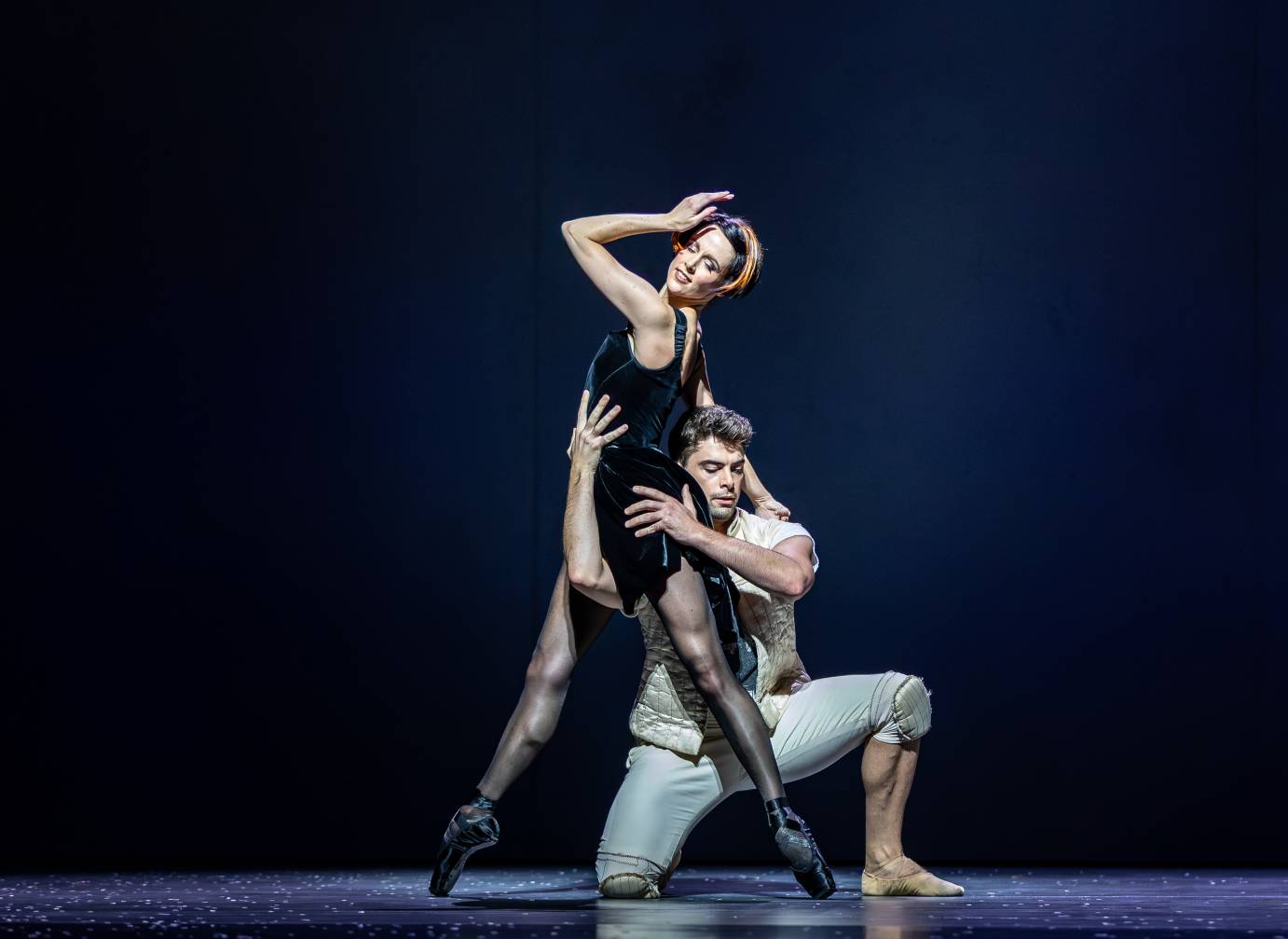
Roseanna Leney as Mary and Evan Loudon as Darnley in Scottish Ballet's Mary, Queen of Scots. Photo: Andy Ross
The greatest strength of the ballet’s choreography is its emotional clarity, which lies in how conspicuously it visualizes intense feelings. And the dramatically-motivated dancing by the production’s well-directed cast buttresses that emotionality immeasurably. When Mary duets with her first husband, the Dauphin (James Garrington), we may not fully understand the politics of their match-up or why a Jester appears among the French courtiers (more on that later), but as he sensuously caresses her legs and gazes rapturously up at her, we clearly understand his awestruck ardor. A steamy pas de deux between Mary and her second husband, Darnley (Nicol Edmonds), starts with Darnley maintaining a sense of deference toward the queen even as the two flirt heatedly. But eventually the couple surrenders to their emotions and their relationship transforms into a love affair between two equals. The choreography shows us exactly when that happens. The milestone move is a charming bit of silliness. As if sharing a secret language, or engaging in that cutesy baby talk some couples speak in private, the dancers break from their balletic partner-work and, standing side-by-side, with bent elbows tucked in at the waist, they skitter gleefully up on their toes, vibrating their fingers like shimmering wings.
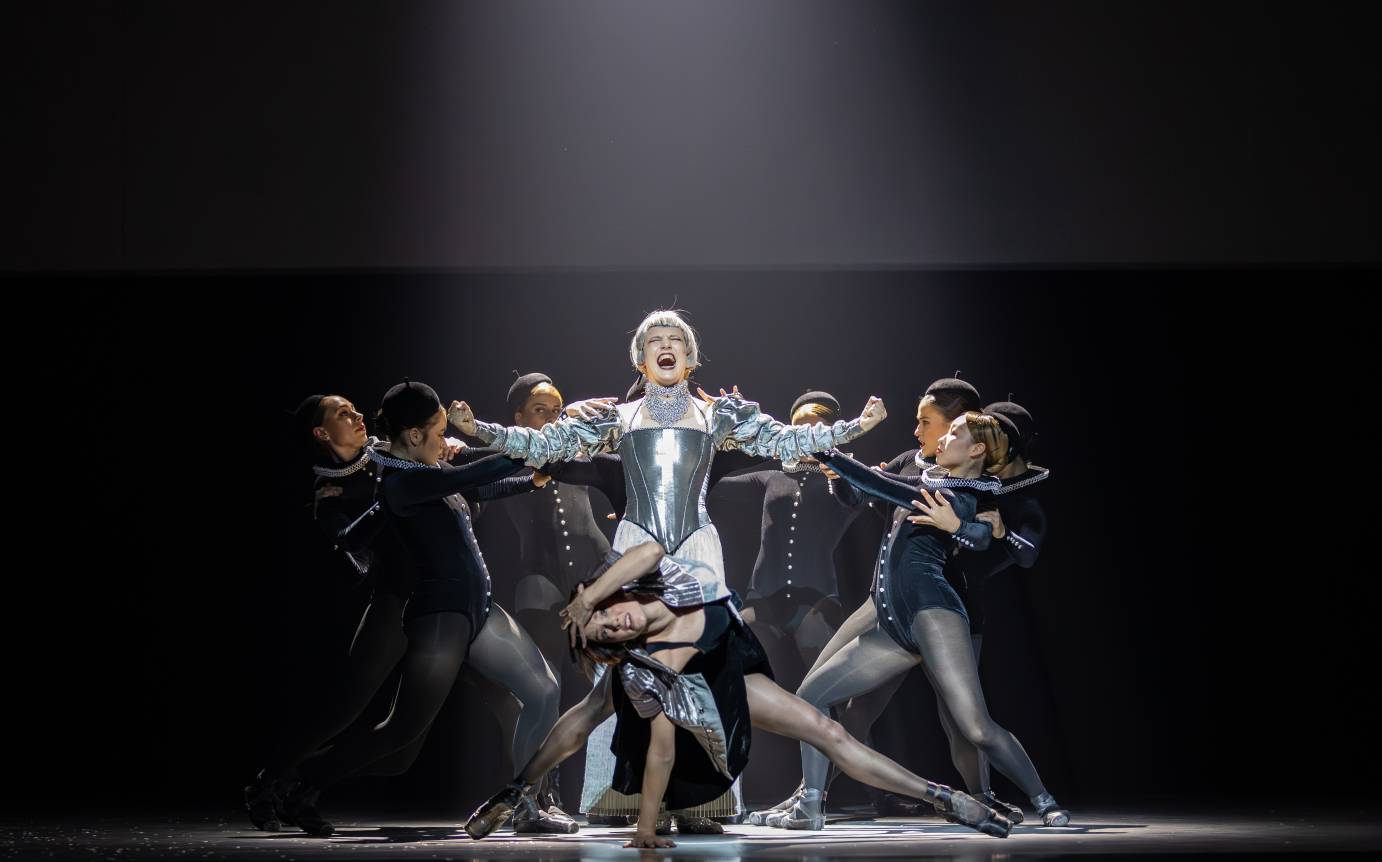
Throughout much of the ballet, cleverly-staged ensemble choreography enriches the emotional expression put forth by the principal characters. Unlike in most traditional story ballets, where ensembles add context, energy, and visual interest of their own to the choreography, here they function as direct extensions of the lead characters’ gestures, thoughts, and feelings. They are often grouped very close to a main character, their movements mirroring, magnifying, closely framing, or intertwining with what that character is “saying.” Most importantly, the ensemble members never perform in a presentational style, looking out at the audience. When not tilting up or down as necessary to form a particular body shape, their head is turned so their eyes and attention stay focused on the character whose statements they are amplifying.
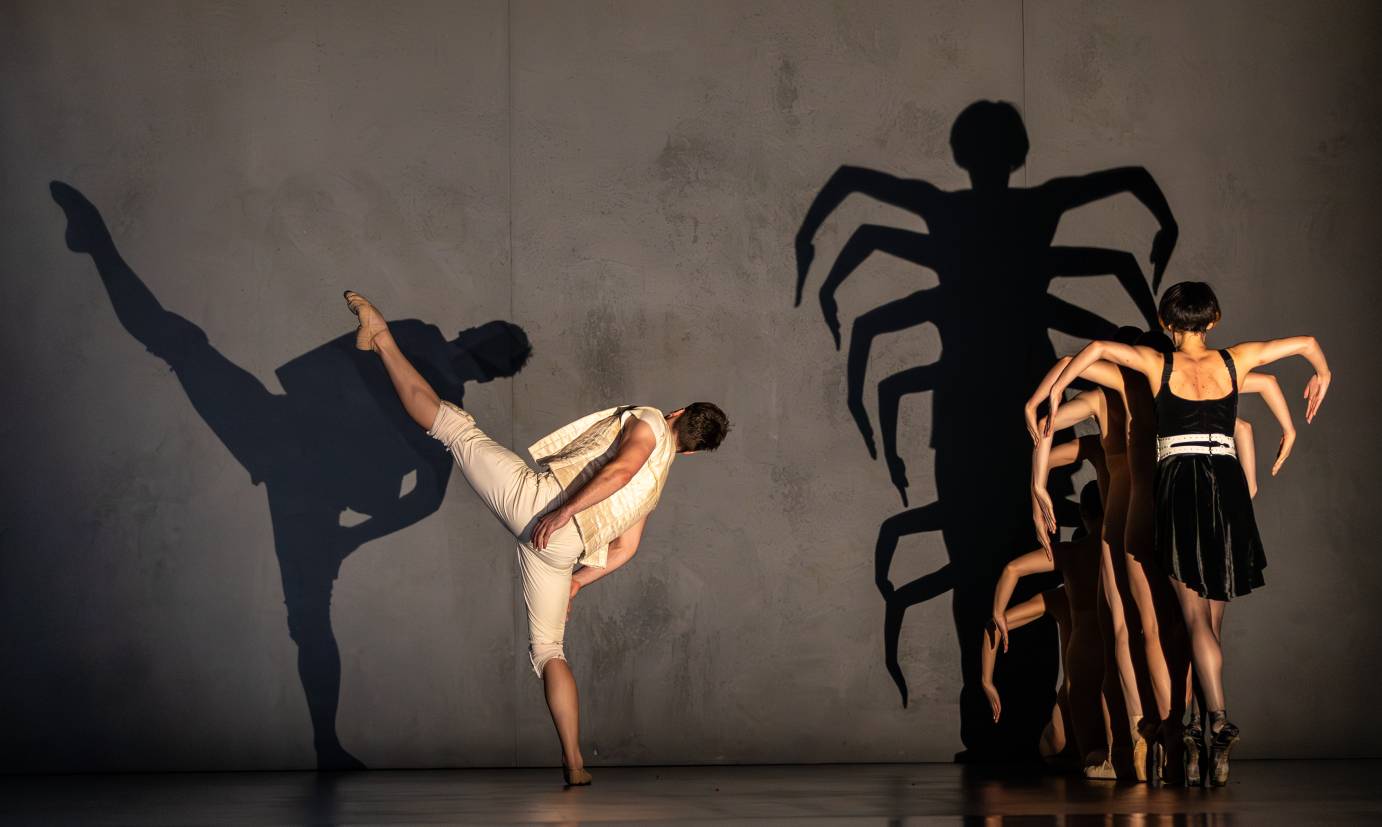
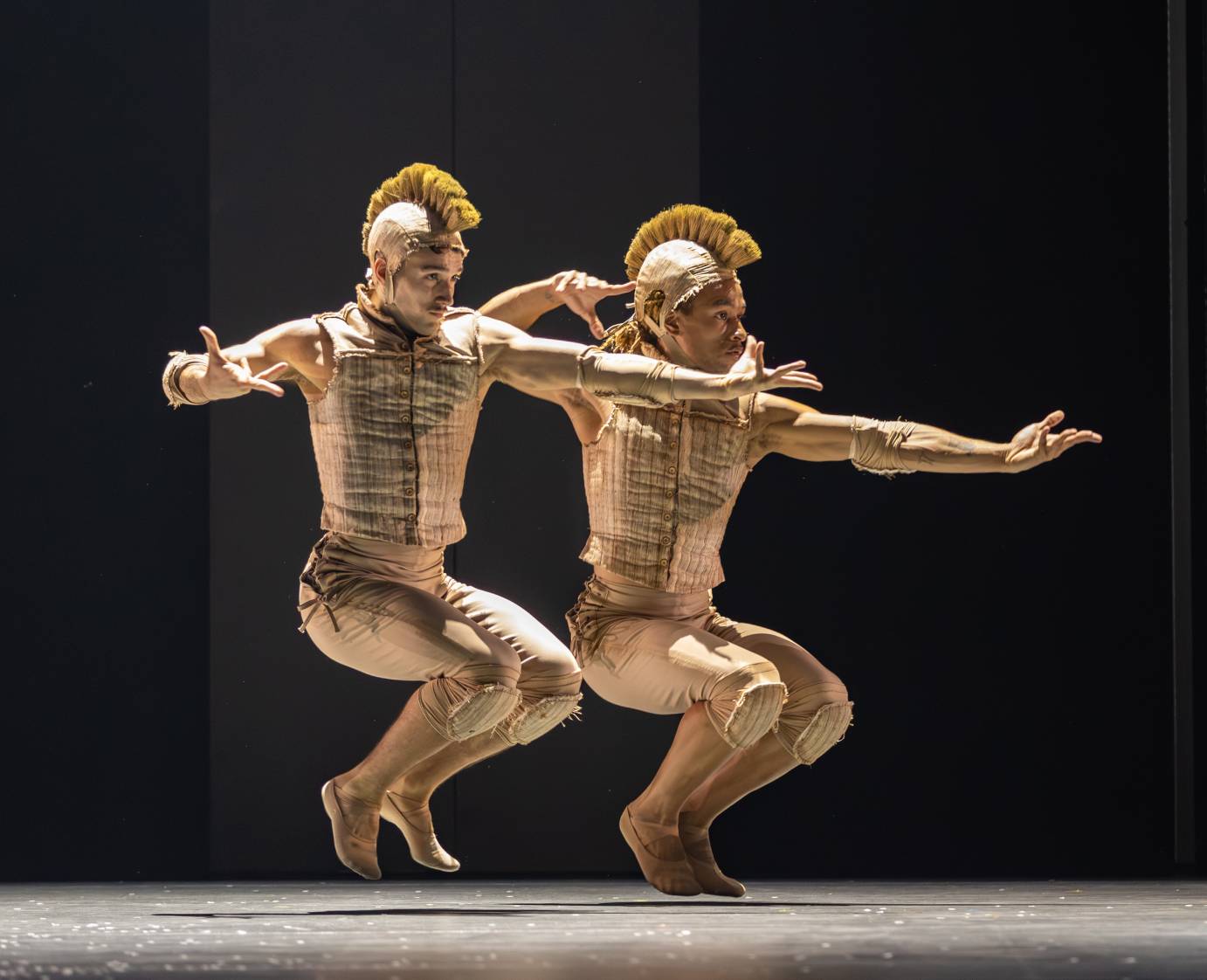
While the ballet’s most imaginatively-designed group choreography is probably the ascending vertical line-up of meticulously-bent-armed women whose silhouette appears as a terrifying spider (which consumes Darnley), my favorite use of the ensemble is the portrayal of the English courtiers. While dressed in period-referencing vests and breeches, they all sport mohawks and dance hunched over, to drum music, pulsating their torsos as they take small rhythmic steps, skitter backwards, or jump up and down in a squat position — much to the Queen’s amusement! Program copy explains that the mohawks reflect punk references Gilmour drew on to lend contemporary resonance to her depiction of Elizabethan militarism. To viewers in the U.S., however, these “courtiers” may bring to mind Elizabeth’s role in the beginnings of the British Empire as a colonizing force, with cultural “interest” in Native American populations.
Sadly, Laplane’s ingenious employment of ensemble choreography is far less robust in the ballet’s second half. About mid-way through Act 2, Mary is imprisoned in a cage, on a platform center-stage that cuts the playing area virtually in half. Not only is Mary limited in what she can do within the cage, but the ensemble is spatially confined to dancing on either side of the platform or circling around it.
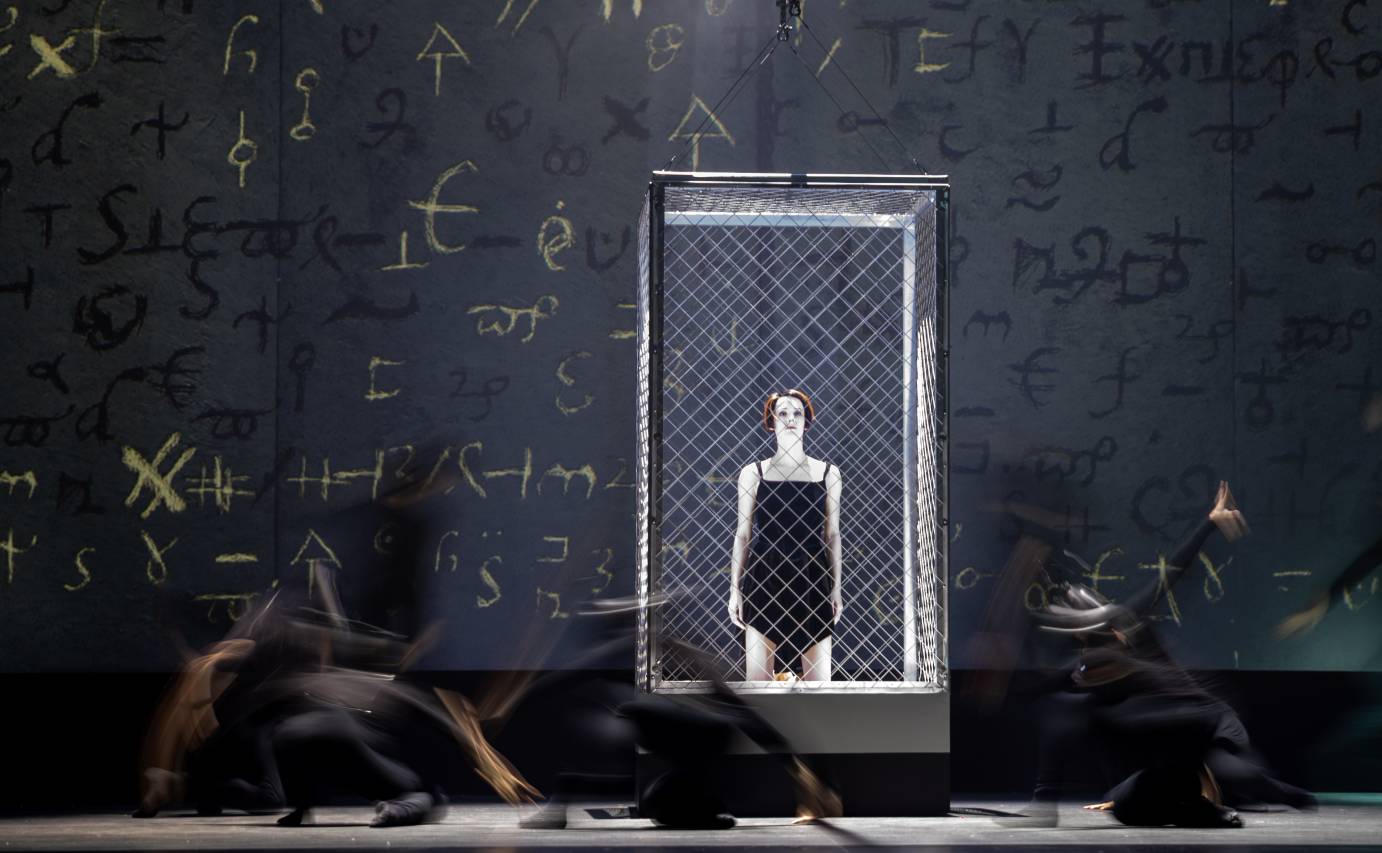
Perhaps if Mary’s cage had been suspended, or even placed farther upstage, her relatively static image wouldn’t have commanded so much focus, and the ballet’s climactic scenes might have been more interestingly choreographed. As it is, the music does all the work in developing the dramatic build to the show’s “big finish” — Mary’s startling execution. Providing tremendous story-telling support throughout, the ballet’s original score, composed by Mikael Karlson and Michael P Atkinson, combines Scottish folk sensibilities with lively orchestral music, lots of percussion passages, and atmospheric electronic sounds.
The ballet’s only problematic element is the inclusion of a lime green-costumed Jester, who performs contortionist movements and flits in and out of scenes, motioning as if directing the action. As the choreography is all so beautifully impelled by the work’s dramatic, visual, and musical elements, the Jester’s “control” over the goings-on does not ring true. Though the program synopsis claims the Jester represents death, that concept is not apparent and the superfluous character does nothing but distract from the drama at hand.
But that’s just one tiny blemish on a slickly entertaining show that sits quite pleasingly at the intersection of contemporary ballet and imaginative historical story-telling.