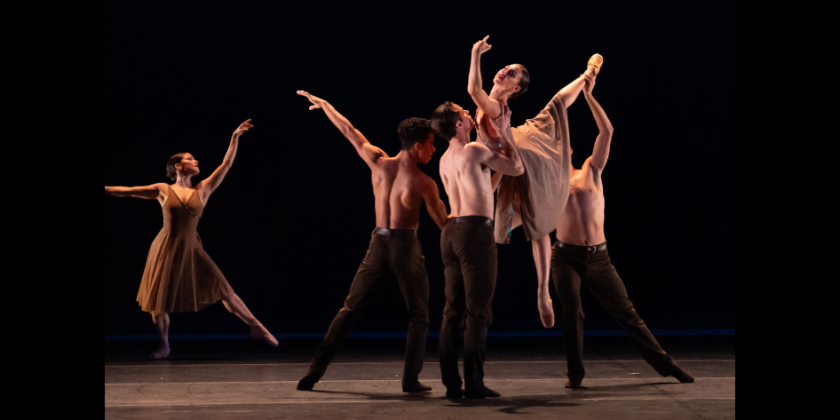




Related Features

IMPRESSIONS: Fresh Tracks 2026 at New York Live Arts
IMPRESSIONS: Soa Ratsifandrihana in “g r oo v e” at New York Live Arts
IMPRESSIONS: Lydia Johnson Dance Leaves Us with a Sense of Caring at New York Live Arts

By Lisa Jo Sagolla
View Profile |
More From This Author
Published on June 29, 2026
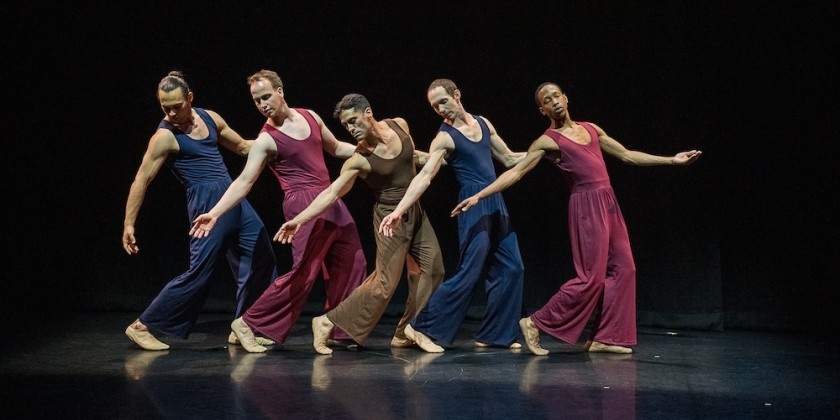
Lydia Johnson presents "Ode." Photo: Christopher Duggan
Choreography: Lydia Johnson
Music: Lera Auerbach, Johann Paul von Westhoff, Nico Muhly, Ludovico Einaudi, Terry Riley, Aleksandra Vrebalov, Henryk Górecki
Lighting Design: Renée Molina
Costume Concepts: Lydia Johnson, Laura Di Orio
Dancers: Laura Di Orio, MinSeon Kim, Michael Miles, Cara McManus, Oscar Antonio Rodriguez, Catherine Gurr, Emily Sarkissian, Maia Culbreath, Emma Conrad, Natalia Nikitin, Gracie Zytynski, Gabriel Sharp, Gion Treichler, Jamie Robinson
New York Live Arts, 219 W 19th St, New York, NY
June 18 - 20, 2026
*Header photo: Gabriel Sharp, Gion Treichler, Oscar Antonio Rodriguez, Jamie Robinson and Michael Miles
There’s a sameness to the vocabulary, construction, tone and presentation of Lydia Johnson’s choreography. Yet, it’s like chocolate ice cream. Sure, every spoonful tastes the same, but who’s complaining?
This month, at New York Live Arts, Johnson’s scrumptious choreography was put on display in Stirrings of the Heart, a quadruple bill of premieres and older dances performed by the choreographer’s fourteen-member, 27-year-old company, Lydia Johnson Dance, supplemented by students from her New Jersey-based Lydia Johnson Dance School.
Though some may classify Johnson’s choreography as ballet, it’s more akin to modern dance. Performed in soft ballet slippers, it lacks pointe work, shows an affinity for the lower levels of space, and makes expressive use of spiraling torsos. And while danced with a ballet-trained dancer’s clarity of line, technical strength, and precision, its vocabulary is weight-acknowledging, gesture-driven, and only slightly seasoned with classical ballet steps.
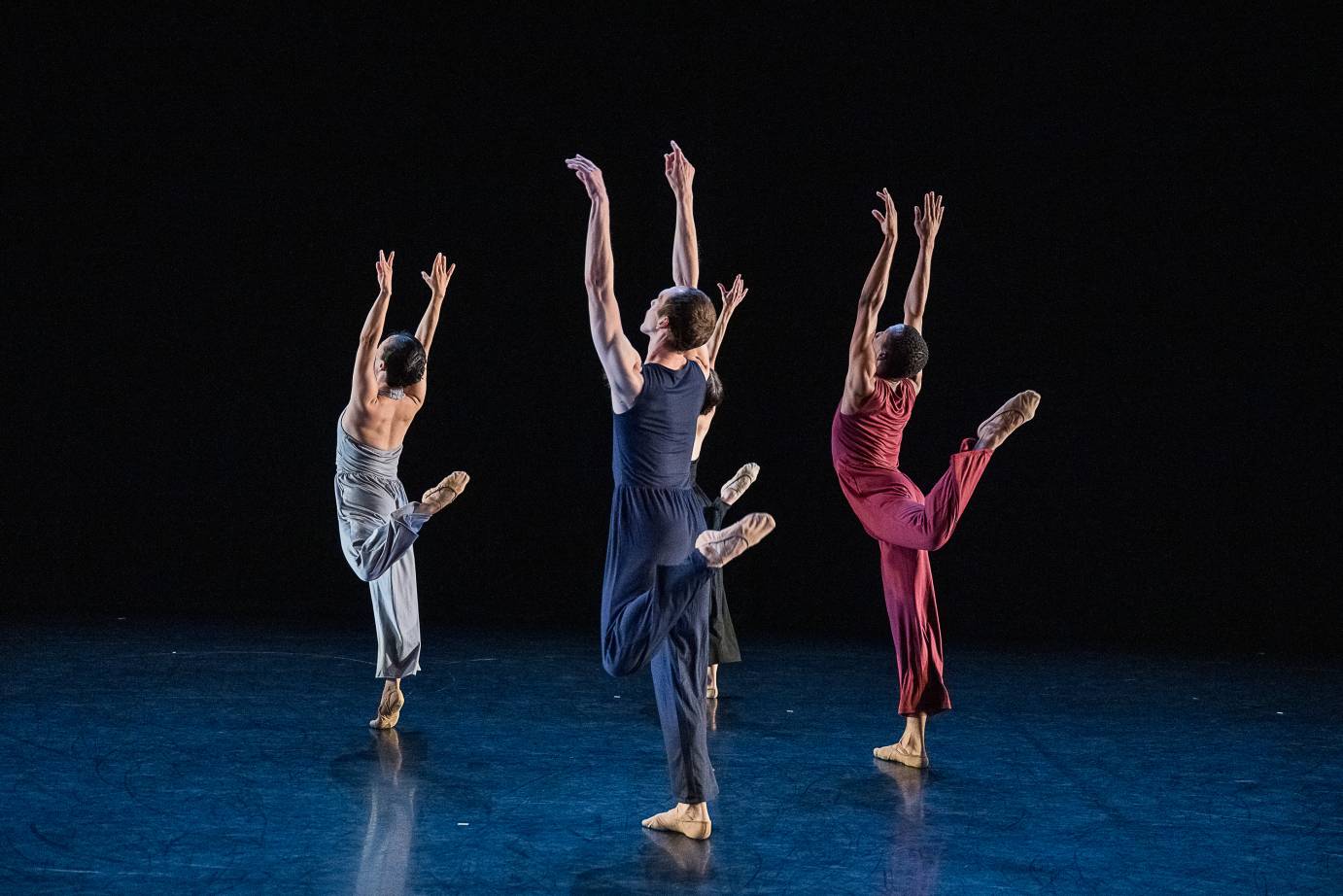
Highly attentive to the music, both structurally and emotionally, Johnson’s image-based choreography is built largely of pauses and positions. There’s little in the way of flow or momentum. Yet the choreography doesn’t feel static, but rather restful, spare, thoughtfully designed, and imbued with the serious conveyance of strong, though never over-sized feelings. When the dancers move through space, they charge, with clear deliberate intention.
They don’t carelessly sweep, swing, or meander. And we get wonderful communal messaging from the choreography’s nurturing, humanistic gestures and abundance of unison ensemble work. Dancers often hold hands, place a palm on a partner’s shoulder, reach around a waistline to support a backward arch, or come together to join in the shared making of striking group formations.
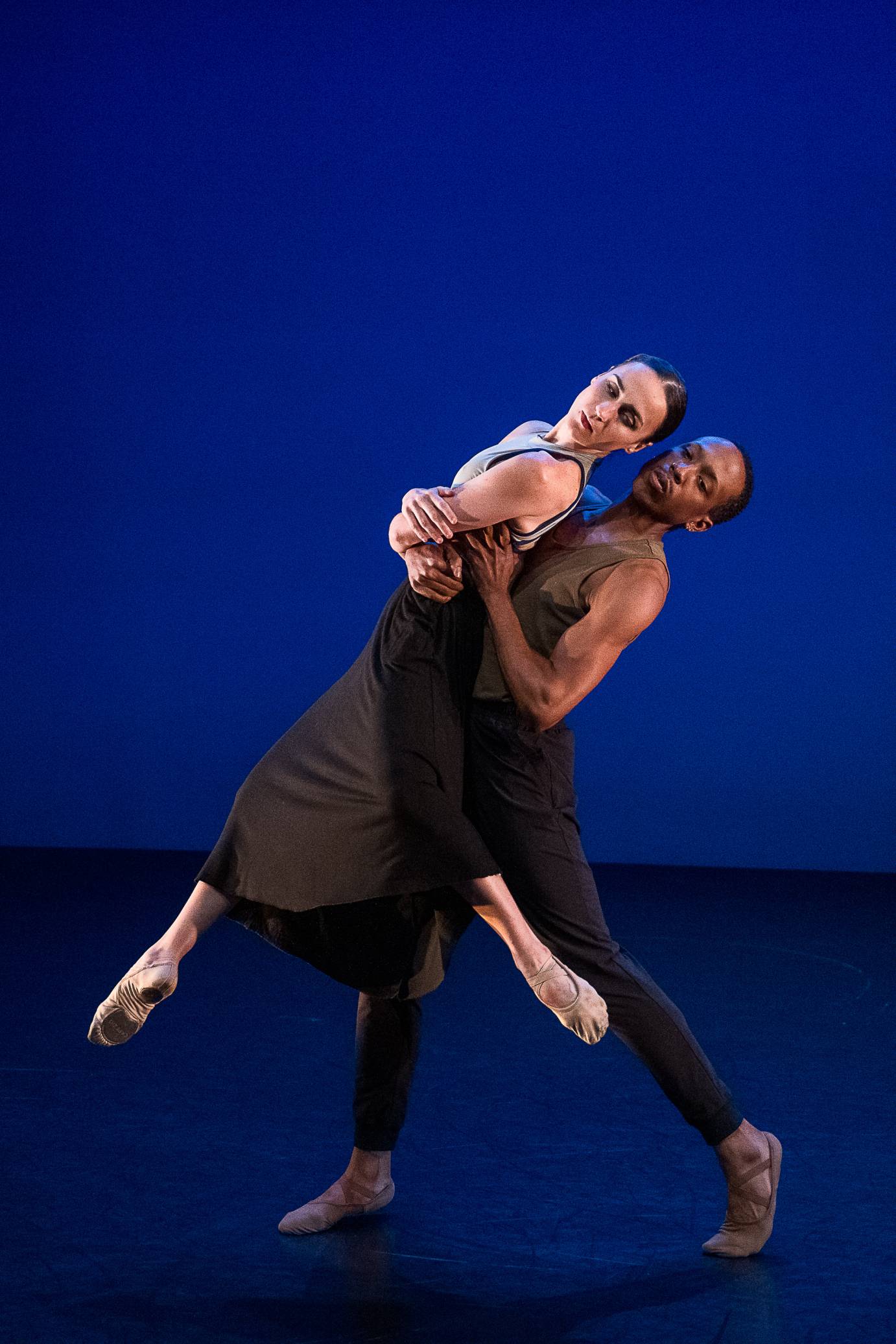
The program’s opener, the New York premiere of Evening is distinguished by gratifying thematic use of a gorgeous two-body image. A six-part work set to a pleasing variety of classical music (ranging from the Baroque Era to contemporary compositions), it launches as a circle of couples walk and then freeze in an abstracted version of a traditional ballroom dance closed position. The position is then repeated, varied, and referenced throughout the piece, as Johnson prompts us to consider what human “connection” looks like.
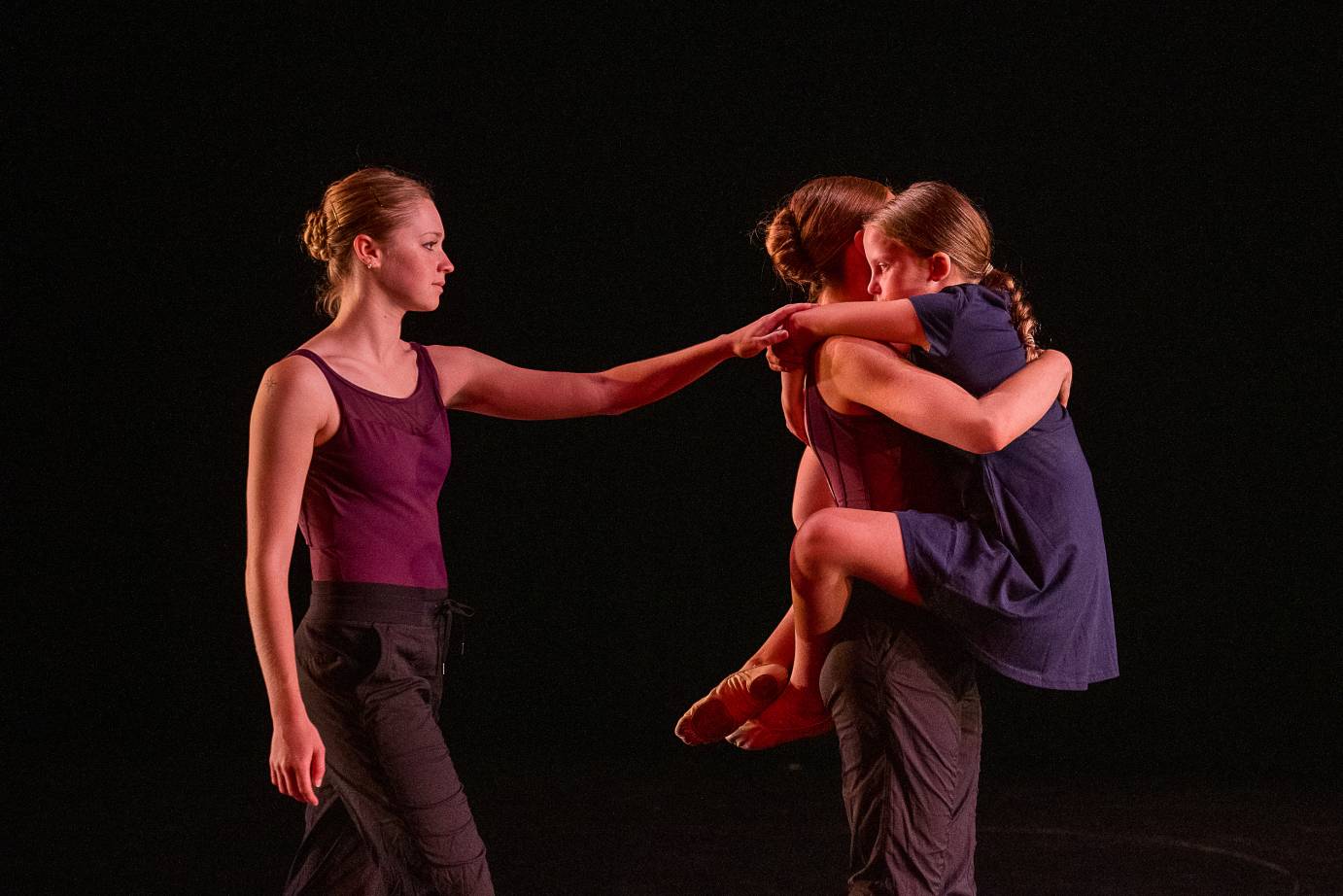
With Legacy (2024), we’re made to think further about the meaning of human relationships as the choreography makes visible the work’s title concept. Set to Terry Riley’s 1964 minimalist groundbreaker In C, the piece starts a bit heavy-handedly, with young children being carried across the stage by adult dancers. But as the dance progresses, the children literally get caught up in the action as they are lifted, spun, and dragged through the space in what evolves into quite entertaining choreography.
The affecting images driving Ode, a world premiere set to selections from Aleksandra Vrebalov’s Sea Ranch Songs, are stunning. We see linear arrangements of separate male and female ensembles, at times with forearms draped woefully across the brow, hand on heart, or in twisted leans against a diagonal line of chairs. Viewers may see reminiscences of the ancient Greek friezes-inspired body and arm positions from Jerome Robbins’ Antique Epigraphs.
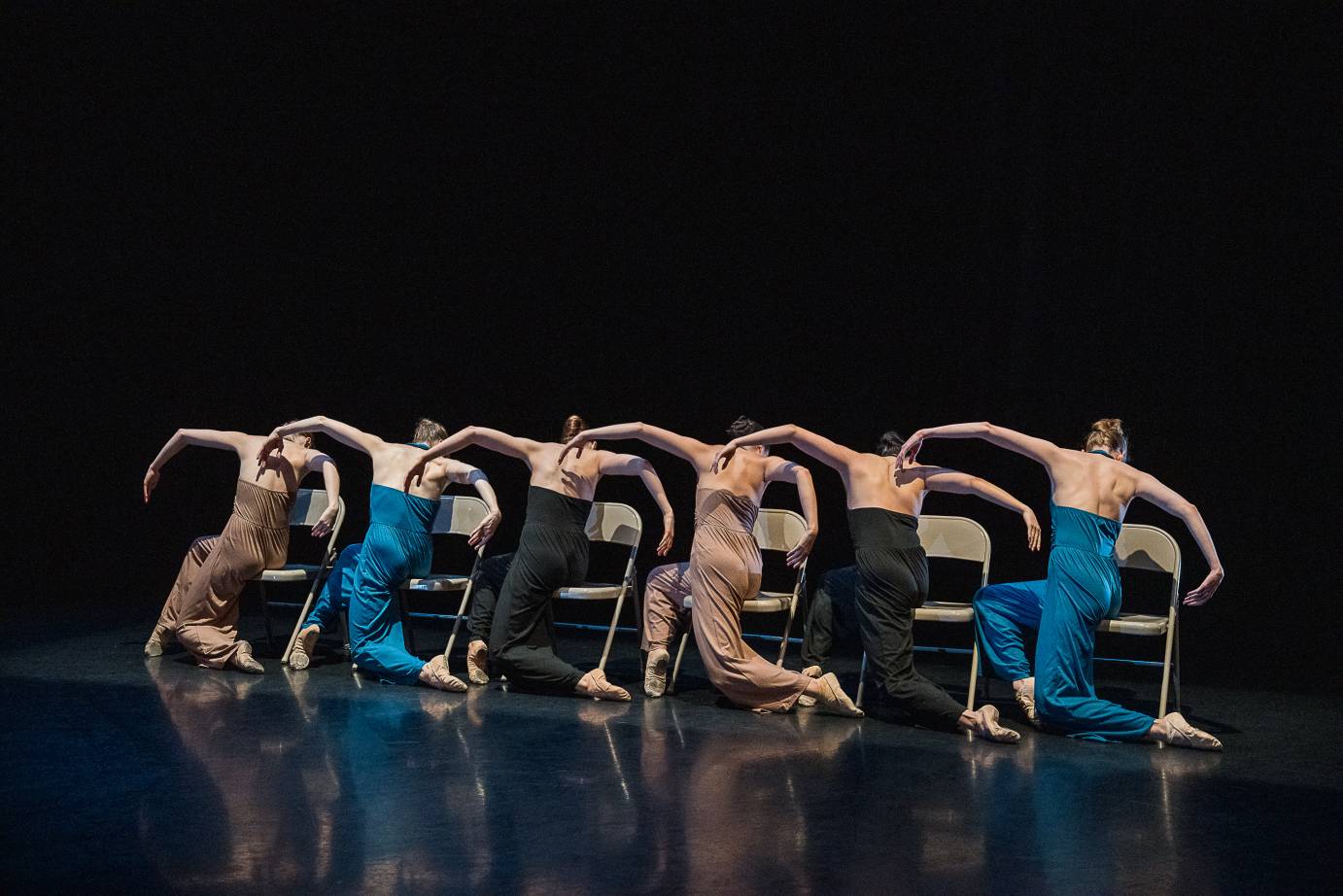
Lydia Johnson Dance in Ode. Photo: Christopher Duggan
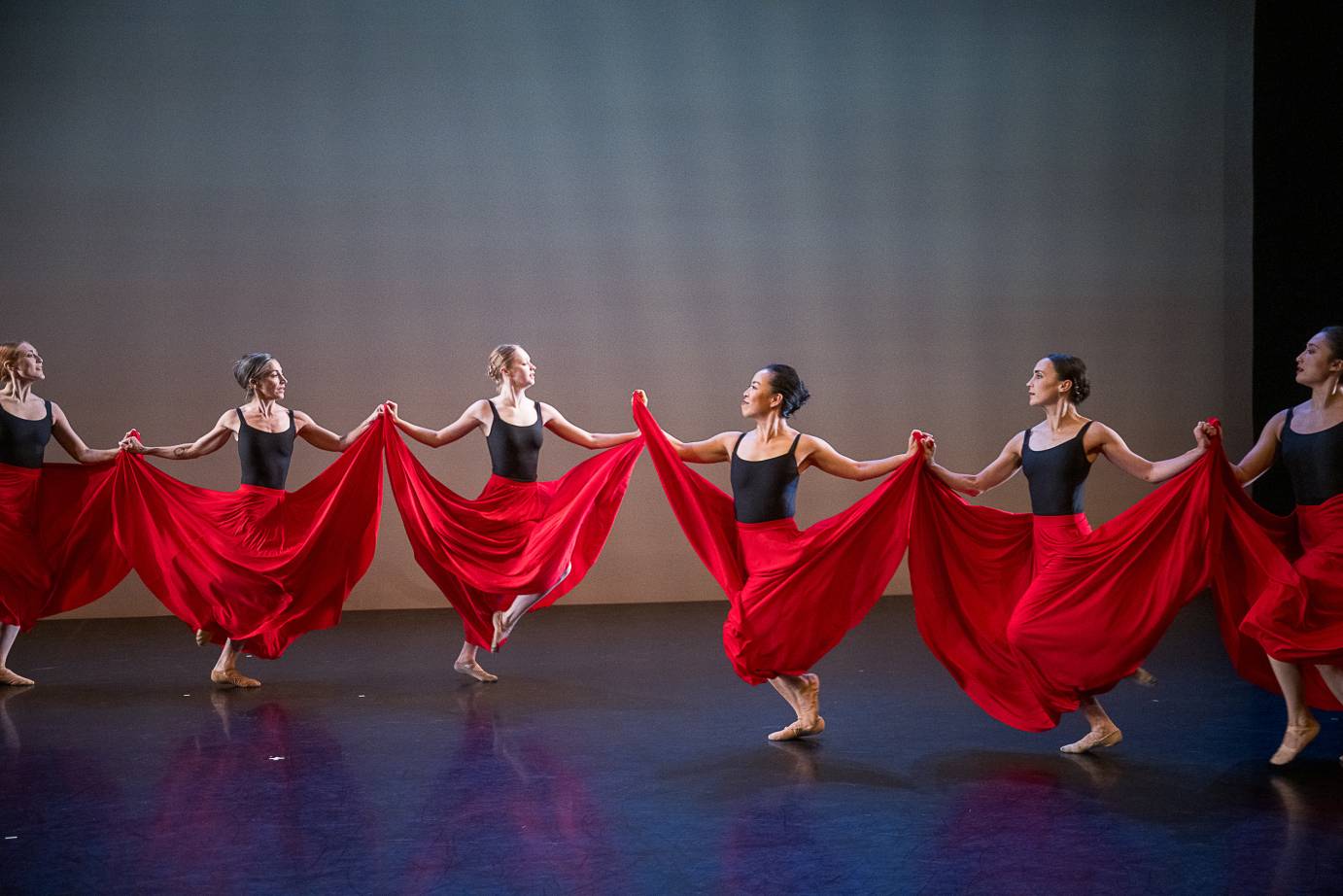
A bit livelier than the other works, the program closer, Undercurrent (2018), is fueled by rousing Henryk Górecki music, and features a touching image of dancers drawing an imaginary protective “bubble” in the air surrounding their partner. Yet most impressive is the way Johnson uses tiny student-dancers (adorably!) to introduce a simple prancing step that is then developed by sets of increasingly older dancers until it transforms into what registers as a celebratory folk dance signaling “we’re all in this together.”
Ultimately, an evening of Johnson’s choreography leaves one with an all-encompassing sense of caring. We feel how carefully the choreography is crafted and executed. And in watching how caringly the dancers relate to one another, we see how beautiful it is to move through life guided by such sentiments.