

Related Features
IMPRESSIONS: Lydia Johnson Dance Leaves Us with a Sense of Caring at New York Live Arts
IMPRESSIONS: Soa Ratsifandrihana in “g r oo v e” at New York Live Arts
IMPRESSIONS: Fresh Tracks 2026 at New York Live Arts

By Sarah Cecilia Bukowski
View Profile |
More From This Author
Published on June 18, 2026
Dahlia Qumhiyeh's "AB+." Photo by Maria Baranova
New Works by Ariel Lembeck, Dahlia Qumhiyeh, Cristina Moya-Palacios, Sacha Vega, and Dorchel Haqq
New York Live Arts’s 2026 Fresh Tracks cohort teems with the energy of creative possibility, and with five artists on the roster, the flood of ideas overwhelms the senses. The Fresh Tracks program provides a long process arc for its artists through a season-long residency, mentorship (this year with the guidance of Juliana F. May), and resources to fully produce their work in the Live Arts theater. It’s an ideal platform from which artists can deepen their research, engage in extended dialogue, and explore their work’s theatrical potential.
The artists of the 2026 cohort — Ariel Lembeck, Dahlia Qumhiyeh, Cristina Moya-Palacios, Sacha Vega, and Dorchel Haqq — bring varying levels of theatricality, both in terms of style and production elements, to their radically divergent projects.
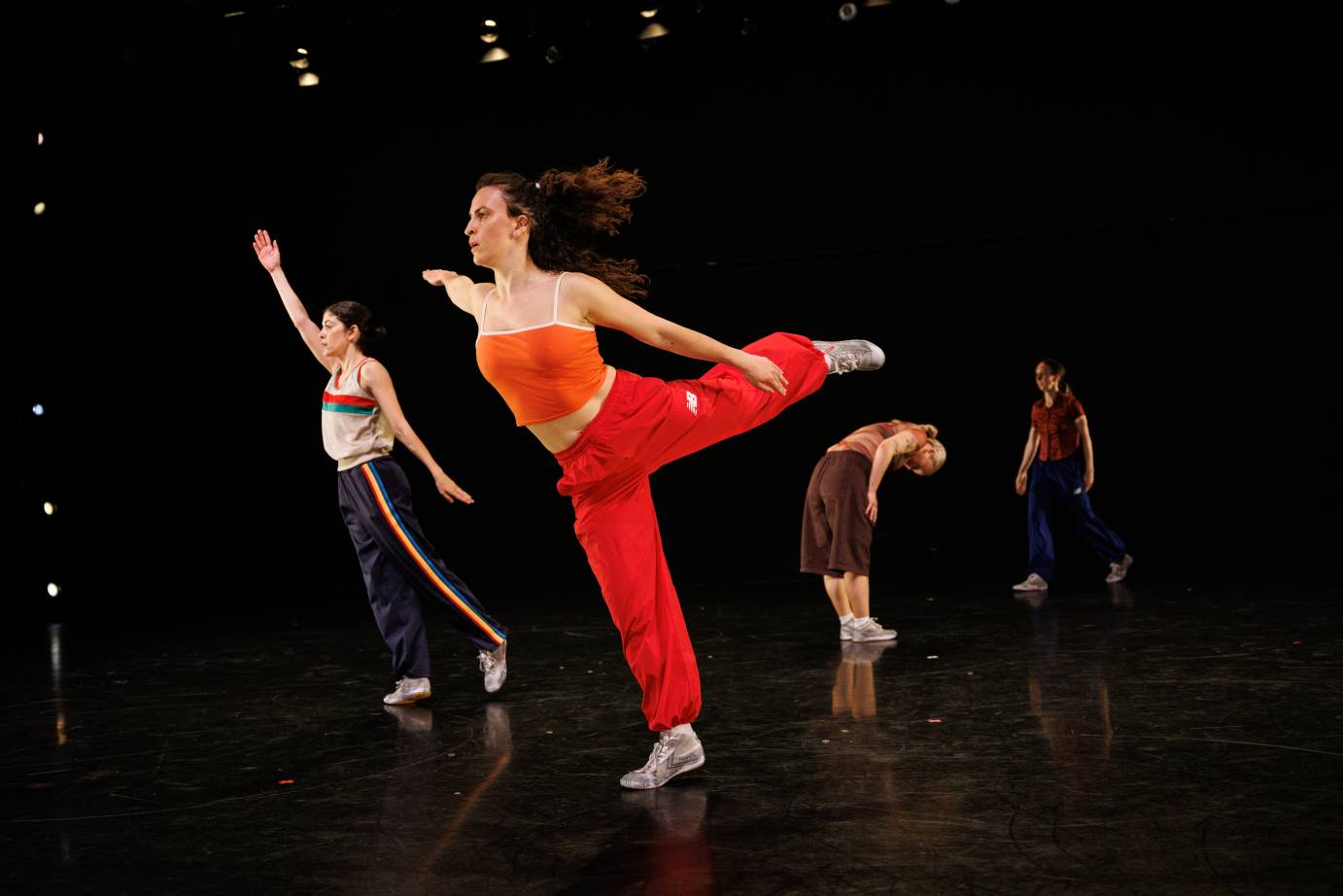
Photo by Maria Baranova, courtesy of New York Live Arts
Ariel Lembeck errs on the side of subtlety with a keen eye for form and rhythm in again and again, an unadorned movement study for four dancers (Lembeck with Marin Day, Emma Judkins, and Dasol Kim). The quartet radiates vectored patterns of footfalls from a central core of stillness before branching into loops and curves of phrasework. Textural touches are light and astute — the squeak of sneakers and the jingle of coins in pockets — and serve to meld the movement and sonic elements of the dance to spark quiet curiosities. The jingling coins are particularly effective in highlighting the gravitational nuances of the broad chassés, sprinting leaps, and percussive shuffles that criss-cross the stage.
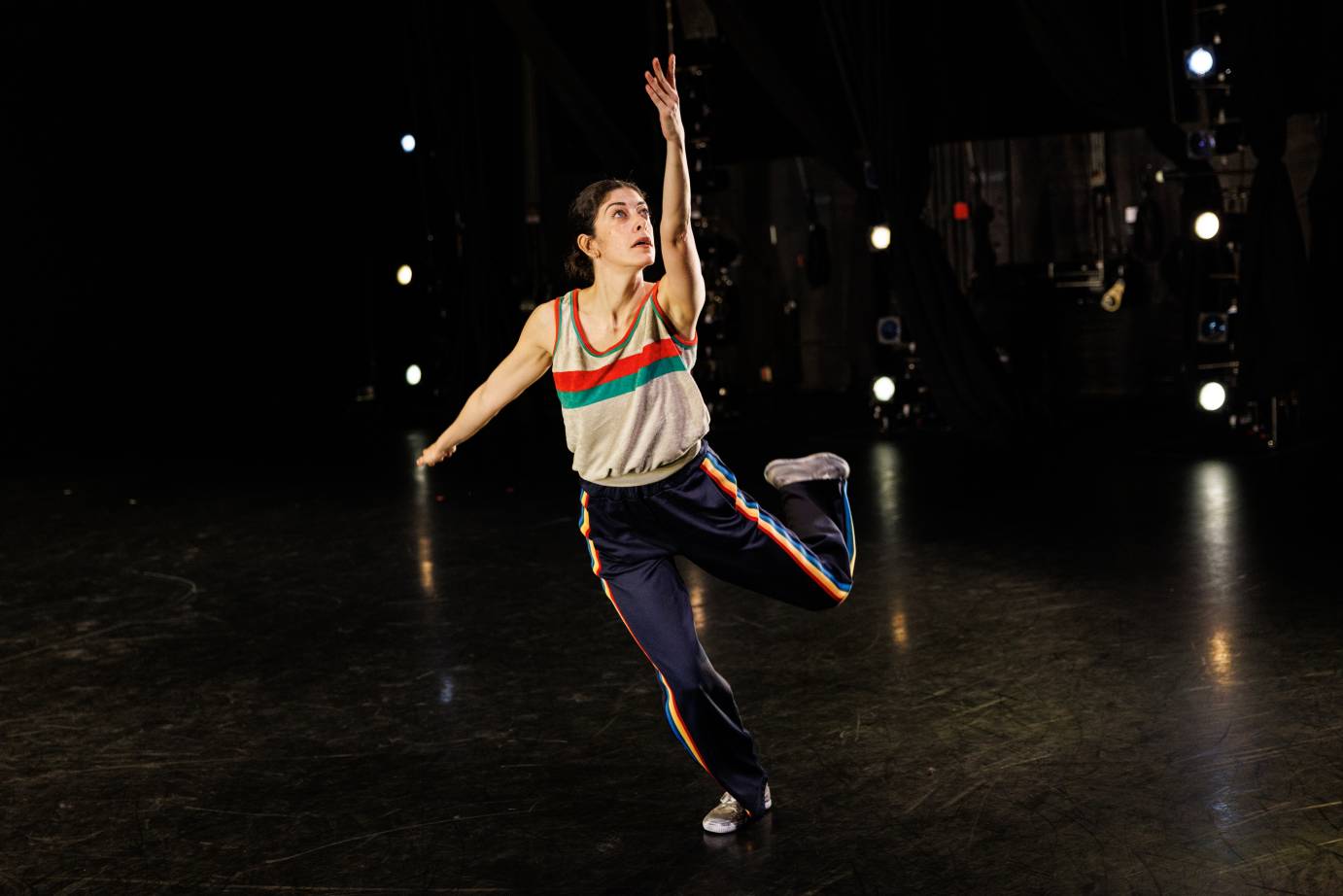
Lembeck’s attention to detail pervades a movement language full of clear contrasts in tone: the feeling of a fist or a flat hand, the full body’s presence in headlong momentum or precarious balance. The cast sustains organic cadences in unison, singing out rhythms with their feet over the ebb and flow of Ryan Gamblin’s sound score. In a final passage, they converge on center to thread their around one another’s waists and spin their way around the stage, harnessing their collective momentum and navigating minute cooperative calculations of speed and direction. While far from minimalist or abstract, Lembeck shows a fluid command of shape, sensation, and image that invites capacious viewing without the need for literal or symbolic interpretation.
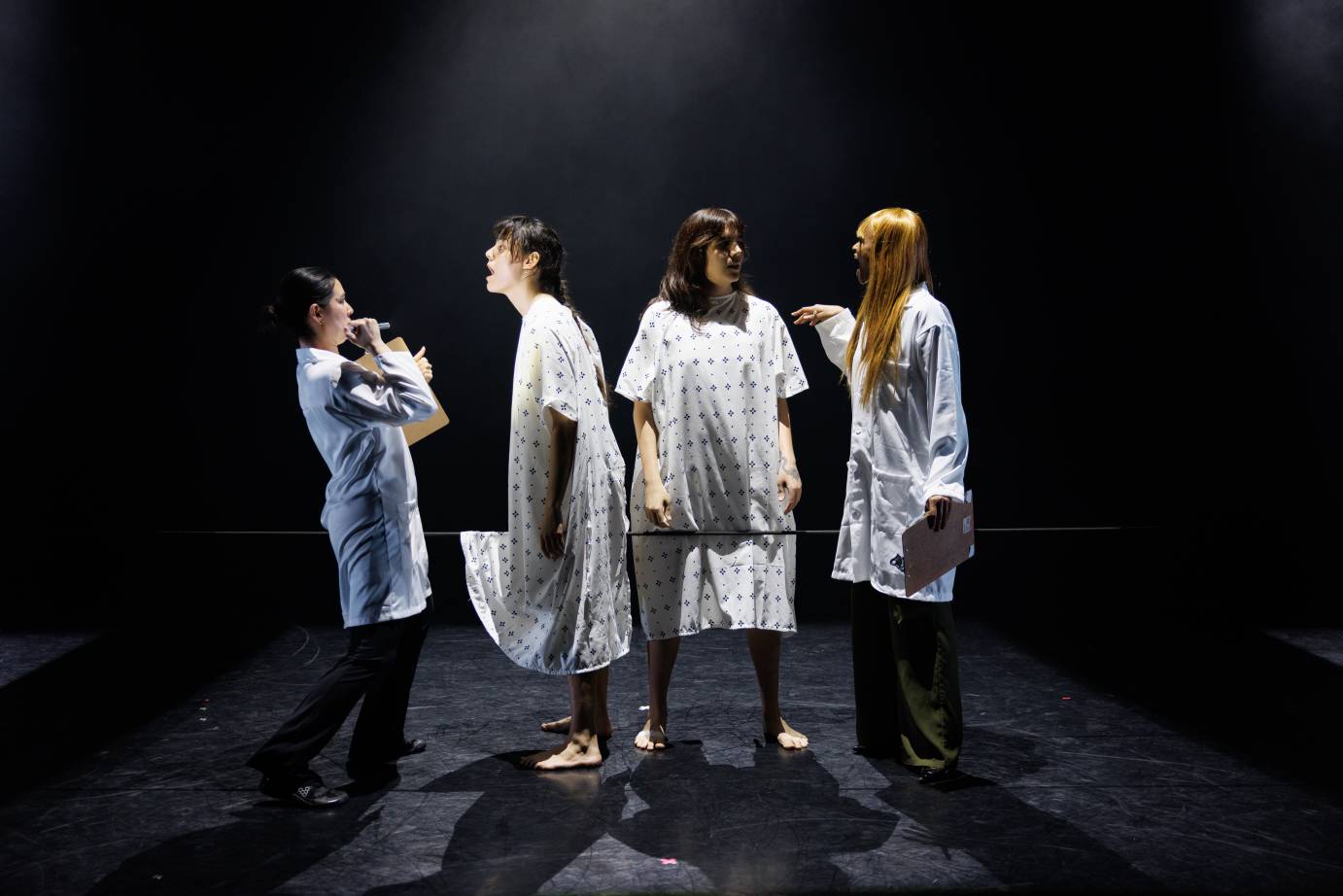
The balance of the program leans into theatricality with varying degrees of interdisciplinary fervor, beginning with Dahlia Qumhiyeh’s raucous and incisive AB+. Qumhiyeh confronts the visceral vagaries and fleshy certainties of the body through the narratives of medicalization that circulate in trans experiences. Internal battles give way to interpersonal battles of self-defense and survival, edged in acerbic parody and full-bodied surrender by a cast that revels in big moves and even bigger presence. Currents of chaos, longing, and control run in tandem to amplify or short-circuit the work’s electric mayhem, fleshed out with immersive abandon by the six dancers and a stunt-double-cum-punching-bag.
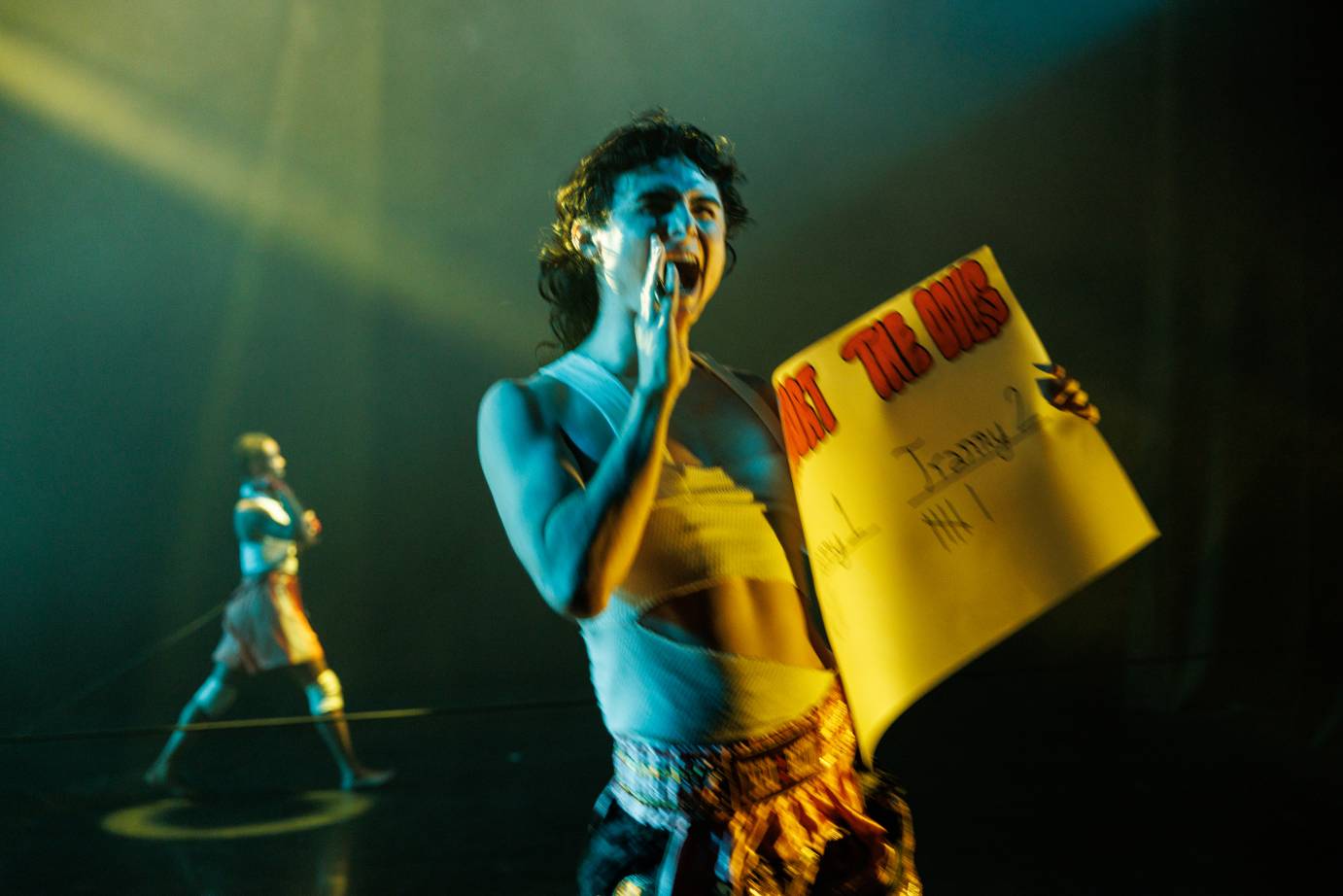
Joshua Leon Eguia (center) in Dahlia Qumhiyeh's AB+. Photo by Maria Baranova, courtesy New York Live Arts
AB+ indulges in its theatricality, with dramatic curtain reveals and architectures of light that destabilize the space as onslaughts of sound and strobes destabilize the senses; passages of video projected on curtains and floor offer glimpses beyond the stage world. Some characters are sharply etched — the scathing derision of Christine Shepard’s high-heeled doctor reads at once horrific and hilarious—while others lean into archetypes of amplified psycho-emotional turmoil. The work is at its strongest when Qumhiyeh’s flights of imagination and physical risk thread into her larger dramaturgical arc; some editing, or an expansion into an evening-length format, would serve the impact of this work’s statement.
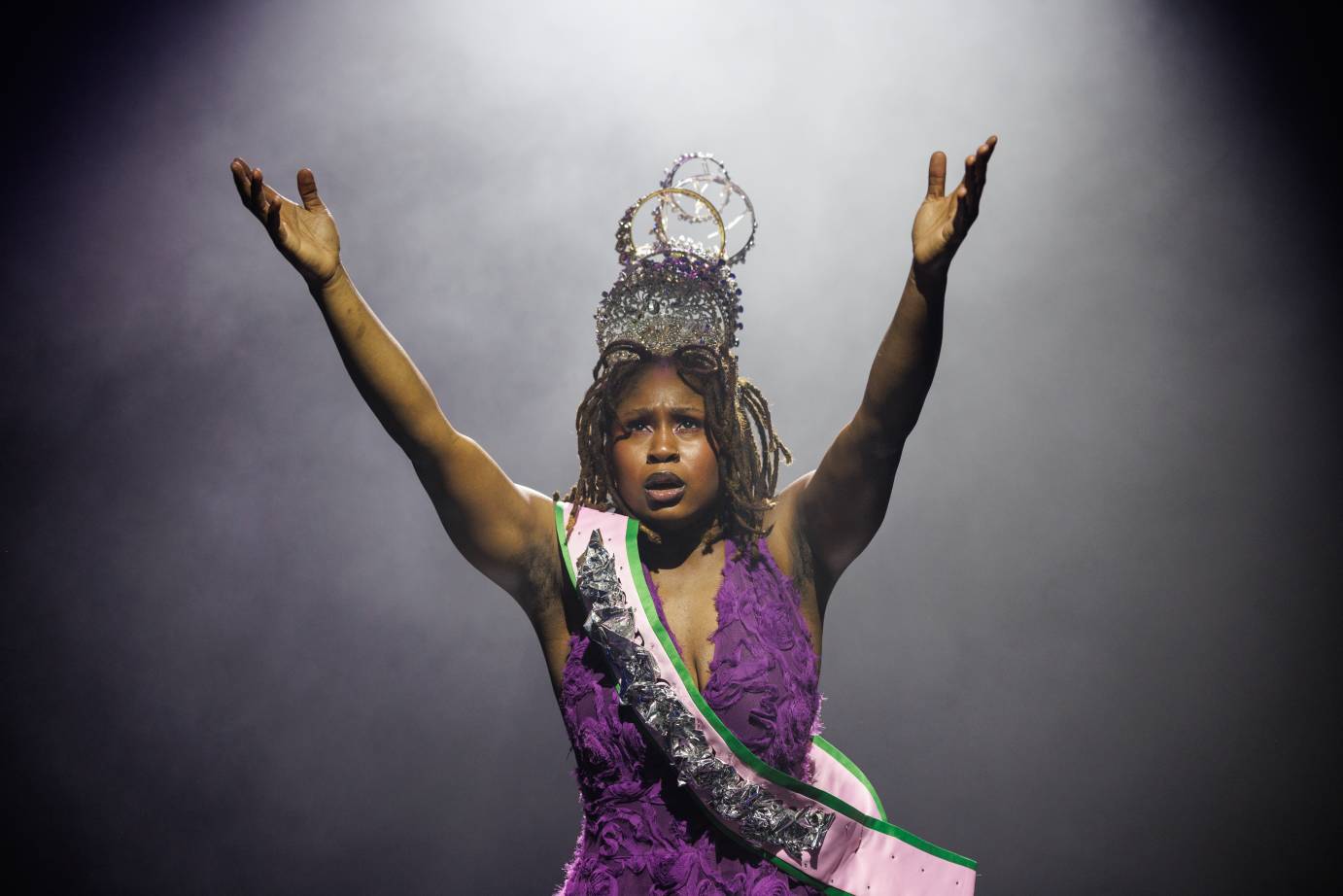
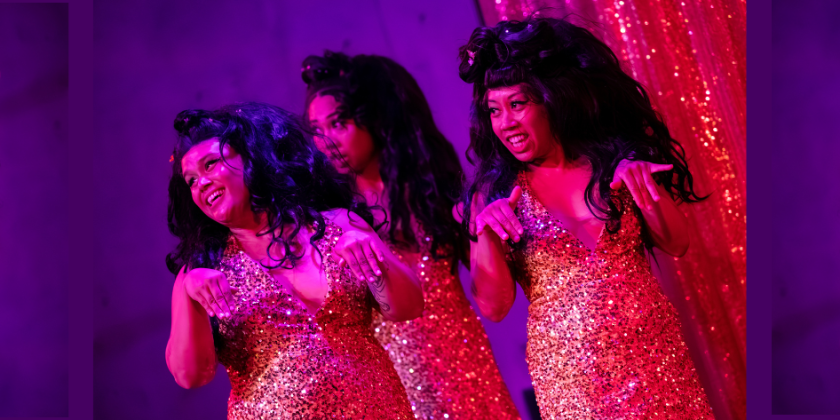
Cristina Moya-Palacios’ episodic fever dream, Without Breasts There Is No Paradise, showcases the artist’s eye (and ear) for camp (the title borrows from a Colombian TV drama). She grabs us on a high note: Moya-Palacios and Valentina Baché tangled in a telenovela tizzy of screams, slaps, and shrieked insults that descend (or ascend?) from melodrama to absurdity as they teeter on invisible high heels to match their tight, bright dresses. She lingers in dimensions of this world — the magnetic Kashia Kancey in a glittering pageant gown and sash, reeling with the weight of a tower of tiaras atop her head — to press on tender spots of romance (surging swells of violins), tension (two luchadoras in a grappling slow dance), and collapse (a bristling piñata that leaks smoke as it crumbles).
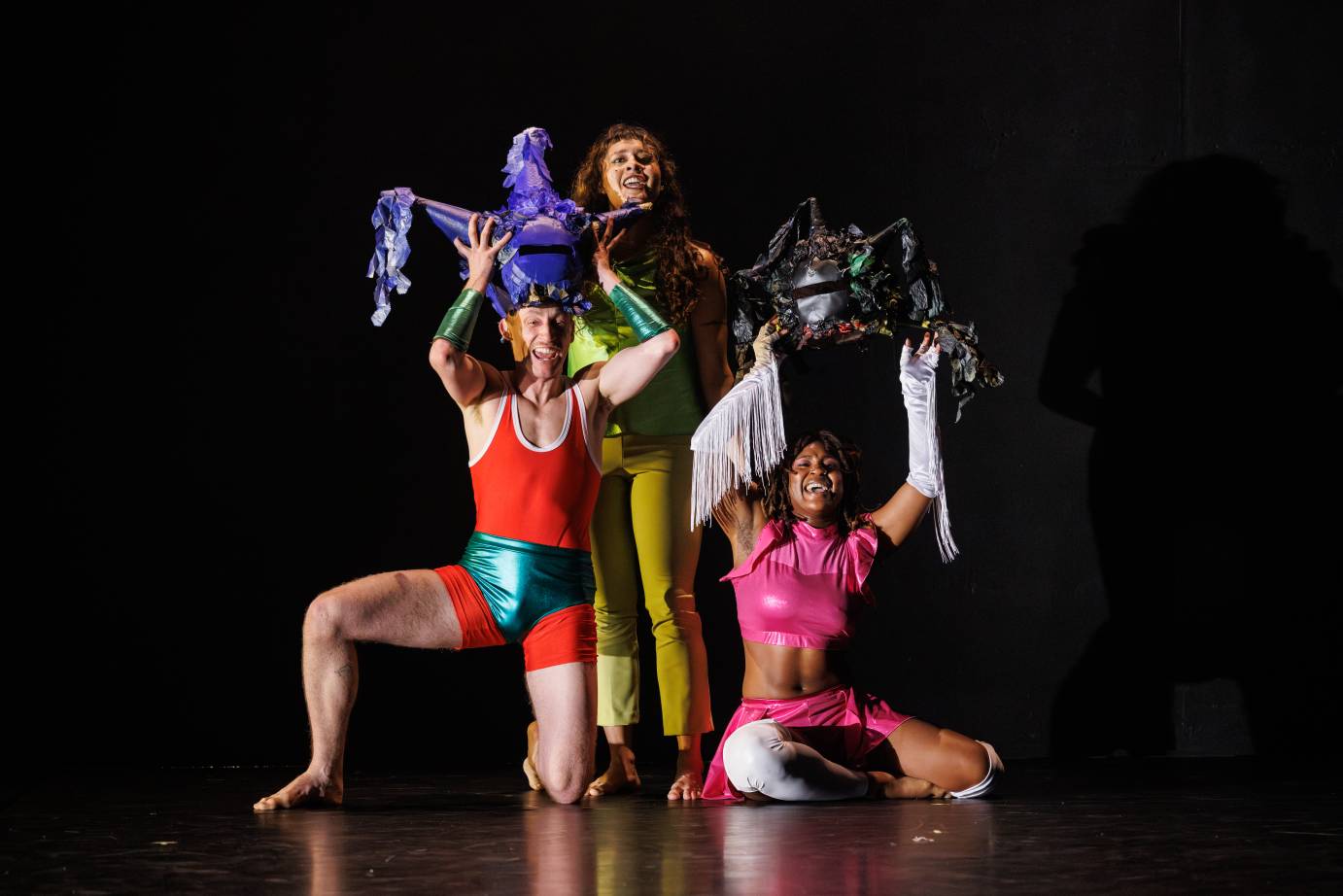
Kyle Carr Scheurich, Cristina Moya-Palacios and Kashia Kancey in Cristina Moya-Palacios’s Without Breasts There Is No Paradise. Photo by Maria Baranova, courtesy of New York Live Arts
Vivid imagery and action swirl in juxtaposition with spare moments of structured shape and visual rhythm, as when a chain of bodies builds one by one in a series of deadpan entrances and exits from the wing. Absurdity breaks open into vulnerability as Moya-Palacios strips off her luchador garb and tearaway layers of t-shirts; she stands alone, center stage, ripping into a head of cabbage tossed unceremoniously at her feet. As the leaves fall away to looping cascades of harp, she solemnly repeats: “me quieren / no me quieren, me aman / no me aman” until the incantation fragments into a gutwrenching plea: “Mamá.” A drifting broom ballet ensues as the cast (mostly) cleans up the mess and converges into a final swirling dance; the lights go down on their bodies joined side by side, heavy feet slapping the floor in an anti-kickline. The veneer of their paradise is shattered, but was it ever truly whole?
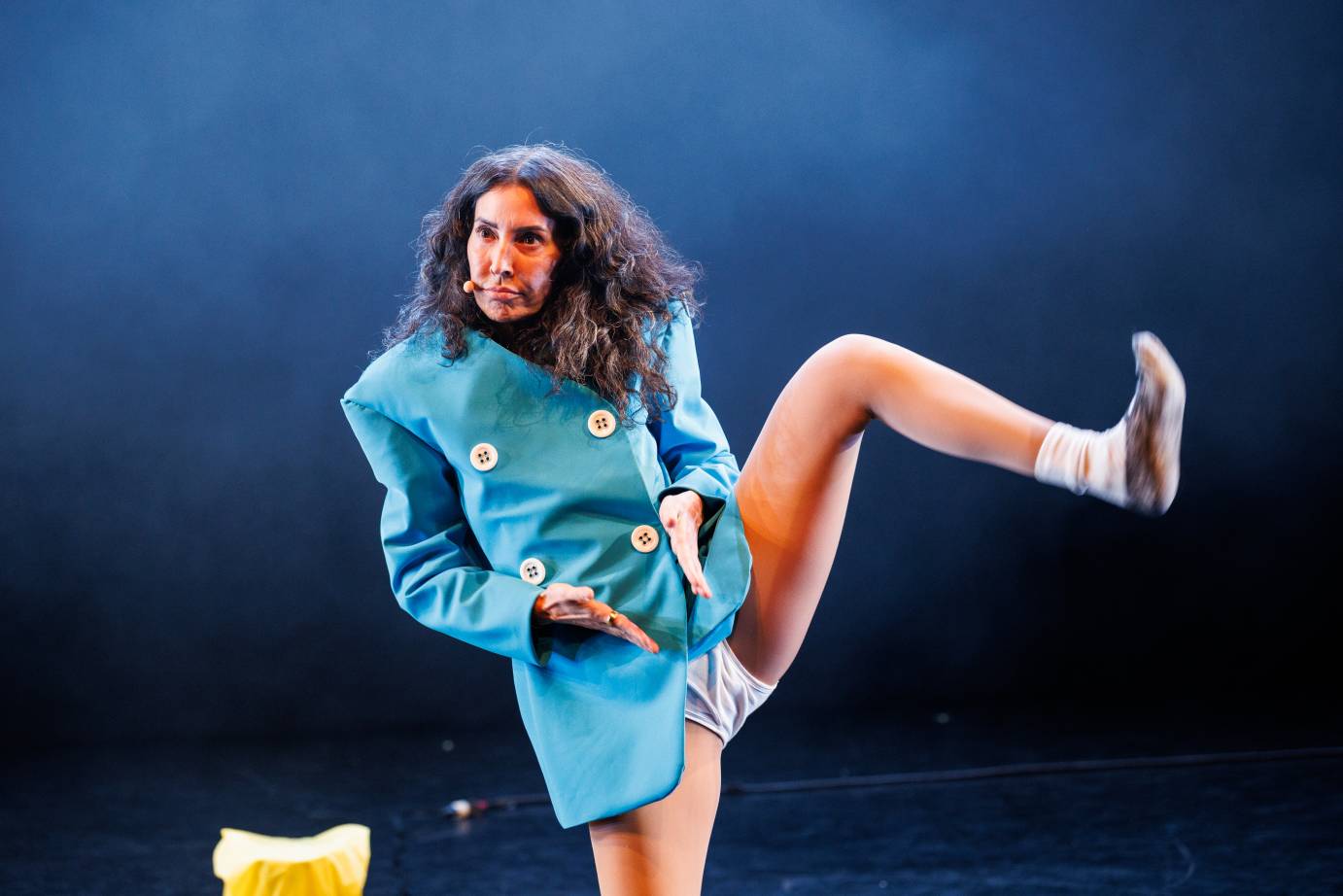
The evening pressed on (our attention would have welcomed an intermission) with Sacha Vega’s almost impenetrably strange SWELL, a mostly-solo character study performed by Rose Luardo. Luardo’s commitment is intense and entire as she transforms herself with maximalist expression in a minimalist stage setting that centers on two comically-oversized inflatable yellow gloves. Vega’s flavor of camp theatricality pushes the edges of grotesquerie to tumble over with gleeful abandon. The overall effect is one of estrangement, and in the absence of an intimacy of trust, much of the work falls flat across this distance — somehow too much and not enough.
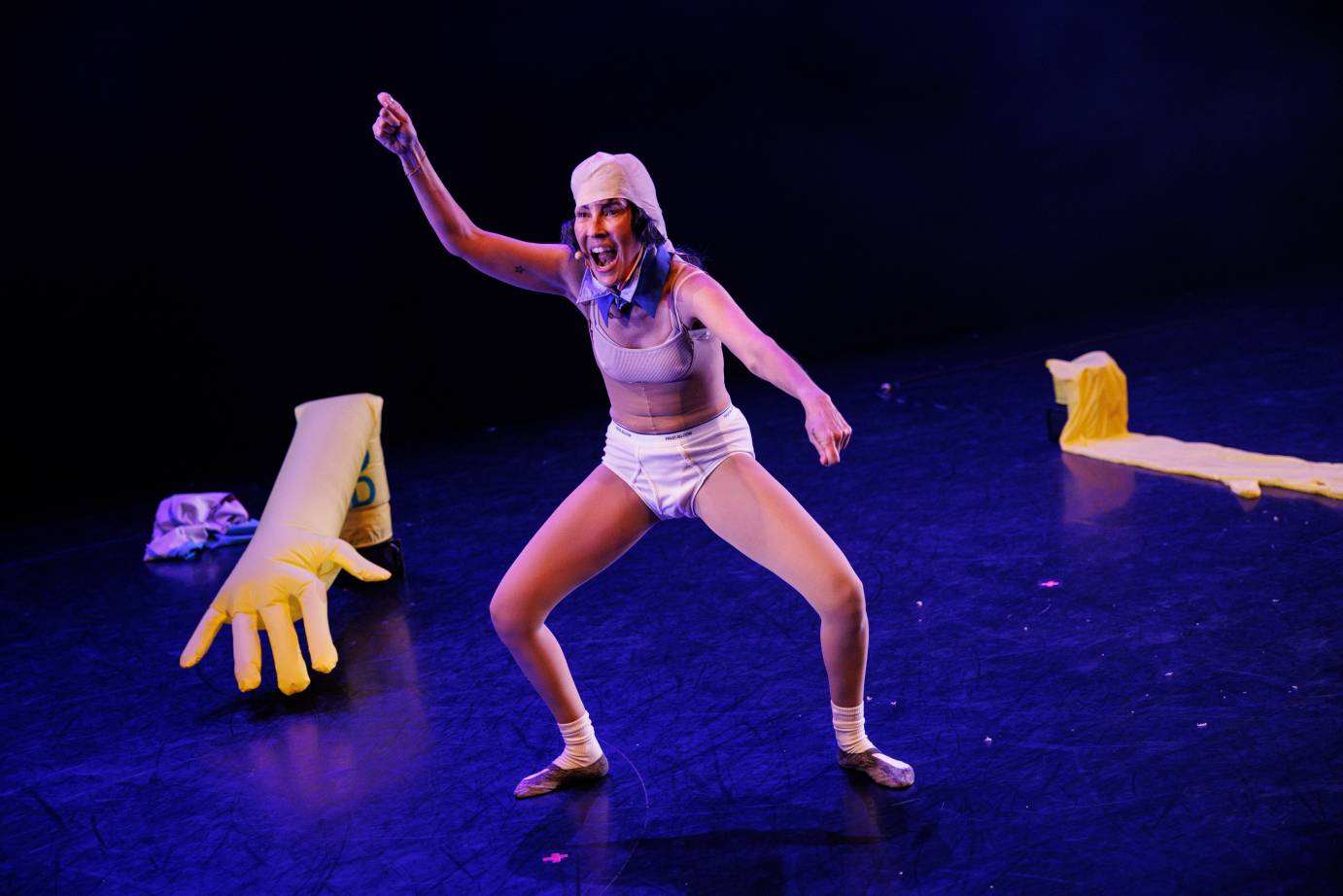
Luardo’s commedia dell’arte background serves her well as she cycles through a grab-bag of caricatures denoted by costumes and props layered over a nude unitard and sagging tighty whities. Speaking and moving fuse tightly in these portrayals, with Luardo’s over-amplified voice adding a disorienting level of remove from her embodied expression. While much of the work’s copious text is baldly obvious (perhaps intentionally so), the subtext is less apparent, creeping in at the dark edges of this twisted comedy. Vega’s capitalist critique shreds the paradigms we too often take for granted; this message, delivered through an in-your-face guerrilla theatre aesthetic, might be better served by a more direct, less formal staging.
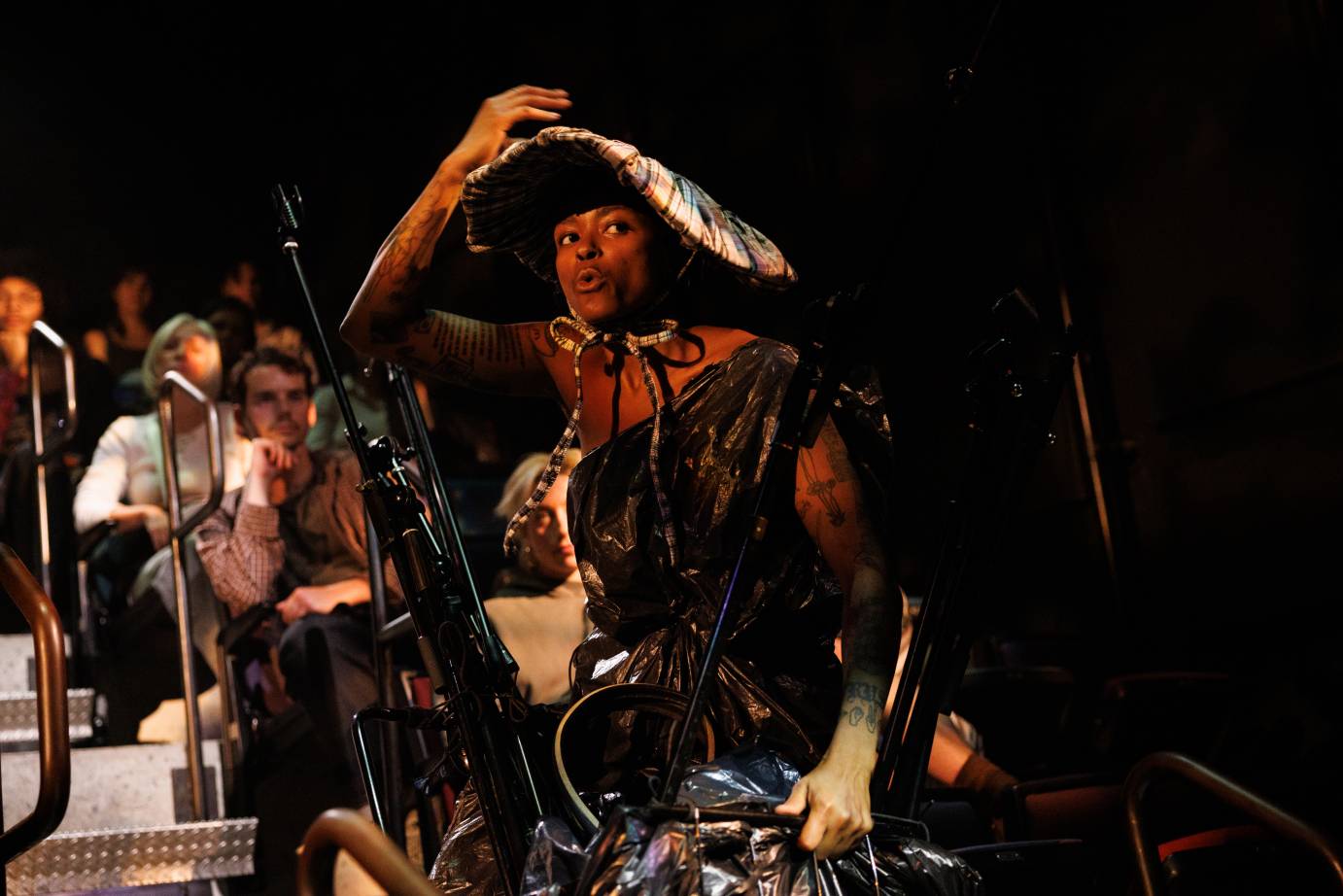
Dorchel Haqq breaks up the theatrical space in her vol.1 / DND / a study on perspective, which opens with Christine Shepard’s second appearance of the evening as a radically different character: an almost oracular vagrant collector of objects shrouded in rags and black trash bags. She descends through the house, navigating a pushcart down its steep concrete stairs, pausing from time to time to offer items to unsuspecting audience members. This extended sequence allows the Live Arts crew time to set the stage: panels of clear plastic rigged to a pipe dropped midway from the grid at the downstage edge, which proceeds to ascend slowly through the remainder of the work.
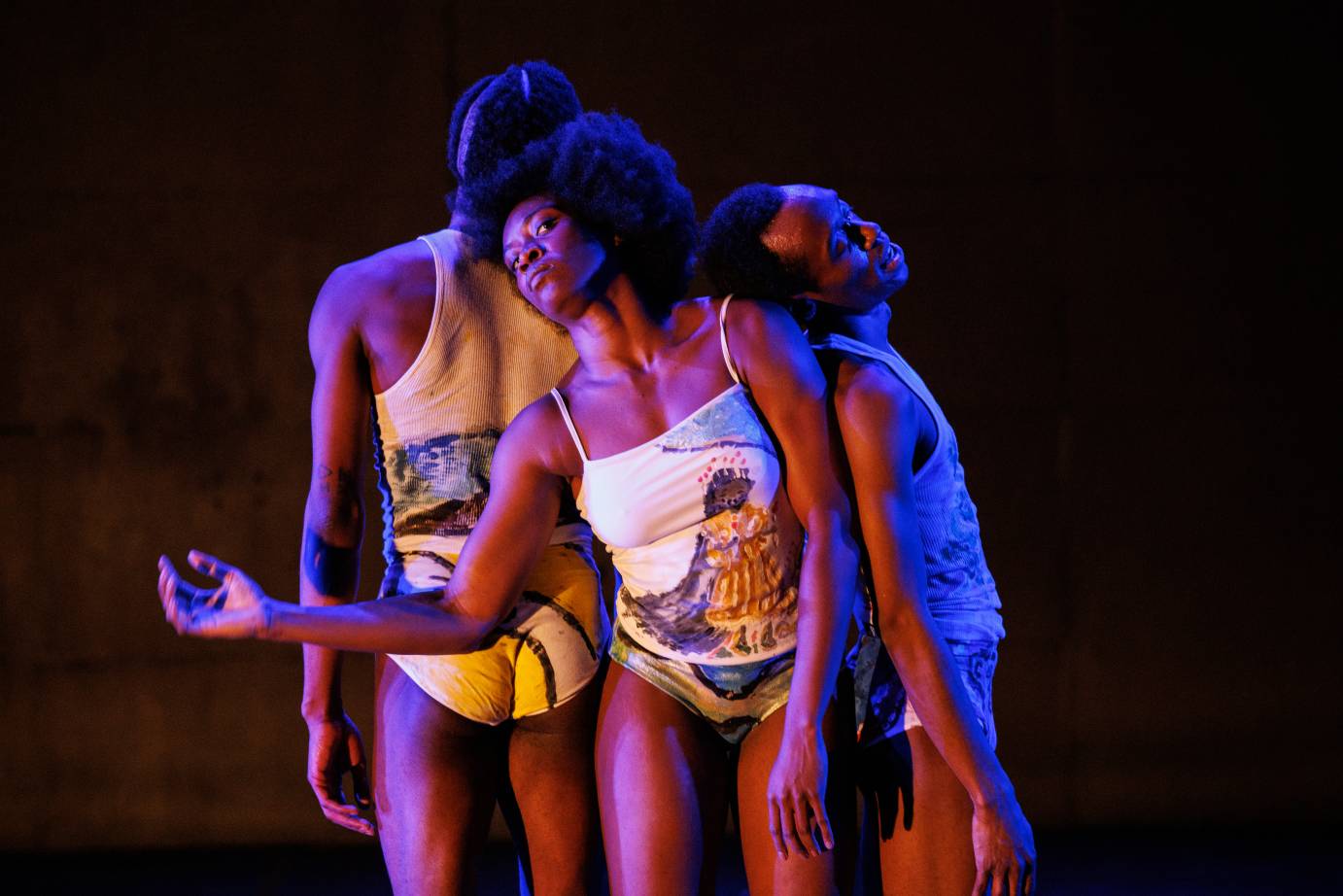
Haqq punctuates an air of tense darkness with chatty street vignettes for the cart lady and two characters in bewigged hoodies; the final figure writhes and emerges from a black trash bag. Shepard remains a busy presence in the background, darting about the stage to set up mic stands and black folding chairs as the architecture of their world. The three dancers, stripped down to tanks and briefs (evocatively painted with Malcolm-x Betts’s playful signatures of color and form), keel and collide through a shifting space that feels full and empty at once: hard black objects casting crisp black shadows in dim black space.
They speak in streams as they move through an equally unstable soundworld, less to be understood and more as added texture for the mumblings and rumblings of their bodies — Black bodies casting black shadows, small and sharp, big and blurred. Haqq shows herself adept at integrating movement as an almost painterly element, with geometries of tension, lush stretches, and thrilling stillnesses that break the surface of the dark only to retreat into its inevitable depths.
Fresh Tracks once again brings a slew of experimentations to theatrical fruition, with dance ideas expressed through improvised and composed movements that play alongside text, sound, character, materials, and technology. Drawing from their individual palettes of form, content, and aesthetic, these artists explode the binary between minimalist and maximalist concerns, instead mixing and remixing (subtly or wildly, often gleefully) among the broad spectrum of possibilities between. I’ll look forward to seeing where each of them makes their next tracks.