



Related Features
MOVING VISIONS: Can Dancing Raise Climate Consciousness?

DANCE NEWS: Harlem Stage & Ailey Organization Launch Landmark WATERWORKS Partnership
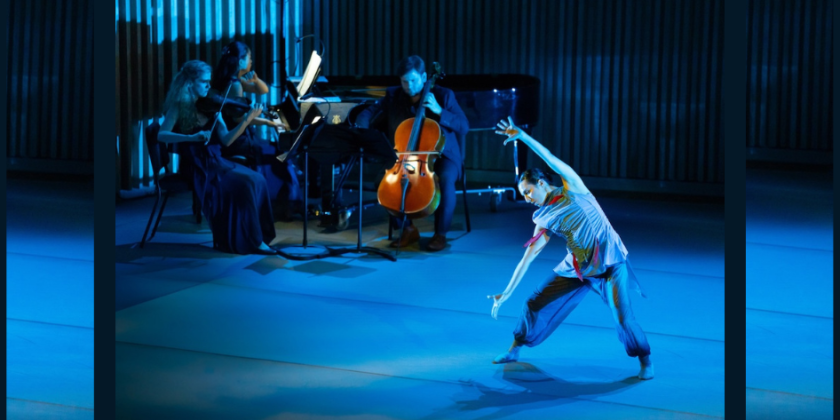
THE DANCE ENTHUSIAST ASKS: Gabrielle Lamb on "Rising," a Collaboration with Composer Robert Sirota and the Neave Trio

By Theo Boguszewski
View Profile |
More From This Author
Published on April 21, 2026
Neave Trio with Allegra Herman. Photo courtesy of the artist
See it This April 23 - 25, 2026 at Baruch Performing Arts Center
As climate change accelerates and oceans rise, choreographer Gabrielle Lamb’s latest collaboration turns to water as both physical force and poetic metaphor. In Rising, an evening-length collaboration with composer Robert Sirota and the GRAMMY®–nominated Neave Trio, Lamb translates scientific ideas into embodied experience — an impulse that expands into a meditation on oceans, memory, and a planet in flux.
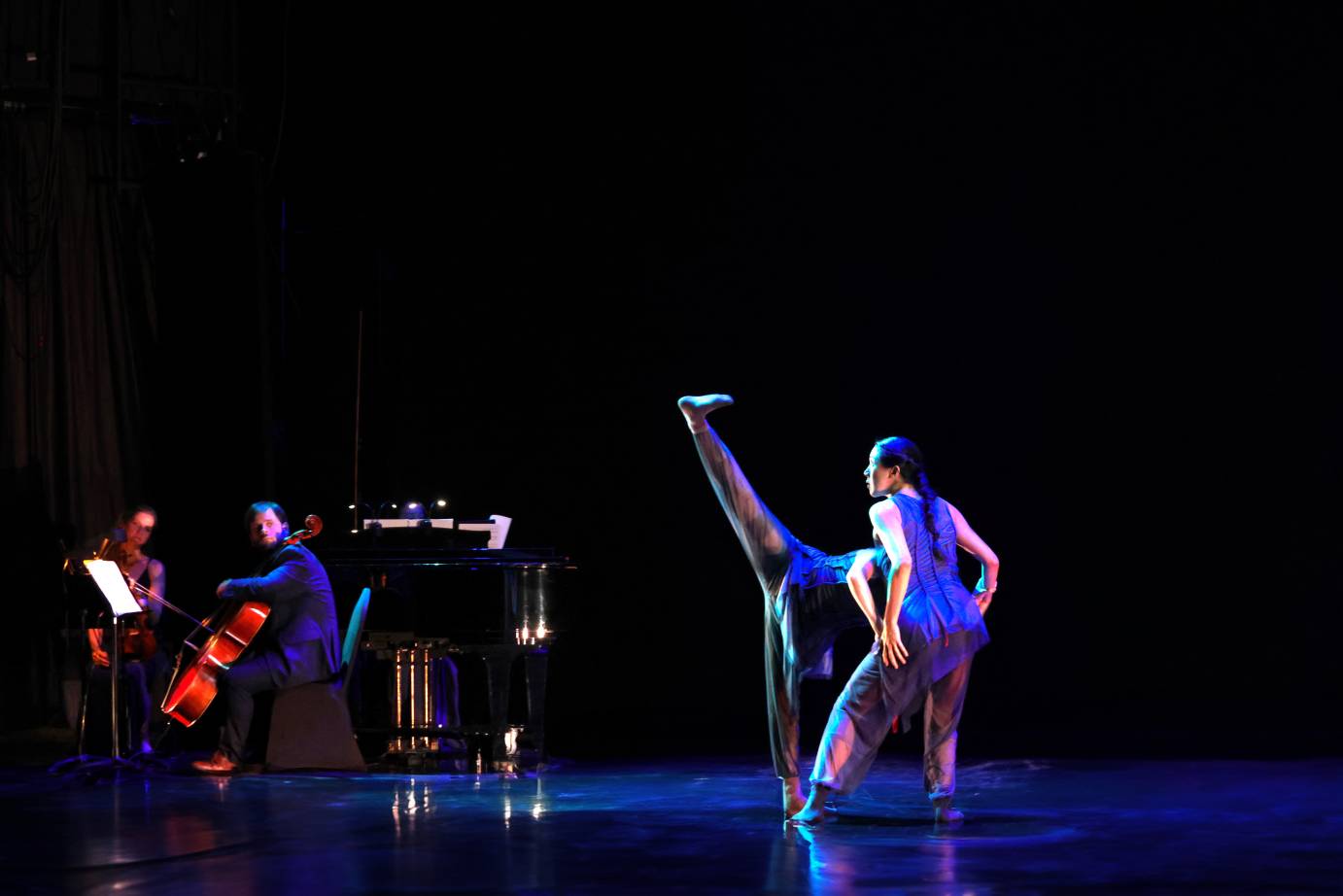
Premiering at Baruch Performing Arts Center through the CUNY Dance Initiative, the work blends live chamber music with Lamb’s intricately detailed choreography for Pigeonwing Dance, inviting audiences to examine and feel our evolving relationship with the natural world.
The Dance Enthusiast’s Theo Boguszewski chatted with Lamb about the lineage of Rising and what audiences can look forward to.
April 23 - 25, 2026
Baruch Performing Arts Center, 25th St. betw 3rd & Lexington Aves, 55 Lexington Ave, New York, NY
MORE INFO + TICKETS
Theo Boguszewski for The Dance Enthusiast: Rising explores oceans and rising sea levels. What initially drew you to water as a subject?
Gabrielle Lamb, Founder of Pigeonwing Dance: A lot of my choreography, even before Rising, was water related. I’m fascinated by the way that water always seeks the lowest place, and the way that it carves channels and changes the shape of things over time. So it's not my first water piece, but it is specifically about the ocean.
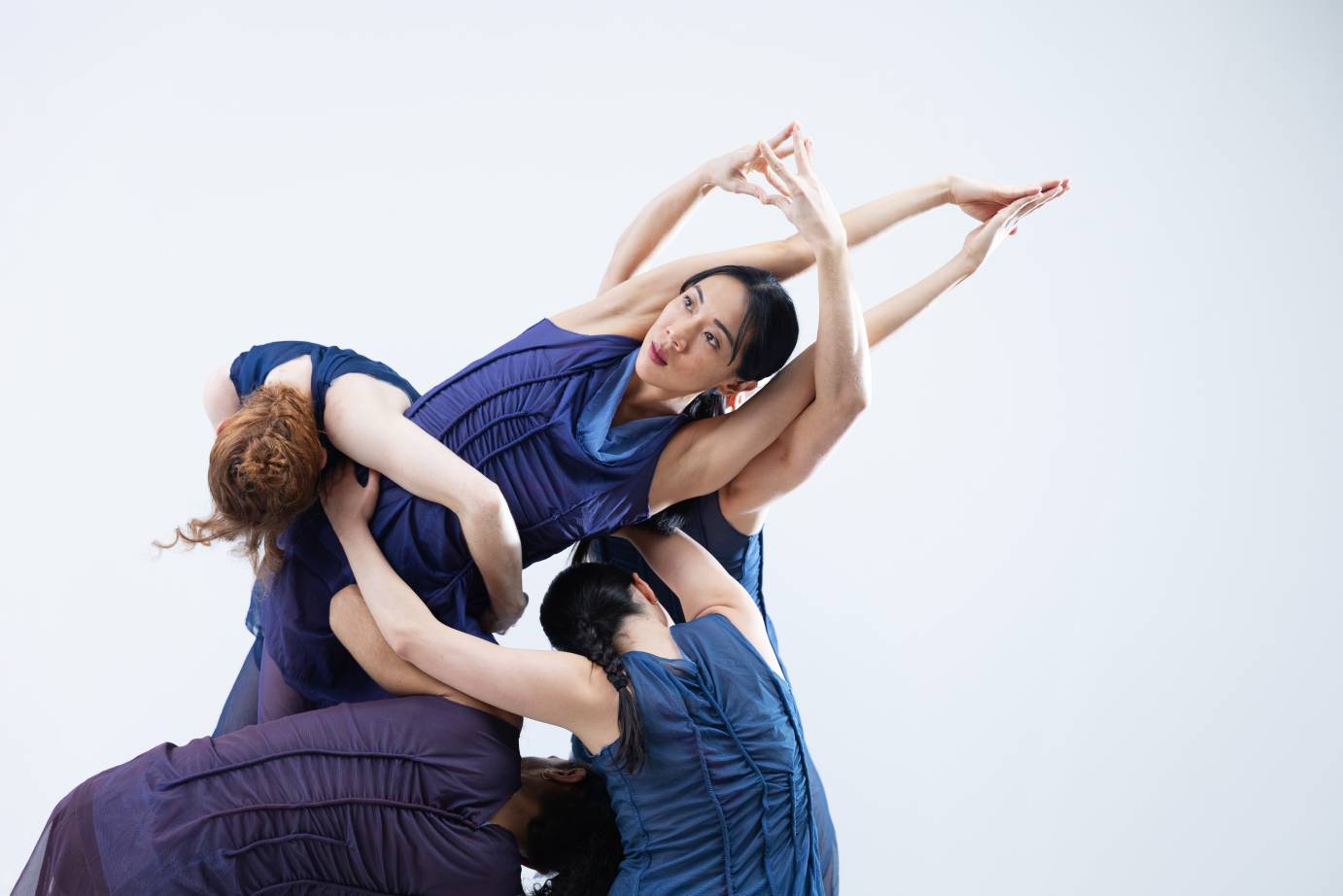
This one had an interesting origin story, which is that the Neave Trio contacted me and they had already chosen a composer they wanted to work with. And they had a theme too; they knew that it wanted to be called “Rising” and to be about the idea of “rising” in some way. They knew they wanted to create work that had impact beyond the concert hall. This was in early 2021, when we were experiencing so much COVID-related tumult after the George Floyd protests of the preceding summer. It felt like the world was in a lot of pain, and the musicians were compelled to respond through sound and movement. For them "Rising" was already connected to the ideas of "uprising" and "rising to the occasion.” We all knew the focus needed to be more specific, but it took us a while to find the right lens. We started with some music sketches, thinking about all the different ways that “rising” can happen, like floating and hovering and spiraling upwards.
After we had a nibble from a presenter at Oregon State University (which has a strong oceanography department) it suddenly seemed obvious that the ocean had always been it. Several of us had grown up in coastal communities and felt strong connections to the ocean and marine life.
The score incorporates recorded text from an oceanographer and a naturalist — how do these scientific and narrative voices interact with movement?
I chose a few musical sketches and made some movement sketches to go with them. And I decided to use this commission I had at Boston Conservatory to sketch out the beginning of this piece as we looked for our direction. I had signed a contract for a 10 minute piece, and I got the music recorded by the trio, and it was eight minutes worth of music. I was like, “oh, what am I gonna do?” The first piece was called Floating, and so I just googled things that float. And I came up with this book called Flotsametrics and the Floating World by the oceanographer, Curtis Ebbesmeyer, which talks about how trash floats around the gyres that circle the continents of the earth. I listened to a podcast and I thought, “oh, this guy's a character, he has a great voice and he has a great story to tell.” I was able to take excerpts from that podcast where he talks about the ocean being like a giant musical instrument.
And maybe, without knowing it, this was what we were looking for when we knew we wanted to make a piece about rising — rising sea levels, and also rising awareness of climate science. Still, it felt pretty astonishing to be addressing a theater full of oceanographers at our OSU premiere, knowing that a late-night Google search for "things that float" had led us there.
Share a little about the process of working with composer Robert Sirota and the Neave Trio.
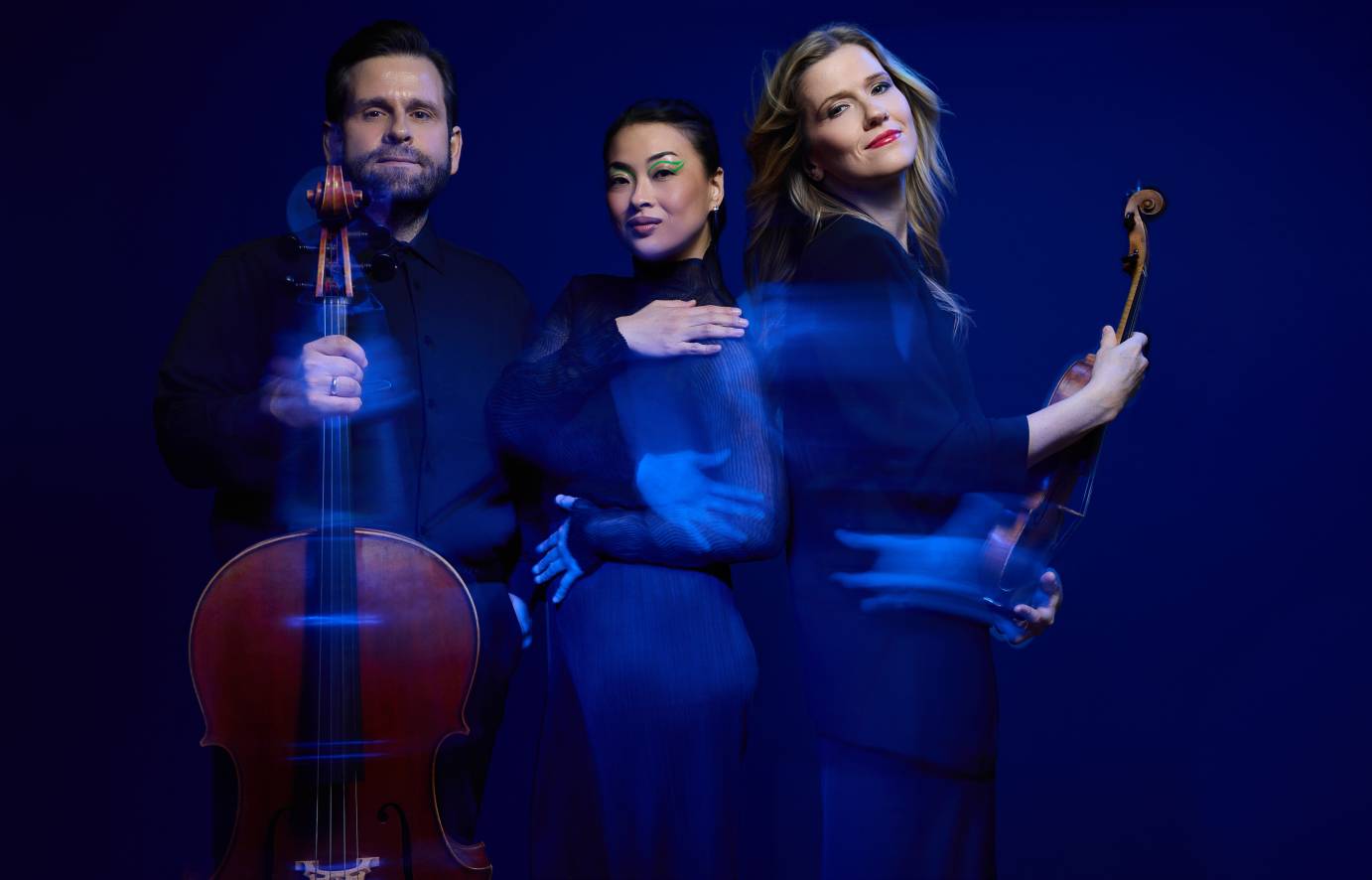
It was actually 2021 when the Neave Trio contacted me, so it was still during the pandemic and everything was happening over zoom. And Bob the composer wrote a number of sketches and had the trio record them and then send them to me. And then I weighed in on the direction. Bob and I collaborated on the structure, and then the musicians were the driving force behind it. And they appear on stage with us as characters.
So were you and Bob co-creating the dance and the music at the same time?
This piece has been made in increments over several years. I did a bit of it at Goucher College and I had a residency with my own dancers at Princeton. So Bob would keep feeding me more music, and I would create more and then that would inform the next pieces that he would write. We had a Miro Board, one of those online tools for collaborating and organizing. It was an interesting process in that we didn’t have a blueprint from the beginning, the piece was created in steps, and one step informed the next.
This piece took several years to develop. How did your ideas evolve over time?
I had this character, Curtis Ebbesmeyer, the oceanographer. And I knew all along that I wanted there to be at least one other voice. And so I used some text by Craig Foster, who is this octopus teacher guy in South Africa. He free dives and he's a naturalist and he brings awareness to the ecosystem, the kelp forest there, and to the ways that it's affected by climate change. And he has a beautiful voice and a very different and complementary approach to Dr. Ebbesmeyer, who is a scientist and driven by data. Craig Foster is much more about the embodied sensation. He talks about diving in cold water without a wetsuit, feeling the little rocks under your feet. It's an embodied approach to the ocean. And so I had those two voices and they provided the scaffolding that I could use to create a narrative structure. And then Bob and I would talk about how the music could help us get from one place to the next.
Did the theme of water influence the physicality or the texture of the movement in specific ways?
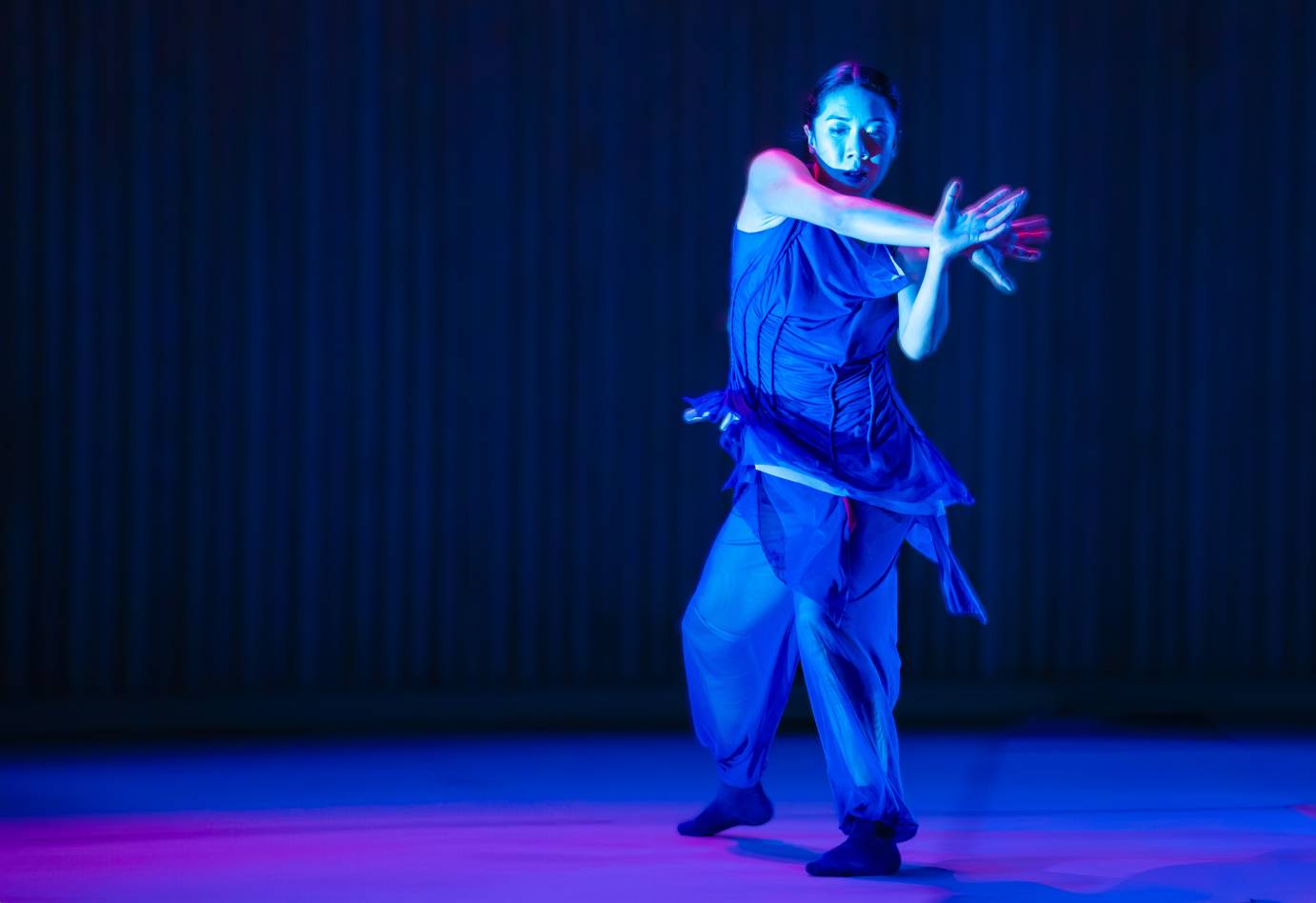
Yes – there’s different relationships to the water. There's moments of diving and there's like a whole section which in my mind I imagined choreographing as a scuba accident. There's stuff in there about the movement of marine life and there's a storm, too. A storm at sea.
Did the urgency of climate change impact your approach to the work?
Yes, of course. I’ve done a number of science informed pieces, and I'm still trying to wrap my mind around what dance can offer in this realm, both to people who don't know the science as well as people who are scientists. To react to climate change by making a dance can feel a little pretentious. But on the other hand, we're inundated with data and don't always have a way to process it emotionally. I think dance and music can do that.
Since founding Pigeonwing Dance in 2016, you've performed in a variety of different spaces, including museums and other public spaces. How do you feel that this piece fits into that trajectory?
Interestingly, this is our first time in New York doing a full evening show in a theater since the pandemic. That was what I was focusing on with Pigeonwing before the pandemic, and then everything ruptured, and we started doing the Carpet Series. So it's interesting to return to a theatrical setting.
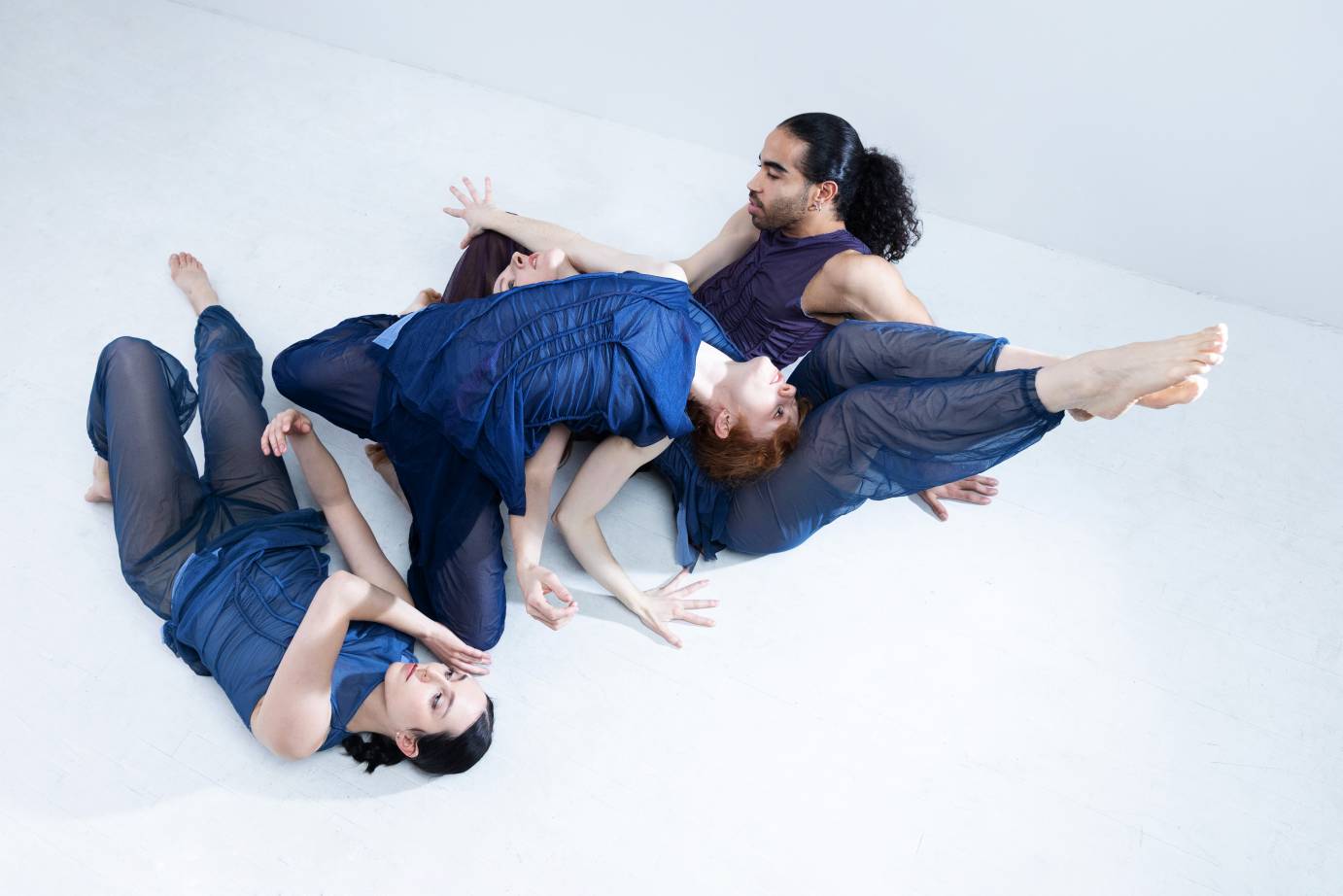
I think I have a stronger sense now of who the audience is, or at least the importance of asking that question. Before the pandemic, performing in theaters, it was always just about my work, and what I wanted to make. And now I think I’m giving more thought to the other side of that equation — who is seeing this? What is the context that I'm going to give them? If they are not experts in contemporary dance, how am I going to contextualize this in a way that allows them to take it in and appreciate it? I learned a lot from the Carpet Series, dancing in public spaces, and also the other science work that we've done. So while this is a step back into the world of concert dance, I feel like I'm returning to it with this newly sharpened perception of how to communicate with an audience, how to give contemporary dance context.
I think I'm still trying to figure out how to reach the people who are interested in the intersection of climate, science and art in New York City. I would like to reach CUNY students.
Can you share a little more about the Carpet Series?
During the pandemic, I had a Works and Process commission to do a short film, and I choreographed a solo for myself. I rehearsed in my living room on this Persian carpet that I had, but I wanted to film it outside. So I took the carpet outside and that was something that attracted a lot of attention. The rug is a beautiful object, so it was this interesting juxtaposition of private space and public space and a luxury good on the gritty sidewalk of New York City. It started with just me, and then I eventually brought a couple of dancers from my company into it, and then it became a more formal structure over time.
We've performed all over New York; the Botanical Gardens, Governors Island, Little Island, Bryant Park. Sometimes we have a formal presenter, but other times we just take the rug out and set it up.
Do you anticipate Rising being an educational experience, an emotional experience, or some kind of combination of those things?
I think it's a combination. I'm curious how much of the narration people are able to retain, given that they're watching dance at the same time.
I think it's an emotional experience that hopefully will inspire people to want to know more about the work of these two people, the oceanographer and the naturalist. So maybe an emotional experience that can start leading people on paths towards learning more.
Is there something in particular that you hope that audience members take with them after experiencing the piece?
I think a lot of what we hear about climate change is very doom-driven, and rightly so.
And yes, this piece is about rising sea levels, but it's also about the beauty and complexity of the ocean. We have to be reminded of why this is something that is worth saving and caring about. So I think that's where dance and music can help.