

Related Features
THE DANCE ENTHUSIAST ASKS: Not Retiring Anytime Soon, Lucinda Childs on her Partnership with Gibney Dance
IMPRESSIONS: Fall for Dance (Programs Two and Three) at New York City Center
THE DANCE ENTHUSIAST ASKS: Gina Gibney, Recipient of the Bessies Service to the Field Award (2025)

By Theo Boguszewski
View Profile |
More From This Author
Published on January 18, 2026
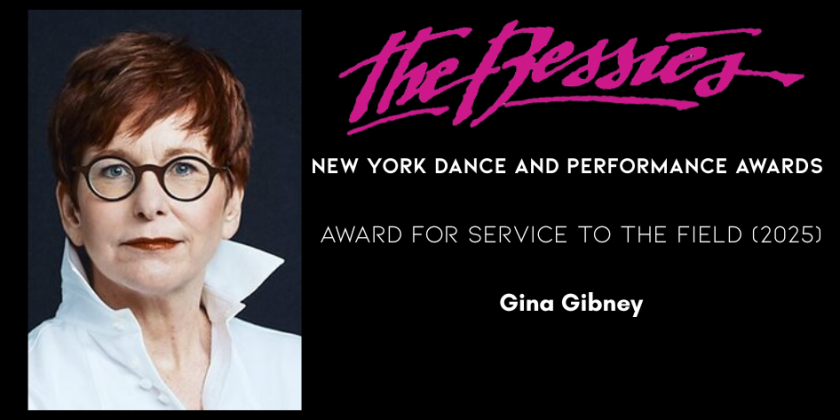
Photo courtesy of the Bessie awards
The Founder, Artistic Director and CEO of Gibney Dance Chats About Her Center, Community and Company
At a moment when the dance community is reflecting on both its lineage and its future, the Bessie Awards — upcoming dance awards honoring outstanding creative work in the field — offer a space where individual artistry and collective service are honored side by side. In conversation with Dyane Harvey-Salaam, recipient of the Lifetime Achievement Award, and Gina Gibney, recipient of the Bessies’ Service to the Field Award, intertwined paths of New York City dance artists are revealed: one shaped by a lifetime of cultural exploration and creative experimentation, and the other by decades of building space, structure, and access for artists and communities. Together, their voices illuminate how the Bessies recognize not only what happens onstage, but the daily work that keeps dance alive in NYC.
The Bessies will take place on Tuesday, January 20 at 7 PM (ET). In-person attendance is no longer available. For live streaming viewing, click here.
Here, The Dance Enthusiast’s Theo Boguszewski speaks with Gina Gibney, recipient of the Bessies 2025 Service to the Field award for her work as founder, artistic director, and CEO of Gibney Dance.
Theo Boguszewski for The Dance Enthusiast: When you first heard that Gibney Dance was nominated for the “Service to the Field Award,” what was your immediate reaction and what did it mean for you personally?
Gina Gibney: First of all, I did not know we were nominated. I think a lot of people still have my old email address. I was really shocked. I feel like I've just been making my way all these years, and there are so many incredible people who have built this field who deserve this kind of recognition.
And happy. I was very proud and very happy because it's a hard field to be in. We all work side by side with each other with a lot of respect and camaraderie, and with a lot of constraints. And so the idea that peers had recognized us was really meaningful.
Can you share a bit about your career, and how you grew from a choreographer into a more comprehensive leader in the field of dance?
My New York story is like just about every other person; I came from a small town to study and train and try to make my way in New York City. Back then, New York was the only place that you could really do this. It was clearly the central nexus of dance in the United States. I wanted to make work, to have my own group, and to work collaboratively. And I was excited by the energy of the city. I was religiously taking two ballet classes a day, and working at night as a legal word processor.
I decided that we needed our own space to work in. I was very close to a couple teachers that I took class with, and we decided to open a studio. And we started to create a community. There was always this concept of making work collaboratively with dancers that I respected and could draw from and elevate. And there was always this space: we got a studio very early on at 890 Broadway. And that meant that we not only had a home for ourselves, but that we could create a home for others in the dance community through classes or rehearsal. And from the beginning, there was always this interest in reaching outside the walls of the studio and bringing dance to other communities; schools and alternative spaces.
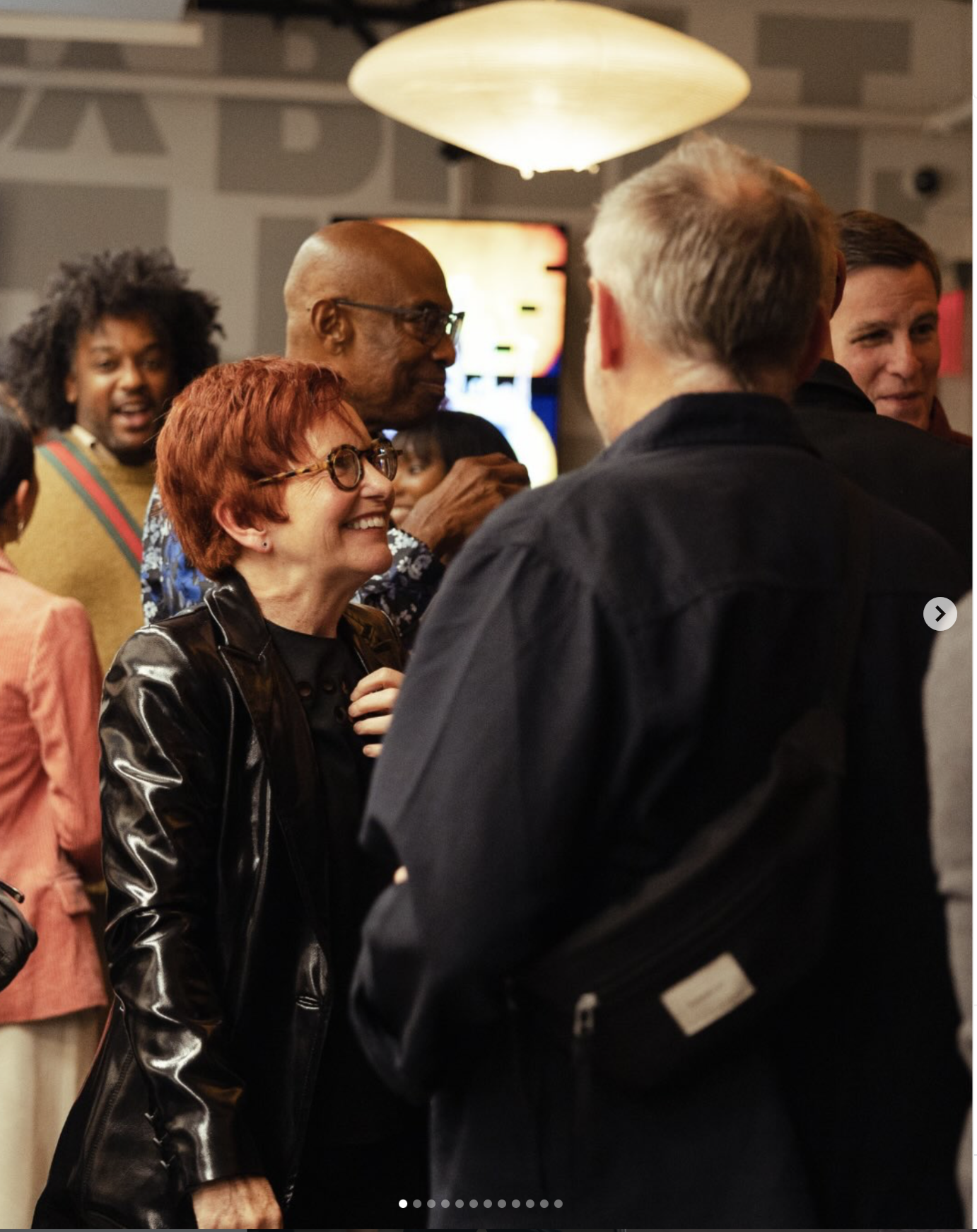
Everything that we are as an organization now: we have this repertory company with nine really amazing dancers who do work by choreographers whom I've admired my whole career, we have two facilities, and we have a very robust community action program that works in domestic violence shelters and with youth with healthy relationship training. All these things are big, and they grew in the scale that I never anticipated.
Can you share more about the community action program? What is the origin of that?
I've always been really interested in leadership, community service, and social action. Then I found dance and I put that aside. But later when I formed the organization, it was the late 80s in New York, and it was a really difficult time. A lot of poverty, inequities, just a lot of unmet needs. We would go into shelters, and you would see kids that just had no opportunity to participate in art in their schools. It would have been impossible for me to be in New York and be surrounded by this and not do something.
We had a program called Full Circle for Youth that went to community centers, schools, and shelters. It was just a great program that gave kids access to dance classes and then ultimately a performance in their own shelter, in their own school. We had this incredible performance that was based on the “Where Wild Things Are” with this wild tropical painted scenery. The kids performed a work where they did the rumba and chanted the "Wild Things" text. We literally did performances in a laundry room in a shelter.
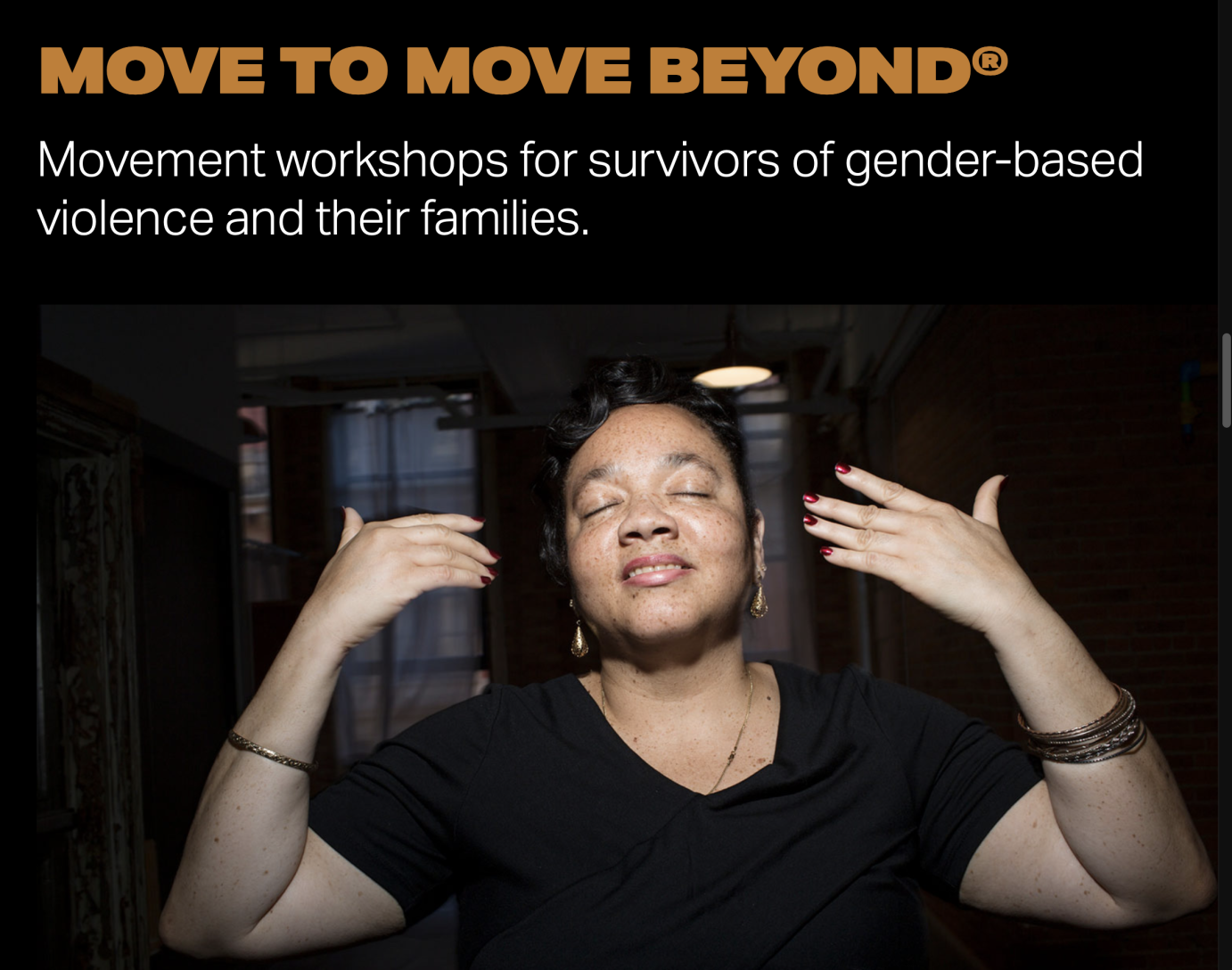
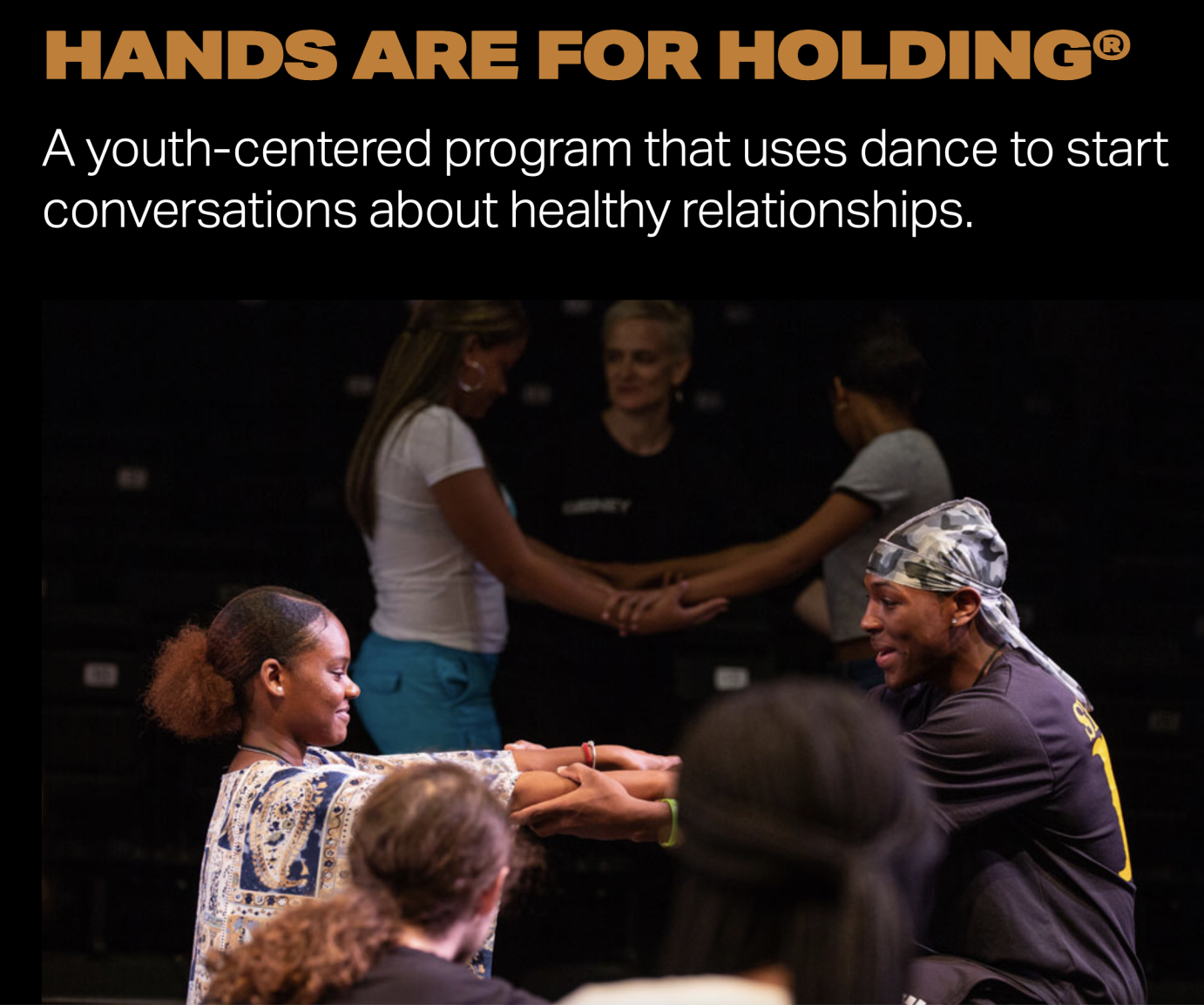
I took a lot of time off in 95-96, and when I came back, I realized the dance field had become quite male dominated. I decided that rather than feeling inhibited by that, I would just basically do what I could, which is have an all female company. We were all female for 10 years. And during that time, we wanted to find community work that was integral to who we were as a company, and we wanted to commit to an issue. Our process artistically was very focused on self respect and self care, and we took that idea and built a program, Move to Move Beyond, that worked hand in glove with what domestic violence survivors were facing. It was based around choice, reconnection with the body, reflection. That program was founded in 1999 and it's still going today. We developed an offshoot of it in 2014 that works with youth. It's called Hands are for Holding, and it focuses on healthy relationships, anti-violence, anti-bullying.
The impetus of working in community is very deep in my life. It's been the through-line of the entire organization's history; for the last 25 years we’ve been committed to a pretty singular vision.
From your vantage point, what are the biggest structural challenges facing the dance ecosystem in New York City right now?
That there is no structure. One of the things that I realized when I went into this field was, when you're in the dance world, you have to create your own structure around you because there is so little infrastructure. As emerging artists in this field, there are no clear professional development pathways. And I think that the biggest problem is the isolation that people feel.
And believe me, institutions are just like people — they are trying to do everything they can to support and to make good choices. It's just a very hard time because everything is so scarce.
We've had to do so much pivoting. We used to have some very well funded residency programs that gave out all sorts of support mechanisms, and then that funding got pulled. But we need to acknowledge just the act of keeping space available for people is important. If somebody really needs space, we can provide it for them. So adjusting expectations is incredibly important.
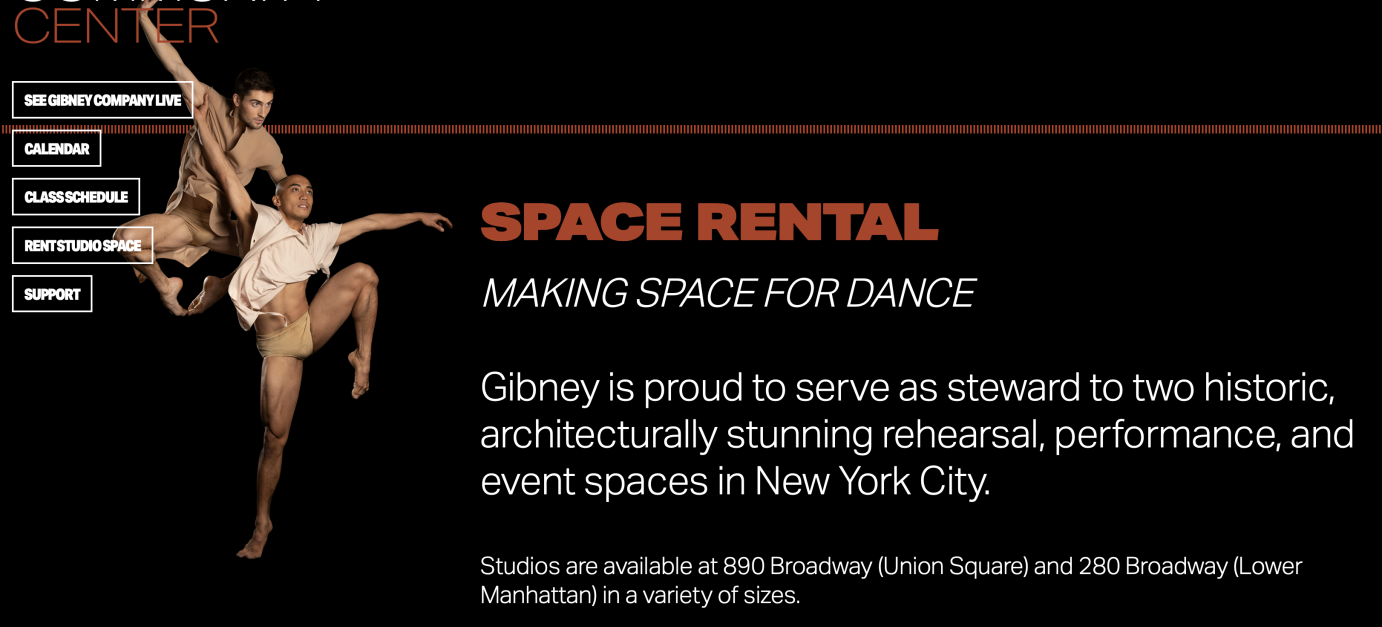
Graphic promoting Gibney's Space Rental Programs. Image via GibneyDance.org
If you could think about designing the next chapter of service to the field that Gibney Dance is providing, what would that look like?
I'm going to go in the order of Center, Community, Company. With this Center, keeping this place open is harder than most people might imagine. But once it's open, activating every corner of this space for this field is important. We are going into a period of rethinking, “What do we do with these offices now that people are remote? How do we make them available to the field? How can we make this place feel like ant-farm of creation, full of resources?” A huge dream of mine would be to have a wood shop, a costume shop, a cafe in the gallery; to have the whole place feel like a co-working space.
I'm trying to do things like that in a kind of cost effective way. We have a program called Open Hours that just keeps studios open for people to come and work together.
Then if you move to the “Community,” I talk about my “unfinished business list”. The community action program to me is unfinished business. Our work with youth could be in every school in New York City. At a time when learning how to relate to other human beings is a dire necessity, every kid should have access to that program.
But the other side of that coin is that there is a really untapped potential within the dance community for employment. Our people have so much training, they have so much wisdom and sensitivity, and I would love to see that deployed. We should take this untapped energy and care, and match it with this deficit of understanding about what a basic relationship should feel like. Like, what is consent? What is trust? How do we learn about respectful boundaries? Using this program and dance and deploying dancers and getting kids to think about these things, it's just a magical formula.
And then with the company, it's a very ambitious desire to build a dance company that really reflects the values of the organization around respect and collaboration, and how we treat our dancers; fair compensation, health insurance and other benefits, and time off.
%20John%20Cage%20(2025).jpg)
When you imagine standing in the room with all of these artists and institutions being honored, what does it mean to you personally to be part of that lineage?
I changed dramatically during the pandemic. Our organization had a huge reevaluation, a rethinking of everything that we stood for. And we came out and thought we had survived, and then we faced this cliff. So we just suffered tremendously.
And I now am at the point, finally, where I feel like we have reprioritized. We survived. I feel a certain sense of personal relief that I'm still here, but also of disappointment that I have not been able to continue to do some of the things that we did for so long, like presenting these big residency programs. It's been a really imperfect several years. I feel like I've been extended a lot of grace and I've had a lot of good fortune.