


Related Features
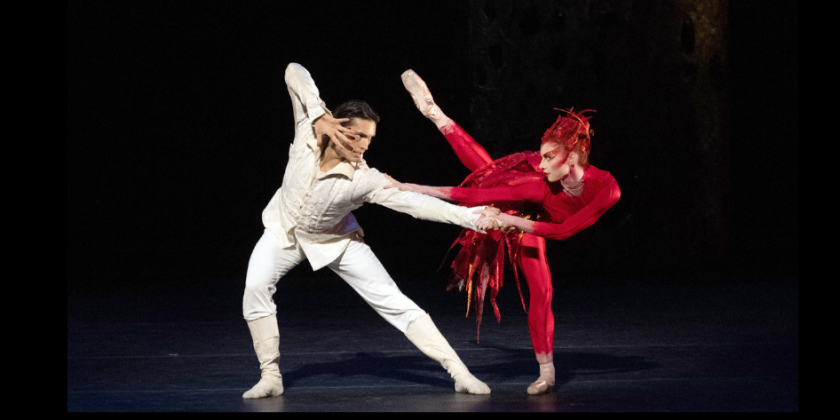
IMPRESSIONS: "The Firebird Variations," Details of Enchantment
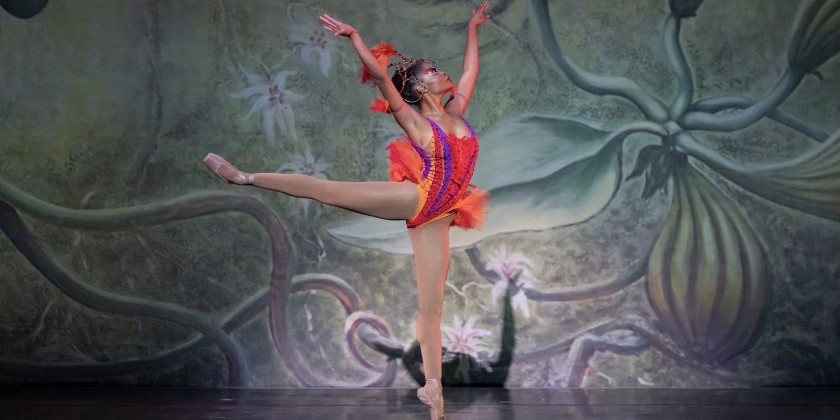
IMPRESSIONS: Dance Theatre of Harlem Presents New York City Center Season
DAY IN THE LIFE OF DANCE: A Burst of FIREBIRDS as Four Versions of the Iconic 1910 Ballet Take Flight This Spring

By Wendy Perron
View Profile |
More From This Author
Published on March 3, 2026
Credits in article
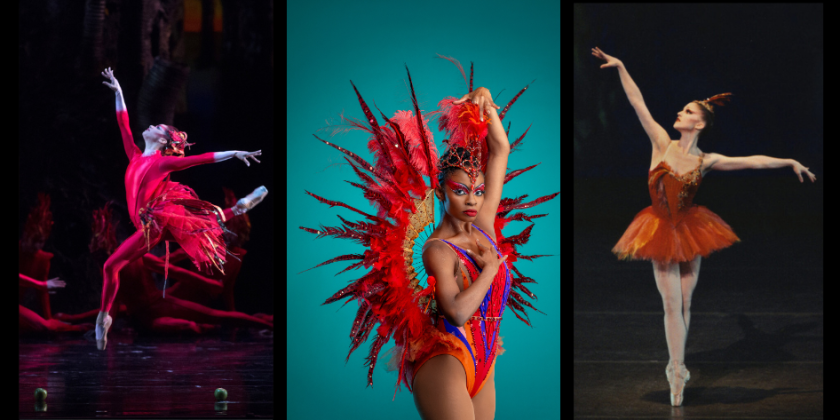
Trio of dancers in cover: (Left to right) American Ballet Theatre's Misty Copeland. Photo: Rosalie O'Connor | Dance Theatre of Harlem's Alexandra Hutchinson. Photo: Nir Arieli | New York City Ballet's Ashley Bouder. Photo: Paul Kolnik
Not many ballets from the early 20th century survive, but The Firebird, with haunting music by Stravinsky, seems to be irresistible to choreographers. This spring season, we have four versions to look forward to.
American Ballet Theatre brings back Alexei Ratmansky’s 2012 ballet from March 13 - 21; Dance Theatre of Harlem performs John Taras’ 1982 version, April 16 - 19; and New York City Ballet will again feature Balanchine’s ballet, April 21 - May 3. On the West Coast, Pacific Northwest Ballet is reprising Kent Stowell’s 1989 Firebird, from March 13 - 22.
All four use Stravinsky’s music, which was the first ballet score he ever wrote. This shimmering music creeps up on you, then seems to dart like a hummingbird, and eventually leads you into a powerful rhythmic dynamism. Whatever changes choreographers and designers have made over the years, Stravinsky’s score is the soul of The Firebird. I’ve seen several versions in the distant past, and I relish the chance to witness how the “bird of light” conquers the forces of evil on three different stages. (Sorry, PNB, I can’t make it to Seattle.)
A Bit of History
In 1909, after his first season of the Ballets Russes, Sergei Diaghilev decided that he want to “astonish” the Parisian audience with an infusion of Russian culture — lush, visual landscapes and folk tales with an “Orientalist” accent. Michel Fokine, whose forward-looking choreography had made it possible for Diaghilev to even conceive of a dance company, looked around for Russian folk tales that might be danceable. In teatime talks with Diaghilev, Leon Bakst, and Alexandre Benois, he came up with a storyline about a restless bird with magical powers.
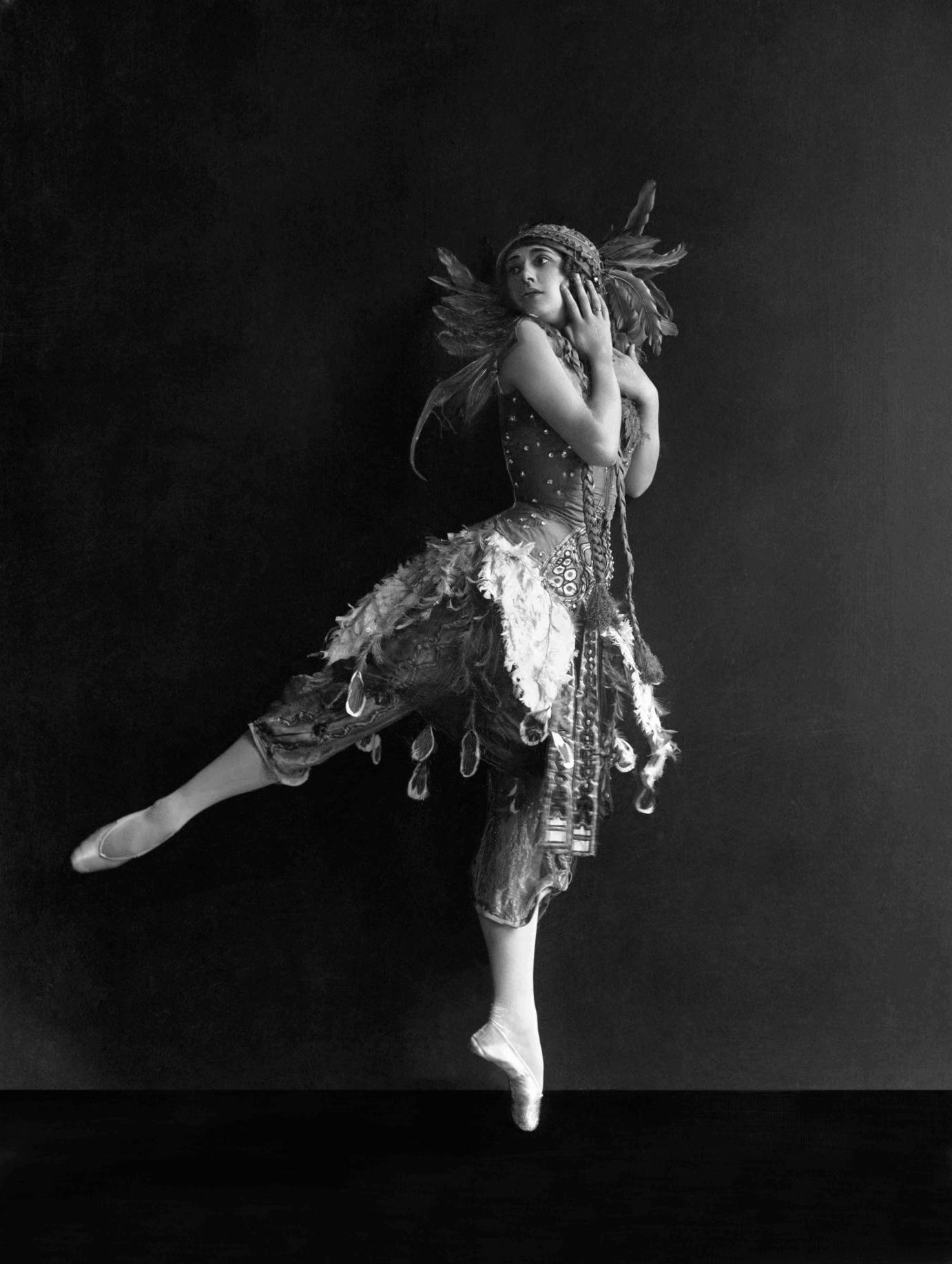
Diaghilev asked Anatoly Lyadev, an expert on Russian musical themes, to compose the music. But after weeks passed and not a note was written, Diaghilev gave the assignment to a budding young composer who had been studying with Nikolai Rimsky-Korsakov: Igor Stravinsky. Fokine worked closely with Stravinsky, miming scenes from his libretto, for instance, the tsarevich Ivan climbing over the garden wall into the enchanted garden. Stravinsky watched, improvised on the piano, went away, and completed the score quickly.
Diaghilev and Fokine had hoped that the great Anna Pavlova, who had decamped after the first Ballets Russes season, would return to dance the Firebird. Fokine was Pavlova’s favorite choreographer, but she turned it down. According to her biographer, Keith Money, there were two reasons: First, she felt the music, as played on just the piano, was “ugly and modern;” second, she preferred to travel to New York to make a splash at the Met with Mikhail Mordkin.
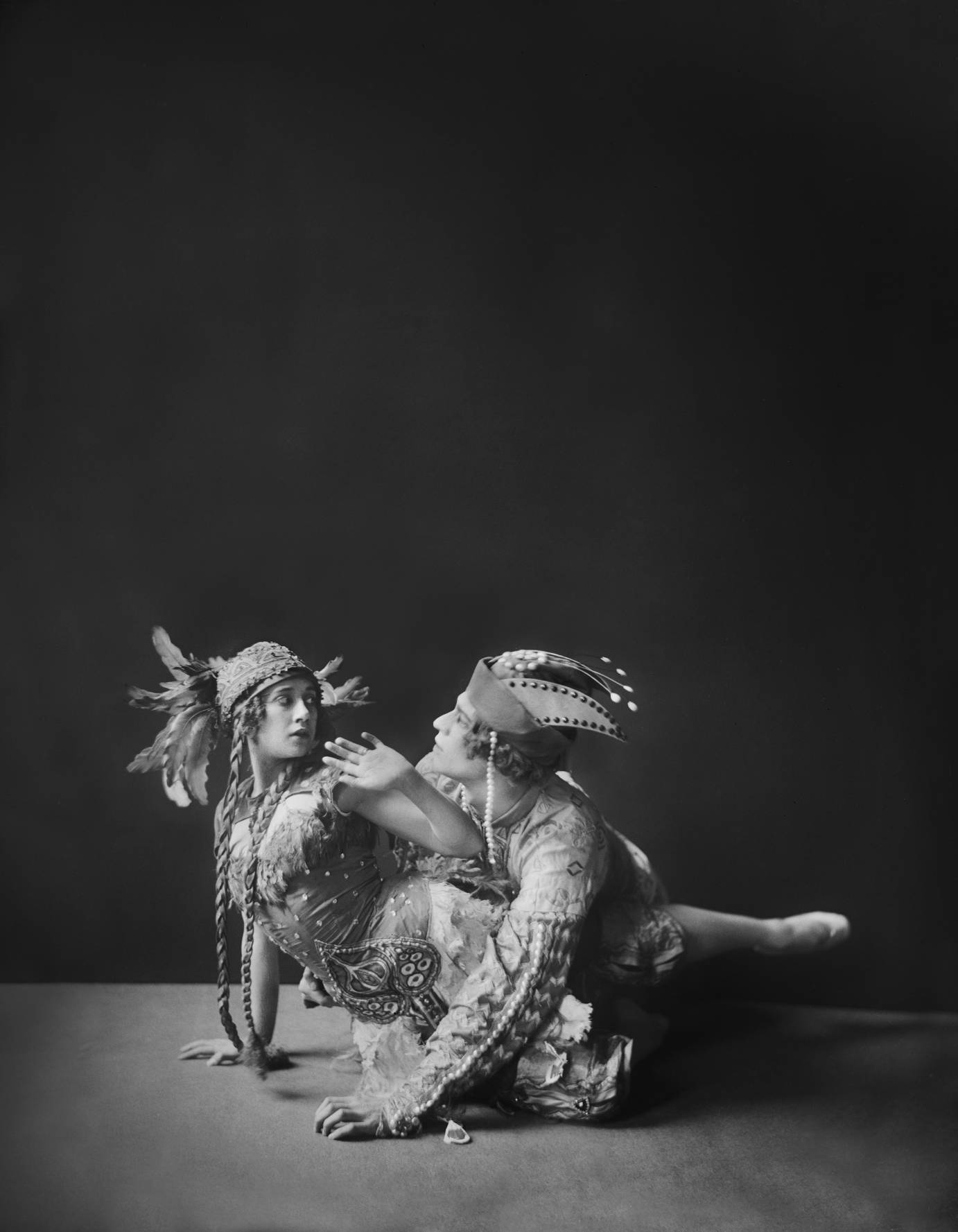
The role went to the lesser known Tamara Karsavina. With Karsavina’s onstage allure in Fokine’s choreography, Stravinsky’s provocative music, and the vibrant designs by Alexander Golovin and costumes by Leon Bakst, the ballet was a hit. Stravinsky once recalled, “The first Firebird! The stage and the whole theatre glittered at the premiere and that is all I remember.” He became famous overnight. Now, 115 years later, his music for Firebird, The Rite of Spring, Agon, and many other ballets lives on gloriously.
The Royal Ballet imported Fokine’s Firebird, as reconstructed by Sergey Grigoriev, Diaghilev’s regisseur, and his wife, Lubov Tchernicheva, with Margot Fonteyn in the lead in 1954. As luck would have it, you can see her in this blurry YouTube video. Watching Fonteyn be the firebird makes me laugh and cry at the same time. Her resistance, her impetuosity, her surrender are all so moving. In her memoir, Fonteyn wrote that she felt transformed by Stravinsky’s music—and you can see that on the video. She’s a flickering flame, an agitated, unstoppable creature. She was coached by Karsavina herself. Fonteyn wrote that, at dress rehearsal when she donned the crown with bright red plumage, “I had a revelation of how the head movements had to be abrupt like a bird’s. It moves its head in a series of quick jerks, remaining motionless in between. This feeling, as soon as I caught it, was the solution to Karsavina’s cipher, ‘Here is no human emotion.’”
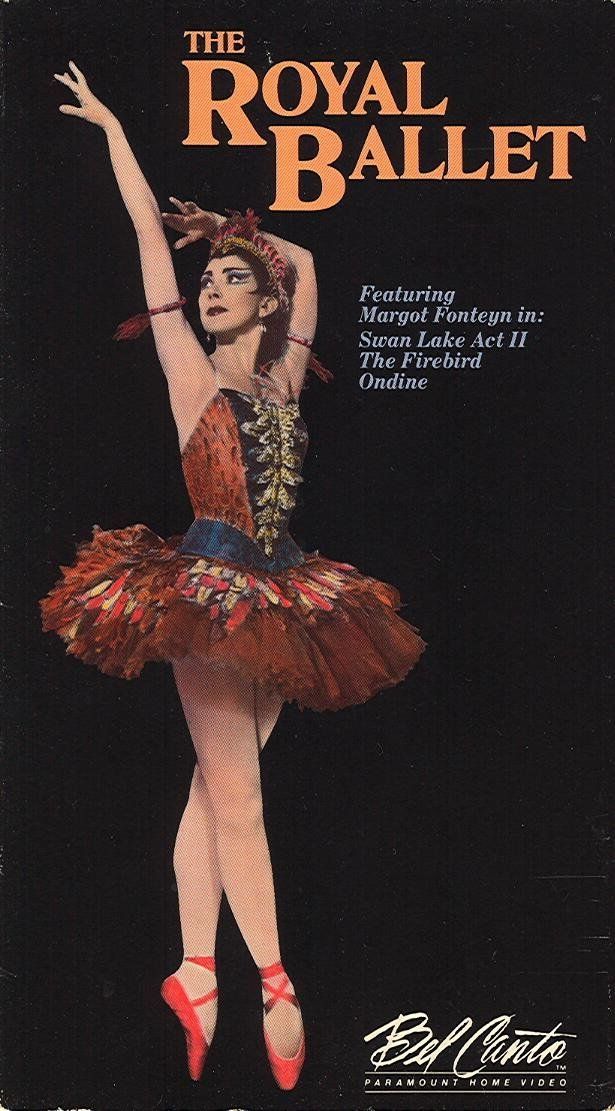
I happened to see this close-to-the-original version in London in 2012, with Itziar Mendizabal as the Firebird, substituting for an injured Lauren Cuthbertson. I felt that it told the story better than either the Balanchine or Taras versions. That is at least partly because The Royal Ballet uses the full 47-minute score. Some sections felt long, but because the scenes were so involving, by the end, you feel like you’ve really been through something.
ABT’s Various Firebirds
Although Fokine (1880–1942) was one of the choreographers who helped launch Ballet Theatre in 1940 — his Les Sylphides opened every season for about fifteen years — the company’s first Firebird was not Fokine’s. Instead, Sol Hurok, who was managing the company in the mid-1940s, hired Adolph Bolm to choreograph a new version in 1945. He asked Stravinsky to shorten the music, and he commissioned Marc Chagall to design sets and costumes. Edwin Denby, reviewing for the New York Herald Tribune, slammed the ballet, saying there was no real choreography. But he raved about Chagall’s sets, calling them “scintillating and touching.”
A second version, staged by Christopher Newton, premiered in 1977 with Natalia Makarova in the lead. Makarova was, of course, “splendid” in the role, to quote the critic Clive Barnes. A third version, staged by a former assistant to Fokine in 1992, had scenery and costumes by Nathalie Gontcharova, who had designed the Ballets Russes’ first revival in 1926.
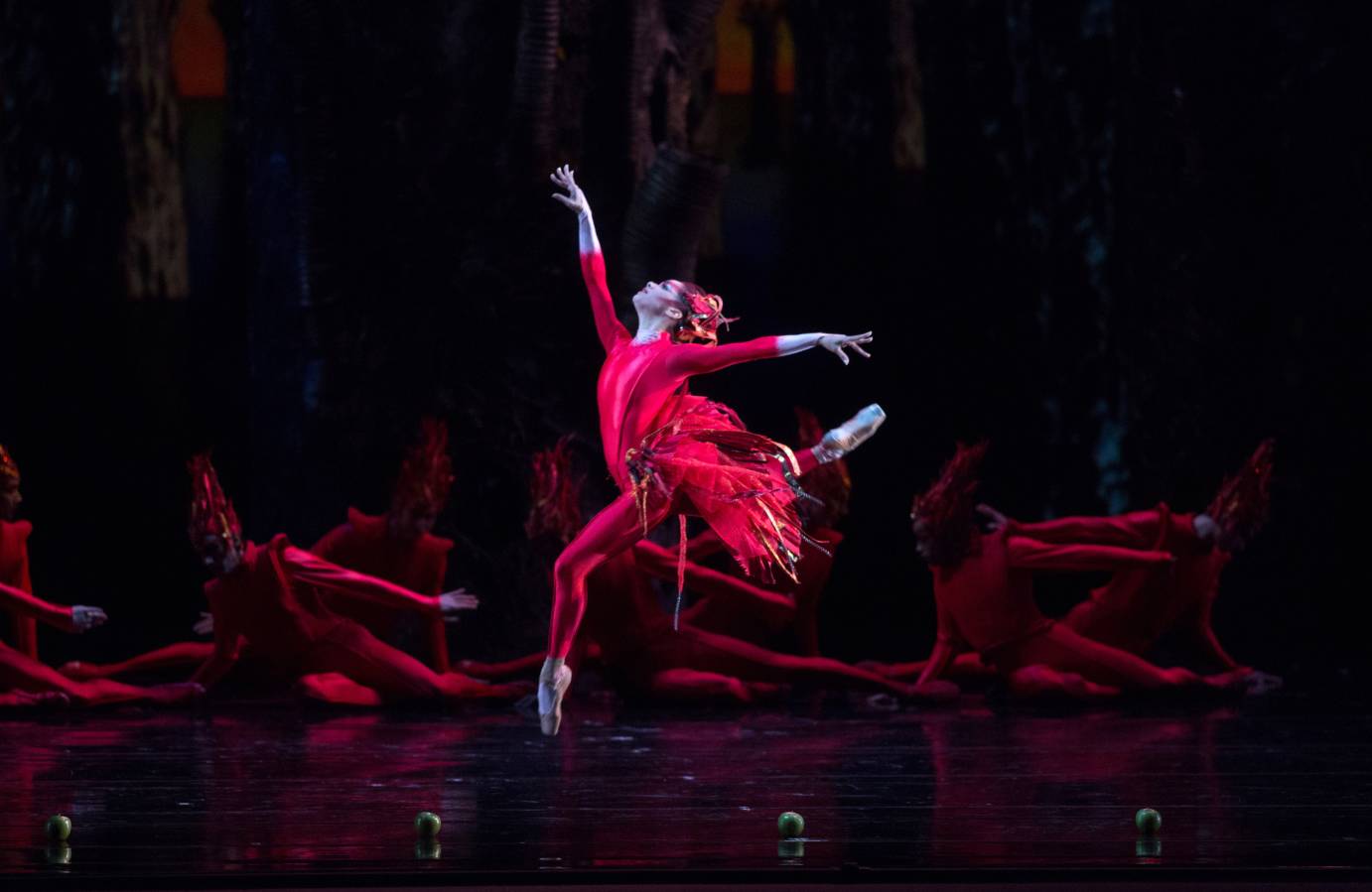
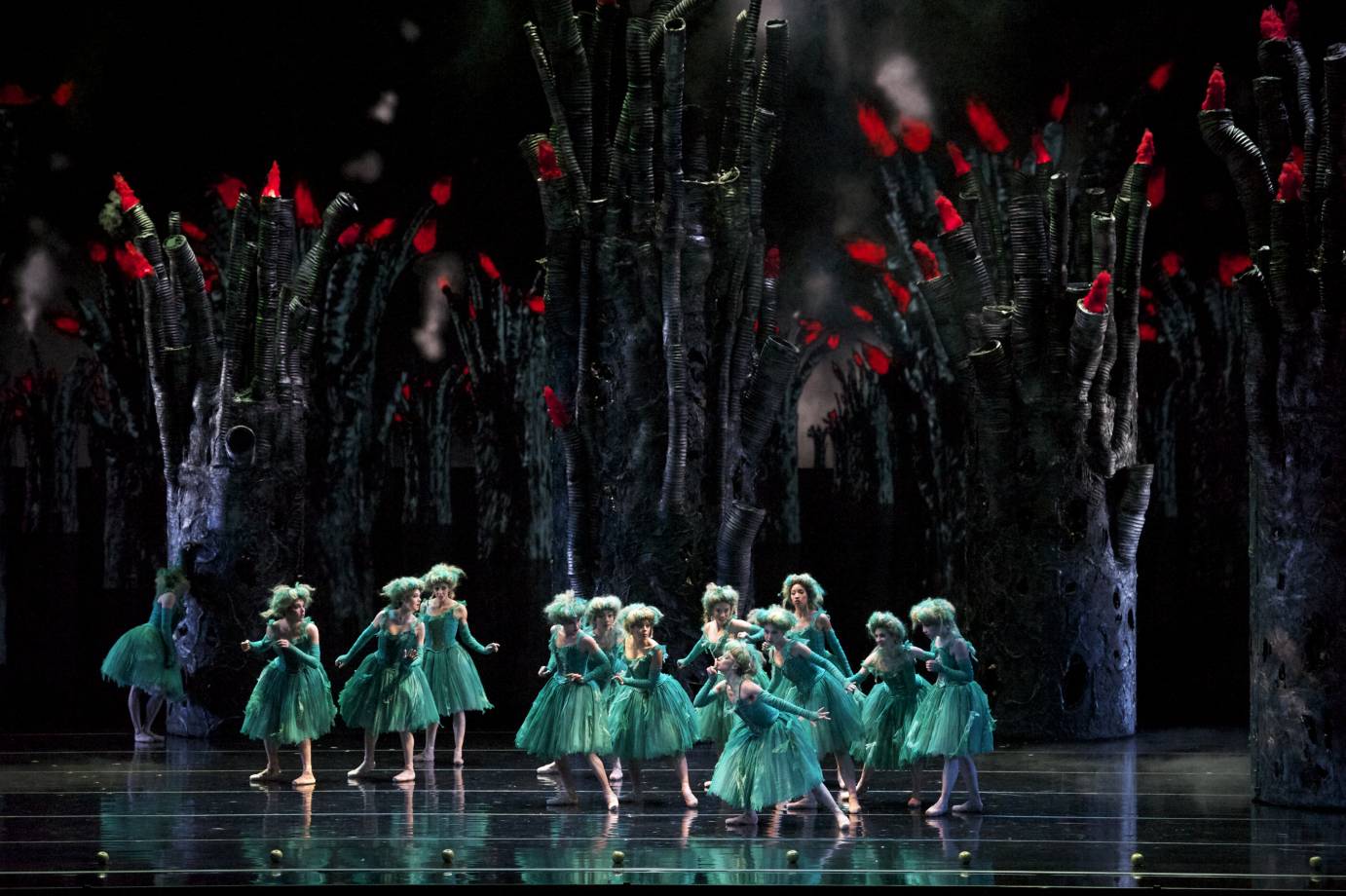
In 2012, Ratmansky collaborated with Russian designer Simon Pastukh to reimagine The Firebird. The late Joan Acocella called it “wonderfully weird” in The New Yorker. One of the weird things is that, by the time we see the firebird in her bold scarlet tutu, we’ve seen a flock of firebirds in the same scarlet tutu. Also, when the maidens are released from Kastchei’s evil spell, they all wear the same dress and same platinum wig (costumes by Galina Solovyeva). To my eyes, the use of conformity dampens the magic. That said, Ratmansky uses the full 47 minutes of the score to tell the story in a rich and surprising way. I found the Berceuse scene, which Ratmansky made into a quartet of sorrow, very moving. And Pastuch’s sets — particularly the burning tips of the ancient trees — hold bizarre and delightful surprises.
Balanchine’s Shortened, Long-lasting Firebird
In the 1920s, Balanchine had played the evil sorcerer Kastchei in Fokine’s original version for the Ballets Russes. From the way biographer Bernard Taper tells it, Balanchine sometimes turned it into a comic role, for which Diaghilev scolded him. Then, one year after the 1948 formation of New York City Ballet, Sol Hurok suggested that Balanchine choreograph a new Firebird with the Chagall costumes and sets left over from Ballet Theatre’s production. His ulterior motive was to sell those sets and costumes, and Balanchine’s motive was to challenge his wife, Maria Tallchief, and let her shine. Shine she did, wowing the audience on opening night with daredevil, off balance moves. At one point she hurled herself across the stage, feet first, landing in Francisco Moncion’s arms. The audience gasped audibly; at the curtain call, they roared their approval. This spectacular success for the very young NYCB anointed Maria Tallchief the first American prima ballerina. (Most of the principals in Ballet Theatre were Russian, British, or Cuban.)
In this clip from a 1951 performance at Jacob’s Pillow, you can see Tallchief’s fearlessness, glamor, and artful pride (though it doesn’t include that daredevil throw-lift). And this Balanchine Foundation video of Tallchief coaching Heléne Alexopolous in the role reveals a secret to Tallchief’s glamor — being aware of how the light hits her face.
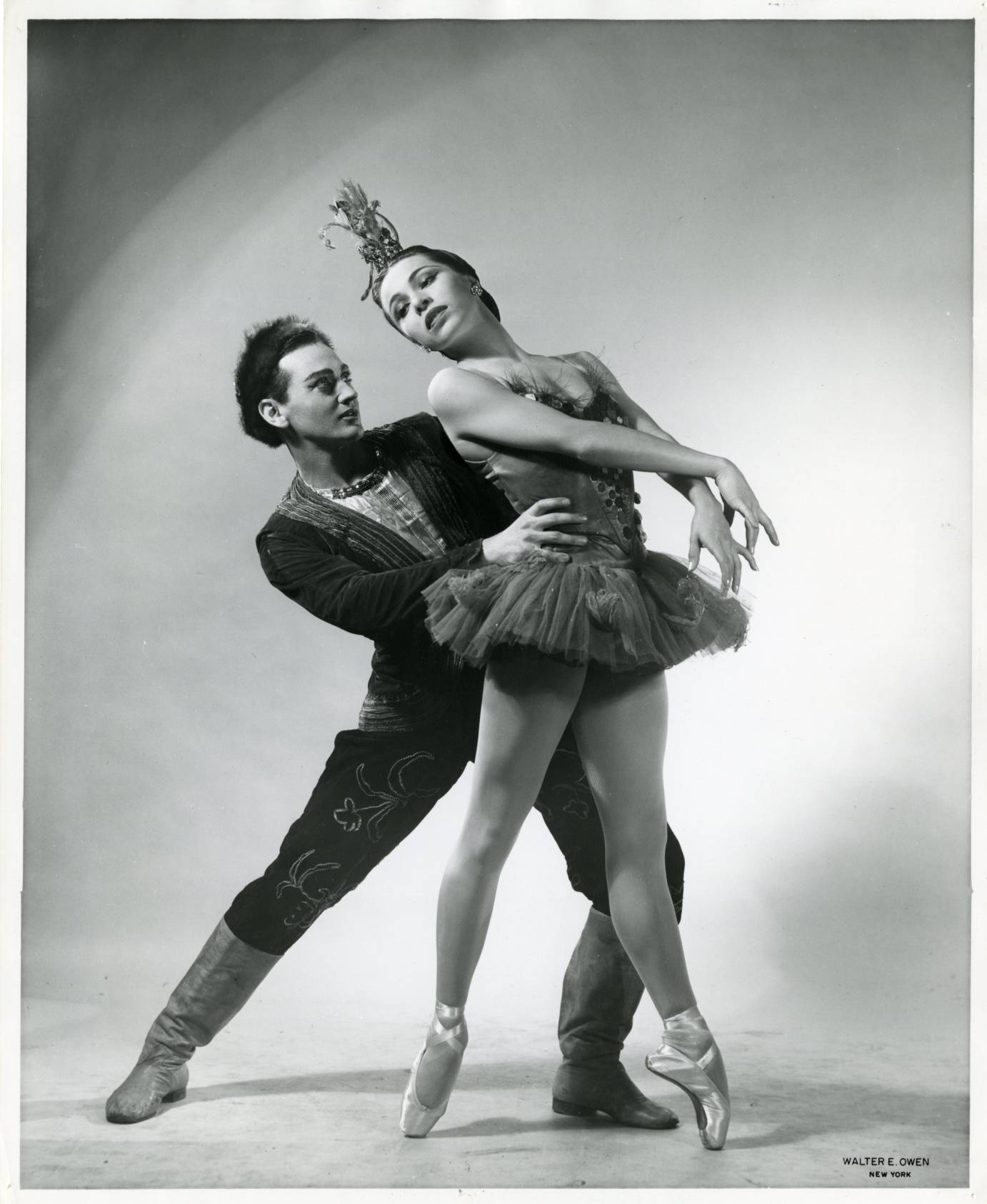
Many other NYCB dancers have performed the role including Violette Verdy, Melissa Hayden, Maria Kowroski, and Gelsey Kirkland, for whom he remade the role in 1970. Ashley Bouder began and ended her career with Firebird. As a teenager, she threw herself into the speed-demon aspect of the role; for her farewell performance twenty-four years later, she softened touchingly into the more sorrowful moments.
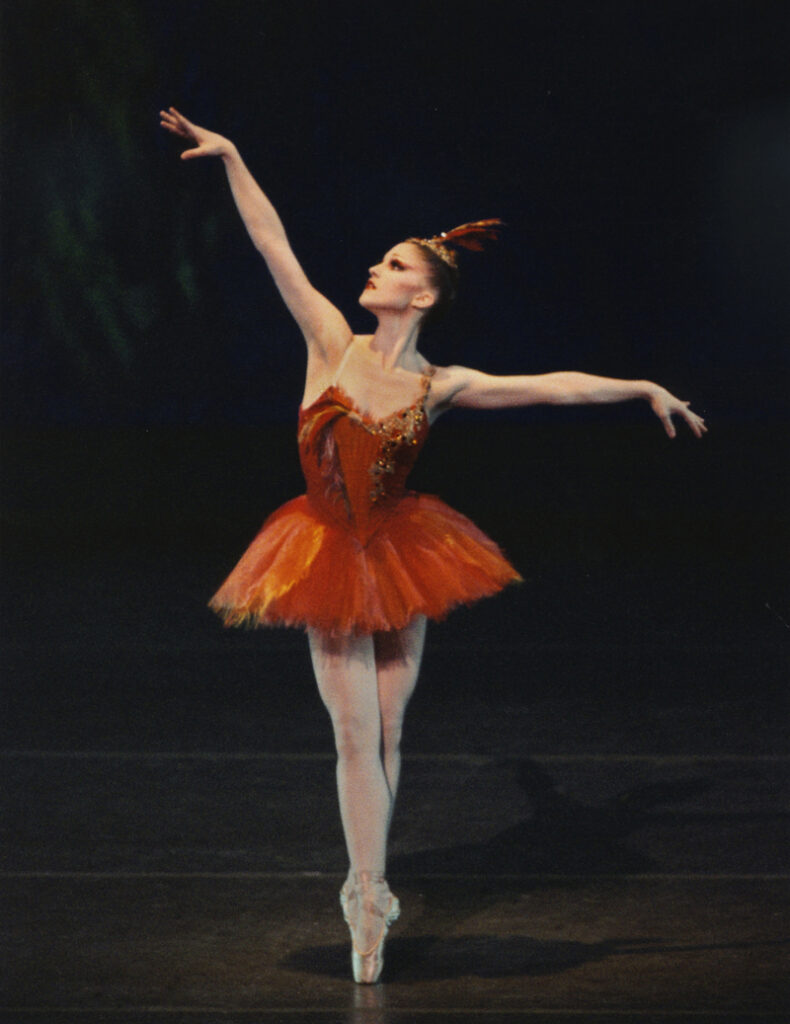
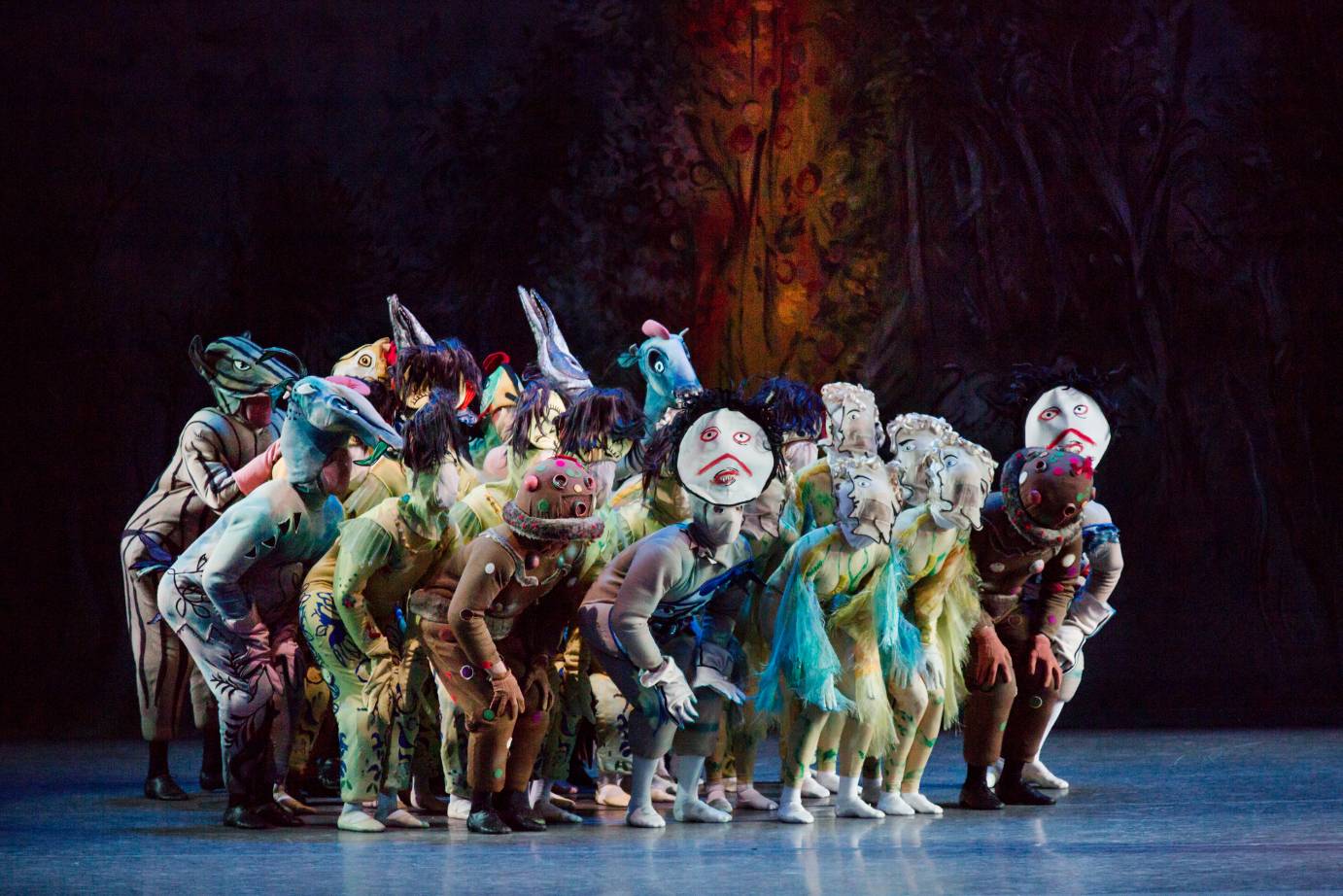
Balanchine uses the shorter “Firebird Suite for Orchestra,” which seems to me to curtail not only the scenes, but also character development. The plot seems thin. But what makes up for it is that the monster scene, choreographed by Jerome Robbins, is more chaotic, more colorful, and more fun than most.
Dance Theatre of Harlem’s Tropical Firebird
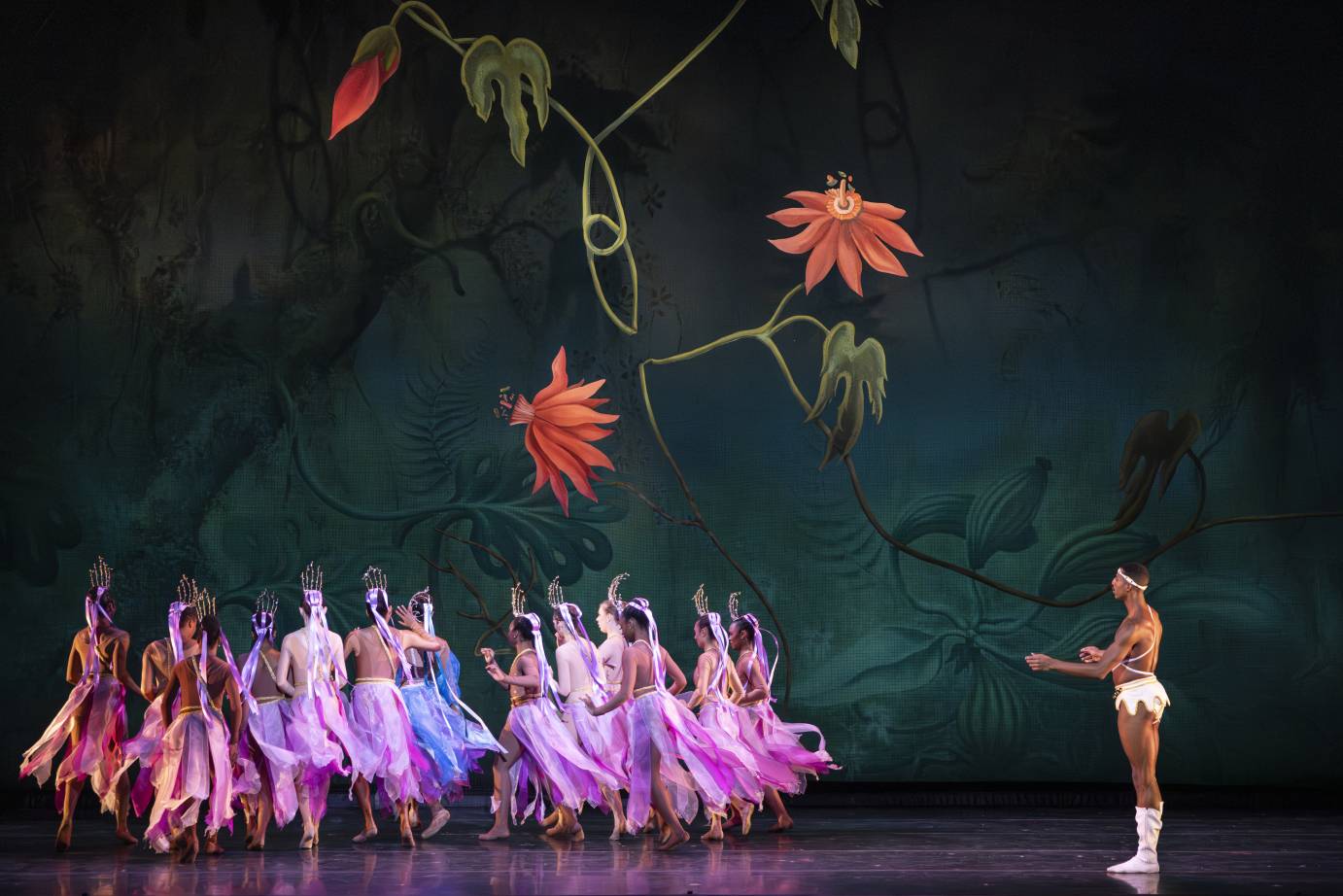
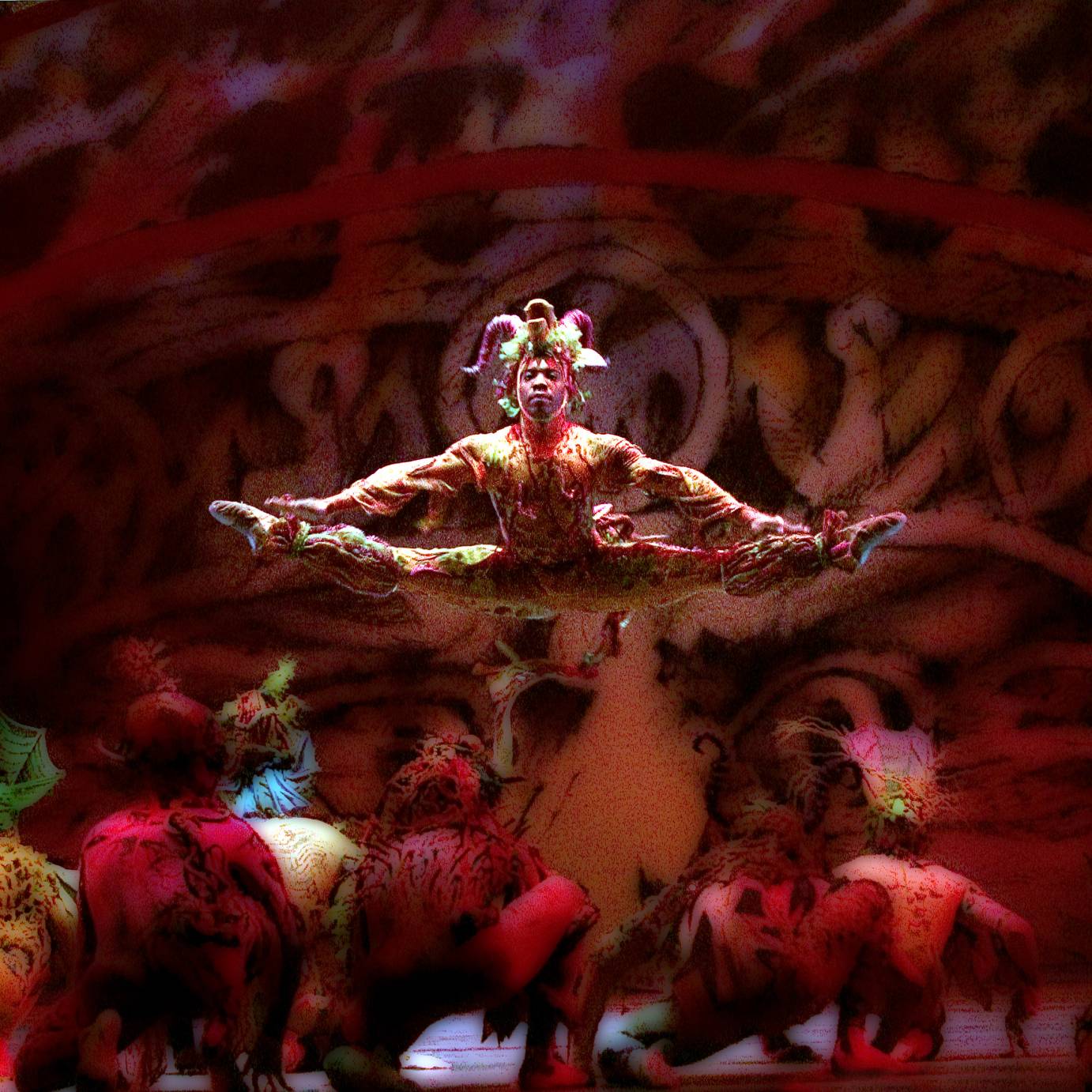
For a Firebird unique to DTH, in 1982 Arthur Mitchell envisioned it in a tropical forest. He hired John Taras, a former ballet master for NYCB to choreograph it. Naturally he asked Geoffrey Holder, who had created the celebratory Caribbean/African Dougla (1974) for DTH, to design the sets and costumes. Author Jennifer Dunning describes the thick, curling vines and “splashy insouciance” of the backdrops. The Firebird wore what looks like a bathing-suit in front, topped off, or rather bottomed off, with a pert tuft of tutu. It is a cacophony of color: “Three shades of red, a little bit of magenta, shocking pink, and orange,” said Holder. “The combination makes the red fluorescent.”
The ballet was a great success; it made Stephanie Dabney a star. According to Judy Tyrus, co-author of Dance Theatre of Harlem: A History, A Movement, A Celebration, Dabney danced that ballet and only that ballet for about a year. Tyrus also quoted Clive Barnes praising this version as having a “vitality completely its own” and a “charming profundity.”
And in Seattle
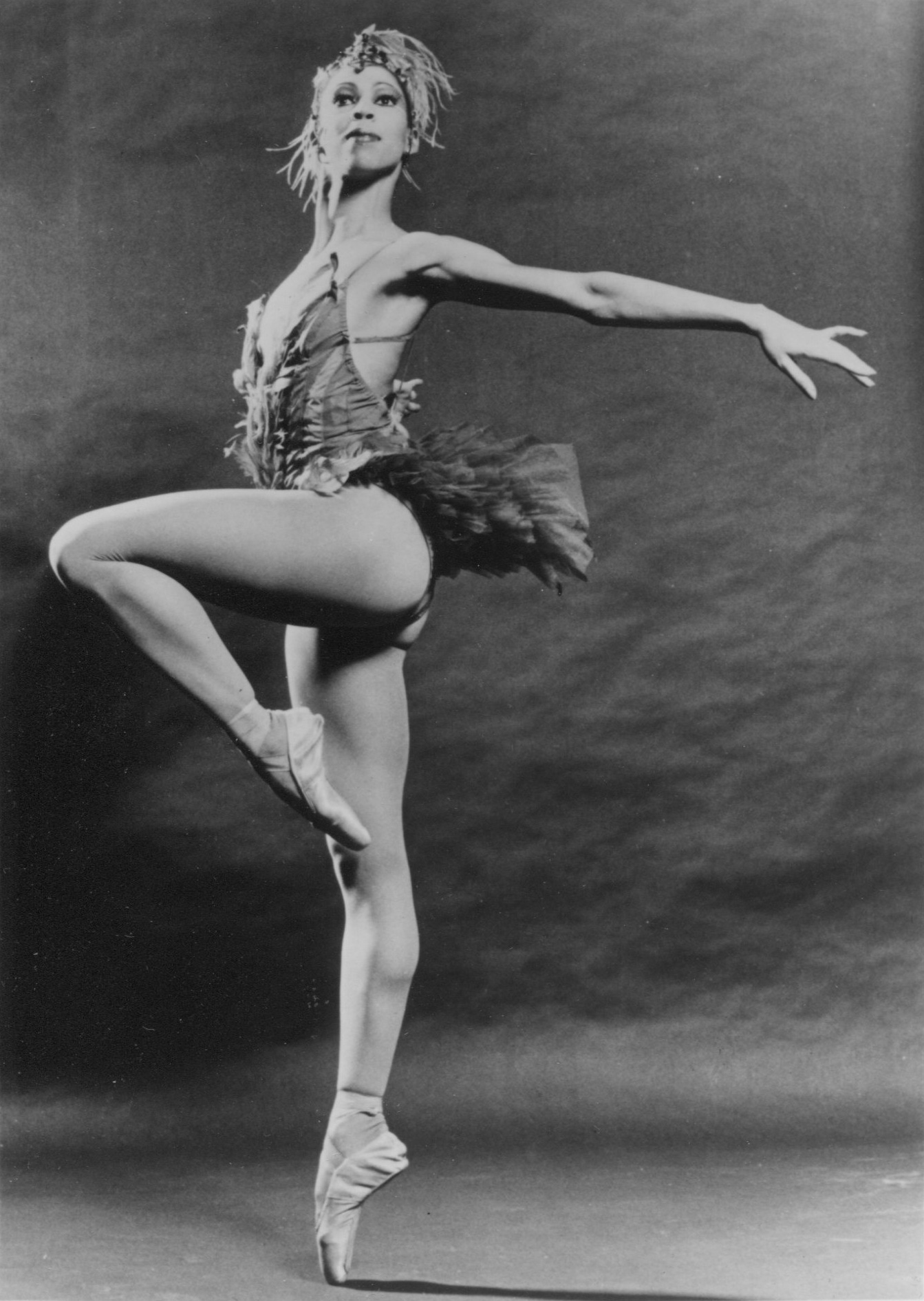
Like John Taras, Kent Stowell had danced with NYCB under Balanchine. He then led Pacific Northwest Ballet for thirty years, and one of the many ballets he (re)made was The Firebird in 1989. With sets and costumes by Ming Cho Lee and Theoni V. Aldredge, this one hasn’t been back since 2005. One of the novelties in this production is a “lead” monster with virtuosic spin.
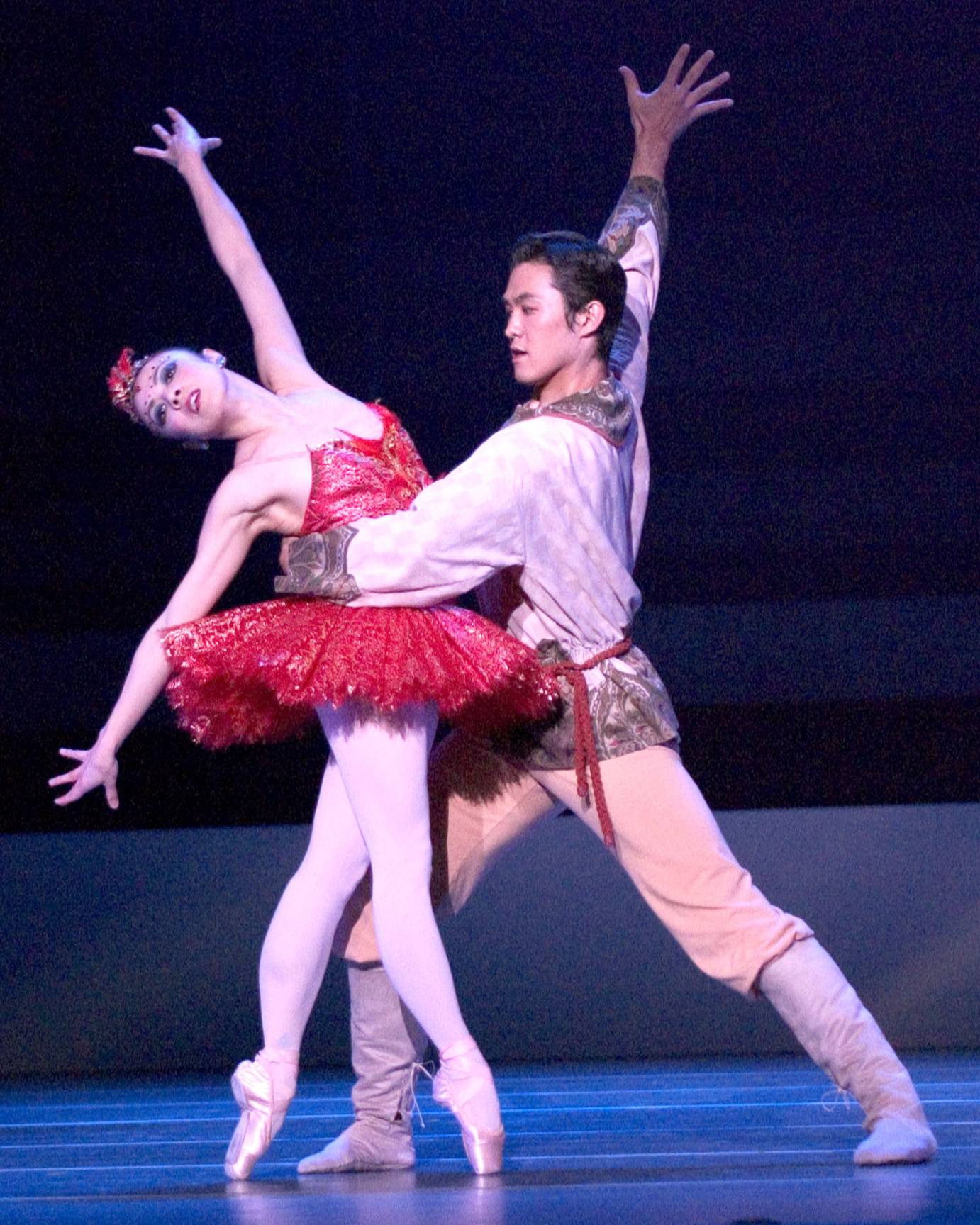
Much as I’d like to fly off to Seattle, I’m going to concentrate my birdwatching on my hometown. I’ll be witnessing these creatures streak across three NYC stages — at American Ballet Theatre, Dance Theatre of Harlem, and New York City Ballet — and I’ll report back to you.