


Related Features
IMPRESSIONS: Dance Theatre of Harlem Presents New York City Center Season
IMPRESSIONS: American Ballet Theatre's 2026 Spring Season at Lincoln Center
IMPRESSIONS: "The Firebird Variations," Details of Enchantment

By Wendy Perron
View Profile |
More From This Author
Published on June 2, 2026
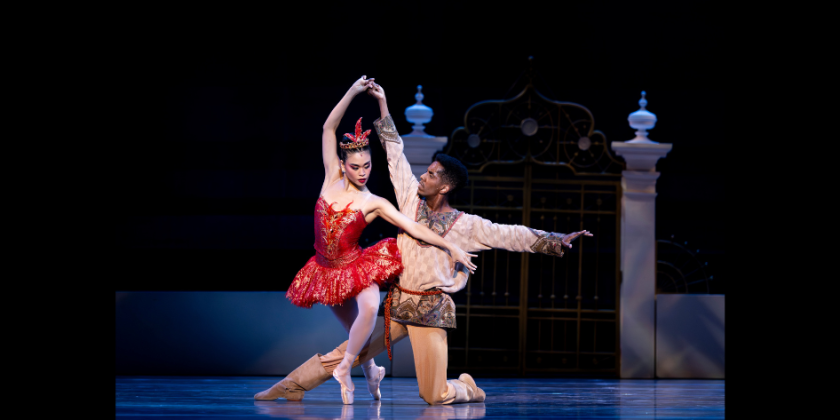
Pacific Northwest Ballet's "Firebird." Photo: Angela Sterling
A Look at Some American "Firebirds" with American Ballet Theatre, New York City Ballet, Dance Theatre of Harlem, and Pacific Northwest Ballet
Cover photo: Dancers Angelica Generosa and Jonathan Batista in Pacific Northwest Ballet's Firebird
The Firebird is unique among classic ballets because it is not primarily a love story. It’s a story about the help we need to vanquish greed and narcissism, a.k.a. evil. (The love story is a sideline.) Perhaps it’s not by chance that a flurry of four Firebird productions appeared in the U.S. this season. Maybe we have a hunger for a quick way to topple a tyrant. Where is our magic feather?
The original story of The Firebird was woven together from various Russian folk tales by Michel Fokine and a group of artists around Diaghilev in 1910. Each of the four current Firebirds presents its own visual style, plot twists, and characterizations. What holds them together is Stravinsky’s hauntingly beautiful score. Also essential is a ballerina who can portray the Firebird as an independent creature, wild and free.
The first notes of Stravinsky’s Firebird are steady, even chords that gradually creep up on you softly, stealth-like. The regularity of rhythm, played by the string section, has an inevitable quality, as though something dangerous awaits. Little flecks of light are expressed by flutes, harps, and trombones sprinkled across those strong strings. So we get a thick blanket of darkness streaked with light and fantasy. I can see why choreographers are drawn to this music.
It’s astonishing to realize that this masterpiece was Stravinsky’s first attempt at ballet music. Diaghilev wanted to create a ballet steeped in “Russianness,” so the young composer incorporated themes from Russian folk tunes. Those evenly space chords from the opening return at the very end, but this time they are notes of triumph, like a brass band marching toward a celebration.
While watching the four current productions that I previewed earlier, my first curiosity was in how the feisty bird/woman is portrayed — was she a creature, did she portray the struggle to get free? Then I got interested in how Kastchei was characterized. From there, it was but a hop to care about how the story was told — but it would be impossible, in this space, to do justice to the full storyline of each production. All of them used the Stravinsky music, but only ABT filled out the full 47-minute score, while the others used one of the shorter Firebird Orchestra Suites. In my descriptions below, I am using the names of the characters as labeled by each company, e.g. Ivan, Prince Ivan, or Young Man, and I am limited to the casting I happened to see.
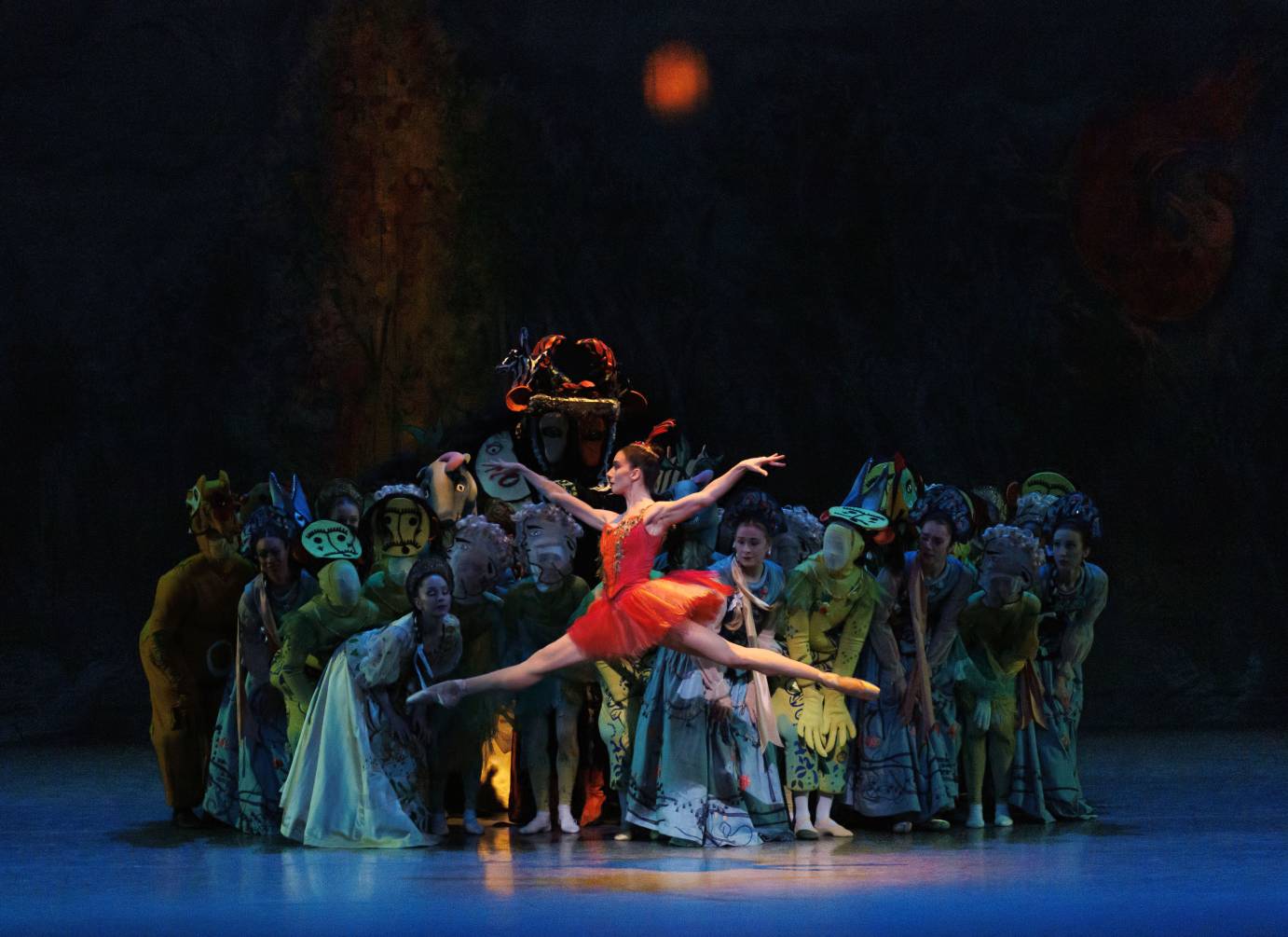
The New York City Ballet still performs the basic version that Balanchine made in 1949, expressly for Maria Tallchief. The Chagall drop cloths give it a whimsical look — mysterious yet childlike. The Firebird’s costume, designed by Karinska after Chagall, was altered as Balanchine re-made the role for each ballerina (e.g., Gelsey Kirkland in 1970 and Karin von Aroldingen in 1972). His Firebird springs, spins, and slices through the space, with hands aflutter. NYCB principal Ashley Hod gave the steps an airy lightness but wasn’t particularly creature-like. The scene of “Kastchei the Wizard and his subjects” was actually re-choreographed by Jerome Robbins in 1970. Kastchei, a Mondrian-face, horn-topped figure, is preceded by a melee of animal-masked comic figures who didn’t exactly reinforce the scariness of Kastchei. After Ivan vanquishes the Wizard, the stage fills up with a huge, formal procession, complete with guards, courtiers, and children carrying little trays of goodies.
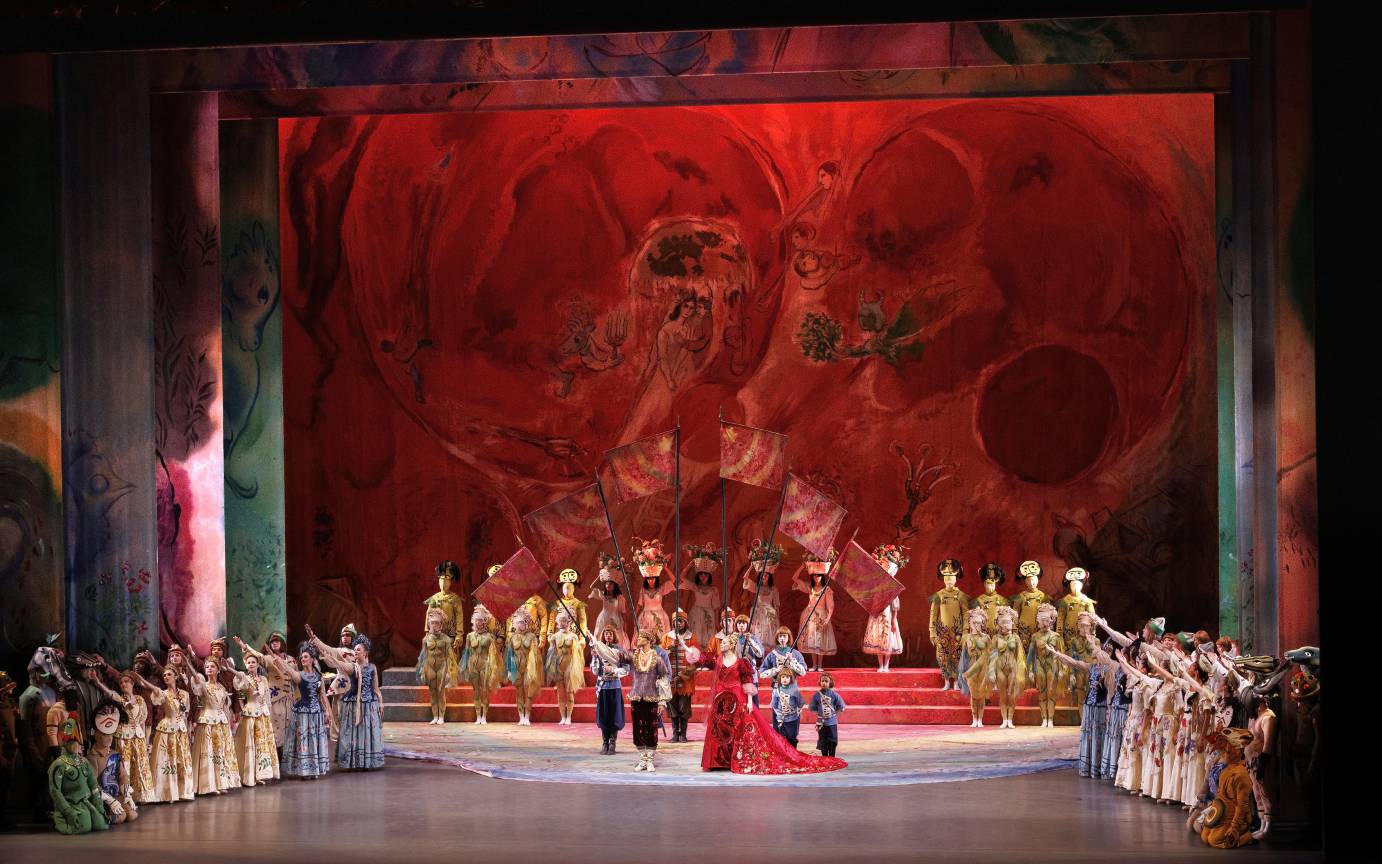
The trouble with the NYCB version is that Prince Ivan and his Bride don’t have much time together before they are married and anointed King and Queen. So the massive celebration feels a bit unwarranted. I mean, it’s great that hordes of people were released from Kastchei’s spell, but the central couple hardly know each other, so the audience doesn’t necessarily feel a warm glow of happiness at their union.
This dramaturgical weak spot is remedied in Pacific Northwest’s version, choreographed by Kent Stowell in 1989. A former NYCB dancer who was co-artistic director of PNB from 1977 to 2005, Stowell added a scene in which the Maiden goes to the exhausted Ivan while he’s recovering from the fight with Kastchei and helps him up. She leads him into a sweet romantic scene, egged on by the Firebird. So when they finally marry, it makes sense to celebrate.
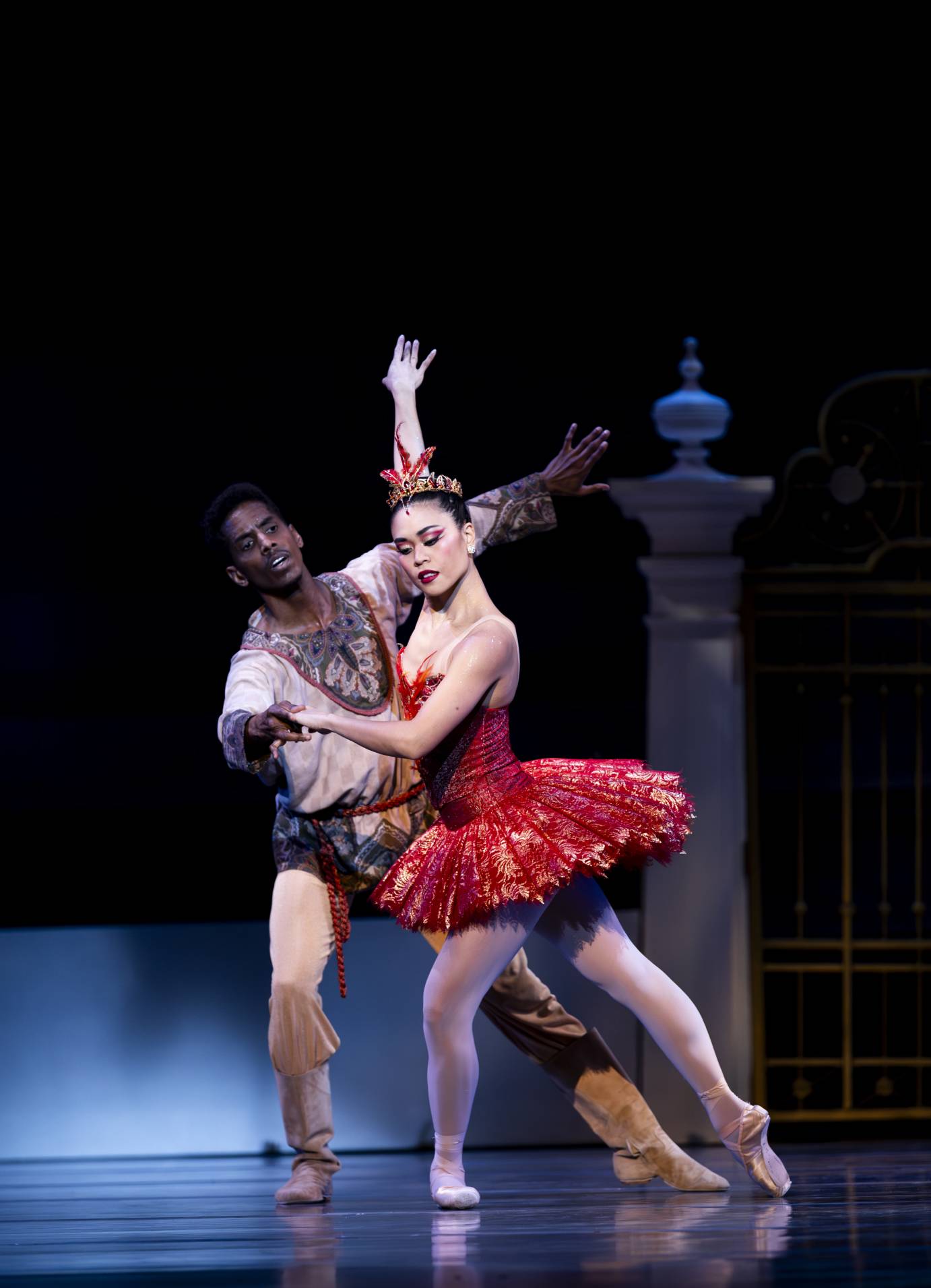
Another plus for PNB, which I saw on live streaming, is Angelica Generosa as the Firebird. She’s impetuous, defiant, and stops on a dime, and her whole body says, “Can I trust him?” With her lively, expressive eyes, she has that hint of glamor that I’ve seen in clips of Margot Fonteyn and Maria Tallchief in the role. Of the four Firebirds I saw this season, Generosa was the only one who really embodied a magical, impulsive creature.
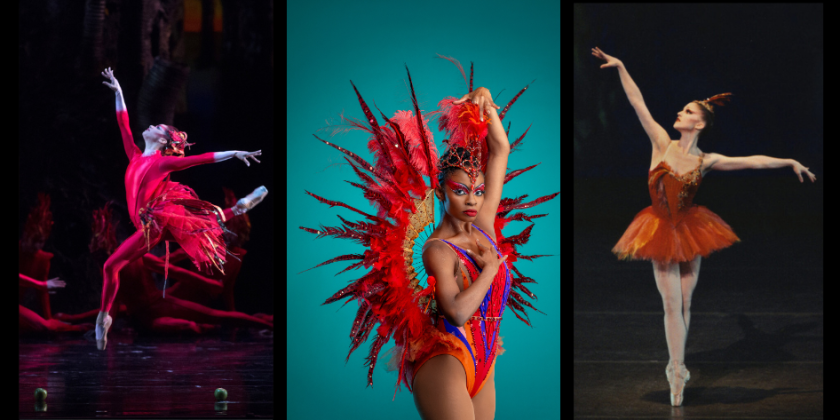
The look of Dance Theatre of Harlem’s Firebird (1982) springs from the fervid imagination of the great Geoffrey Holder. His Caribbean forest transforms this ballet into something more contemporary, not lodged in the “ Russianness” that Diaghilev insisted on. The foliage sprouting from Holder’s front and back cloths is so colorful and vibrant you can almost feel the heat, and you understand why the costumes are so scant. The Young Man wears only a white headband, loincloth/trunks, and soft white boots; the maidens are wrapped in nude-like tops with scarfy streamers for skirts. The choreography is by John Taras, who was closely associated with Balanchine so his steps are not far from the Balanchine mold. Ariana Dickerson as the Firebird has the sharp, bird-like head movements that Tamara Karsavina spoke about (see the new biography of her) and a strong open chest, as if ready to take flight. After she destroys the Prince of Evil, her slow exit, bourréeing backwards into the stage-right wing, was quite moving. (In a felicitous collaboration with the University of North Carolina School of the Arts, where former DTH principal Endalyn T. Outlaw is dean of the School of Dance, UNCSA students have joined the cast of the group scenes, and the school’s orchestral program recorded Stravinsky’s Firebird suite.)
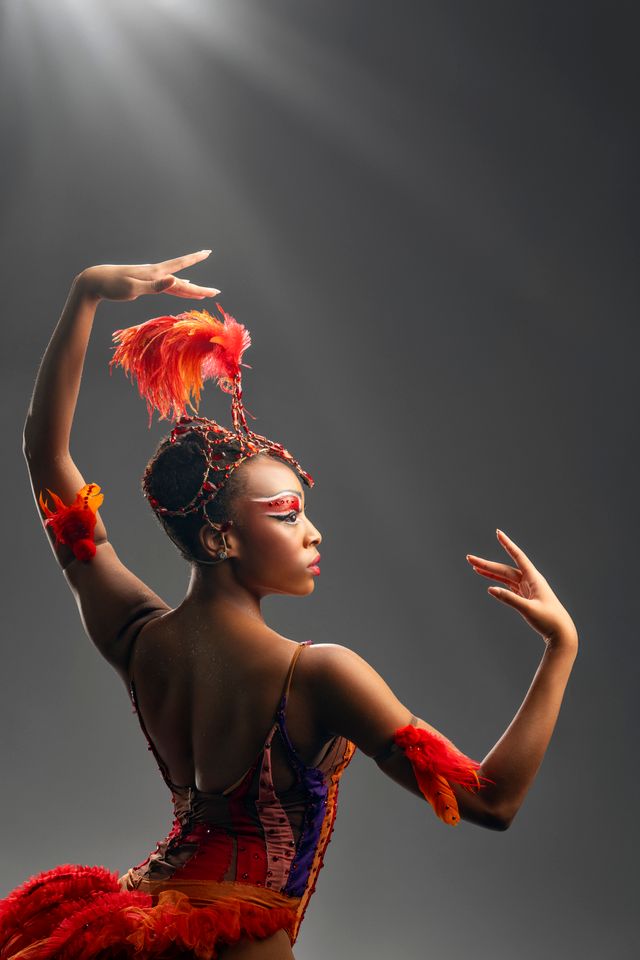
At one point in the scene where the Young Man and the Princess of Unreal Beauty draw close together, half the Beautiful Maidens surround him and the other half surround her, and they fan out their hands around their bodies, then vibrate their hands to suggest shimmering crowns over each of them.
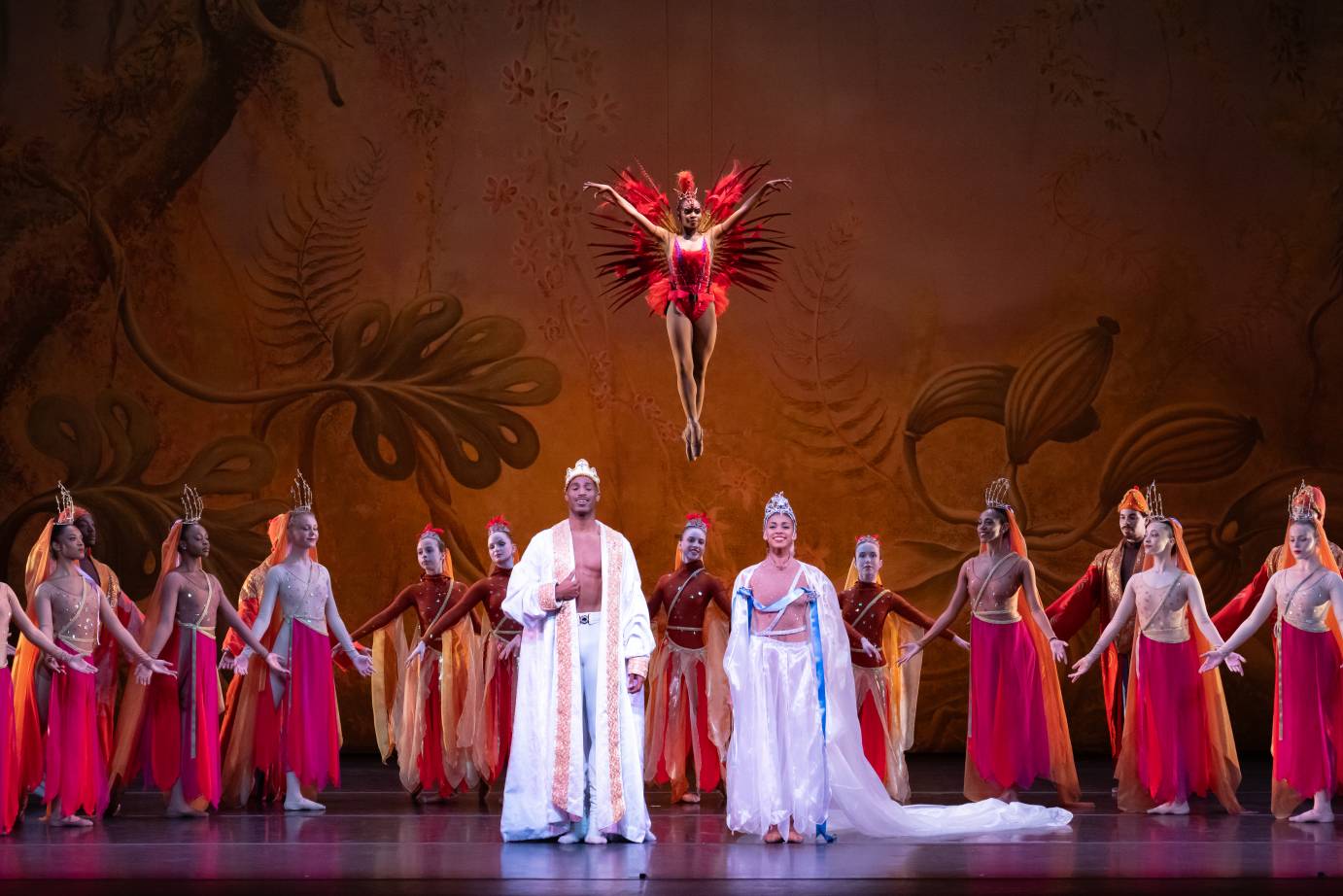
Also shimmering is the last image of the Firebird, who floats above the “Apotheosis,” now with a glittering cape of feathers behind her. In other versions, she doesn’t reappear in the last scene. But here she reminds us that only the Firebird’s heroic act made it possible for peace and prosperity to reign.
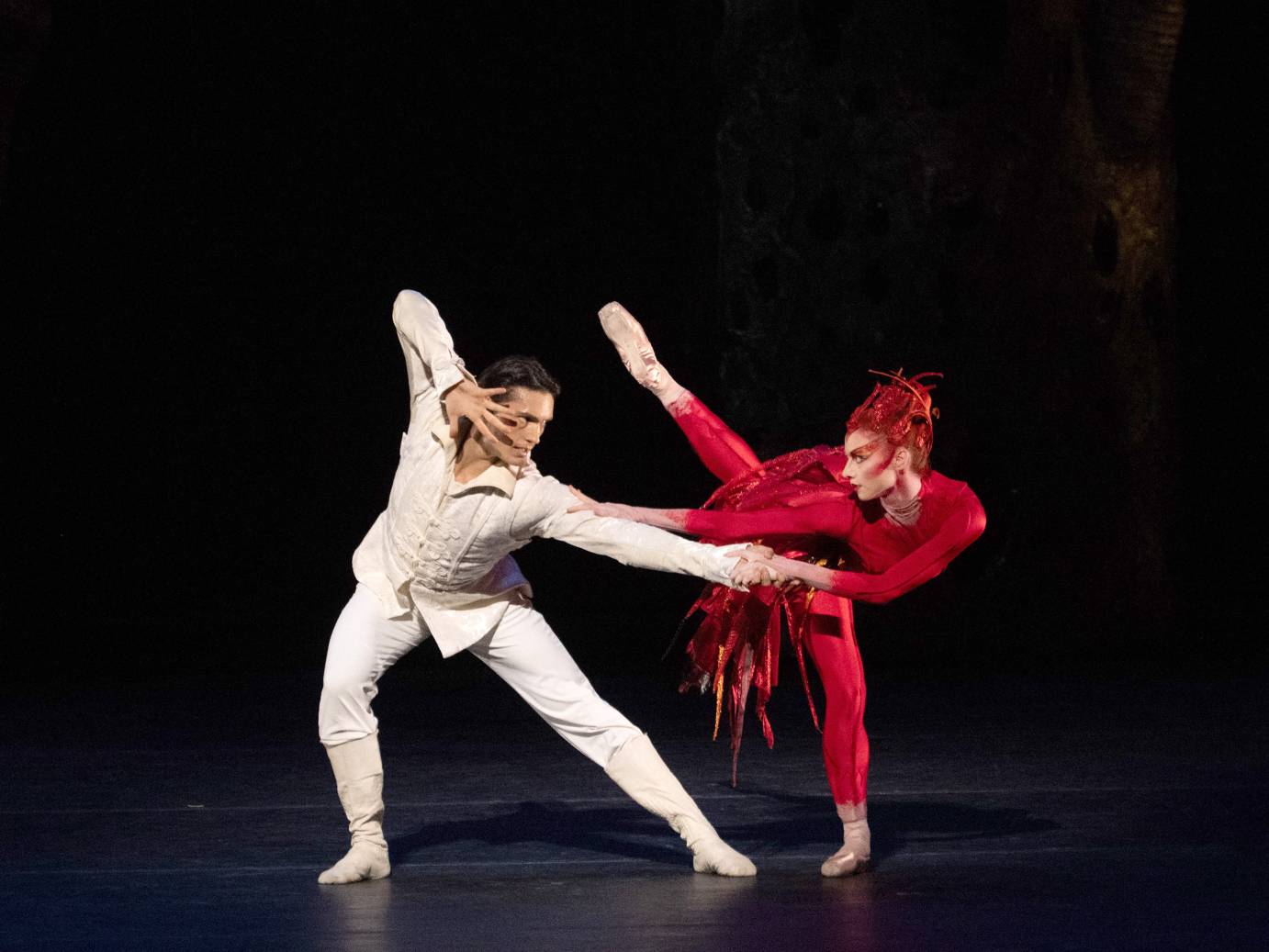
While DTH changed the whole look of the ballet, Alexei Ratmansky changed the whole plot structure. In his 2012 version for ABT, no longer is the Firebird a single unique being; no longer are there monsters who attack Ivan. The main firebird only appears after a flock of sixteen scarlet-covered, spikey-headdressed creatures invade the garden, and one is left behind. Her solo and pas de deux are crammed with turns, leaps and high extensions. Although Catherine Hurlin carries off this display of virtuosity beautifully, I didn’t see the bird’s struggle to get free. The Maidens do not frolic with apples or scarves, but instead engage in goofy, defiant headshaking and shimmying — which maybe qualifies them as monstrous by their sheer unexpected jokiness.
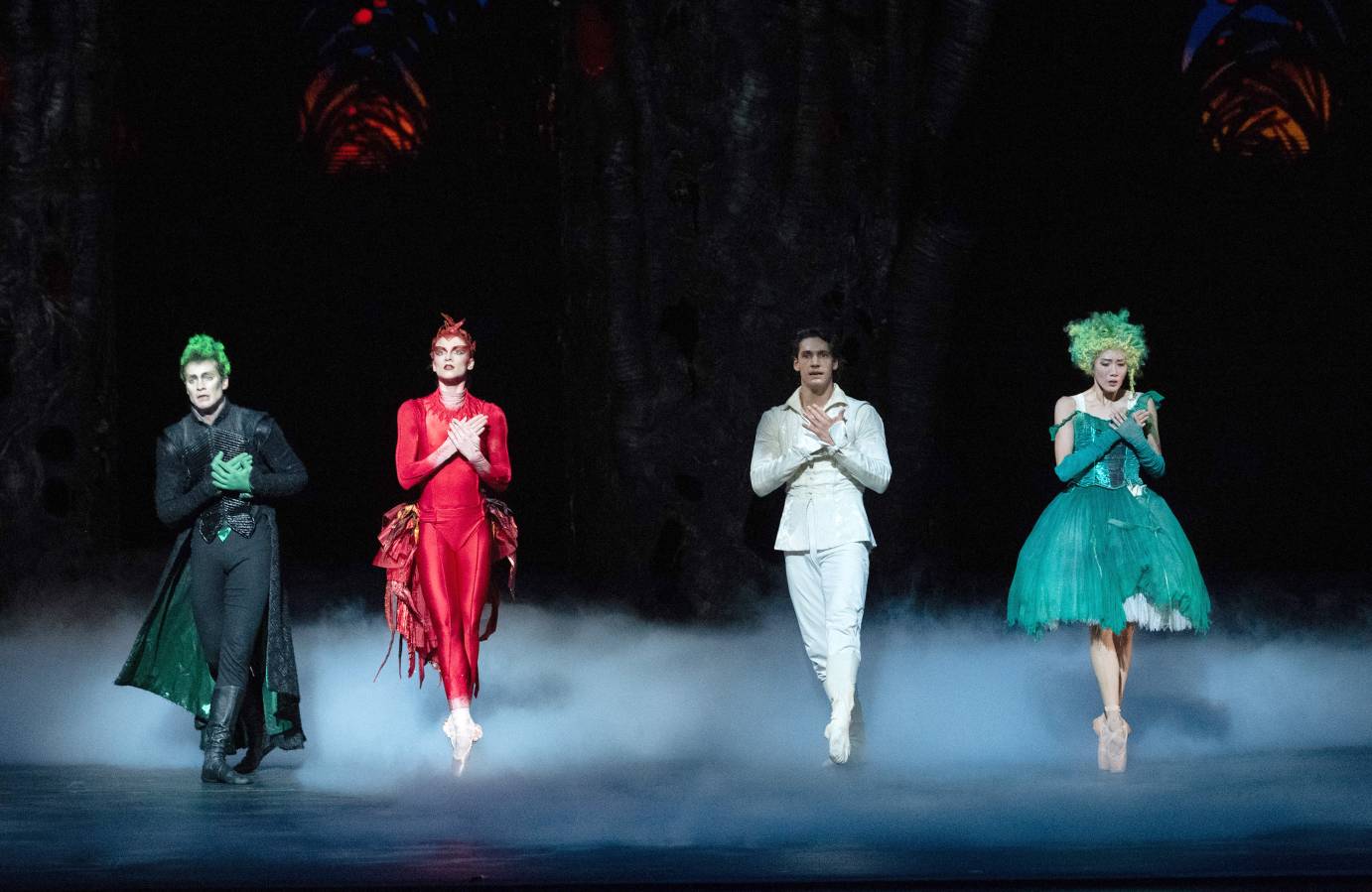
Kaschei is dressed elegantly, with hair and hands tipped in green, to match his spellbound Maidens. Compared to the hideous portrayals in other productions, he is attractive in a David Bowie sort of way (and thus, perhaps, more insidious). During the sorrowful Berceuse section of the music, Kaschei dances in a lovely quartet, along with the Firebird, Ivan, and the Maiden. They slowly interweave together, each resting a hand on their heart — a moment for these four characters to reflect on their interdependence.
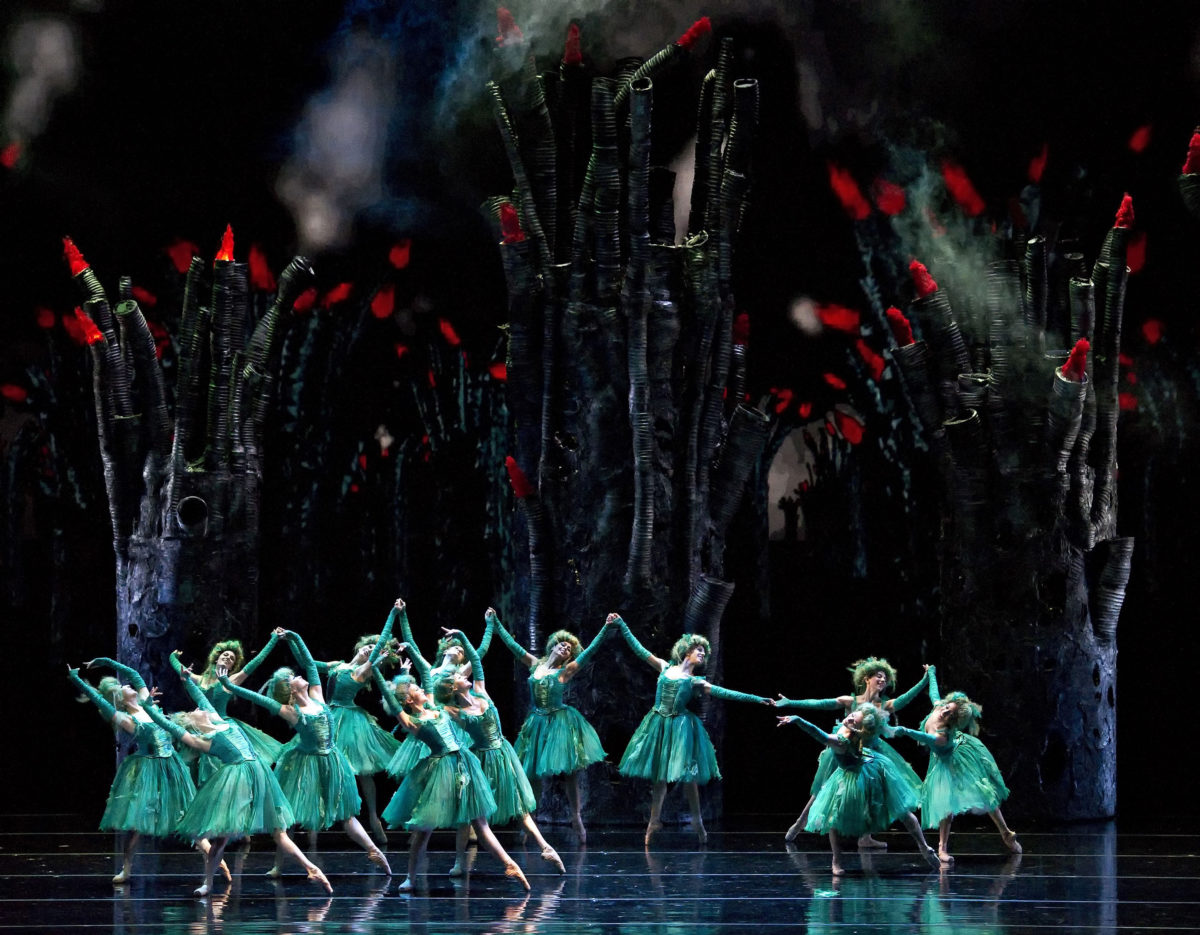
Meanwhile, the set by Simon Pastukh pulls us into a drastic state. Huge gnarly trees are topped with what look like flaming fingernails or cigarette embers. After Ivan breaks the sorcerer’s spell, the tree trunks crack open, and soldiers roll out, blinking in the sunlight (or so it seems). The Men, as they are named in the program, end up dancing with the Maidens. All the hugging and good cheer suggest this is a reunion between spellbound lovers.
Here’s a change that I really appreciate: In Ratmansky’s original version that premiered in 2012, when Kaschei’s spell is broken the Maidens changed from green to white dresses — with identical platinum wigs. That seemed unnecessarily conformist to me, so I was happy to see that now, when the Maidens are released from the evil spell, they wear their own hair color. Progress!
For me it was fascinating to watch these four productions; I found variations that were startlingly innovative, visually transporting, or deeply moving. In every case I felt truly enchanted by Stravinsky’s music.
Maria Tallchief on George Balanchine's Firebird
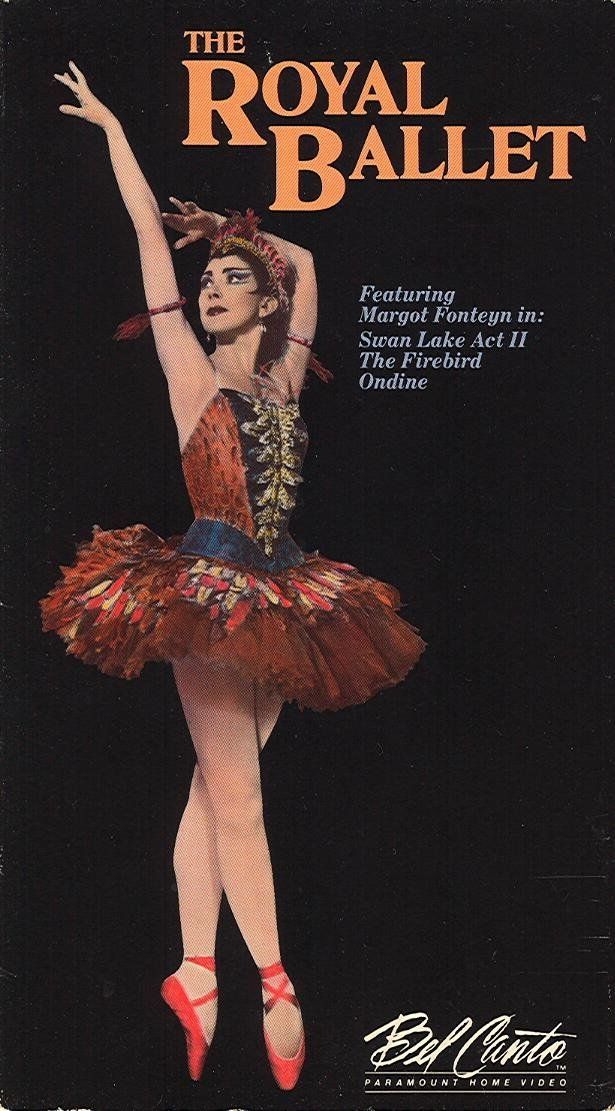
For serious firebird-watchers, you might be interested in some of the iconic productions that are online: Margot Fonteyn in the close-to-Fokine version with The Royal Ballet, a short clip of Maria Tallchief in the pas de deux when she performed it at Jacob’s Pillow in 1951, Diana Vishneva with the Maryinsky Ballet, staged by Isabelle Fokine and Andris Liepa; Leanne Benjamin with The Royal Ballet here, the PBS broadcast of DTH version with Stephanie Dabney, who created the role, here.
Note: I happened to see the above productions this season, but there are many other Firebird flights in the repertories of U.S. ballet companies: Ballet West has a 1963 version by Willam Christensen; Richmond Ballet has one by Ma Cong; Houston Ballet’s version is by James Kudelka; San Francisco Ballet’s Choreographer in Residence Yuri Possokhov created their Firebird; Christopher Wheeldon made one for Boston Ballet, and City Ballet of San Diego just premiered a new Firebird by Elizabeth Wistrich in April.