


Related Features
IMPRESSIONS: "ABT@85: Classics to the Contemporary" at Lincoln Center
IMPRESSIONS: ABT@85: A Retrospective of Master Choreographers (Part One)
IMPRESSIONS: ABT@85: A Retrospective of Master Choreographers (Part Two)

By Robert Johnson
View Profile |
More From This Author
Published on November 10, 2025
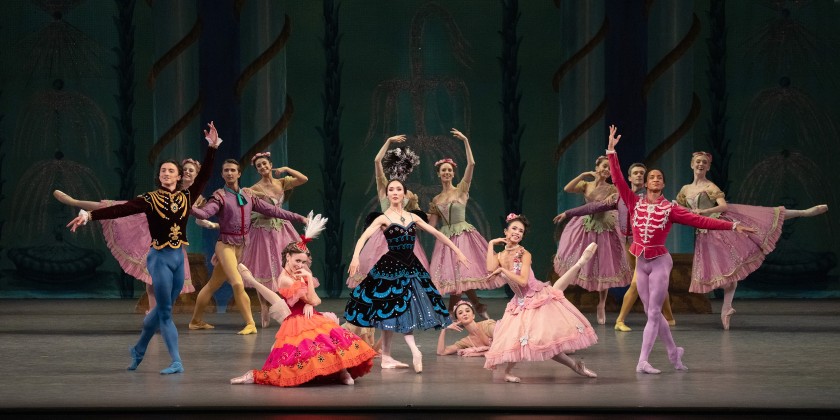
Antony Tudor's Gala Performance." Photo: Steven Pisano.
Gala Performance
Choreography by Antony Tudor
Staged by Amanda McKerrow and John Gardner
Music by Sergei Prokofiev
Sets and Costumes by Hugh Laing
Lighting by Jennifer Tipton
Solo Piano: Evangelos Spanos
Conductor David LaMarche
Rodeo
Choreography by Agnes De Mille
Tap solo staged by Dirk Lumbard
Music by Aaron Copland
Scenery by Oliver Smith
Costumes by Santo Loquasto
Lighting by Thomas Skelton
Conductor: David LaMarche
After the soulful uplift of Les Sylphides, practically anything would feel jarring, but the sharpened satire of Gala Performance, the second item in American Ballet Theatre's Retrospective of Master Choreographers, at the David H. Koch Theater, seems intended to scuttle all theatrical illusions. The two ballets are polar opposites: while Michel Fokine’s gentle sylphs flee from us, Antony Tudor's international ballet stars besiege us, hungry for our attention.
Devouring us with burning eyes, her elbow crooked before her face gypsy-style, the Russian Ballerina in Gala Performance hunches forward to bring herself ever-so-slightly nearer to the public. (To be sure, her pandering is absurd, and nothing remotely like it would ever... er, never… Oddly, this “Retrospective” evening contains two comic ballets, but no dramatic centerpiece. Is ABT director Susan Jaffe reaching out to collar the audience, da or nyet?)
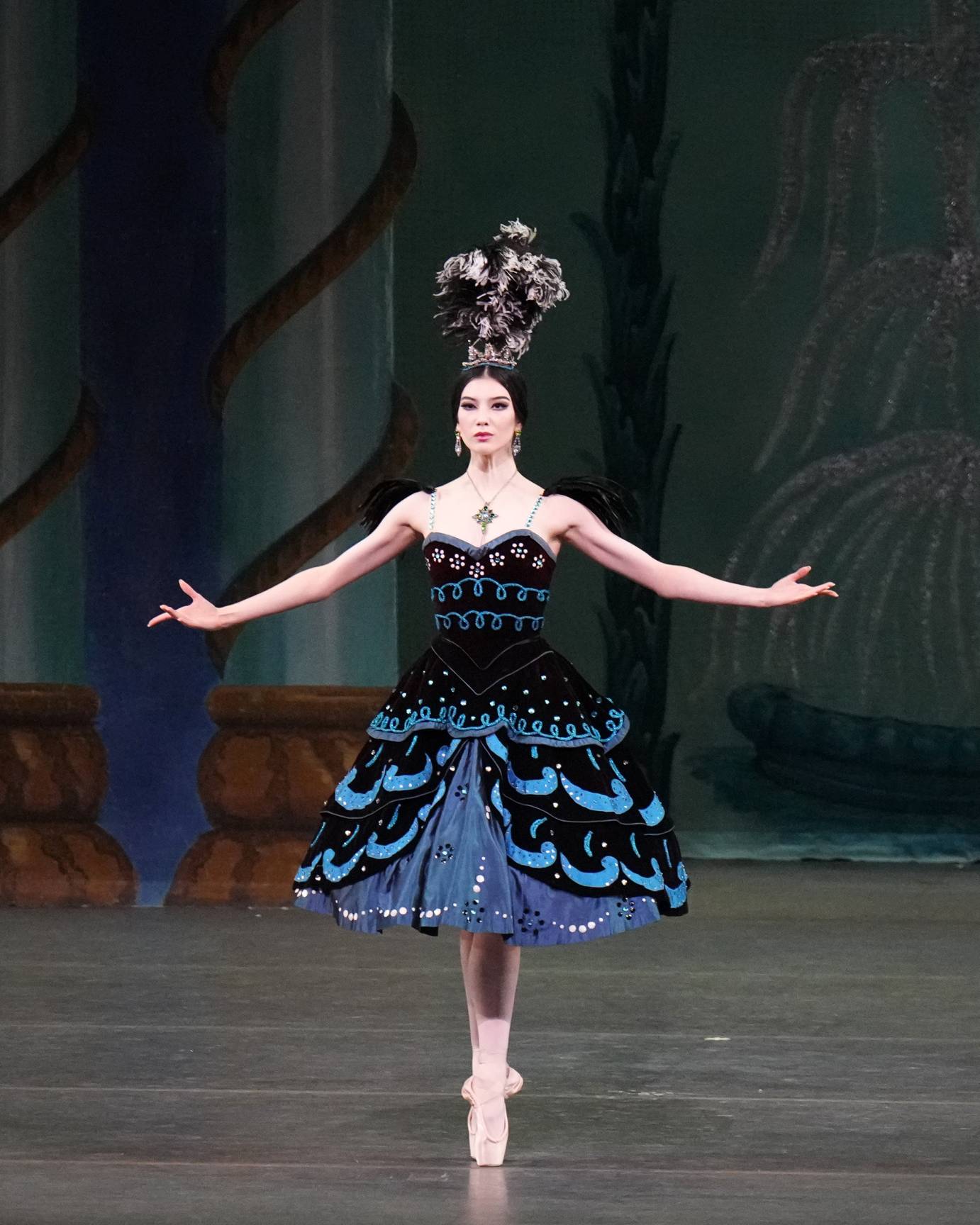
Chloe Misseldine in Gala Performance. Photo: Steven Pisano
Never mind! Before Tudor allows his scheming, overdressed celebrities to flaunt their charms, he takes us backstage for a look around. Here goofy coryphées are working out the kinks, gossiping with their friends and snubbing their enemies, and receiving last-minute instructions from the ballet master. Their male counterparts hold themselves in reserve, until the stars’ appearance prompts a rush of fatuous hand-kissing. Now we see what the expression “artistic temperament” means. The Russian Ballerina, who appears with hands propped against her overstretched back, snaps at a coryphée for wearing flashy jewelry. The Italian Ballerina, a steely monomaniac who inspires awe, if not dread, studies herself in a hand-mirror, and slaps the Dresser when her attention wanders. The French Ballerina is a social butterfly who flirts promiscuously, and throws a tantrum when the Russian Ballerina hijacks her huddled conference with the conductor. As the curtain is about to rise, the cast rush to take their places but a coryphée upstage is on the wrong foot, catching herself just in time.
The performance itself, set against a candy-colored backdrop with arches and splashing fountains, is the kind of circus-act that Fokine and Tudor despised, but that ballet audiences can’t help loving. The Russian Ballerina vamps us with a predatory leer and makes love to the scenery, flirting from the wings and angling for a return to the stage. The Italian Ballerina proves to be a control freak, manipulating the other performers, the conductor, and the audience as she makes her long-drawn-out entrance. In their gymnastic pas de deux, the Italian Ballerina’s partner sinks lower and lower, splaying his legs as he supports her in a vertiginous penché, and then leaves her tottering in a crabbed balance. When she tilts backward, he gets a dusting from the feathery plume on her head. In their gamboling duet, the French Ballerina keeps her partner guessing where she will make an entrance, capriciously loving him one minute and bumping him offstage the next. The stage becomes uncomfortably narrow, when the three stars squeeze into the center. As every balletomane knows, the curtain calls are part of the performance. In Tudor’s orgy of adulation, the Russian and French Ballerinas collect a shower of bouquets, but are forced to surrender them to their stern Italian colleague.
Though Gala Performance is always funny, it must be said that, with the exception of Takumi Miyake’s high-flying antics as the French Ballerina’s partner, the ballet did not come fully alive until the Sunday matinee, Oct. 19. Skylar Brandt brings a natural intensity to all she does, her body radiating energy even when at rest. She is the perfect dancer to put the grasping Russian Ballerina hysterically over the top. As the Italian Ballerina, Hee Seo appears sullen and mean, nursing a grudge and possibly concealing a stiletto. Léah Fleytoux is the French Ballerina, fluttering, blowing kisses, and maniacally scheming.
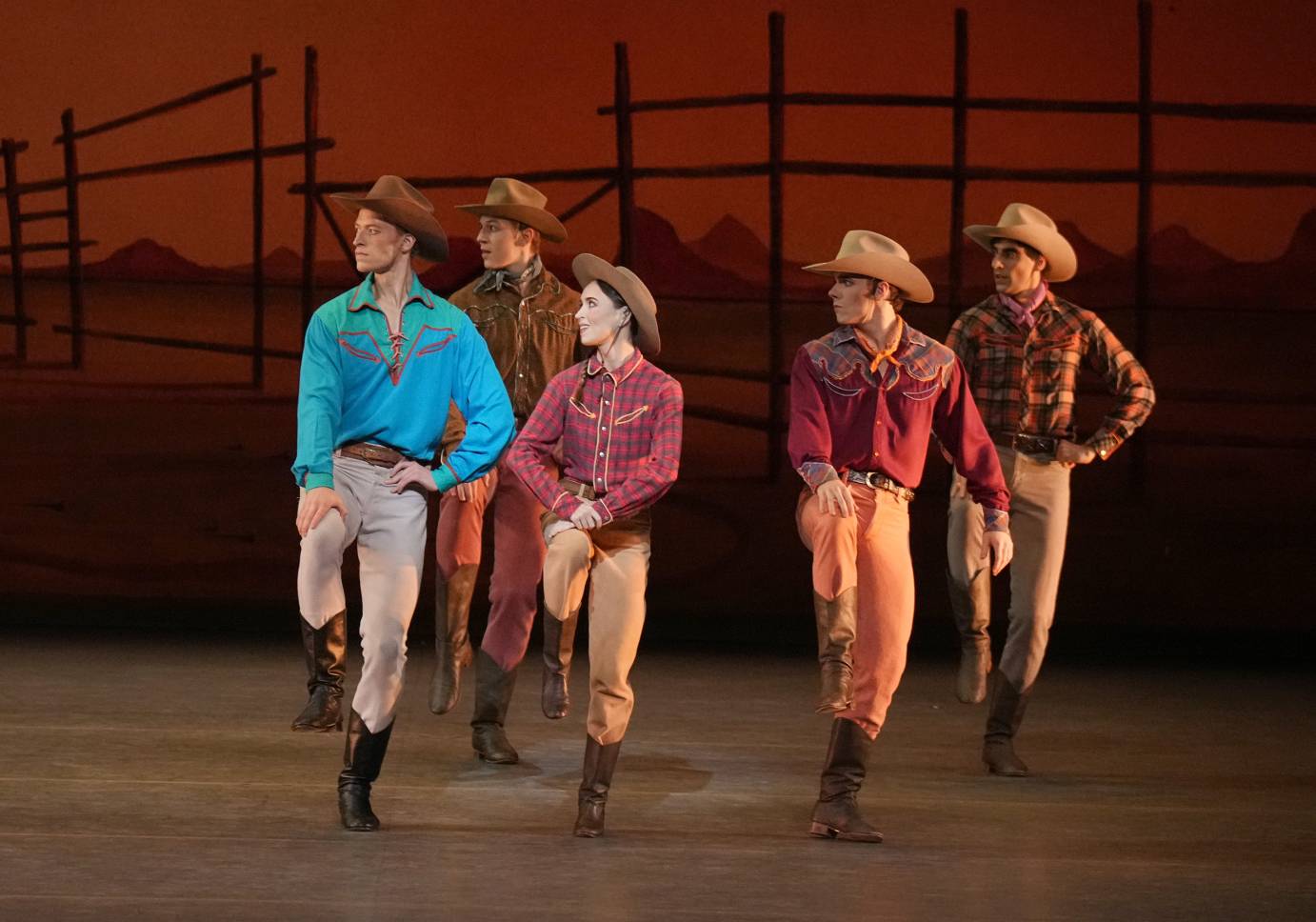
The other comedy on this light-weight, but historic mixed bill did not fare so well. If Fokine’s Les Sylphides seems timeless, Agnes de Mille's Rodeo looks out-of-date and under-rehearsed. Leaving aside whether this twisted defense of gender stereotypes should still be performed at all — if ABT is going to dance Rodeo, then it must make it convincing.
Skylar Brandt is a wonderful artist, but one whose passionate integrity does not help her enter into the Cowgirl’s mindset. On Friday, Oct. 17, she takes de Mille’s slapstick entirely too seriously, making her Cowgirl appear not just love-sick and clueless, but tortured and psychologically unbalanced. If this Cowgirl’s crush on the Head Wrangler is not reciprocated, and soon, we might hear that she has shot up a high school. (ABT should revive Fall River Legendand Billy the Kid in all their unhinged violence, if the company wants to present real Americana.) As for the men impersonating ranch hands, well, we know this generation grew up playing Grand Theft Auto, not “cowboys ‘n injuns,” but have they really never seen a Western, even in re-runs?
When the Martha Graham Dance Company tackled Rodeo last year, even the Italian dancers in the troupe had a clear idea of how American cowboys are supposed to look and move. They must have studied Sergio Leone's gunslinger classics: Il Buono, Il Brutto, Il Cattivo; and Per Un Pugno di Dollari. For those of a certain age, it's hard to grasp that the horse-opera, once ubiquitous, has become so rare that the American-wing contribution to ABT’s “Retrospective” program is the ballet its dancers find most alien.
Jake Roxander, who is terrific in Push Comes to Shove, should borrow a little of Push’s lowdown style to share with his Championship Roper. As things stand, this Roper responds to the Cowgirl’s blues with the clean-cut earnestness of a Mormon missionary. The Head Wrangler, Jarod Curley, is a cipher, possibly in recovery from the Italian Ballerina’s abuse in Gala Performance. Ingrid Thoms, as the Ranch Owner’s Daughter, remains blandly lyrical without a hint of superciliousness or scheming — except in a revelatory moment when we catch her spying on the Cowgirl from a doorway, and coldly sizing up the competition. De Mille may have been cowardly when she made Rodeo, but she knew all about treachery. Abbey Marrison supplies the other pleasure on Friday night. As the timid girl whose overexertion in the hoedown makes her vomit, Marrison takes a cameo and makes it a star turn.

Things improve on Sunday afternoon, when interesting debuts by two dancers spur this old nag into a trot. Radiant as the Cowgirl, Breanne Granlund may suffer, but she accepts disappointment tenderly — this Cowgirl knows she is dreaming. On the cusp of maturity, she is also ready to blossom when her chance comes. Carlos Gonzalez has a sly, underhanded quality that suits the part of the Championship Roper, and gives him psychological dimension. In some ways, the Roper is the most interesting character, because he can see through the Cowgirl’s disguise. Perhaps this is because of his own, tap-dancing eccentricity, or because he is a lady-killer accustomed to x-raying a woman’s figure. While encouraging the Cowgirl to don a skirt, the Roper doesn’t really care, because he plans to remove her clothes later, anyway.
That said, Gonzalez and Granlund appear genuinely drawn to one another, and it’s possible that the Cowgirl has captured this randy cowboy’s heart, at least temporarily. ABT’s production benefits from Oliver Smith's Surrealist backdrops, where the Western plains suggest the unexplored frontier of the mind. At the center of Rodeo, the innocent square dance, with the quality of a dream sequence, remains affecting because it’s the one thing in this ballet that de Mille didn’t fake.