



Related Features
IMPRESSIONS: Ballet Hispánico in Gustavo Ramírez Sansano's "CARMEN.maquia" at New York City Center
THE DANCE ENTHUSIAST ASKS: Amanda Ostuni on Embodying Carmen in Ballet Hispánico's "CARMEN.maquia"
IMPRESSIONS: Opera and Dance: "El Último Sueño de Frida y Diego" and "Carmen"

By Catherine Tharin
View Profile |
More From This Author
Published on June 30, 2026
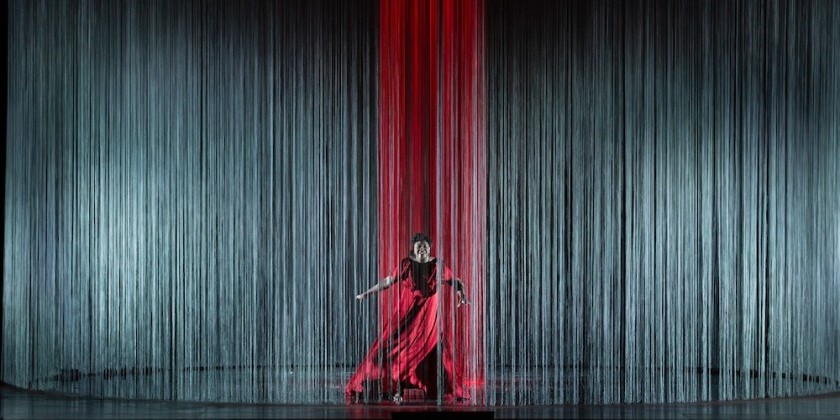
"El Último Sueño de Frida y Diego." Photo: Marty Sohl
The Metropolitan Opera presents El Último Sueño de Frida y Diego
Composer: Gabriela Lena Frank // Libretto: Nilo Cruz
Production: Deborah Colker // Director/Choreographer: Deborah Colker
Set Design: Jon Bausor // Costume Design: Jon Bausor and Wilberth Gonzalez
Conductor: Yannick Nezet-Seguin
Frida: Isabel Leonard // Diego: Carlos Álvarez // Catrina: Gabrielle Reyes // Guadalupe: Ponti Lianne Coble-Dispensa // Leonardo/Greta Garbo: Nils Wanderer
May 14, 2026
Teatro alla Scala, in co-production with The Royal Opera, Covent Garden, London, and Teatro Real, Madrid, presents Carmen
Composer: Georges Bizet // Libretto: Henri Meilhac and Ludovic Halevy
Stage director: Damiano Michieletto
Conductor: Myung-Whun Chung
Carmen: Stéphanie d'Oustrac // Don José: Matthew Polenzani // Escamillo: Andrii Kymach // Micaëla: Slávka Zámečníková // Frasquita: Sarah Dufresne // Mercédès: Marine Chagnon
June 18, 2026
Opera and dance have long existed side by side. Louis XIV championed both art forms, promoting an aesthetic in which music, movement, poetry, and spectacle coexisted as a shared sensibility. Ballets became customary features of grand opera. Although the forms gradually separated, dance has retained a place within opera as an opportunity for reflection, a distinct theatrical language, and another way of encountering a story.
Two operas seen within weeks of one another prompted me to contemplate how opera productions ask bodies to carry meaning. Some operas are conceived with dance at their core; others ask singers to inhabit their bodies so fully that dedicated choreography scarcely feels absent. What kind of physical expressiveness best serves a particular opera may depend less upon convention than upon the aesthetic priorities.
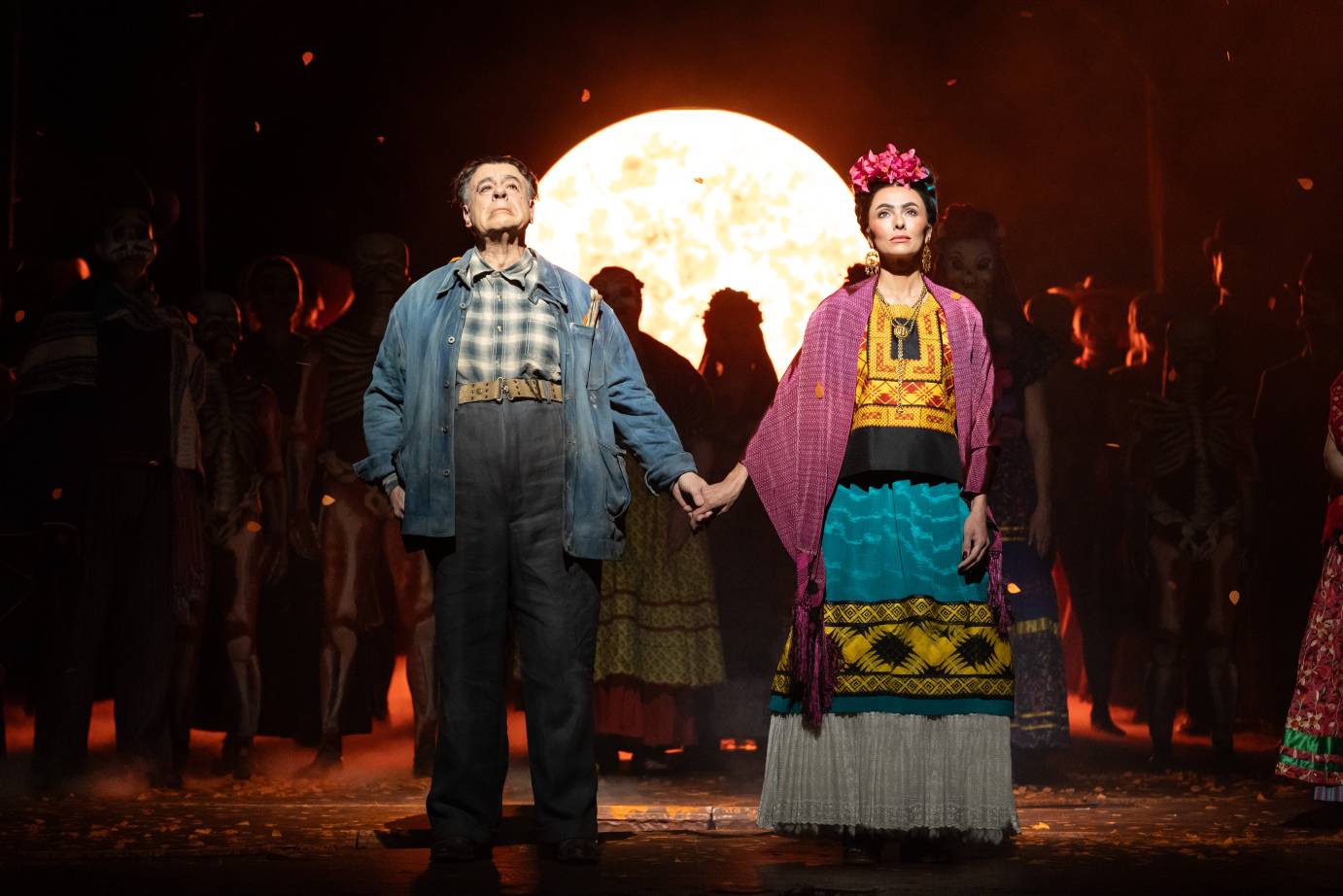
Deborah Colker's staging of El Último Sueño de Frida y Diego, an opera centered on the turbulent relationship between Mexican artists Frida Kahlo and Diego Rivera, seen at The Metropolitan Opera in May, exemplifies one contemporary approach in which expressiveness is dispersed among dancers, singers, acrobats, and scenic imagery.
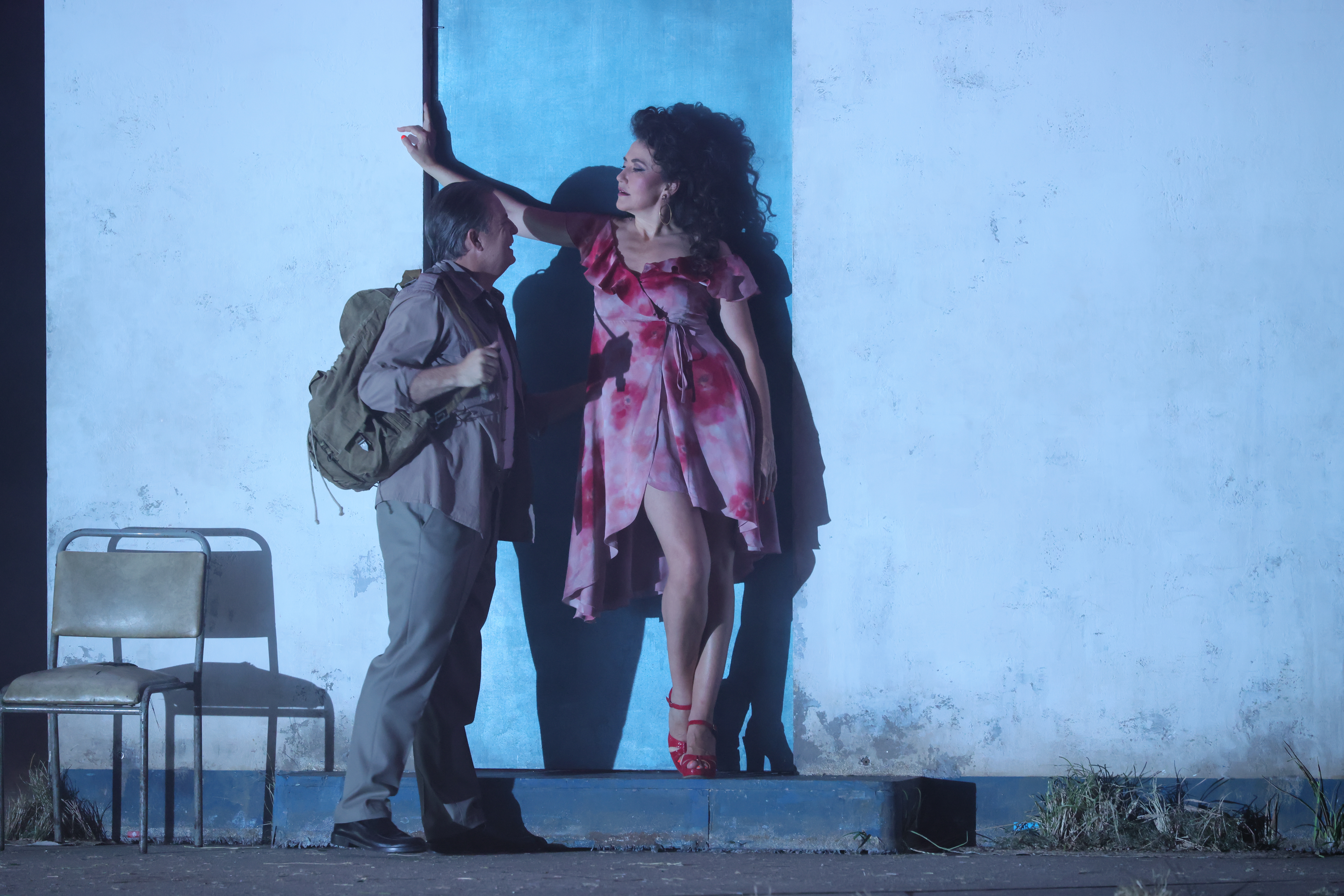
At Teatro alla Scala, Damiano Michieletto's recent interpretation of Georges Bizet's Carmen in mid-June, which premiered in 1875 and remains a bedrock of the operatic canon, offered a striking contrast. Although productions of Carmen have incorporated dances inspired by Spanish traditions, including flamenco, this interpretation omitted dedicated choreography altogether. Michieletto replaced familiar images of Seville with a bleak urban landscape and kept the focus firmly on the principal characters. Here, physical expressiveness resided primarily in singers whose bodies and voices seemed inseparable.
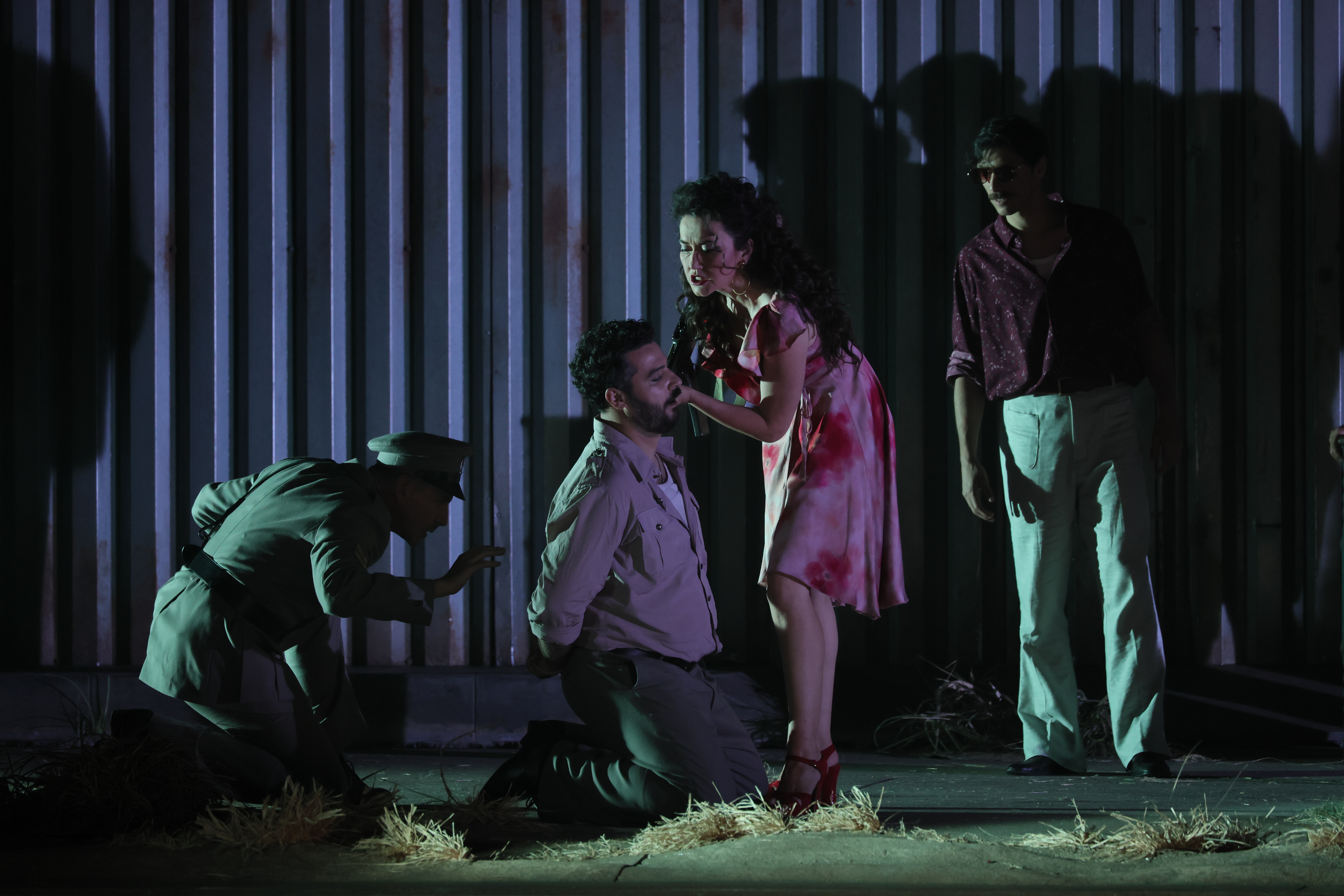
Mezzo-soprano Stéphanie d'Oustrac's Carmen moved with suppleness and ease, shifting her weight, leaning into conversations, and occupying the stage with a confidence and sensuality that made her fierce independence palpable. Women shimmy briefly in a nightclub scene, children join adults in song, and the chorus often remains behind the principal characters, but it was Carmen herself who commanded attention.
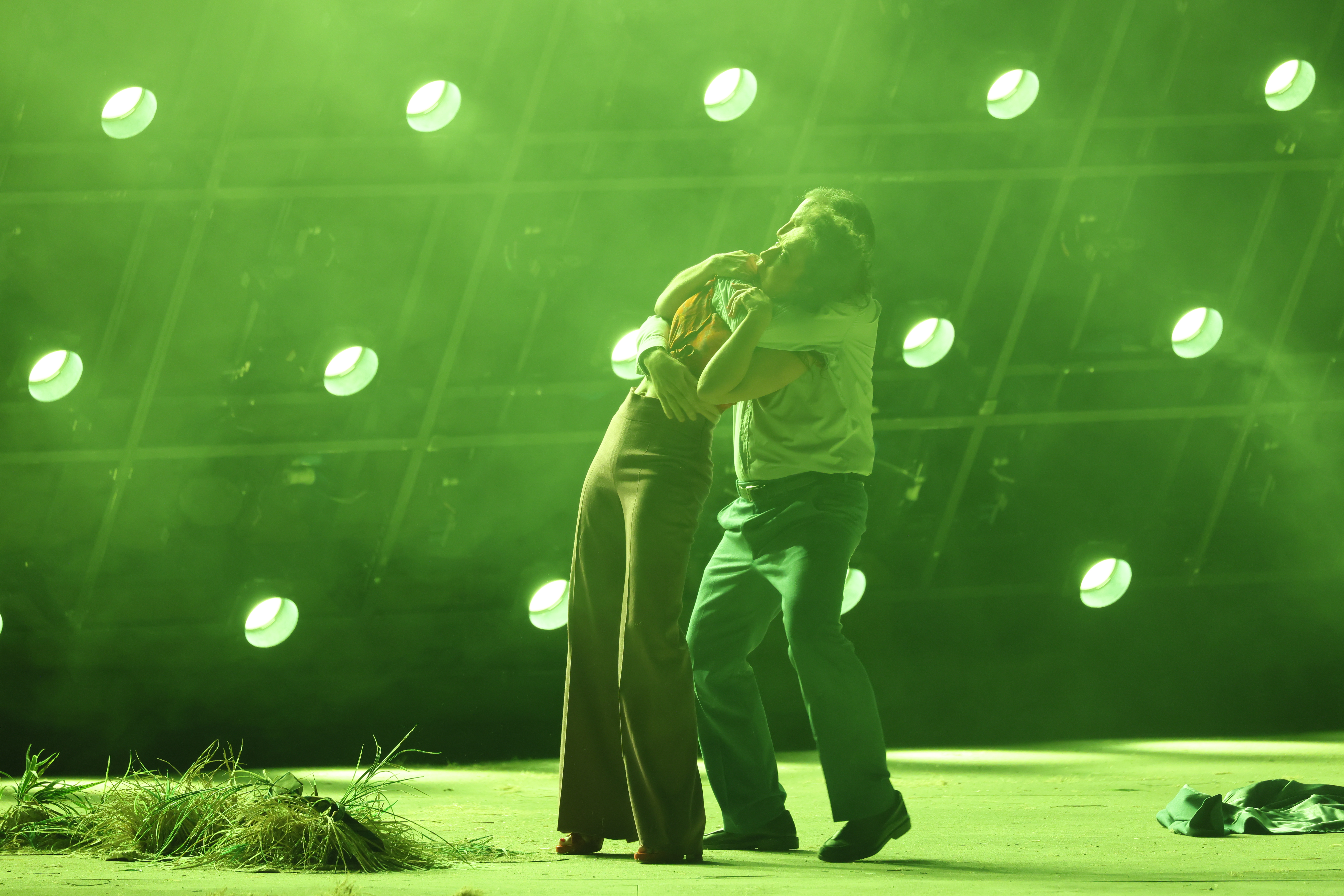
Don José appeared physically more restrained until the opera's closing moments, when his desperate need to possess Carmen culminated in her murder. The strangulation was frighteningly convincing. Carmen fought against Don José's grip with growing urgency until he overpowered her, and she collapsed and died.
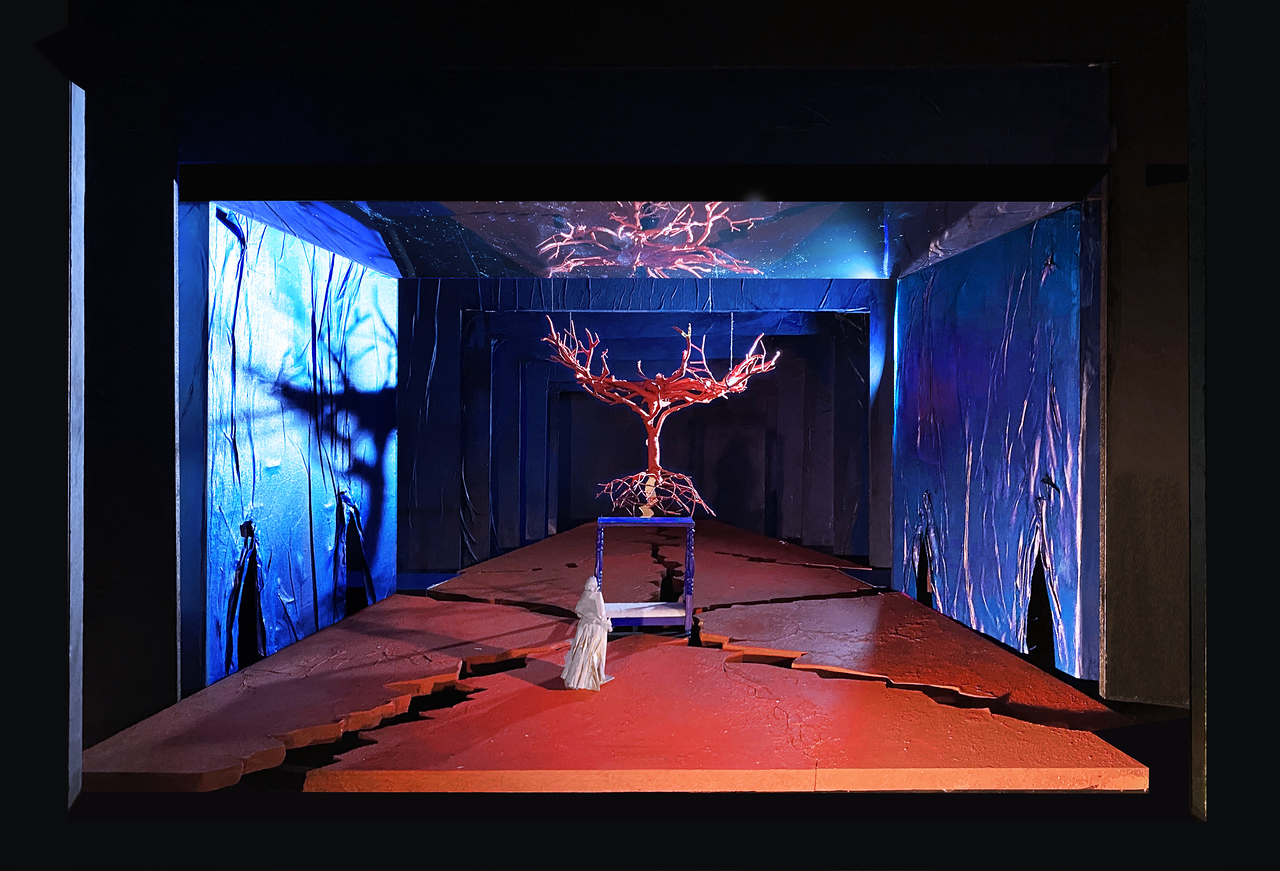
El Último Sueño de Frida y Diego embraced a richly visual aesthetic. A mirror suspended above the stage reflected the action below. Jagged red fissures cut through the stage floor, evoking Kahlo's bodily wounds. A large tree repeatedly descended from the flies, its roots spreading as wide as its crown, recalling imagery that recurs in Kahlo's paintings in which trees emerge from and intertwine with her body. A giant canvas bearing Frida's face was swallowed into a hidden opening. Wooden crates became tables, chairs, and thrones. Brightly dressed townspeople in Mexican garb contributed to the production's striking visual world.
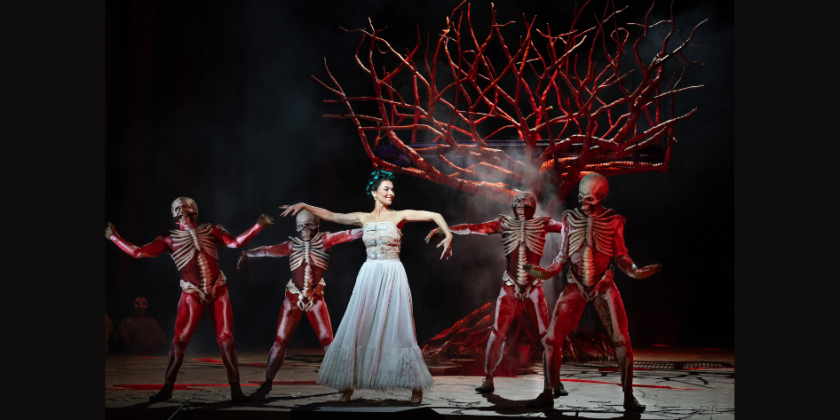
Colker resisted folkloric dance traditions despite the opera's roots in Mexican culture. Instead, she employed New York City street dancers alongside dancers from the Metropolitan Opera Ballet and acrobats. Dressed as skeletons, performers climbed and dangled from roots, scurried in and out of fissures, bowed before Frida, and clustered around Diego, while others tumbled through forward rolls, handsprings, flips, and aerials. Elsewhere, dancers appeared as townspeople, villagers, Day of the Dead celebrants, and denizens of the underworld.
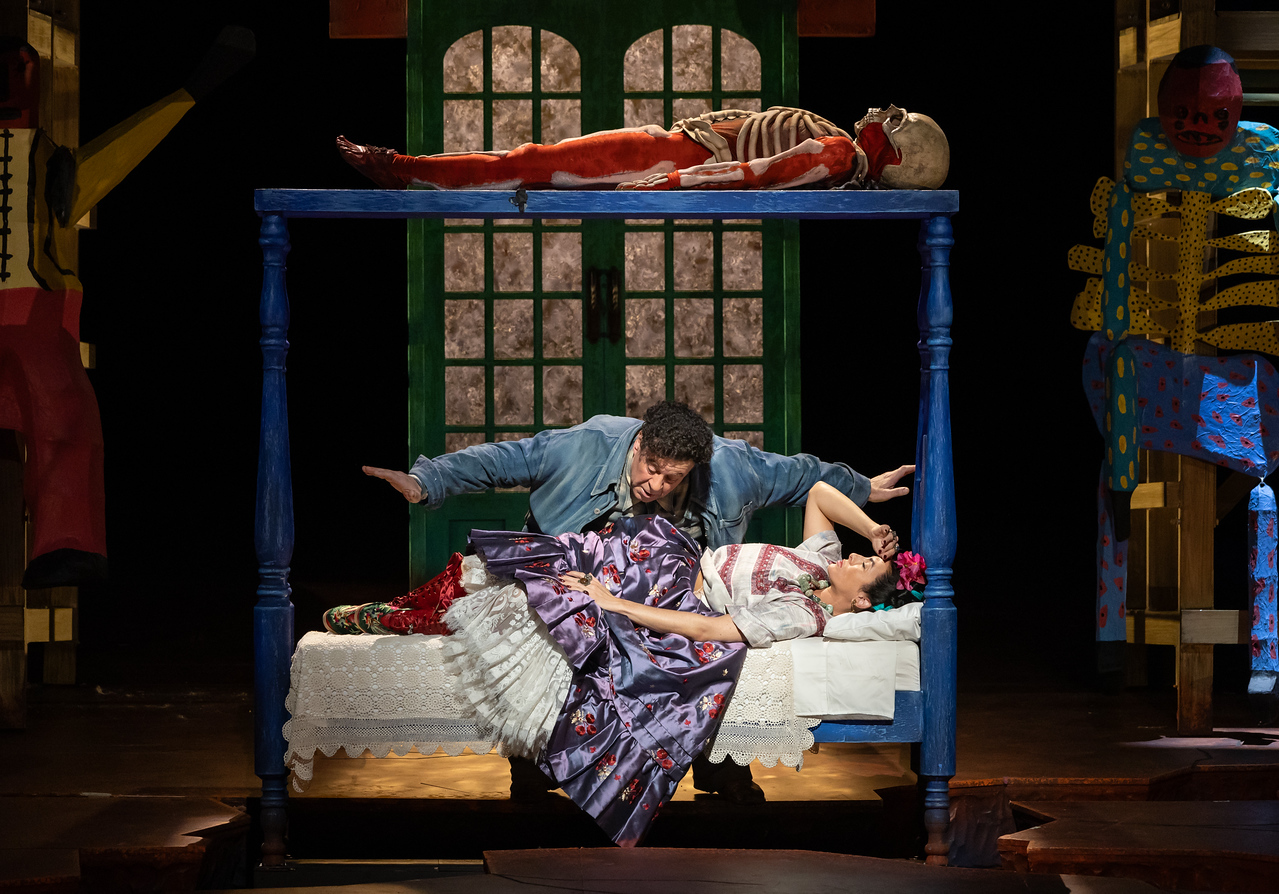
Leonardo, an actor from the underworld who accompanies Frida to the world of the living disguised as Greta Garbo, offered another imaginative detour. Sung by countertenor Nils Wanderer, his arresting presence and remarkable voice briefly drew focus from the surrounding activity. Petals descended from above. Frida's dresses hung suspended from the tree. Her giant puppets are displayed. There was always another image to take in.
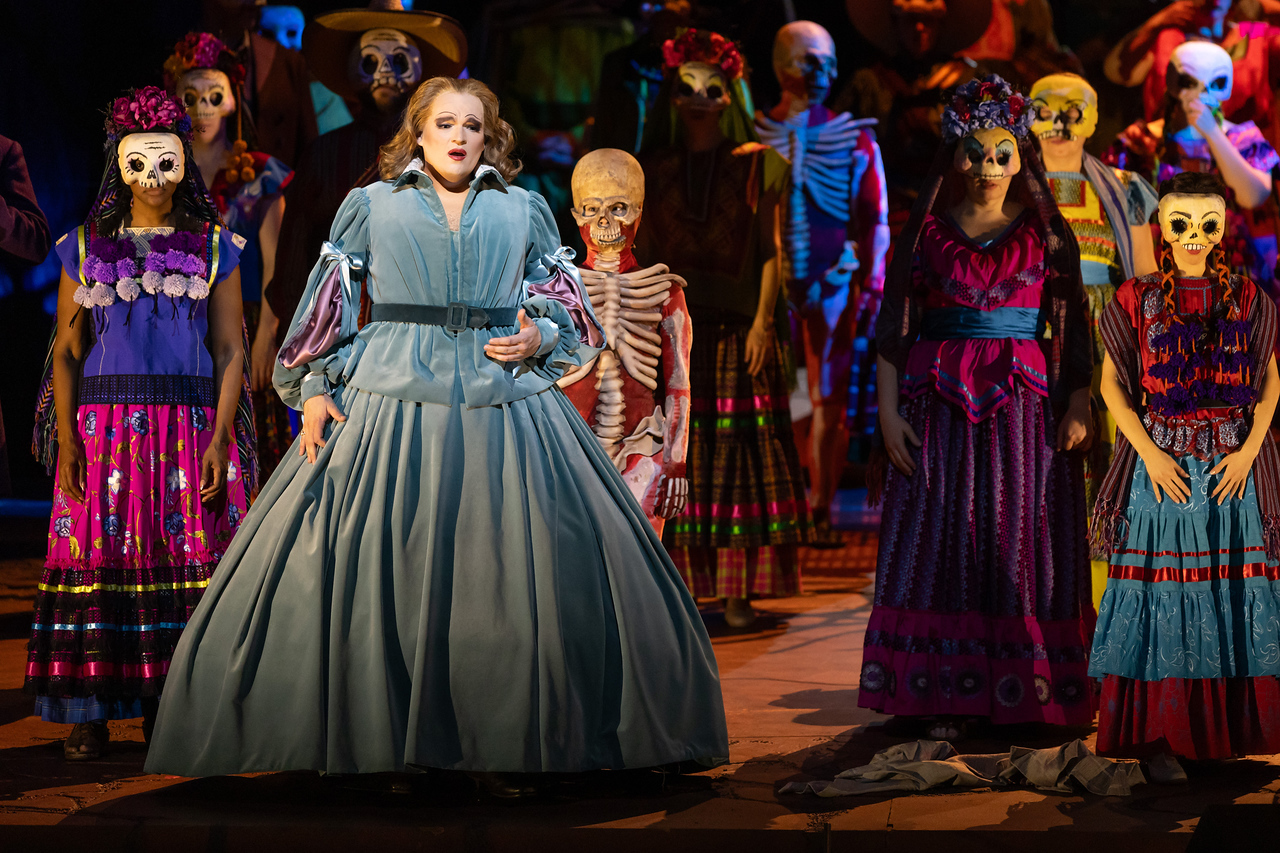
While the production's lavishness was undeniable, my notes from El Último Sueño de Frida y Diego read more like an inventory of stage images than a record of what I felt while watching. Though movement permeated the production, I rarely felt drawn into Frida and Diego's relationship or the emotional stakes of their story. Surrounded by a profusion of activity and imagery, they often seemed less immediate than the visual world around them.
Bizet's score and the economy of character-driven movement swept me along with an inevitability. His melodies continued to resonate long after the performance ended.
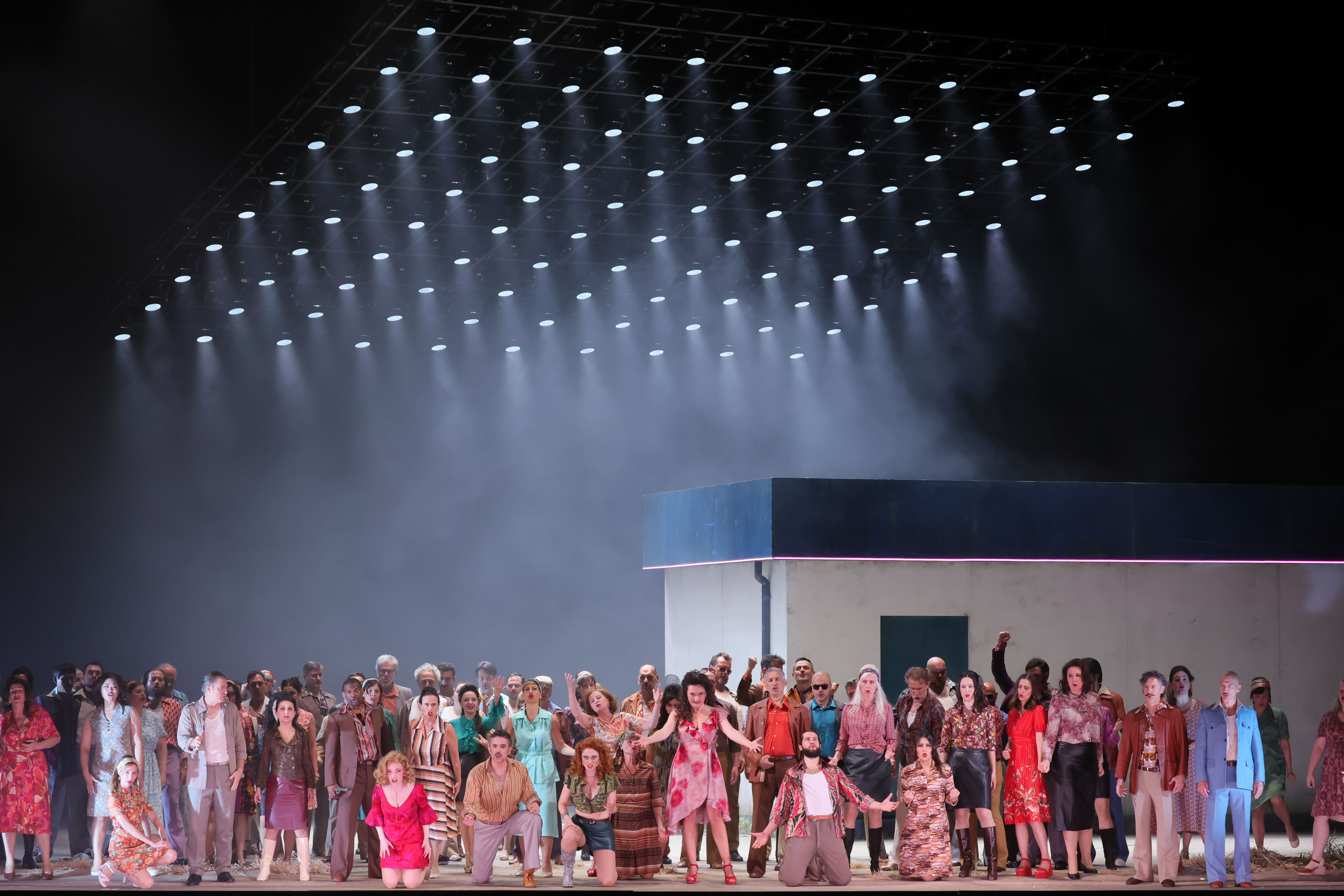
Both Frida and Carmen are pursued by men. Carmen refuses to belong to anyone, despite the claims made upon her by Don José and Escamillo. Frida, despite Diego's pleas, refuses to return to a world she has consciously left behind. Their stories unfold differently, yet both women insist upon determining the terms of their own existence. For all El Último Sueño de Frida y Diego's visual invention, nearly continuous movement, and theatricality, I found myself more affected by the spareness of Carmen. It was Carmen herself, singing and moving with complete assurance, who lingered in memory.