

Related Features
DANCE NEWS: Jacob’s Pillow Announces Plans for Festival 2021, Ted Shawn Theatre Renovation, and Dance We Must Campaign
Artists at Work, an Ambitious National Initiative Inspired by the WPA, Launches in Western Massachusetts
IMPRESSIONS: Works & Process Presents a Summer Preview of Jacob’s Pillow Dance Festival 2026

By Catherine Tharin
View Profile |
More From This Author
Published on June 15, 2026
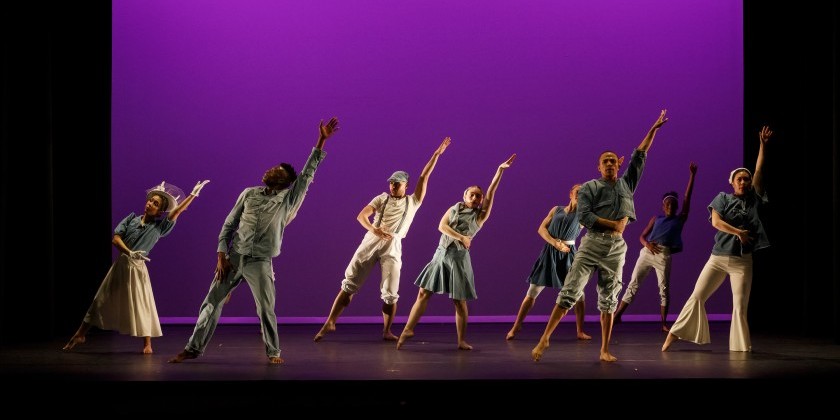
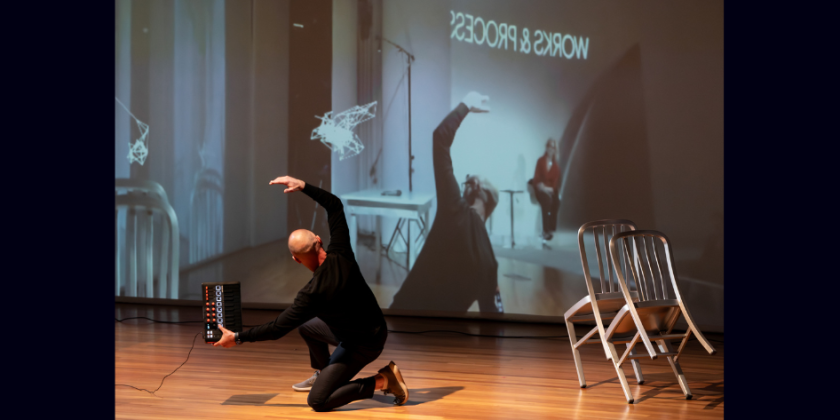
Jacob's Pillow Dance Festival; Brian Brooks. Photo: Elyse Mertz
With Brinae Ali and Brian Brooks
Works & Process Presents:
Jacob’s Pillow Dance Festival
2026 Summer Preview
With Brinae Ali and Brian Brooks
Guggenheim New York
April 27, 2026
Pam Tatge, Moderator
Brinae Ali
Baby Laurence Legacy Project
Brian Brooks Moving Company
Brian Brooks, Choreographer, Digital Design, Programming
Karen Young, Costume Design
i. Elsewhere
Peter Martel, Technology and Programming Support
RJ Craig, Lighting Design
ii. Closing Distance
Jacob’s Pillow Dance Festival
June 20 - August 30, 2026
Brian Brooks: July 29 - August 4, 2026
Brinae Ali: August 12 - 16, 2026
Pam Tatge, Executive and Artistic Director of Jacob's Pillow, the internationally recognized dance festival in the Berkshire Mountains of Massachusetts, introduced choreographers Brinae Ali and Brian Brooks at a recent Works & Process presentation at the Solomon R. Guggenheim Museum. The evening, held in the museum's basement theater, offered excerpts from works in development that will premiere this summer in the newly rebuilt Doris Duke Theater.
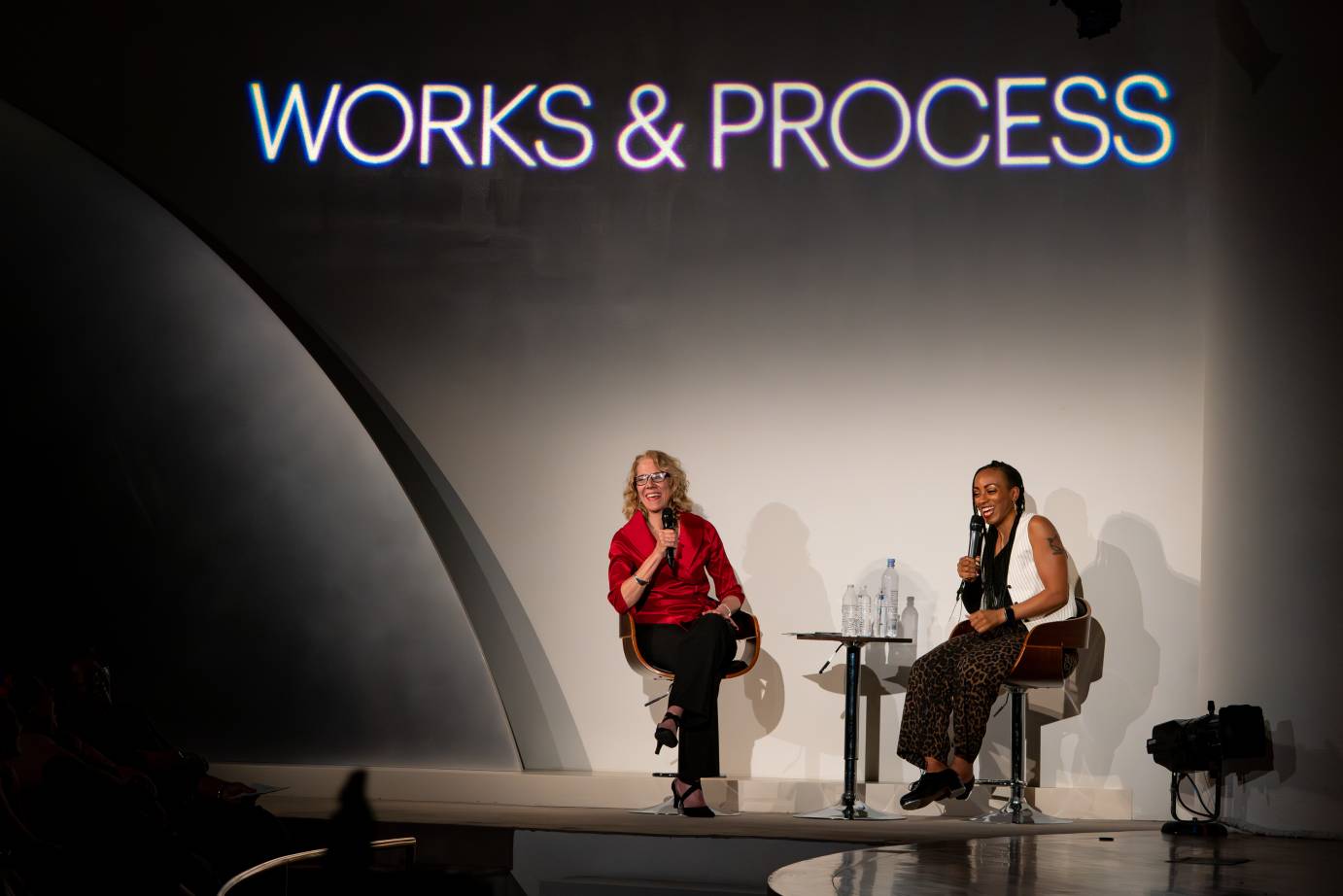
"One of the pillars of our work is dance and technology," Tatge explained. For Ali, technology extends the warmth, musicality, and communal energy of tap and jazz traditions. Brooks, by contrast, uses technological systems to reshape how movement itself is perceived. Each artist joined Tatge in conversation before audiences viewed selections.
The tap artist, singer, and writer Brinae Ali (Alexandria Bradley) discussed her new work with Tatge. Centered on the influential but under-recognized Baltimore tap artist and musician Baby Laurence Jackson, her project draws from archival research, live music, storytelling, and interactive technologies.
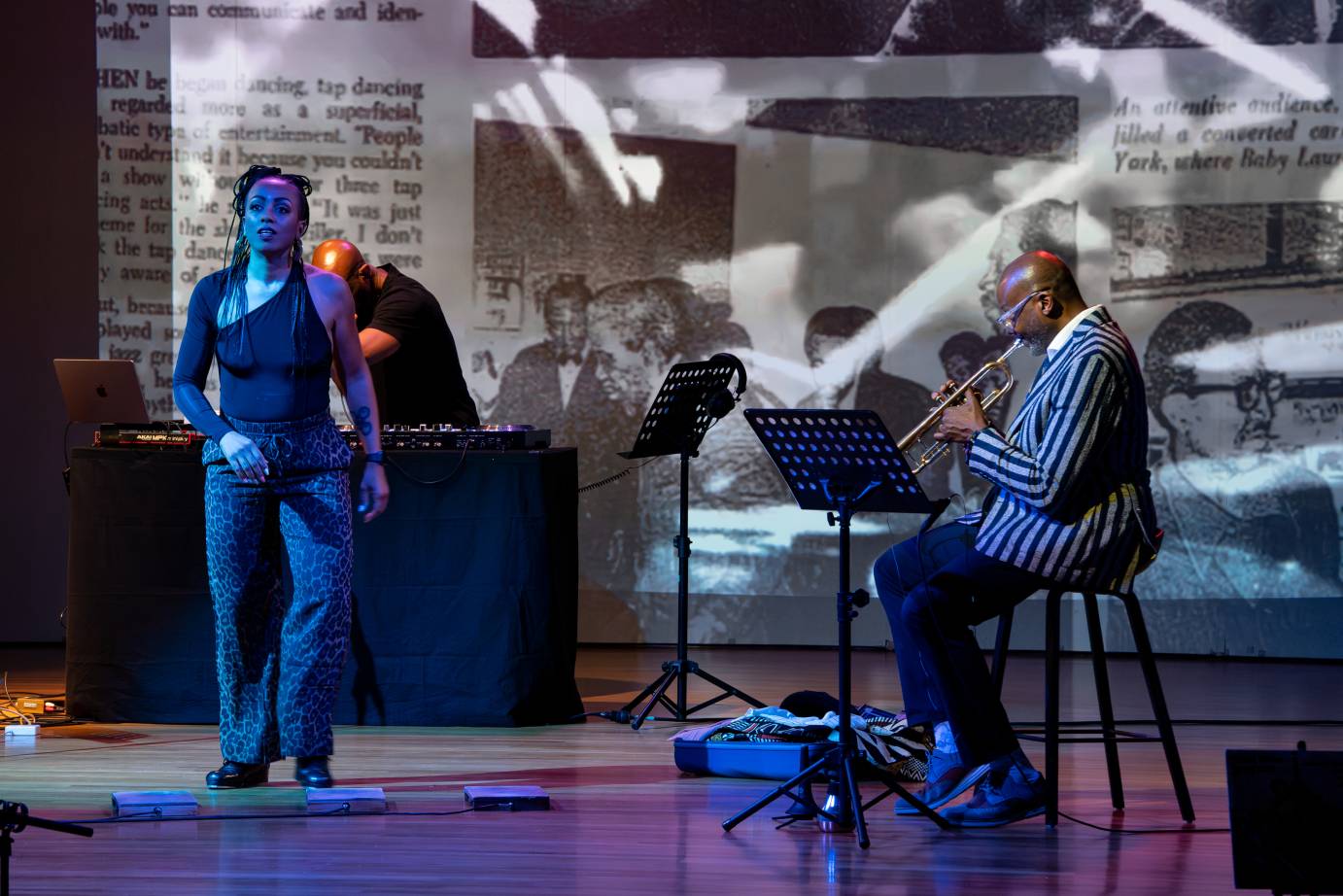
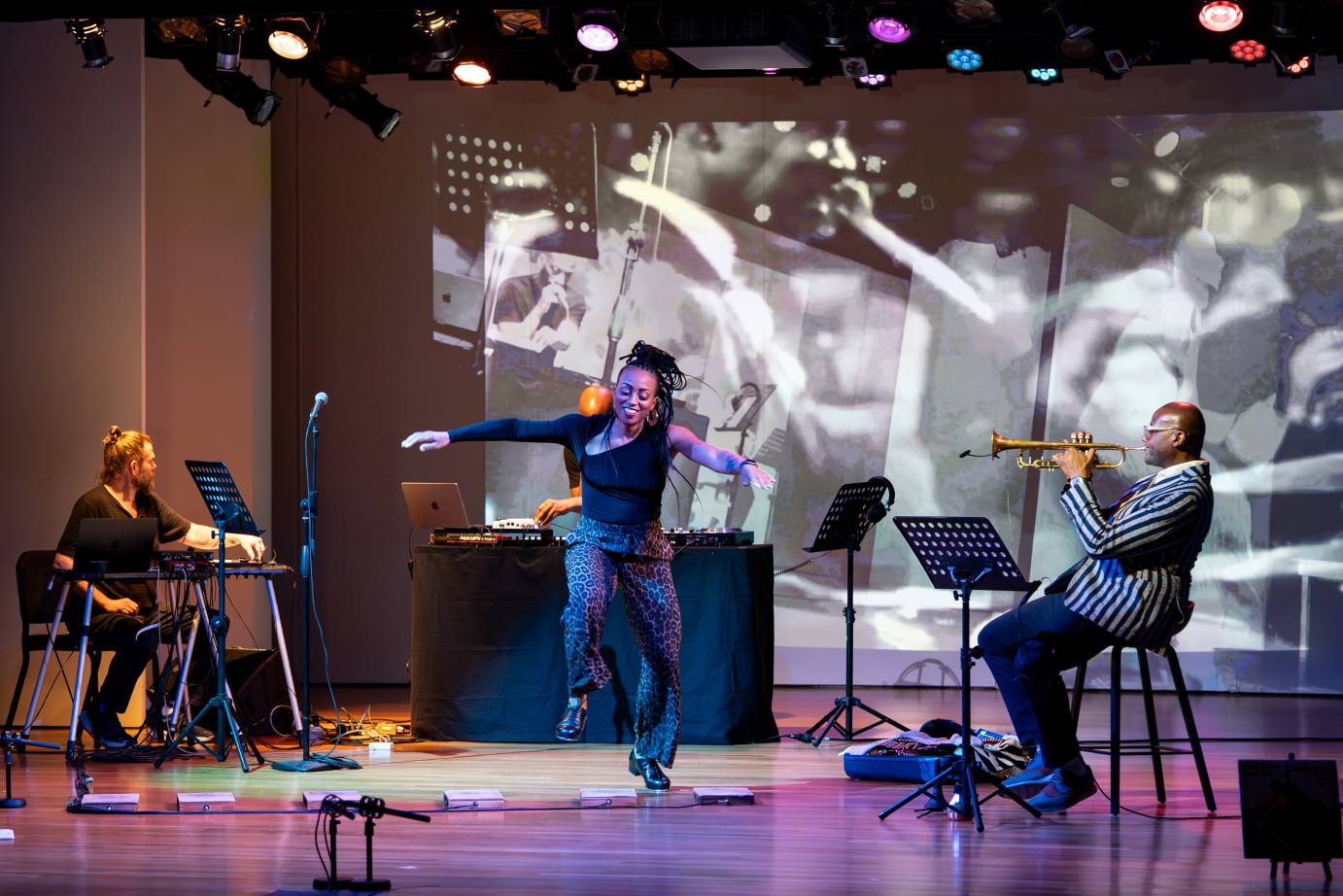
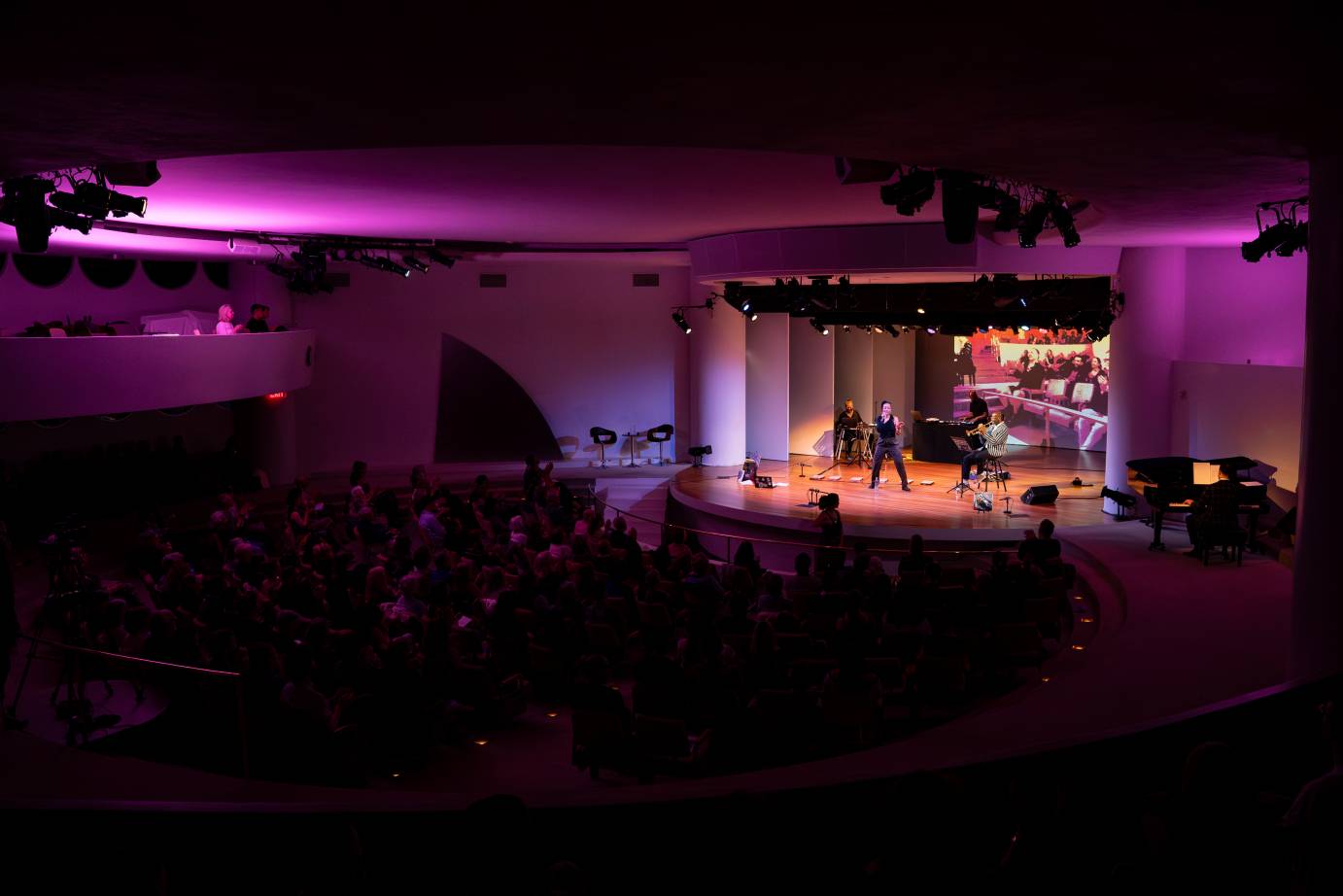
Ali's tap rhythms activate imagery projected onto a large screen behind the performers. A projectionist mixes onstage images, including the cover of Jazz Dancing, in real time, layering them atop the activated imagery. Musicians Sean Jones (trumpet), Alex Brown (piano), and Wendel Patrick (turntables, sound effects, and beatbox), together with BZ (videography) and Nicholas Van Young (visual and audio design), accompany Ali with trills, punctuation, swelling and receding sounds, and shifting projected imagery that create a resounding atmosphere.
Every corner of the stage is alive with activity: Ali's tapping, the musicians' music, the large projections, the roaming projectionist, and the mixer.
"I call it percussion speech — live jazz tap," Ali said. Tatge remarked that Baby Laurence is embodied through imagery, letters, and voice. "You feel him."
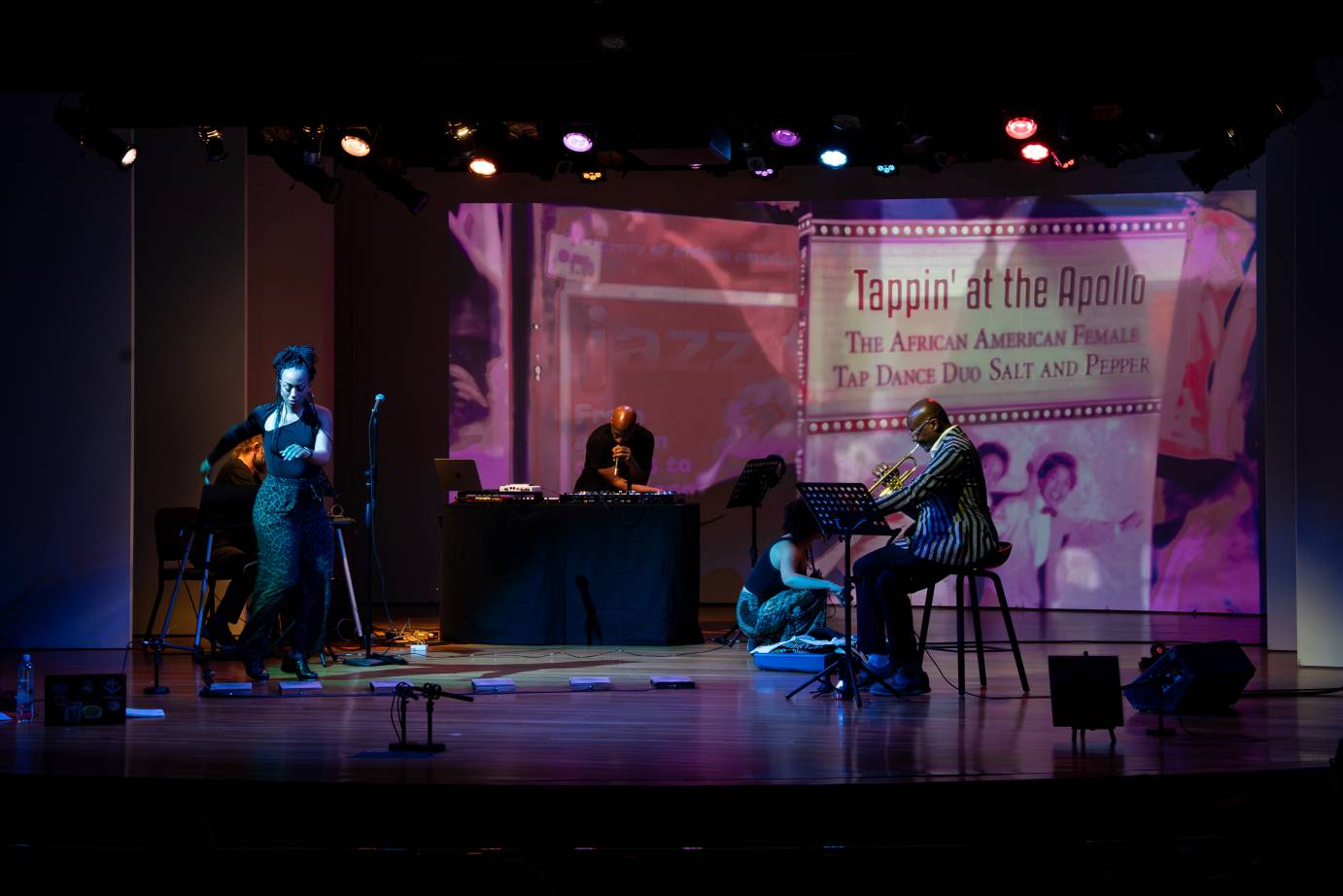
Though little-known today, Lawrence Donald Jackson (1921-1974) was one of tap’s most influential innovators. At the age of 11 or 12, he sang soprano on the vaudeville circuit, soon adding tap dancing to his act. Because of his young age, he was called “Baby Laurence". He went on to perform with many of the great big bands and jazz ensembles, revolutionizing tap dancing by expressing the rhythms of jazz musicians. His improvisatory solo lines are legendary. Struggling with lifelong drug and alcohol addiction, he spent periods of time in prison. Even so, he repeatedly returned to performing.
Initially appearing in a one-shouldered blouse and leopard-print pants, Ali occupies the space with physical authority and ease. Dense and complex rhythms glide off her shoes. The musicians respond in the moment to her tapping and to one another. She shifts between speech, song, and dance, engaging the audience, who laugh and call out encouragement.
Ali next appears in white gloves, a white vest, and a colorful dashiki-cloth jacket. Her long hair, previously coiled, falls freely beneath a beige hat. Smiling broadly, she reads from a letter written by Baby Laurence from prison to dance historian Marshall Stearns, co-author of Jazz Dancing. For a moment, performer and subject intertwine. Expressing his loneliness, Baby Laurence writes: "This is a convict's soliloquy. Out here, I live alone in the middle of the river and refuse to die. I stand alone against god's (sic) creation."
Across the work, past and present continually overlap. In one projected sequence, Sammy Davis Jr. introduces a dapper Baby Laurence to a television audience. Laurence taps small, incisive, rapid-fire steps on a checkerboard floor. His heels strike lightning-fast, punctuated by weightier offbeats and nimble toe flurries.
When I asked Ali whether growing up in Flint, Michigan, influenced the way she thinks about rhythm, expression, and storytelling, she answered, "It has everything to do with it." From elementary school onward, her education centered on the performing and visual arts. Her father, Alfred "Bruce" Bradley, is the founder and CEO of Tapology, an organization that for more than forty years has brought resources and recognition to what Ali described as the "underfunded, underserved and overlooked" tap community. Having begun tapping at age three, she spoke of understanding the necessity of building community from childhood. "It's followed me everywhere I went." Ali also spoke of knowing Baby Laurence's legacy from an early age through the Flint tap community.
While Ali uses technology to surround and extend an already exuberant live exchange between dancer and musicians, Brooks embeds technology directly into the choreographic structure, emphasizing the passage of time.
.jpg)
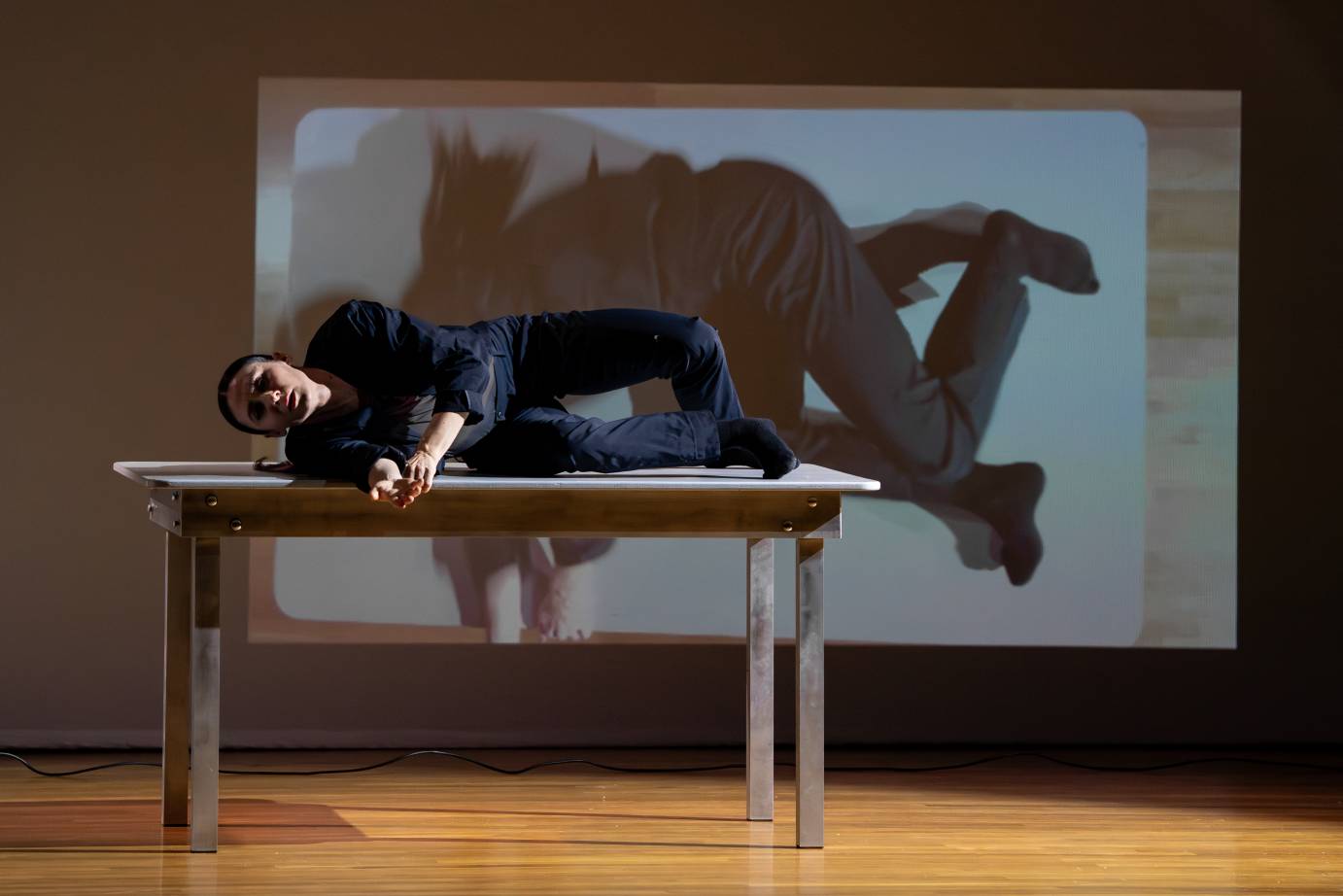
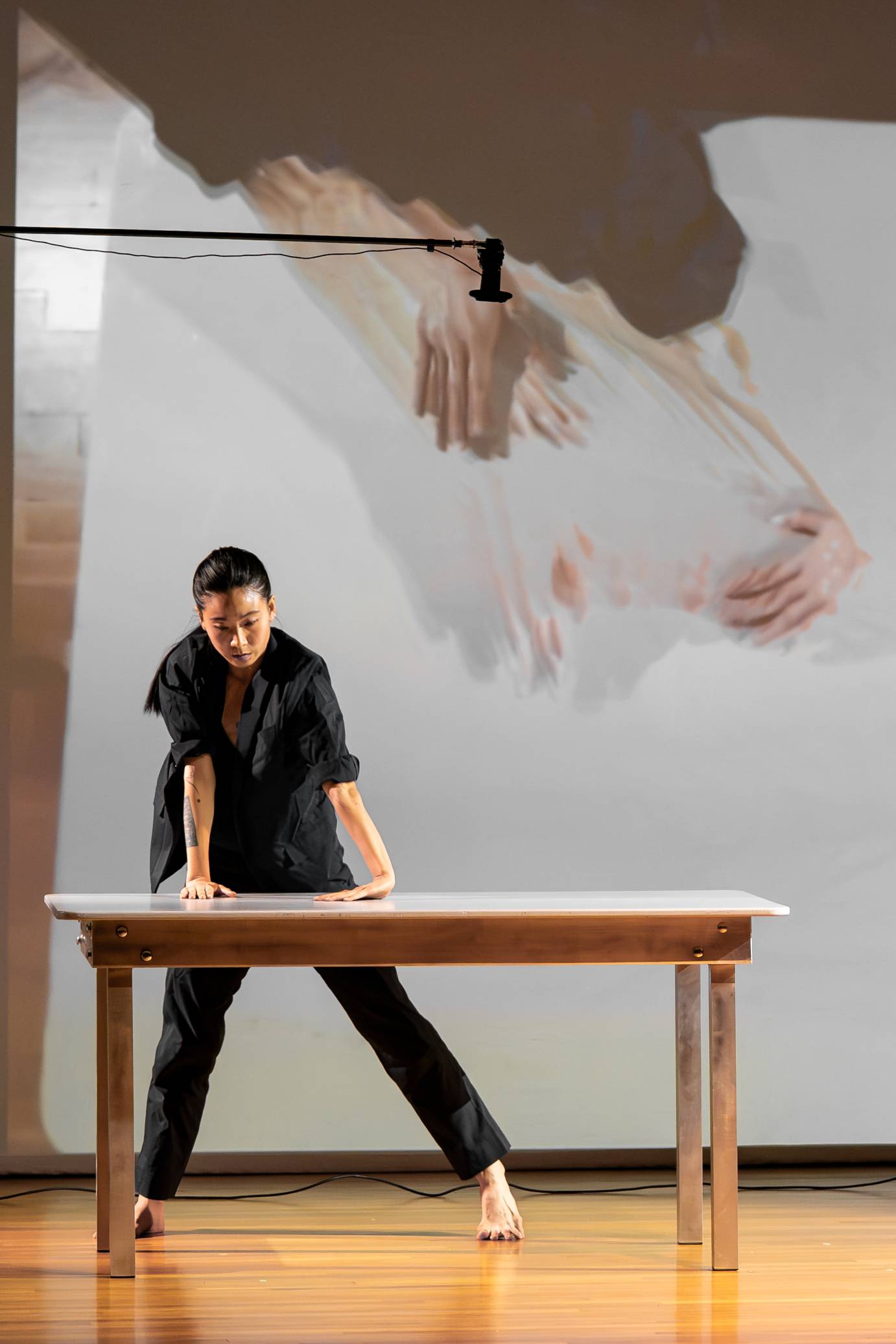
In excerpts from Elsewhere, Sarah Housepian lies on her back atop a large white table while an overhead camera projects her image behind her. As she rolls and spirals across the surface, her projected body lags slightly, multiplying into layered visual trails.
Soon, Evan Fisk joins her, placing two metal chairs behind the table. Housepian and Fisk move their hands forward and back in unison. Their images replicate more slowly in projection. Once both dancers are on the table, their projected bodies seem urgent, and it becomes difficult to take in both the live dancing and its projected double. The projection inevitably draws the eye. Eventually, their hands rest quietly on the tabletop, a fleeting reminder of touch and human fragility within the cool precision of the technological system.
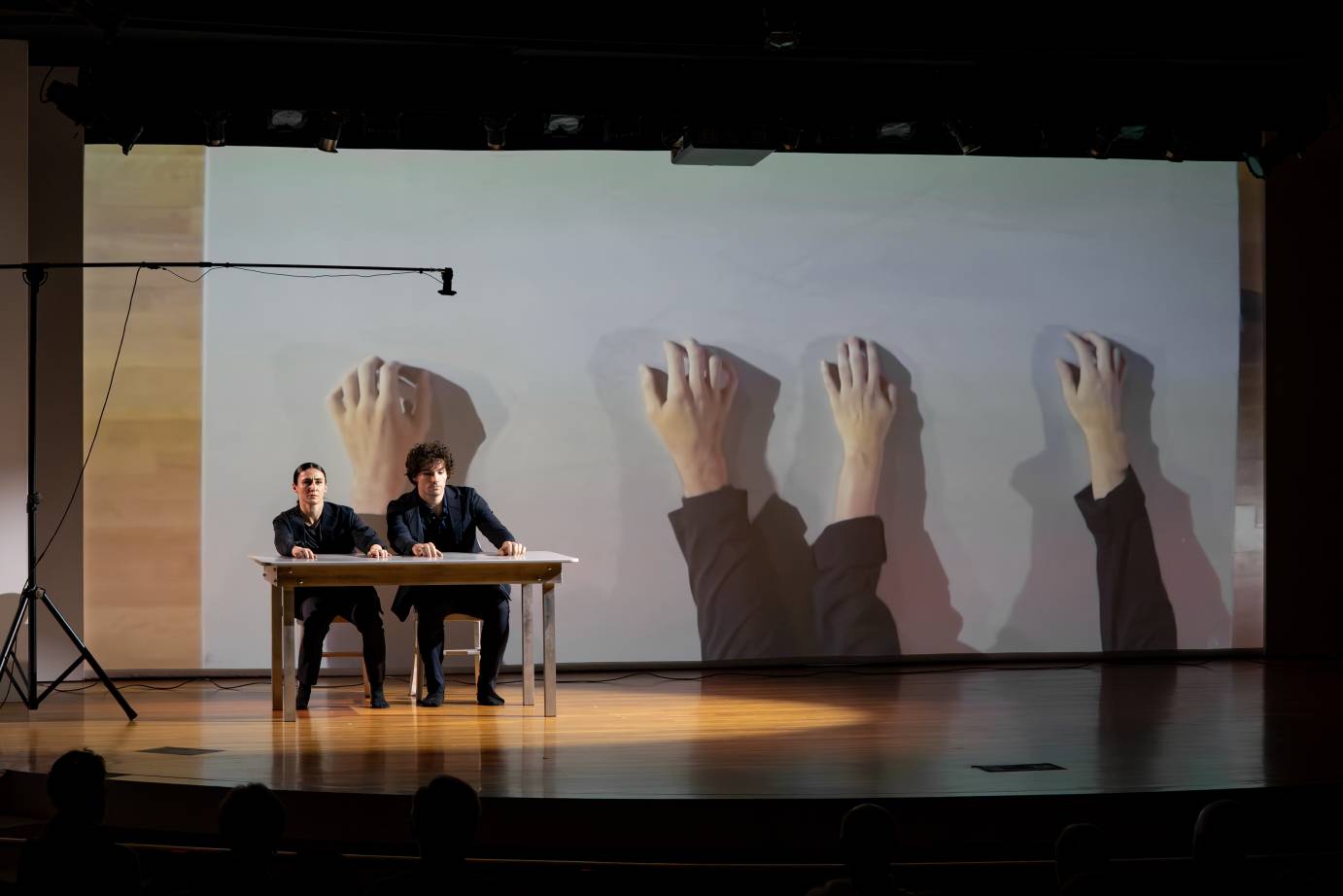
Jie-Hung Connie Shiau enters. She performs a simple hand gesture that, in projection, makes her fingers appear like a rapidly shuffled deck of cards. Jerome Begin's music pushes forward with mounting urgency. Shiau slides onto the table, and her image continues to replicate in increments; the space between each version of her body remains visible, recalling early Eadweard Muybridge photography experiments. Later, seated quietly on the table, she appears suspended between stillness and motion as successive projected images of her simple shifts continue moving across the screen. Although movement is performed live on and around the table, the screen increasingly becomes the primary stage. The projected image races ahead until Shiau's body eventually catches up.
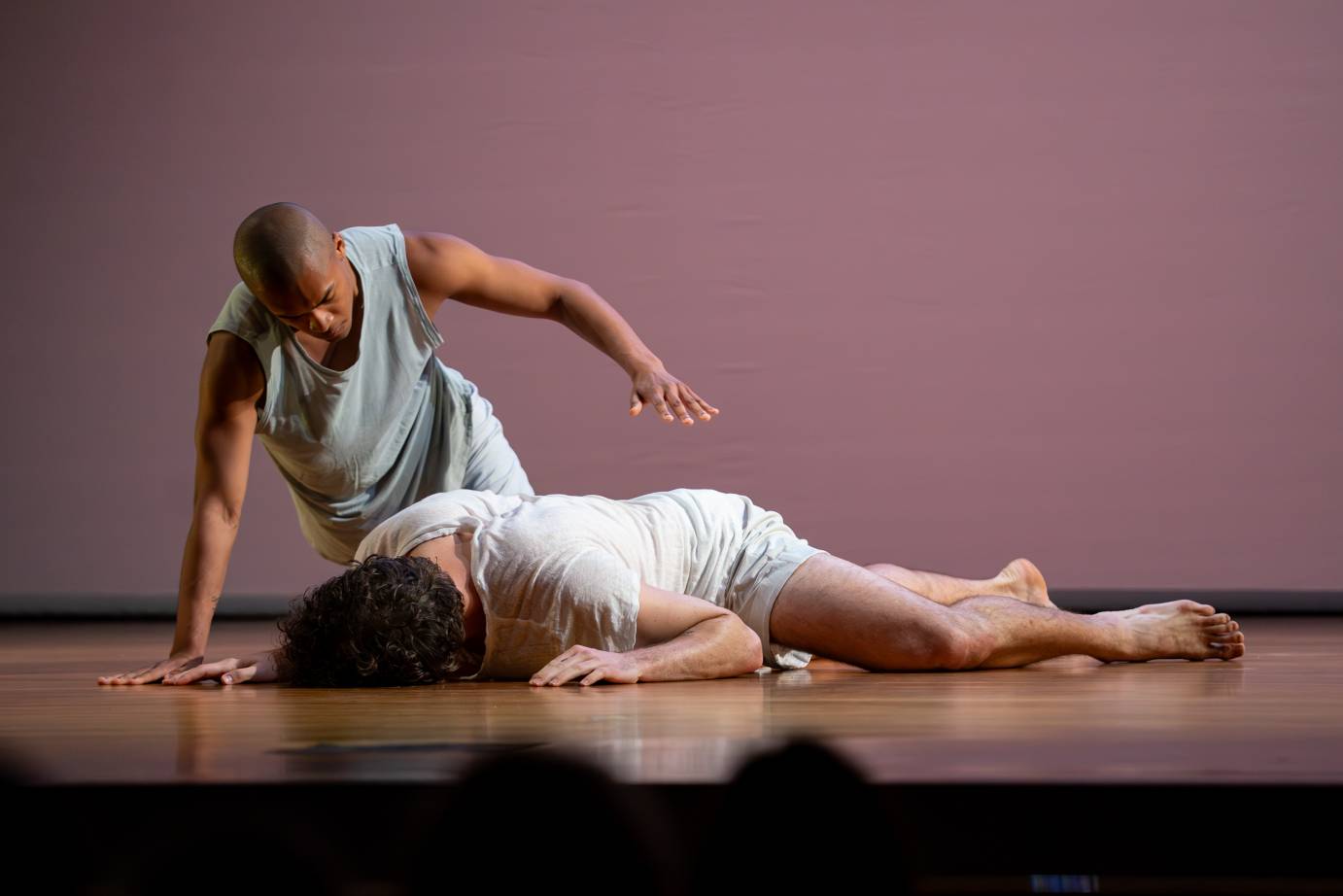
In the trio Closing Distance, with Fisk, Housepian, and Nelson Enrique Mejia Jr., Brooks presents movement developed through technological processes no longer visible onstage. The choreography carries remarkable precision and moments of sensuous touch. Yet the technology remains aesthetically present even when invisible, lending the work a cooler, more clinical atmosphere in contrast to the rich humanity of Caroline Shaw's Partita for Eight Voices.
In conversation, Tatge remarked on Brooks' long association with Jacob's Pillow through residencies and performances. She noted his work with Wendy Whelan in Restless Creature and Some of a Thousand Words. Brooks also created the recently performed duet Could We Be Quiet? for Miami City Ballet dancers. These dances reflect his continued focus on the human body alongside more recent technology-centered experimentation.
Animated, generous, and eager to explain the mechanics of the work, Brooks spoke enthusiastically about coding, choreography, and technological systems. He graduated this spring from the Tisch MFA program in Dance and Interdisciplinary Research, where he worked with software engineers and coders. "The systems are choreographic; there is a cause and effect in coding and programming. Tech acts as an extension of the body," Brooks said. He pointed out that technology already permeates everyday life through phones and screens. "The only catch," he added, "is that tech (used in his performances) comes with a lot of equipment."