

Related Features
IMPRESSIONS: Flamenco Vivo Carlota Santana at The Joyce Theater

IMPRESSIONS: Compagnie Hervé Koubi's "Sol Invictus" at The Joyce Theater
IMPRESSIONS: Doug Varone and Dancers at The Joyce Theater

By Robert Johnson
View Profile |
More From This Author
Published on June 17, 2026
Dova Dance. Photo: Kevin Colton
Artistic Director: Doug Varone
The Company: Courtney Barth, Dareon Blowe, Janiece “Jolo” Boykins, Madison Elliott, Will Noling, Nicholas Ruscica, Kanon Sugino, Ryan Yamauchi
Lighting Designers: Jane Cox, Ben Stanton
Costume Designers: Liz Prince, Caitlin Taylor
Production Manager: Joseph Futral
General Manager: Patty Bryan
May 27, 2026
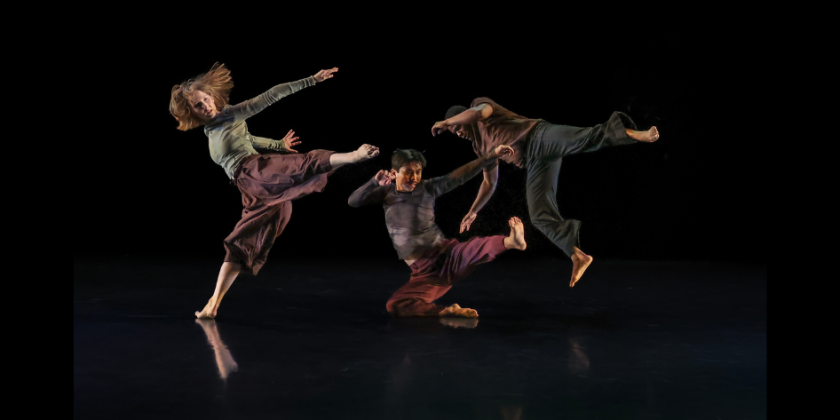
Header photo: Courtney Barth, Ryan Yamauchi, and Dareon Blowe
To celebrate his company’s 40th anniversary, choreographer Doug Varone has opted for simplicity. Instead of cramming his season with tributes and nostalgia, Varone is offering two masterpieces: the haunted Boats Leaving, from 2006, and No Matter How It Ends, a vivid and exciting new showcase for his dancers. Alumni have been invited to perform one night during the too brief run, May 27 to 31, 2026 at The Joyce Theater, but every other night these amazing pieces speak for themselves attesting to this choreographer’s fecund inspiration.
Set to Arvo Pärt's “Te Deum,” Boats Leaving has an air of timelessness, the majesty of the score accentuating the plight of ordinary people as they grapple with life’s intangibles, contemplating loss and the mystery of their own impending departure. Here, as in some classics of 20th-century dance (There Is a Time, or Dark Elegies), the focus is on a community. Yet Varone’s approach is so different from that of earlier generations of dancemakers that he renews this theme completely.
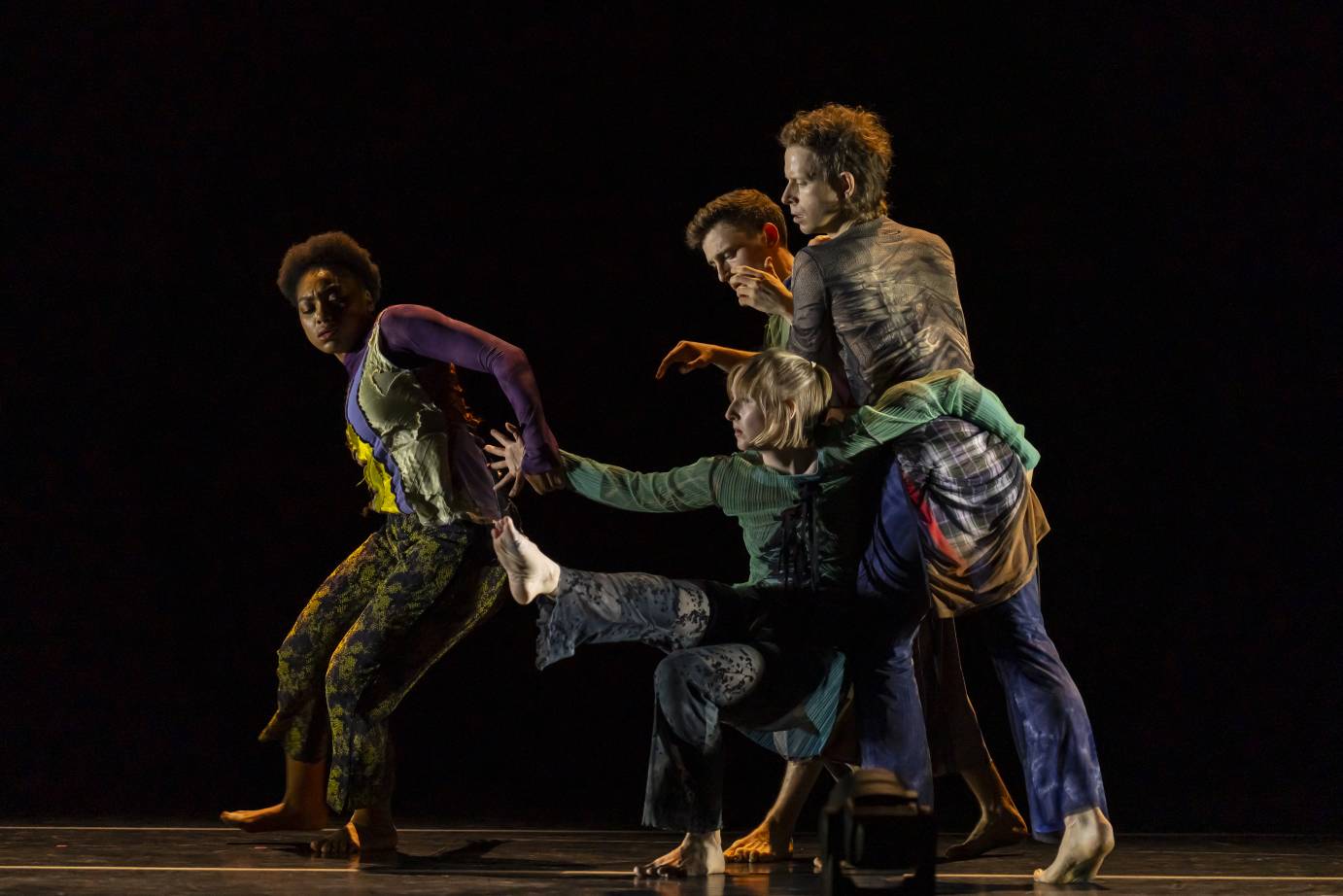
Instead of organizing his piece as a series of dramatic vignettes, he has borrowed gestures from newspaper photographs, seeding the dance with attitudes from real life that also appear in a recurring tableau. Madison Elliot covers her mouth, and cradles her belly. Courtney Barth presses her hands together in prayer; and Joniece “JoJo” Boykins averts her gaze raising one hand protectively. Dareon Blowe slumps with Nicholas Ruscica’s hands on his shoulders. Before them lies the body of Kanon Sugino, a possible accident victim. Stripped of their original context, these poses become abstractions, telegraphing pure emotion and inviting viewers to supply their own associations. Instinctively, we all recognize an arm extended suddenly in warning or appeal.
Boats Leaving is also free of regimentation. Classic modern dance may pit the individual against the group, harnessing people together in uniform anonymity. Varone shows us the individual within the group, fully independent, yet tied to others with bonds of need and affection. Shared experience brings this community together. Even huddled against one another on the floor, in a line that twitches its way toward an upstage corner, these dancers seem to possess autonomy. They are real people, singular and sociable. The movement looks casual, and when symmetry emerges unexpectedly — choreography, with a capital “C” — it is all the more striking. Spiky intersections and pile-ups, seemingly random, are more common. The permutations seem endless, and dancers flow effortlessly from one arrangement to the next, subtly making physical contact and varying their dynamics.
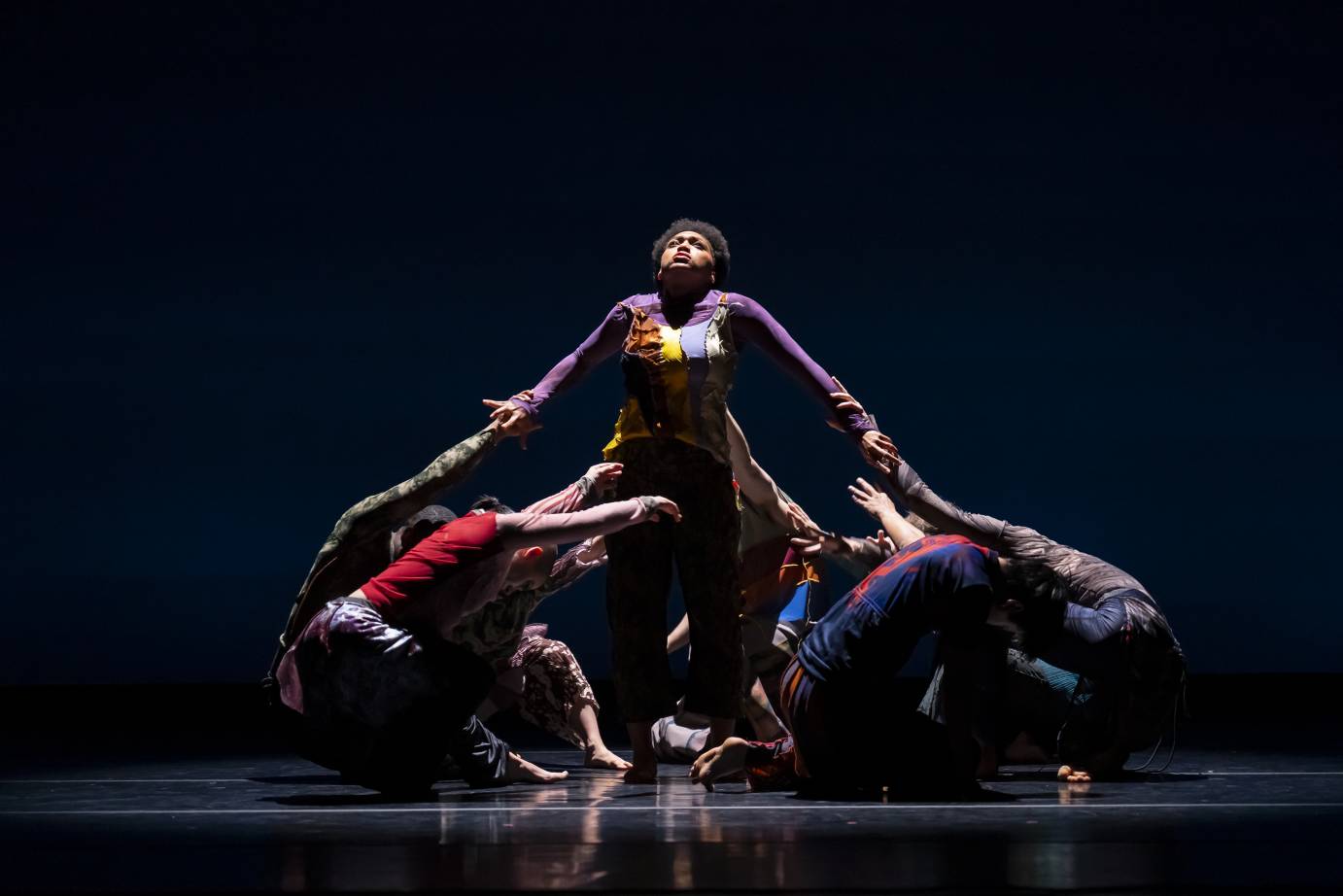
Another recurring image shows the dancers posted around the edges of the stage, forming an open-ended rectangle. Plunged in blue shadow, they face inward peering at one another across the emptiness that separates them, and solemnly acknowledging it. Perhaps they are contemplating their own absence. In a spectacular ending, two dancers form a doorway through which the others exit unpredictably. This doorway opens, shuts, and eventually disintegrates; the threshold itself eroding. The last to leave, Ryan Yamauchi tries to walk away, but the tide is going out, and he can’t escape its pull.
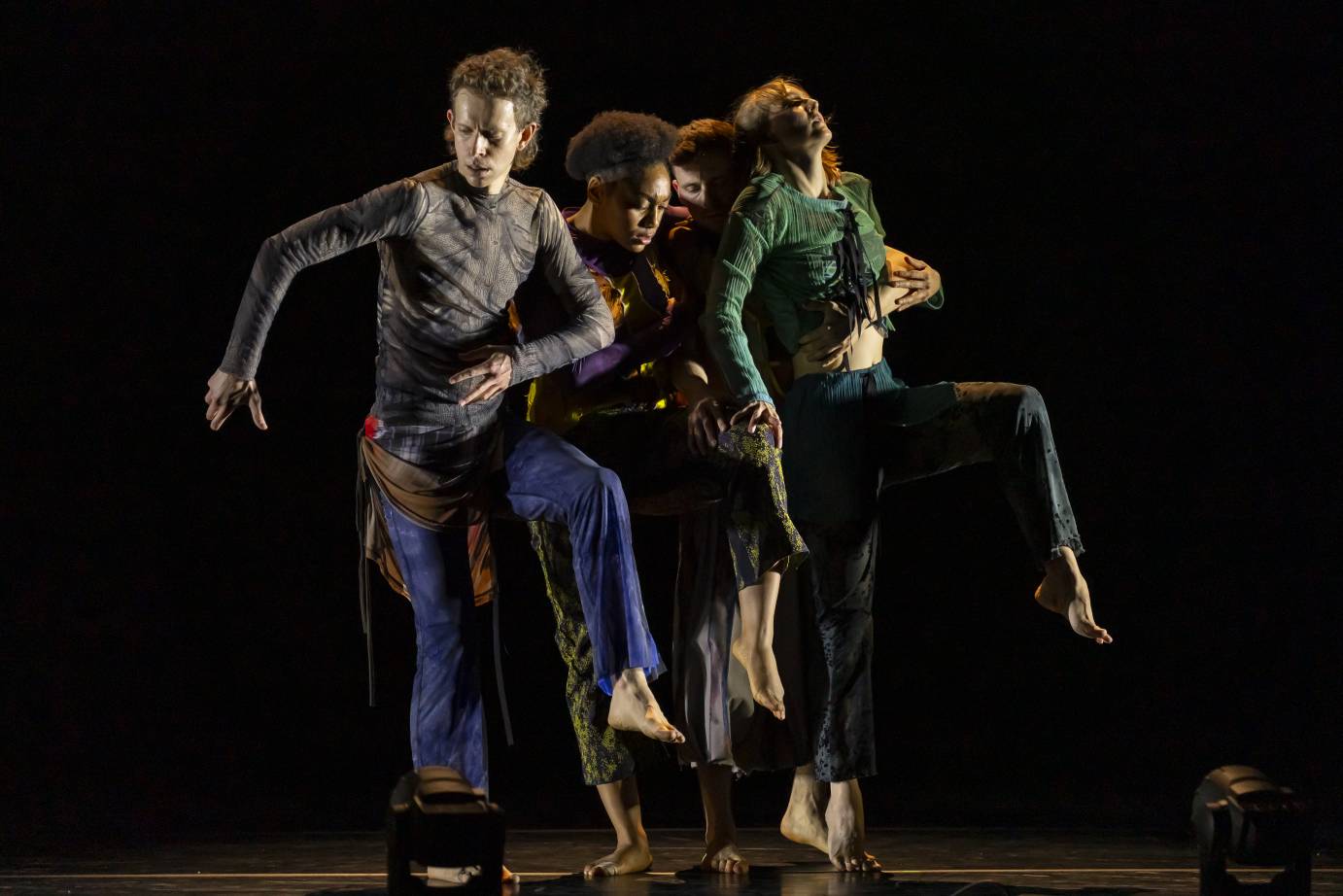
No Matter How It Ends, the season premiere, features quirky individuals and their partners working out the kinks, but this piece set to a rock ‘n roll score is inevitably more cheerful than Boats Leaving. Radiohead’s 2007 album In Rainbows, textured and otherworldly, sustains the dancing with an infectious beat; and the album provides a ready-made format with a solo or duet matched to a song. The atmosphere is less communal than personal, offering glimpses into the characters’ private struggles. Varone’s movement is frequently hard and brittle here. Sometimes, the dancers appear frozen, with odd flourishes at their extremities that suggest the dogged persistence of life. Caitlyn Taylor has dressed them in rich-hued motley; while Ben Stanton’s lighting plan also emphasizes gorgeous colors. Even the silhouettes are dyed; and during a shadowy section the background retains a pale tint.
Among the highlights is the duet Bodysnatchers, in which Blowe and Yamauchi go head-to-head, stubborn opposition and bursts of violence alternating with peaceful moments when all is forgiven and the men hold hands, bouncing side-by-side. Some relationships are like that, and Varone will give this feisty, but loving duo the last word.
Will Noling is very much alone in his solo, Nude, waiting and staring off into the distance before he sinks slowly into a lunge. Nervously in-gathering and twisting, he scrabbles high on his toes and low on all fours. He pauses to stare at his open hand. Small, physical adjustments don’t seem to improve his mood, but allowing his fingers to wave softly like fronds imposes a hypnotic calm.
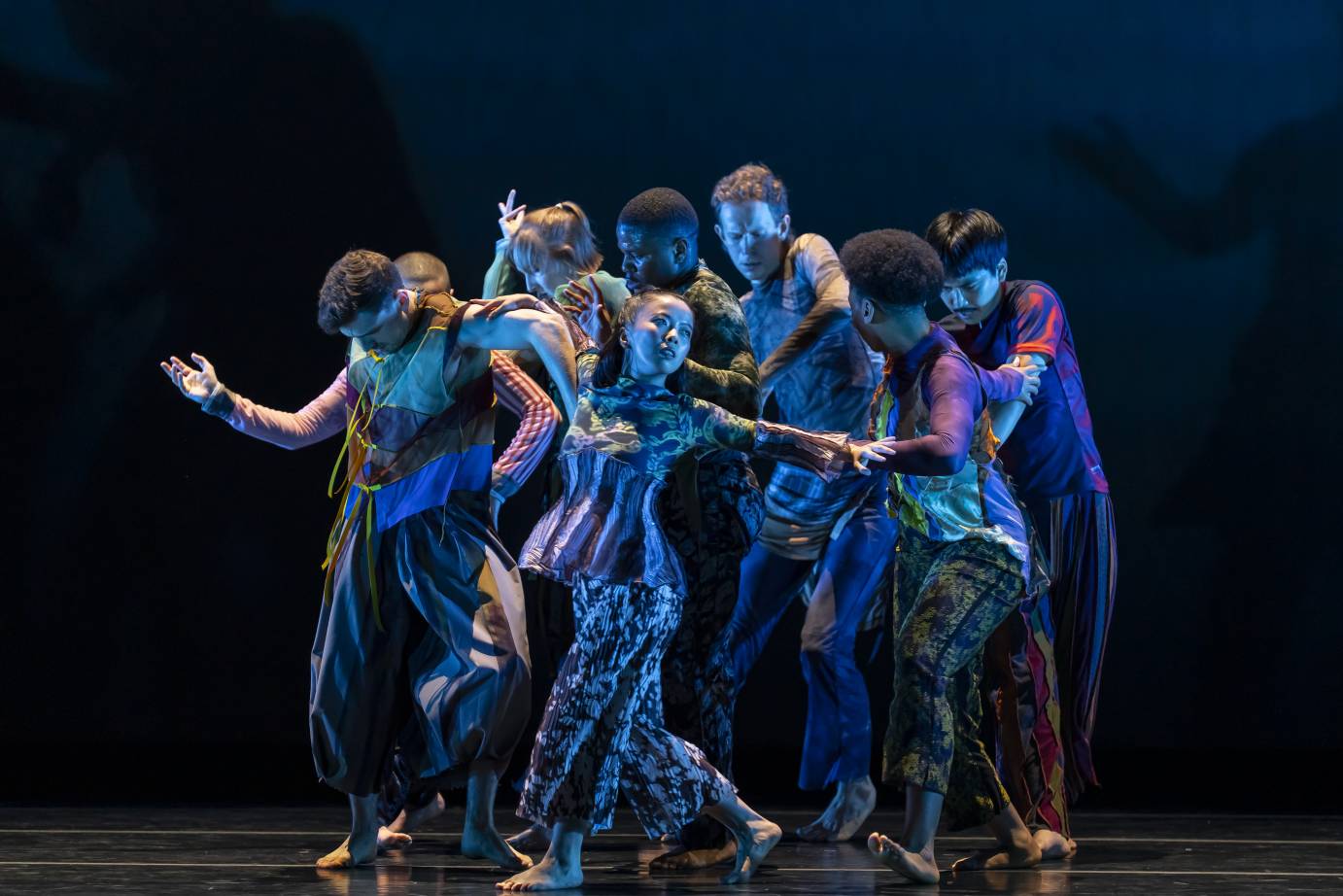
Boykins has something on her mind that keeps her from joining the ensemble in Weird Fishes/Arpeggi. Swinging around coolly, and gently swaying, she draws our focus. Boykins may be the calm center, as the group bustle around her. Or she may take the outside track, and then burst through them. The others lean against her, but fall helpless at her feet. Pausing with one hand on her chest, Boykins suddenly springs and flails, and dives into penché. Having scored some kind of victory, she calmly walks away.
In All I Need, Barth and Ruscica work their way from one side of the stage to the other, though they are all but paralyzed. Advancing jerkily, half-conscious, Barth seems to chase Ruscica, bumping into him and crawling under his arms. They support each other effortfully, and awkwardly embrace. Tenderly, he strokes her hair. When, at last, she drags him off-stage, we seem to witness a rescue.
Amid the charivari ensembles, the dancers form clusters or bop to the rhythm; and relationships emerge only to dissolve. Elliot becomes a boisterous companion to Blowe and Yamauchi; and Sugino catapults into a partner’s arms, or skids across the floor with startling abandon.
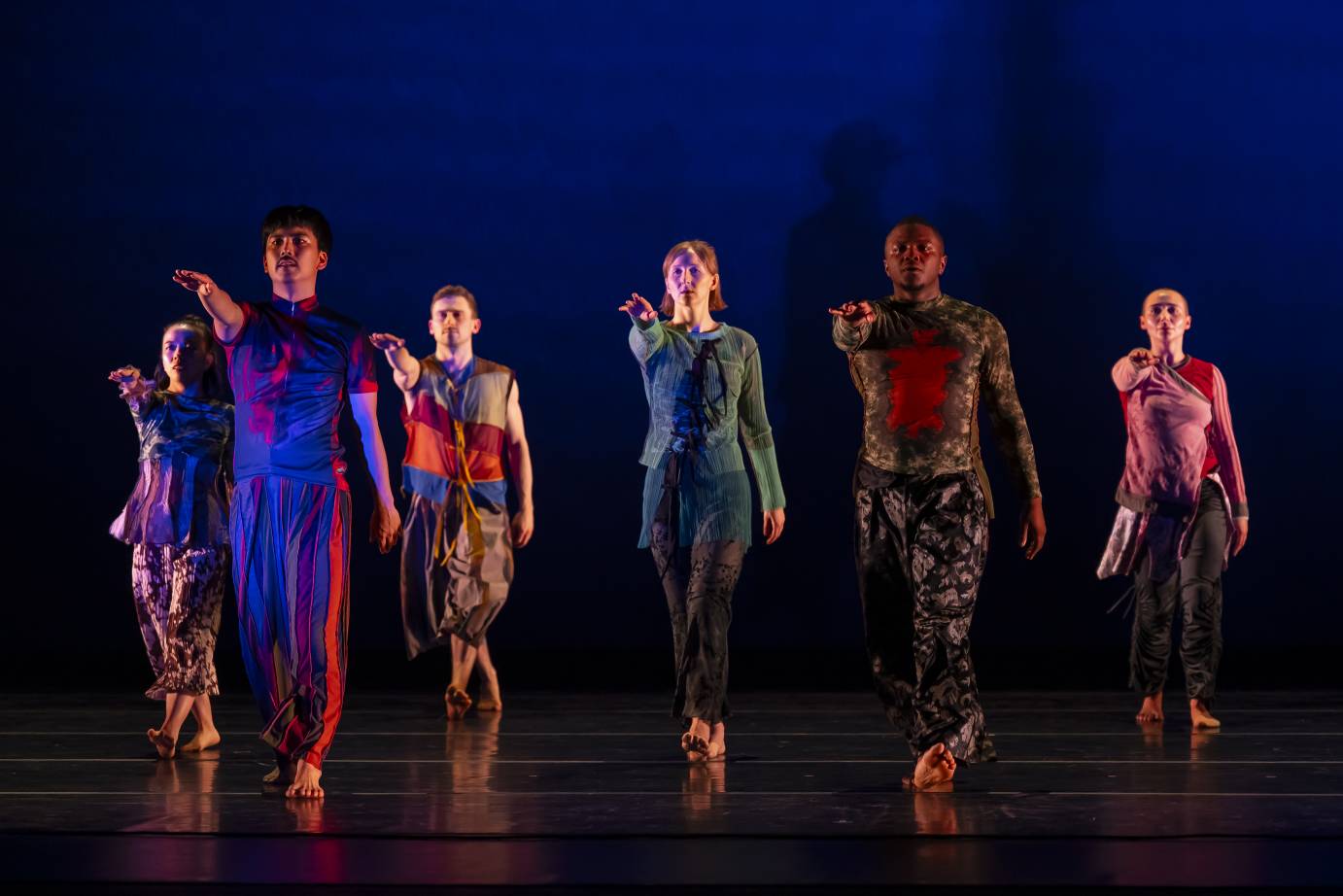
Toward the end, Varone hides a series of solos behind a line of dancers, who stand downstage with their backs to us blocking our view. When the soloists finish, they retire to a shadowy area upstage. This distancing contrasts with the intimacy of the earlier vignettes, but perhaps would-be voyeurs in the audience should be frustrated. “Who gets to see what” seems more fraught today, in a world of vanishing privacy, than when Trisha Brown made an issue of it in For M.G.: The Movie, back in 1991.
Clearly, Varone knows we’re watching. At the end, when the Bodysnatchers guys take hands again and saunter upstage, Blowe and Yamauchi pause and turn to look at us over their shoulders. How do they feel about being observed? As our digital devices become increasingly intrusive, how do we regain our freedom?